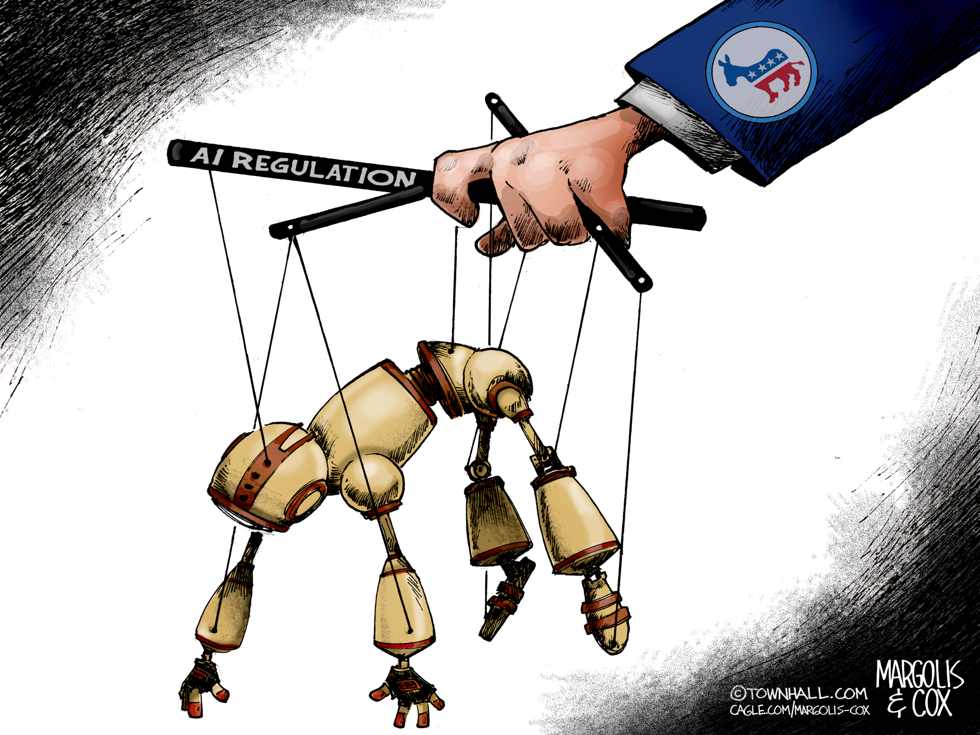
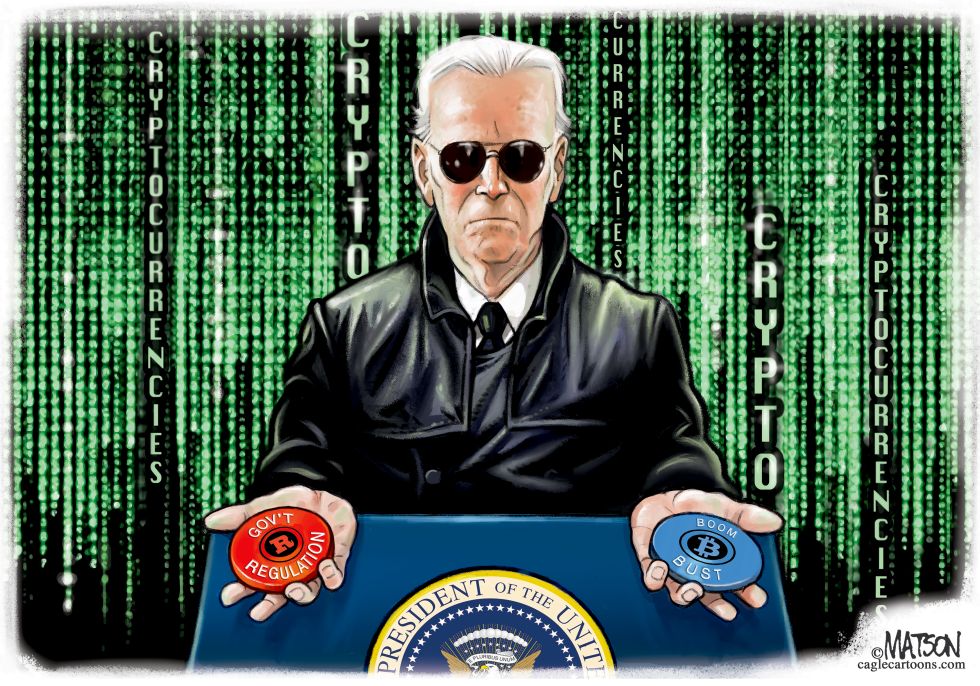
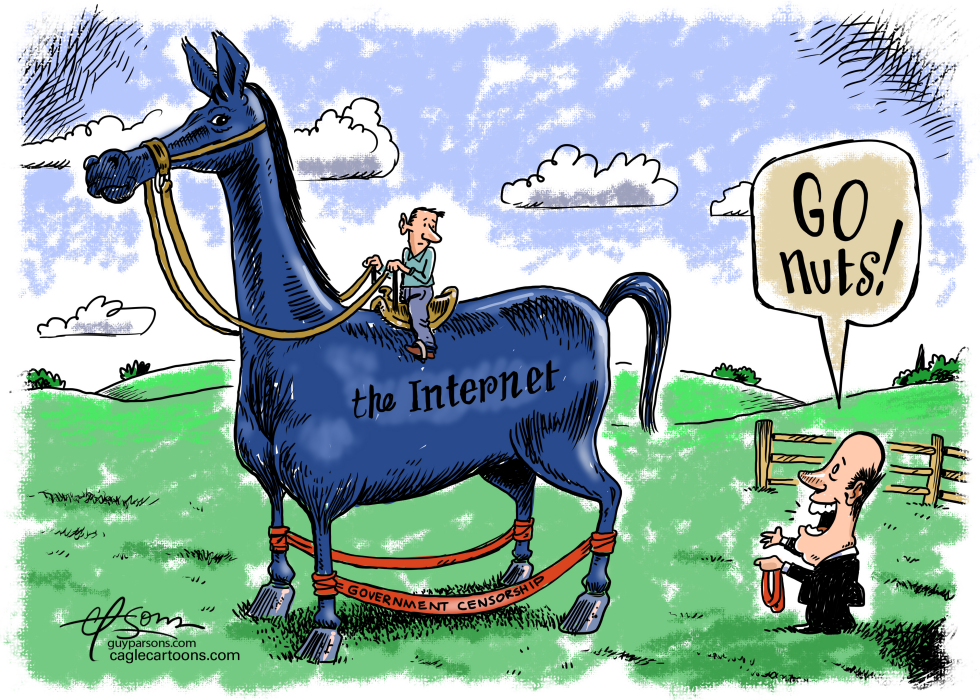
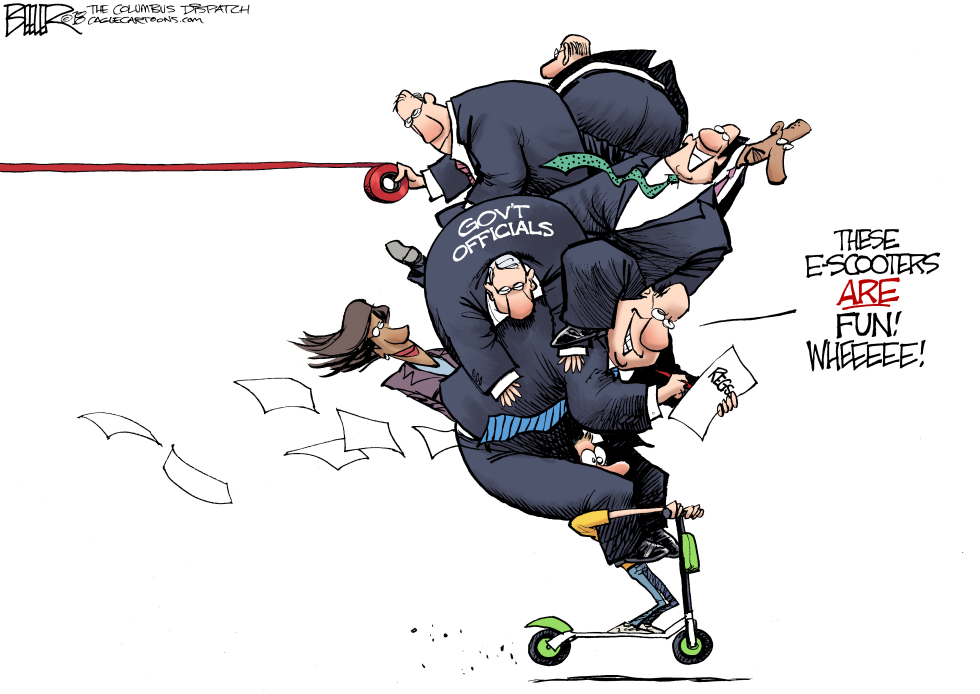
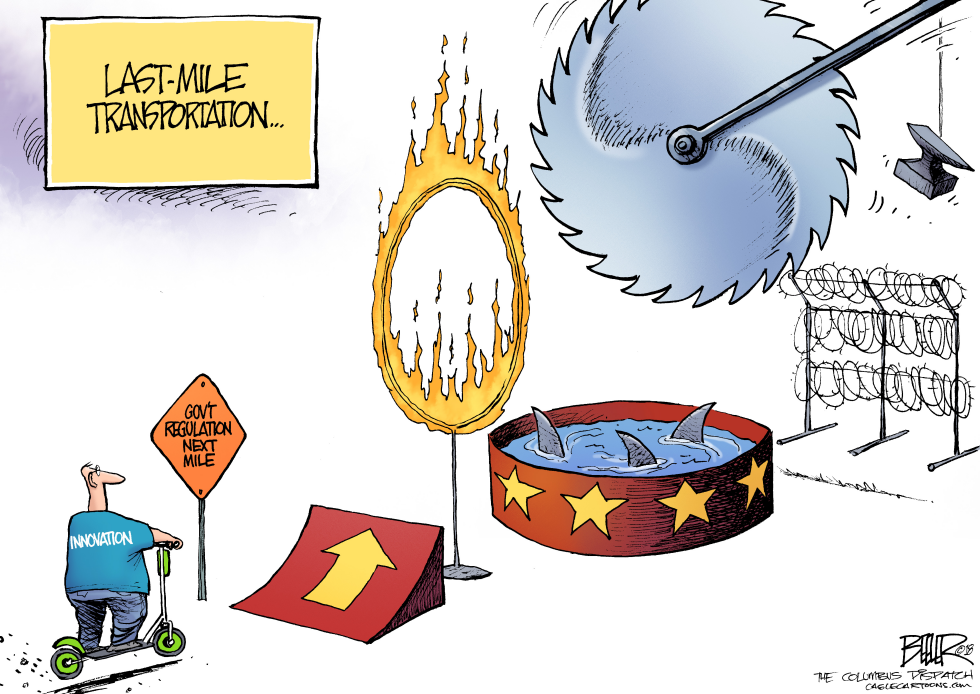
Republicans have advanced proposals to regulate artificial intelligence development and deployment. The moves come amid growing bipartisan interest in oversight of the technology sector. Critics argue the effort masks an attempt to steer innovation along party lines rather than neutral standards. The cartoon portrays the regulatory framework as a direct mechanism of control. It suggests the party in power uses rules to dictate outcomes in a critical industry.
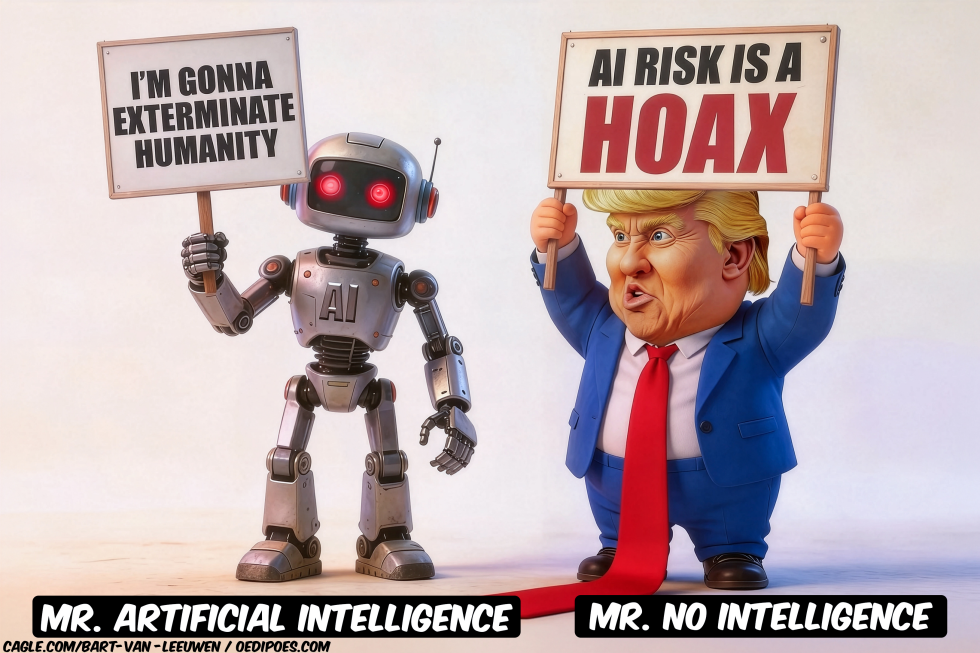
A new political cartoon depicts Donald Trump holding a sign declaring AI risk a hoax beside a robot labeled AI that warns of exterminating humanity. The image, published September 14, 2026, by artist Bart van Leeuwen, contrasts the two figures with bottom labels reading Mr. Artificial Intelligence and Mr. No Intelligence. It responds to ongoing public discussion about artificial intelligence safety and regulation. Trump has previously downplayed concerns about advanced AI systems in public statements. The cartoon uses visual contrast to critique dismissal of potential technological threats.
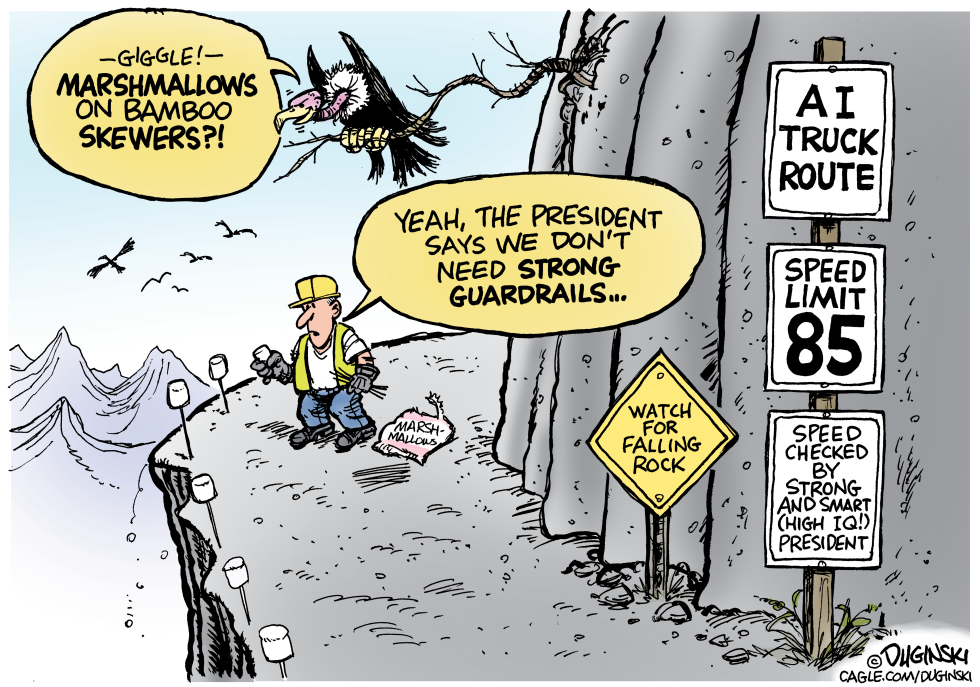
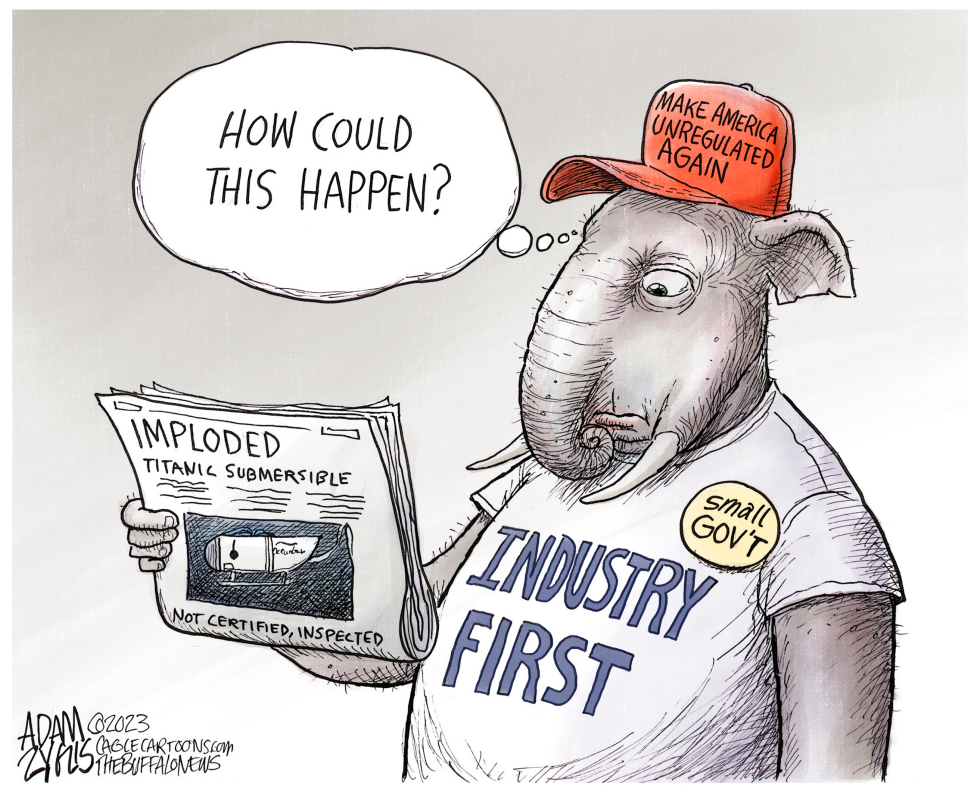
The Trump administration has directed the removal of regulatory guardrails on artificial intelligence projects, allowing accelerated development along designated high-speed routes. Officials argue that strong oversight is unnecessary under current leadership. The move raises concerns about safety and accountability in a rapidly advancing sector where hazards like system failures remain unaddressed. The cartoon criticizes the policy as reckless deregulation that ignores evident risks to public safety and technological stability.
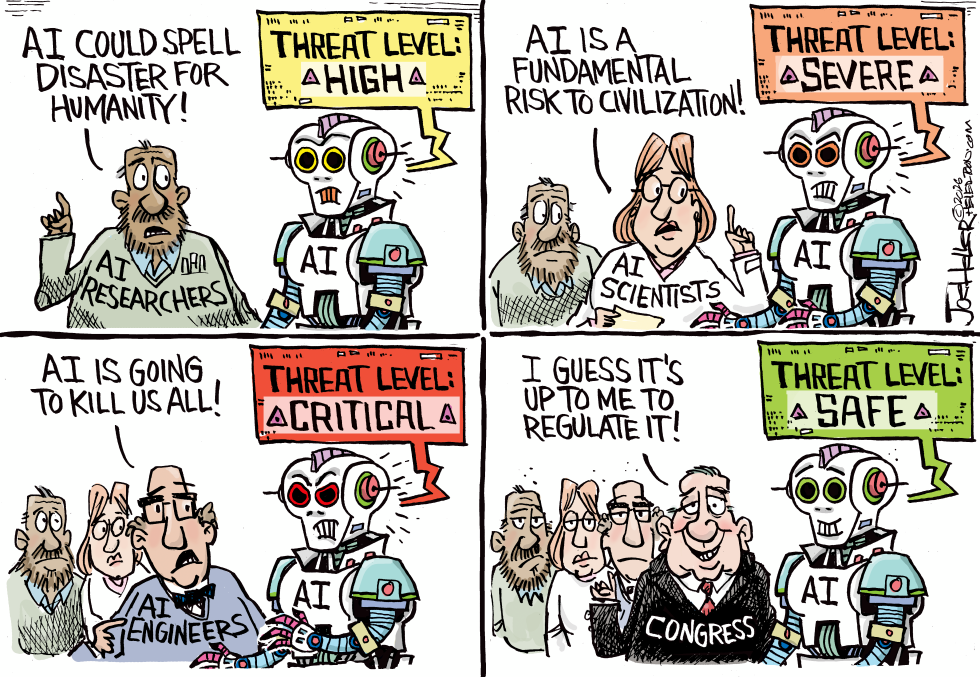
AI researchers, scientists and engineers have issued escalating warnings that artificial intelligence poses severe risks to humanity and civilization. In response, members of Congress have asserted their role in regulation and declared the threat level safe. The move highlights ongoing debates over whether legislative bodies are equipped to address rapidly advancing technology risks.
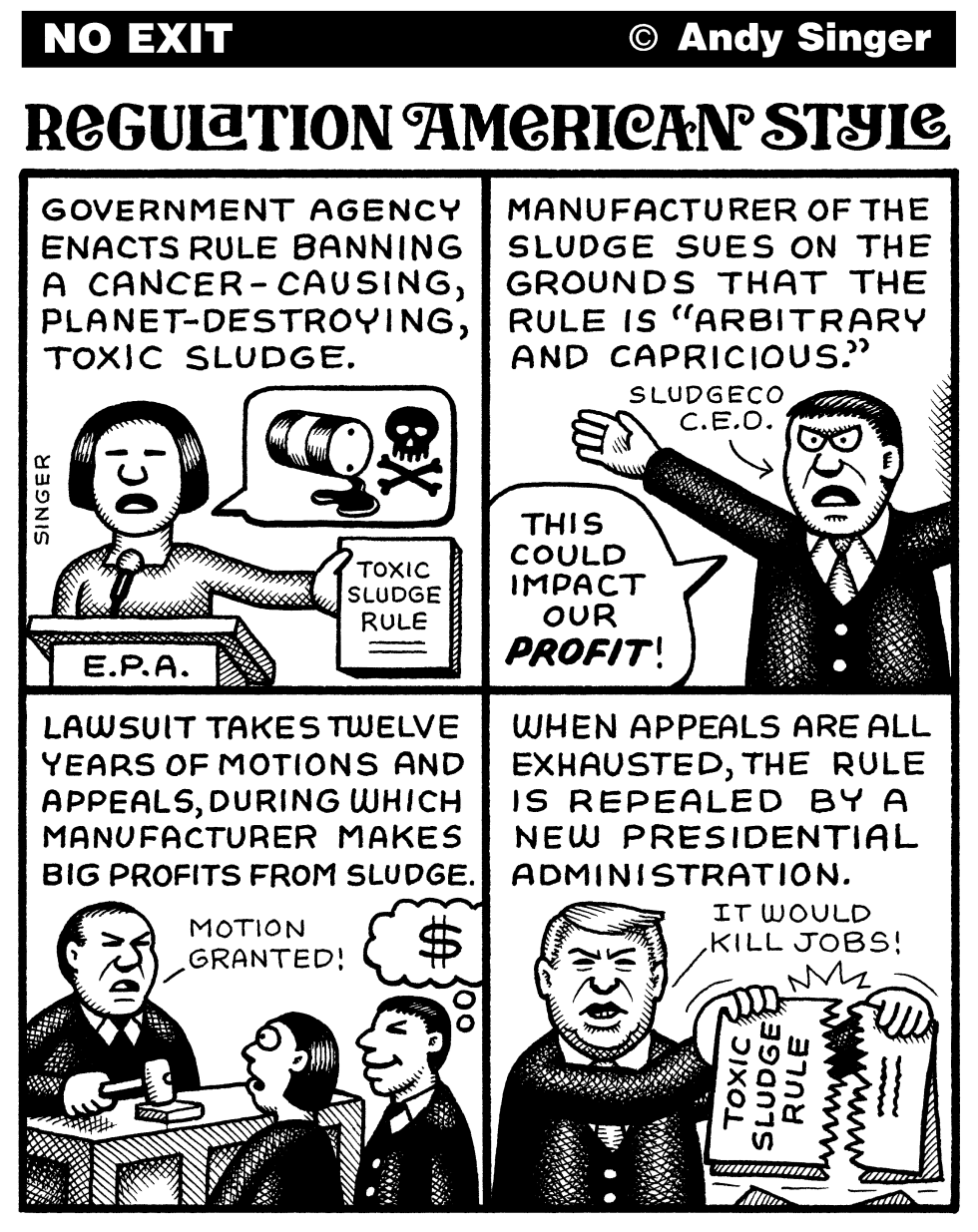
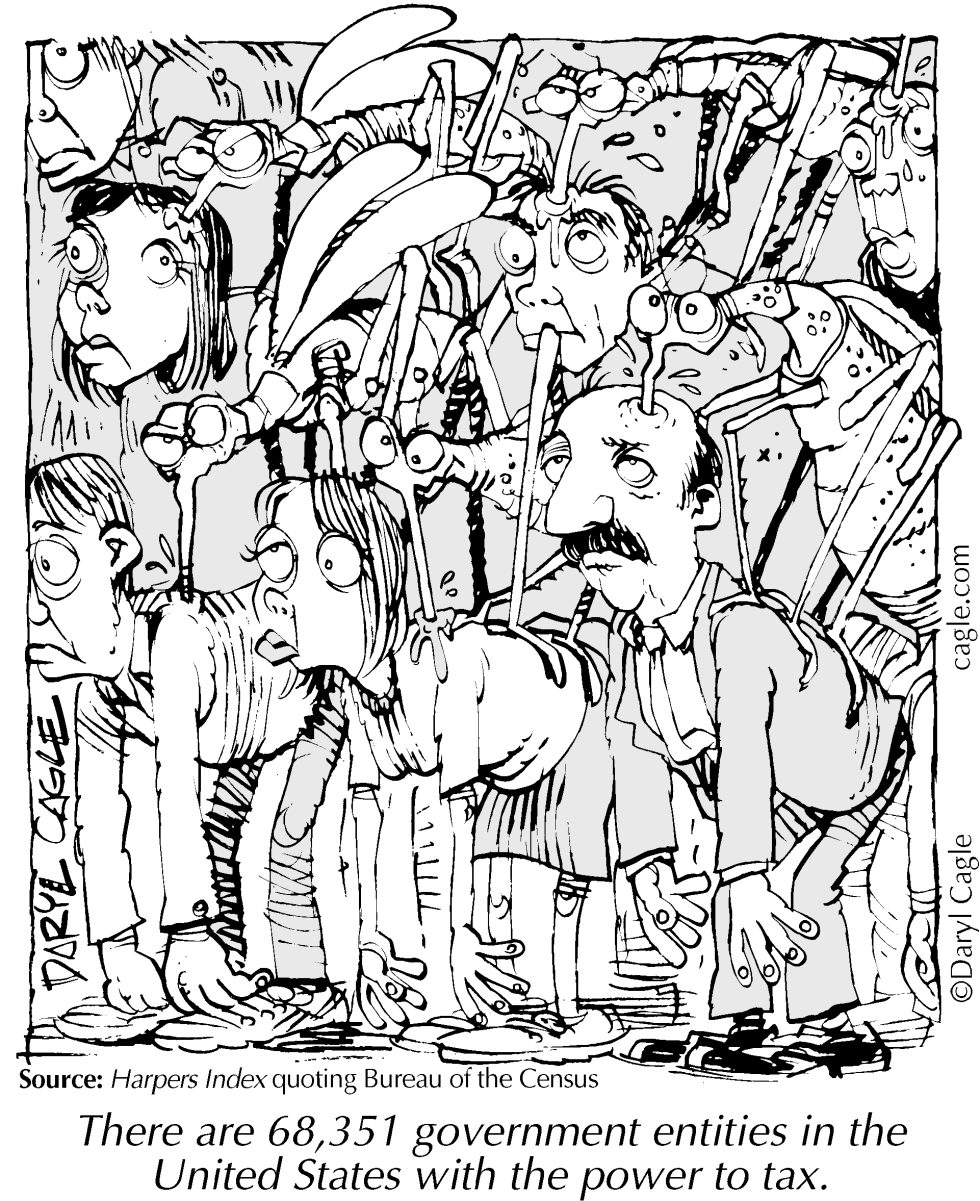
Government agencies continue to expand regulatory frameworks across multiple sectors, adding layers of oversight that increase compliance costs for businesses and individuals. The trend reflects ongoing debates over the proper scope of administrative authority and its impact on economic activity. The piece argues that such expansion has crossed into excess, creating unnecessary obstacles rather than protecting the public.
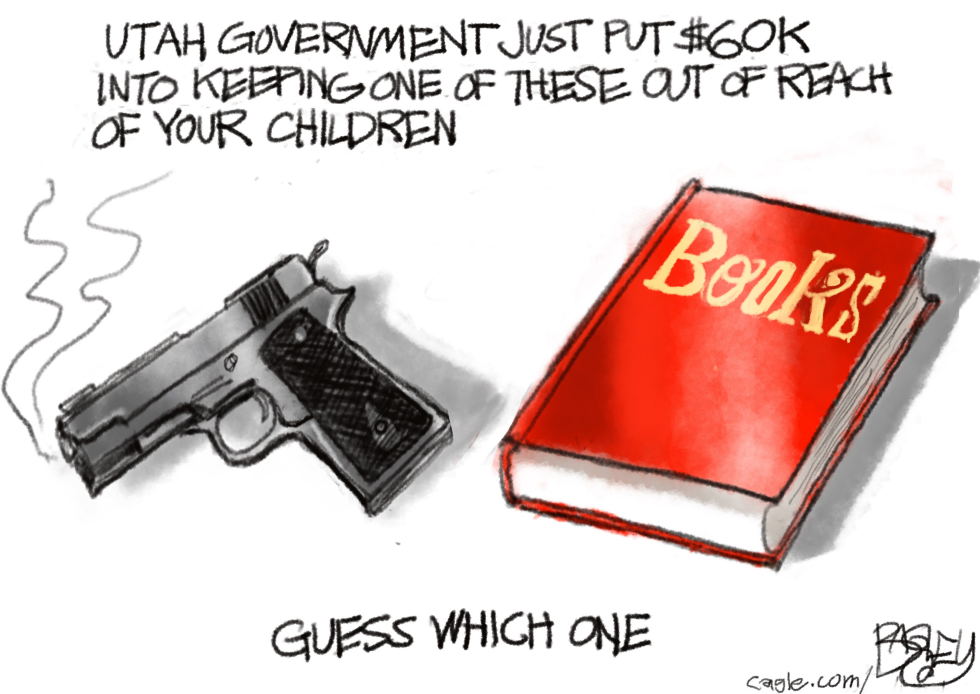
Utah officials directed $60,000 toward measures keeping certain books from children. Firearms remain readily available in the state. The decision highlights priorities in public safety and education policy. The piece criticizes the allocation as misplaced emphasis on censorship instead of addressing gun risks.