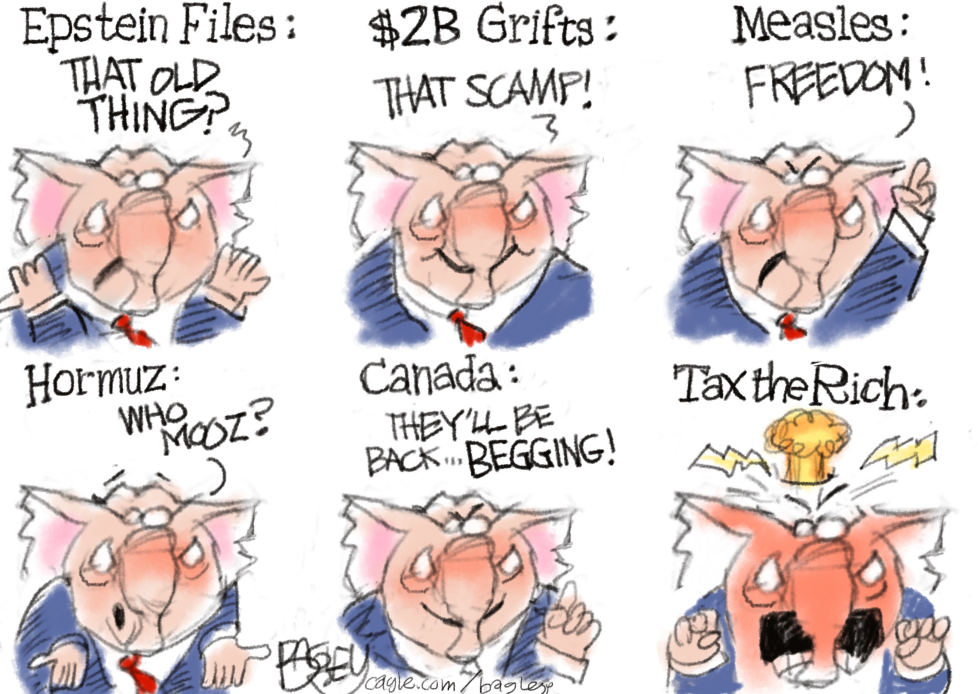
A political figure downplays the Epstein files, billion-dollar grifts, measles outbreaks, Hormuz tensions, Canada relations and wealth taxes. The piece critiques selective indifference to ongoing controversies and policy flashpoints.
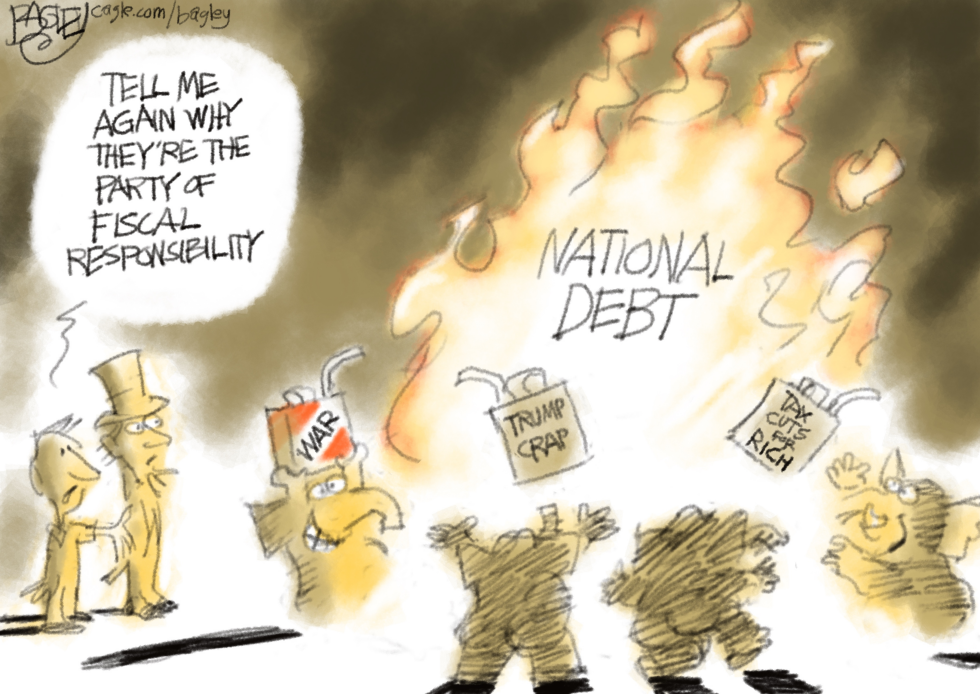
Republicans continue to promote themselves as the party of fiscal responsibility even as national debt rises sharply from sustained war spending and tax cuts favoring the wealthy. The editorial takes the position that these policies directly contradict the fiscal responsibility label.
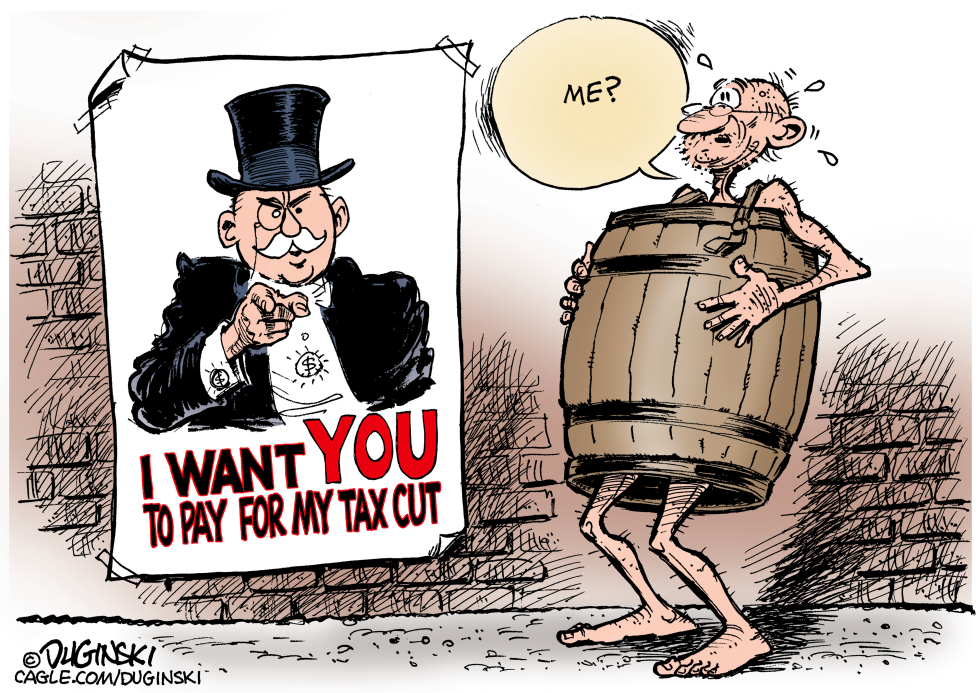
A poster of Uncle Sam points directly at a thin man trapped in a barrel, with bold text demanding that the man pay for the tax cut. The barefoot figure reacts with surprise in a speech bubble. The scene unfolds against brick walls, highlighting tension between authority and the economically disadvantaged.
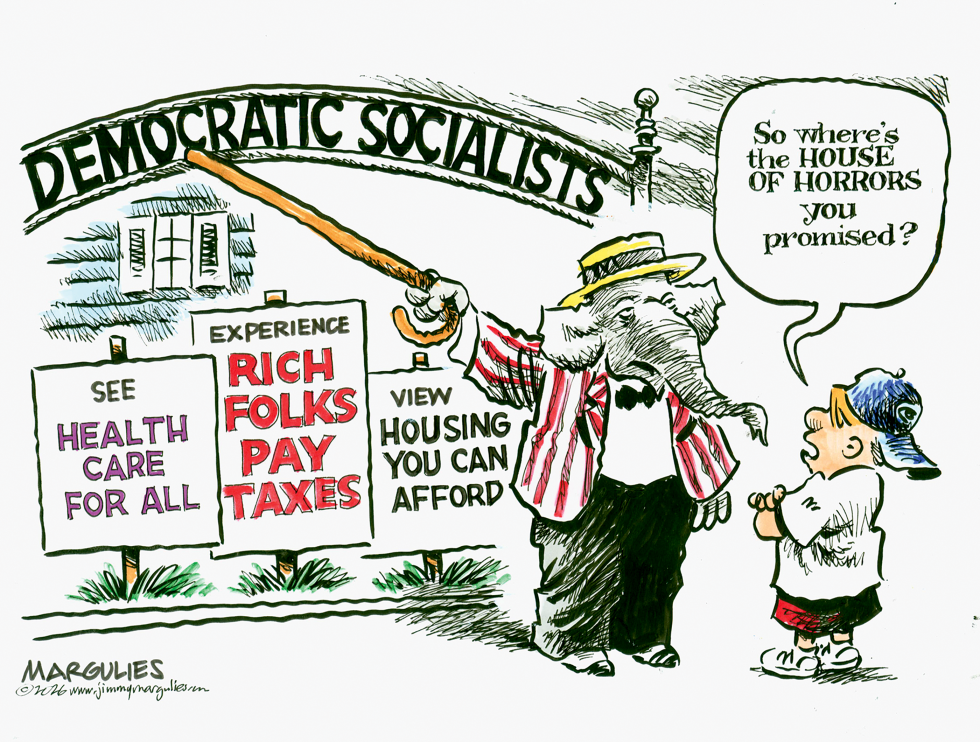
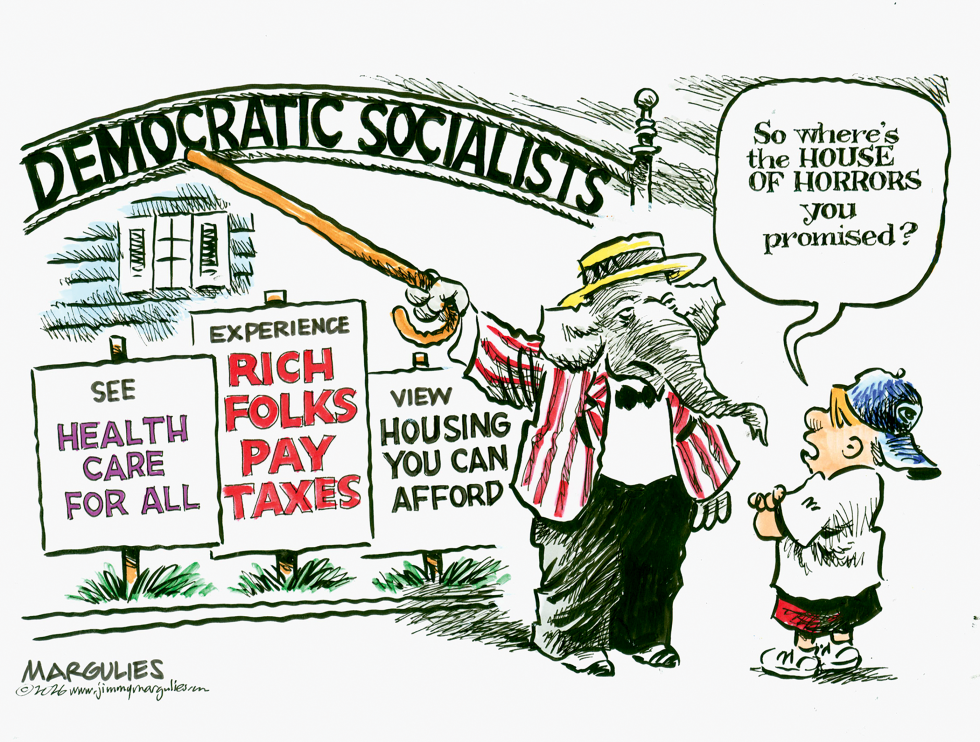
An elephant representing Republicans conducts a tour of attractions labeled Democratic Socialists on July 1 2026. Three signs advertise health care for all, taxes paid by the rich and housing that average people can afford. A young visitor in a cap asks where the house of horrors is that was promised. The scene uses the classic elephant symbol to frame policy offerings as ordinary exhibits rather than frightening outcomes.
An elephant dressed as a barker stands at a Democratic Socialists booth displaying signs for health care for all, rich folks paying taxes, and housing you can afford. The figure holds a pointer toward the arch and addresses a child visitor. The child asks where the house of horrors is located. The scene is set outdoors with a building facade visible behind the signs. Publication occurred on July 1 2026.
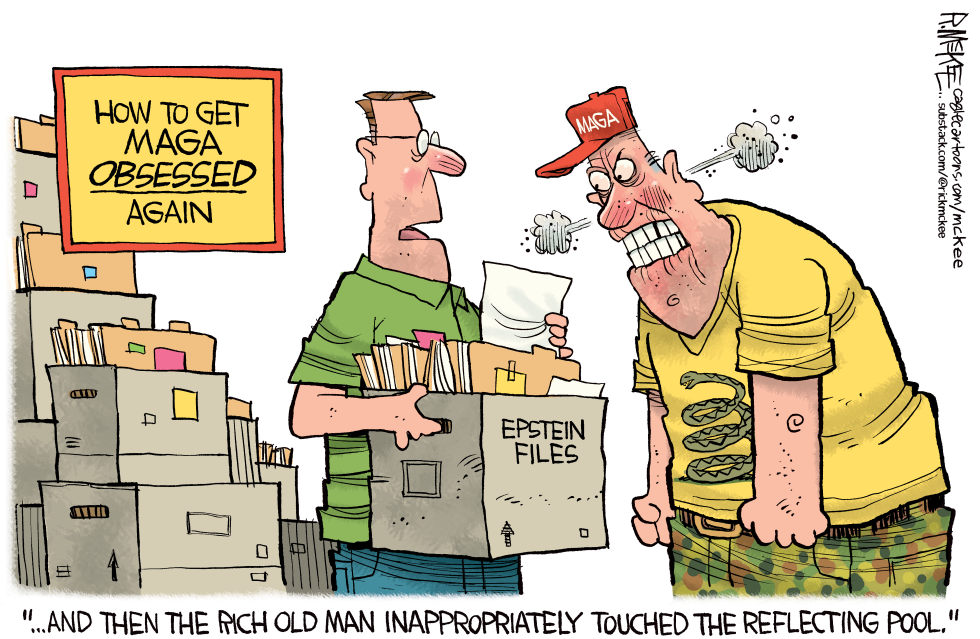
A man in a MAGA hat and yellow shirt shows visible anger with steam lines near his head while facing another man holding an Epstein files box. A yellow sign reading how to get MAGA obsessed again stands amid stacks of boxes. The bottom caption references a rich old man touching the reflecting pool.
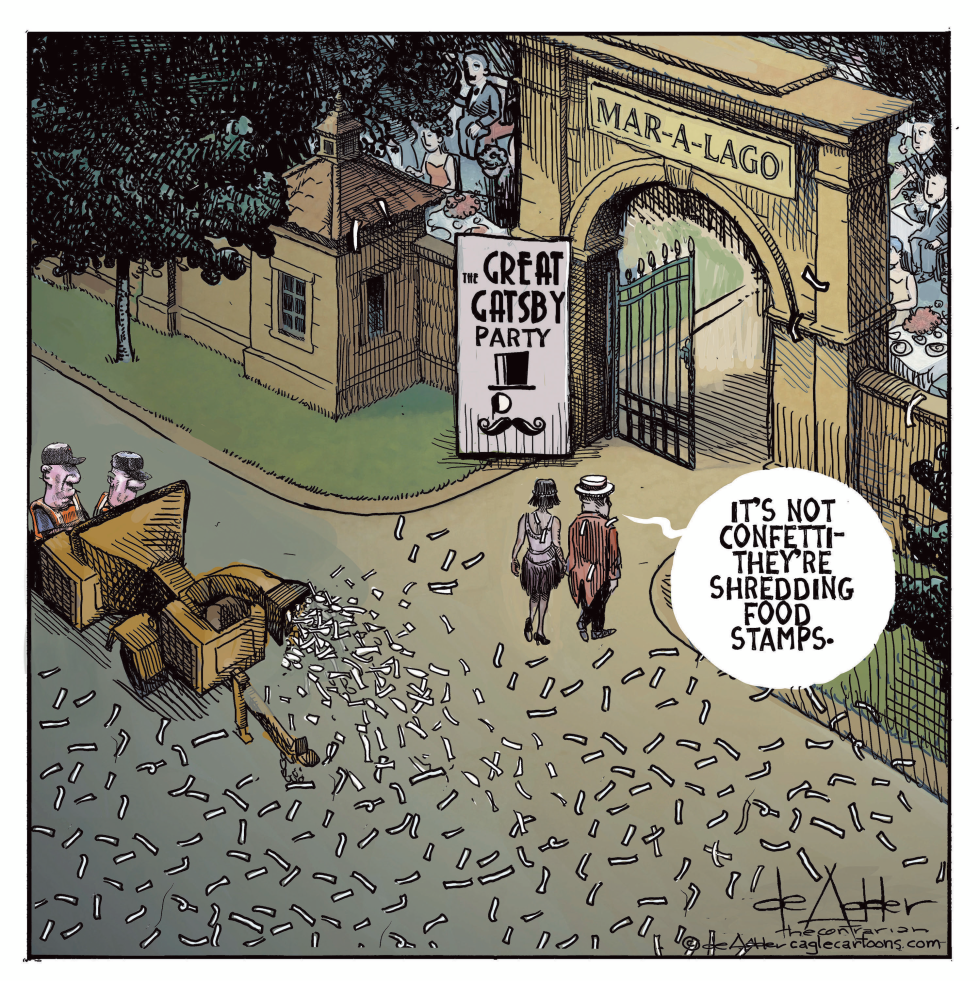
The cartoon by Michael de Adder depicts a Great Gatsby party at Mar-a-Lago where food stamps are shredded instead of confetti. It responds to ongoing debates over SNAP funding and cuts proposed by Republican leaders including Donald Trump. The visual uses the iconic novel's excess to highlight perceived indifference to low-income Americans reliant on nutrition assistance.