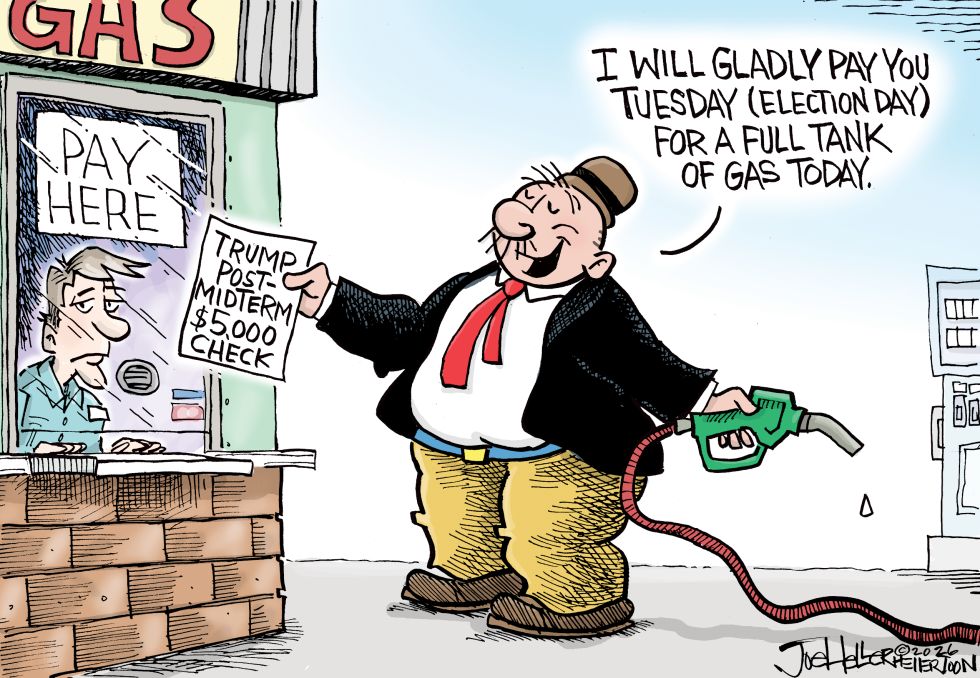
Donald Trump issued a post-midterm gas payment pledge tied to the 2026 election cycle. The promise revives a classic deferral line to link fuel costs with voting day. The cartoon argues the offer functions as an empty election tactic rather than a concrete policy step.
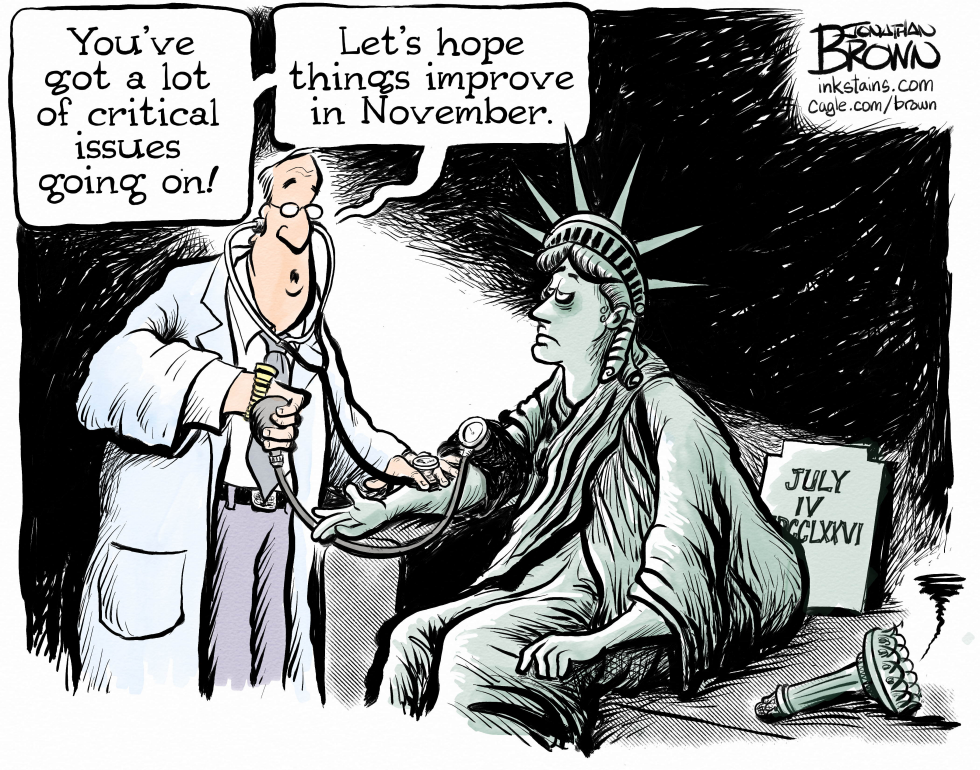
The cartoon depicts a doctor examining the Statue of Liberty's blood pressure and noting numerous critical issues. The Statue responds with hope that things will improve in November. A sign references July 4, 1776, and a broken torch rests on the ground. Published on September 15, 2026, the image uses the iconic figure to comment on the state of the nation ahead of upcoming elections. The visual metaphor highlights concerns about American institutions and public sentiment.
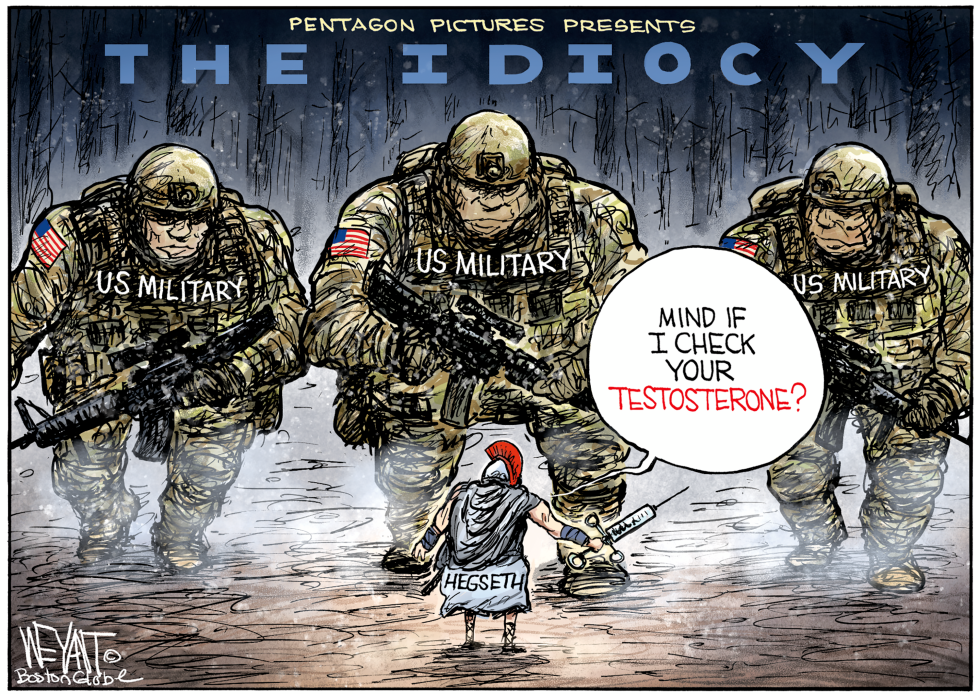
Defense Secretary Pete Hegseth has directed new scrutiny of testosterone levels across US military units. The move comes as the Pentagon reviews physical readiness standards for combat roles. Critics argue the focus distracts from broader readiness issues while supporters say it enforces accountability. The editorial takes the position that such micromanagement undermines troop morale and operational effectiveness.
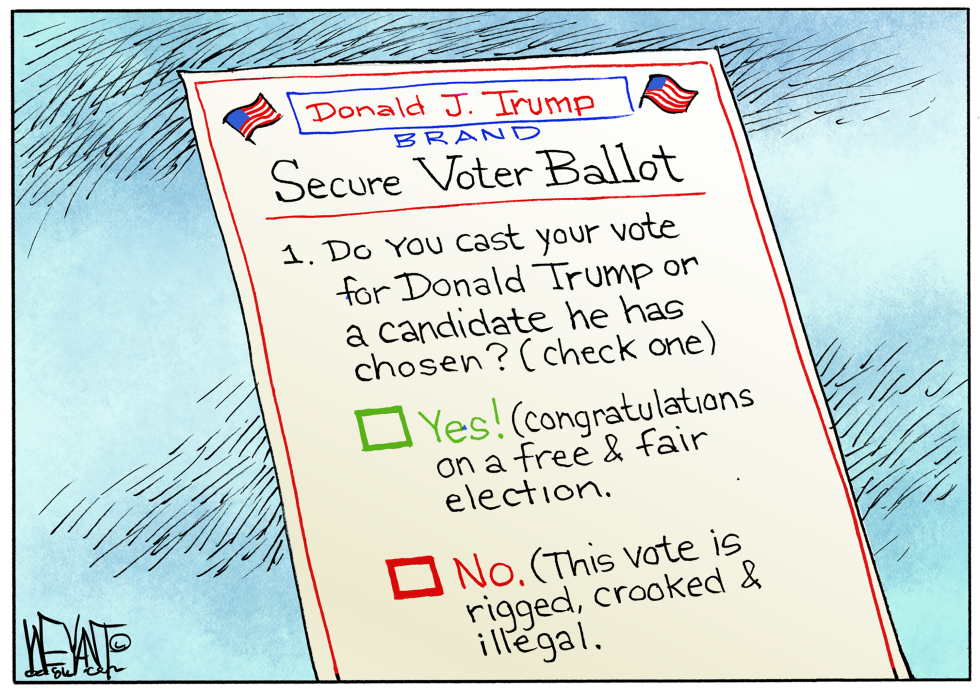
A ballot labeled with Donald J. Trump's brand presents voters with a binary choice between supporting him or his selected candidates. The design labels one option as confirming a free and fair election while marking the other as rigged and illegal. The piece highlights ongoing debates over election processes and candidate influence.
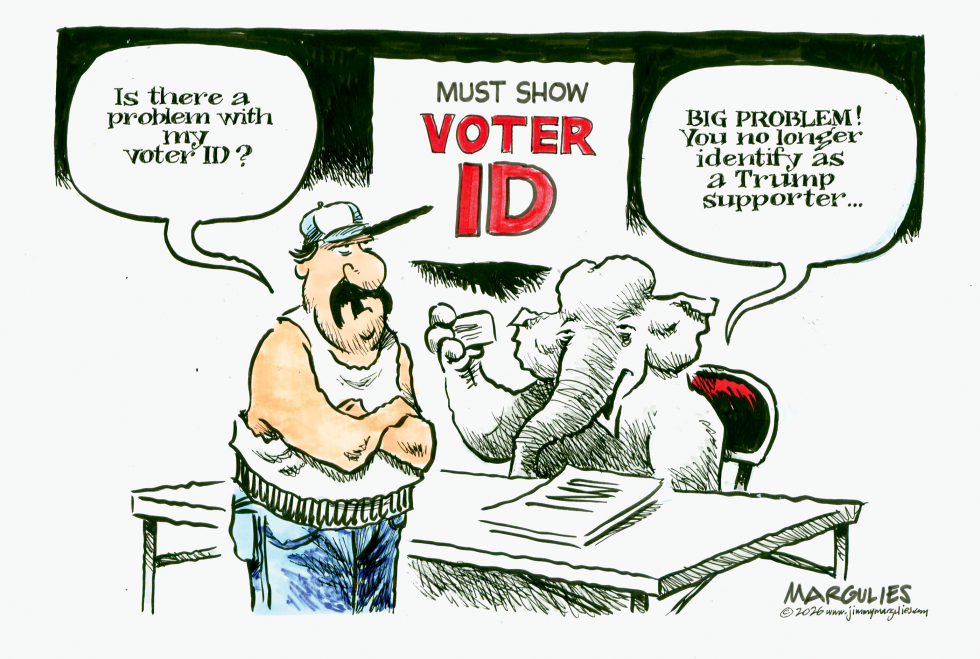
A voter at a registration desk presents identification while asking if there is an issue. The Republican elephant official responds that the problem stems from the man no longer identifying as a Trump supporter. The scene centers on a large sign requiring voter ID. This cartoon from June 2026 addresses ongoing debates over identification rules at polling places and shifting political affiliations ahead of elections.
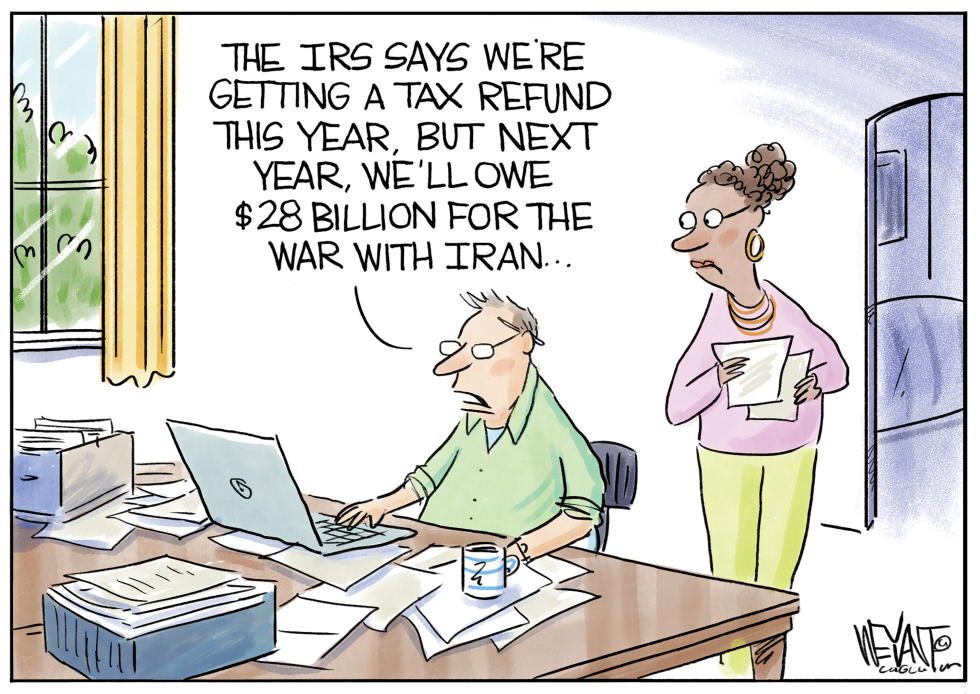
Dive into this biting political cartoon tax refund piece where a woman, holding papers, informs a laptop-working man about their IRS windfall this year, only to drop the bomb of owing $28 billion next for the war with Iran. The satirical cartoon Iran war vibe captures the absurdity of US taxes funding wars, with cluttered desks and exasperated expressions underscoring the humorous take on federal spending. It's a classic taxpayer burden Iran conflict jab, poking fun at government spending satire while illustrating the disconnect between personal finances and massive military expenses. Through cartoon about military expenses, it cleverly critiques fiscal policy in an office setting, making the war with Iran taxpayer joke both relatable and irreverently insightful for viewers pondering editorial cartoon fiscal policy.
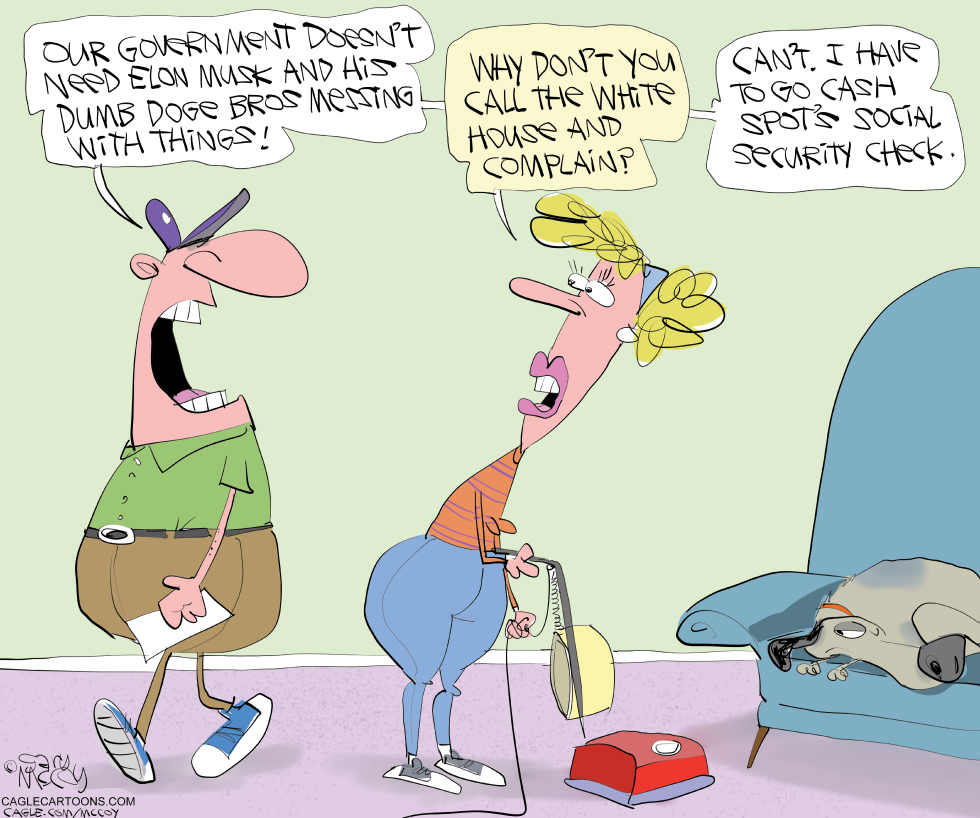
A man in a green shirt and cap declares the government needs no help from Elon Musk and DOGE. A woman holding a vacuum suggests calling the White House. The man replies he must first cash Spot's social security check. The scene shows a dog resting on a blue couch. The exchange occurs in a living room setting with speech bubbles linking the dialogue.
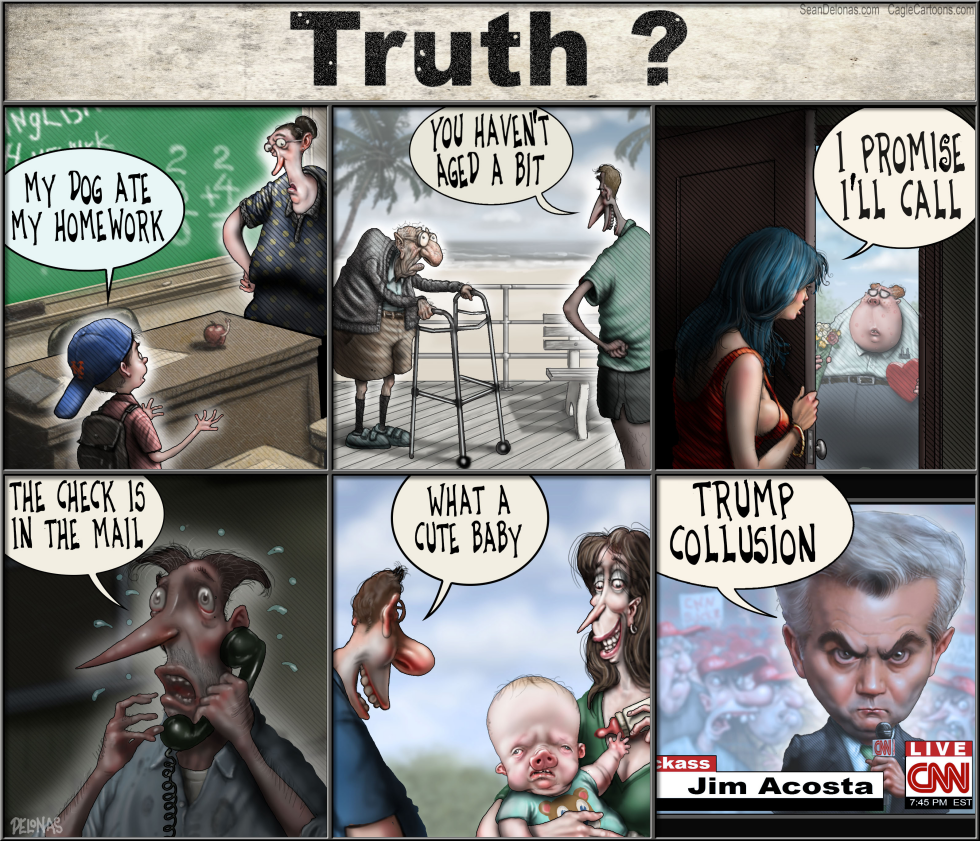
A six-panel comic by Sean Delonas published August 3 2018 presents five familiar false statements before showing CNN anchor Jim Acosta declaring Trump collusion. The sequence places the network report in the same category as a student claiming a dog ate homework and a man promising to call. Delonas drew the final panel with Acosta on air under the CNN logo. The cartoon appeared during ongoing coverage of the special counsel investigation into Russian election interference. It uses the structure of common lies to comment on the persistence of the collusion story in media at that time.