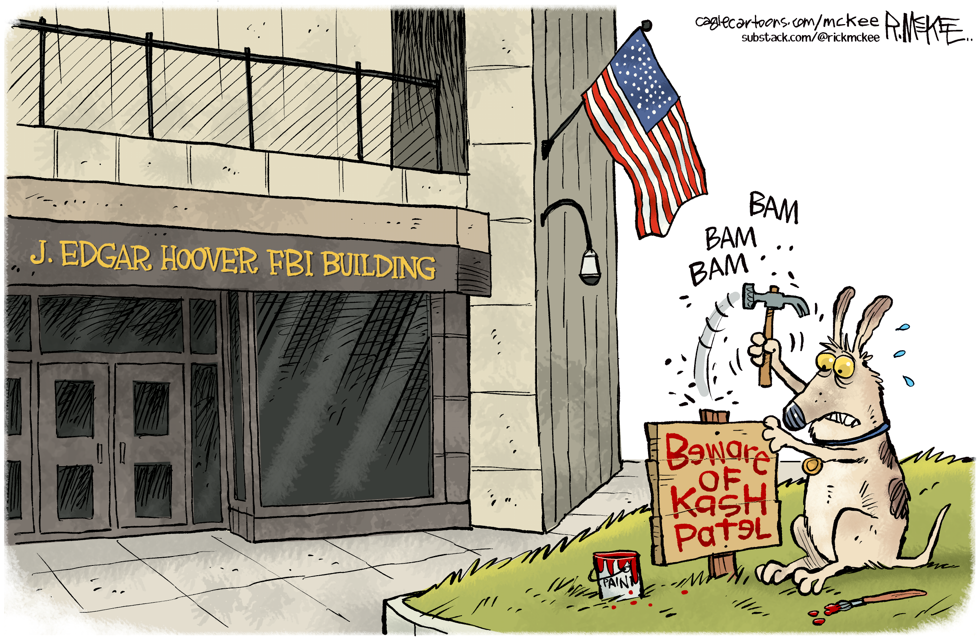
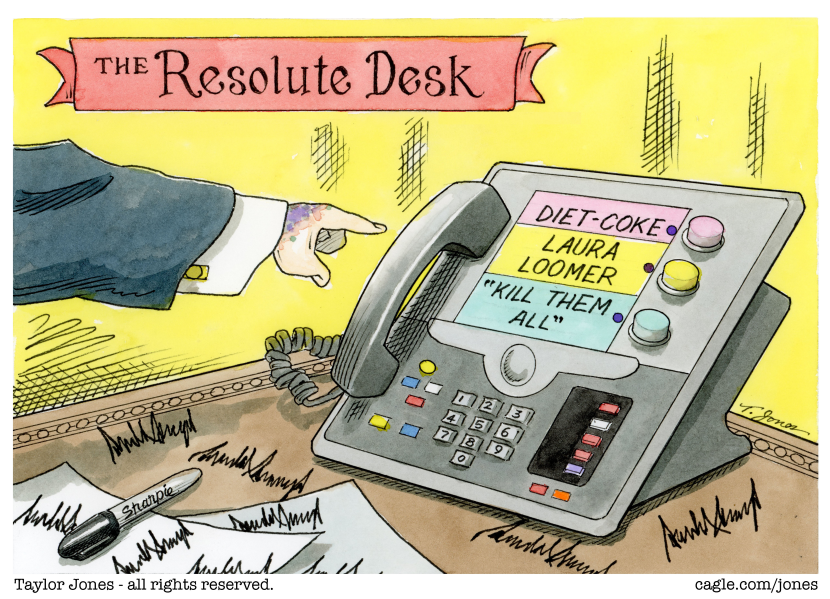
President-elect Trump has selected Kash Patel to lead the FBI, a move that has drawn scrutiny over the nominee's past statements on the bureau and plans for personnel changes. The cartoon portrays the appointment as a threat to the agency's independence, using the J. Edgar Hoover Building as the setting for a direct warning about Patel's influence.
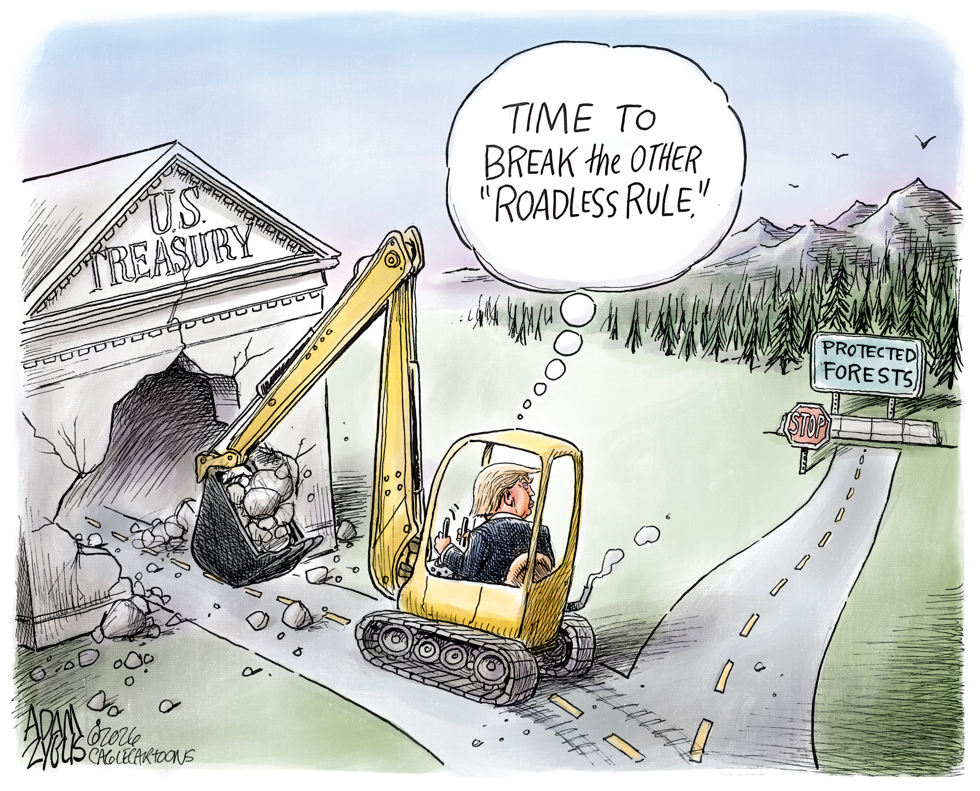
The cartoon shows Donald Trump at the controls of a yellow excavator that has already damaged the U.S. Treasury building. His thought bubble calls for breaking the other Roadless Rule while a sign marks protected forests ahead. The image comments on efforts to open national forests to development by repealing the 2001 Roadless Rule. It links the policy shift to broader questions about federal spending and regulatory priorities. The visual places the Treasury in the path of the machine to suggest fiscal or institutional costs alongside environmental changes.
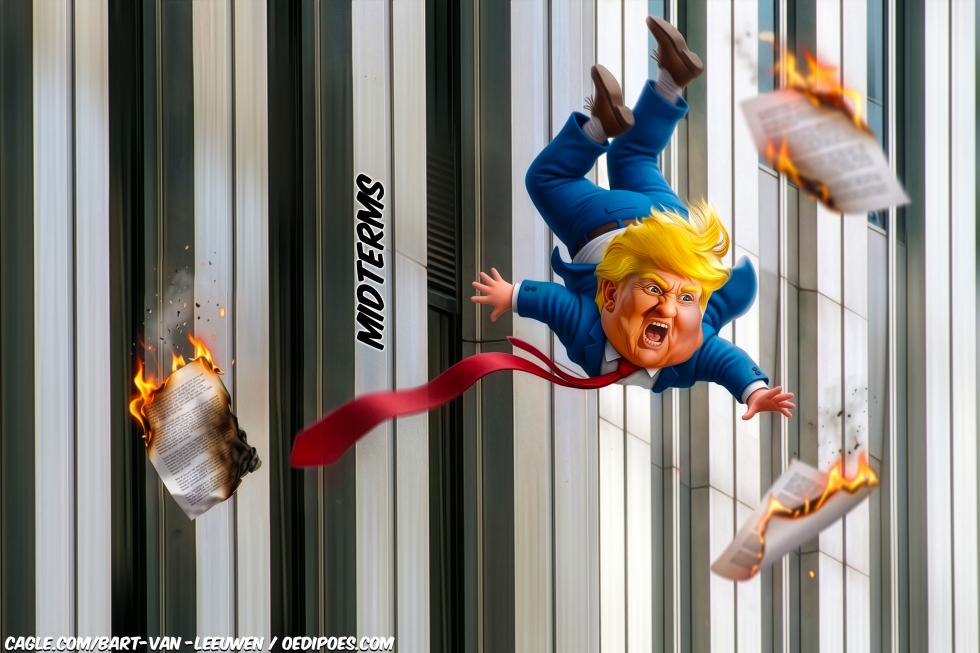
The cartoon shows a caricature of Donald Trump tumbling from a tall building while clutching at burning documents. Vertical lettering spells out midterms along the facade. The scene captures the editorial view of Trump's political position weakening ahead of the 2026 elections. Burning papers suggest damaging records or failed policies catching fire. The falling figure with an open mouth conveys alarm and loss of control. Publication occurred on September 9, 2026, during active midterm campaigning.
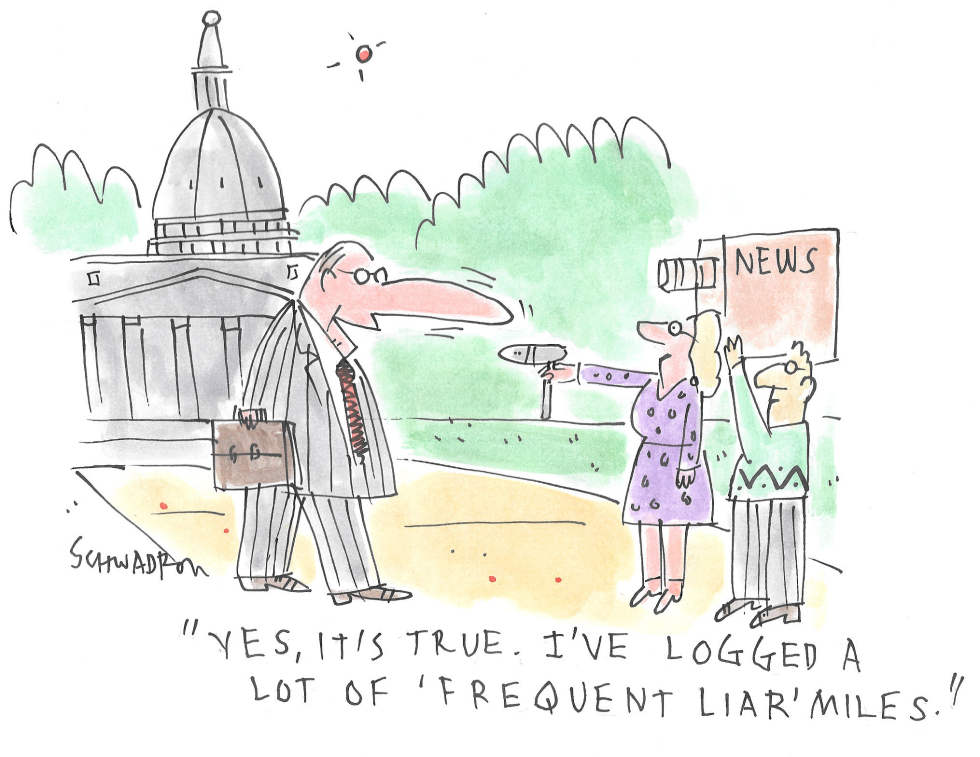
A Capitol politician carrying a briefcase marked GB faces a news interview outside the building and openly acknowledges logging many frequent liar miles. The exchange highlights routine political deception as a normalized practice rather than an exception. The cartoon frames the admission as unremarkable business for those in government.
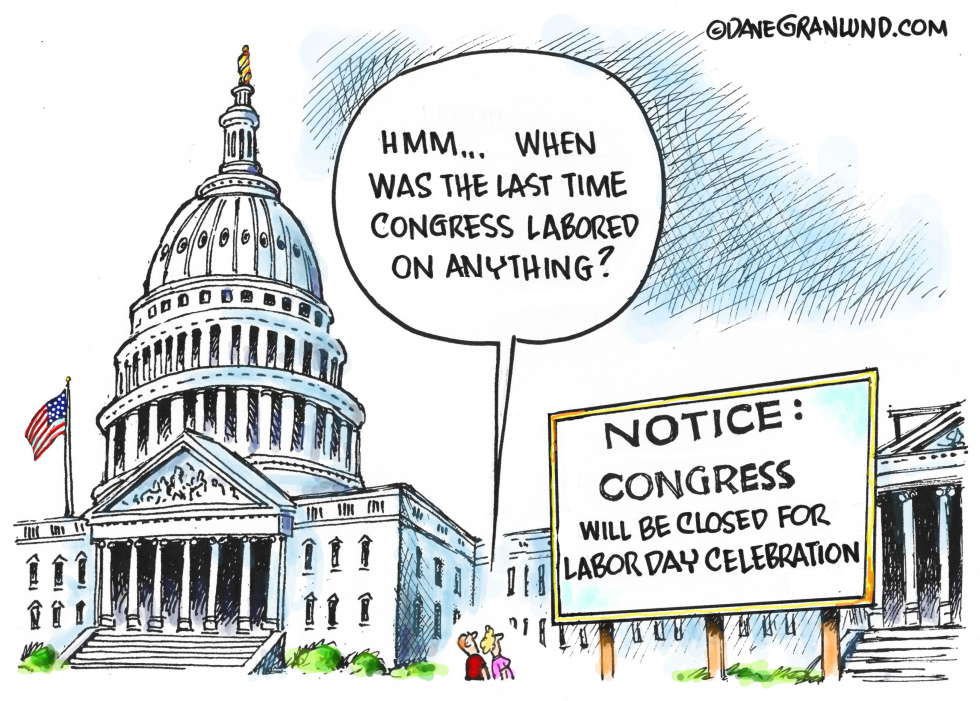
A political cartoon depicts the US Capitol Building with a prominent notice announcing Congress will be closed for Labor Day celebration. A speech bubble from onlookers asks when Congress last labored on anything. The image, dated September 1, 2026, comments on legislative inactivity during a federal holiday. It reflects common public frustration with congressional productivity and frequent recesses. The cartoon uses the holiday to underscore perceptions of limited legislative output in recent sessions.
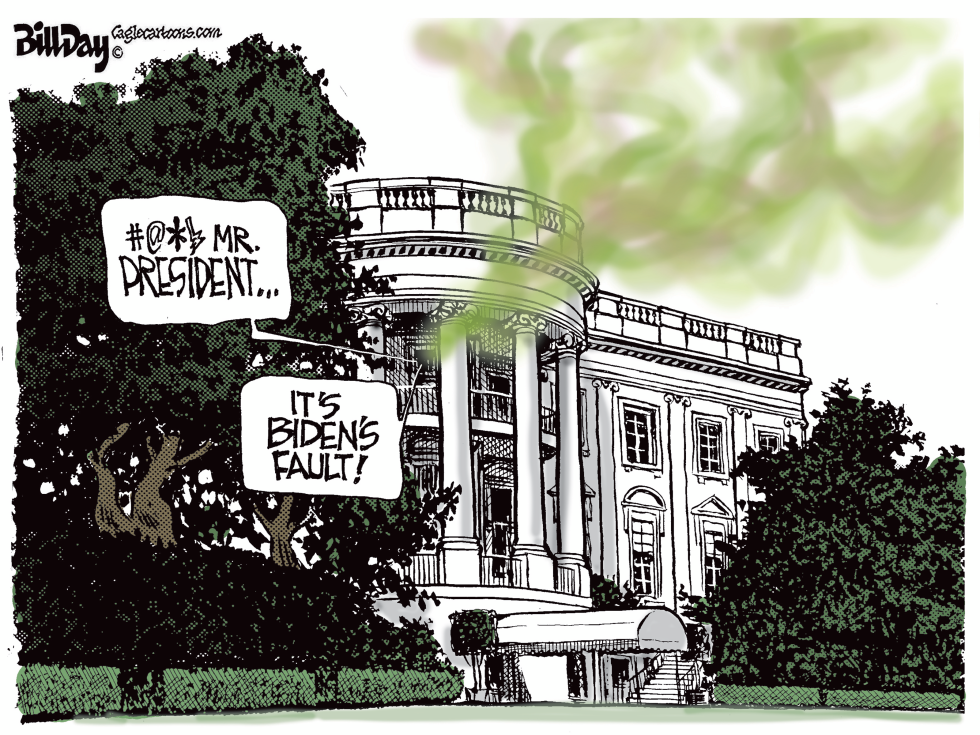
Political discourse continues to center on former President Biden even after his term, with critics attributing various problems to his leadership. The White House remains a focal point for such discussions. The piece takes the position that persistent efforts to assign fault to Biden reflect deeper partisan divisions rather than specific new developments.
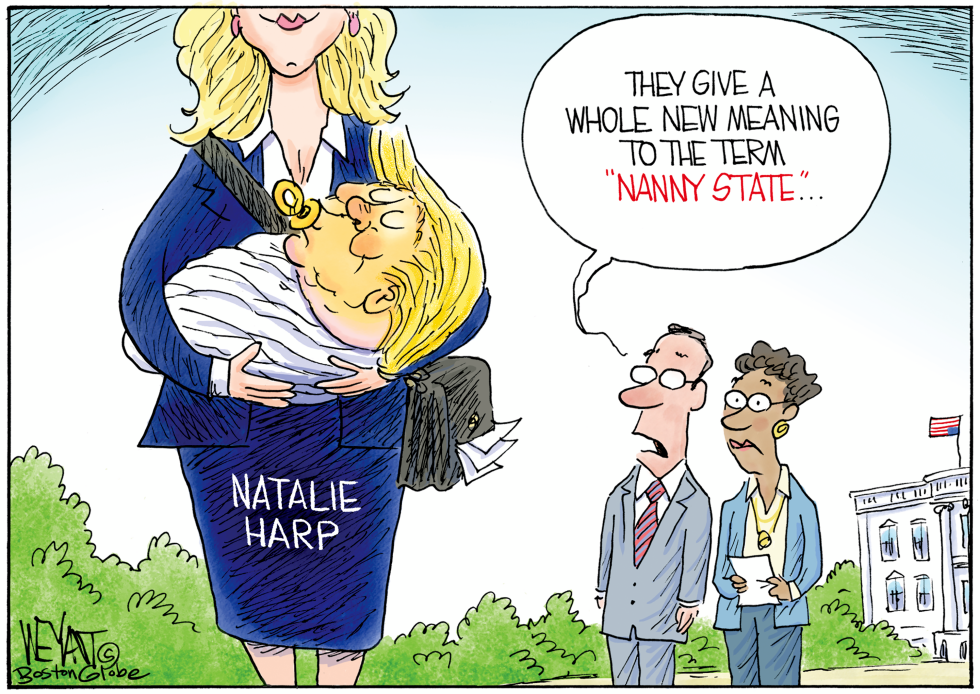
Natalie Harp, a Trump aide, appears in a Boston Globe cartoon holding an infant version of the former president. The image plays on the term nanny state as Harp carries Trump in a carrier. The piece comments on the close personal dynamic between the two figures amid ongoing political developments in 2026.
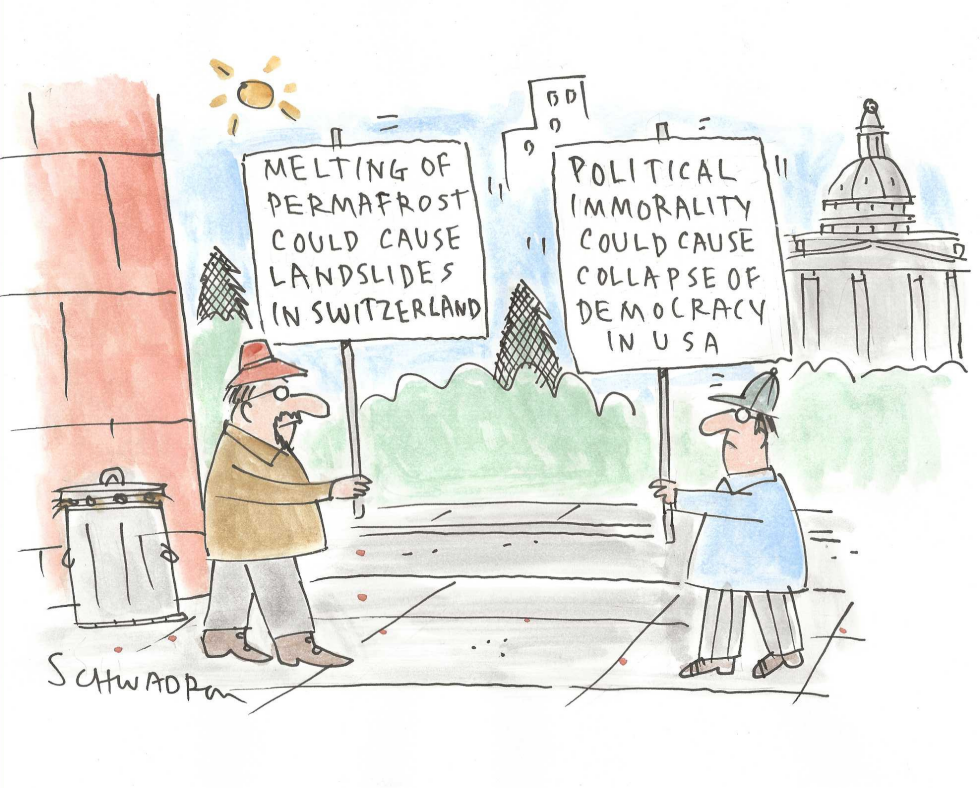
Activists in public spaces continue to draw parallels between accelerating climate impacts such as thawing permafrost and landslides in Switzerland and warnings about political conduct undermining democratic institutions in the United States. The signs highlight how environmental changes and governance failures each carry risks of sudden structural breakdown. The editorial stance underscores that both threats deserve equal public attention as visible warning indicators.
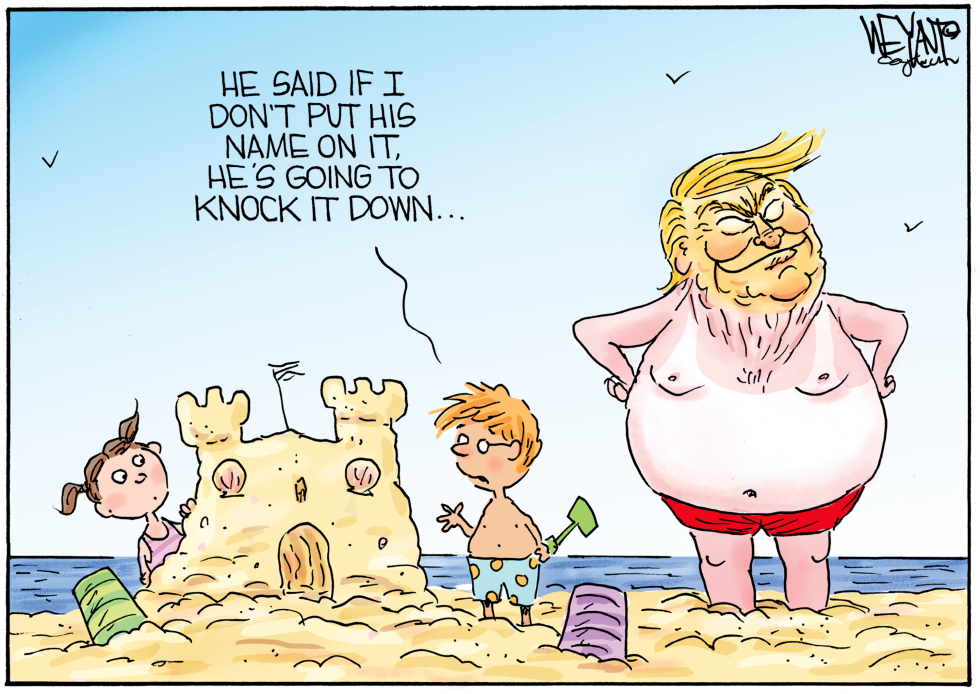
Donald Trump has long pressed for personal credit in public projects and political dealings. The pattern involves demands for recognition that extend even to minor or symbolic matters. This dynamic matters because it reveals how one figure seeks to dominate credit and loyalty across settings. The piece takes the position that such demands reflect an outsized need for acknowledgment that overrides ordinary boundaries.
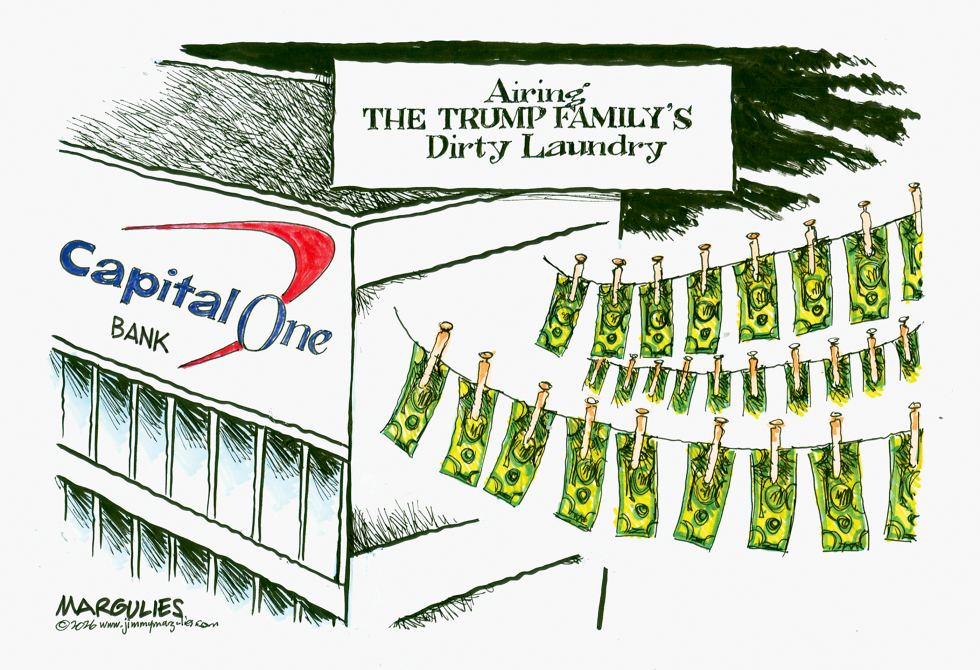
Questions persist over the Trump family's banking relationships and financial disclosures at Capital One. The bank has faced scrutiny for its handling of loans tied to the family businesses. These matters draw attention because they involve a former president and his relatives. Public records and legal filings continue to surface details about debts and repayments. The editorial takes the position that such financial entanglements warrant full transparency to maintain public trust in both political figures and major financial institutions.
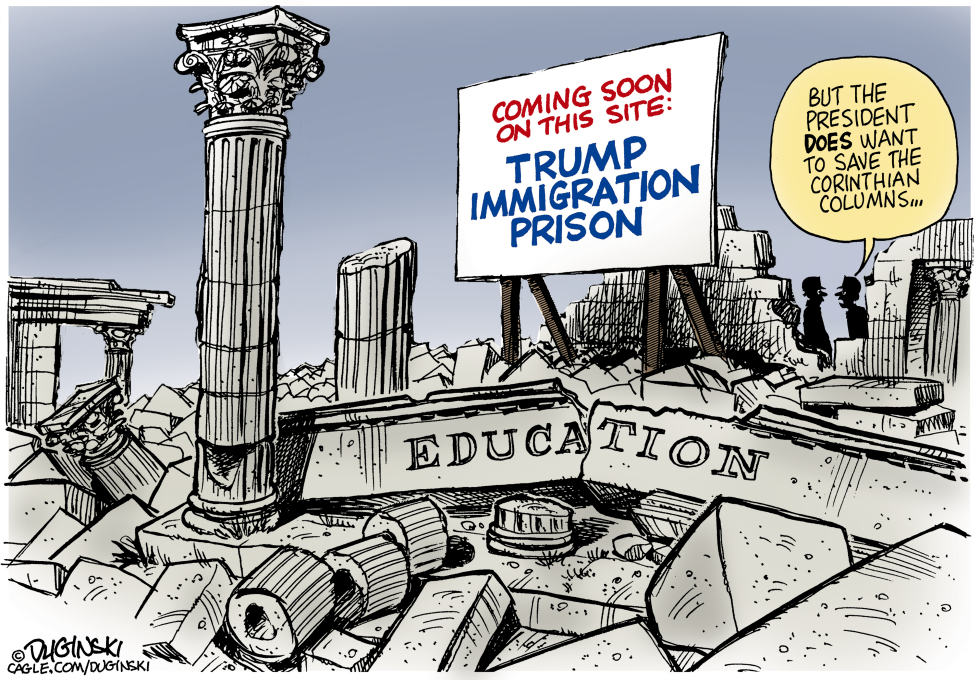
The Trump administration has moved to repurpose a site previously tied to education programs for a new immigration detention facility. The shift reflects ongoing policy emphasis on border enforcement over domestic education support. The piece argues that selective preservation of symbolic elements masks broader institutional damage.
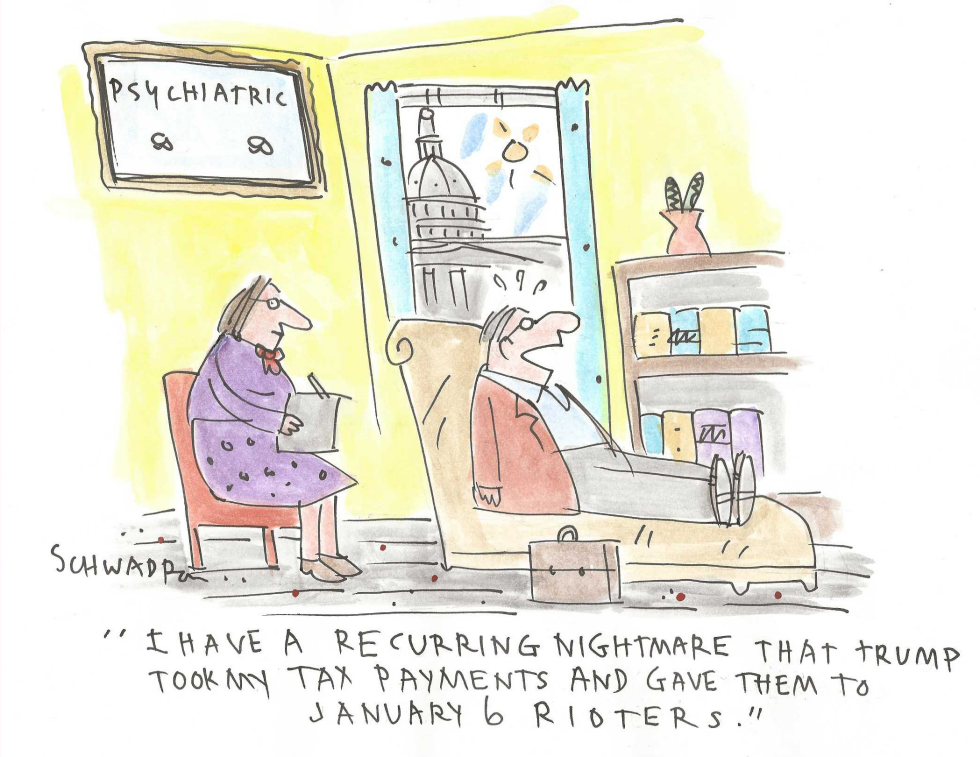
A patient describes a recurring nightmare in which former President Trump diverts tax payments to January 6 rioters. The session reflects persistent public concerns over accountability for the Capitol events and use of public funds. The piece portrays these fears as a continuing source of political unease.
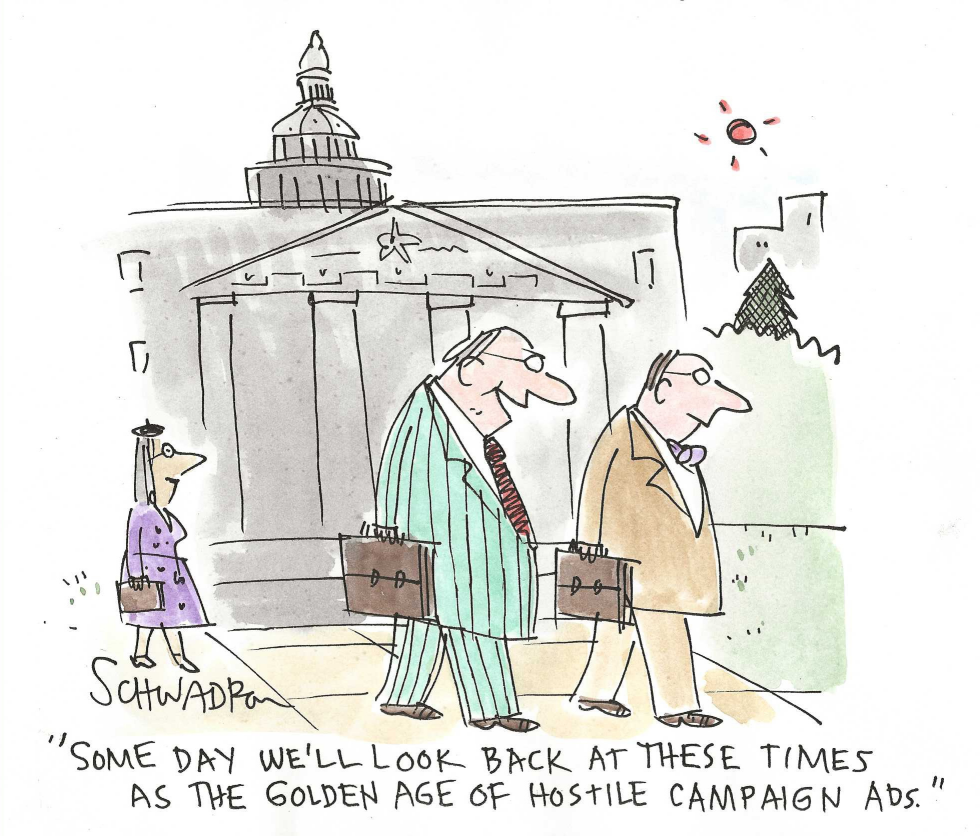
In mid-2026, partisan campaign rhetoric remains sharply negative with Democrats and Republicans trading attacks through ads and statements. The ongoing dynamic highlights deepening divides in Washington. The piece suggests these contentious times may later be viewed more favorably than current participants expect.
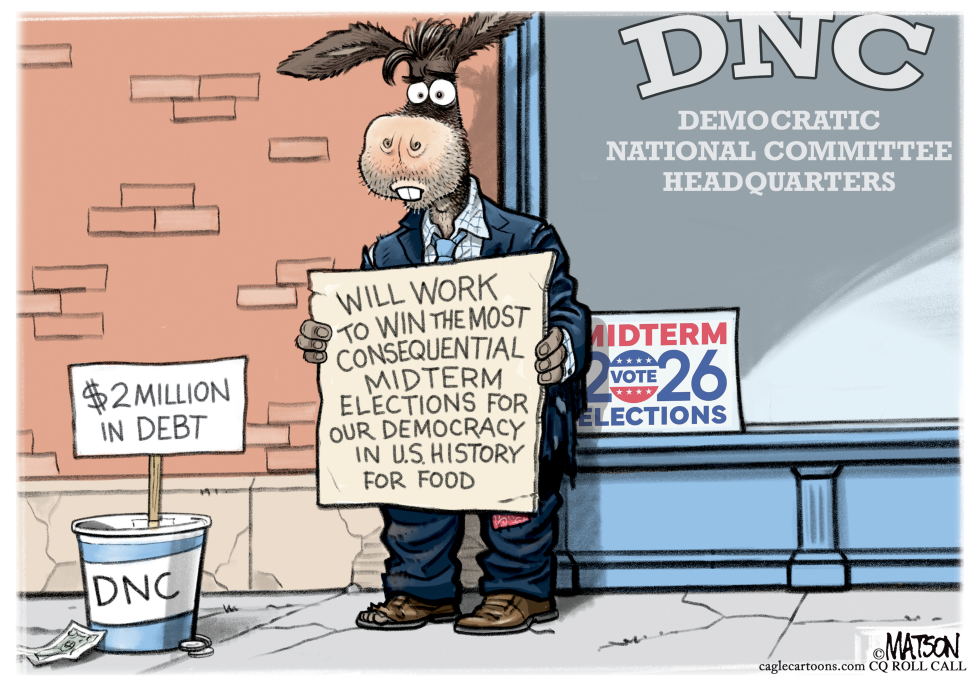
The Democratic National Committee faces a reported $2 million debt as it prepares for the 2026 midterm elections. The party headquarters displays signs of financial strain while promoting the contests as pivotal for democracy. The editorial position criticizes the DNC for prioritizing election rhetoric over addressing its fiscal problems.
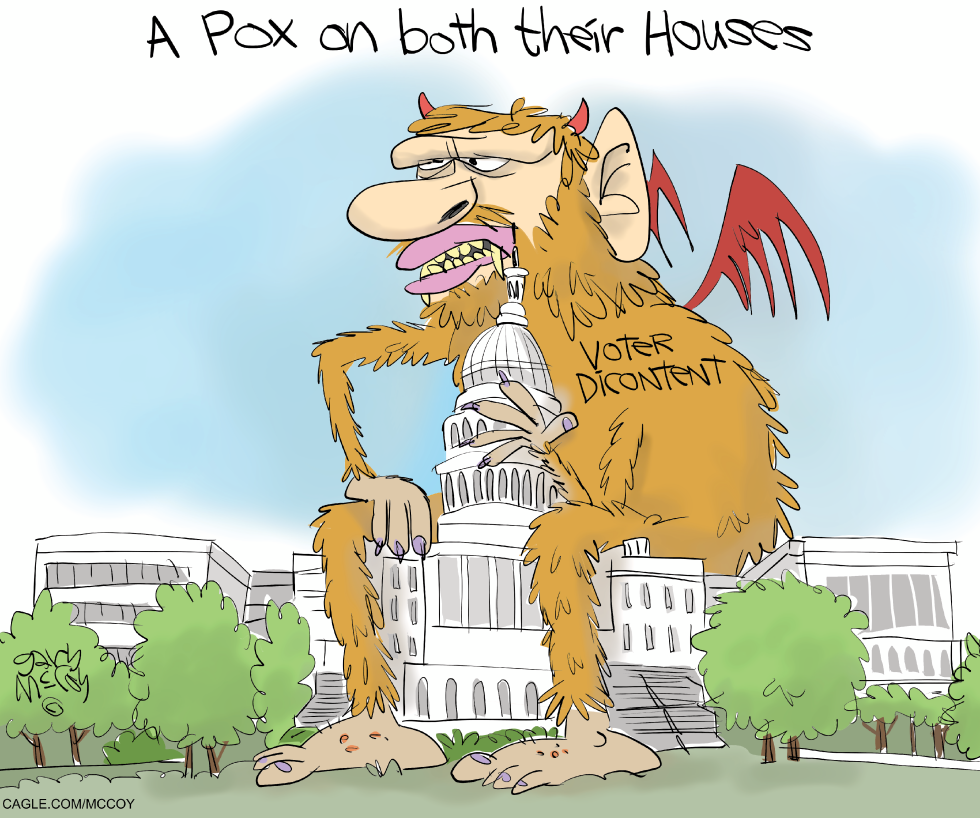
Voter frustration with Congress has grown amid stalled legislation and partisan gridlock on Capitol Hill. The piece portrays this sentiment as a towering monstrous force looming over the legislative branch. It argues that public anger targets both parties equally for failing to address key issues.