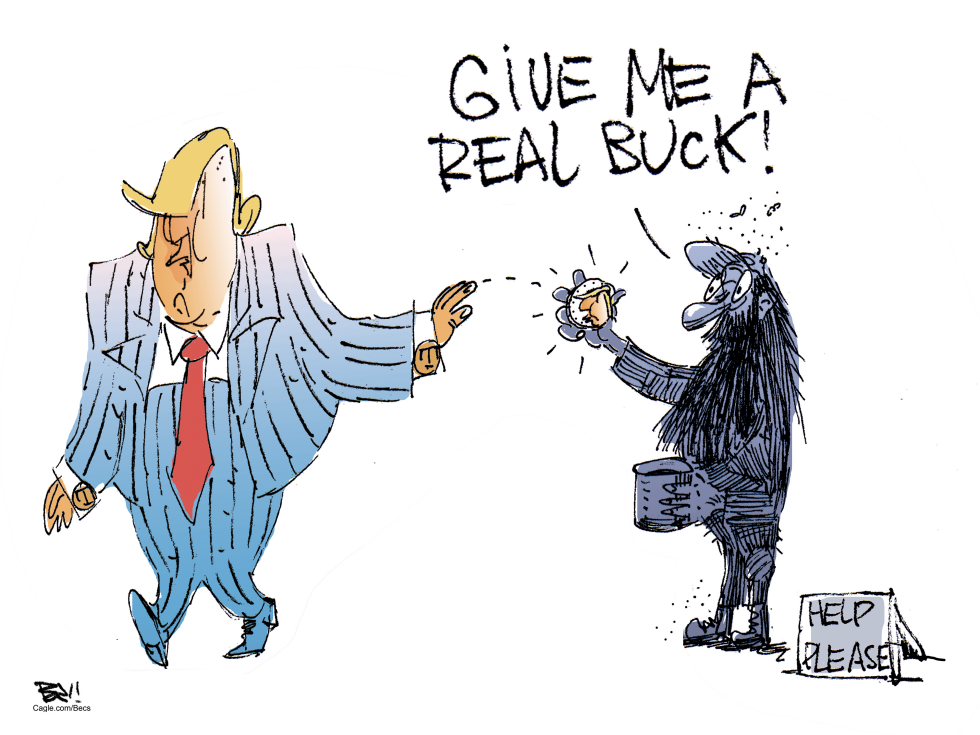
Donald Trump promotes a dollar bearing his image as a symbol of economic strength. The move draws immediate public pushback questioning its actual worth. Critics argue the branding fails to address underlying fiscal challenges. The cartoon frames the dollar as an unconvincing substitute that fails to satisfy basic needs for credible value.
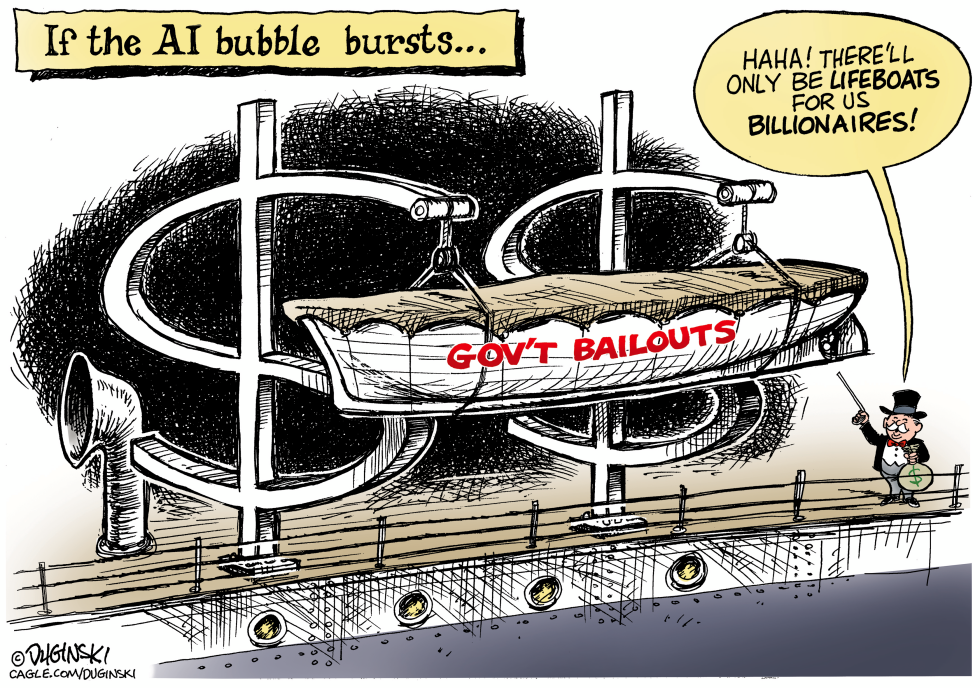
Speculation grows over potential government intervention if the artificial intelligence sector experiences a sharp downturn. Industry leaders and investors face questions about whether public funds would support failing companies. The editorial argues that any such support would primarily protect billionaires rather than address wider economic fallout from overvalued tech assets.
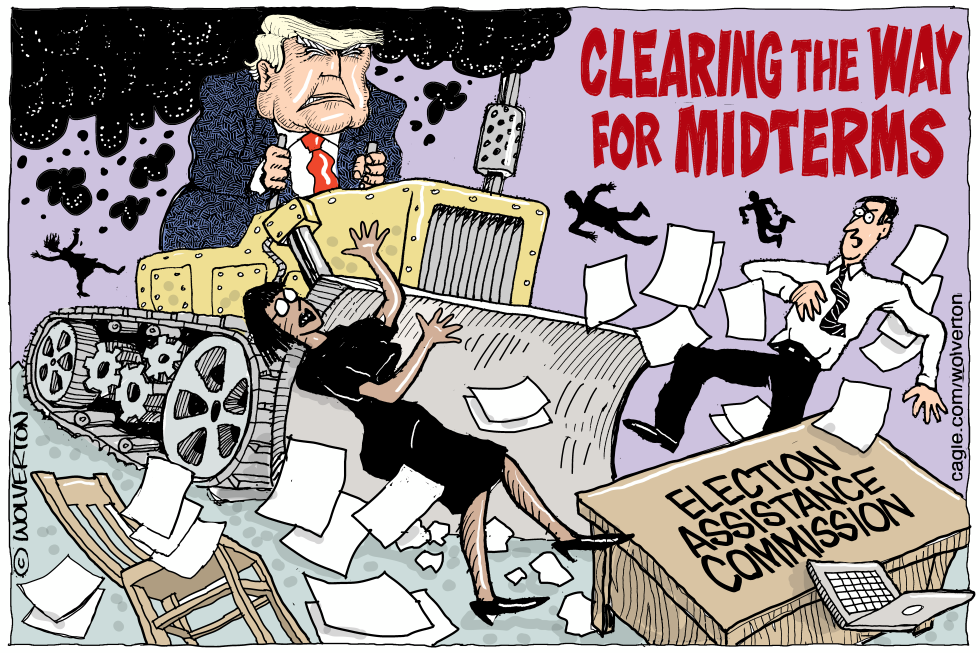
The cartoon by Monte Wolverton shows Donald Trump operating a bulldozer labeled Clearing the Way for Midterms. The vehicle crushes a woman and flattens the Election Assistance Commission desk while scattering papers and figures. It responds to ongoing debates over election administration and midterm preparations as of July 2026. The image uses the bulldozer as a metaphor for aggressive efforts to reshape election processes.
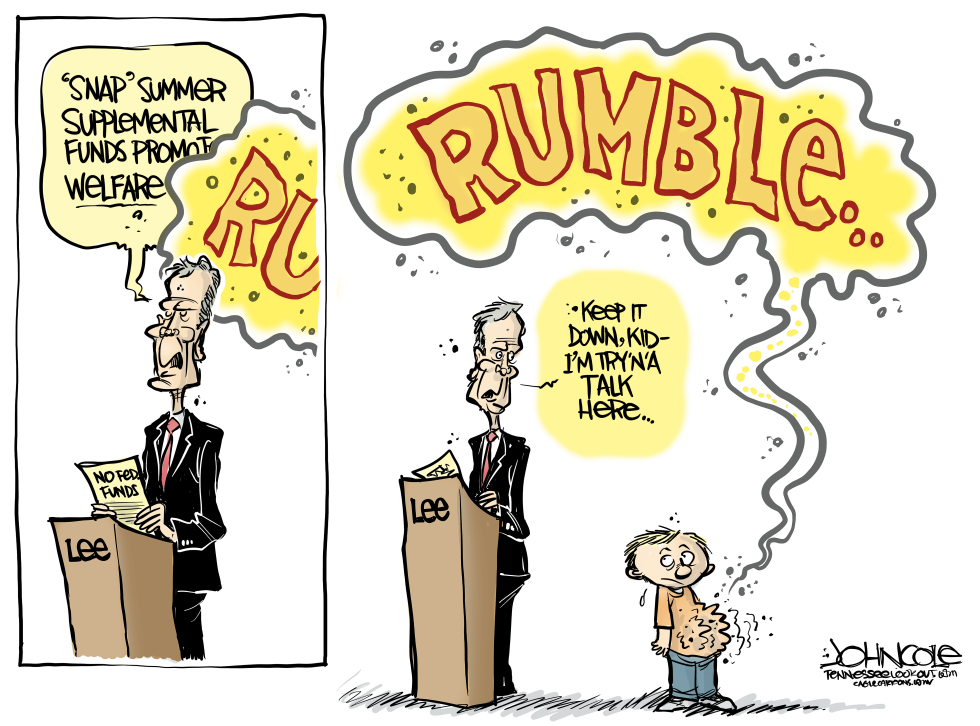
Tennessee Governor Bill Lee has declined federal SNAP summer supplemental funds, arguing the program promotes welfare. The cartoon depicts Lee at a podium holding papers marked no fed funds while a speech bubble criticizes the assistance. Nearby a hungry child with a rumbling stomach stands ignored as Lee tells the child to keep quiet. The image highlights the tension between state policy choices and immediate child needs during summer months when school meals are unavailable.
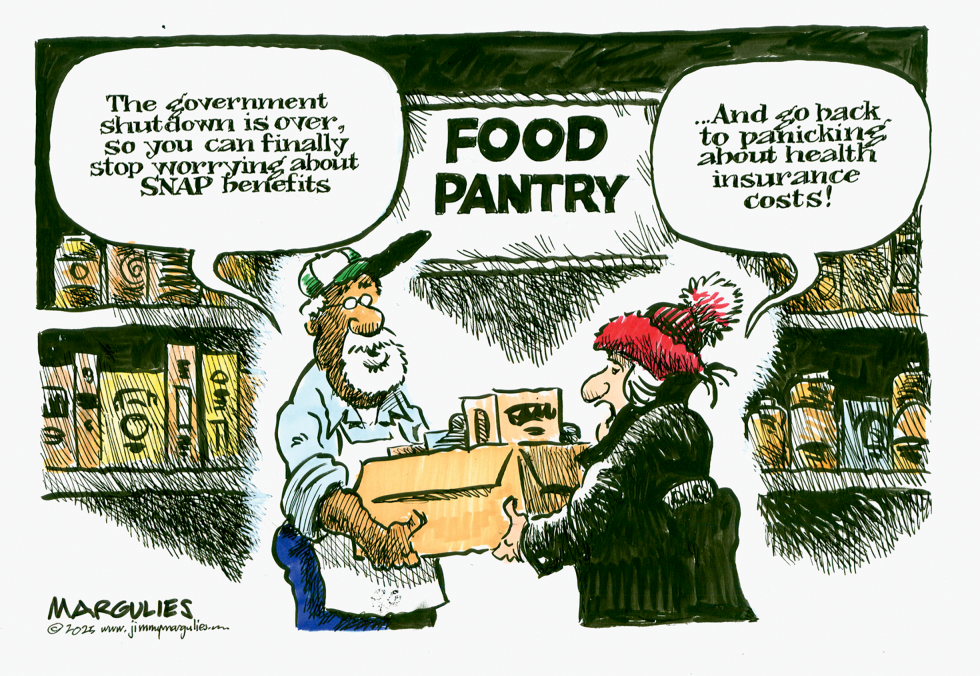
The cartoon depicts a food pantry volunteer informing an elderly woman that the government shutdown has ended, allowing her to stop worrying about SNAP benefits. The second speech bubble immediately pivots to renewed panic over health insurance costs. The scene references the Affordable Care Act subsidies and food assistance programs. It responds to the November 2025 resolution of a federal funding impasse that had threatened SNAP distributions. The work underscores how temporary relief on one front leaves recipients facing ongoing uncertainty on another. Broader context includes debates over extending enhanced ACA premium subsidies set to expire after 2025.
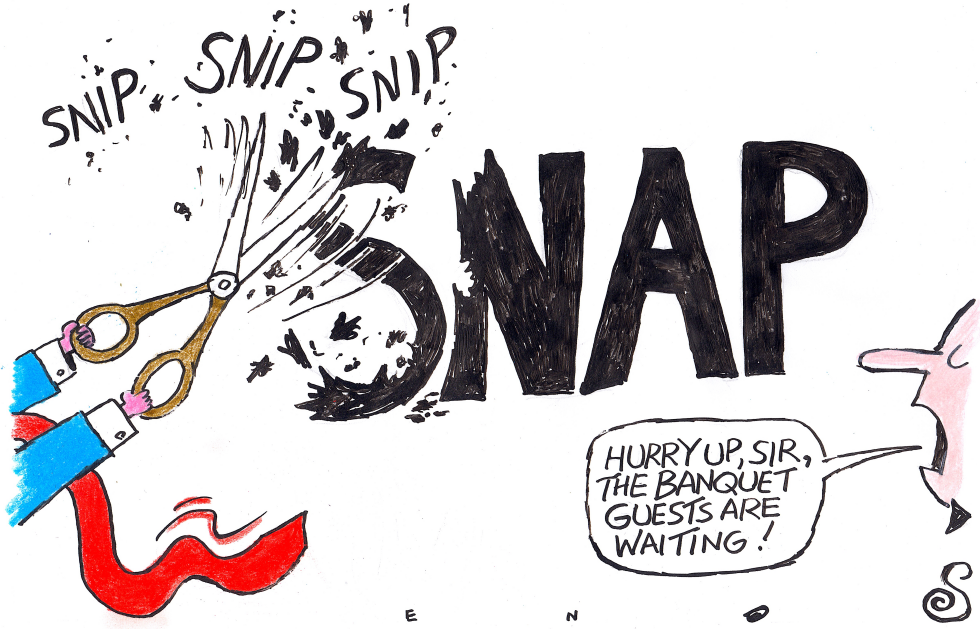
The cartoon depicts a hand wielding scissors to cut the letters of SNAP, the Supplemental Nutrition Assistance Program. A speech bubble urges haste for banquet guests. This visual responds to reports of proposed cuts to food stamps under the Trump administration in late 2025. The contrast highlights perceived priorities between lavish events at Mar-a-Lago and reductions in nutrition assistance for Americans facing hunger. The piece uses the act of cutting to symbolize policy changes affecting low-income households.
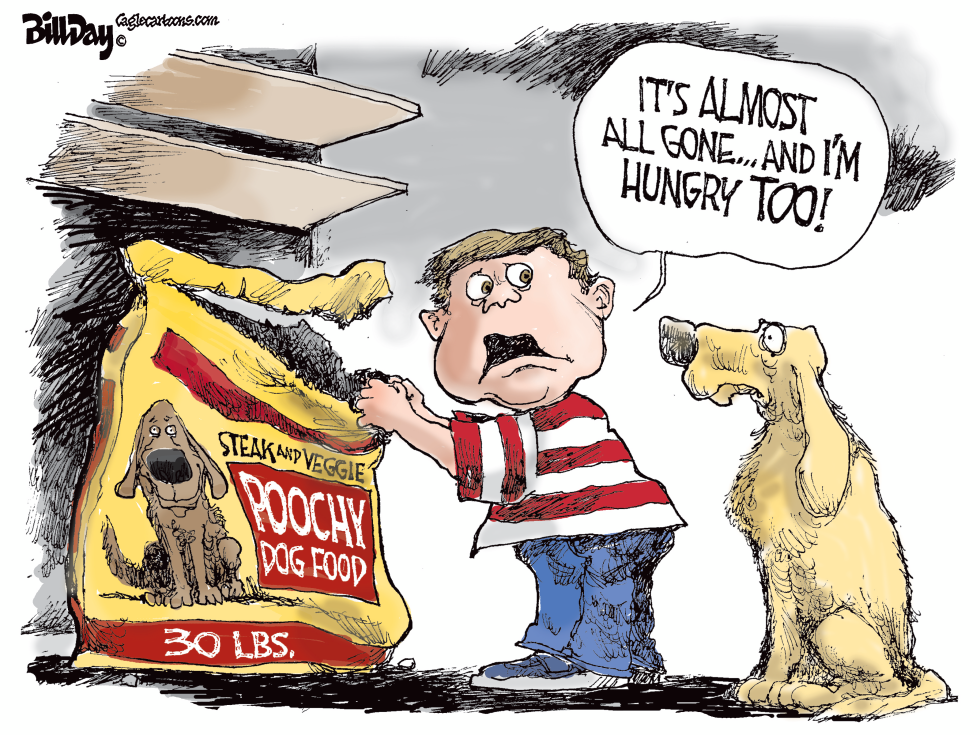
The cartoon depicts a young boy in a striped shirt desperately eating from a torn 30-pound bag of Poochy Steak and Veggie dog food as a concerned dog looks on. His speech bubble reads, 'IT'S ALMOST ALL GONE... AND I'M HUNGRY TOO!' Published November 8, 2025, the image responds to disruptions in the SNAP food assistance program linked to a government shutdown and recent Supreme Court actions involving judges. It illustrates the human cost of delayed benefits, showing how families face acute hunger when federal support stalls. The visual uses the dog food bag as a stark symbol of the program's failure to meet basic needs for children.
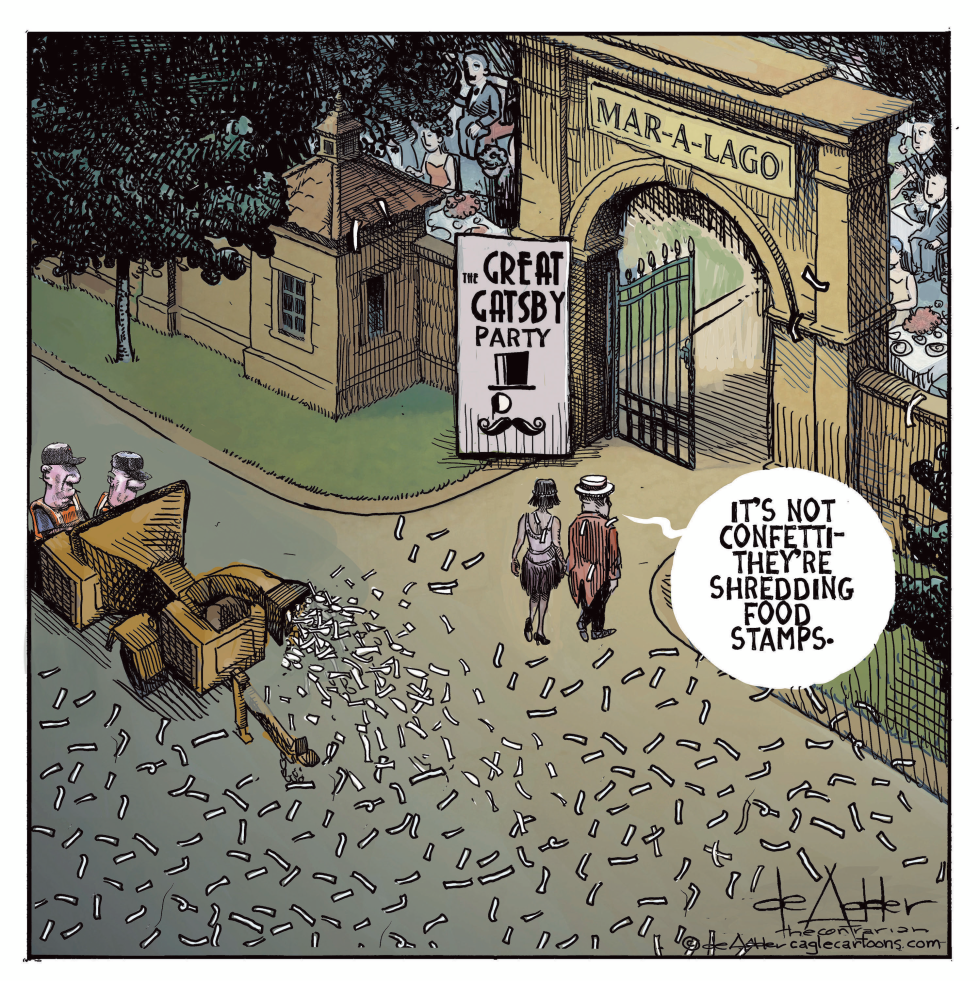
The cartoon by Michael de Adder depicts a Great Gatsby party at Mar-a-Lago where food stamps are shredded instead of confetti. It responds to ongoing debates over SNAP funding and cuts proposed by Republican leaders including Donald Trump. The visual uses the iconic novel's excess to highlight perceived indifference to low-income Americans reliant on nutrition assistance.
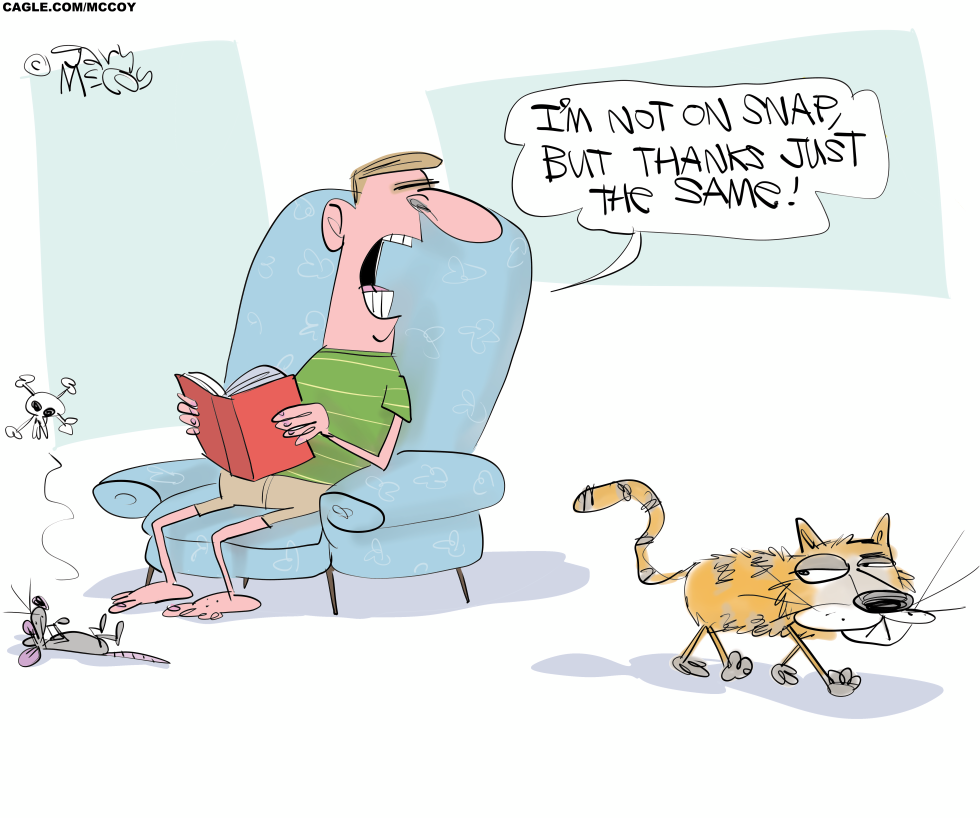
The cartoon depicts a man seated in an armchair who rejects a bandaged cat's offer of a mouse on a plate, declaring he is not on SNAP. The scene comments on debates over Supplemental Nutrition Assistance Program funding during government budget negotiations between parties. It highlights public attitudes toward food aid amid concerns about hunger and program cuts.
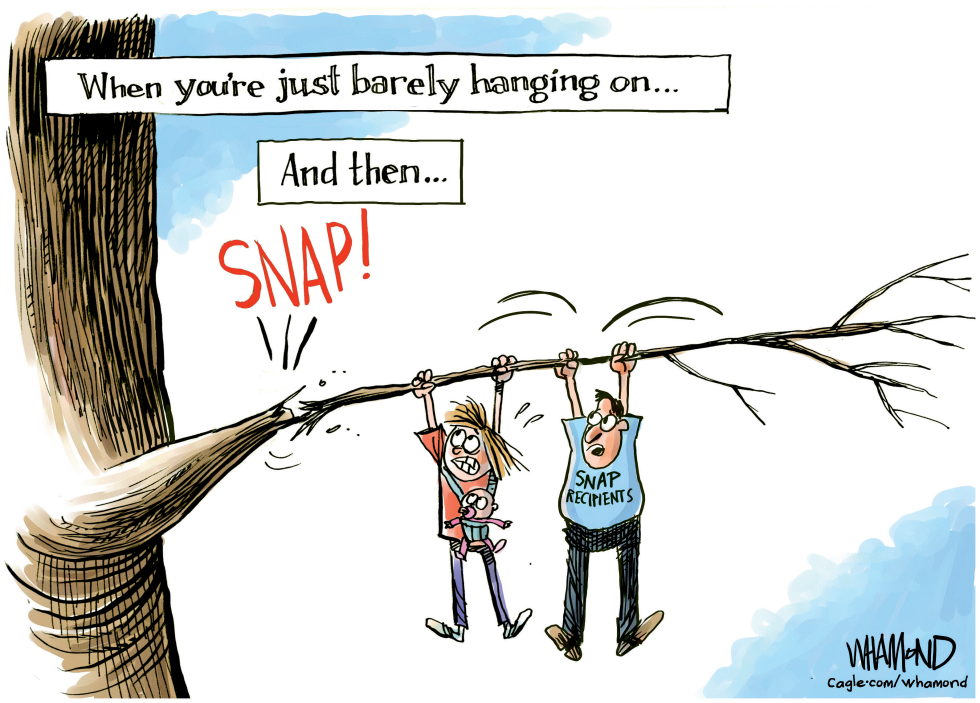
The cartoon depicts two adults and a child clinging to a tree branch that snaps under their weight. The scene illustrates the sudden cutoff of SNAP benefits. Text in the image highlights the precarious position of recipients. The work responds to reports of federal food assistance funding running dry. It ties the visual break to ongoing budget negotiations involving Speaker Johnson and the GOP. The piece underscores worries for families relying on the program. Broader context includes potential links to a government shutdown and ACA discussions. The argument centers on the abrupt impact on 42 million Americans.
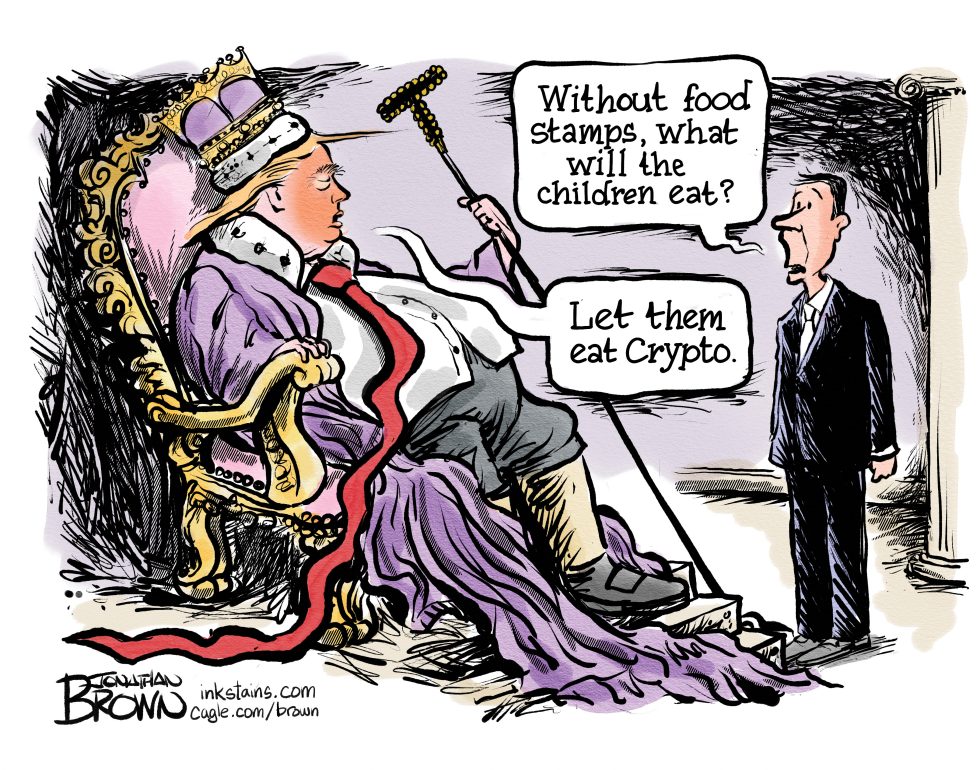
The image depicts Donald Trump dressed in royal attire on a throne responding to a question about food stamps during a government assistance halt. The suited figure asks what children will eat without SNAP benefits. Trump replies by suggesting crypto as the solution. This draws on the publication date of October 27 2025 when SNAP program disruptions were under discussion. The visual frames the response as detached from everyday economic pressures faced by recipients.
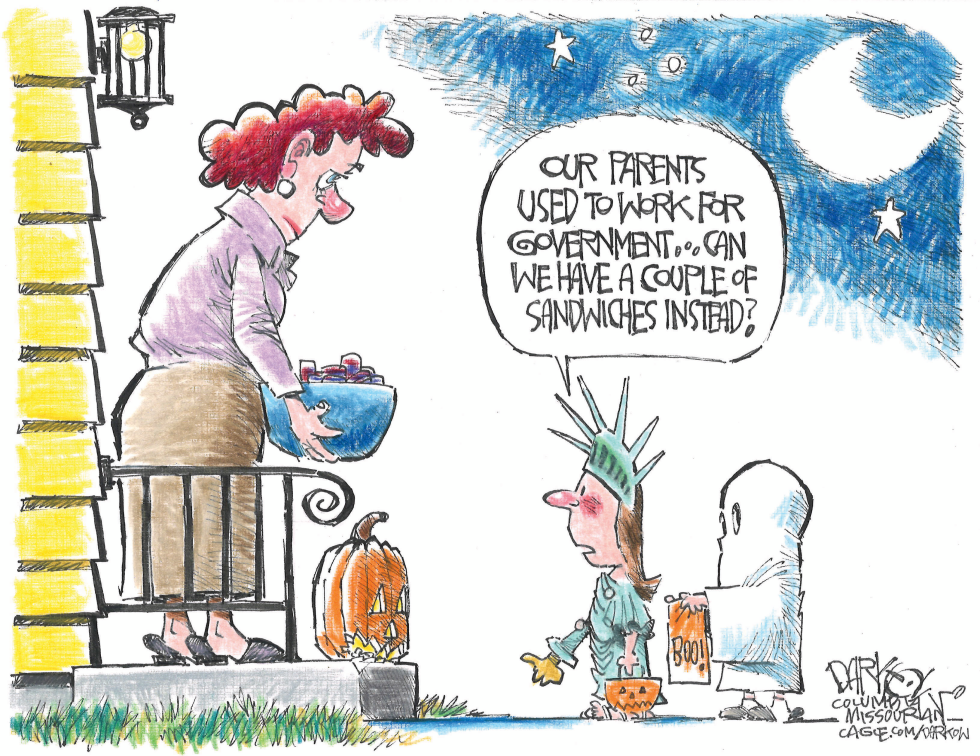
A political cartoon depicts two children trick-or-treating at a suburban home on Halloween night during a government shutdown. One child dressed as the Statue of Liberty asks a woman on the porch for sandwiches because their parents worked for the government and now face furloughs. The scene references food banks and soup kitchens as families seek alternatives amid the shutdown.
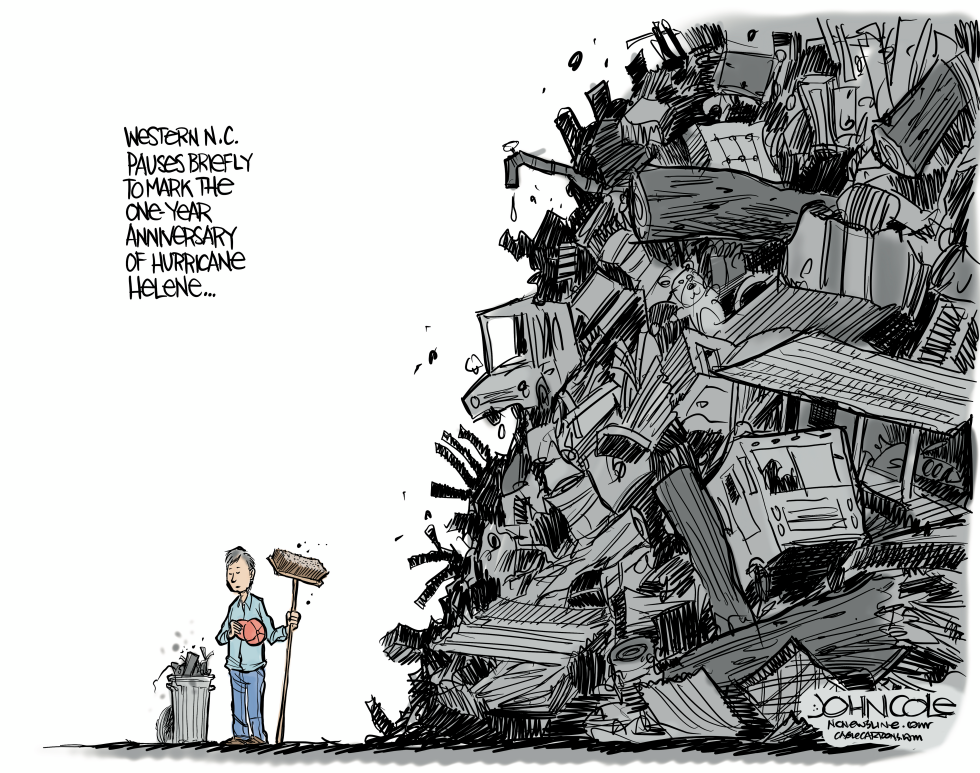
The cartoon depicts a Western North Carolina resident standing with a broom and dustpan before a towering heap of storm wreckage on the one-year anniversary of Hurricane Helene. Text notes the brief pause to mark the date. The image contrasts the single figure's small cleanup effort with the overwhelming volume of debris, highlighting the slow pace of recovery and the limits of available resources one year after the September 2024 storm.