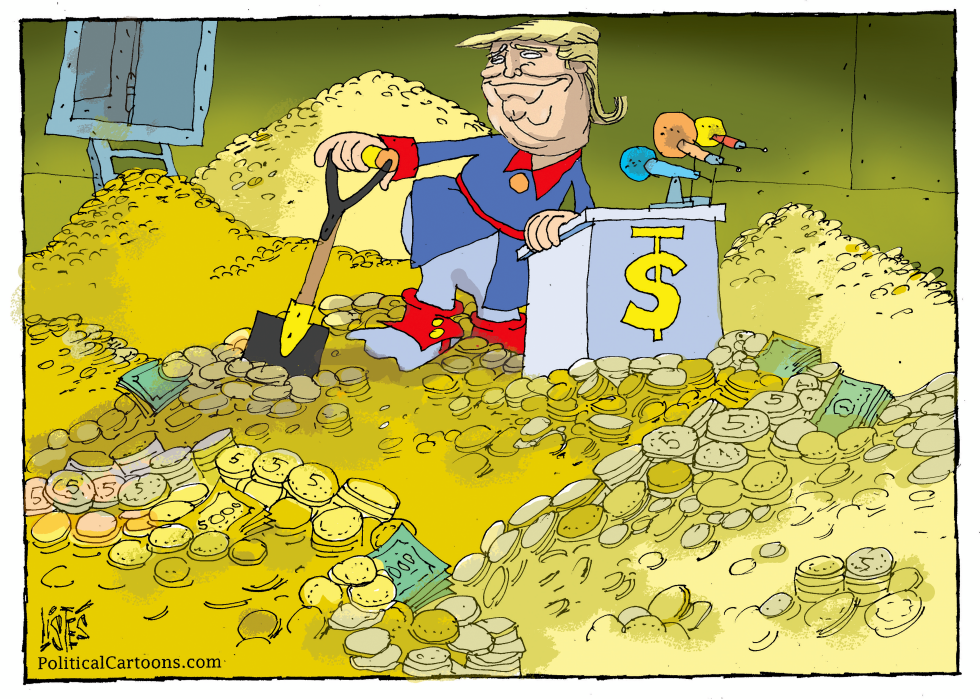
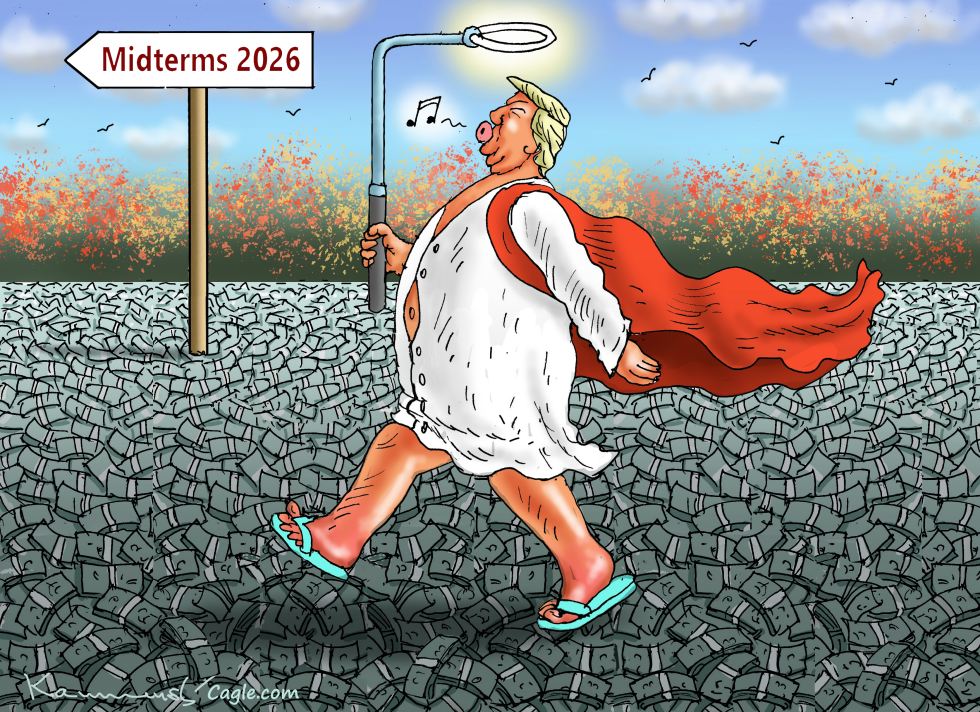
Donald Trump remains a central figure in debates over wealth and political power as of September 2026. The cartoon responds to ongoing scrutiny of how personal fortune intersects with public life and policy influence. It portrays the former president amid symbols of money to critique that dynamic. The editorial position frames Trump's association with wealth as a defining and problematic feature of his political presence.
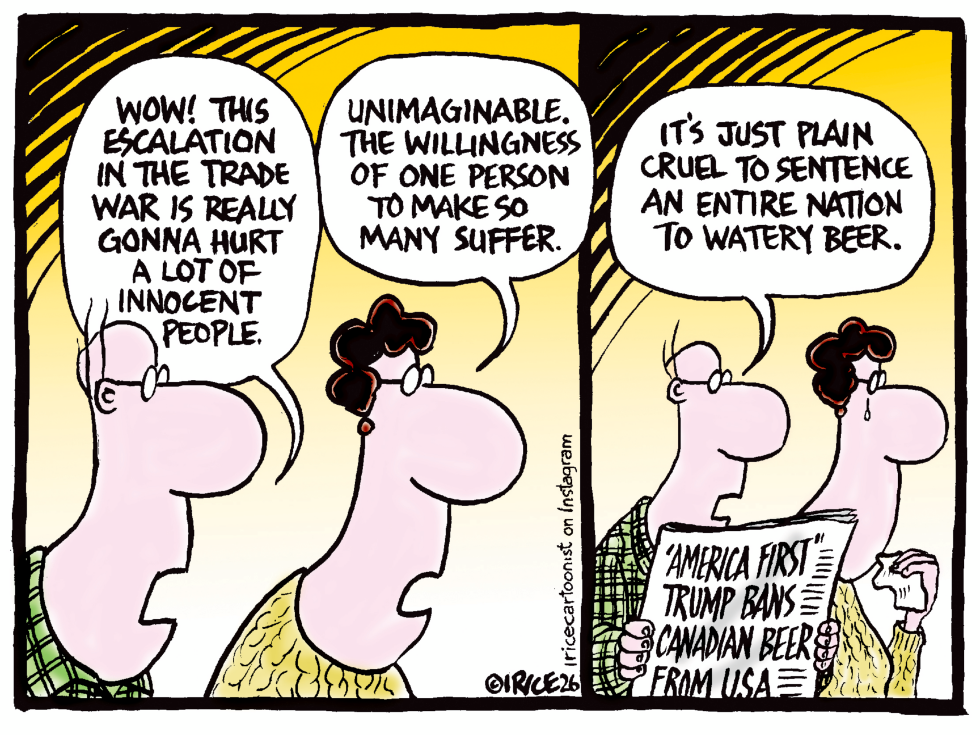
President Trump announced a ban on Canadian beer imports as part of an escalating trade dispute with Canada. The move, framed under the America First banner, immediately drew criticism for punishing ordinary citizens on both sides of the border. The policy extends earlier tariff threats into consumer goods, raising prices and limiting choices for American drinkers. Canadian exporters face sudden market loss while U.S. retailers scramble for alternatives. The editorial cartoon portrays the decision as petty and disproportionate, arguing that one leader's willingness to inflict broad pain reveals the human cost of personal political theater.
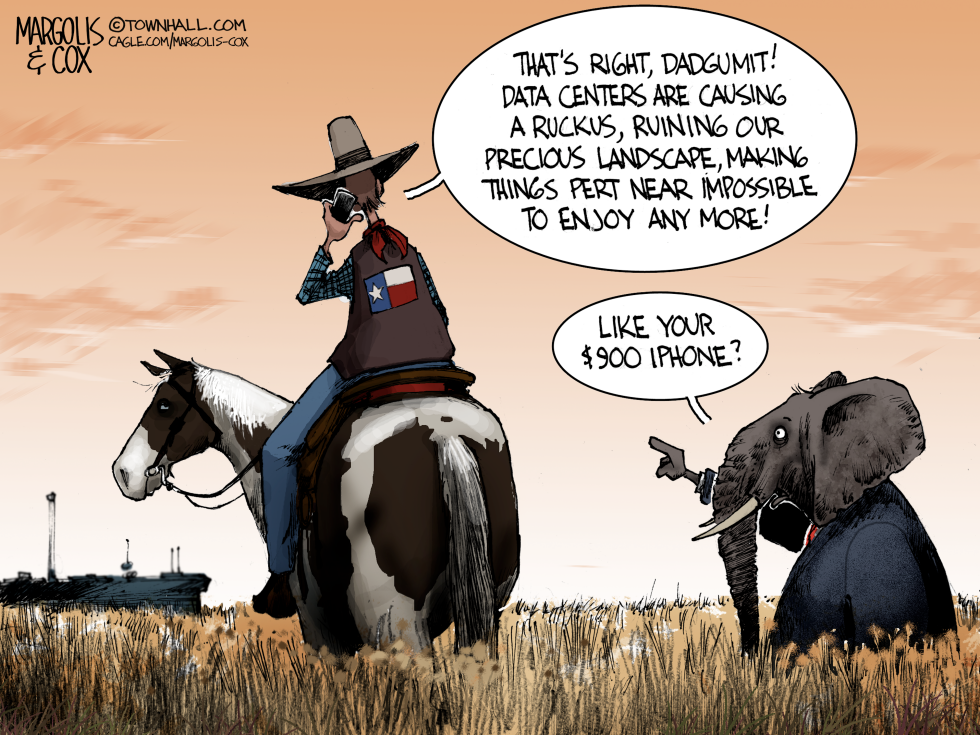
Data centers are expanding rapidly across Texas to support growing digital demands, drawing complaints from local residents and officials over land use and visual impact. Republicans in the state have voiced concerns about the facilities altering rural scenery and affecting quality of life. The cartoon highlights the inconsistency in such criticism given widespread reliance on smartphones and other tech products that necessitate these centers.
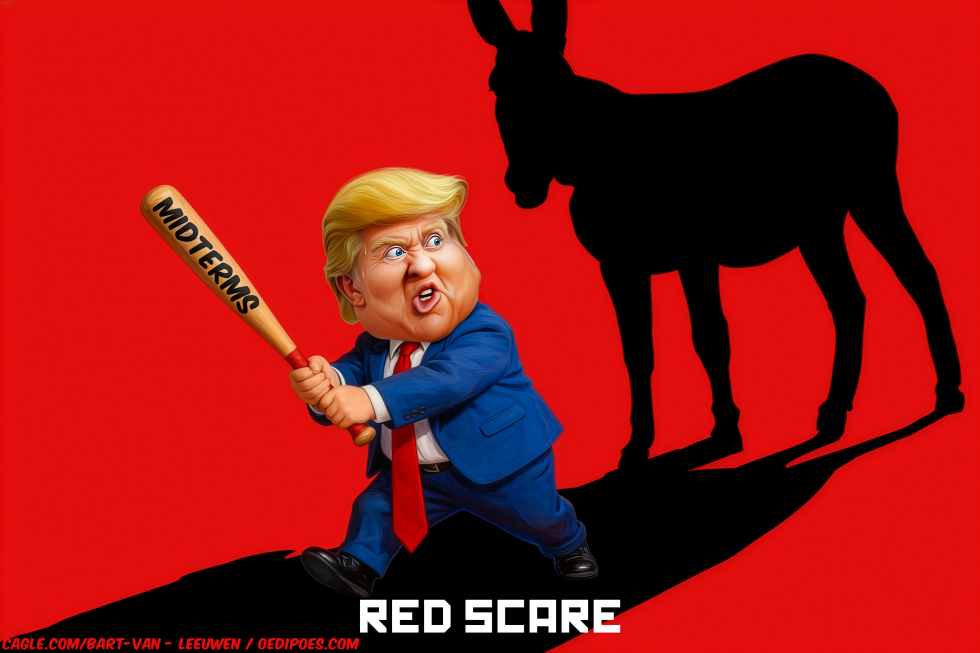
The cartoon shows Donald Trump in a blue suit swinging a baseball bat labeled MIDTERMS toward a black donkey silhouette on a red background. The phrase RED SCARE appears prominently at the bottom. Published on September 14, 2026, the image comments on Trump's approach to the upcoming midterm elections. It portrays the former president as aggressively pursuing Democratic opponents. The visual draws on historical Red Scare imagery to suggest fear-based political tactics. The composition places Trump in the foreground with the donkey shadow looming behind him.
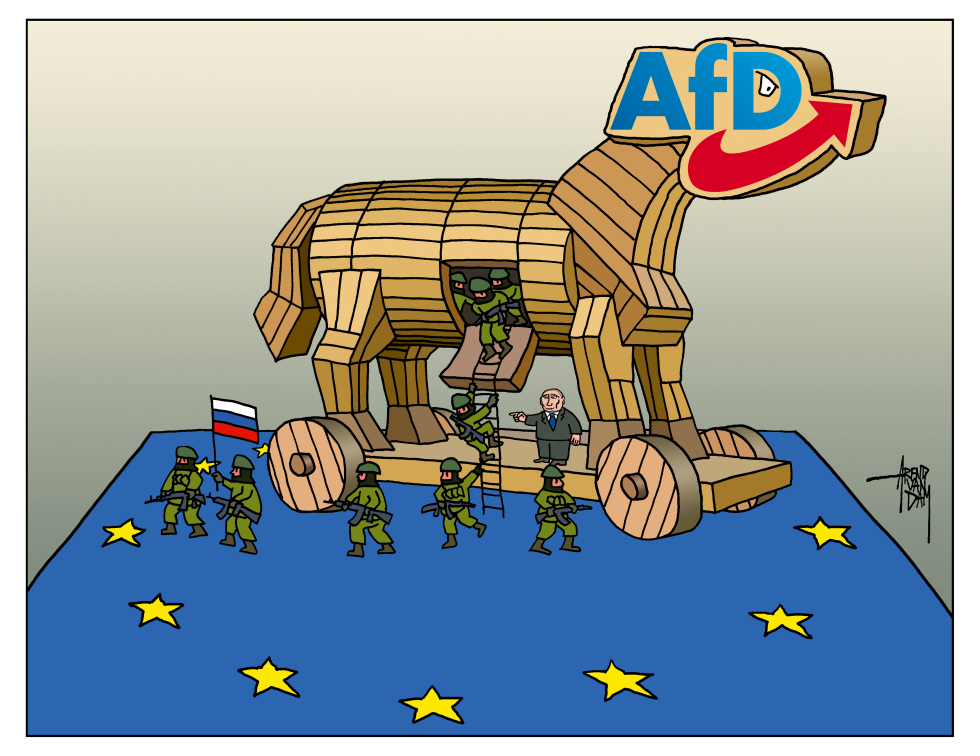
The AfD party in Germany faces accusations of serving as a conduit for Russian influence operations targeting the EU. Vladimir Putin benefits from the far-right group's rising profile ahead of elections, using it to sow division and weaken European unity. The cartoon portrays this dynamic as a classic Trojan horse tactic, with Russian troops emerging from the AfD structure on EU soil. Critics argue the party's policies align too closely with Kremlin interests, undermining NATO and EU cohesion at a critical time. The editorial stance warns that ignoring these ties risks strategic vulnerability for Europe.
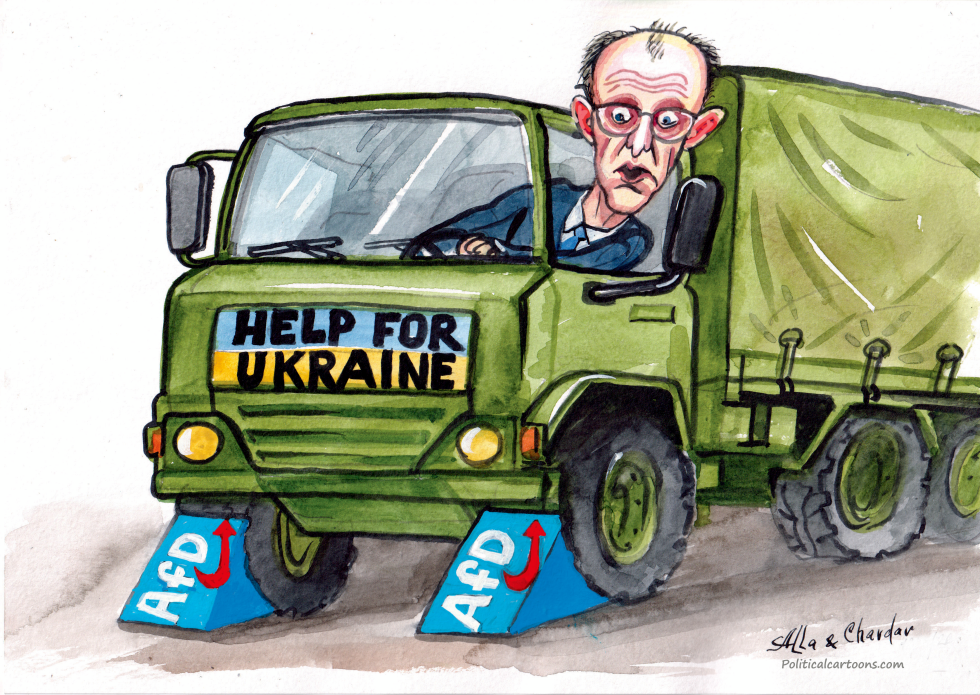
The cartoon depicts a green truck labeled Help for Ukraine stopped by blue AfD wheel chocks. A caricature of an AfD leader sits in the driver's seat. The image comments on the party's opposition to continued German military aid for Ukraine as of September 2026. AfD has consistently voted against additional support packages in the Bundestag. The visual uses the truck and chocks to illustrate the party's blocking role in foreign policy debates.
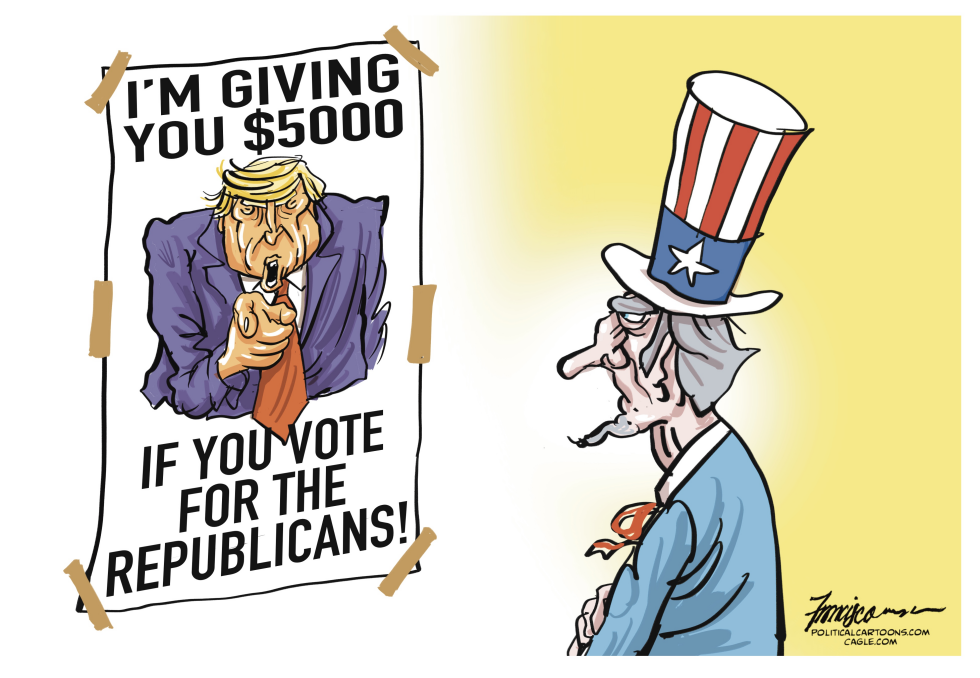
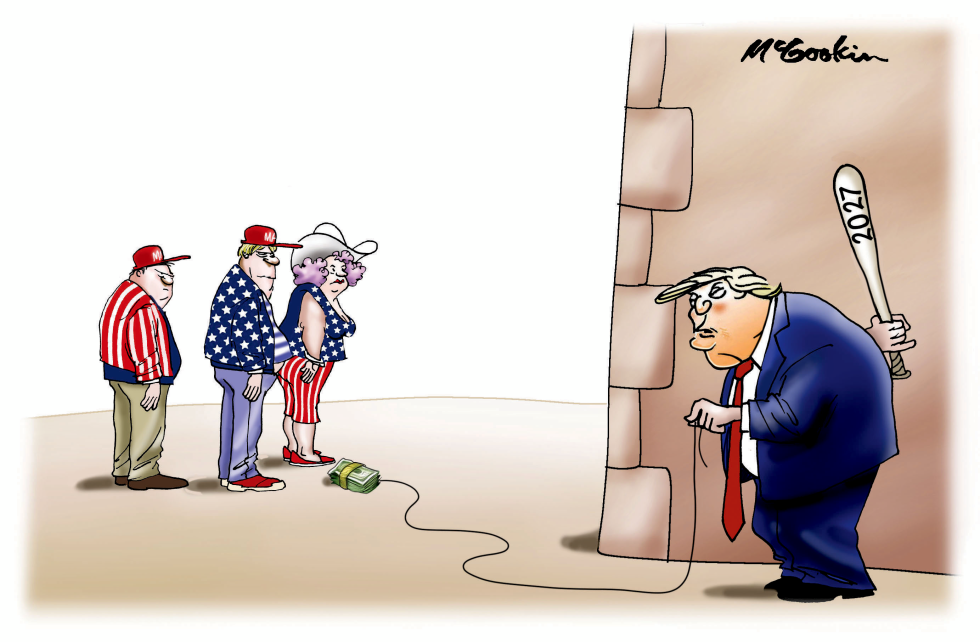
Donald Trump has floated direct cash payments to voters who support Republican candidates. The proposal surfaces weeks before the 2026 midterms and draws immediate scrutiny over its legality and intent. Critics argue the move risks turning elections into auctions. Supporters frame it as economic relief. The cartoon depicts the offer as a blunt transaction that leaves traditional symbols of American integrity uneasy.
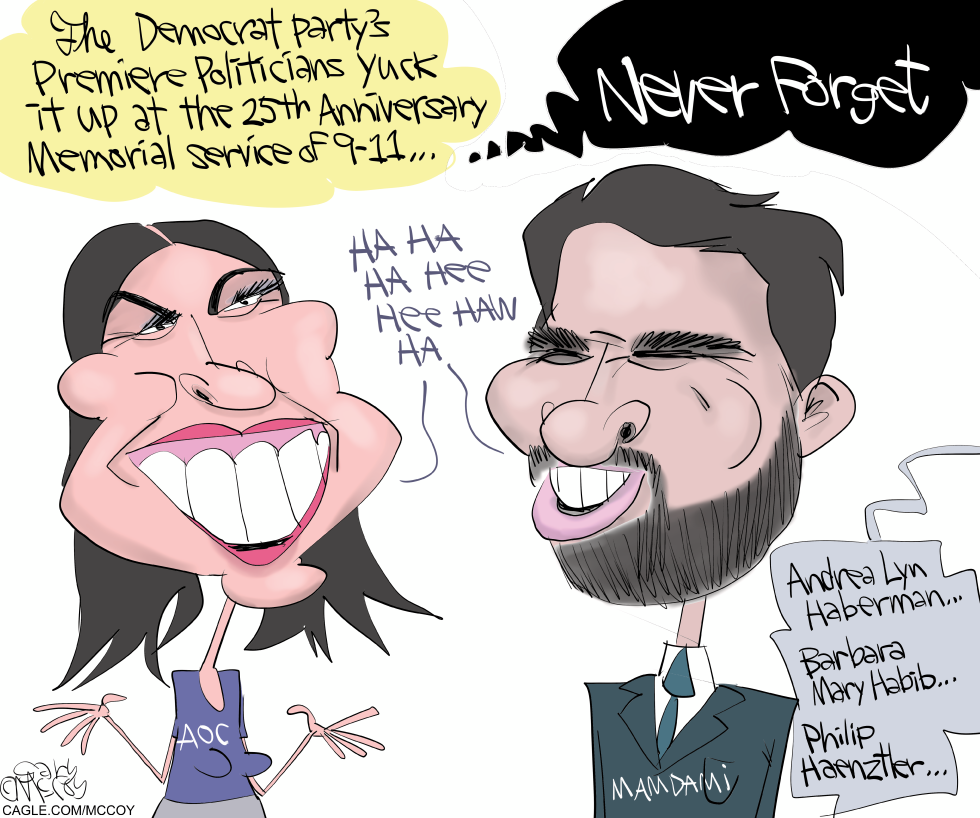
On the 25th anniversary of the September 11 attacks, prominent Democrats faced accusations of inappropriate levity at memorial events. The cartoon depicts AOC and Zohran Mamdani laughing while a thought bubble reading Never Forget trails off, underscoring claims that party leaders have grown detached from the solemnity of the occasion. The piece argues that such behavior reveals a broader erosion of respect for national tragedies among Democratic elites.
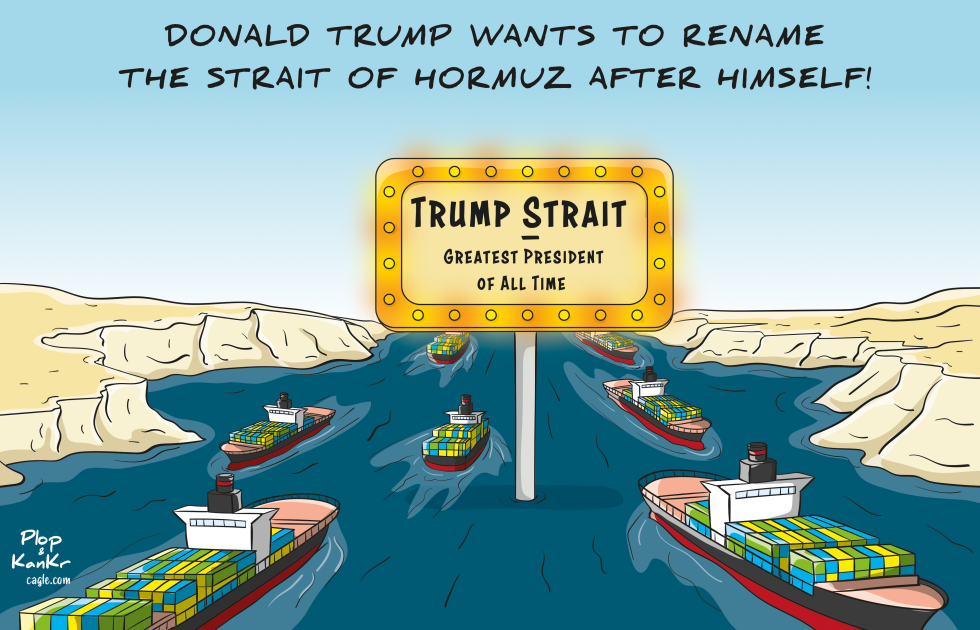
A political cartoon depicts Donald Trump proposing to rename the Strait of Hormuz after himself. The image shows multiple cargo ships navigating the waterway beneath a large glowing sign reading Trump Strait with the subtitle Greatest President of All Time. The top text states Donald Trump wants to rename the Strait of Hormuz after himself. The cartoon uses the visual of a prominent sign overlooking busy shipping lanes to comment on the proposal. It responds to ongoing discussions about international waterways and presidential initiatives in the Middle East region as of the September 2026 publication date.
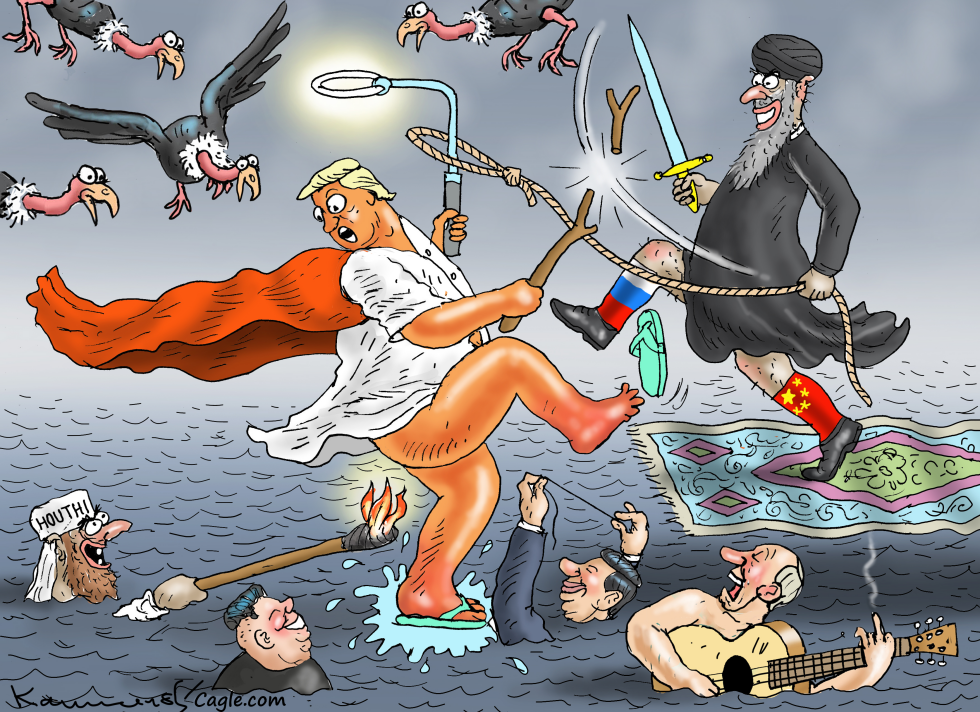
Donald Trump faces mounting complications in Middle East engagements involving Houthi forces and shifting ties with Russia and China. The cartoon portrays these entanglements as self-inflicted disorder that invites scavengers and undermines stability. It critiques the approach as reckless and counterproductive.
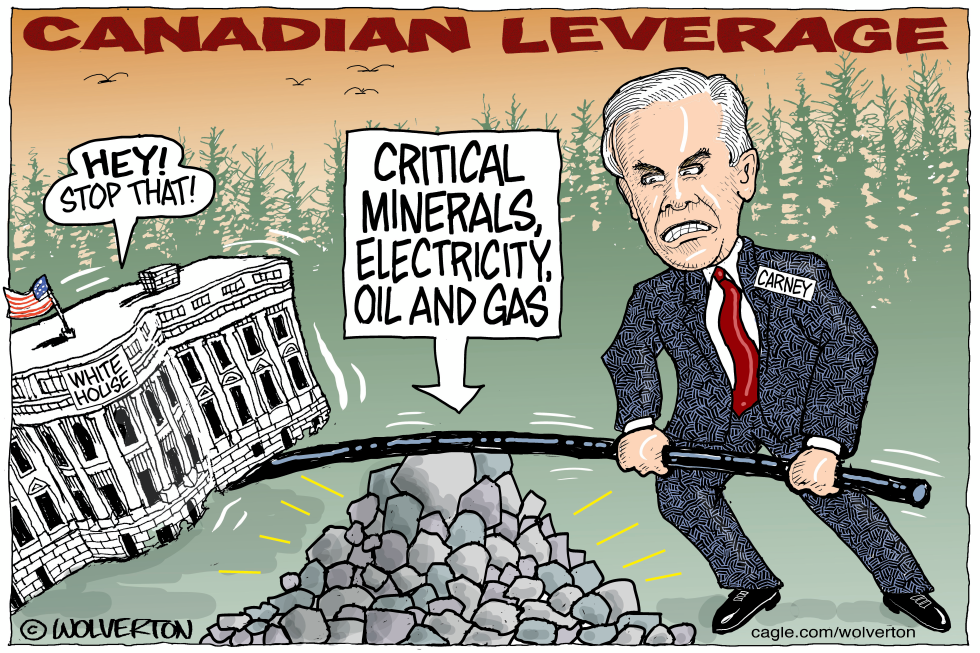
The cartoon depicts former Bank of Canada governor Mark Carney using a pipe labeled critical minerals, electricity, oil and gas as a lever to damage the White House. A speech bubble from the building protests the action. Published on September 12, 2026, the image comments on ongoing Canada-US tensions over resource exports and trade policy. Carney is shown in a suit with a determined expression, standing on rubble. The visual underscores Canada's potential to restrict supplies vital to the American economy. It reflects real-world discussions about critical minerals and energy interdependence between the two nations.
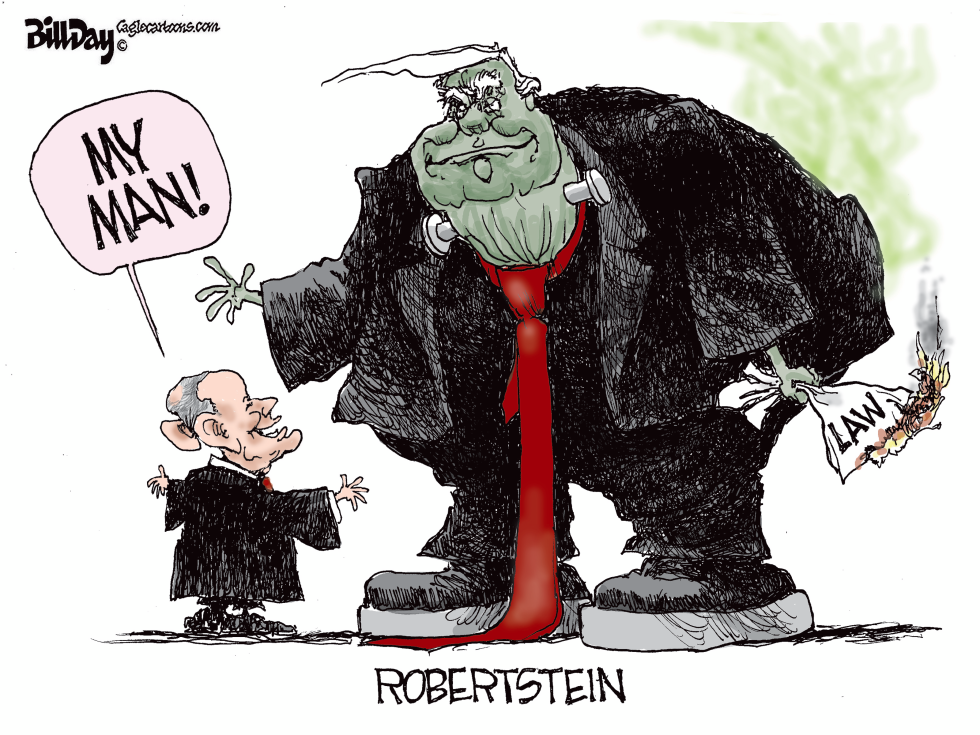
A judge nicknamed Robertstein appears as a stitched-together monster clutching a burning copy of the law while a smaller political figure hails him as 'my man.' The image responds to ongoing concerns over judicial appointments that produce ideologically driven rulings. Critics argue such selections prioritize loyalty over legal restraint, weakening institutional guardrails. The cartoon takes the position that these appointments create uncontrollable forces that damage the rule of law.
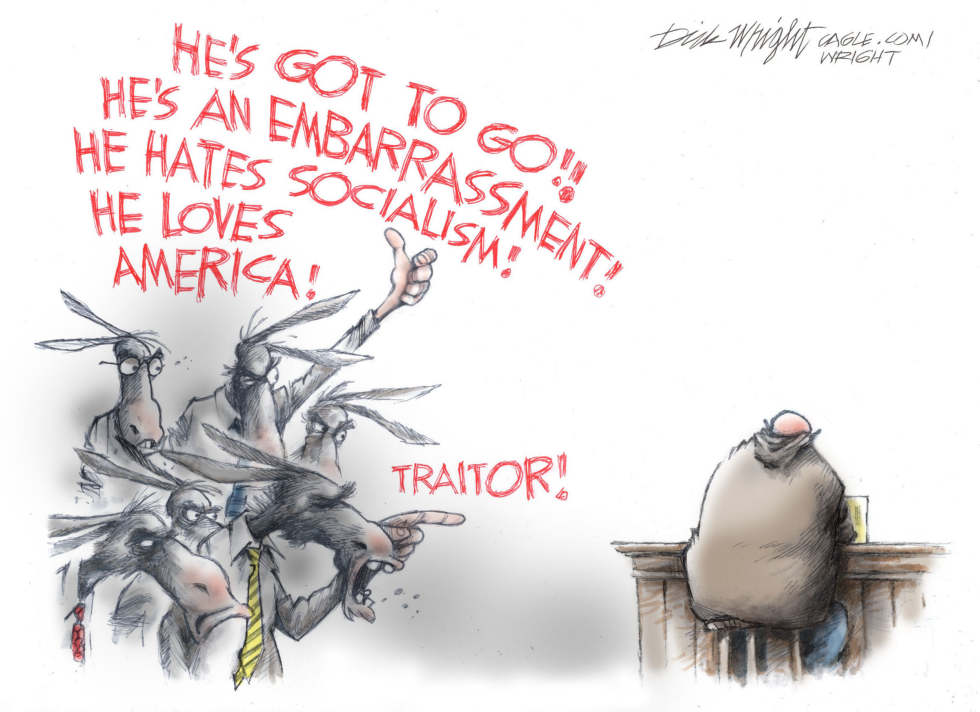
Senator John Fetterman drew sharp criticism from fellow Democrats in September 2026 for publicly rejecting socialism and emphasizing his love of America. The episode highlights deepening tensions within the party over ideological purity tests. The cartoon portrays the attacks as self-destructive party infighting.
As the 2026 midterm cycle heats up, Donald Trump has positioned himself at the center of Republican fundraising efforts. Large donor contributions and party infrastructure have given GOP candidates a financial edge in key races. The cartoon portrays this advantage as a decisive factor heading into November. Critics argue the focus on money risks overshadowing policy substance. Supporters see the resources as essential to counter Democratic spending. The piece frames the cash flow as a clear path to victory for the MAGA-aligned slate.
The cartoon shows Donald Trump holding a baseball bat labeled 2027 while standing beside a brick wall. A wire connects a stack of cash from three supporters to the wall near Trump's position. The image comments on Trump's preparation for future political activity and reliance on donor contributions. Published on September 12 2026 the piece addresses ongoing discussions about election cycles and funding. It uses the bat and wiring as visual metaphors for planned actions and financial connections.