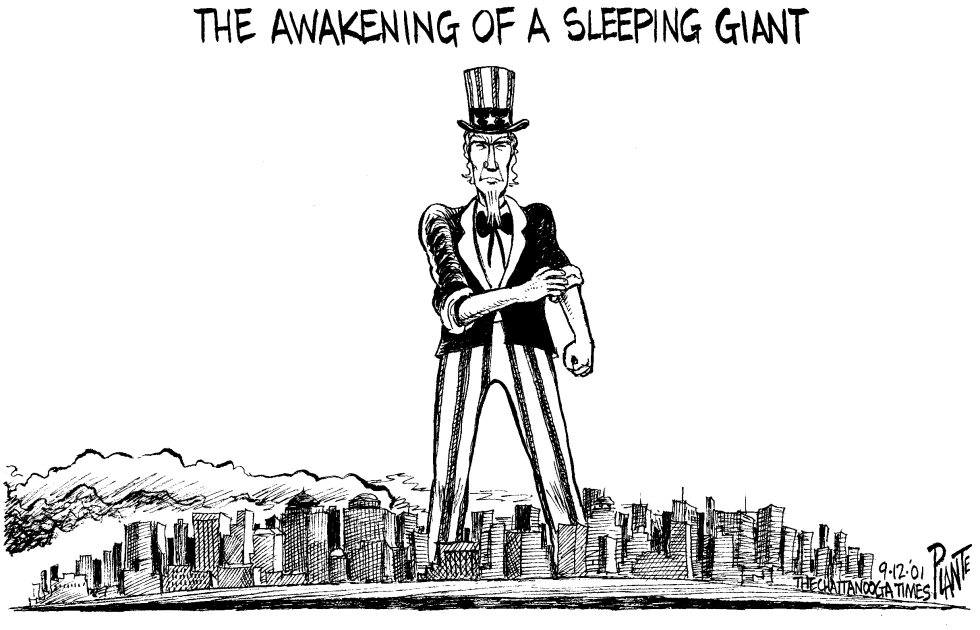
On September 11, 2001, al-Qaeda terrorists flew planes into the World Trade Center and the Pentagon, killing nearly 3,000 people. The attacks prompted an immediate national mobilization and the launch of the war on terror. The cartoon frames the United States as a sleeping giant now roused to action, reflecting the widespread view that the country would respond with unified strength and resolve.
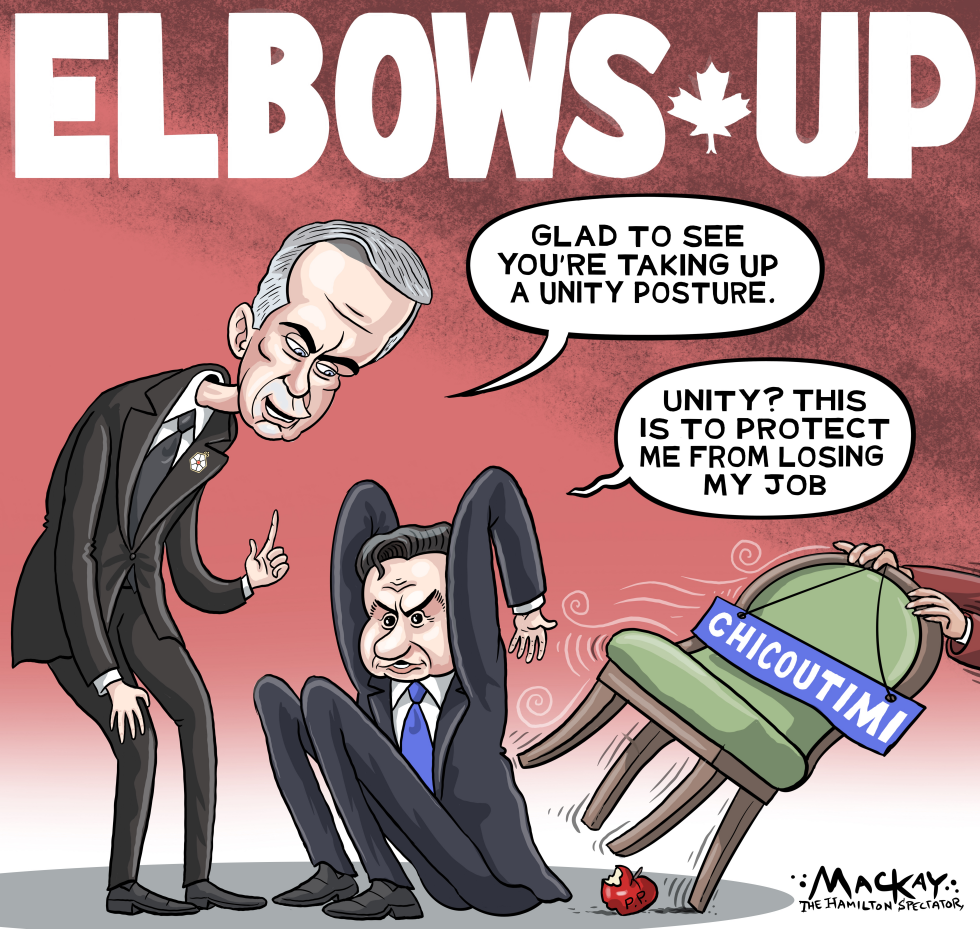
Pierre Poilievre assumes an elbows-up defensive posture in response to mounting leadership questions within the Conservative Party. The visual ties the hockey-derived stance to efforts to retain his position as party leader ahead of future electoral tests. The piece portrays the move as self-preservation rather than genuine unity.
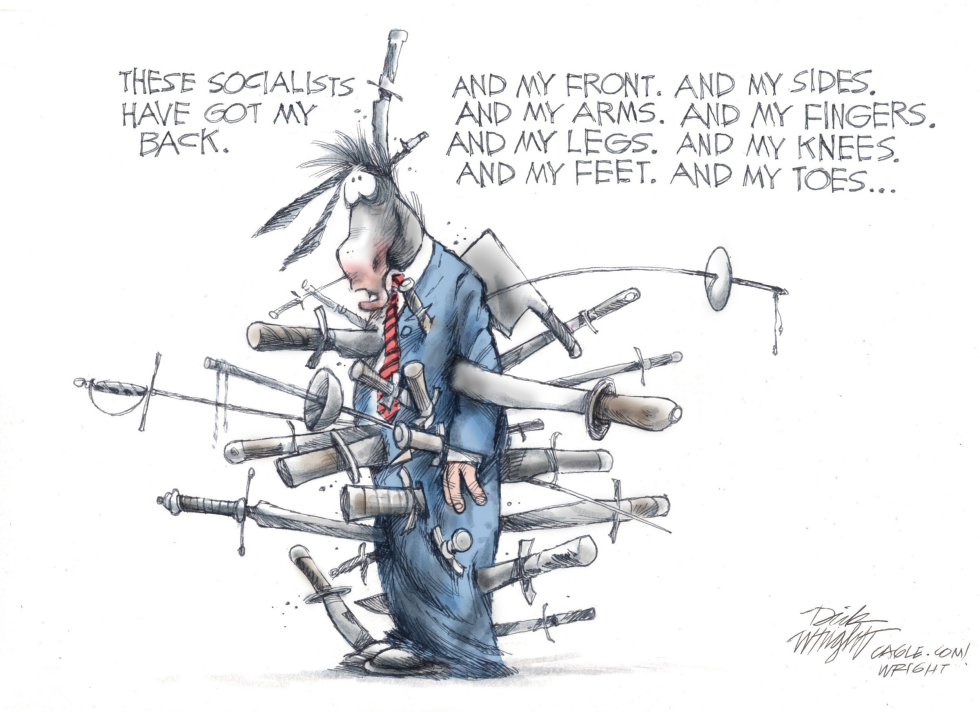
Tensions between socialist factions and mainstream Democrats continue to strain party cohesion ahead of future elections. The cartoon depicts socialists as actively harming the Democratic brand through relentless internal attacks. It argues that such infighting weakens the party's ability to govern effectively and appeal to broader voters.
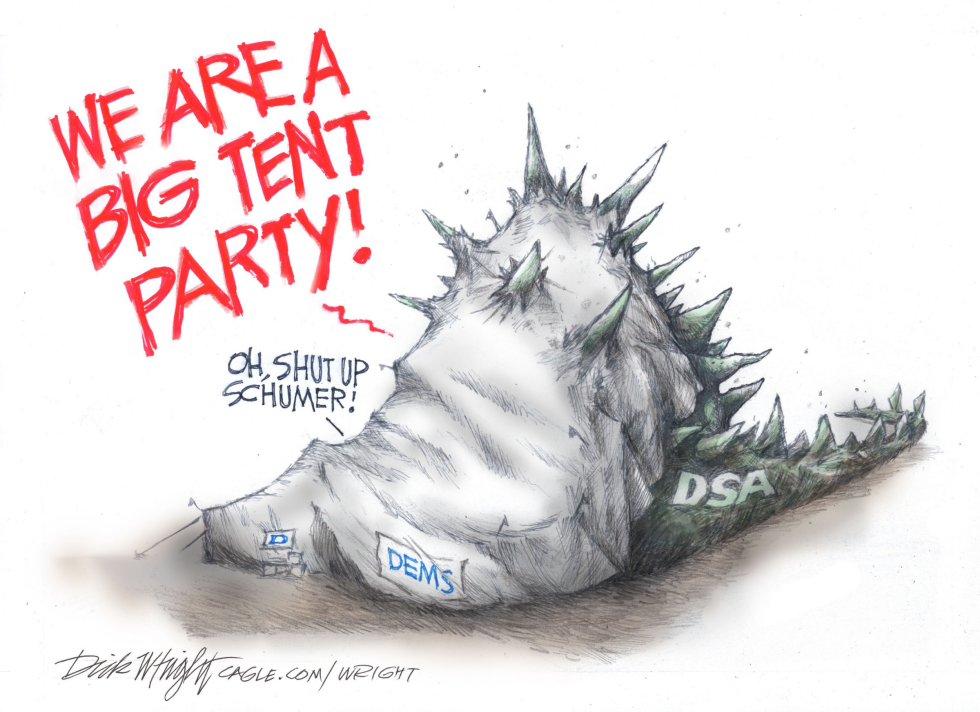
Democratic leaders continue to promote the party as a big tent open to all factions. The DSA's growing role creates visible friction with establishment figures like Senate Minority Leader Chuck Schumer. This dynamic highlights ongoing tensions over the party's direction and messaging ahead of future elections. The piece argues that the big tent claim rings hollow when the socialist wing dominates and dismisses traditional voices.
Rising grocery costs have left many households stretching paychecks to cover staples like bread. Shoppers increasingly discuss payment plans or smaller purchases to manage expenses. The cartoon highlights the strain on family budgets from persistent inflation in food prices. It portrays everyday transactions turning into negotiations over affordability. The editorial stance criticizes how inflation forces ordinary consumers into difficult choices at the register.
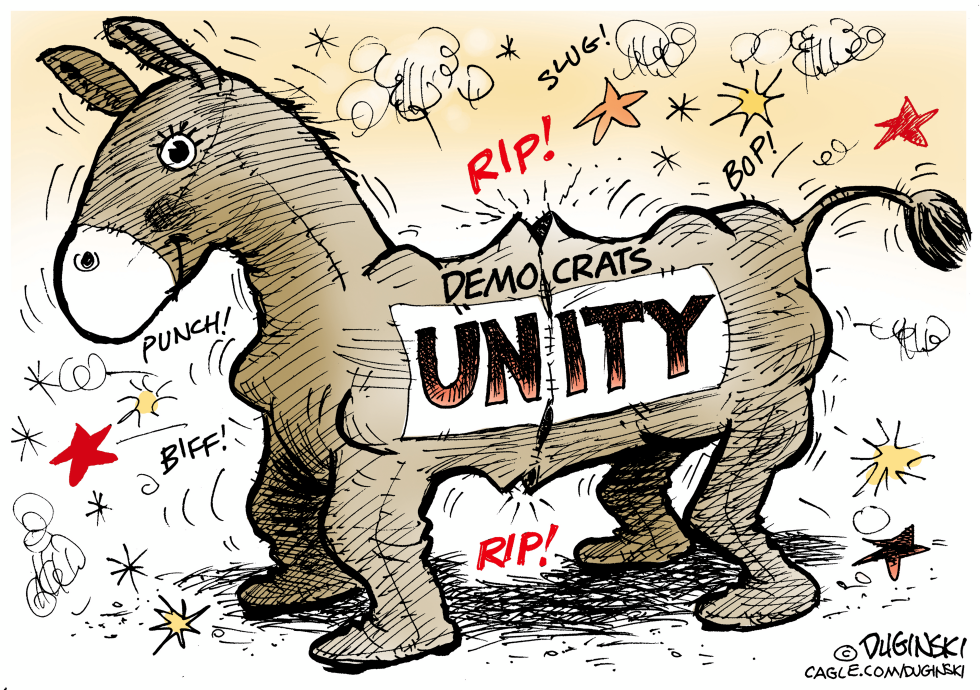
Democrats continue to display public divisions over strategy and messaging in the run-up to midterm and presidential contests. Party leaders struggle to project cohesion on issues ranging from economic policy to social priorities. The resulting perception of disarray weakens their ability to counter Republican narratives and mobilize voters. The cartoon highlights how these internal conflicts undermine the party's core message of unity.
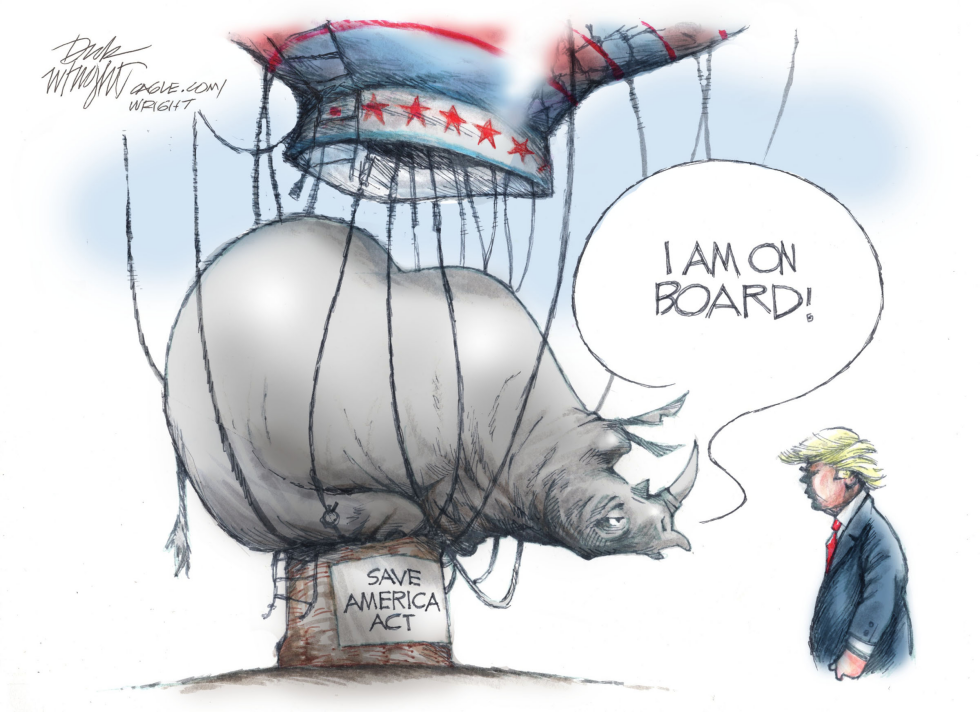
Donald Trump appears on the right side of the scene and states support for the Save America Act. A large rhino figure rests on a base marked with the act name and is connected to an overhead structure resembling the Capitol dome. The rhino faces toward Trump. The date of the image is July 1 2026.
On June 30, 2026, a cartoon depicts Donald Trump lighting the fuse of a large American-flag firework rocket labeled 250th. The greeting Happy Birthday America carries an asterisk that expands into a lengthy parenthetical list of omitted groups including immigrants, blue states, LGBTQ individuals, women, trans athletes, scientists, medical professionals, Democrats, people of color, veterans, educators, Indigenous people, Muslims, environmentalists, liberals, RINOs, and journalists. The image appears days before the July 4, 2026, semiquincentennial.
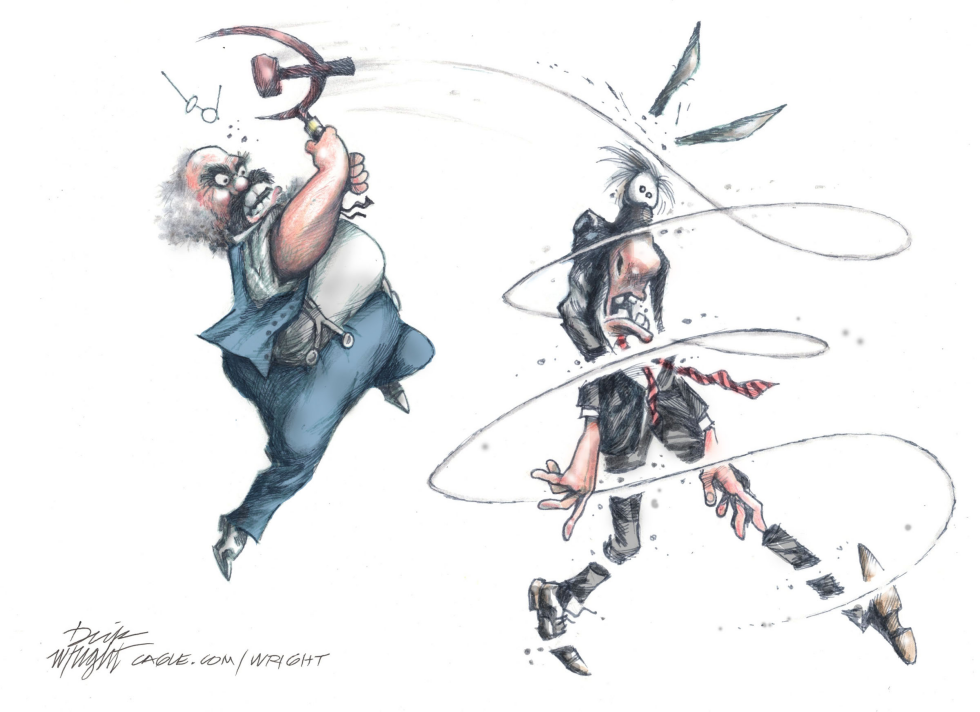
On June 30 2026 Dick Wright depicts a hammer and sickle wielding figure lunging at a suited Democrat form. The strike sends the target figure flying apart in fragments. The image responds to ongoing debates over ideological influences within the Democratic Party during the 2026 election cycle.
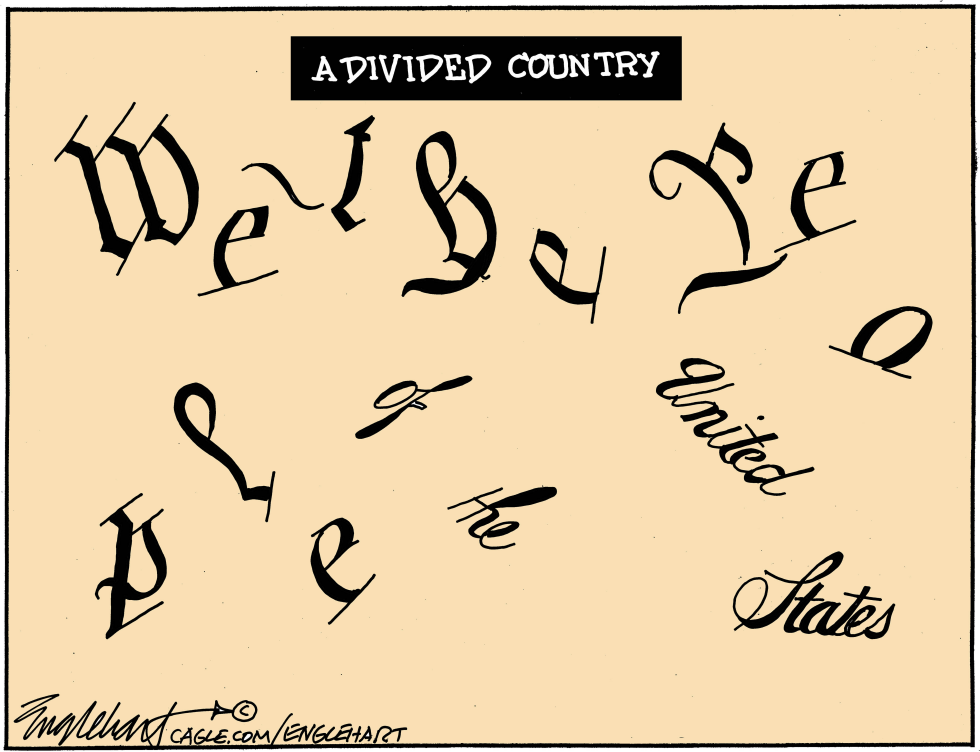
The cartoon displays the opening words of the U.S. Constitution scattered in disconnected segments across a plain background. A black banner at the top reads A DIVIDED COUNTRY. The arrangement of the familiar preamble text visually breaks the phrase into isolated parts. This presentation coincides with the approach of Independence Day on the 2026 calendar. The work draws attention to fractures within the national fabric without naming specific events or figures.
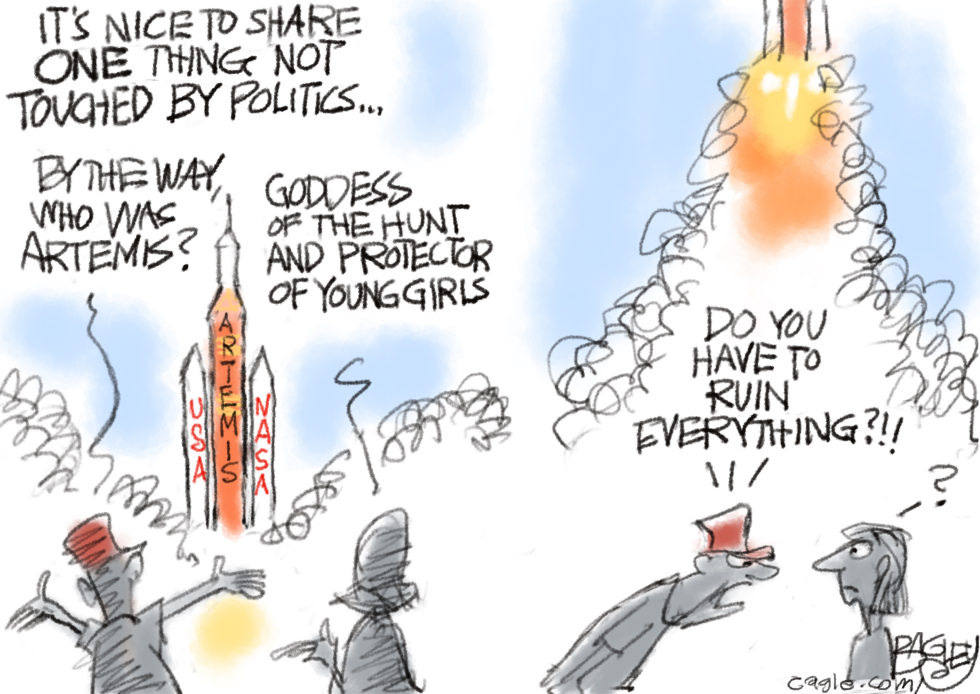
This political cartoon features a launching rocket labeled Artemis, SLS, NASA, and USA, with overlaid text praising one thing untouched by politics before asking about the goddess Artemis, described as goddess of the hunt and protector of young girls. A figure exclaims frustration at ruining everything, satirizing how even space missions get dragged into cultural debates. The irreverent sketch uses humorous figures with red hats to poke at over-politicization in science, blending mythology with modern rocketry in a witty critique. Tags like Artemis rocket launch political cartoon, NASA SLS Artemis mission satire, and politics invading science editorial cartoon underscore the cartoon's sharp insight into societal divisions spilling into apolitical realms like space exploration politicized cartoon.
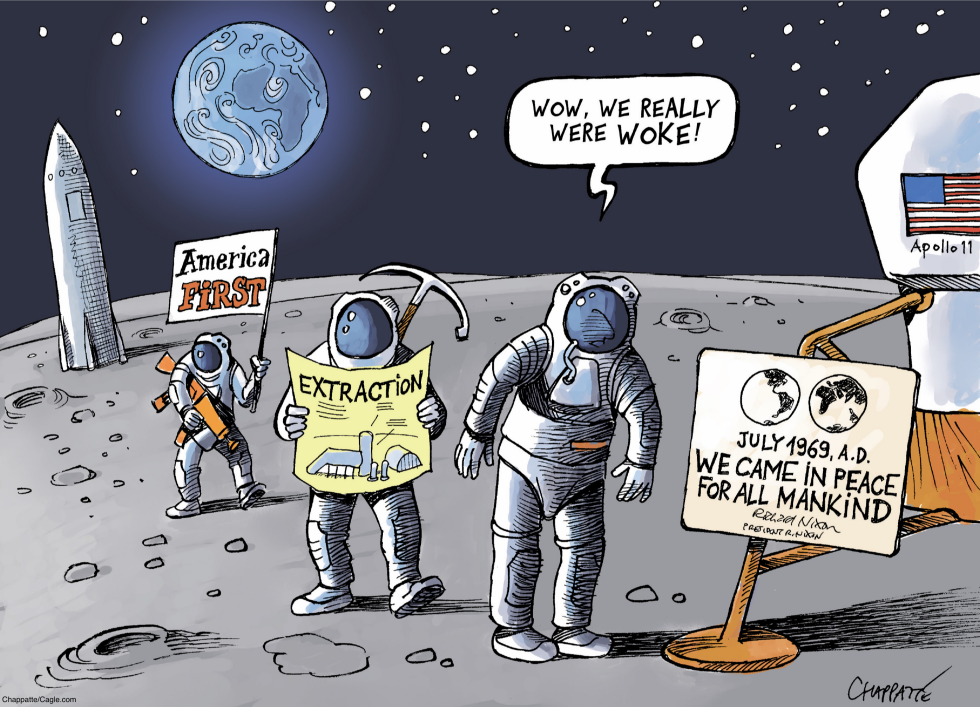
The cartoon shows three astronauts on the moon\\\\\\\'s surface, with Earth visible in the background. One holds a sign reading America First while carrying a weapon, another grips a document titled Extraction with a mining diagram, and the third wields a pickaxe next to a plaque stating We came in peace for all mankind from July 1969 A.D. near the Apollo 11 lander flagged with the US stars and stripes. A speech bubble declares Wow, we really were woke! The scene captures space race satire, lunar exploration humor, political cartoon commentary on shifting priorities from global peace to nationalistic resource grabs, all in Patrick Chappatte\\\\\\\'s style.