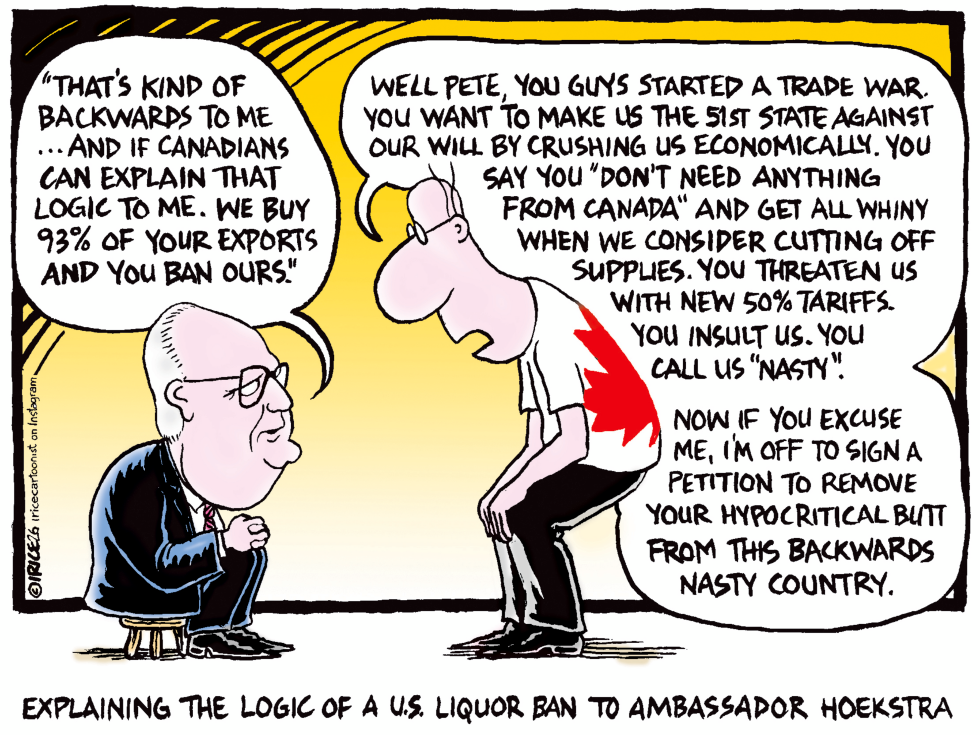
The United States has enacted a liquor ban targeting Canadian products as part of broader trade measures. Ambassador Hoekstra receives direct criticism over the policy's economic impact and perceived hypocrisy. The response underscores Canada's role as a major buyer of U.S. exports and its readiness to retaliate with supply cuts and petitions.
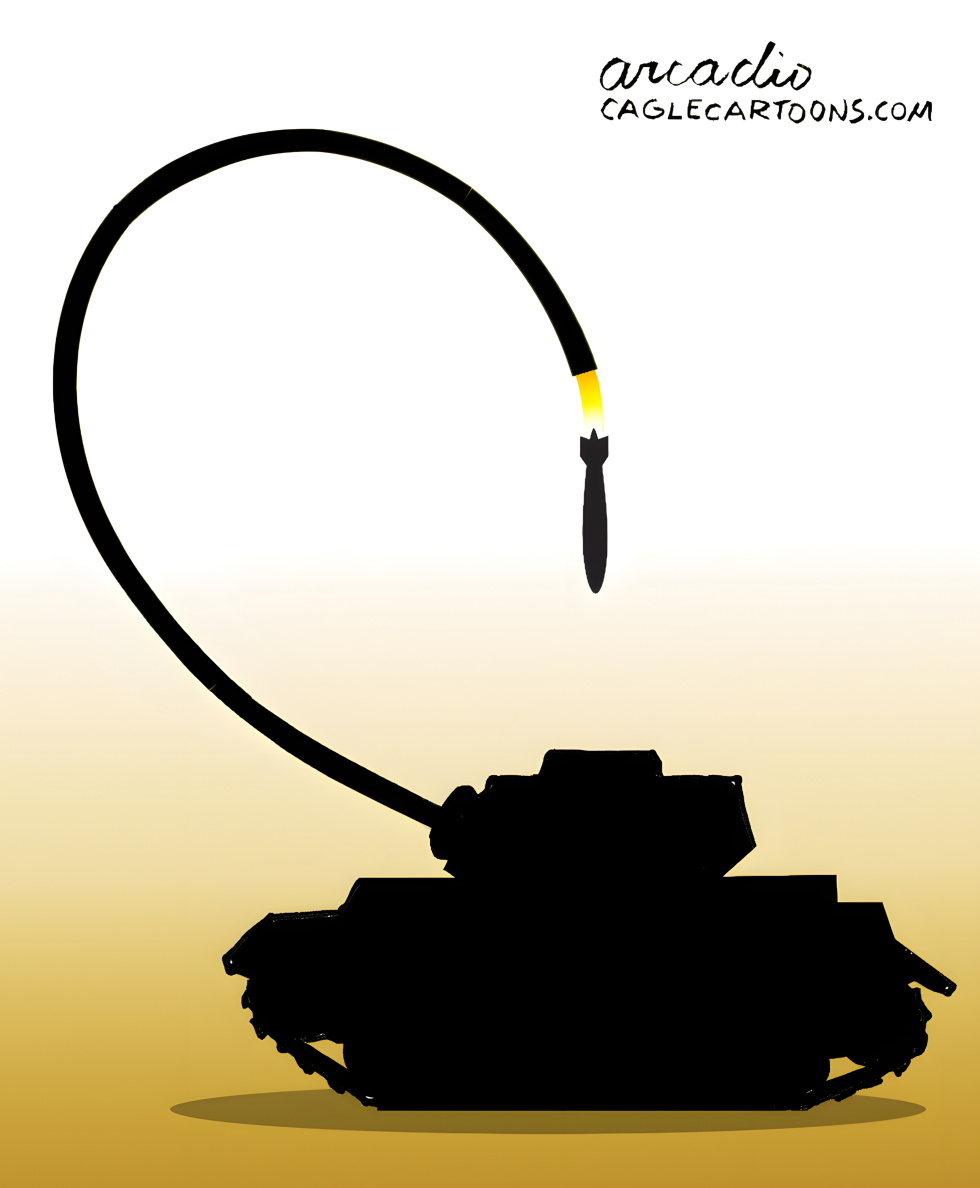
A military tank deploys a projectile attached to an unusually long curved fuse in this editorial image. The setup implies hardware that could rebound on its user. The piece comments on defense strategies where advanced systems carry built-in risks of unintended harm to the deploying force itself.
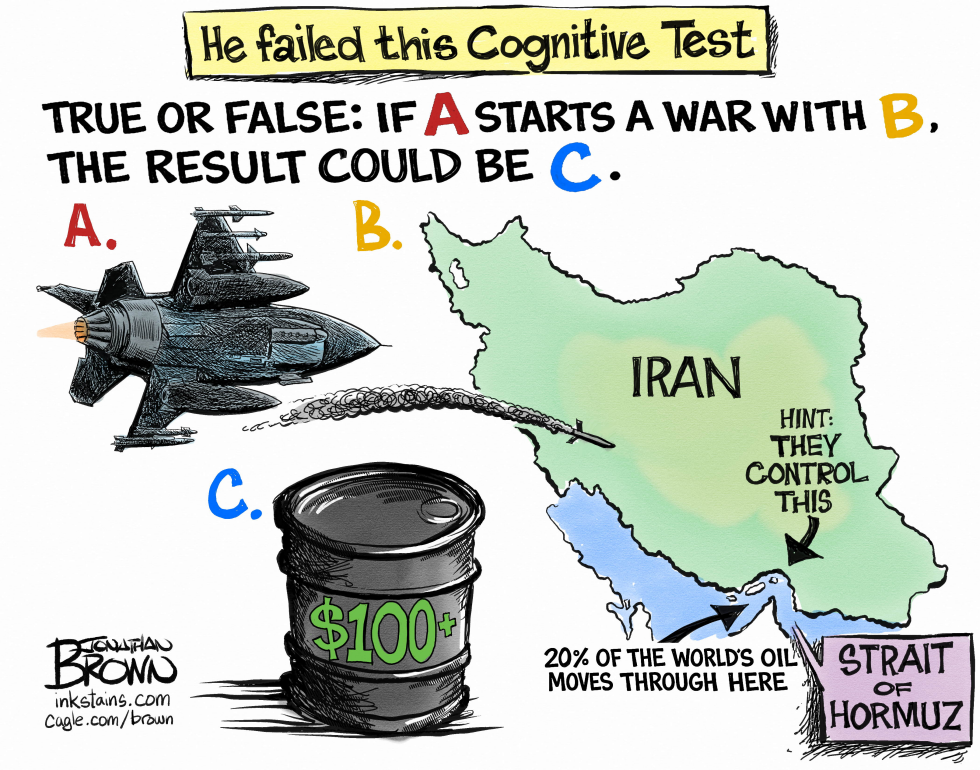
Jonathan Brown's cartoon presents a stark true-or-false cognitive test: if A (a fighter jet) starts a war with B (Iran), the result could be C (an oil barrel marked $100+). The map of Iran includes a hint pointing to the Strait of Hormuz, noting that 20% of the world's oil moves through there, underscoring control over this chokepoint. Tags such as cognitive test, war in Iran, oil prices, Strait of Hormuz, gas prices, and cost of war frame the satire. The artwork warns of economic fallout from conflict, with the jet trailing toward Iran and the oil barrel symbolizing surging costs. This piece captures geopolitical tensions in a simple, visual riddle.
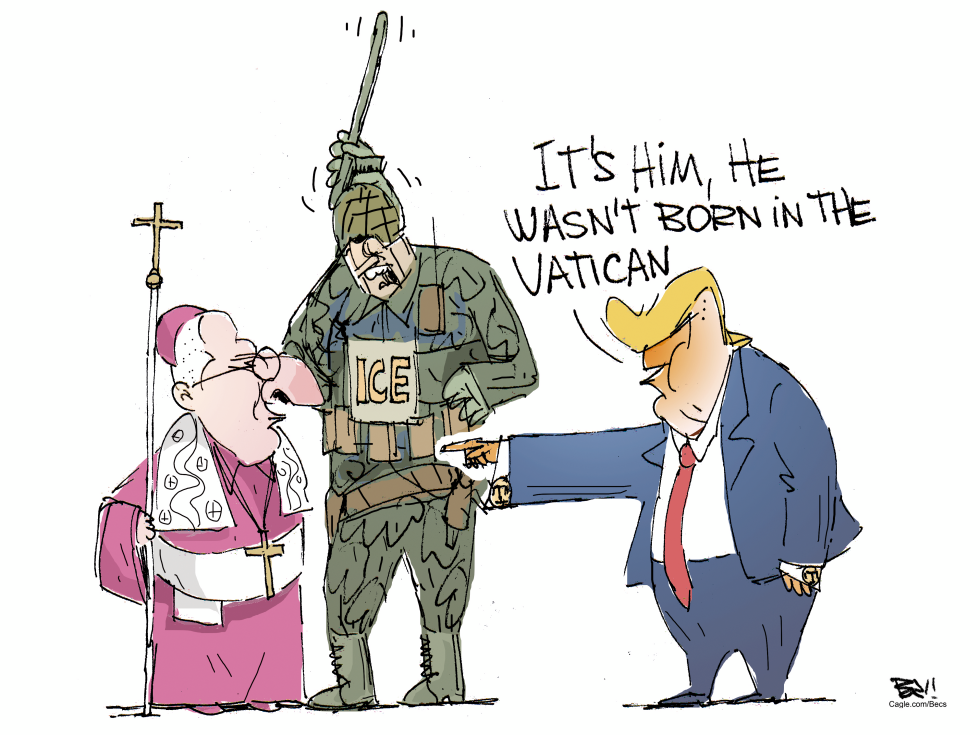
This cartoon shows Donald Trump accusing the Pope of not being born in the Vatican, with an ICE agent poised for action. The tags highlight themes of incompetent narcissistic leadership in US politics, blending Vatican imagery with immigration enforcement. Trump's pointing finger and the Pope's surprised expression drive the satire, while the ICE label on the agent's vest ties into border control debates. Such cartoons often poke at figures like Trump and the Pope to underscore absurdities in power dynamics. With elements of humor targeting narcissism and incompetence, it fits broader discussions on US-Vatican relations and policy follies.
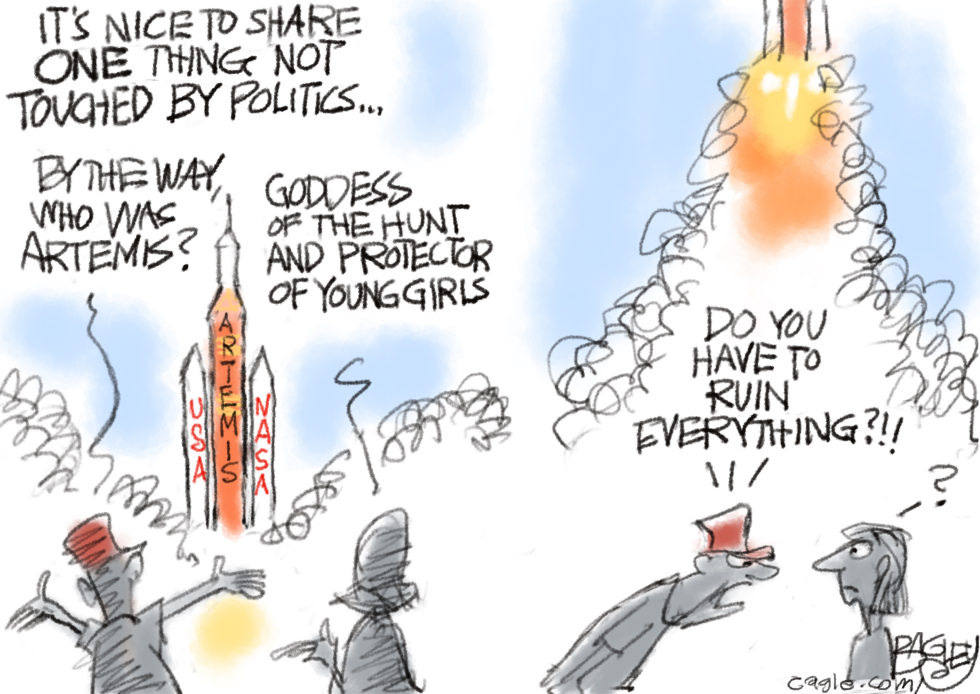
This political cartoon features a launching rocket labeled Artemis, SLS, NASA, and USA, with overlaid text praising one thing untouched by politics before asking about the goddess Artemis, described as goddess of the hunt and protector of young girls. A figure exclaims frustration at ruining everything, satirizing how even space missions get dragged into cultural debates. The irreverent sketch uses humorous figures with red hats to poke at over-politicization in science, blending mythology with modern rocketry in a witty critique. Tags like Artemis rocket launch political cartoon, NASA SLS Artemis mission satire, and politics invading science editorial cartoon underscore the cartoon's sharp insight into societal divisions spilling into apolitical realms like space exploration politicized cartoon.
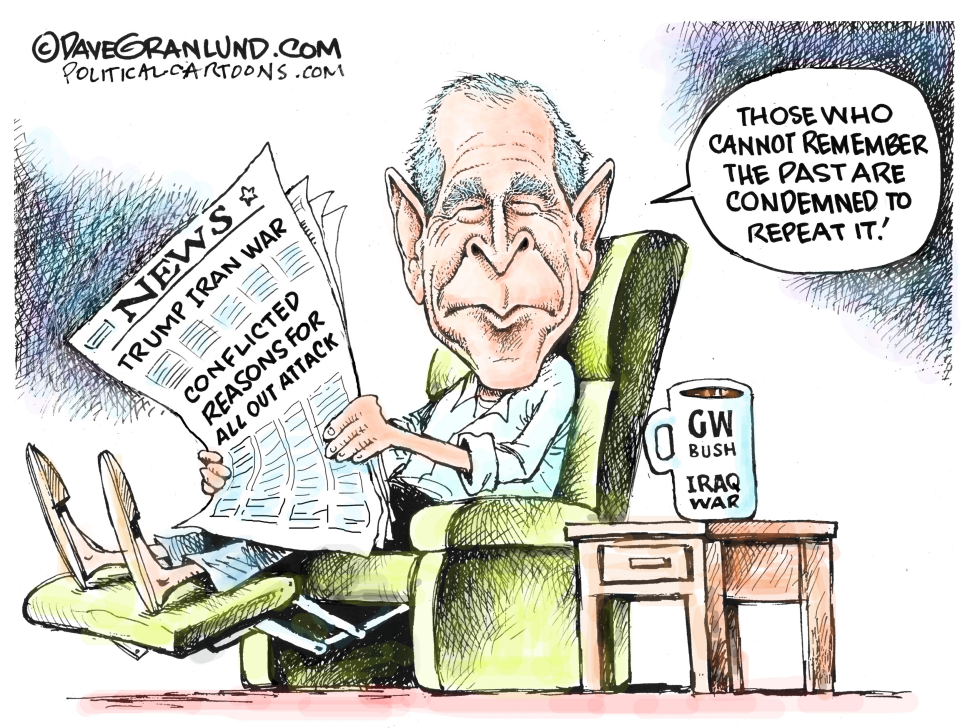
Dave Granlund's political cartoon cleverly lampoons the Trump Iran conflict by portraying a smug, elf-eared figure—possibly a nod to forgetful policymakers—lounging with a newspaper screaming 'Iran War' headlines, while clutching a mug emblazoned with 'GW Bush Iraq War.' The speech bubble twists George Santayana's famous quote on historical amnesia, warning that those who cannot remember the past are condemned to repeat it. This satirical jab underscores the eerie parallels between Bush's ill-fated Iraq invasion and Trump's bellicose posturing toward Iran, blending humor with sharp insight into geopolitical folly. Tags like Iraq War repetition and Trump Iran conflict amplify its relevance, making it a viral-ready critique of endless war cycles.
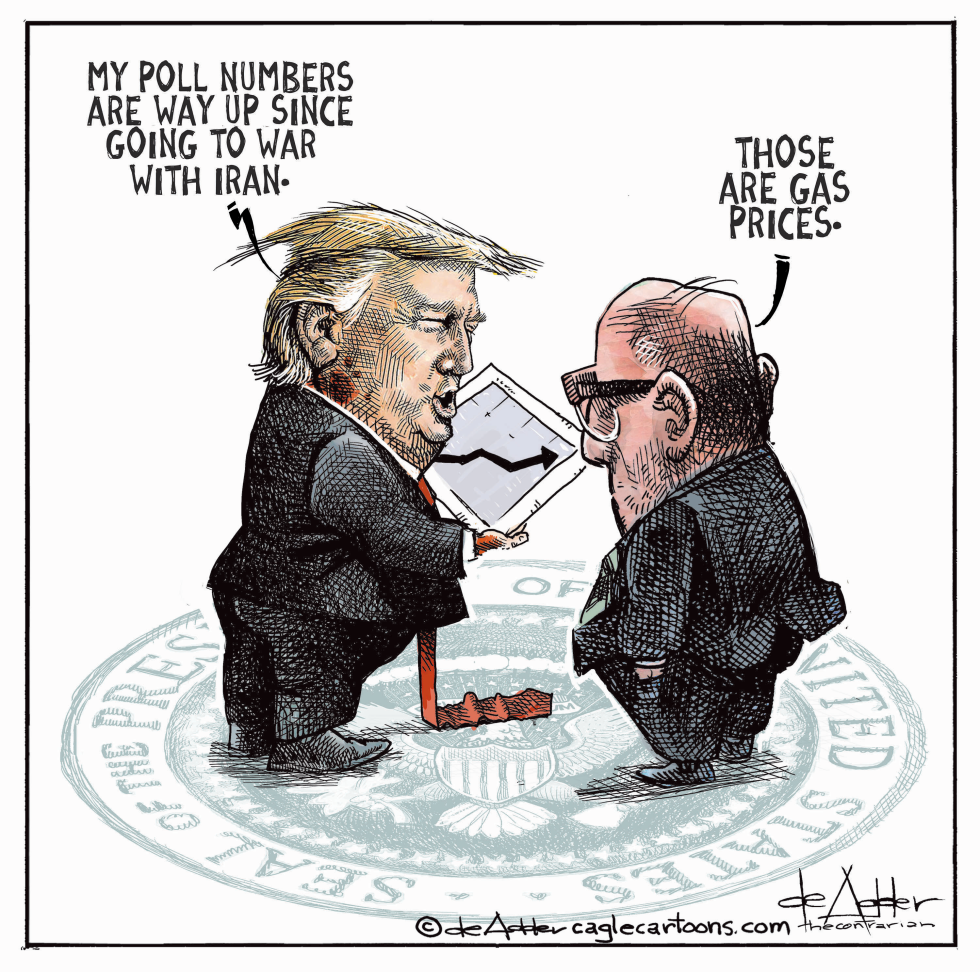
This sharp political cartoon by Michael de Adder captures Donald Trump triumphantly holding a chart of upward trends, claiming his poll numbers have skyrocketed since going to war with Iran. However, a bespectacled Dick Cheney corrects him, revealing those are actually gas prices soaring. The satire highlights the ironic consequences of Middle East conflict on the US economy, blending humor with commentary on presidential approval ratings tied to foreign policy blunders. Incorporating elements of US politics, oil prices, and war economy, the image stands on the presidential seal, emphasizing official folly. It's a witty jab at how leaders might misread economic fallout as personal gains, perfect for editorial discussions on satire and current events.