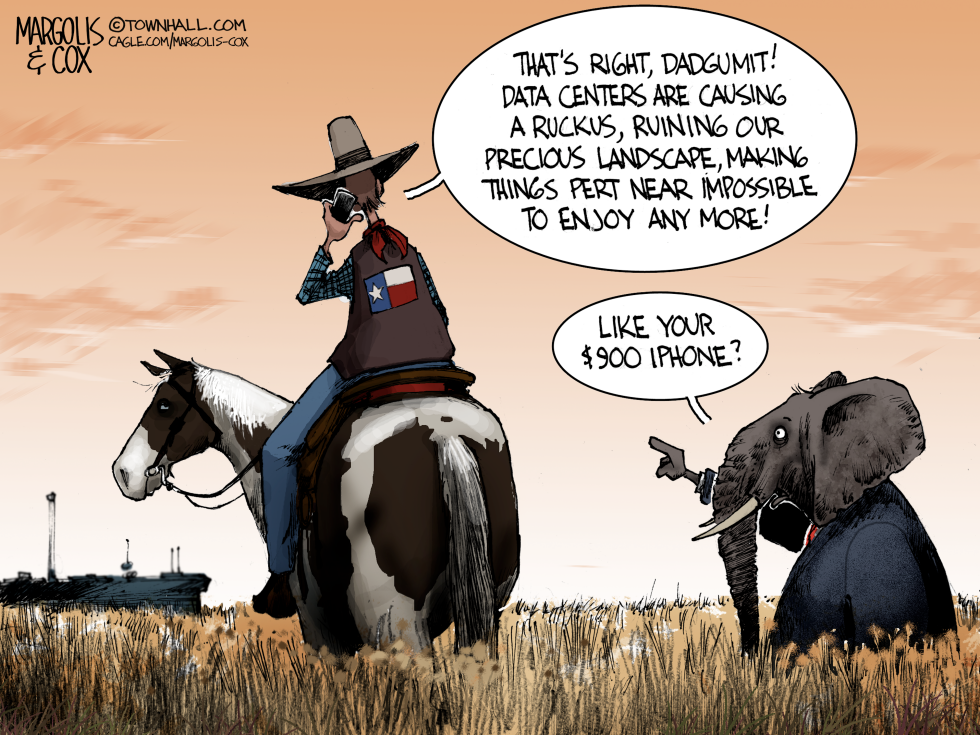
Data centers are expanding rapidly across Texas to support growing digital demands, drawing complaints from local residents and officials over land use and visual impact. Republicans in the state have voiced concerns about the facilities altering rural scenery and affecting quality of life. The cartoon highlights the inconsistency in such criticism given widespread reliance on smartphones and other tech products that necessitate these centers.
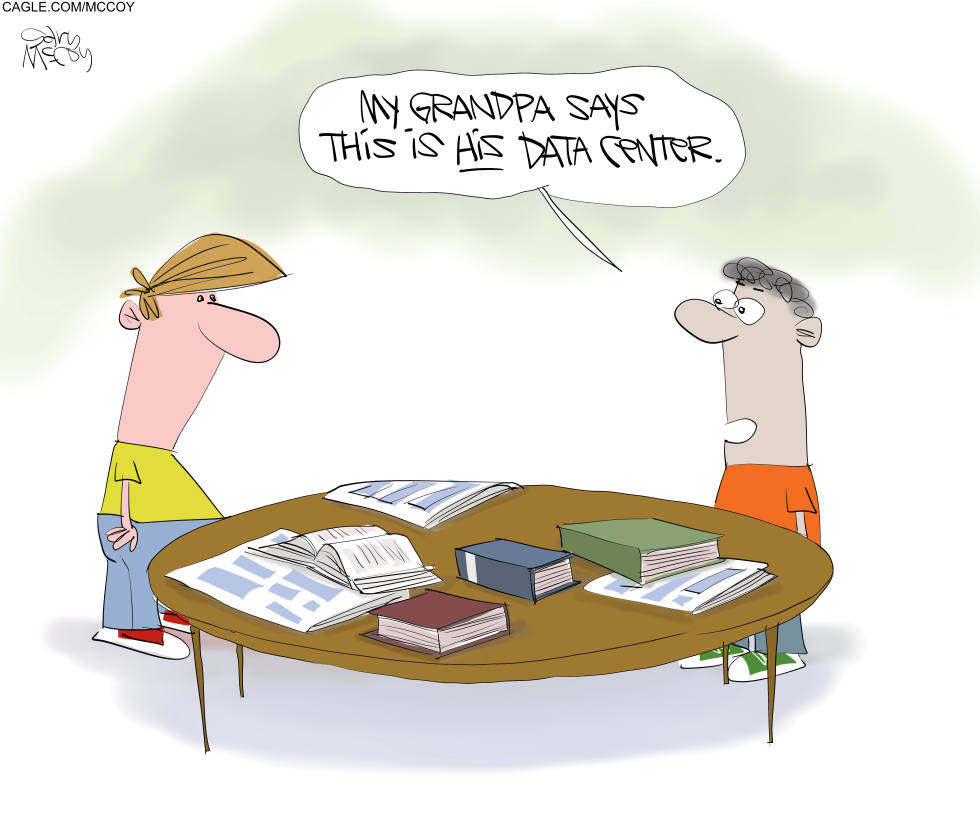
Rapid expansion of AI data centers has drawn scrutiny over energy demands and necessity by 2026. Companies and governments push massive builds to support growing artificial intelligence workloads. Critics question whether the scale matches real needs or reflects hype. The cartoon uses a grandfather's table of books and papers to suggest traditional methods still hold value. It argues the push for ever-larger facilities may overlook simpler realities.
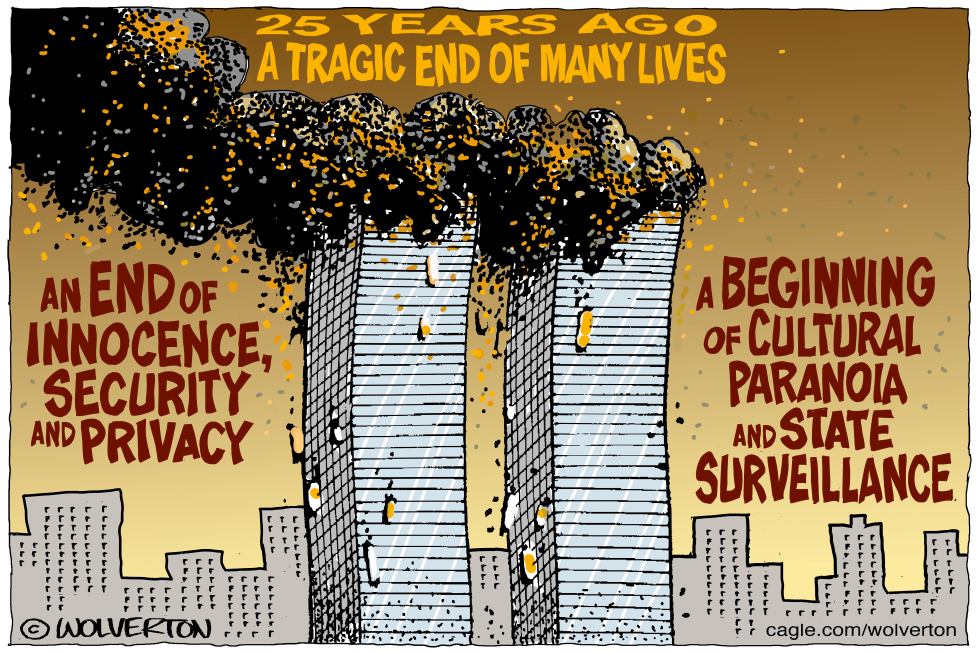
On the 25th anniversary of the September 11 attacks, the cartoon highlights the human tragedy while pointing to the subsequent expansion of state surveillance and erosion of privacy. The editorial position frames the attacks as both an end to national innocence and the start of heightened monitoring.
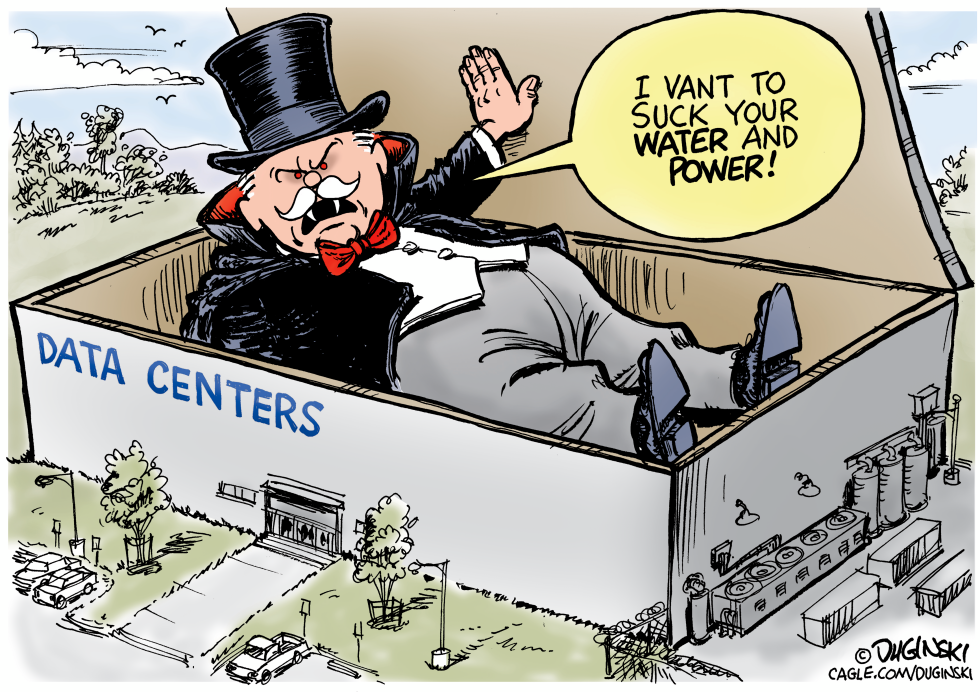
Data center operators continue rapid expansion to support cloud computing and artificial intelligence workloads, driving sharp increases in electricity and water consumption across multiple states. Local utilities report strain on grids and aquifers as facilities require constant cooling and backup power. The editorial takes the position that unchecked growth treats public resources as unlimited, urging stronger oversight before shortages worsen.
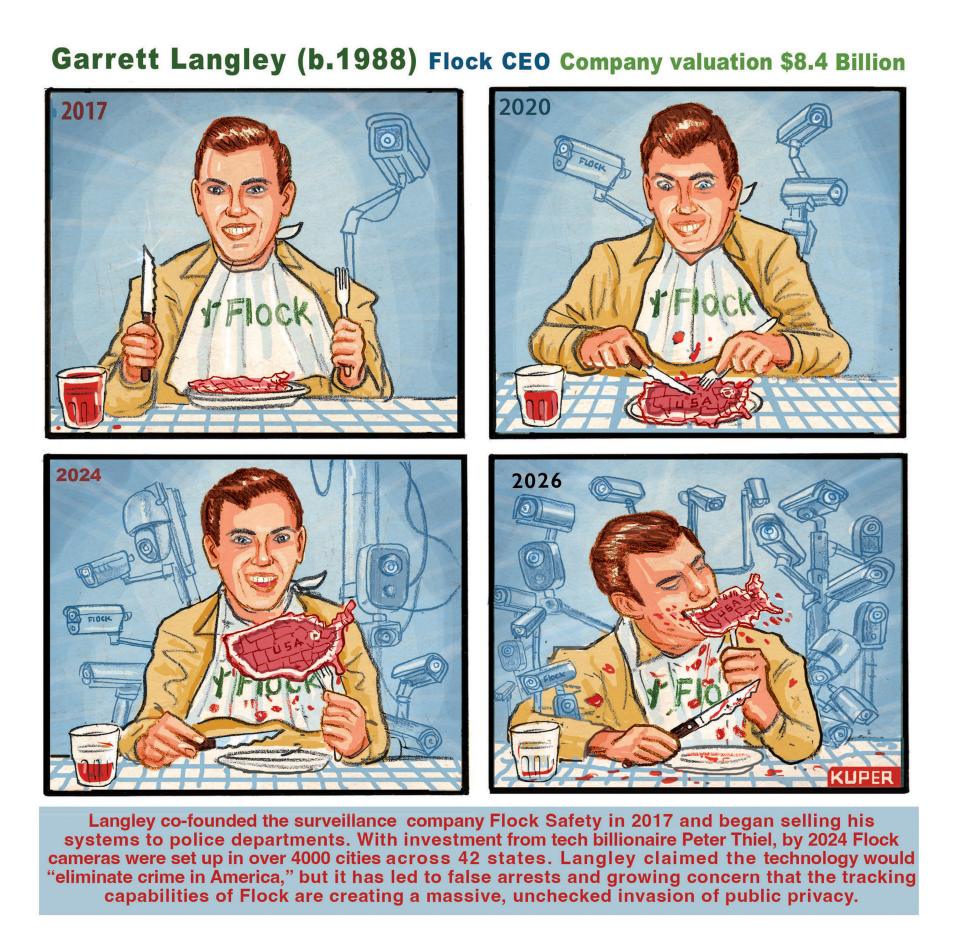
Flock Safety, co-founded by Garrett Langley in 2017, has installed cameras in over 4,000 cities across 42 states with backing from Peter Thiel. Langley promoted the system as a way to eliminate crime, yet reports show false arrests and widespread privacy concerns. The cartoon depicts Langley consuming a map of the US as cameras proliferate, underscoring the editorial view that the company's growth represents an unchecked invasion of public privacy.
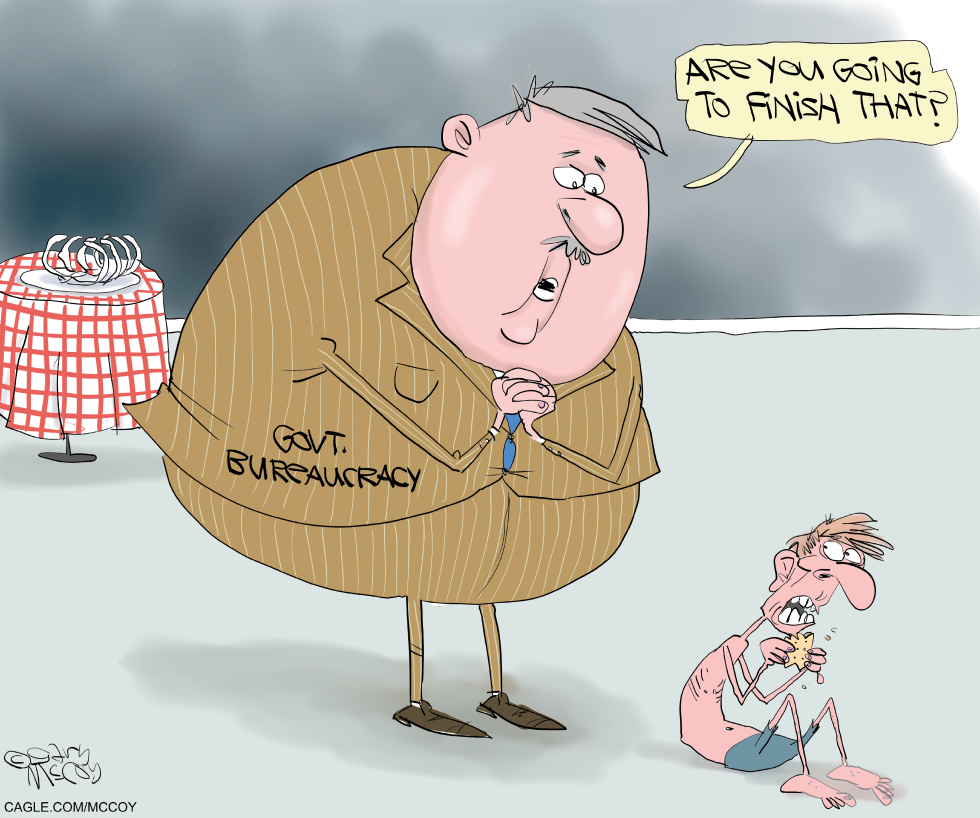
The cartoon shows an oversized man labeled Government Bureaucracy standing above a gaunt citizen who clutches a small star-shaped item. A nearby table holds only scraps. The large figure asks if the citizen plans to finish the food. The image comments on how expanding government operations can leave ordinary people with fewer resources. It uses scale and positioning to illustrate the imbalance between bureaucratic size and citizen need. The publication date places the work in a period of ongoing debate over federal spending and agency growth.
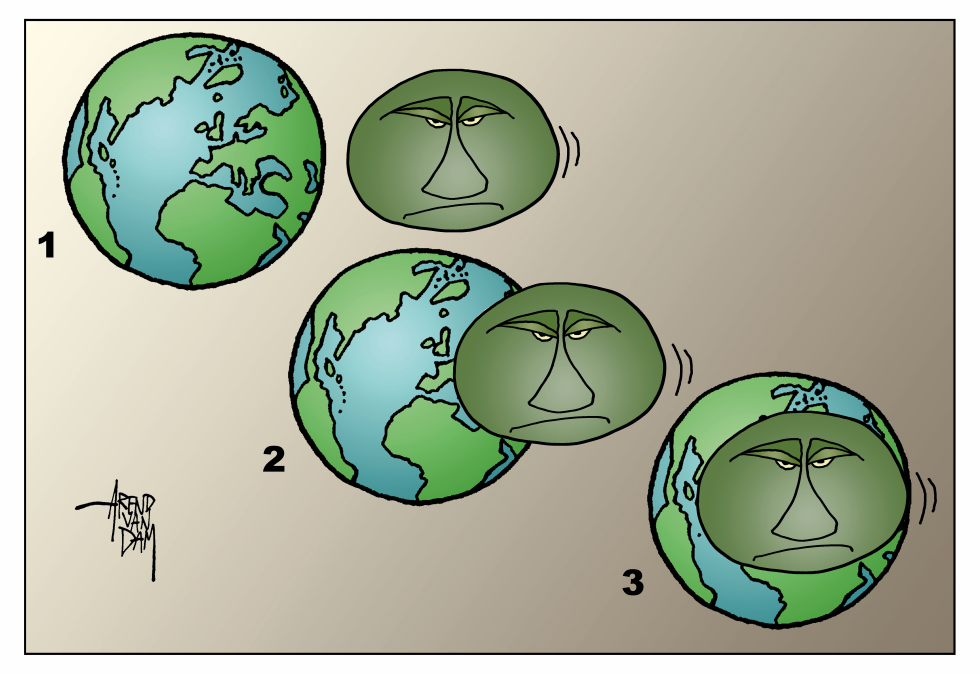
Vladimir Putin appears as a stern green face progressively eclipsing the Earth in three labeled stages. The sequence illustrates expanding Russian influence on the global stage. The piece argues that Putin's reach is steadily overtaking international affairs.
Donald Trump continues a pattern of public statements widely described as misleading. The Republican Party remains closely tied to those statements. This dynamic affects voter trust and party cohesion ahead of future elections. The editorial takes the position that Trump's falsehoods have become the central support structure for the GOP.
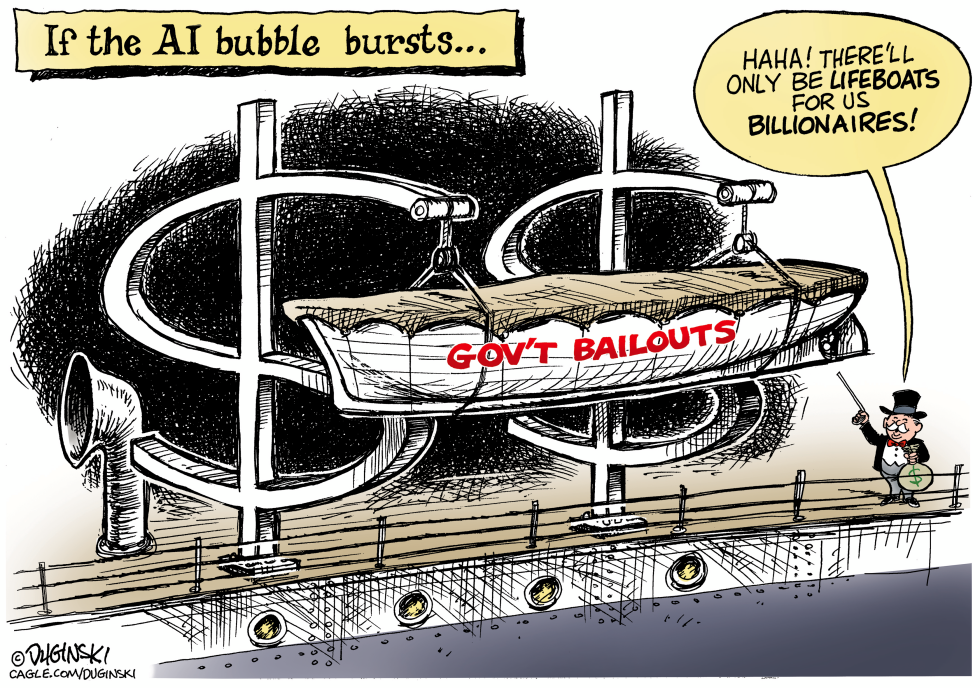
Speculation grows over potential government intervention if the artificial intelligence sector experiences a sharp downturn. Industry leaders and investors face questions about whether public funds would support failing companies. The editorial argues that any such support would primarily protect billionaires rather than address wider economic fallout from overvalued tech assets.
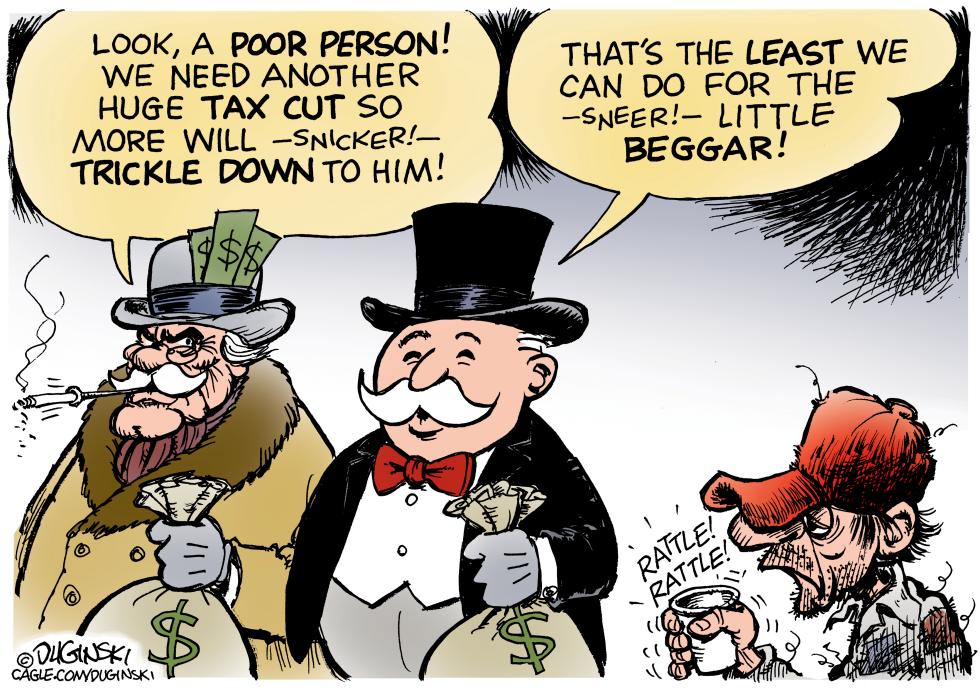
Wealthy interests continue to advocate additional tax reductions framed as broad-based relief. Critics note that such measures primarily benefit high earners while leaving lower-income households with minimal gains. The piece highlights the disconnect between policy promises and visible outcomes for those at the bottom.
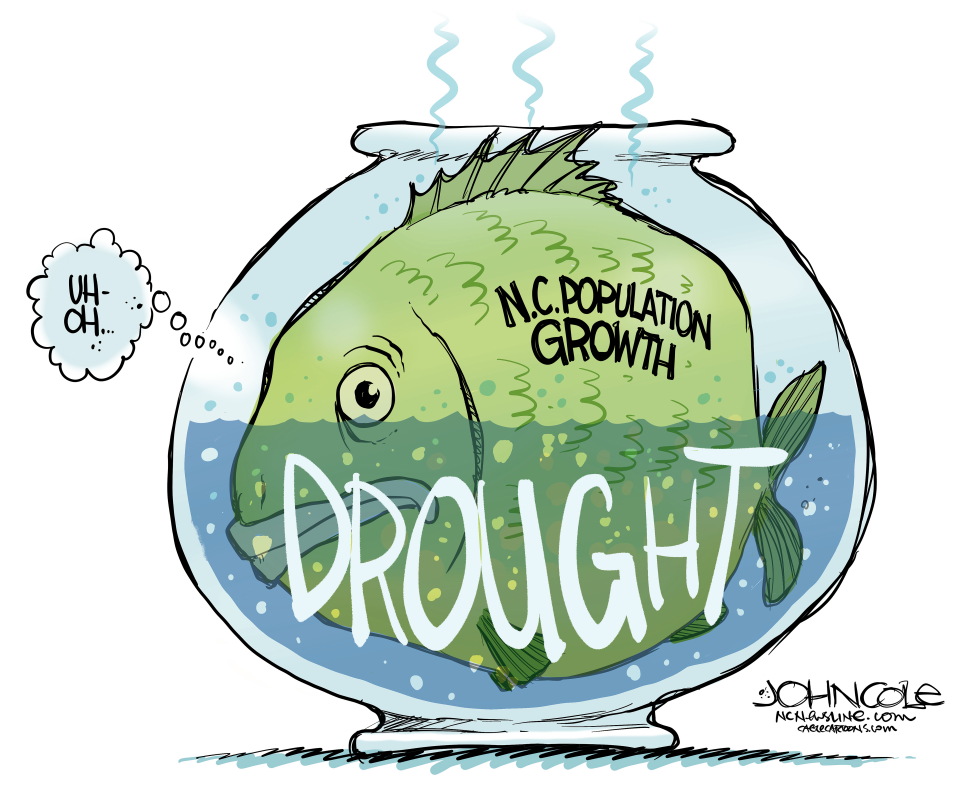
The cartoon depicts a large green fish inside a fishbowl with the water level significantly lowered. The fish bears the label N.C. POPULATION GROWTH across its body while the word DROUGHT appears in the remaining water. Heat lines rise from the bowl and a thought bubble reads UH-OH.... The image addresses rapid population increases in North Carolina occurring at the same time as drought conditions reduce water supplies. The visual places the population label directly on the fish to link growth with the shrinking habitat. Publication occurred on July 24 2026 during a period when state officials monitored reservoir levels and growth patterns in urban areas.
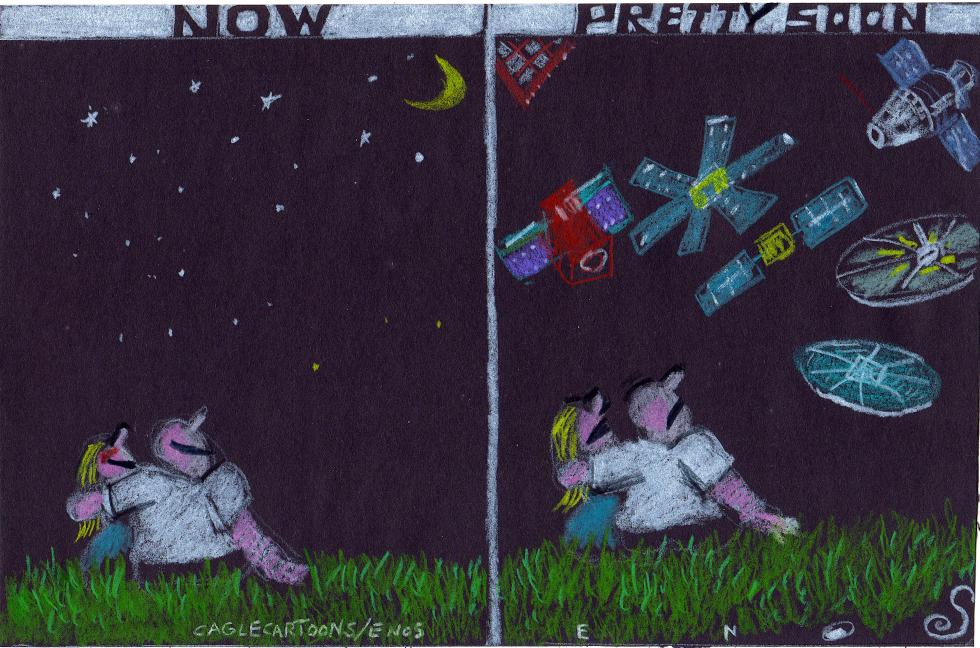
The night sky remains a quiet backdrop for stargazers in the present. Within a short time, however, proliferating satellites and debris will dominate the view overhead. The piece highlights how rapid expansion of orbital technology alters even simple moments of connection with the natural world.
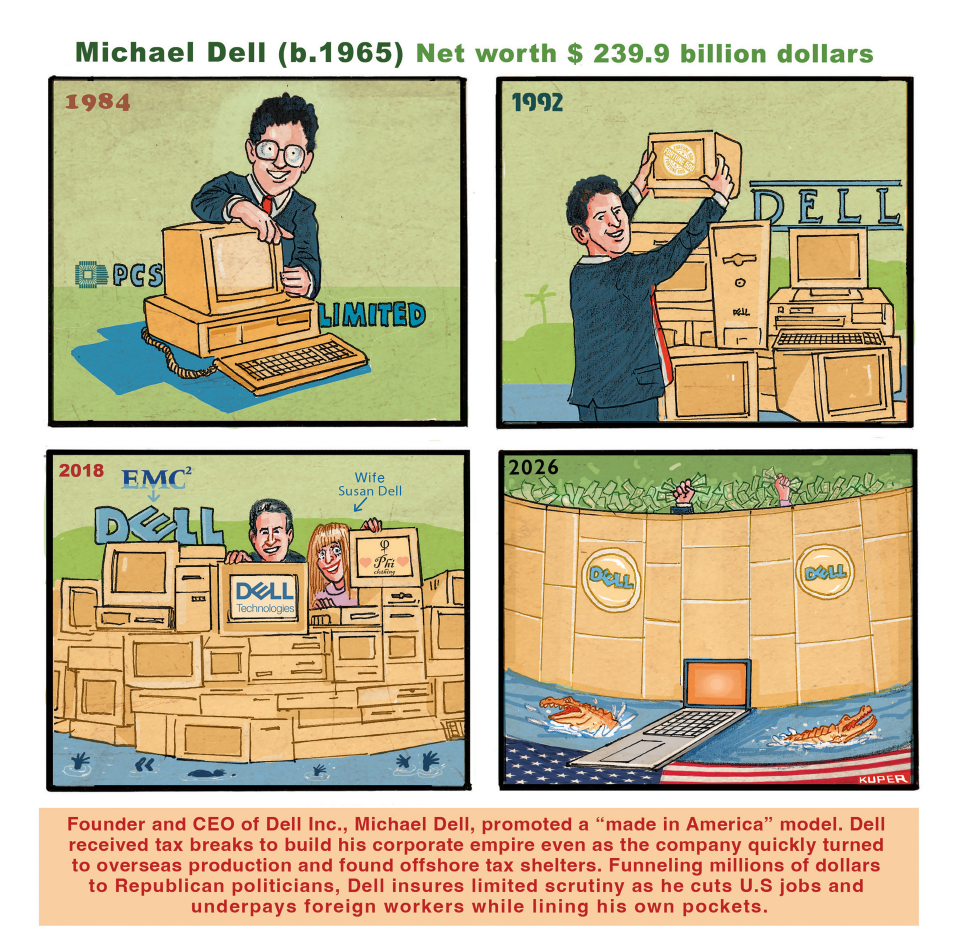
Michael Dell's net worth reached $239.9 billion by 2026 after decades of building Dell Technologies from a 1984 startup. The company accepted tax breaks for domestic growth yet shifted production overseas to cut costs and shelter profits. Donations to Republican politicians helped limit oversight while US jobs declined and foreign workers faced lower pay. The piece argues these moves allowed Dell to protect his fortune at the expense of American workers and fair taxation.