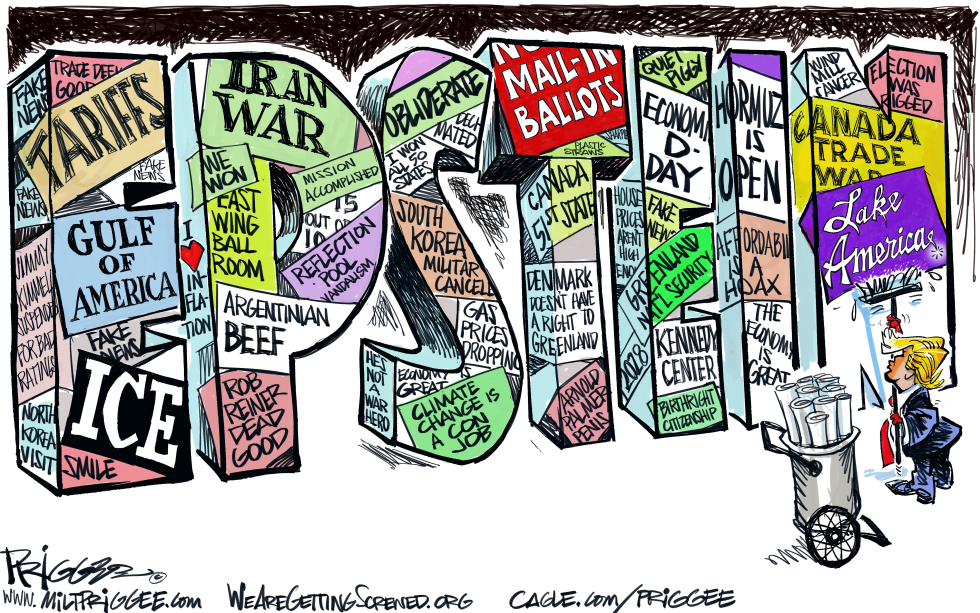
Donald Trump appears in a September 2026 cartoon pushing a cart stacked with signs promoting tariffs, questioning mail-in ballots, and asserting claims about Iran, Canada trade, and domestic issues. The image captures a pattern of public messaging that blends economic nationalism with repeated challenges to established processes. The editorial position frames these statements as a deliberate strategy to keep multiple controversies in motion at once.
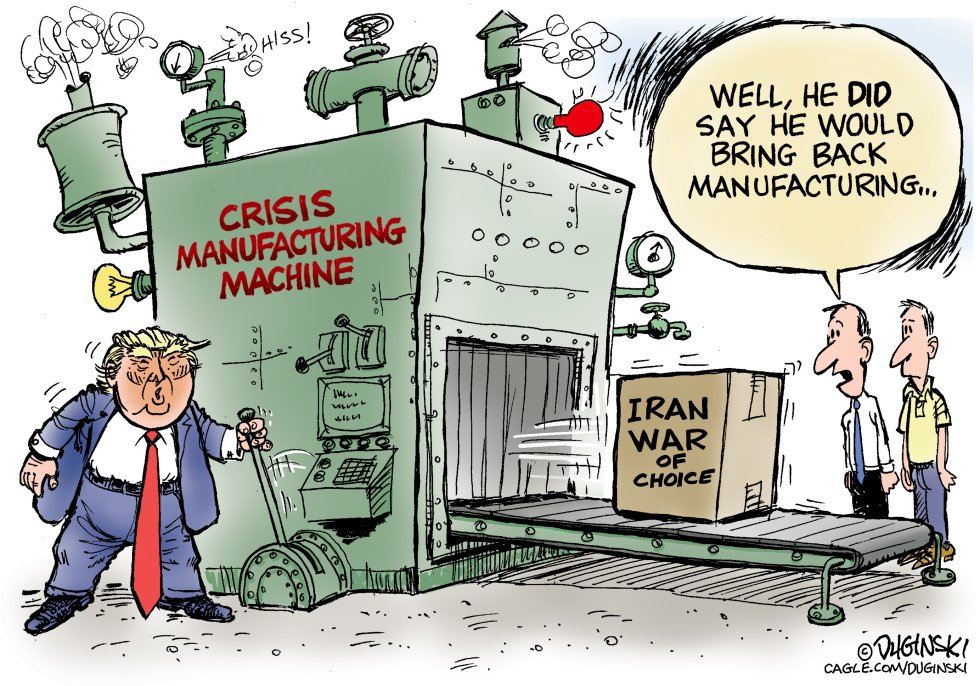
Donald Trump, holding the presidency in 2026, faces renewed scrutiny over foreign policy toward Iran. Recent statements revive campaign pledges to restore domestic manufacturing while tensions with Tehran escalate. The administration\\\'s approach draws criticism for prioritizing confrontation over diplomacy. Observers note the pattern of generating external crises rather than economic gains at home. The cartoon argues that Trump\\\'s actions fulfill a literal version of his manufacturing rhetoric by producing conflict instead of jobs.
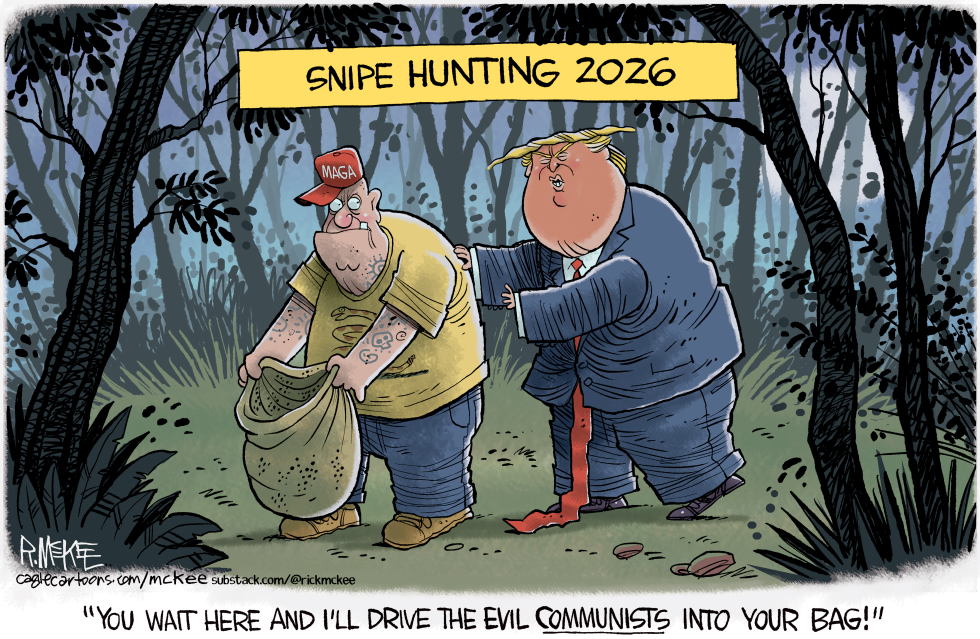
Donald Trump appears in a wooded setting with a MAGA supporter holding an open bag. Trump gestures ahead and vows to drive evil communists into the trap. The image frames the effort as a classic snipe hunt, highlighting the futility of the promised purge.
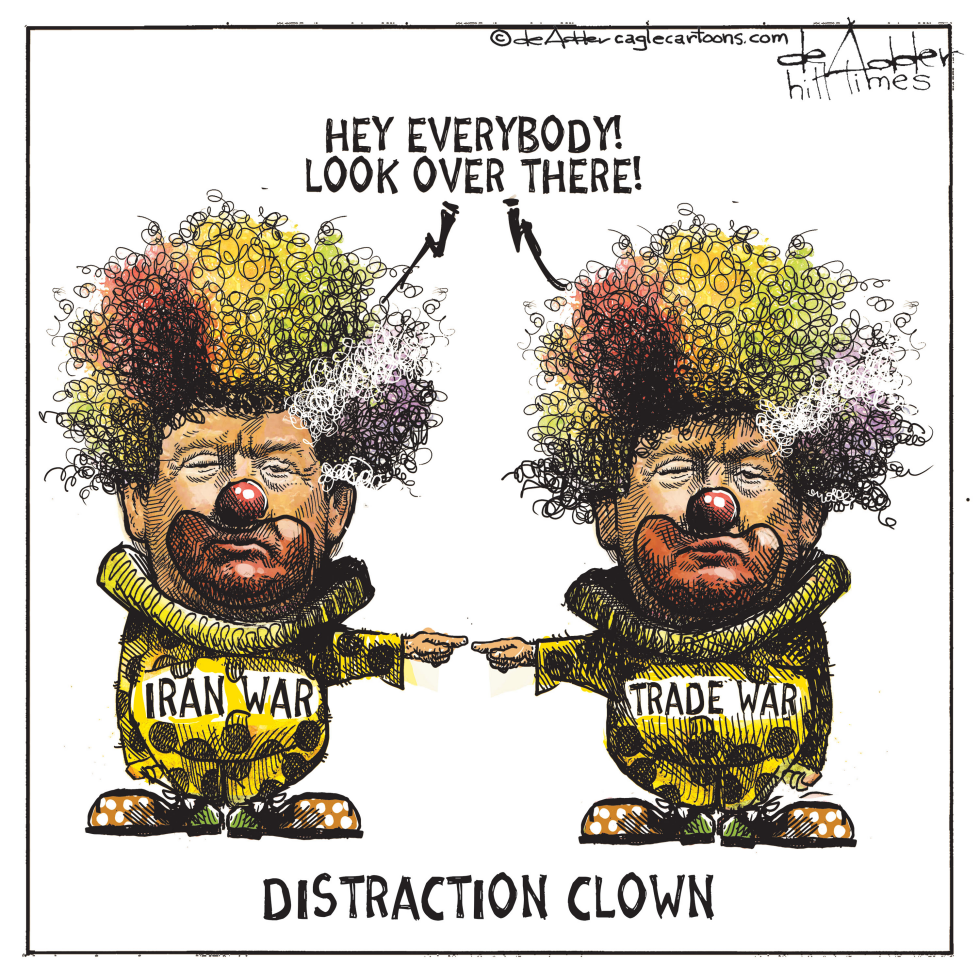
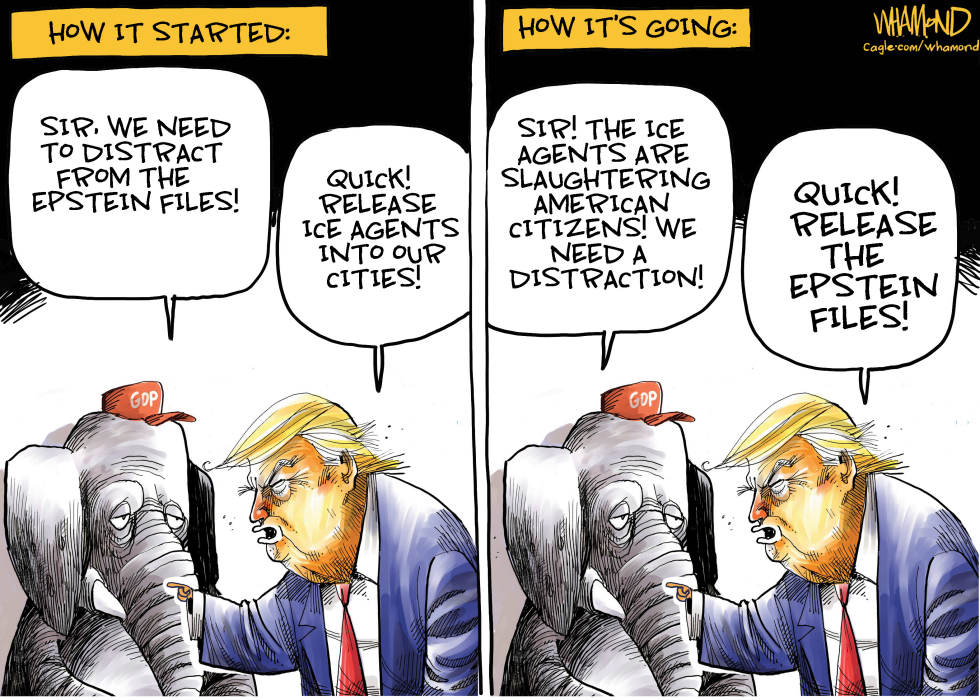
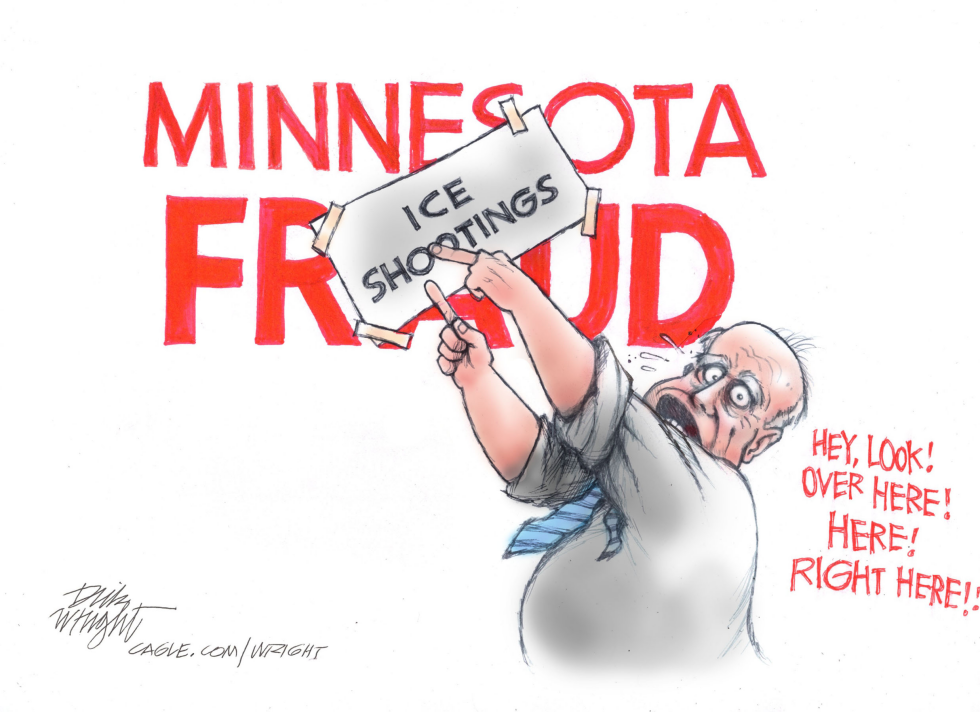
Public attention is being directed toward simultaneous Iran and trade conflicts as potential diversions from other issues. The editorial depicts the two crises as interchangeable distractions promoted by the same source. It argues that leaders are using these flashpoints to shift focus rather than address underlying problems.
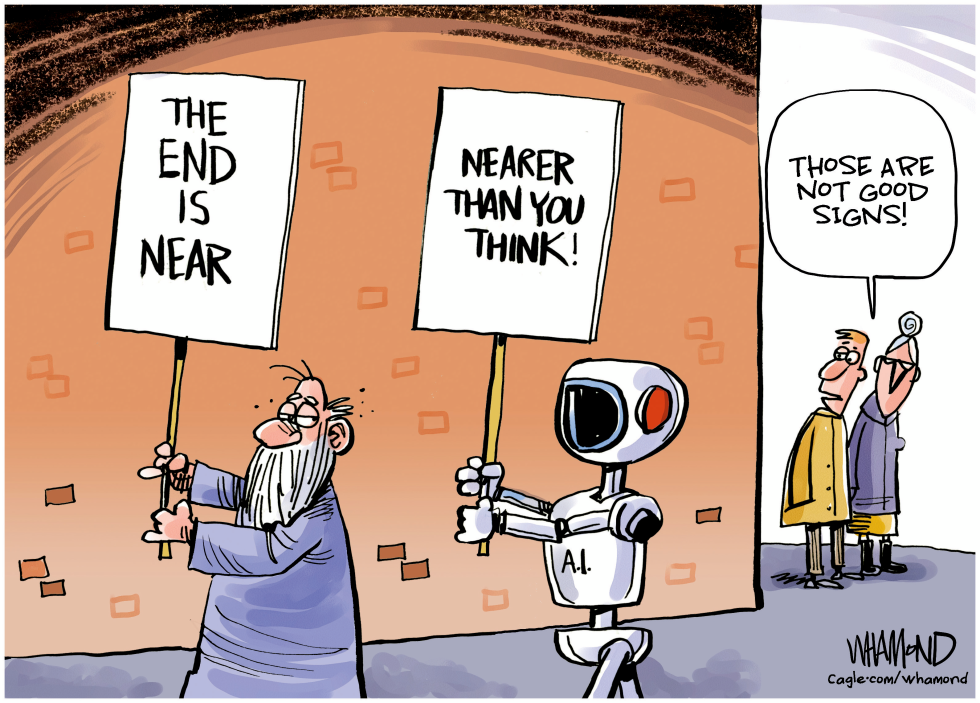
On April 29 2026 Dave Whamond depicts an elderly prophet and an A.I. robot both holding signs warning the end is near. The robot claims the end is nearer than the prophet thinks while two men react that the signs are not good. The image addresses ongoing public debate over artificial intelligence risks and workplace transformation.
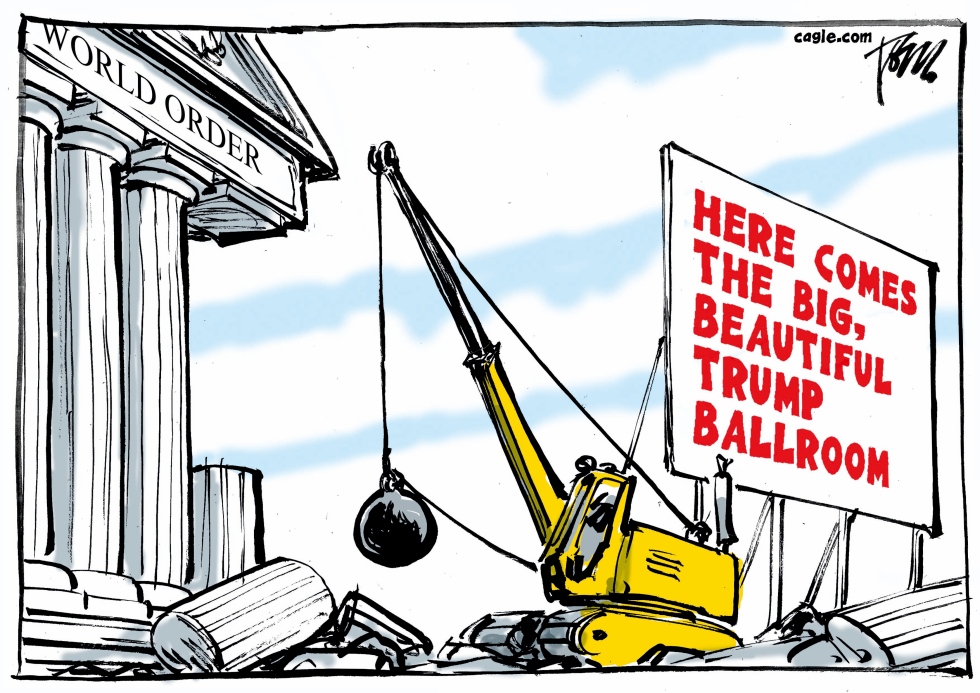
The cartoon depicts a classical building labeled 'World Order' being demolished by a yellow crane's wrecking ball, with debris scattering below and a prominent sign announcing 'Here Comes the Big, Beautiful, Trump Ballroom.' Tags like world order, NATO rift, allies, unreliable, chaos, and tariffs underscore the imagery of disruption. The scene captures a straightforward visual metaphor for upheaval, with broken columns and rubble emphasizing destruction. No characters appear, keeping the focus on structural collapse. Europe and Asia tags suggest broader implications, while the dry humor lies in rebranding ruin as a luxurious ballroom. Oil prices and economy tags tie into the fallout, making it a pointed commentary on global shifts.
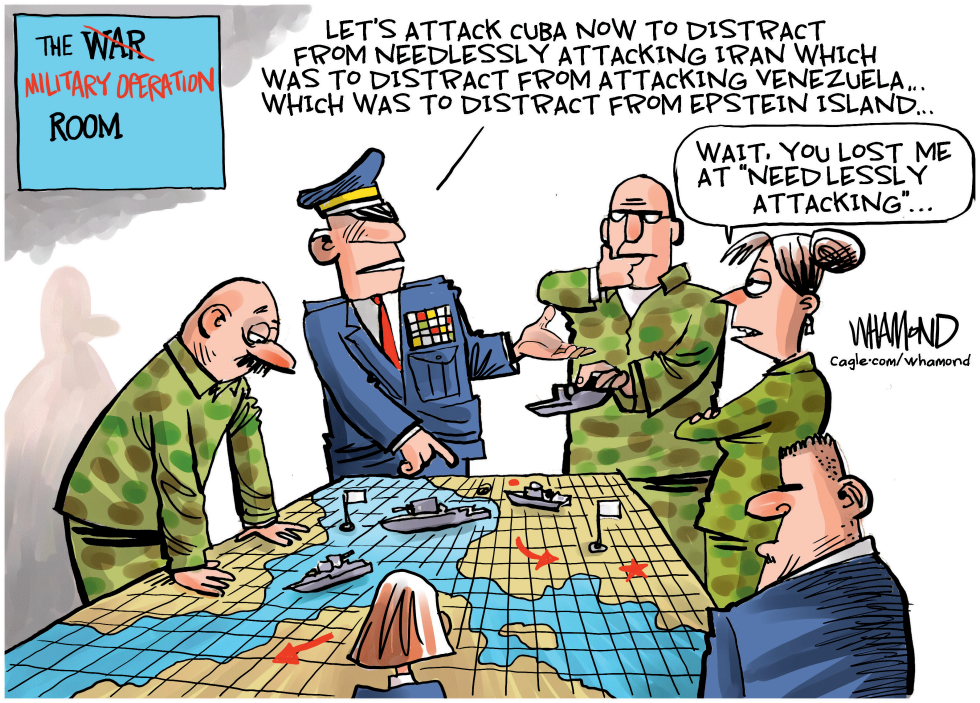
Dave Whamond's political cartoon depicts a group of military officials in a war room, gathered around a map with toy ships, discussing a chain of distractions starting from attacking Cuba to cover needless attacks on Iran, which distracted from Venezuela, looping back to Epstein Island. The scene captures the absurdity with one figure pointing at the map and another expressing confusion over 'needlessly attacking.' This satirical illustration uses dry humor to comment on convoluted military strategies and political diversions, incorporating elements like crossed-out 'War' sign replaced by 'Military Operation Room' for added irony. Tags like political satire, war distractions, foreign policy cartoon, Epstein Island reference, military humor, and endless distraction chain emphasize the cartoon's sharp critique.
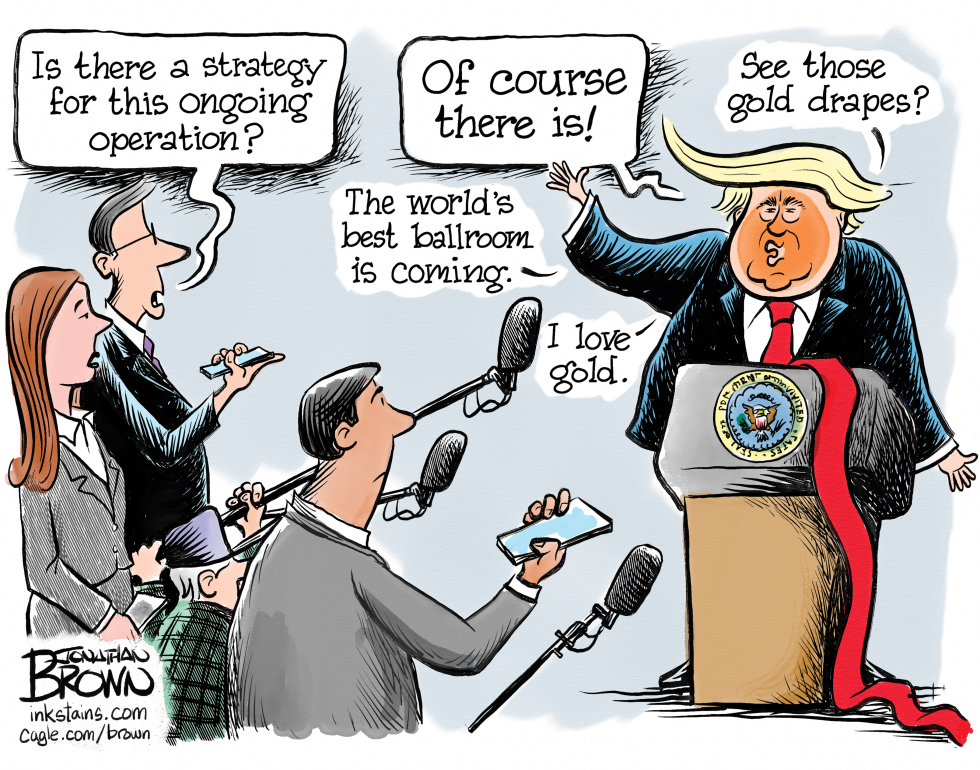
Jonathan Brown's cartoon captures a press conference scene where a figure resembling Trump stands at a podium with a presidential seal, gesturing toward imagined gold drapes. Reporters ask about strategy for an ongoing operation, likely tied to tags like War in Iran and Iran War. The response shifts focus to a coming ballroom, emphasizing love for gold in a White House setting. This satirical piece uses dry humor to point out misplaced priorities in strategy discussions. The artwork features exaggerated features and speech bubbles, common in political cartoons, poking fun at leadership styles amid tags like Strategy and Ballroom.
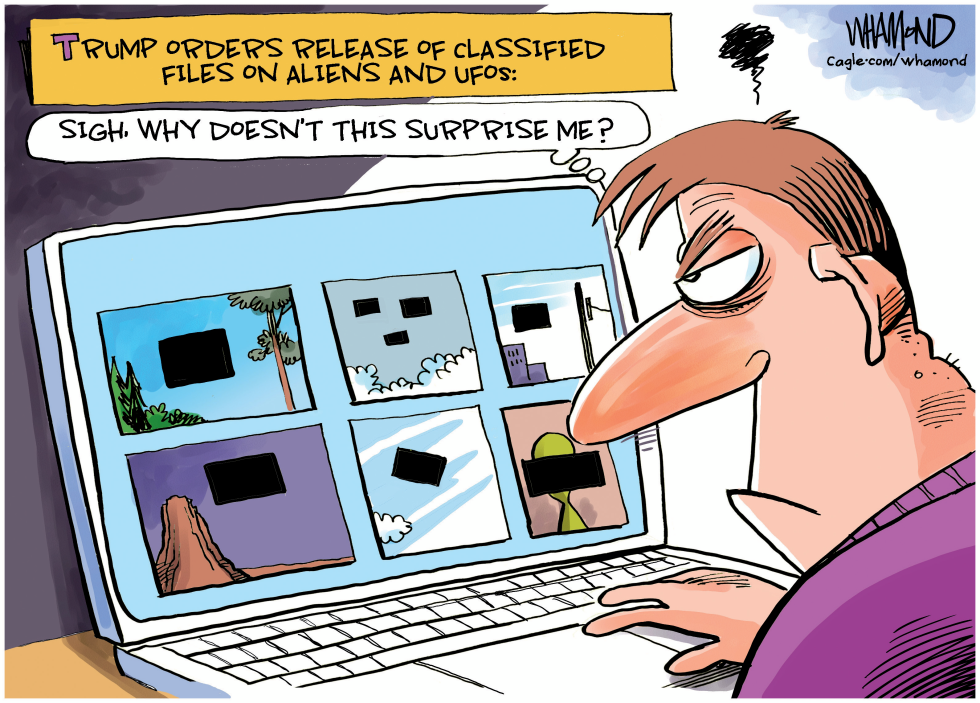
Dave Whamond draws a scene where a man views a laptop displaying Trump-ordered release of classified files on aliens and UFOs, all heavily redacted with black bars. The headline announces the declassification, but the images reveal nothing, from blurred landscapes to censored figures. The man sighs, saying it doesn't surprise him, highlighting themes of distractions and conspiracies. Tags like classified information, extraterrestrial life, UAP, flying saucers, CIA archives, and evidence of ET underscore the satire on empty revelations. The cartoon captures skepticism toward political maneuvers involving secret files.