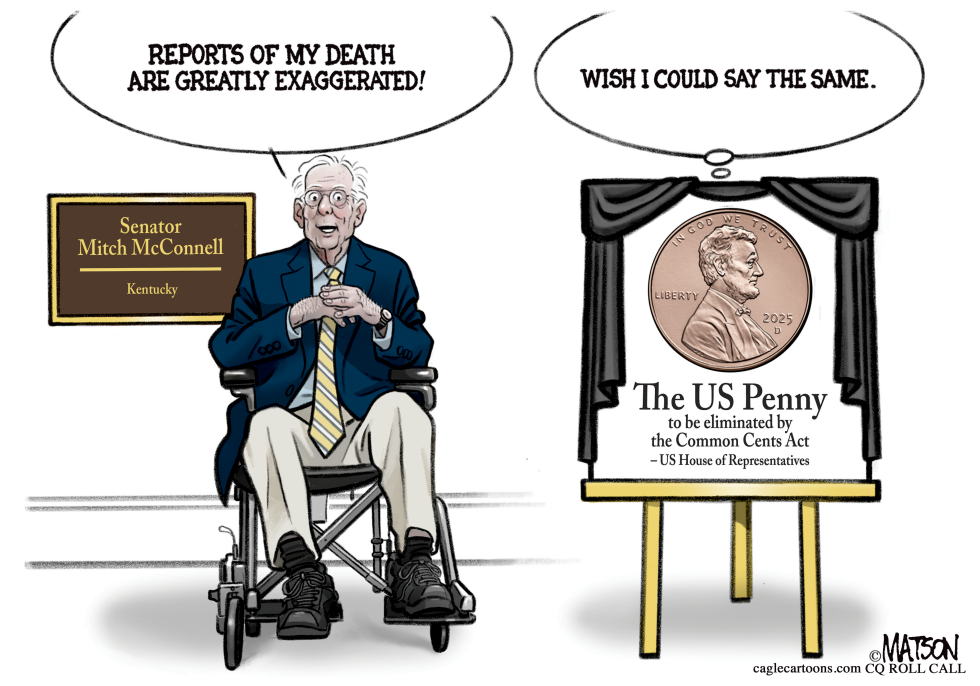
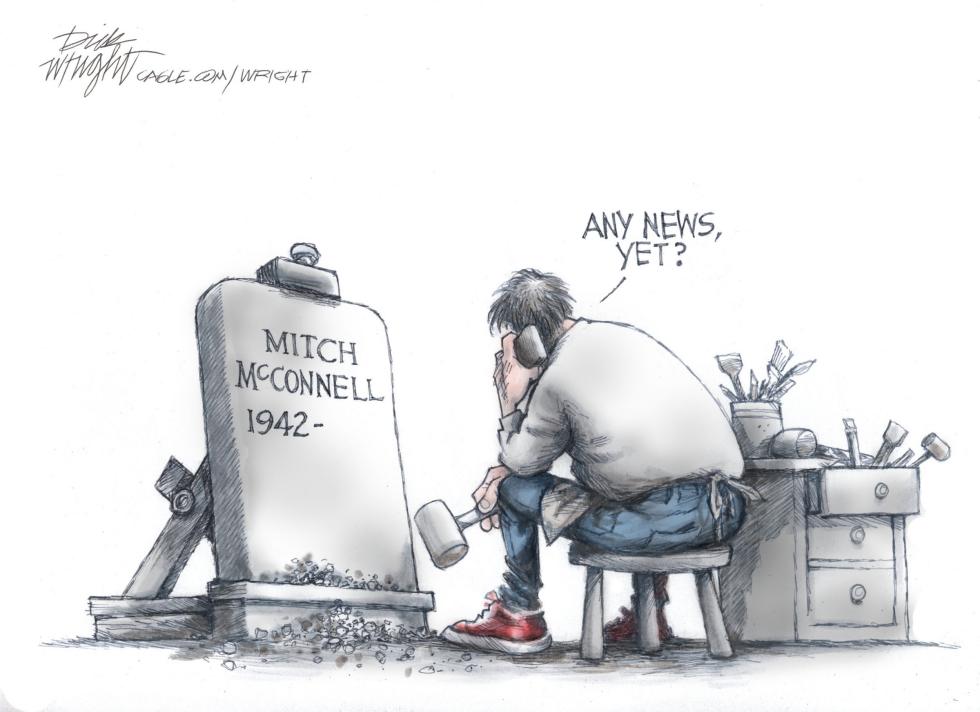
Senator Mitch McConnell returned to the Senate floor on September 15, 2026, after health-related absences, directly addressing rumors of his political demise. At the same time the House has advanced the Common Cents Act to eliminate the US penny. The move reflects ongoing efforts to modernize currency amid rising production costs. McConnell's return underscores his enduring influence in the chamber despite physical challenges. The cartoon uses a classic quote to juxtapose the senator's resilience against the penny's planned demise, suggesting one survives while the other does not.
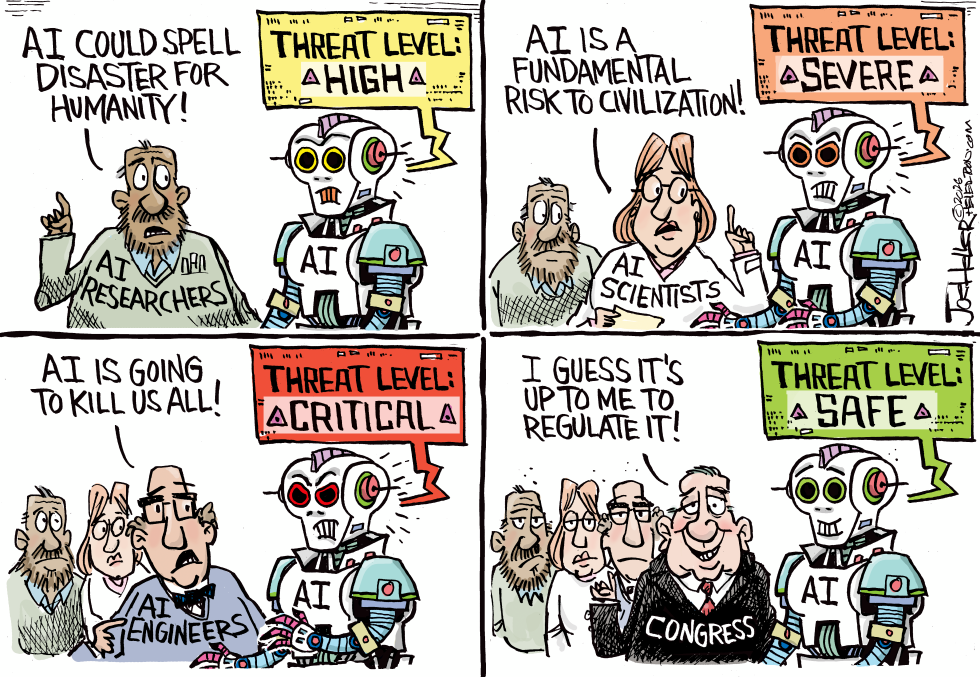
AI researchers, scientists and engineers have issued escalating warnings that artificial intelligence poses severe risks to humanity and civilization. In response, members of Congress have asserted their role in regulation and declared the threat level safe. The move highlights ongoing debates over whether legislative bodies are equipped to address rapidly advancing technology risks.
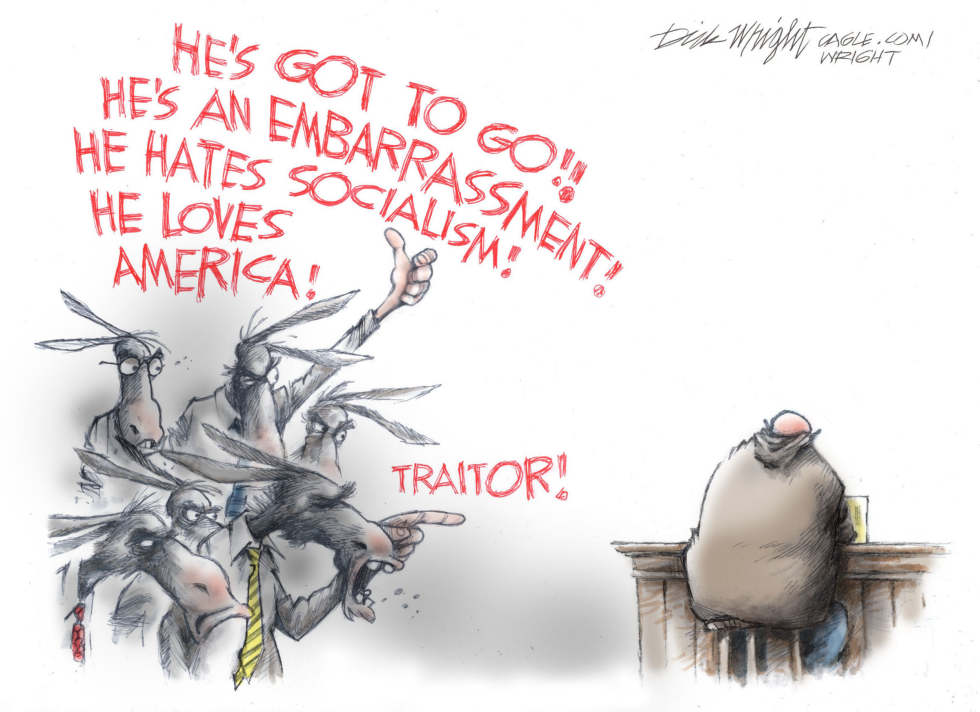
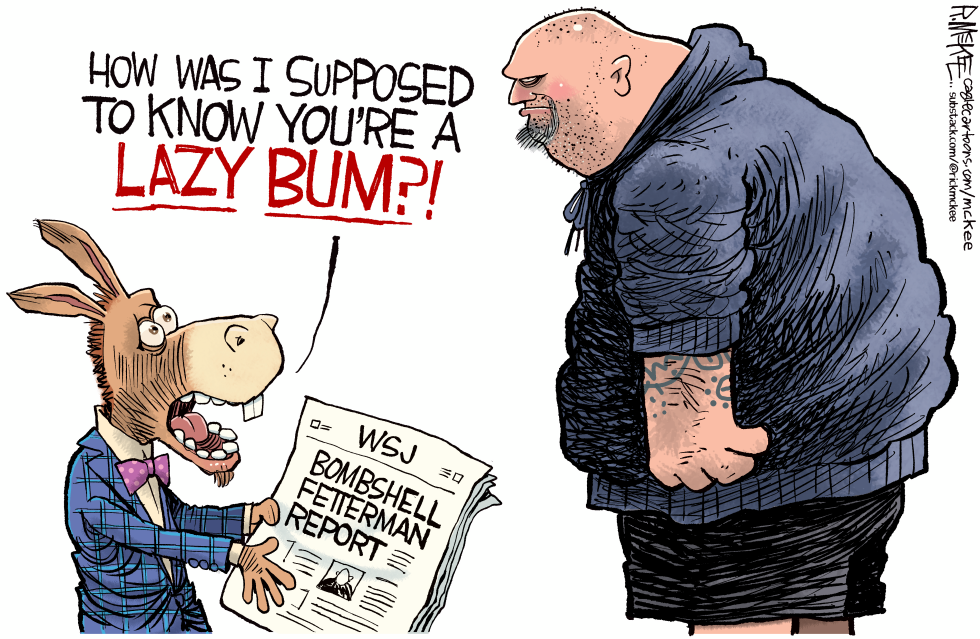
Senator John Fetterman drew sharp criticism from fellow Democrats in September 2026 for publicly rejecting socialism and emphasizing his love of America. The episode highlights deepening tensions within the party over ideological purity tests. The cartoon portrays the attacks as self-destructive party infighting.
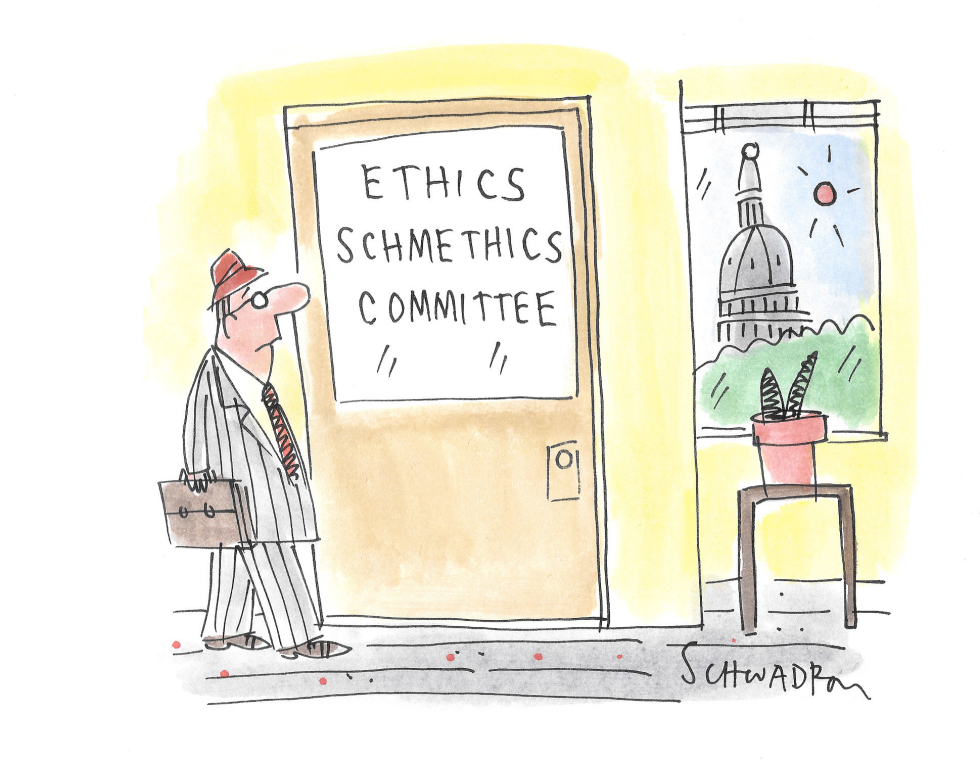
Congress continues to sideline meaningful ethics oversight, with lawmakers showing little interest in strengthening or even respecting the chamber's ethics committee. The panel exists on paper but carries little practical weight in daily operations. This dynamic matters because weak internal standards erode public trust in legislative institutions and invite outside influence. The cartoon captures the prevailing attitude that ethics rules are an afterthought rather than a core responsibility.
Mitch McConnell's prolonged absence from the Senate in 2026 has prompted questions about his future and the chamber's direction. The cartoon captures the uncertainty surrounding the veteran Kentucky Republican's role and whether his departure is imminent.
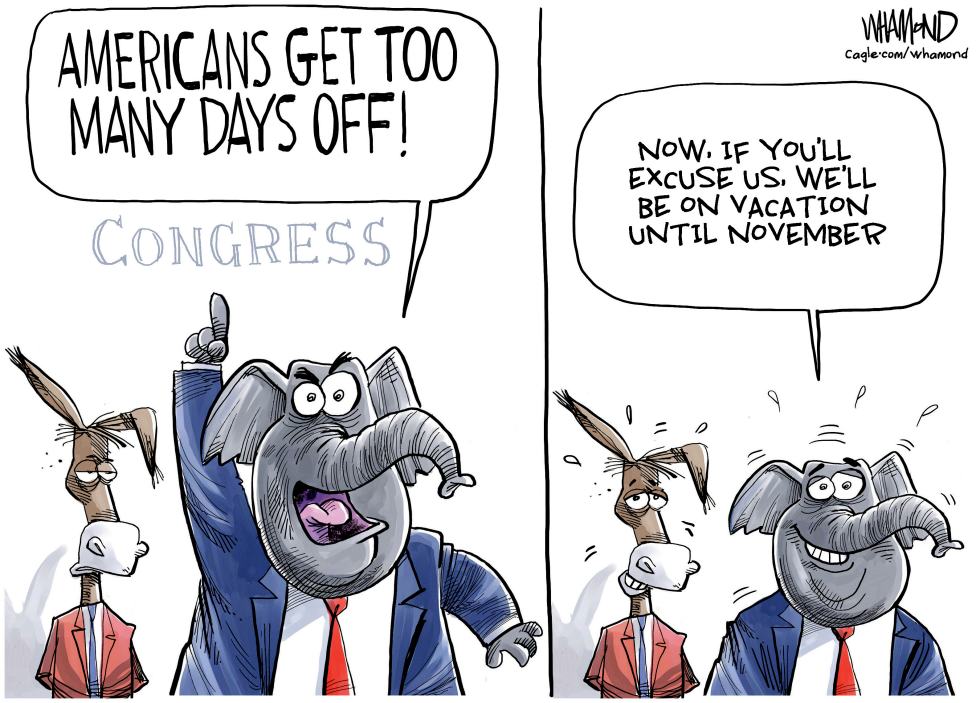
Congressional leaders from both parties have drawn criticism for lecturing American workers about taking too many days off while preparing to recess until November. The move comes as lawmakers face questions over productivity and priorities in an election year. The cartoon highlights the perceived double standard between public statements on labor and the actual schedule of elected officials.
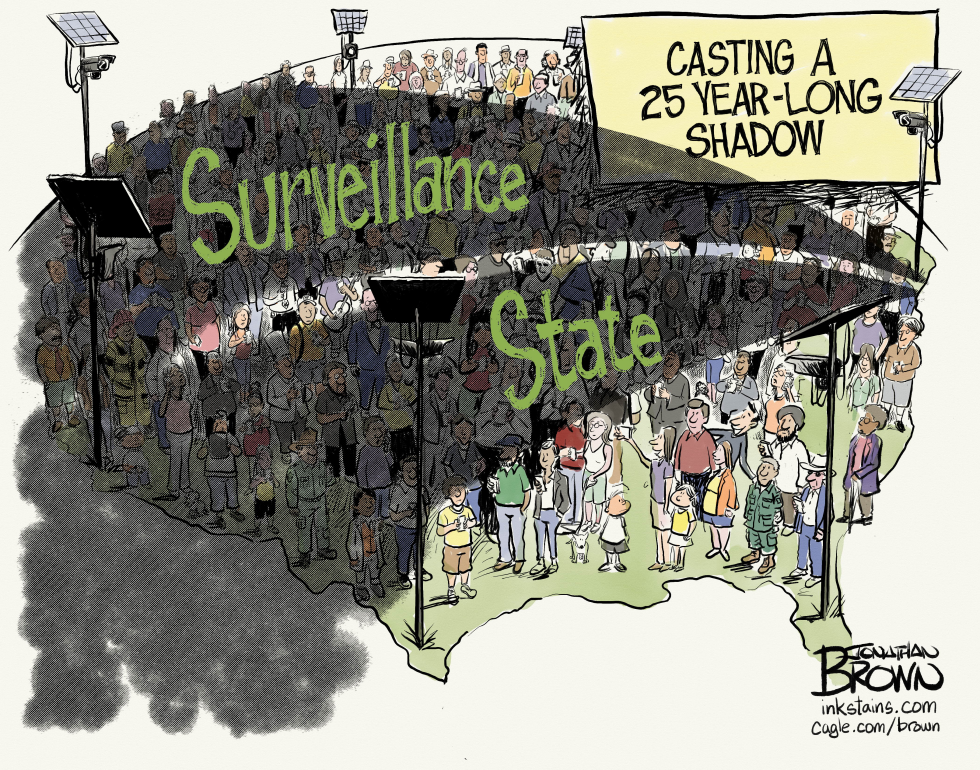
The cartoon depicts a dense crowd of Americans standing on a map of the United States, partially obscured by a large dark shadow cast by surveillance cameras mounted on poles. The words 'Surveillance State' appear prominently in green lettering across the scene, while a sign in the upper right reads 'CASTING A 25 YEAR-LONG SHADOW.' The image comments on the lasting effects of expanded government surveillance programs that began after the September 11 attacks, now spanning a quarter century. It illustrates how these measures continue to influence daily life and public spaces in 2026.
A Wall Street Journal report labeled Sen. John Fetterman a lazy bum, prompting a sharp response from the Pennsylvania Democrat. The piece highlights ongoing questions about his Senate attendance and engagement. Fetterman dismissed the characterization as unfair. Democrats portrayed the coverage as an attack on one of their members. The cartoon captures the party's defensive posture toward the criticism.
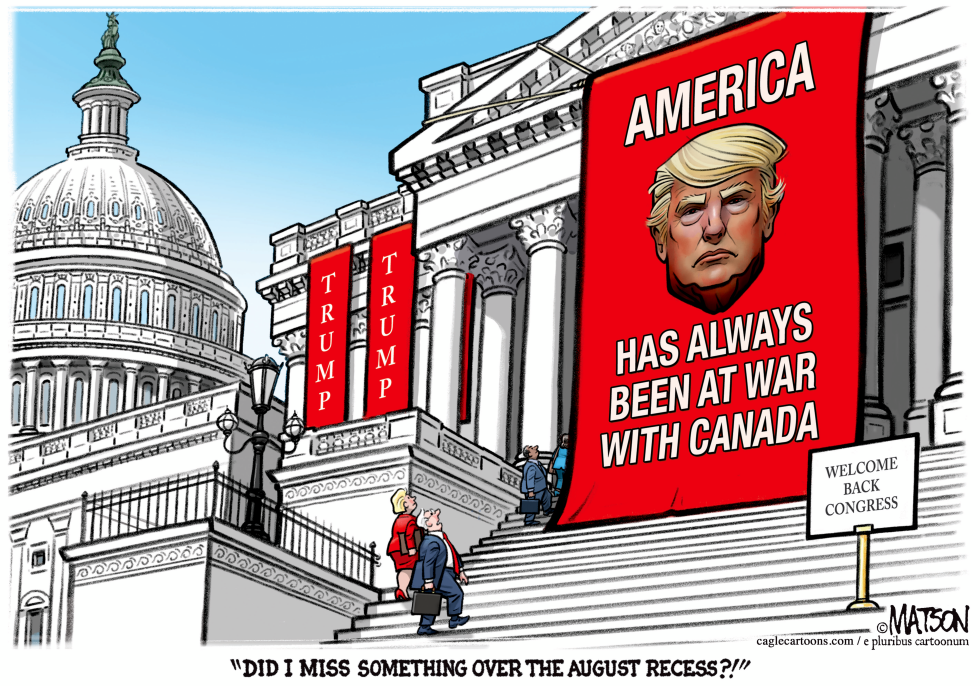
President Trump has intensified trade measures against Canada, prompting comparisons to classic dystopian rhetoric as lawmakers reconvene after the August recess. The move revives long-standing bilateral tensions over tariffs and economic policy. The cartoon frames the development as an attempt to normalize conflict through repeated messaging, underscoring concerns that familiar disputes are being recast as perpetual struggle.
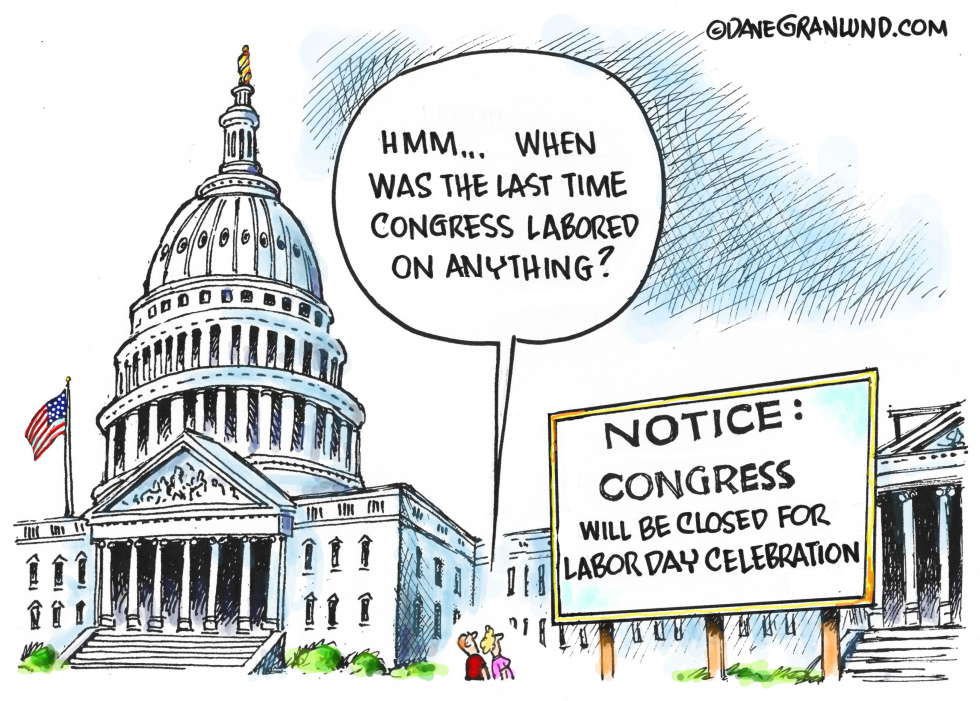
A political cartoon depicts the US Capitol Building with a prominent notice announcing Congress will be closed for Labor Day celebration. A speech bubble from onlookers asks when Congress last labored on anything. The image, dated September 1, 2026, comments on legislative inactivity during a federal holiday. It reflects common public frustration with congressional productivity and frequent recesses. The cartoon uses the holiday to underscore perceptions of limited legislative output in recent sessions.
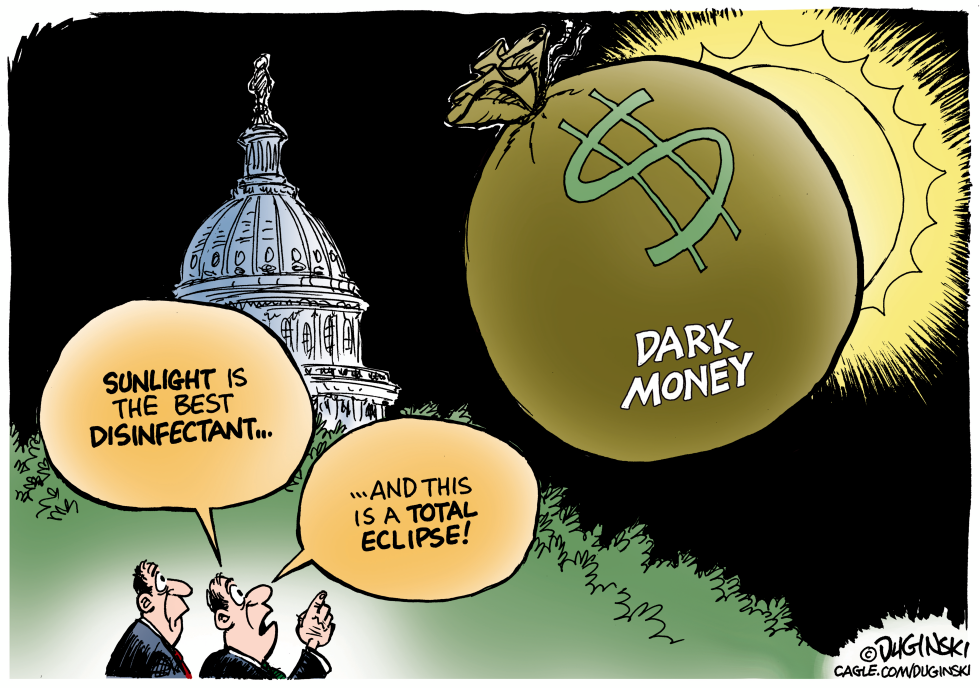
Dark money continues to shape congressional races and policy debates through undisclosed channels. Lawmakers face pressure to address donor secrecy amid calls for stronger disclosure rules. The cartoon argues that such funds directly undermine public oversight of government actions.
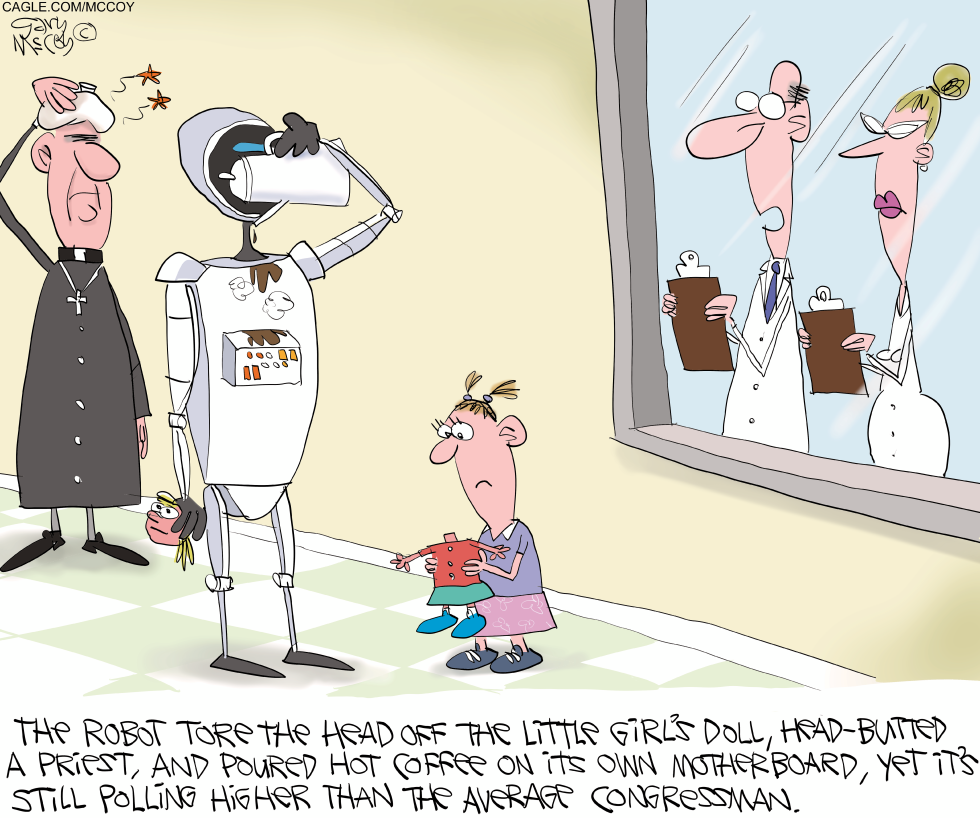
A robot's string of mishaps including tearing a doll's head off, head-butting a priest and spilling coffee on its own systems still leaves it polling higher than the average member of Congress. The piece highlights widespread public frustration with congressional performance and low approval ratings that allow even flawed alternatives to rank higher.
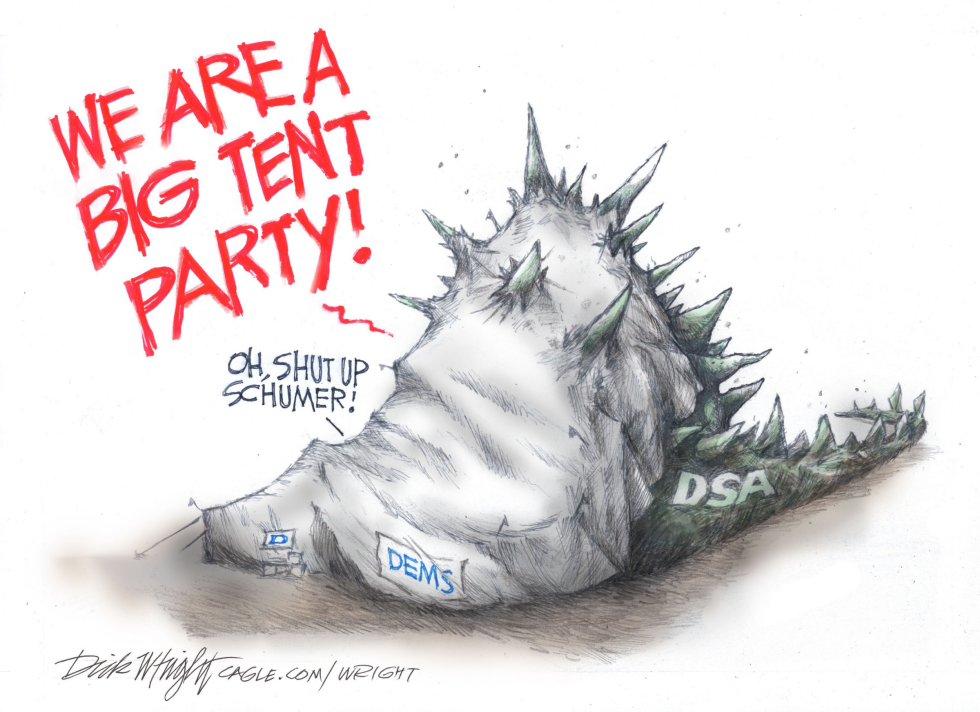
Democratic leaders continue to promote the party as a big tent open to all factions. The DSA's growing role creates visible friction with establishment figures like Senate Minority Leader Chuck Schumer. This dynamic highlights ongoing tensions over the party's direction and messaging ahead of future elections. The piece argues that the big tent claim rings hollow when the socialist wing dominates and dismisses traditional voices.
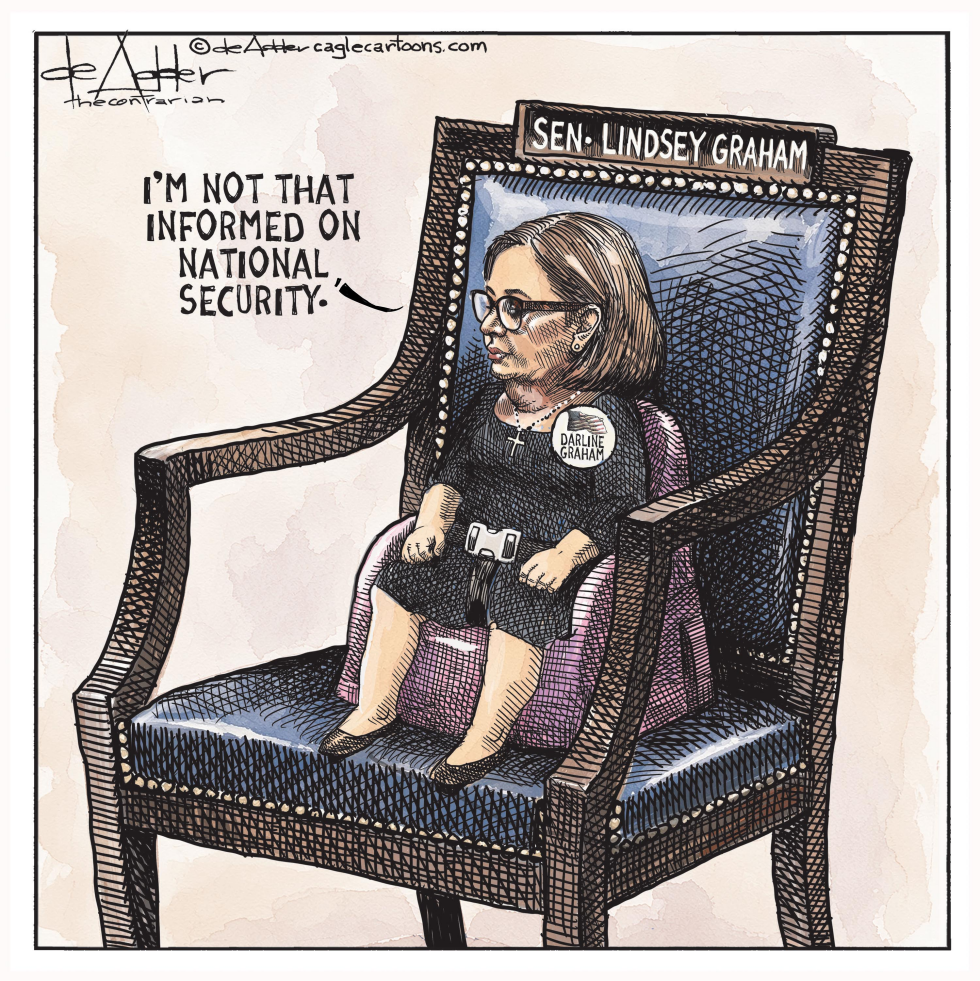
Senator Lindsey Graham stated he is not that informed on national security. The remark comes from a senior member of the Senate with oversight responsibilities in foreign affairs and defense matters. It raises questions about preparedness for committee leadership. The piece portrays the comment as a direct reflection of Graham's self-assessment in his role.
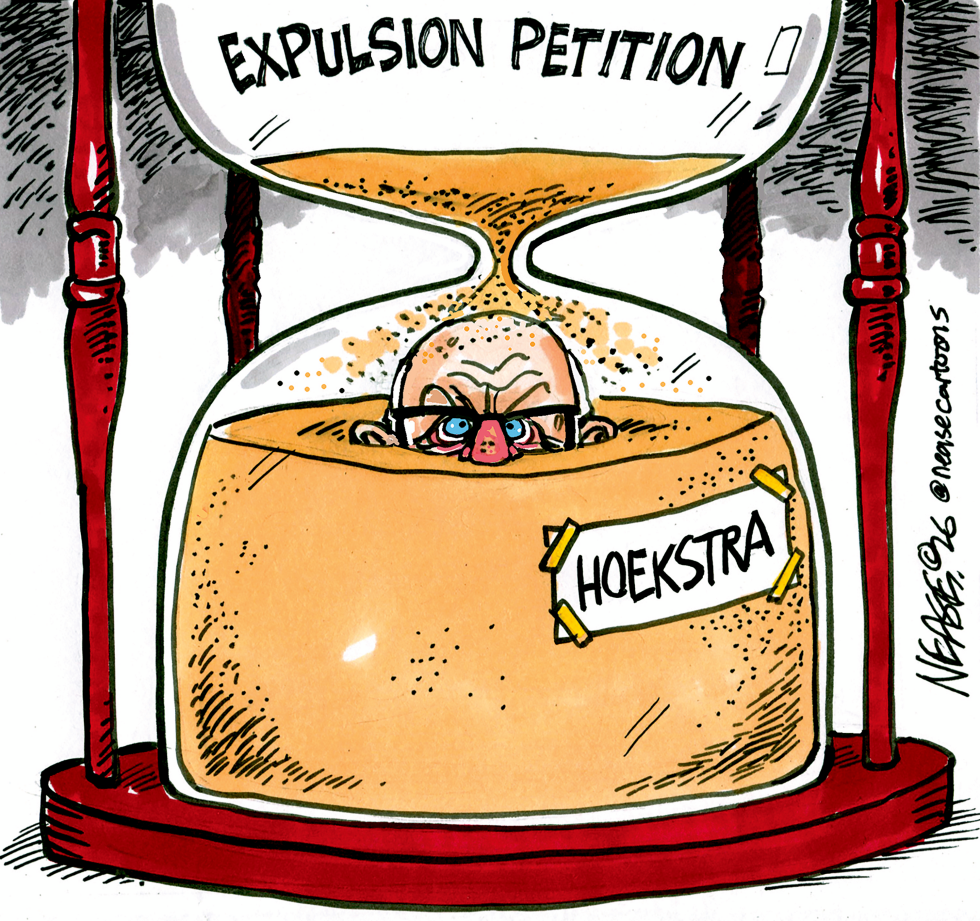
A petition to expel Representative Hoekstra from Congress has advanced, placing the lawmaker under direct procedural threat. The measure reflects internal House pressure over conduct and accountability standards. Colleagues must decide whether to advance the rare expulsion process or allow the matter to lapse. The development underscores ongoing tensions within the chamber about member discipline and institutional standards.