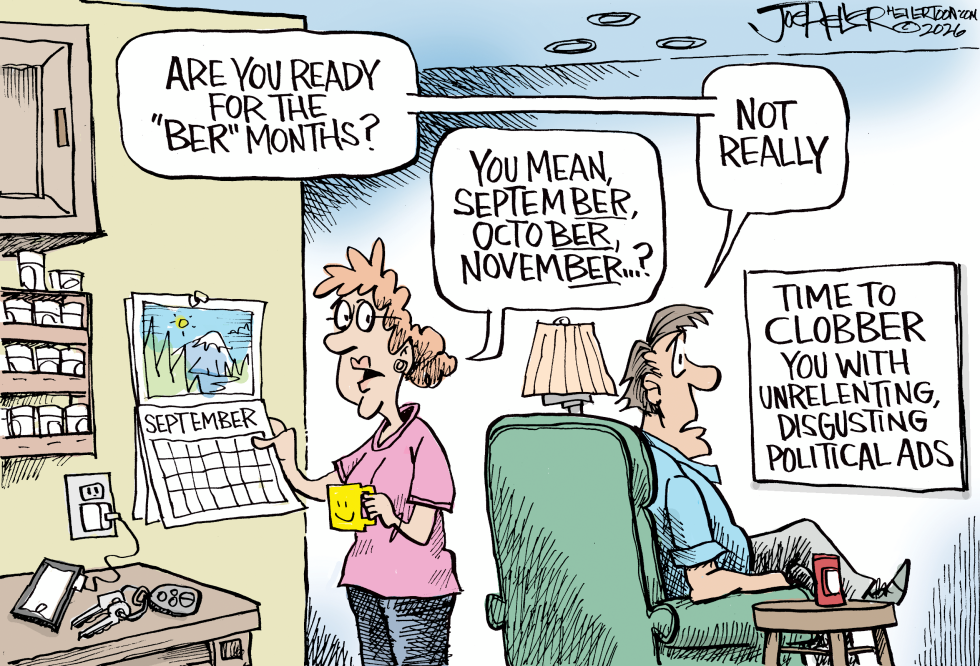
As September begins, the annual cycle of fall political advertising intensifies ahead of November elections. Candidates and outside groups ramp up spending on television, digital and mail campaigns to reach voters. The volume of messages creates widespread fatigue among the public. The cartoon highlights the predictable dread that accompanies the shift from summer to the final stretch of the campaign calendar.
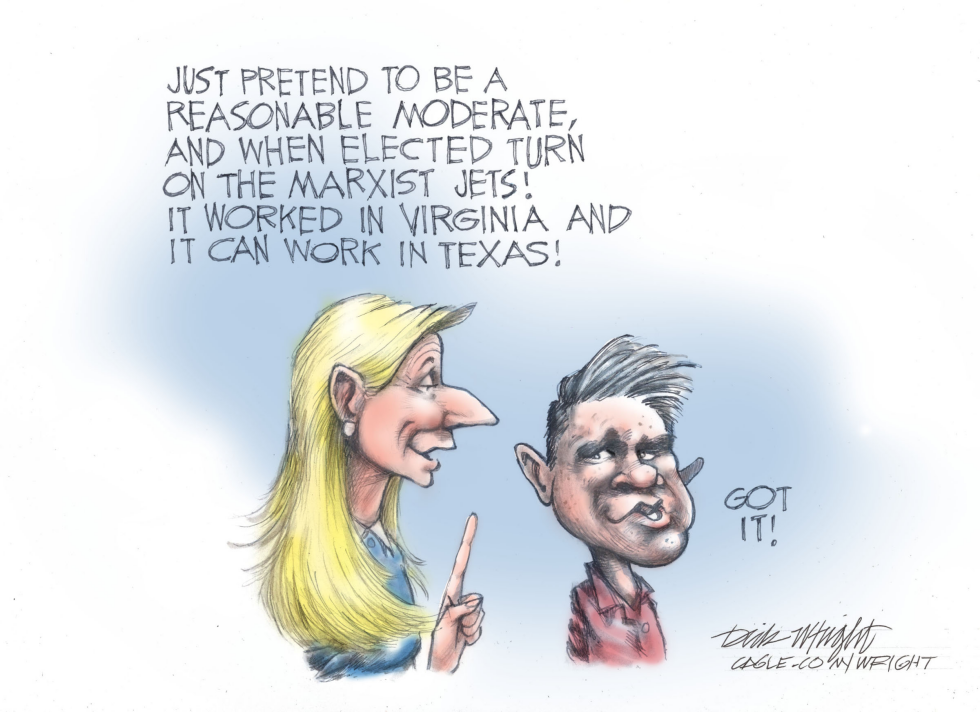
A Texas political candidate is depicted receiving advice to campaign as a moderate before revealing a more radical agenda after election, modeled on Abigail Spanberger's Virginia approach. The cartoon highlights concerns over deceptive campaign strategies in the 2026 cycle and questions the authenticity of centrist positioning by progressive candidates.
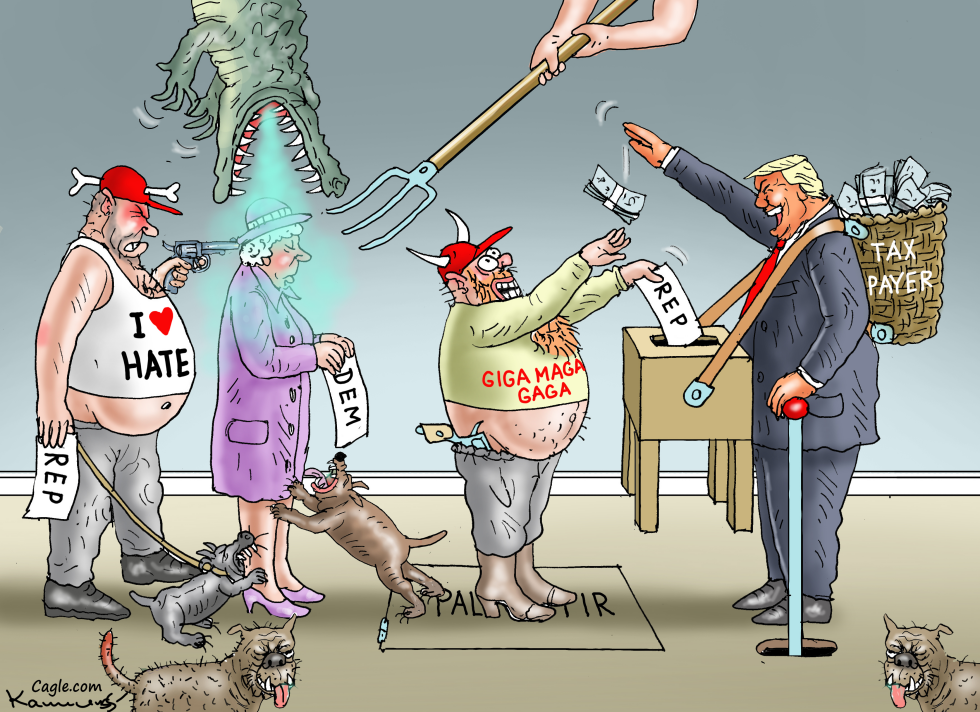
As the 2026 midterm elections approach, former President Trump has positioned himself as a central force in Republican campaigns, directing resources and mobilizing supporters. The cartoon highlights the use of taxpayer money in these efforts and the intense partisan divide, with Democrats portrayed as under attack. It takes the position that such involvement risks undermining fair electoral processes.
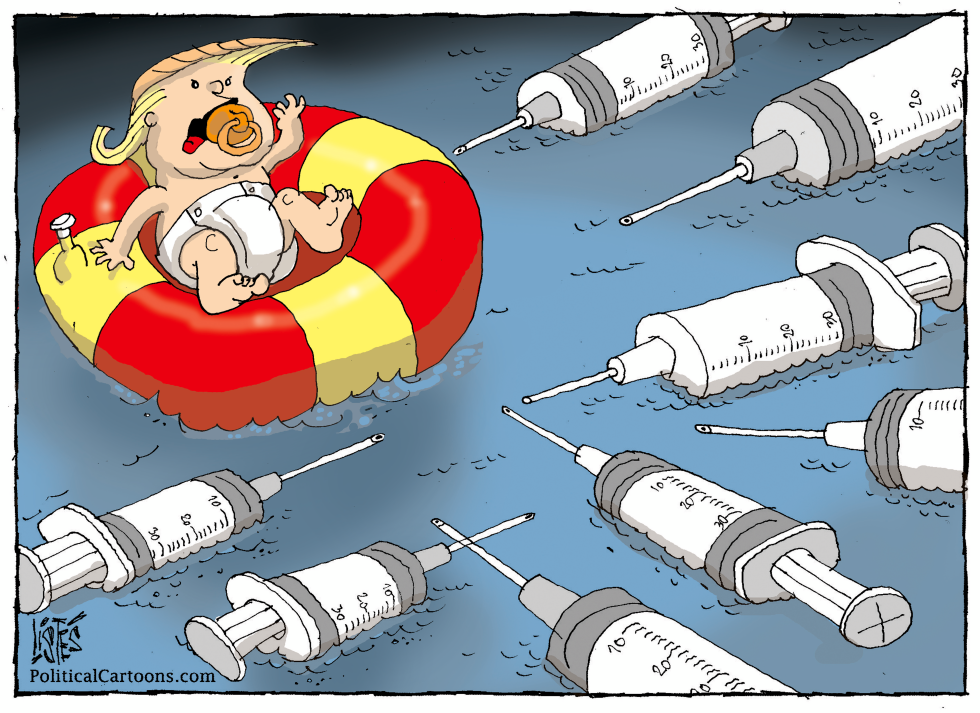
Donald Trump has maintained vocal opposition to certain vaccine mandates and public health measures in recent political discourse. The piece frames this stance through an infant metaphor to underscore perceived vulnerability and fear. It critiques the position as immature amid ongoing public health debates.
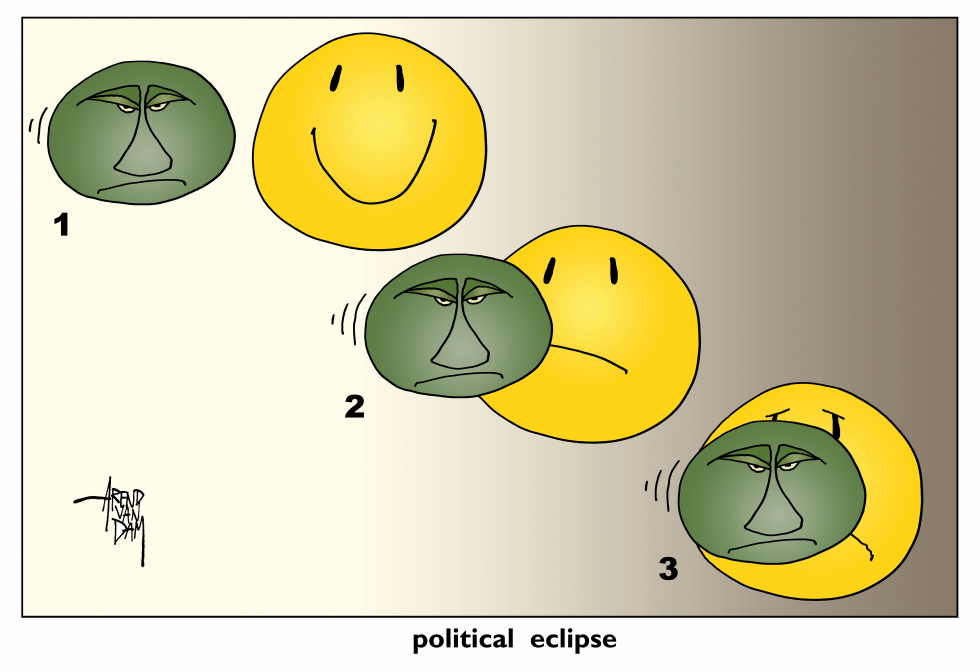
A political figure represented by a green frowning face progressively covers a yellow smiling face across three labeled stages. The interaction illustrates one presence gaining dominance while diminishing the other. The piece comments on the dynamics of political competition and shifting influence between rivals.
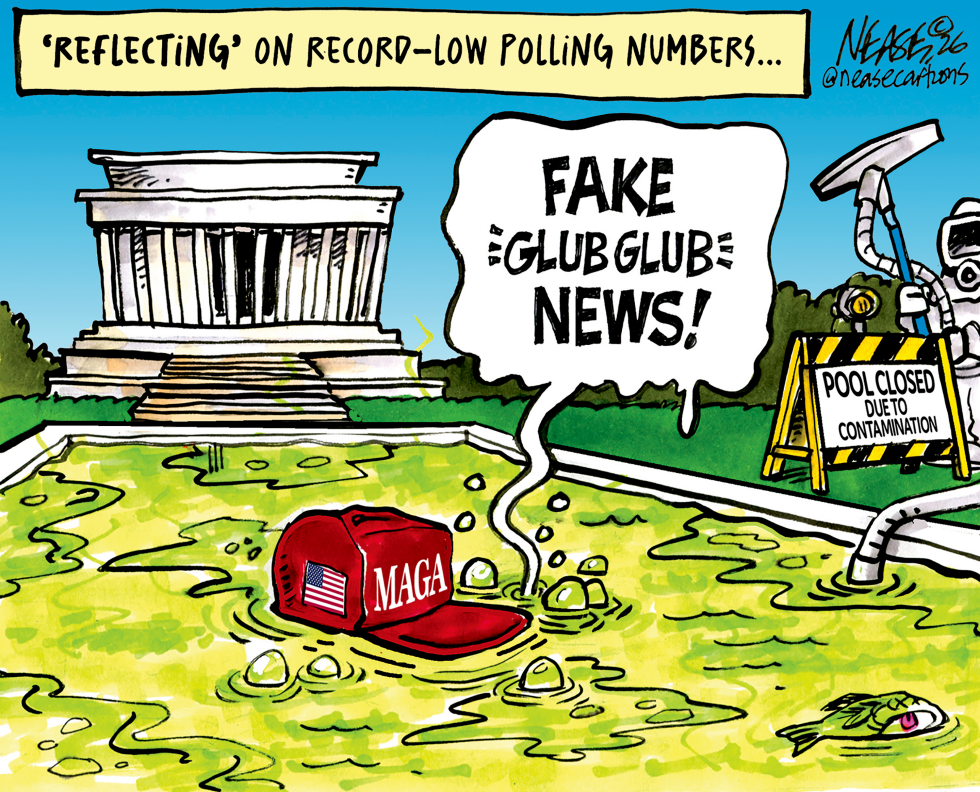
Donald Trump-aligned polling numbers reached record lows in early August 2026. Supporters responded with claims of fake news rather than addressing the data. The piece portrays this denial as occurring in a toxic environment.
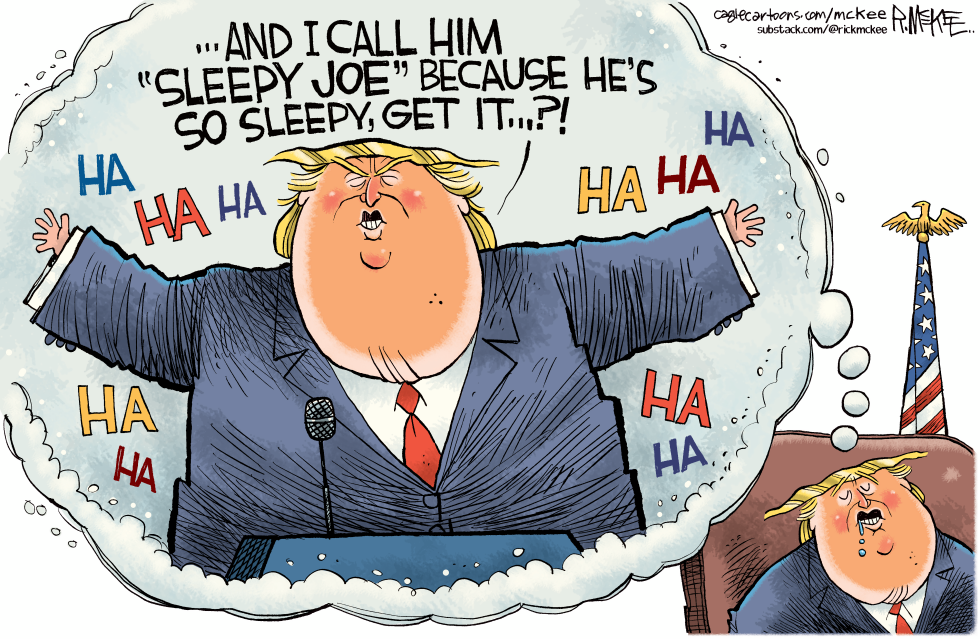
Donald Trump repeatedly labeled Joe Biden 'Sleepy Joe' during the 2024 campaign and beyond. The nickname stuck as a critique of Biden's energy and age. The cartoon responds by showing Trump himself unable to stay awake at the podium, underscoring perceived hypocrisy in the attack.
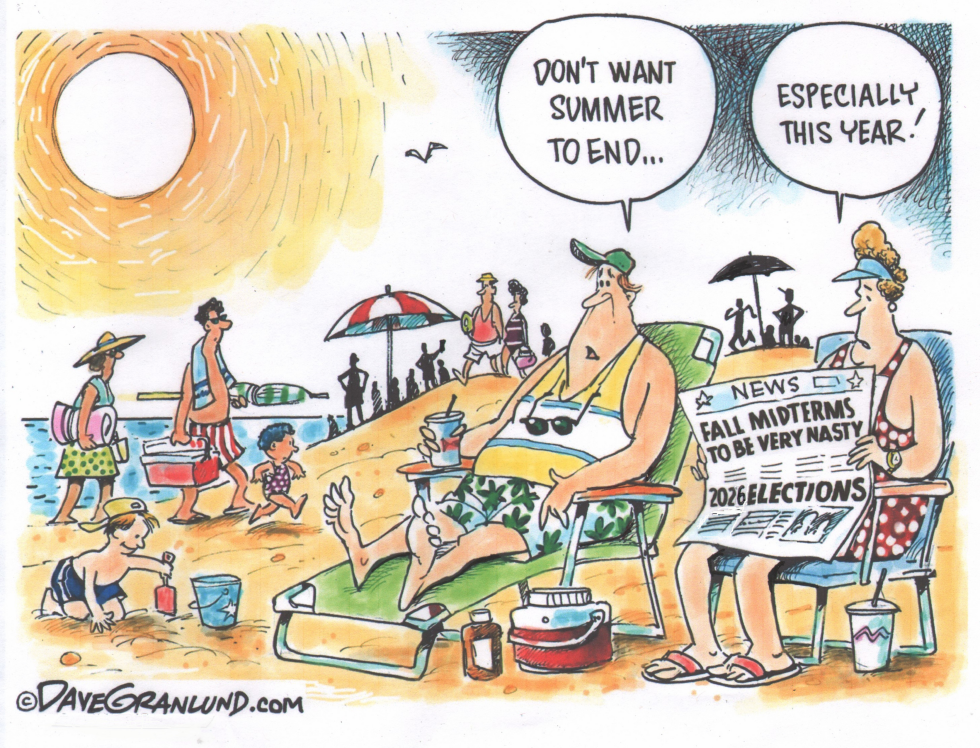
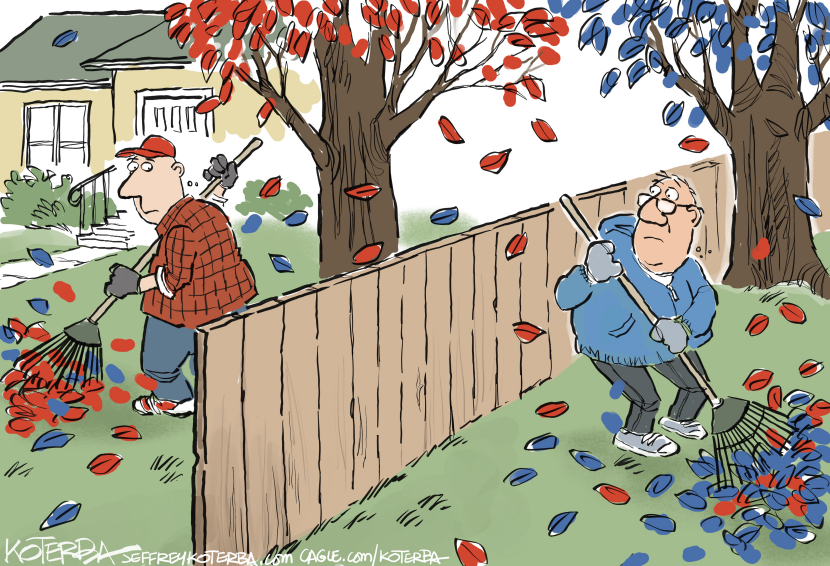
With the 2026 midterm elections approaching, voters across the country are bracing for contentious races that could reshape Congress. The campaigns are already shaping up to be unusually heated, with both parties mobilizing aggressively. This dynamic matters because control of the House and Senate will influence policy on spending, investigations, and presidential priorities for the remainder of the term. The piece takes the position that many citizens would rather avoid the coming political battles altogether.
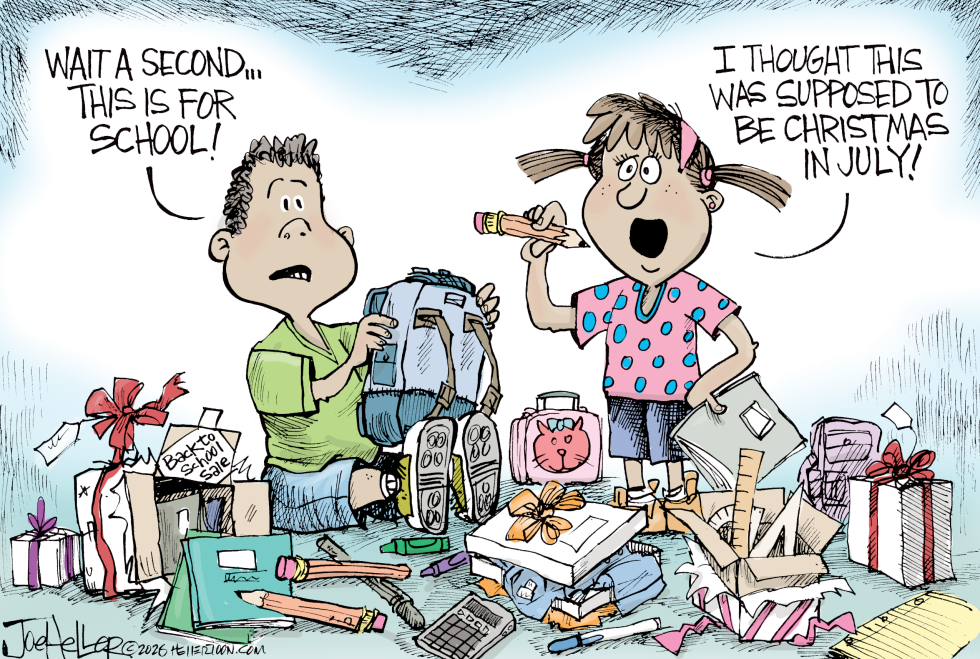
Retailers launched back-to-school promotions in late July, prompting families to stock up on supplies weeks ahead of the academic calendar. The timing overlaps with summer clearance events that mimic holiday marketing tactics. Parents and students face added pressure to buy early amid rising costs for essentials. The piece highlights how commercial calendars compress traditional shopping seasons and shift family routines.
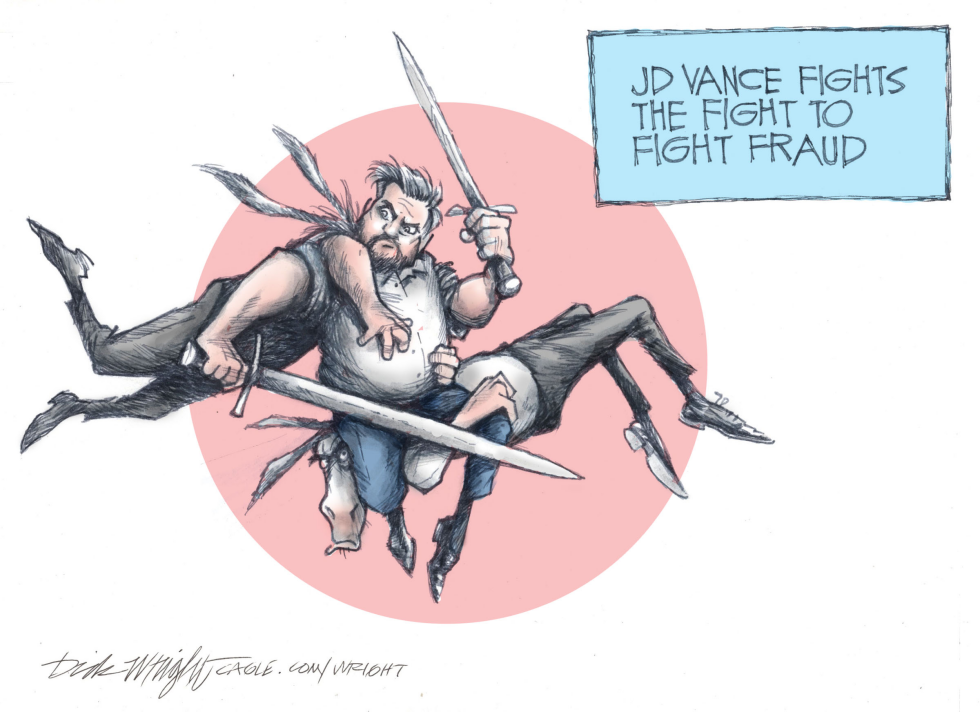
The July 10 2026 cartoon by Dick Wright shows JD Vance in mid-leap with two swords drawn against a prone figure topped by a donkey head. A blue text box reads JD VANCE FIGHTS THE FIGHT TO FIGHT FRAUD. The scene uses a red circle backdrop and captures the vice presidential figure in exaggerated combat stance amid torn clothing and motion lines.
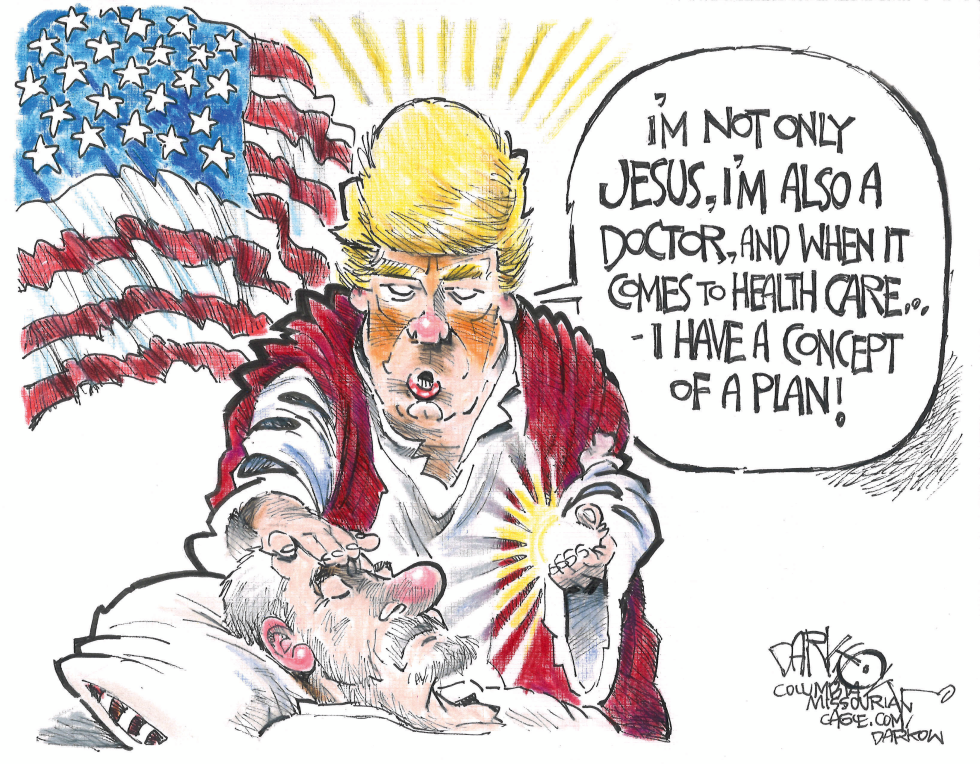
John Darkow's cartoon shows a blonde-haired figure resembling Donald Trump, clad in a red cape and white garment, extending a glowing hand toward an elderly man lying in bed. An American flag waves in the background with radiant beams from above. The speech bubble declares the figure as both Jesus and a doctor, boasting a concept of a health care plan. This setup highlights satirical elements in political imagery. Tags like donald trump political cartoon, trump health care plan satire, jesus doctor parody cartoon, american flag political humor, trump messiah complex illustration, and health care policy cartoon fit the visible components.
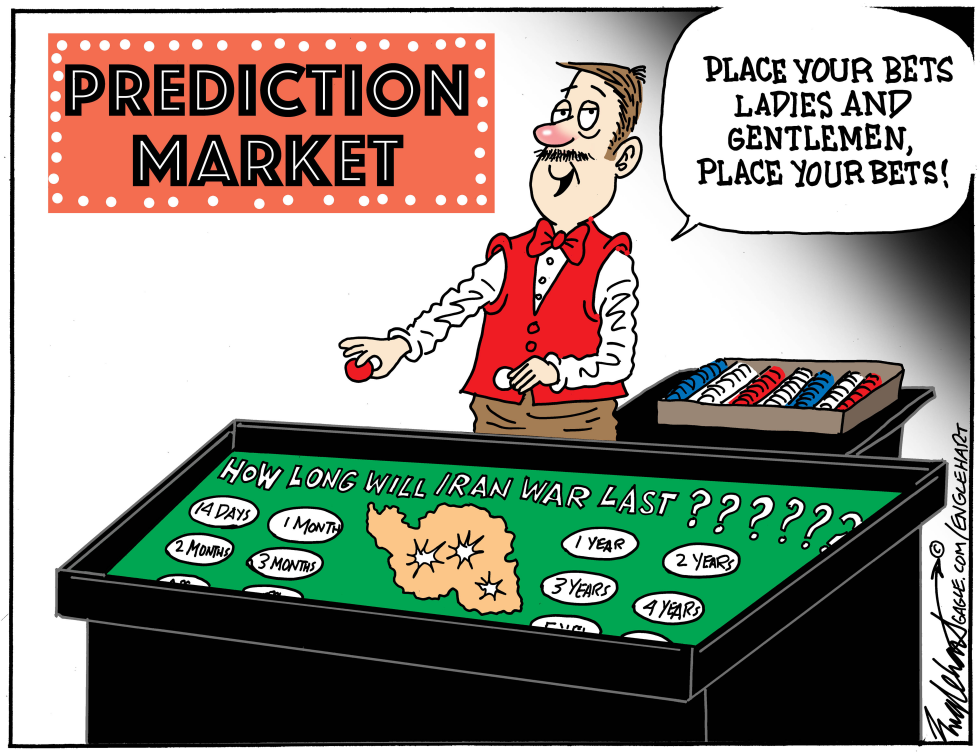
In a biting political cartoon, a smirking croupier oversees a prediction market table shaped like Iran, complete with explosion graphics, where punters can wager on war duration options ranging from 14 days to 5 years. This satirical take skewers the commodification of geopolitical betting, turning grave matters like Iran war into casino-style gambles. By blending elements of gambling on war with Middle East conflict, the artwork highlights the absurdity of prediction markets applied to real-world crises, offering humorous yet insightful commentary on how society speculates on political humor and potential catastrophes. The irreverent style underscores the folly of treating war length wager as just another market fluctuation.