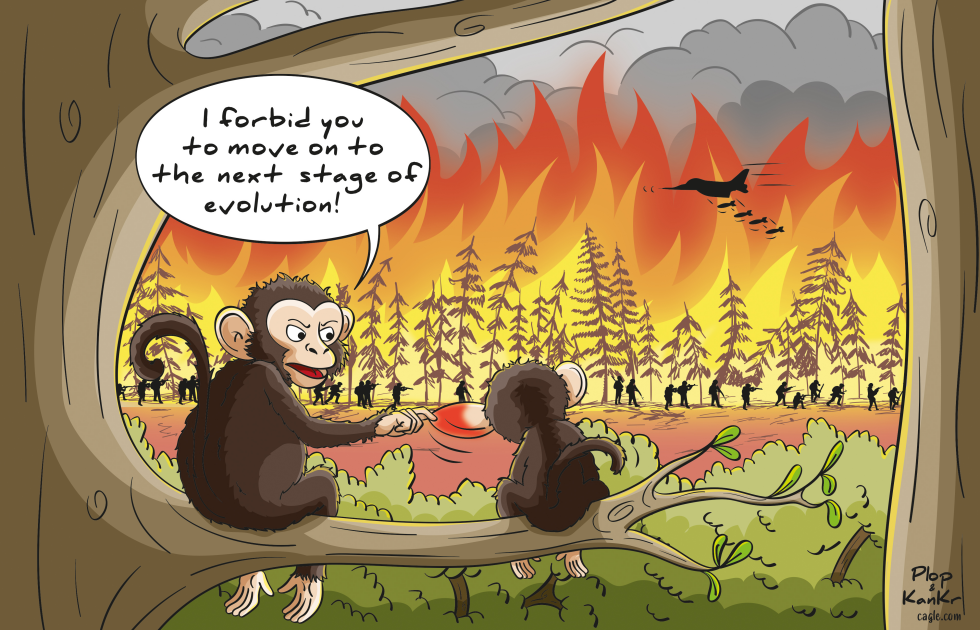
The cartoon published on September 7, 2026, shows two monkeys on a tree branch overlooking a forest fire. One monkey holds a red object and declares it forbids the next stage of evolution. In the background, soldiers stand in formation and a fighter jet flies overhead. The image responds to ongoing themes of war disrupting societal and human development. It uses the monkeys to represent humanity stalled by violence and destruction rather than advancing.
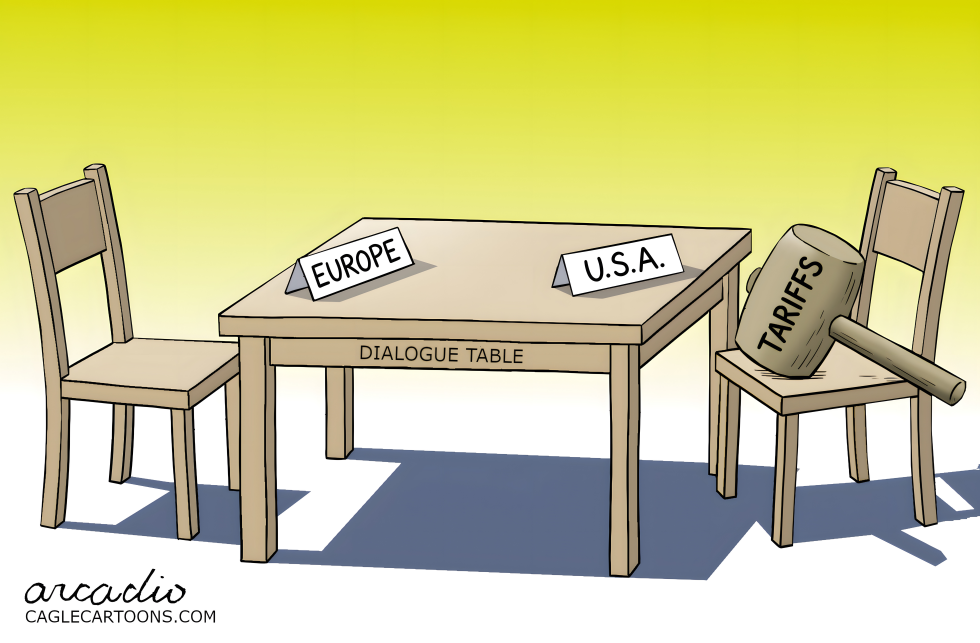
US and European officials face renewed friction over trade measures as tariffs disrupt scheduled talks. The impasse highlights ongoing disputes on import duties and market access that affect supply chains and consumer prices on both sides of the Atlantic. The editorial position criticizes the tariff approach for preventing constructive engagement and prolonging economic uncertainty.
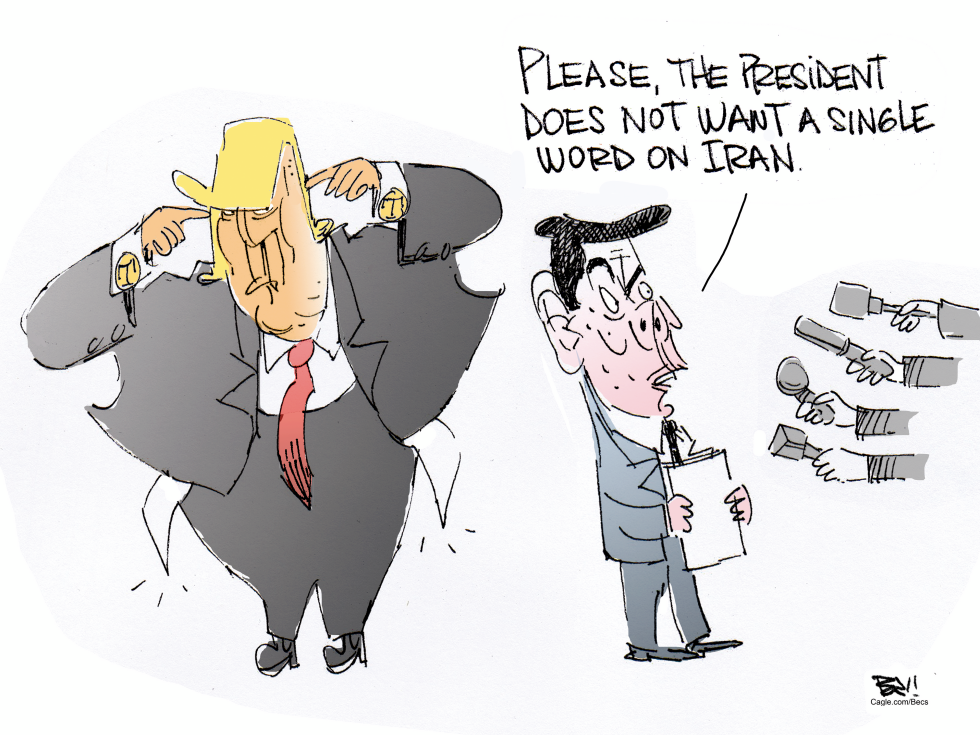
President Trump directed staff to avoid any public discussion of Iran policy. The move drew immediate pushback from reporters seeking clarification on administration plans. The editorial takes the position that the order reflects an effort to avoid accountability on a key foreign policy issue.
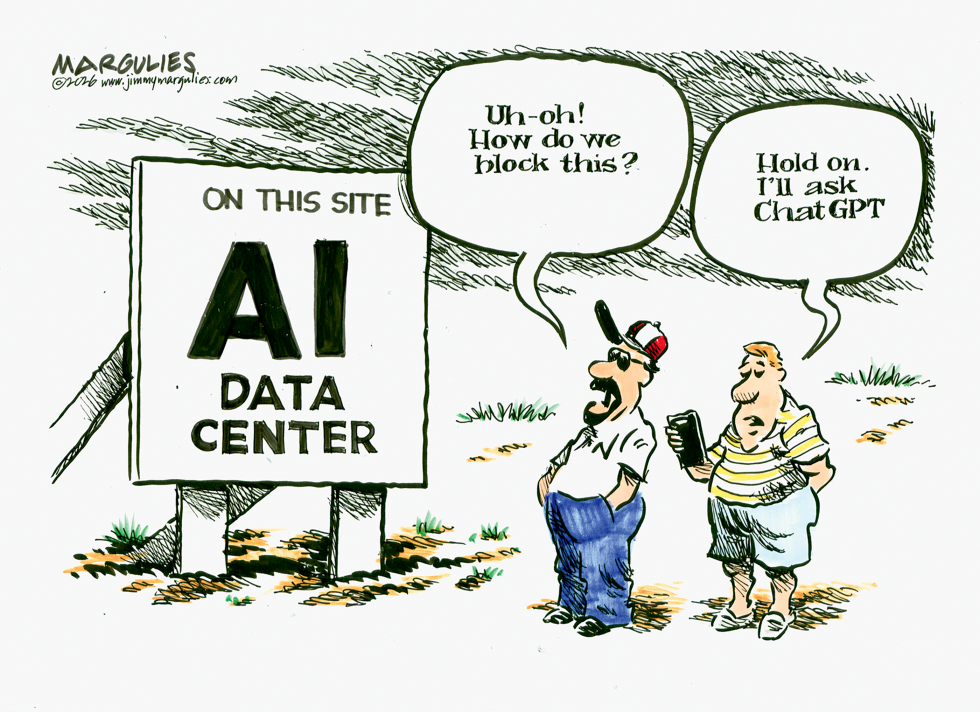
A large sign announces an AI data center on the site. Two men react with concern, one asking how to block access while the other suggests querying ChatGPT on his phone for a solution. The scene highlights the rapid spread of artificial intelligence infrastructure and the reflexive turn to AI tools even when questioning their presence.
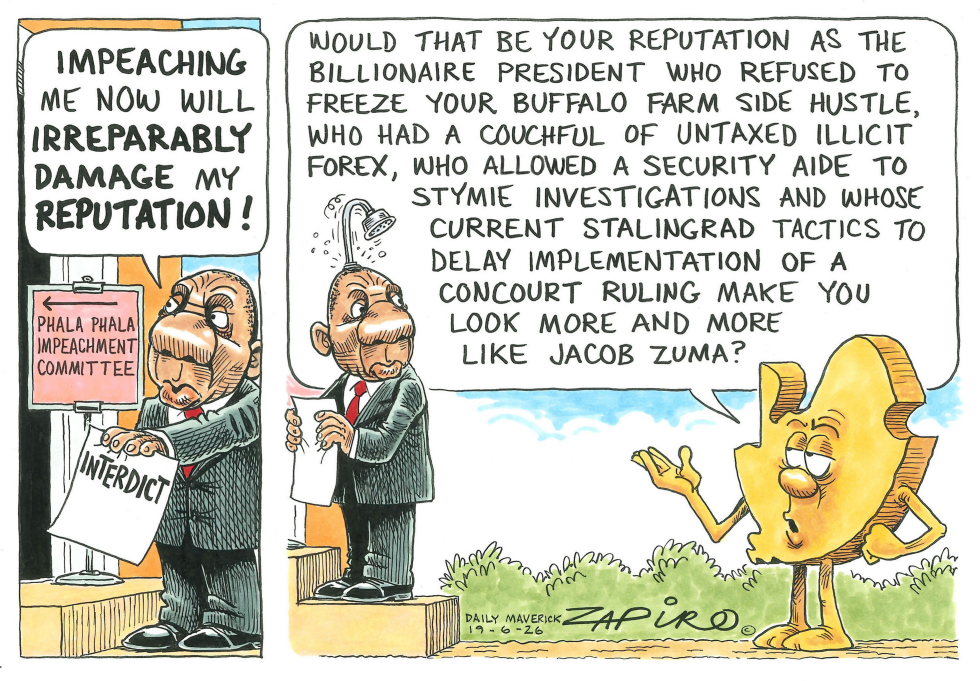
South African President Cyril Ramaphosa seeks a court interdict to halt impeachment proceedings tied to the Phala Phala farm scandal. The June 2026 cartoon depicts him warning of reputation damage while a Swiss-cheese figure highlights alleged forex issues, stalled investigations and ConCourt ruling delays that echo Jacob Zuma tactics.
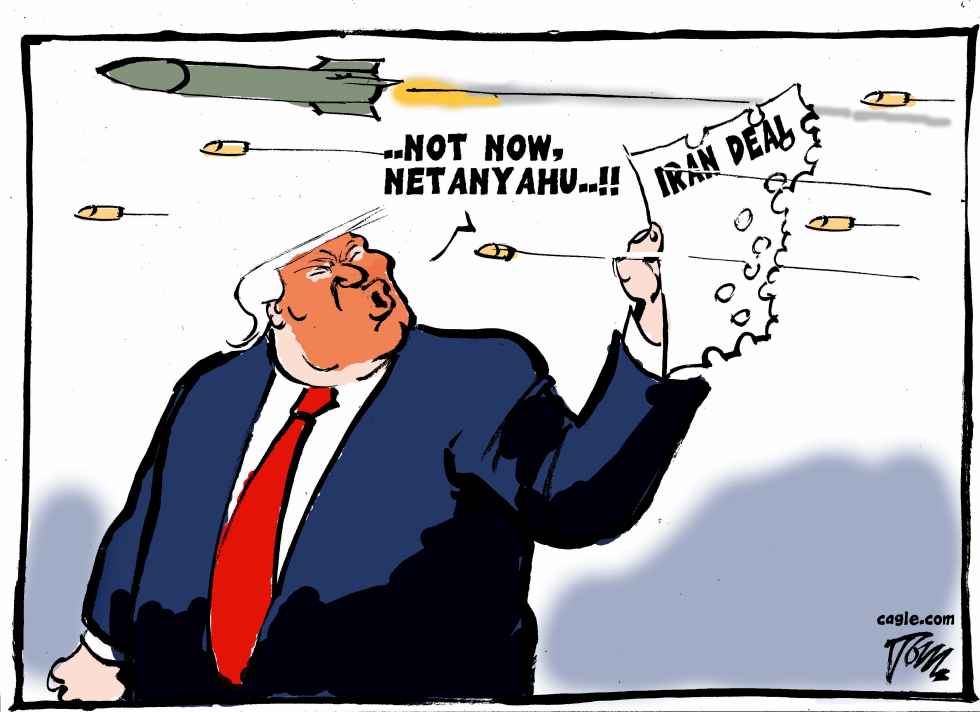
On June 19 2026 Donald Trump appears in the cartoon clutching a torn Iran deal document while shouting at Benjamin Netanyahu. A missile flies from the left and bullets scatter across the frame. The image captures Trump rejecting any immediate Israeli action against the agreement. The scene reflects ongoing Middle East friction involving the nuclear pact and potential strikes. Publication occurs during a period of heightened regional alerts.
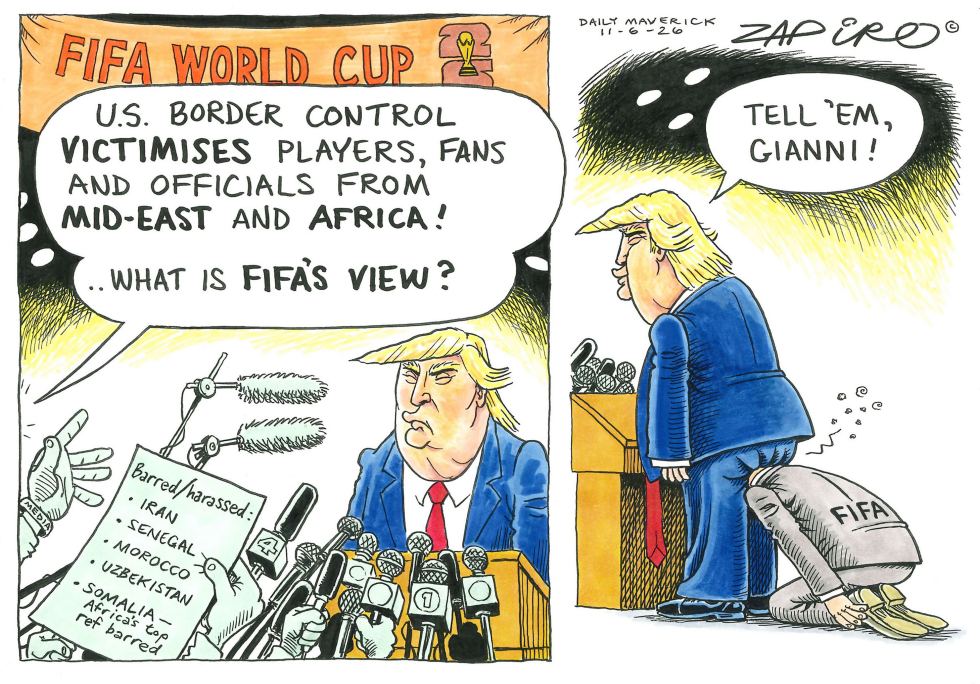
On June 19, 2026, a cartoon shows Donald Trump at a podium criticizing U.S. border policies for barring or harassing World Cup players, fans and officials from Iran, Senegal, Morocco, Uzbekistan and Somalia. He asks what FIFA thinks of the situation. In a separate panel Trump urges Gianni to speak out while a figure labeled FIFA kneels at his feet. The image responds to ongoing enforcement actions near the 2026 tournament.
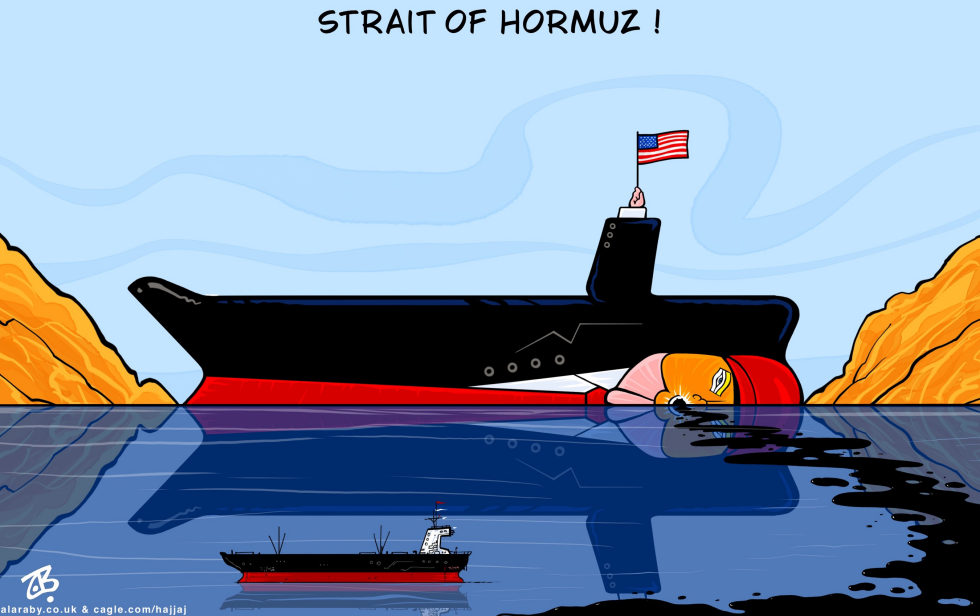
Emad Hajjaj's cartoon depicts a large black submarine with a red hull, stuck between orange landmasses in the Strait of Hormuz, its bow featuring an orange face with yellow hair and a red tie, clearly caricaturing Donald Trump. An American flag flies atop the vessel, while black oil spills into the blue water, reflecting the ship. Below, a smaller black tanker with a white figure onboard sails through the oily sea, tagged with Persian, Gulf, Sea, Tanker, Oil, War. The image satirizes US involvement in Middle East conflicts, particularly Iran war scenarios, without overreaching into hidden meanings. The composition is straightforward, with clear lines and bold colors emphasizing the blockage.
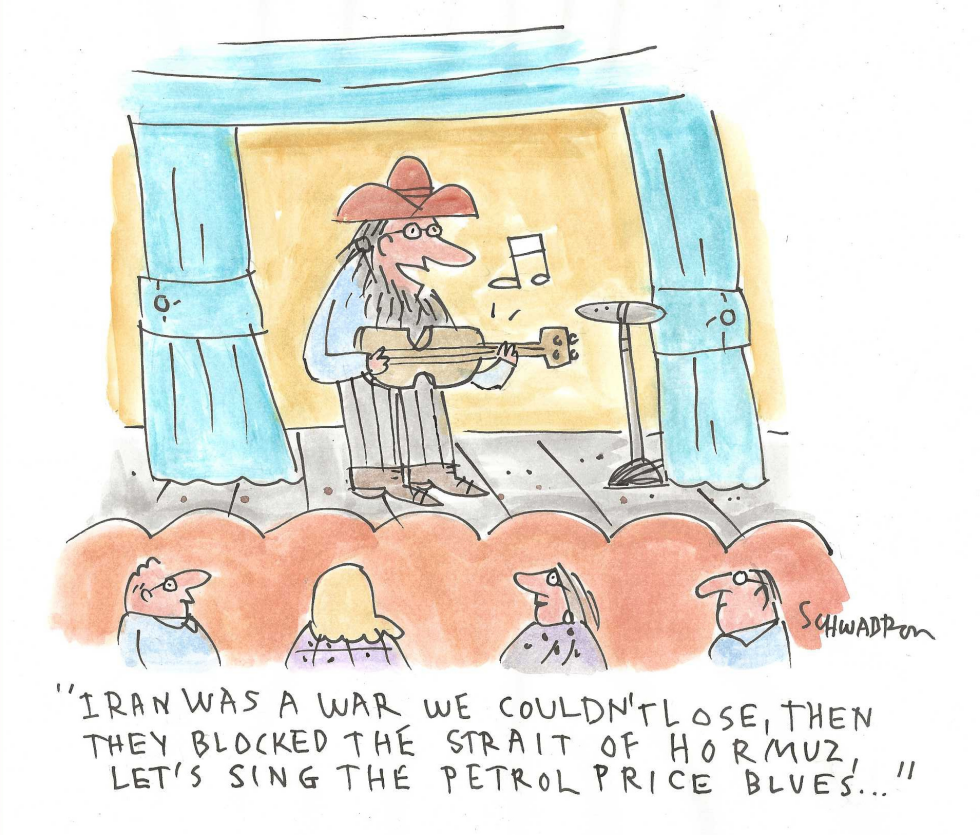
The cartoon depicts a guitarist on a stage with blue curtains and yellow backdrop singing about an unwinnable war with Iran followed by a blockade of the Strait of Hormuz that leads to higher petrol prices. Four audience members sit in the foreground. The scene uses simple lines and watercolor tones to show the performer with a music note floating nearby and a microphone stand to the side.
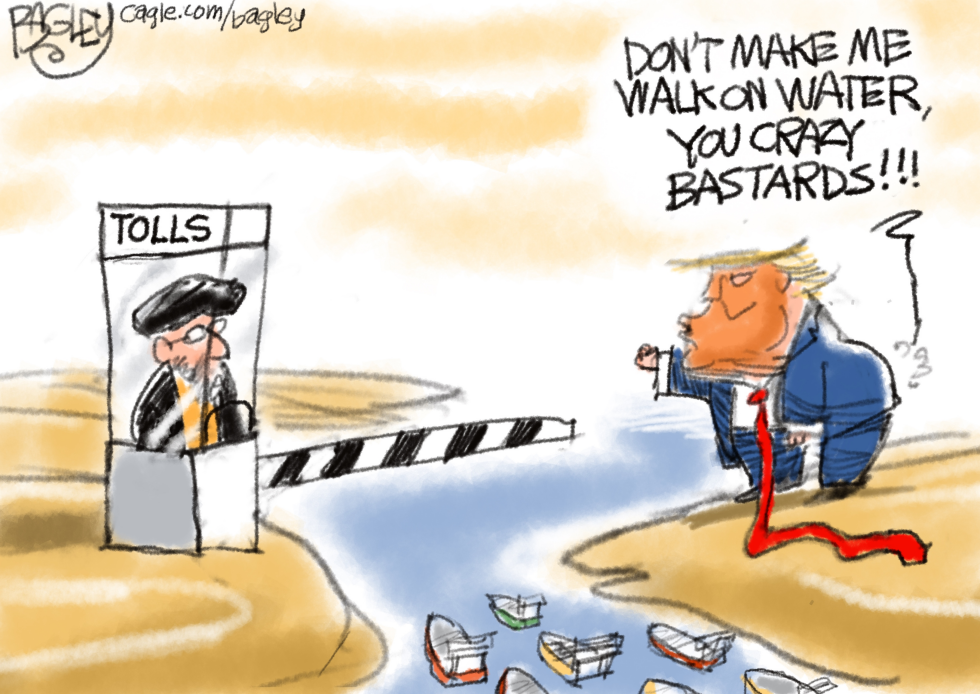
Donald Trump stands at the edge of a body of water confronting a toll booth operated by a figure resembling Ayatollah Khamenei. Small tankers sit in the water below while Trump issues a warning about walking on water. The scene references shipping routes through the Strait of Hormuz and surrounding nations.
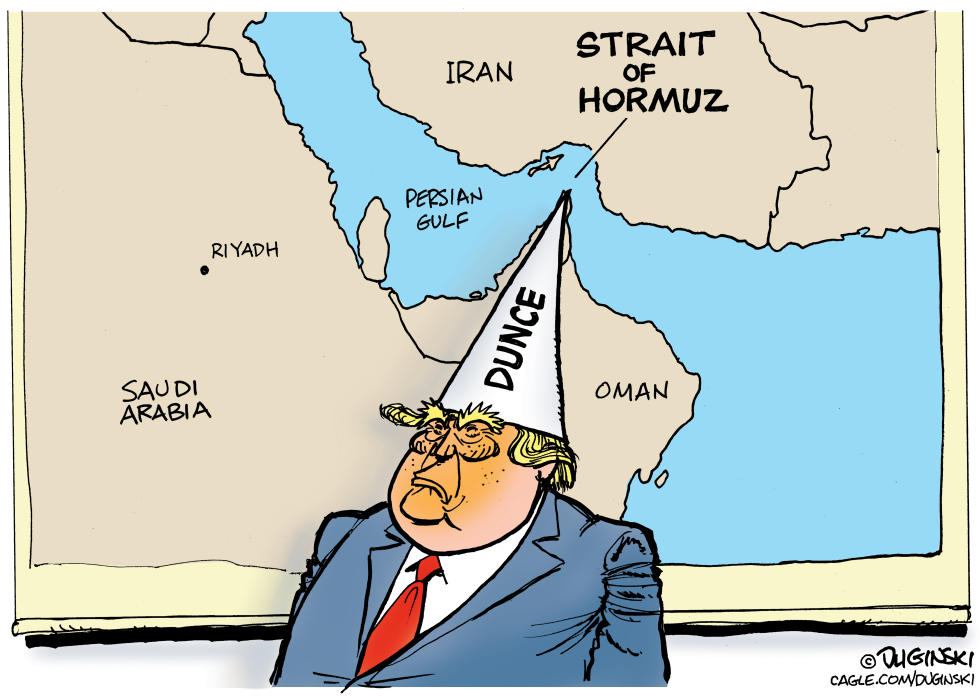
The cartoon depicts a simplified map of the Middle East, including labels for Iran, Saudi Arabia, Oman, Riyadh, and the Persian Gulf. The Strait of Hormuz is prominently marked, with a caricatured man in a suit and red tie wearing a dunce cap labeled \'DUNCE\' positioned over it. This setup uses the strait as a choke point for oil and energy, tying into themes of foreign policy, war, and ignorance. The image critiques handling of Middle East waterway issues, possibly linked to closure threats, tankers, and ceasefire efforts. Artist signature appears in the bottom right.