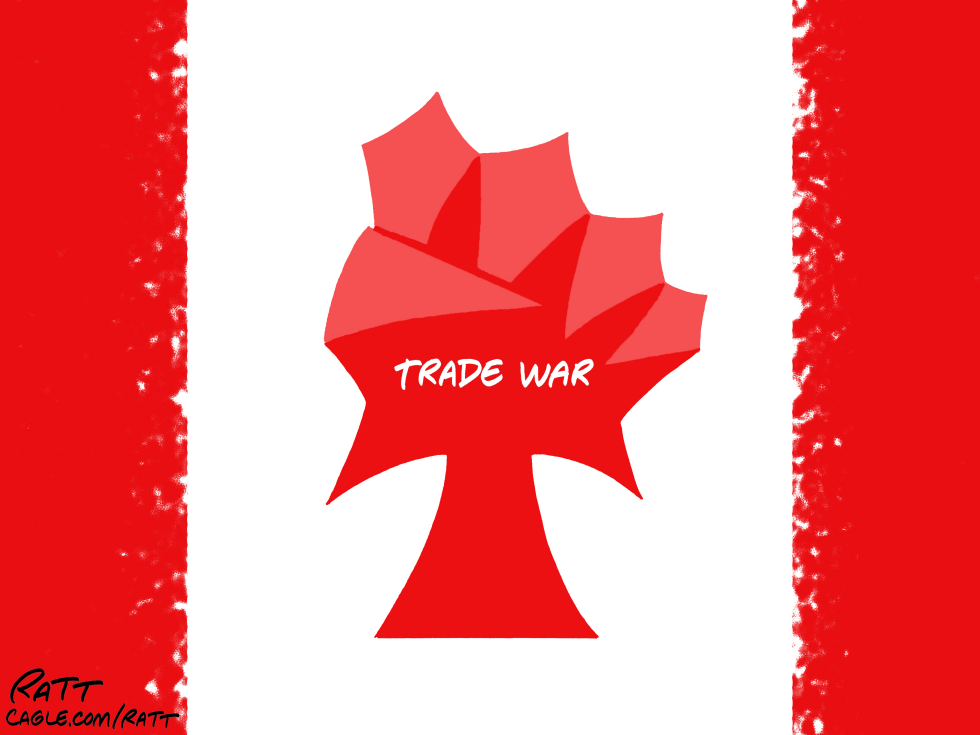
Ongoing US-Canada trade tensions escalated in 2026 with new tariff threats targeting Canadian exports. The dispute threatens key sectors including autos, lumber and agriculture, raising costs for consumers on both sides of the border. Canada has signaled plans to diversify markets and strengthen domestic industry. The cartoon frames the conflict as a direct assault on Canadian sovereignty and economic stability. It portrays the trade war as fracturing national symbols while urging a stronger northern response.
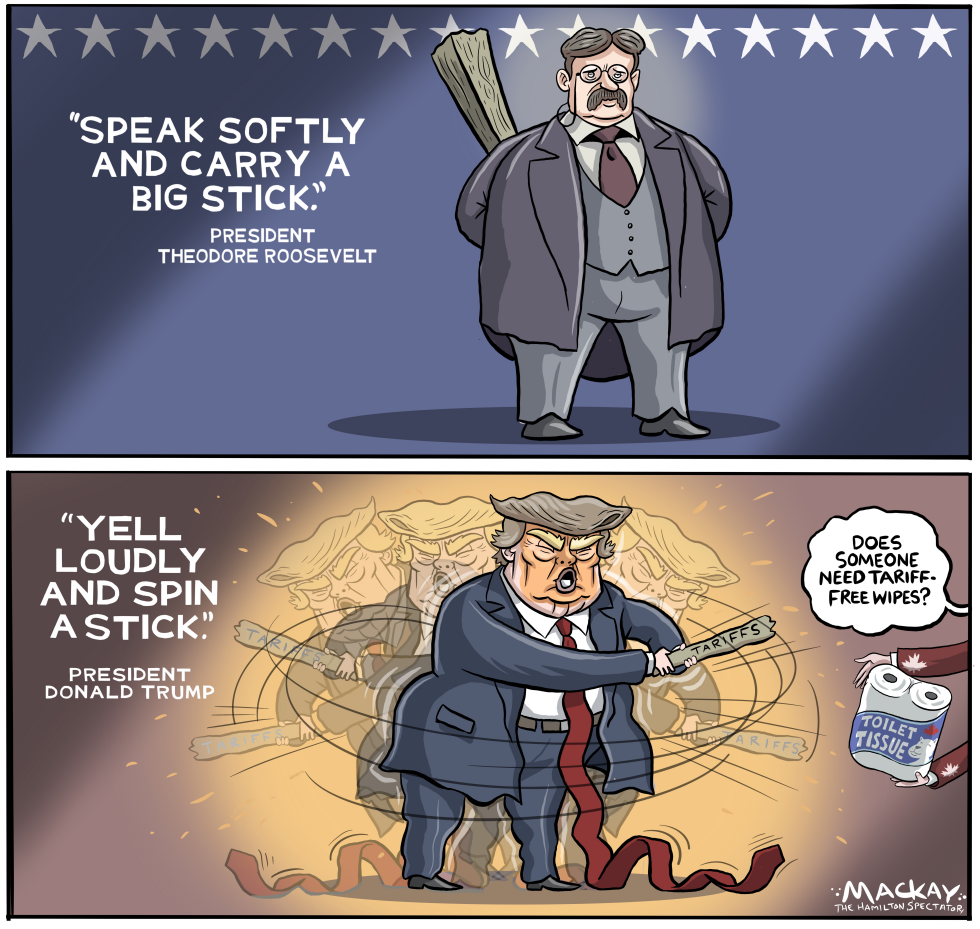
The cartoon by Graeme MacKay contrasts Theodore Roosevelt's famous speak softly and carry a big stick approach with Donald Trump's version of yelling loudly and spinning a stick covered in tariffs. In the lower panel Trump appears dizzy from the motion as a Canadian hand offers toilet tissue labeled tariff-free wipes. The image comments on recent US tariff actions and their impact on Canadian trade relations as of the September 2026 publication date.
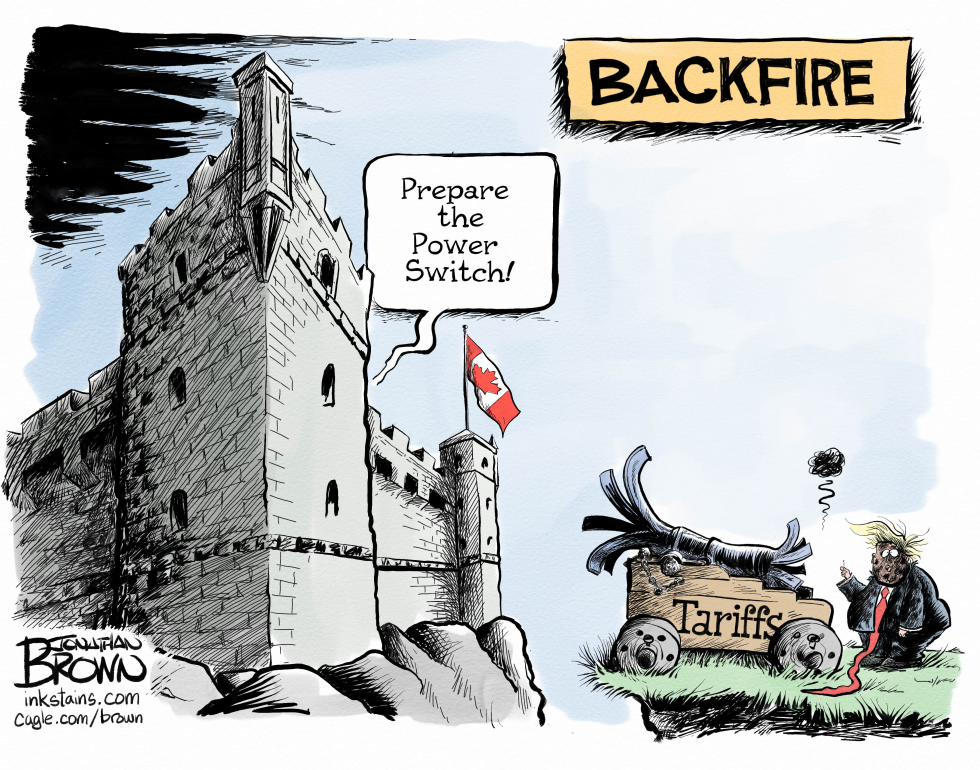
The cartoon shows a Canadian castle flying its flag while a cannon labeled Tariffs explodes backward toward a figure resembling Donald Trump. The scene responds to ongoing trade tensions where U.S. tariffs on Canadian goods prompted retaliatory measures. The visual emphasizes the policy rebounding on its originator rather than achieving intended pressure.
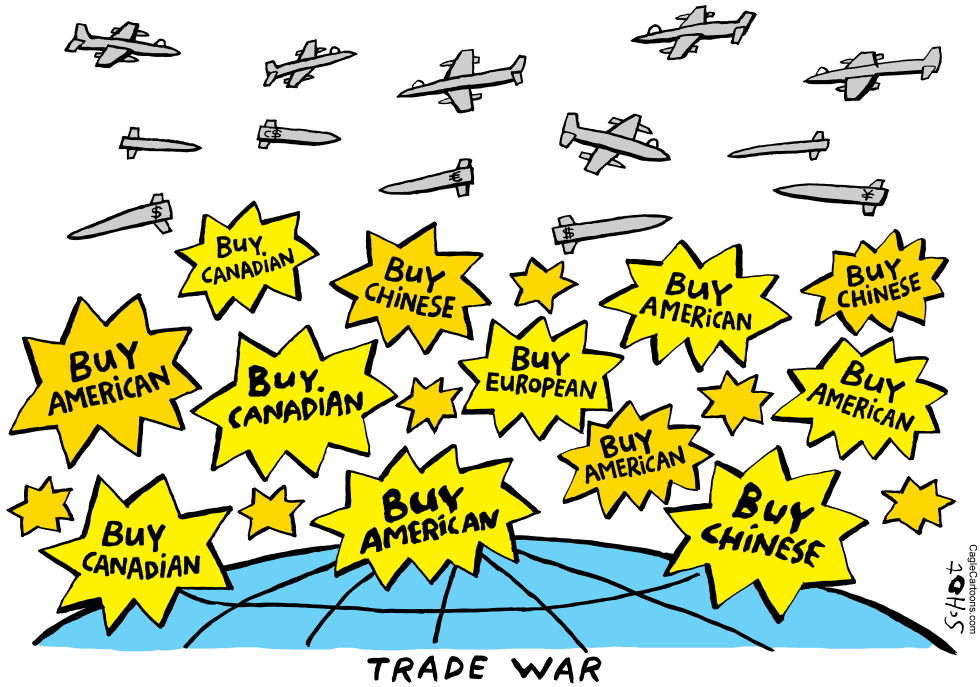
Competing buy national campaigns from multiple countries have intensified trade disputes, raising concerns over economic retaliation and supply chain disruptions. The piece argues these appeals are directly contributing to broader conflict.
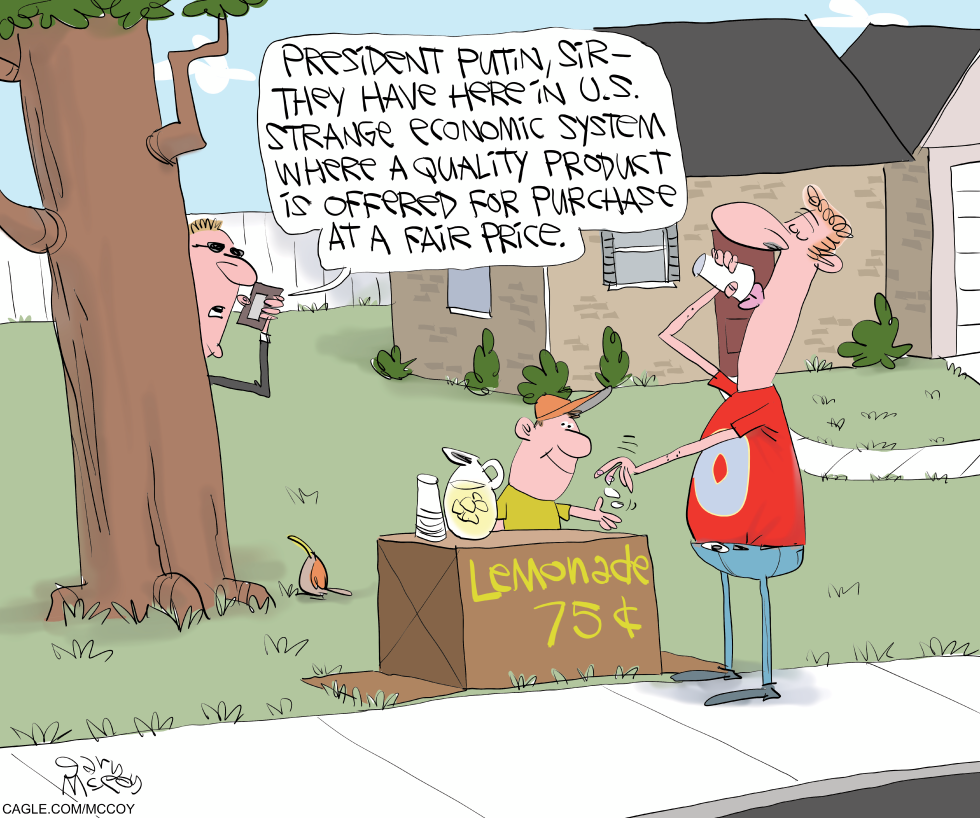
A cartoon depicts a man explaining the U.S. free-market system of offering quality goods at fair prices to President Putin during a phone call next to a child's lemonade stand. The scene underscores the perceived strangeness of American capitalism from a Russian perspective. The editorial position critiques the disconnect between market-driven economies and state-controlled systems.
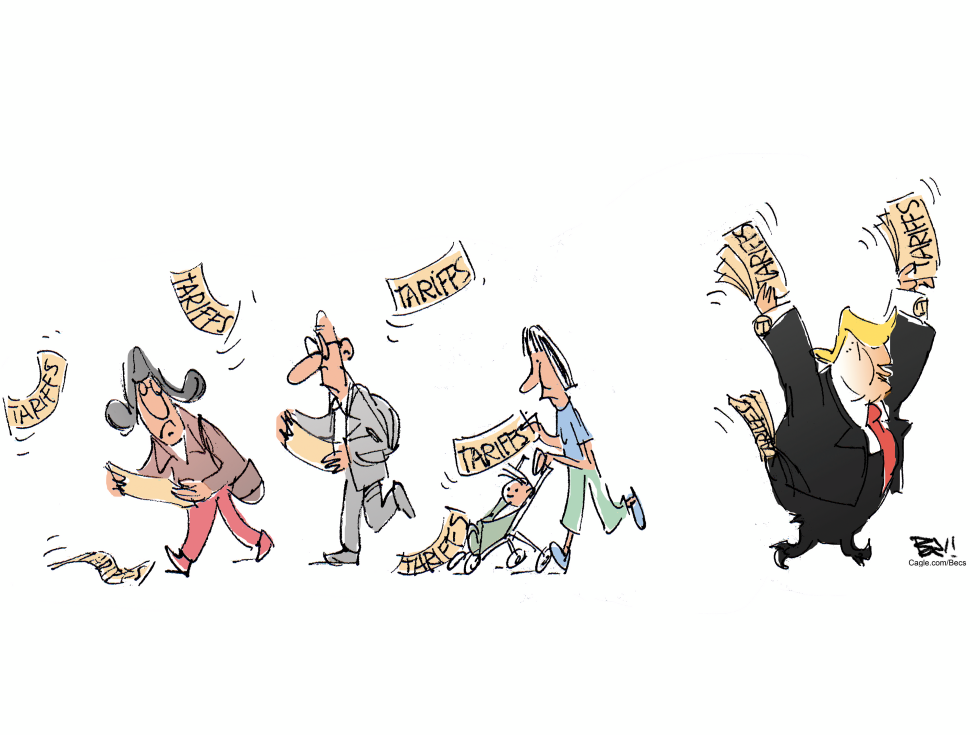
Donald Trump expanded tariffs across trading partners in mid-2026, triggering immediate market volatility and diplomatic pushback. The move raised costs for consumers and businesses reliant on imports. The piece portrays the policy as an indiscriminate barrage that disrupts daily life and global commerce.
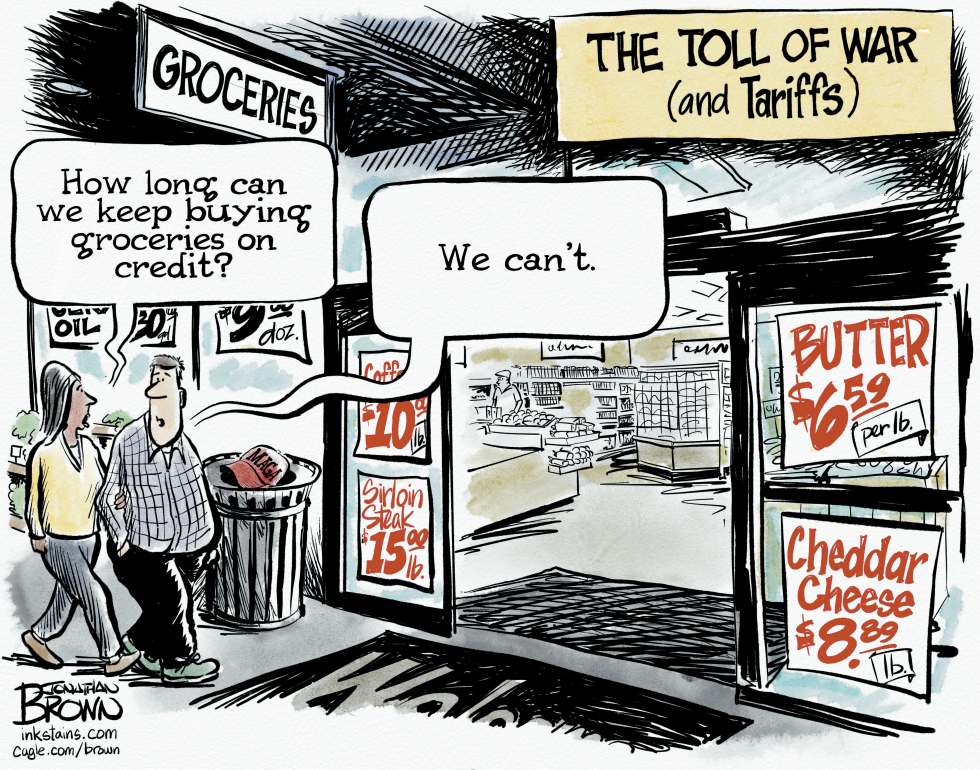
A political cartoon depicts a couple leaving a grocery store after learning they cannot continue buying food on credit. Signs inside show sharply higher prices for butter at $6.59 per pound, cheddar cheese at $8.89 per pound and sirloin steak at $15 per pound. A banner overhead reads The Toll of War (and Tariffs). The scene illustrates how ongoing conflict and trade barriers have driven up everyday food costs leaving households to rely on credit that is no longer sustainable.
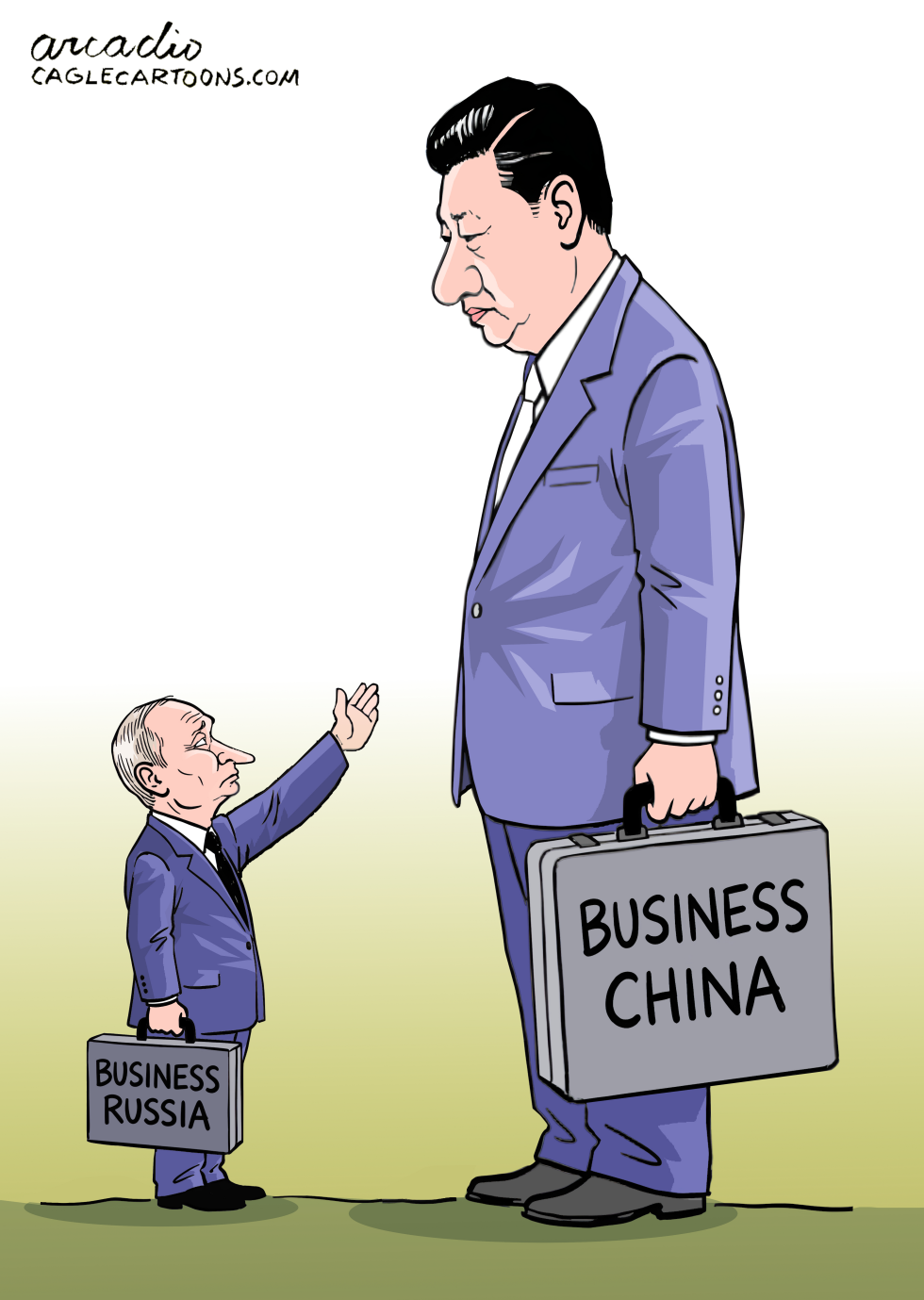
China and Russia continue deepening economic cooperation amid Western sanctions on Moscow. Xi Jinping's government provides critical markets and technology to Russia while extracting favorable terms. The cartoon underscores the unequal power dynamic in their partnership.
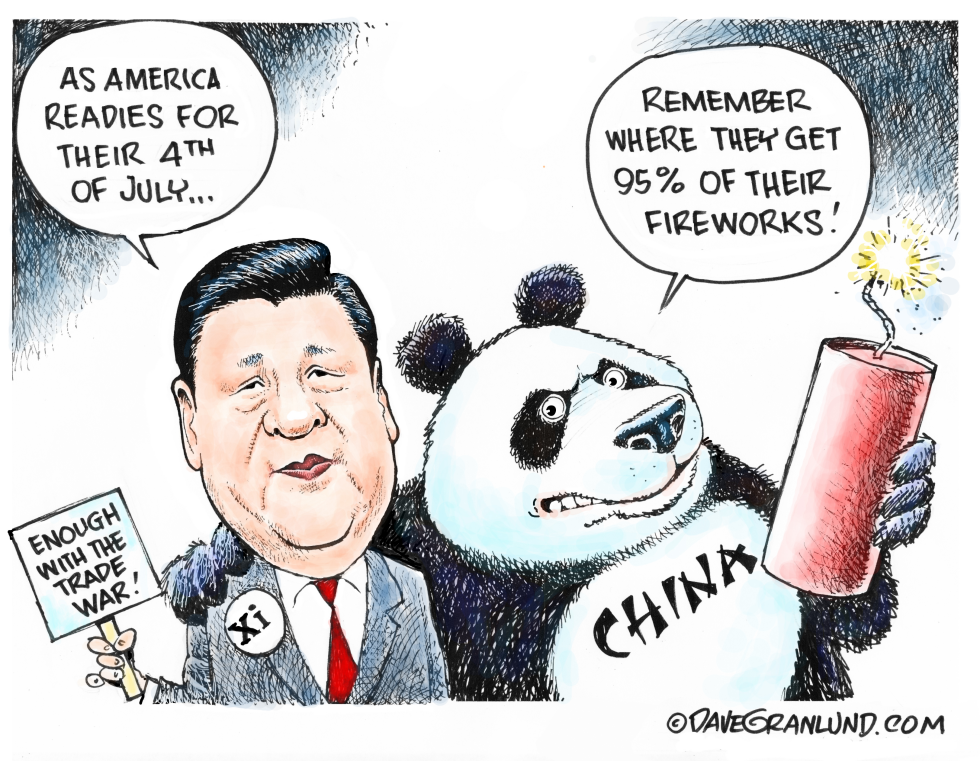
On June 19, 2026, a cartoon by Dave Granlund depicts Chinese leader Xi Jinping alongside a panda representing China. Xi holds a protest sign against the trade war while the panda reminds viewers that China supplies most American fireworks. The image addresses rising costs for July 4th celebrations tied to tariffs and supply issues with the largest provider.
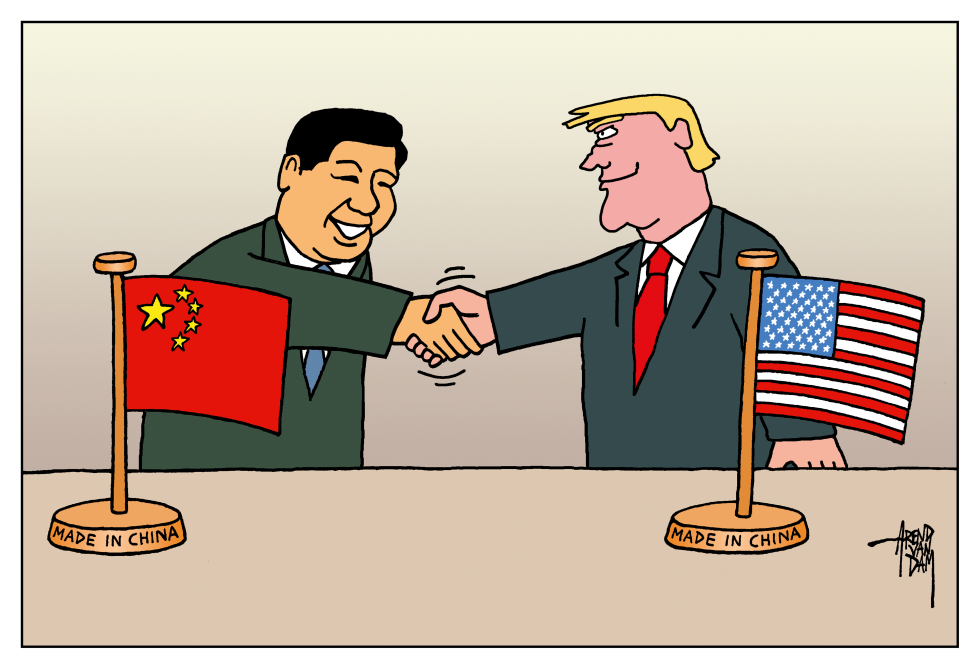
On October 31 2025 Donald Trump and Xi Jinping are depicted shaking hands over a table. Each national flag is mounted on a wooden base labeled Made in China. The image highlights ongoing economic interdependence between the United States and China despite political differences. Trade and production issues remain central to bilateral relations at the time.
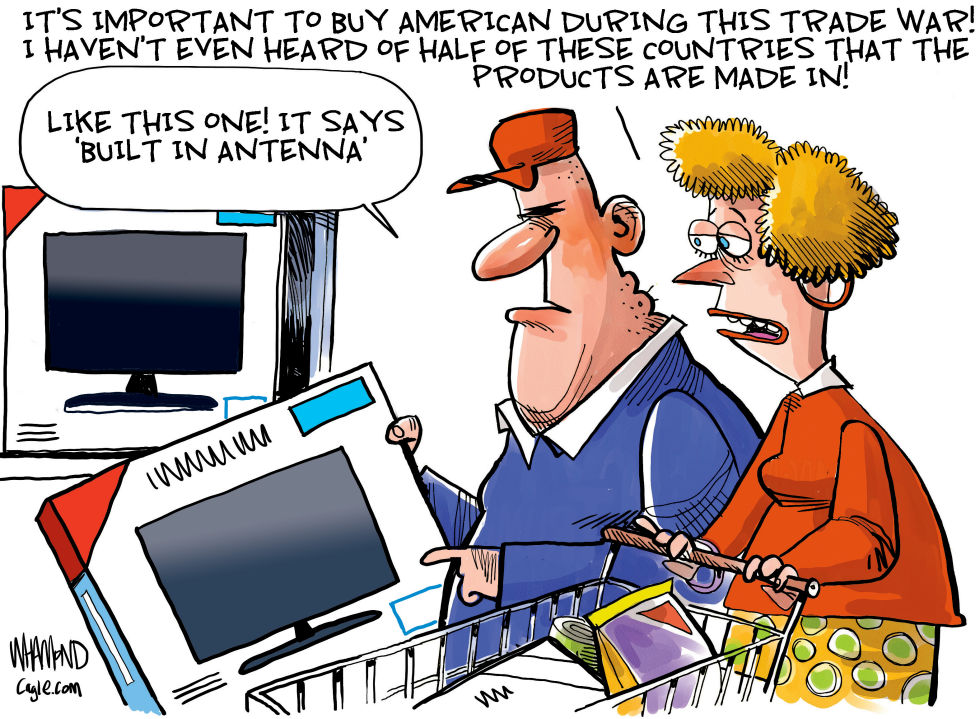
A couple shops for electronics in a store as the man points to a television box labeled built in antenna while declaring support for American goods during an ongoing trade war. The woman reacts with surprise at the label. Large text overhead stresses the importance of domestic purchases because many product origins remain unfamiliar. The scene reflects consumer reactions to tariffs and protectionist policies active in late 2025.
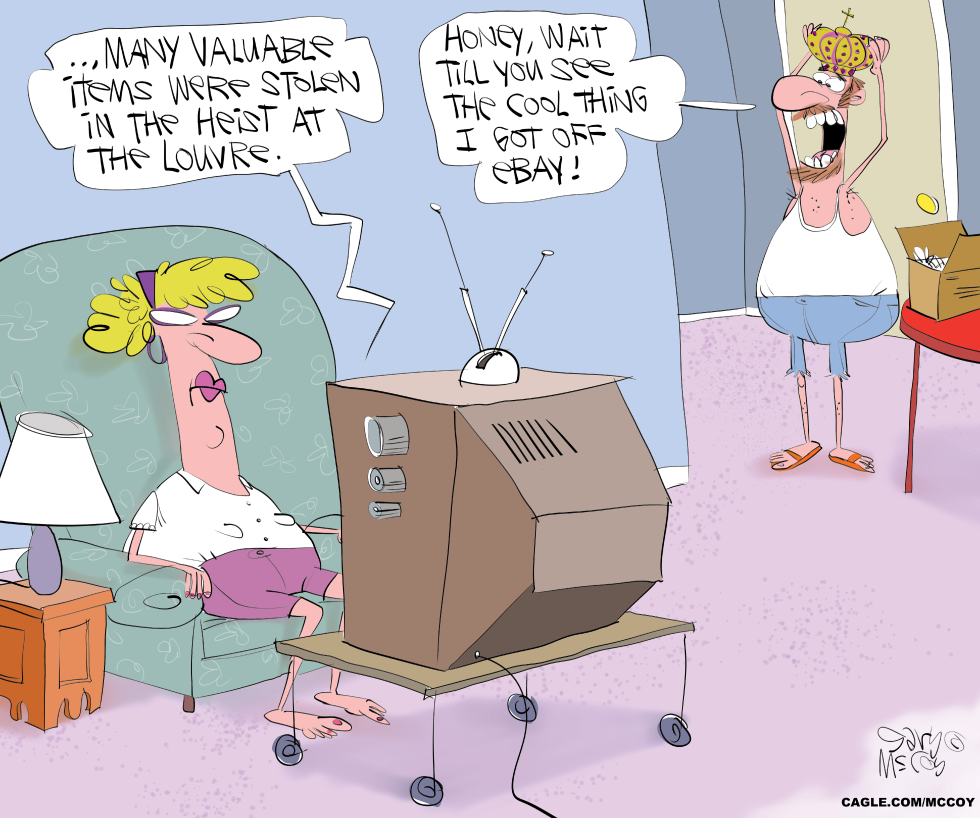
A woman seated before an old television hears a report of valuable items stolen from the Louvre. Across the room a man in casual clothes holds a jeweled crown overhead and calls out about his eBay purchase. The cartoon links the museum robbery directly to an online marketplace transaction inside a suburban home. Dated October 21 2025 the image comments on the immediate aftermath of the Paris theft. The visual contrast between the broadcast and the domestic moment forms the central joke.
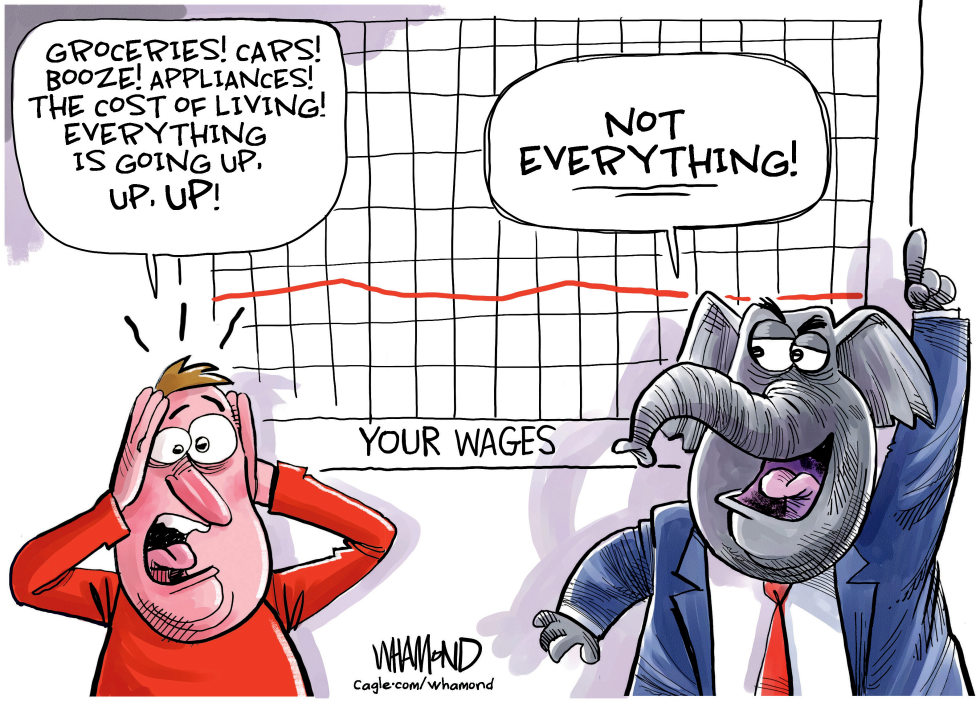
A man clutches his head in distress as an elephant in a suit points upward. Speech bubbles list rising costs for groceries, cars, booze and appliances. A graph line stays flat under the label your wages while the elephant declares not everything.
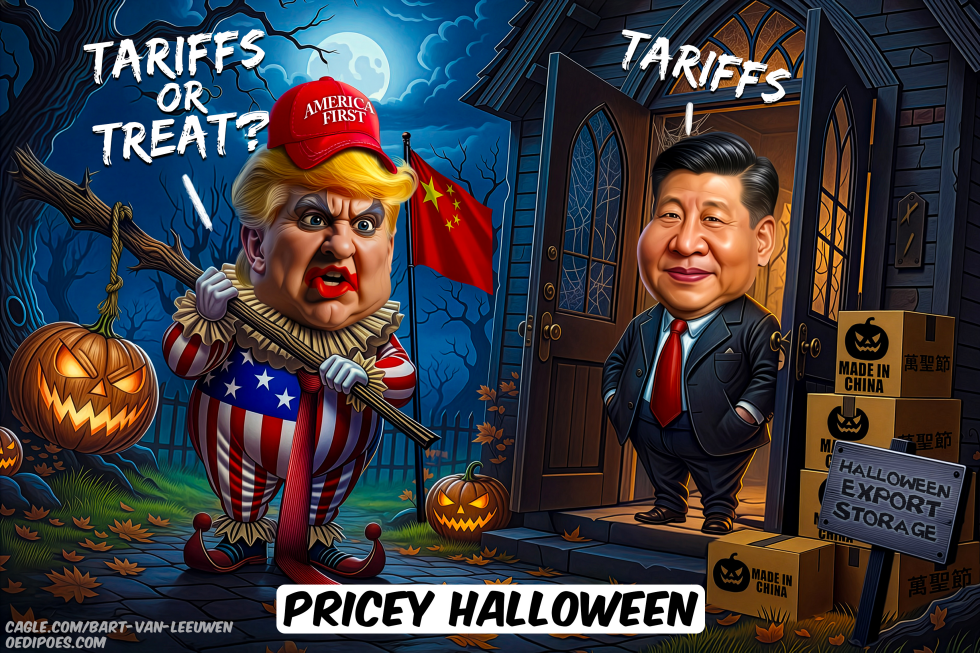
On October 4 2025 the cartoon depicts Donald Trump in a jester costume confronting Xi Jinping outside a house stacked with Chinese made Halloween goods. The scene highlights the impact of proposed tariffs on imported holiday products and resulting higher consumer prices in the United States.