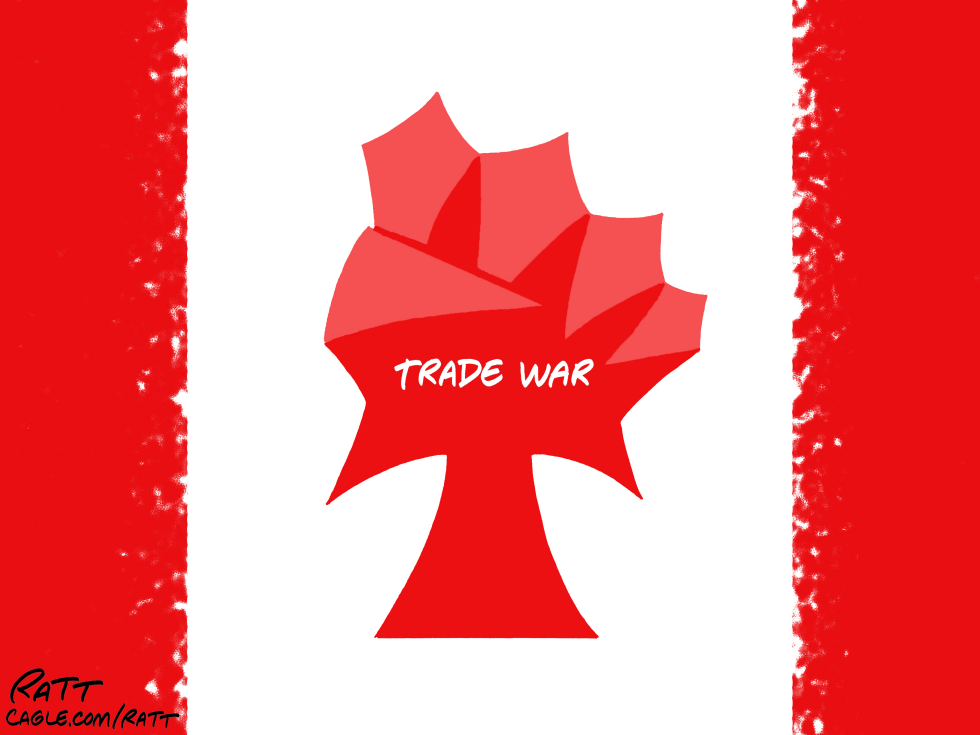
Ongoing US-Canada trade tensions escalated in 2026 with new tariff threats targeting Canadian exports. The dispute threatens key sectors including autos, lumber and agriculture, raising costs for consumers on both sides of the border. Canada has signaled plans to diversify markets and strengthen domestic industry. The cartoon frames the conflict as a direct assault on Canadian sovereignty and economic stability. It portrays the trade war as fracturing national symbols while urging a stronger northern response.
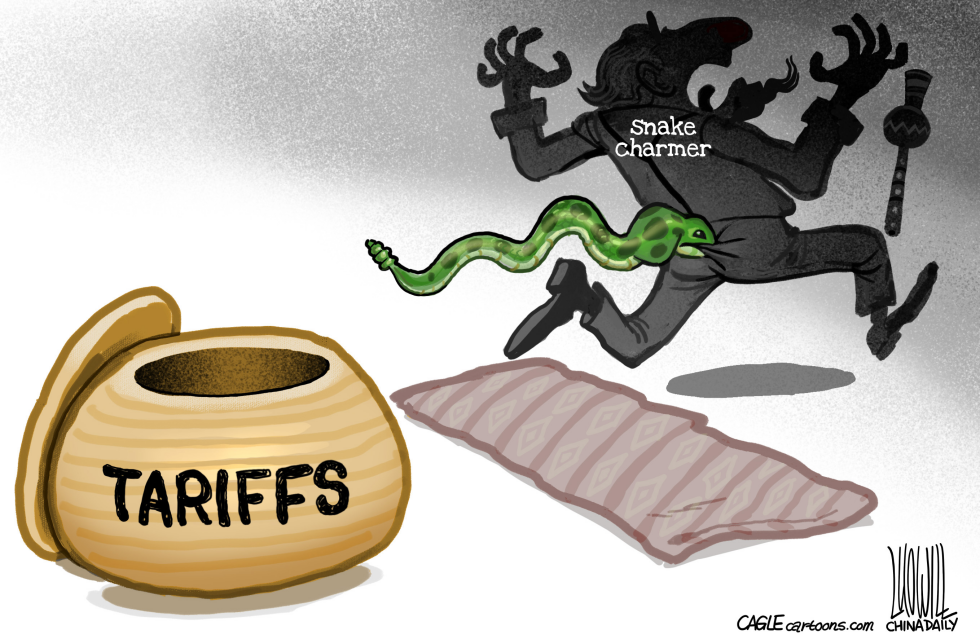
A political cartoon published August 28, 2026, shows a snake charmer fleeing as a green snake emerges from a pot labeled tariffs. The image uses the snake charmer metaphor to comment on tariff policies. The cartoon appeared in China Daily and was distributed via Cagle Cartoons. It responds to ongoing trade tensions involving tariffs. The visual suggests tariffs carry uncontrolled risks similar to an escaped snake.
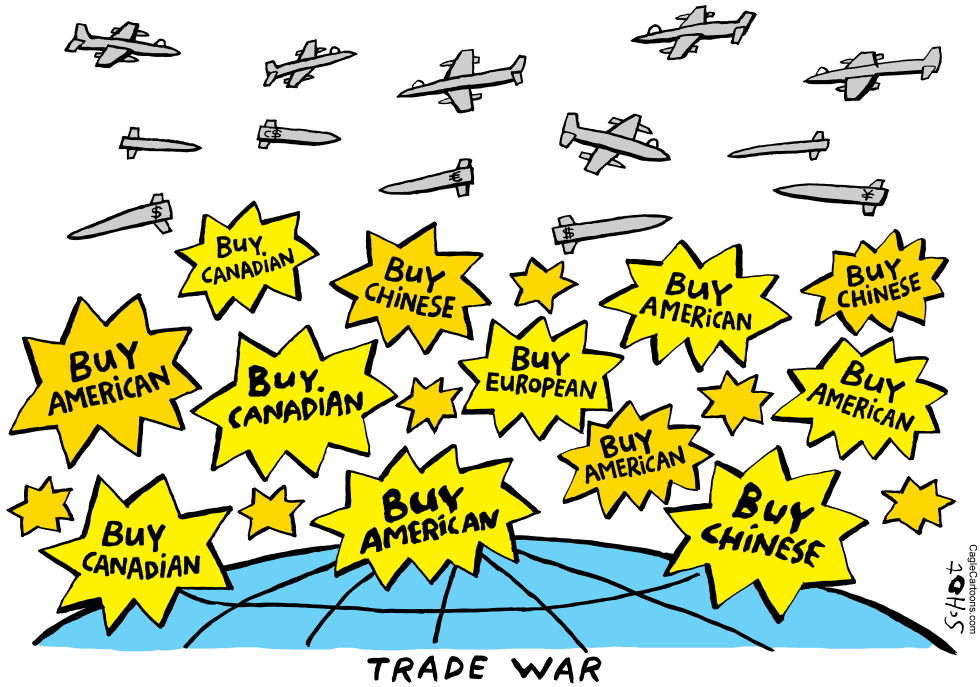
Competing buy national campaigns from multiple countries have intensified trade disputes, raising concerns over economic retaliation and supply chain disruptions. The piece argues these appeals are directly contributing to broader conflict.
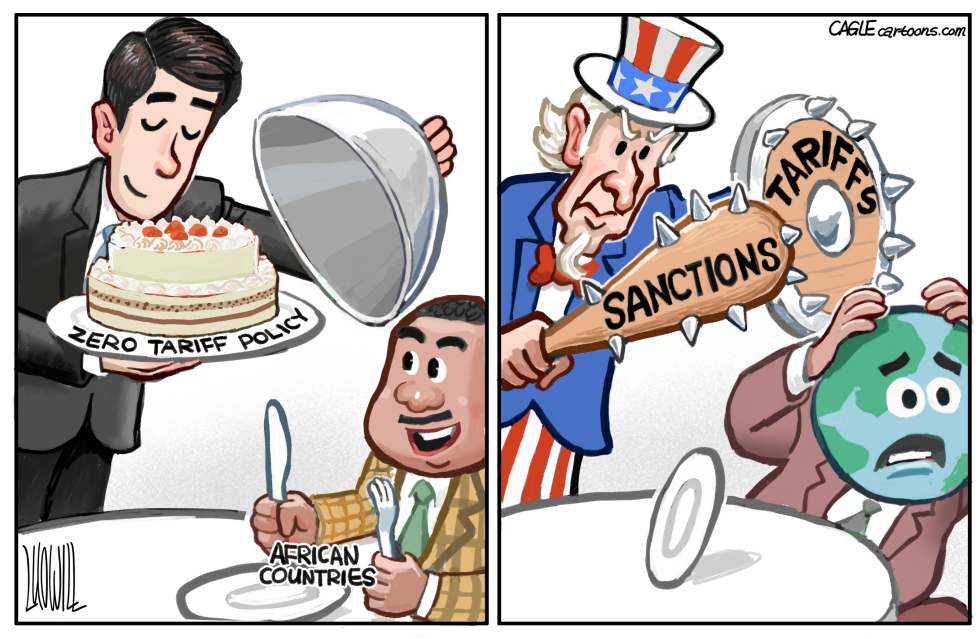
The United States has extended a zero-tariff policy offer to African nations amid ongoing global trade tensions. This move stands in contrast to simultaneous use of tariffs and sanctions against other trading partners. The policy highlights selective economic engagement by Washington. The editorial position criticizes the inconsistency between the overture to Africa and the punitive approach applied more broadly.
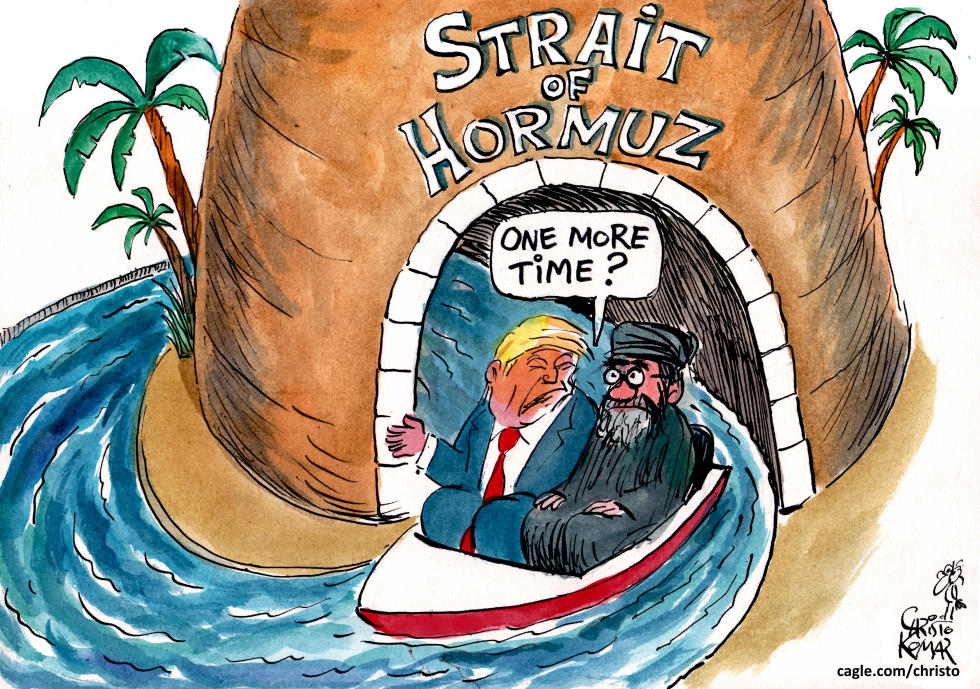
On August 5 2026 renewed friction over shipping lanes in the Strait of Hormuz draws attention as former President Donald Trump appears alongside Iran's Supreme Leader in a symbolic return to the chokepoint. The episode underscores ongoing US-Iran friction over energy exports and naval presence. The piece portrays the pair repeating a risky transit that highlights persistent strategic vulnerabilities in the Persian Gulf.
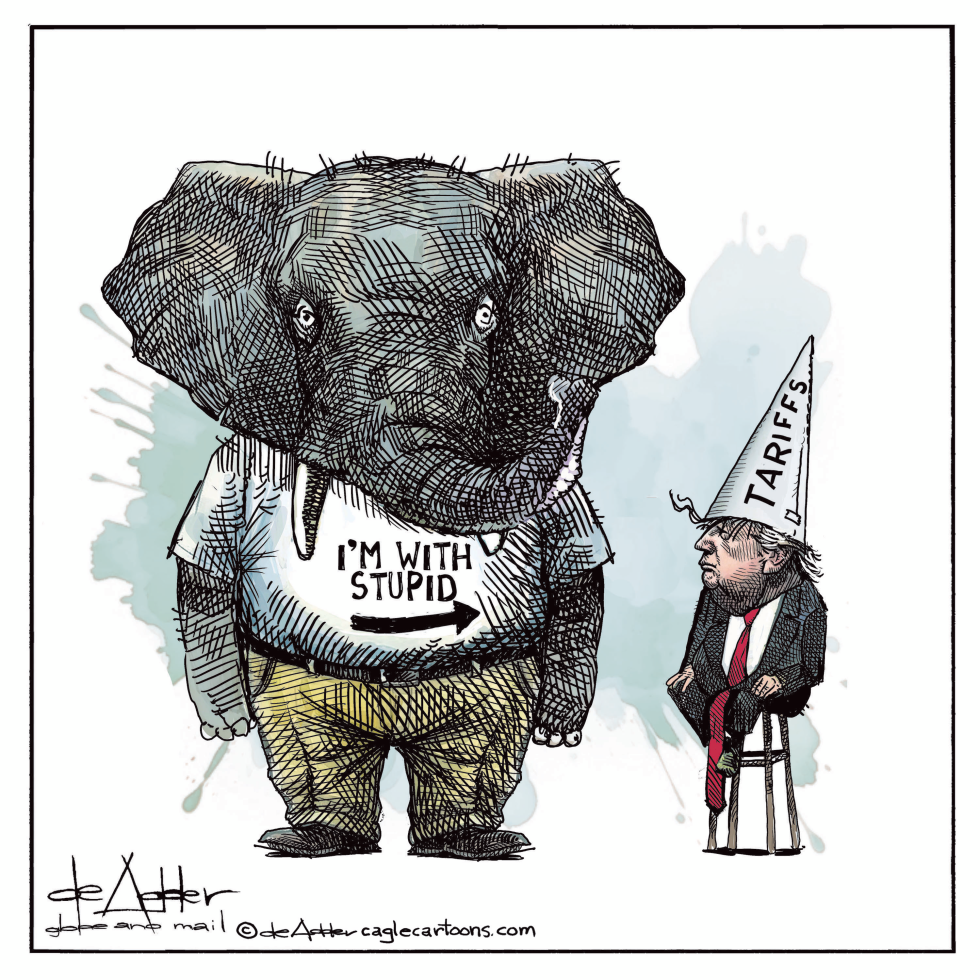
Donald Trump faces renewed scrutiny over his tariffs approach as the Republican Party grapples with the economic fallout. The policy has drawn internal party tension amid broader trade debates. The piece portrays the GOP as aligned with a flawed leader on the issue.
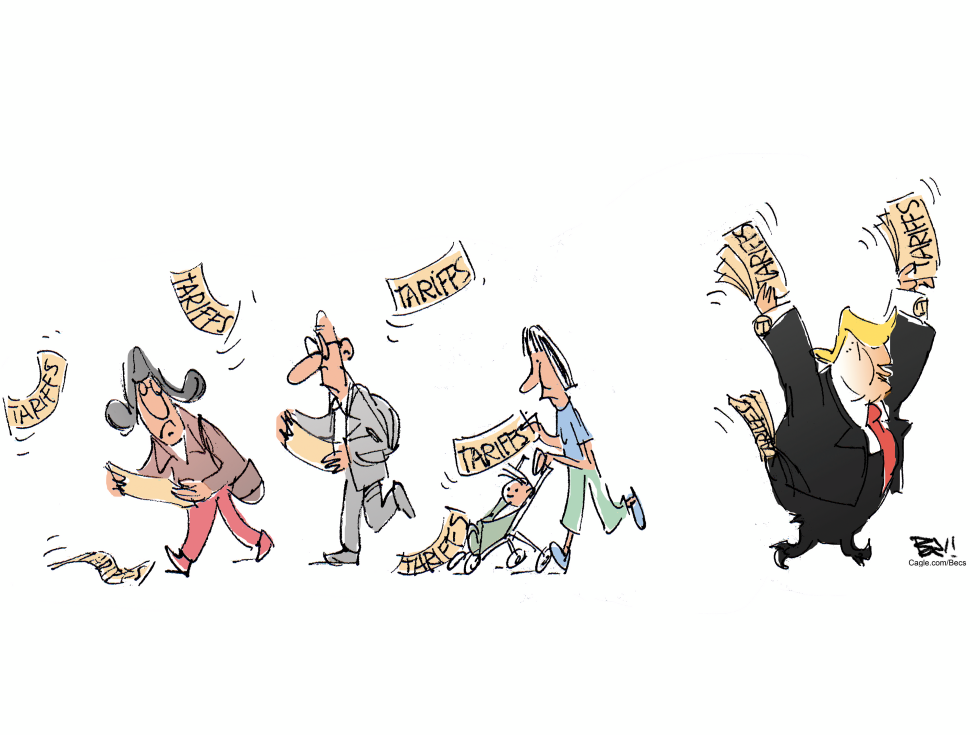
Donald Trump expanded tariffs across trading partners in mid-2026, triggering immediate market volatility and diplomatic pushback. The move raised costs for consumers and businesses reliant on imports. The piece portrays the policy as an indiscriminate barrage that disrupts daily life and global commerce.
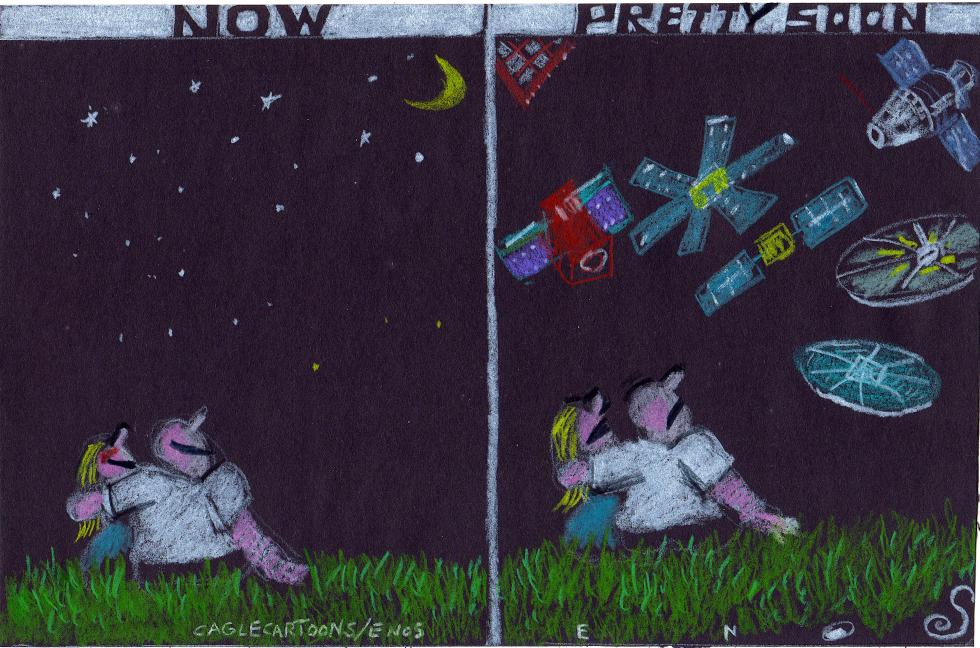
The night sky remains a quiet backdrop for stargazers in the present. Within a short time, however, proliferating satellites and debris will dominate the view overhead. The piece highlights how rapid expansion of orbital technology alters even simple moments of connection with the natural world.
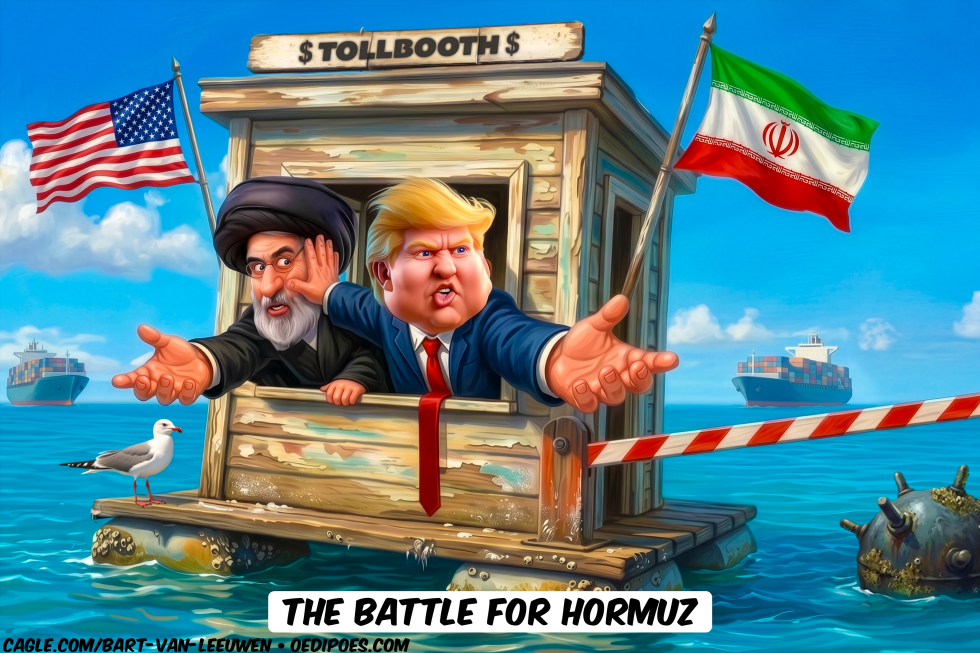
A new political cartoon shows President Trump and Iran's supreme leader sharing a tollbooth positioned across the Strait of Hormuz. Both figures extend their hands toward passing cargo ships while American and Iranian flags fly from the structure. The image comments on ongoing disputes over control of the vital oil shipping route.
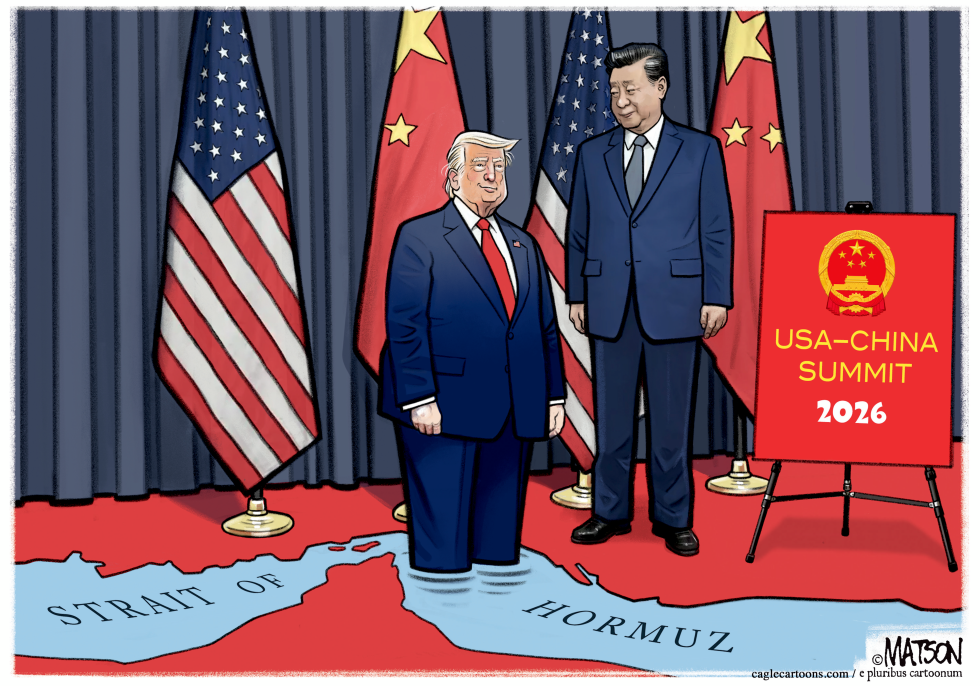
The cartoon depicts Donald Trump and Xi Jinping standing side by side at a USA-China summit in 2026. American and Chinese flags stand behind them on a red carpet. A blue shape labeled Strait of Hormuz runs across the carpet floor. A red sign displays USA-China Summit 2026. The artist signature Matson appears in the corner along with caglecartoons.com credit.
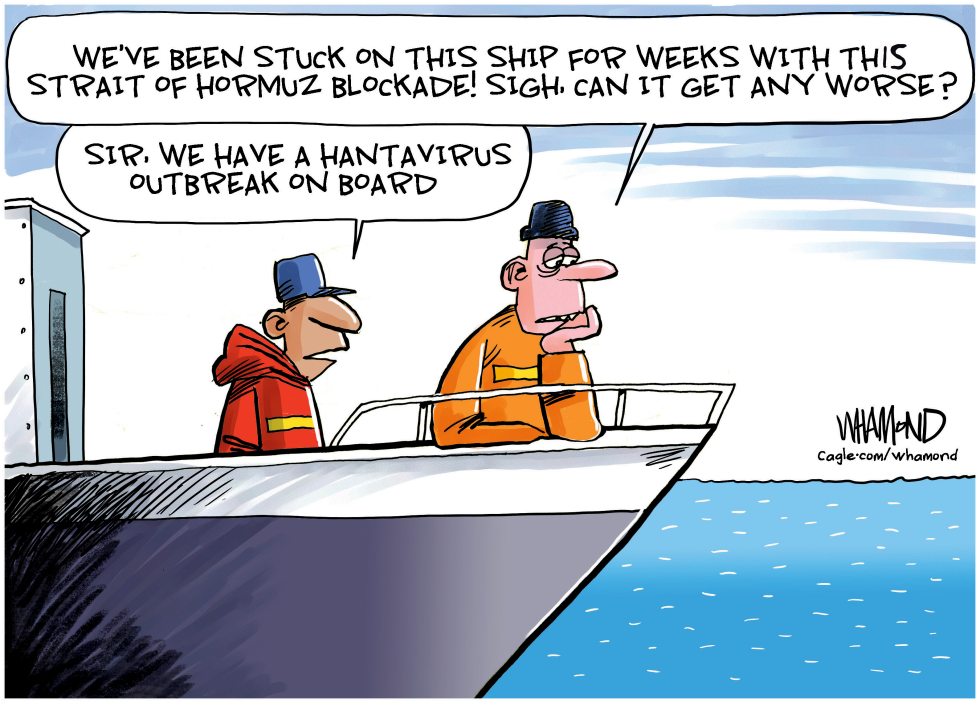
The cartoon depicts two sailors aboard a ship trapped in the Strait of Hormuz due to a naval blockade. One laments the weeks-long delay and wonders if conditions can worsen. The other reports a hantavirus outbreak on board. The image responds to ongoing tensions involving Iran and disruptions to global oil routes. As of the May 2026 publication date, the blockade has halted tanker traffic and strained energy markets. The added health crisis underscores the compounding risks for crews and supply chains. The visual ties geopolitical conflict directly to immediate human and economic consequences.
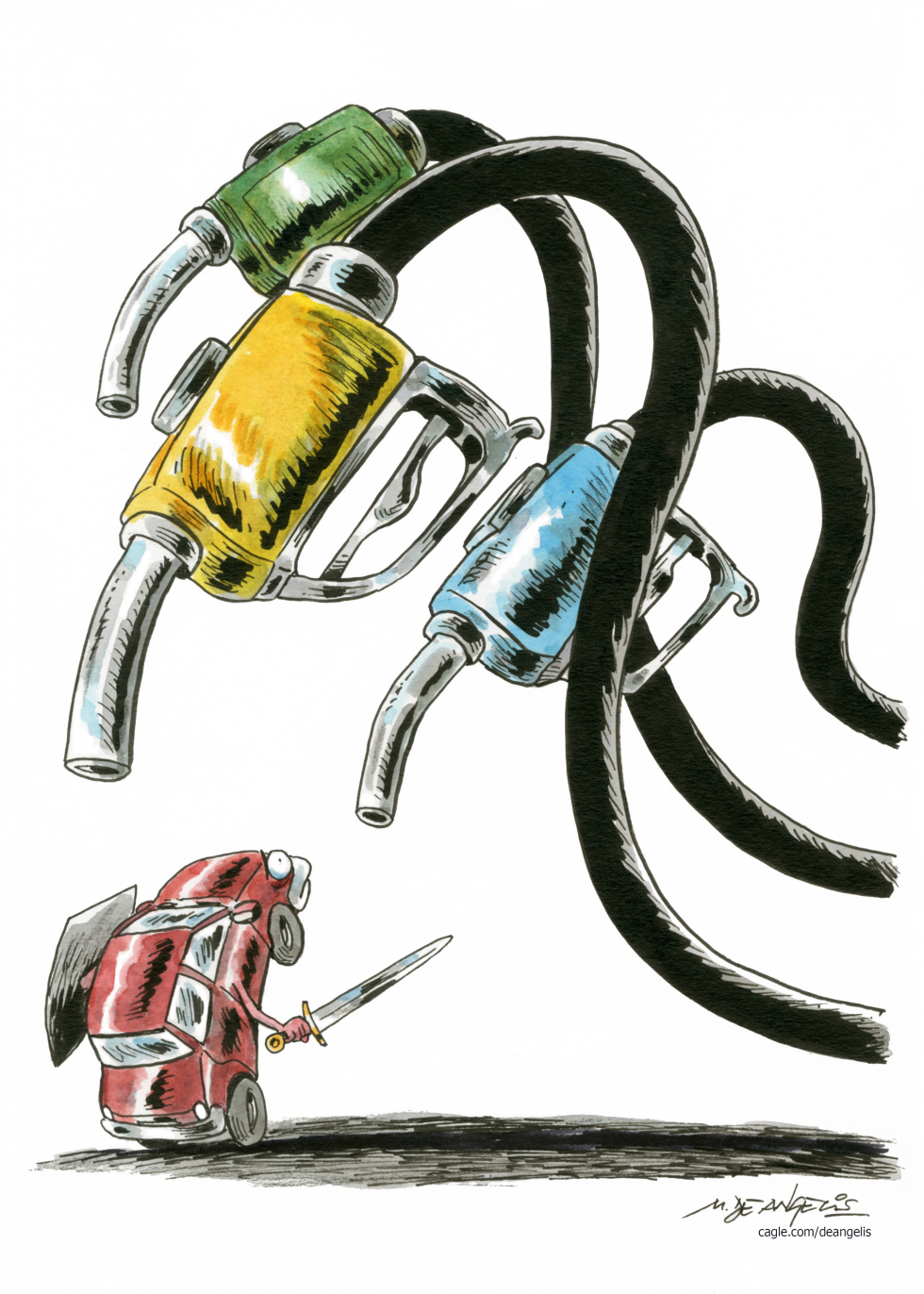
Marco De Angelis draws a clever twist on the ancient HYDRA myth, where a plucky red CAR, sword in hand, squares off against a beastly creature formed by three FUEL pump nozzles—green, yellow, and blue—attached to writhing black hoses. The scene plays on the endless battles drivers face with soaring OIL PRICES and FUEL costs, tying into broader ECONOMY woes. Tags like TRANSPORTATION, TRADE, WAR, CRISIS, IRAN, USA, and HORMUZ hint at real-world tensions in the Strait of Hormuz, where geopolitical strife disrupts global OIL supplies. It's a sharp commentary on how these issues regenerate like hydra heads, making every victory temporary in the fight against economic pressures.
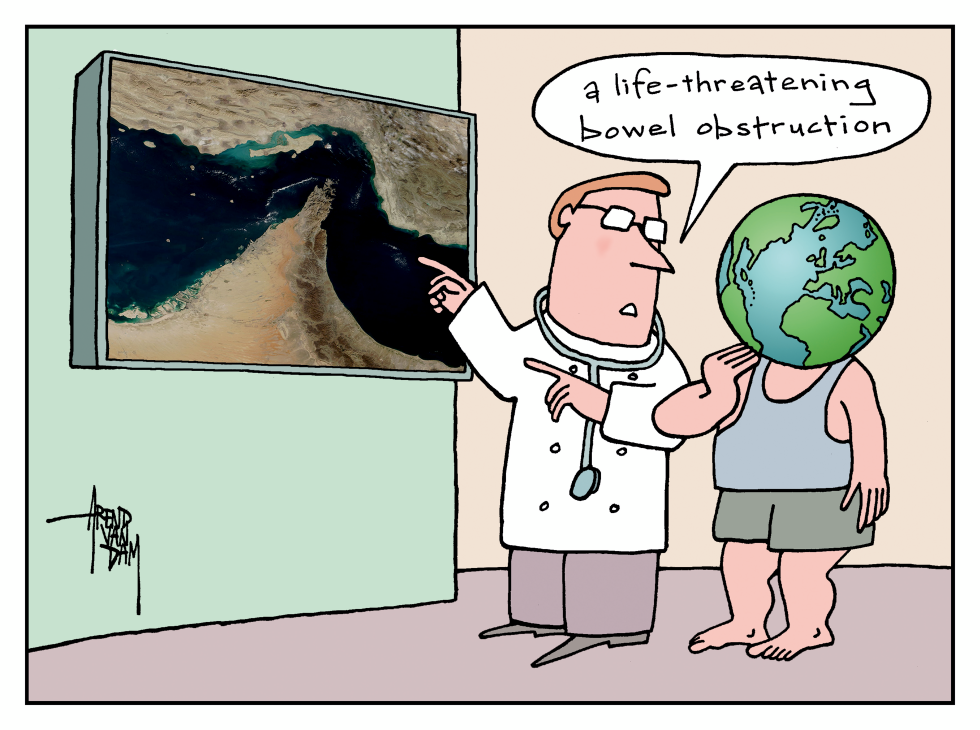
Arend van Dam\'s cartoon depicts a doctor diagnosing a child-like figure with a globe for a head, pointing to a screen showing the Strait of Hormuz as a life-threatening bowel obstruction. This visual metaphor ties into tags such as economy, world, oil, gas, obstruction, and war, illustrating how blockages in key trade routes threaten global stability. The barefoot patient in casual attire underscores vulnerability, while the doctor\'s serious demeanor adds dry humor to the geopolitical satire. Negotiations with ayatollahs and regime sanctions loom in the background, making the image a pointed commentary on how such conflicts create economic chokepoints. The overall composition blends medical analogy with international affairs for sharable impact.