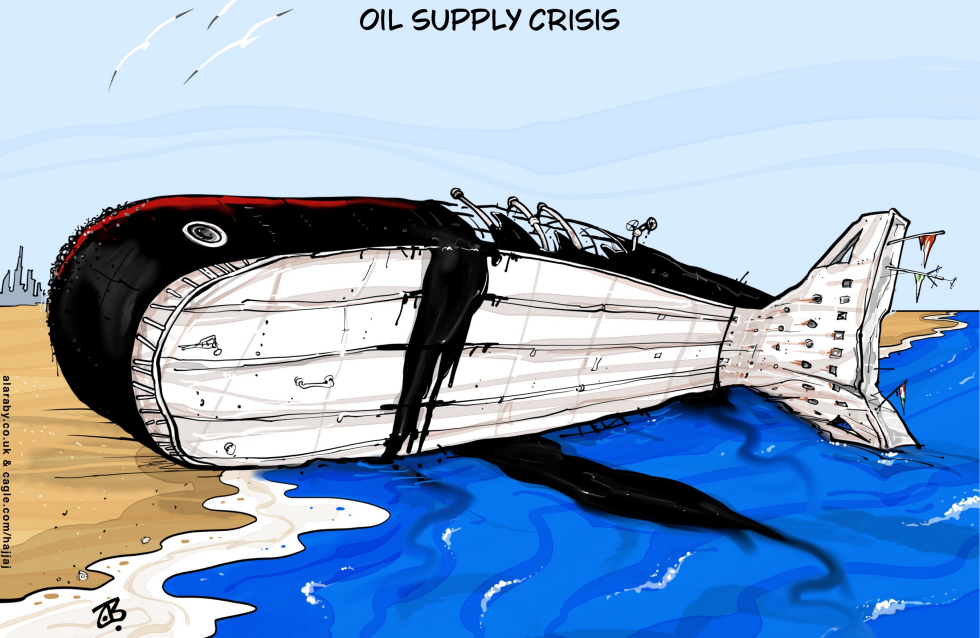
A major oil tanker has run aground, disrupting supply routes and releasing crude into coastal waters. The incident underscores vulnerabilities in global energy transport networks that rely on aging or poorly maintained vessels. Such events can spike fuel prices and trigger immediate cleanup costs for affected regions. The cartoon frames the grounding as a direct cause of the broader supply crisis rather than an isolated accident. It points to systemic weaknesses in oversight and infrastructure that allow one failure to cascade into wider shortages and ecological harm.
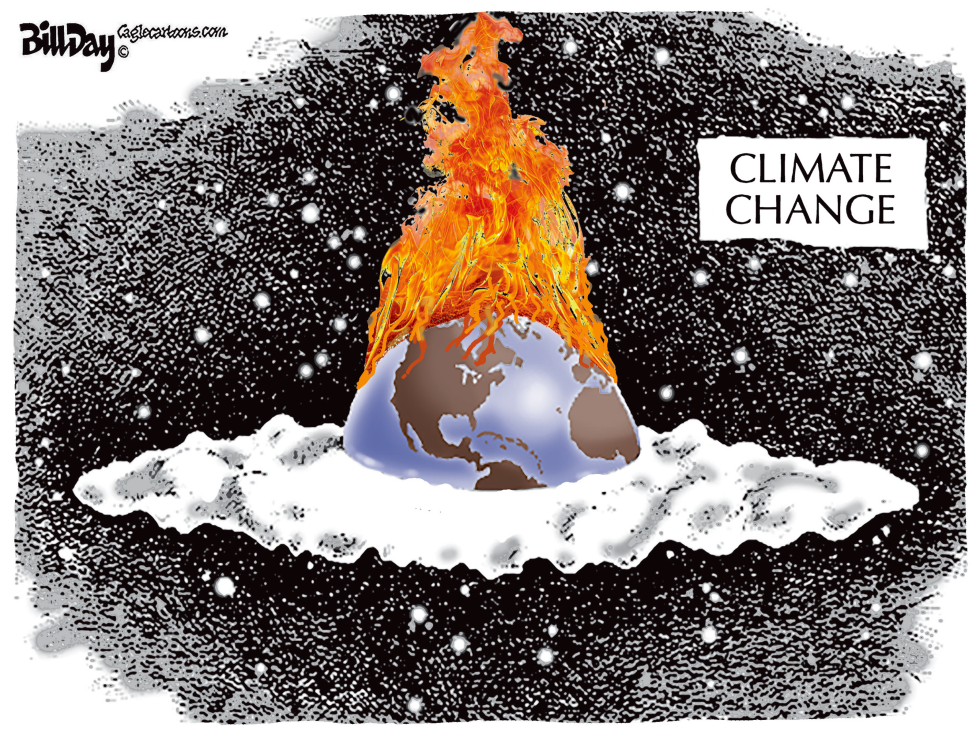
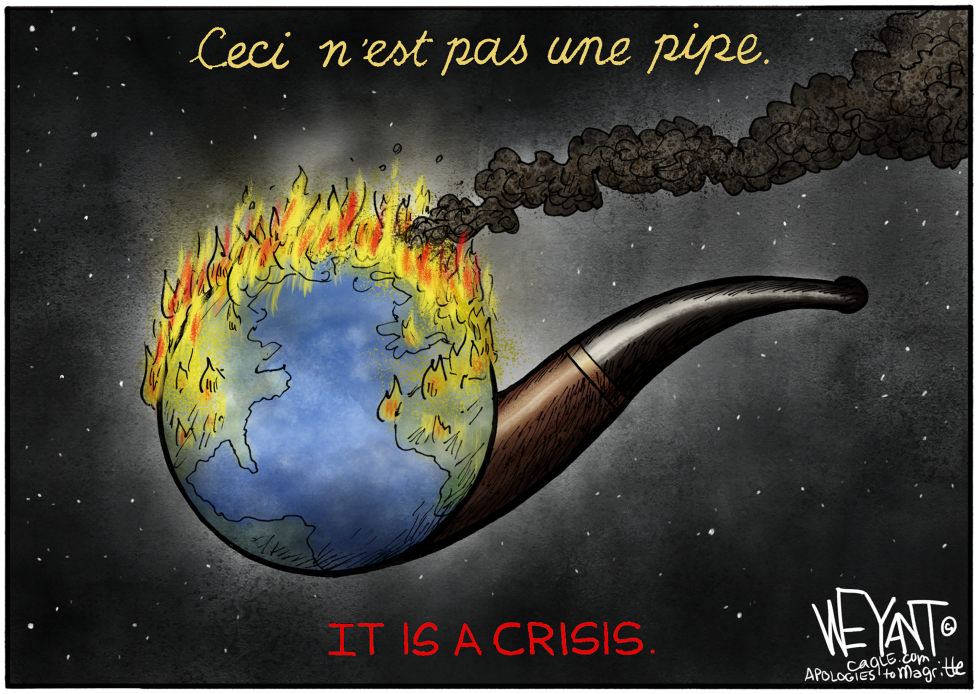
Rising global temperatures continue to break records as heat waves intensify across continents. Scientists link the trend to greenhouse gas emissions from human activity, raising risks for ecosystems and populations. The piece frames the ongoing warming as an urgent crisis demanding immediate policy response.
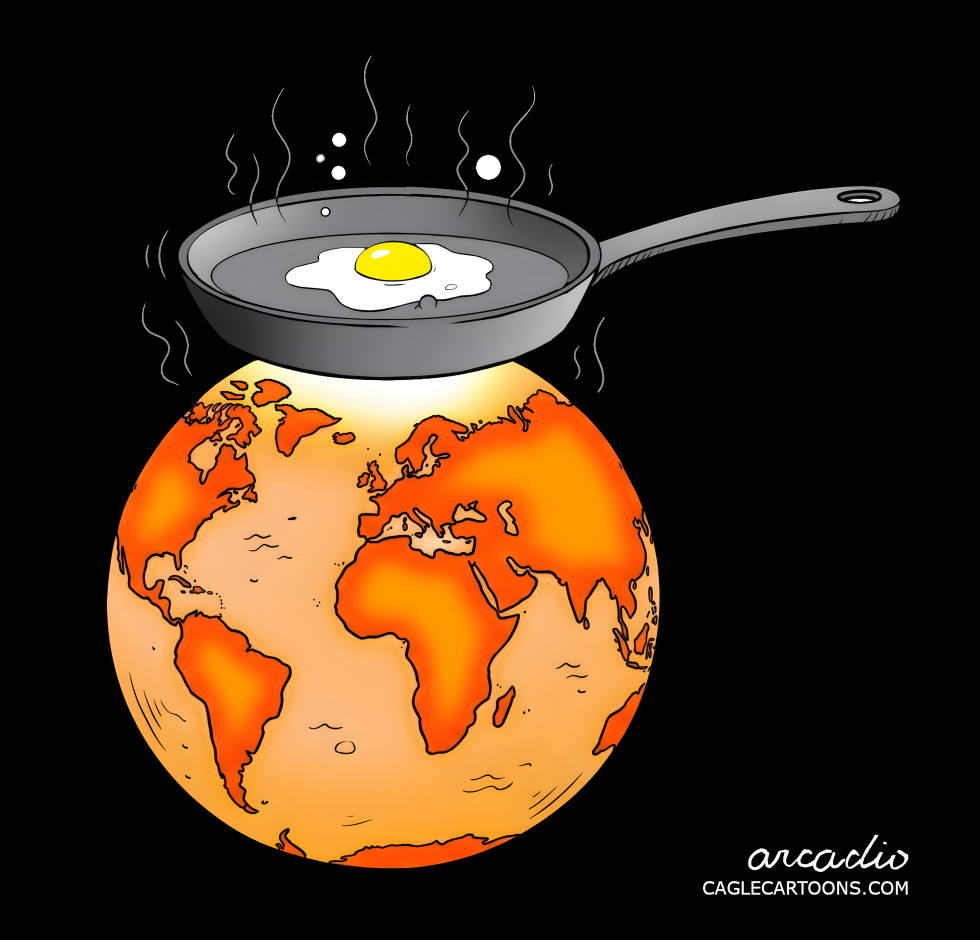
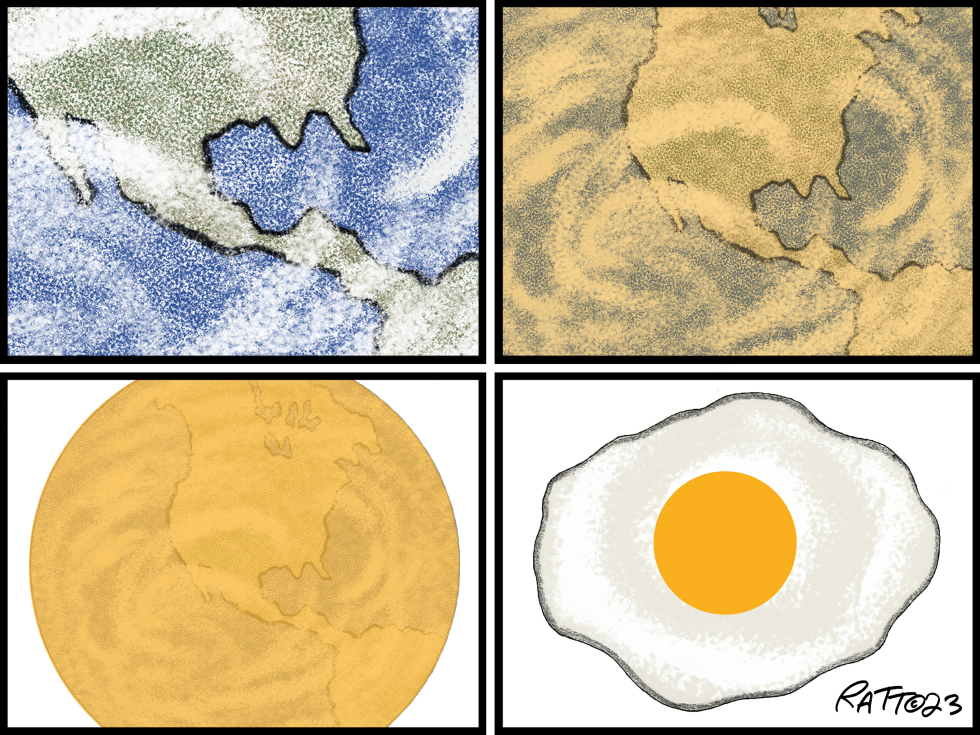
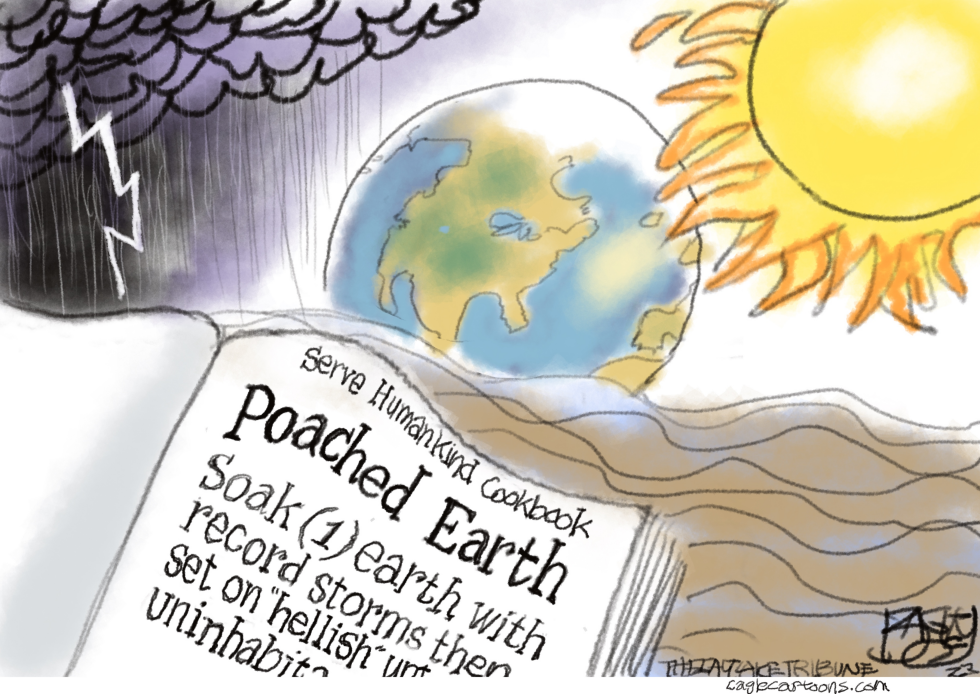
Ongoing global temperature records continue to climb in mid-2026 amid extreme weather events worldwide. Scientists and governments track accelerating impacts from greenhouse gas emissions. The cartoon underscores the direct link between human-driven climate change and planetary distress, presenting the crisis as an immediate and visible threat rather than a distant concern.
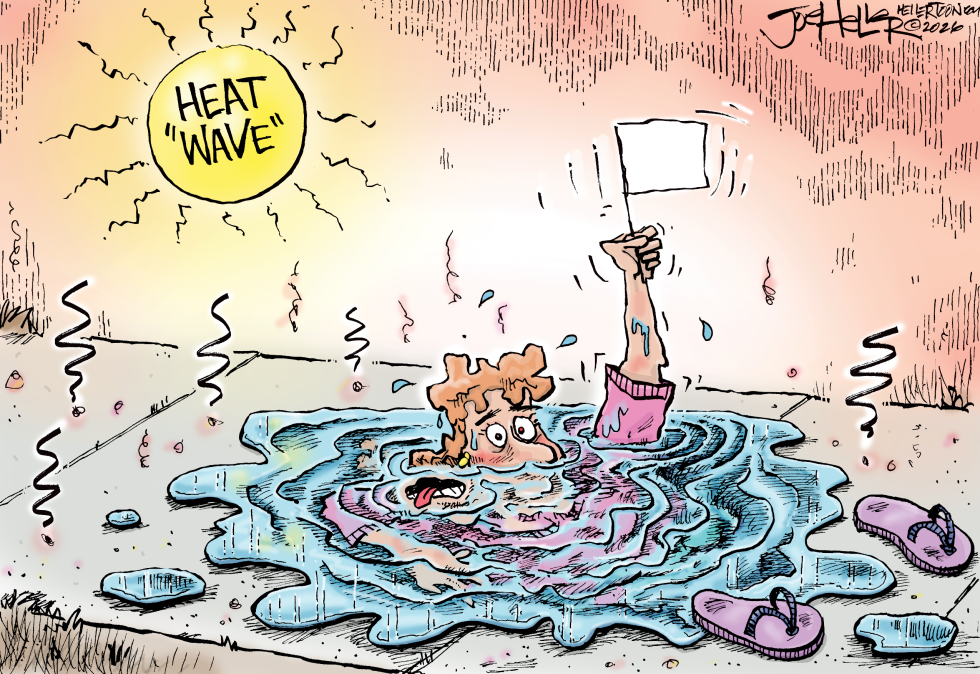
A cartoon published July 13, 2026, depicts a person trapped in a shrinking puddle on cracked pavement, waving a white flag in surrender beneath a sun labeled Heat Wave. The scene captures the overwhelming impact of extreme summer temperatures, with the figure partially submerged and surrounded by discarded flip flops. The image highlights the physical toll of prolonged heat, showing steam and distress as the sun dominates the sky. This visual responds to ongoing heat wave conditions affecting many regions during mid-July.
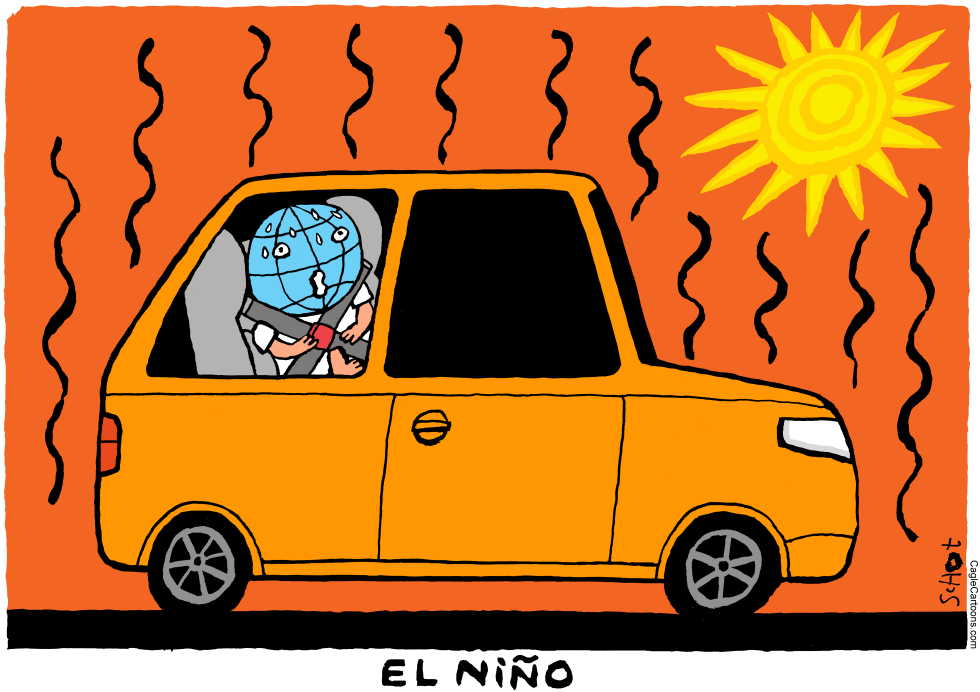
A yellow car sits under a bright sun with heat waves rising on an orange background. Inside the car a globe figure wearing a seatbelt sweats in the driver's seat. Large text at the bottom reads EL NIÑO.
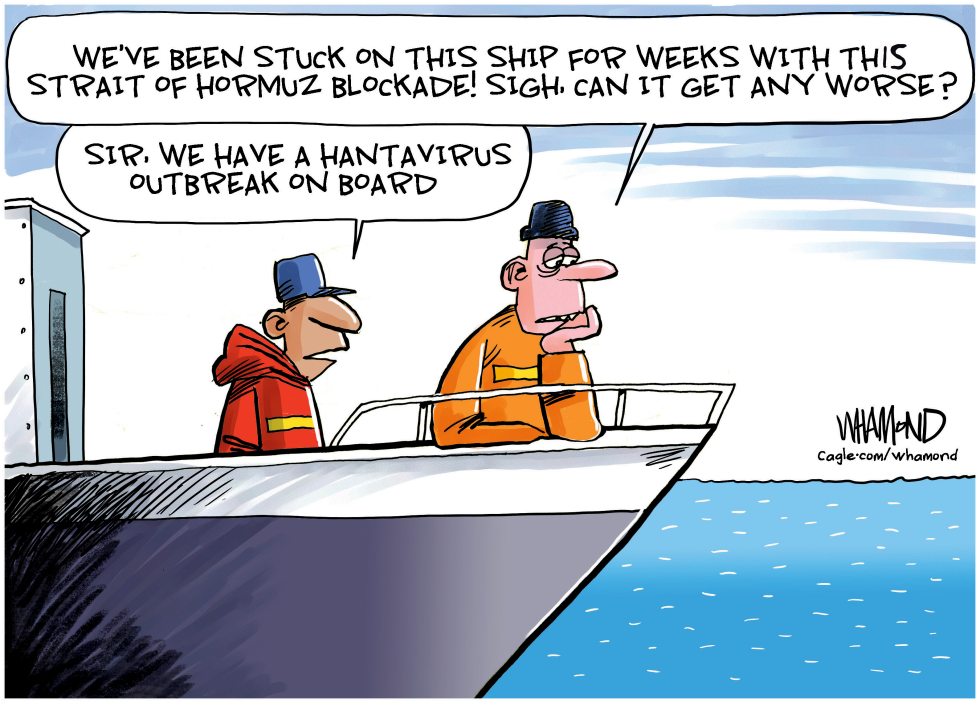
The cartoon depicts two sailors aboard a ship trapped in the Strait of Hormuz due to a naval blockade. One laments the weeks-long delay and wonders if conditions can worsen. The other reports a hantavirus outbreak on board. The image responds to ongoing tensions involving Iran and disruptions to global oil routes. As of the May 2026 publication date, the blockade has halted tanker traffic and strained energy markets. The added health crisis underscores the compounding risks for crews and supply chains. The visual ties geopolitical conflict directly to immediate human and economic consequences.
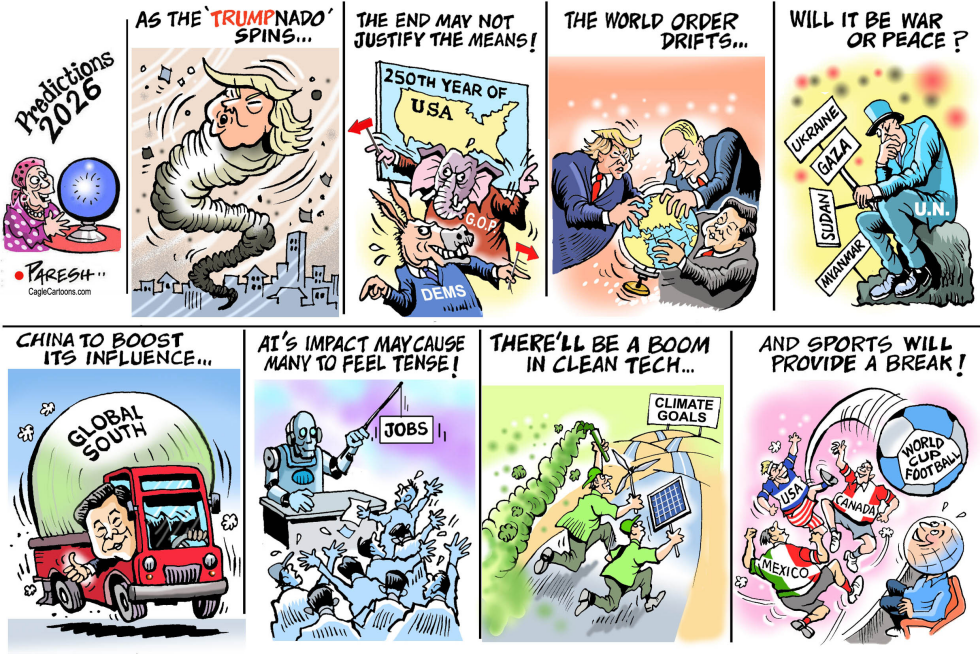
Paresh Nath's January 2026 predictions panel series opens with a fortune teller viewing a crystal ball. Subsequent sections show a Trump tornado, an elephant and donkey arguing over the US 250th anniversary, leaders tugging at a globe, a UN figure pondering conflict zones, China boosting influence in the global south, a robot waving a jobs sign amid chaos, workers chasing clean tech, and athletes from USA, Canada and Mexico scrambling for a World Cup football.
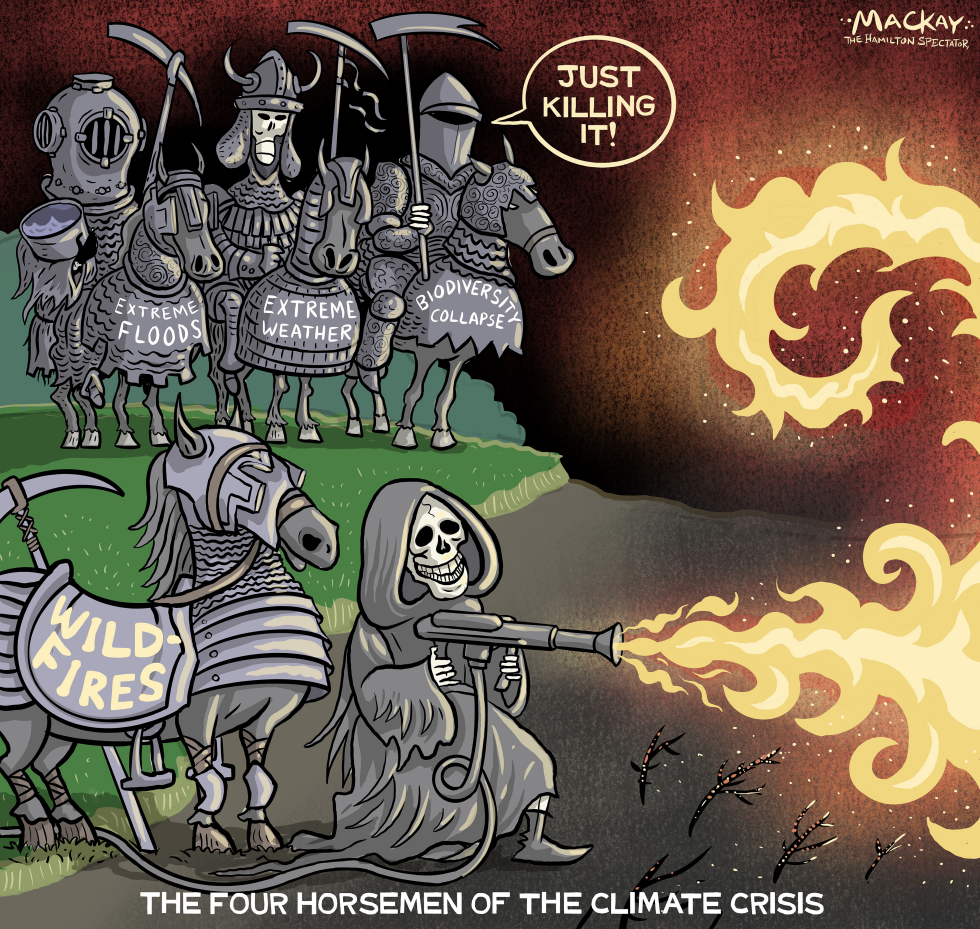
The cartoon depicts four armored horsemen on a grassy rise beneath a fiery sky. The foreground figure, labeled Wildfires, kneels and directs a flamethrower toward the right. Three additional horsemen behind carry shields marked Extreme Floods, Extreme Weather and Biodiversity Collapse. A speech bubble above the third rider reads Just Killing It. Large text at the bottom identifies the group as The Four Horsemen of the Climate Crisis. The image responds to ongoing wildfire seasons and broader climate impacts reported in late 2024 and early 2025.