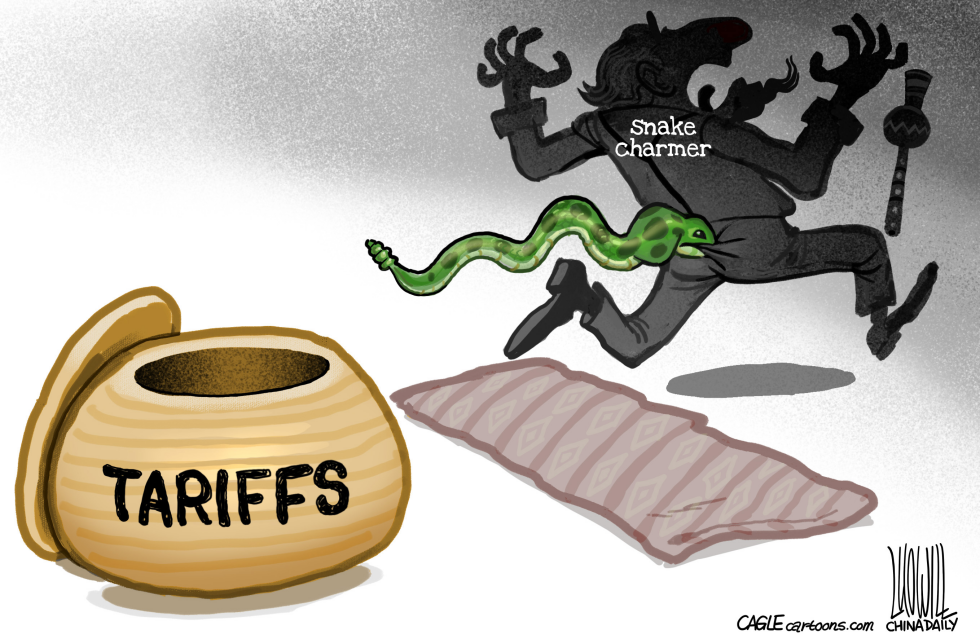
A political cartoon published August 28, 2026, shows a snake charmer fleeing as a green snake emerges from a pot labeled tariffs. The image uses the snake charmer metaphor to comment on tariff policies. The cartoon appeared in China Daily and was distributed via Cagle Cartoons. It responds to ongoing trade tensions involving tariffs. The visual suggests tariffs carry uncontrolled risks similar to an escaped snake.
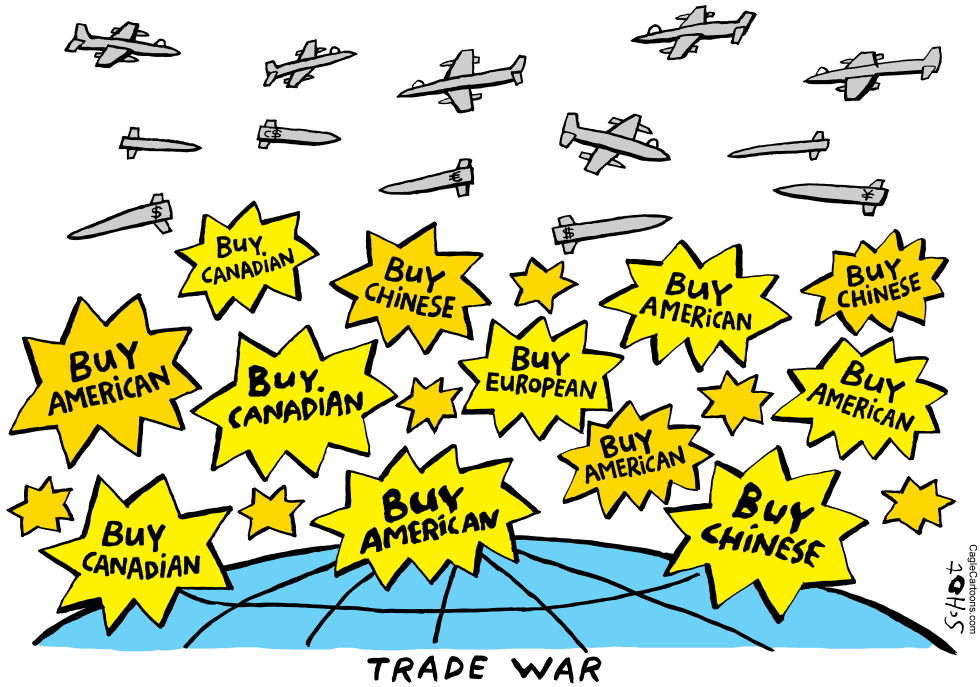
Competing buy national campaigns from multiple countries have intensified trade disputes, raising concerns over economic retaliation and supply chain disruptions. The piece argues these appeals are directly contributing to broader conflict.
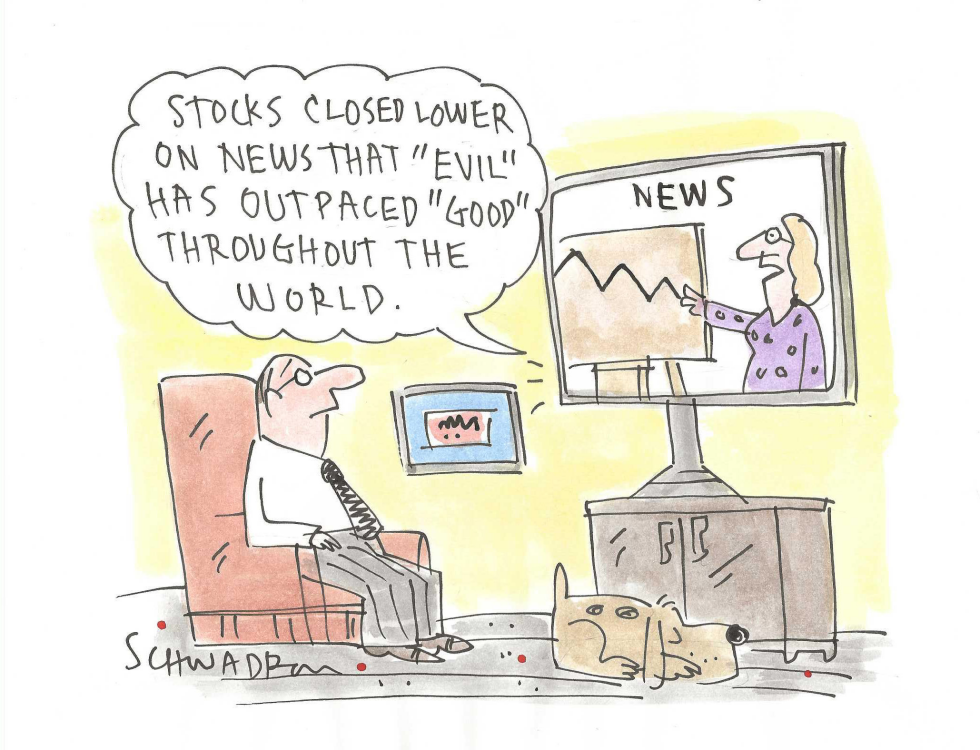
Stock markets declined after news reports indicated evil has outpaced good around the world. The development prompted immediate selling as traders absorbed the assessment from major outlets. The shift highlights how broad negative narratives can influence trading volumes and sentiment in real time. The piece presents the market reaction as a direct response to the reported imbalance between evil and good.
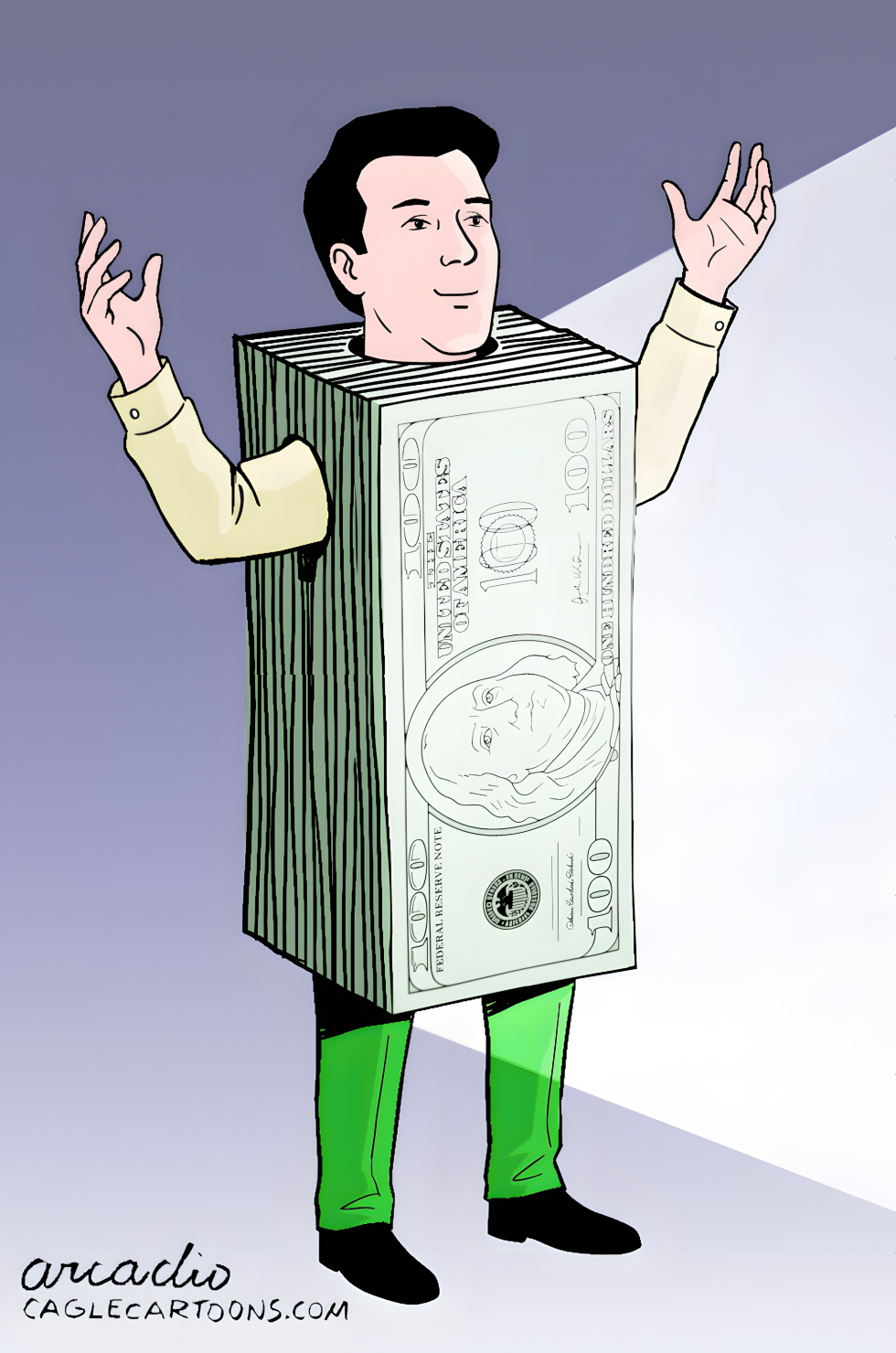
The US dollar maintains its central role in international finance and trade. Its status as the primary reserve currency supports global transactions and stability. The editorial highlights this continued influence without recent policy shifts or challenges altering the dynamic.
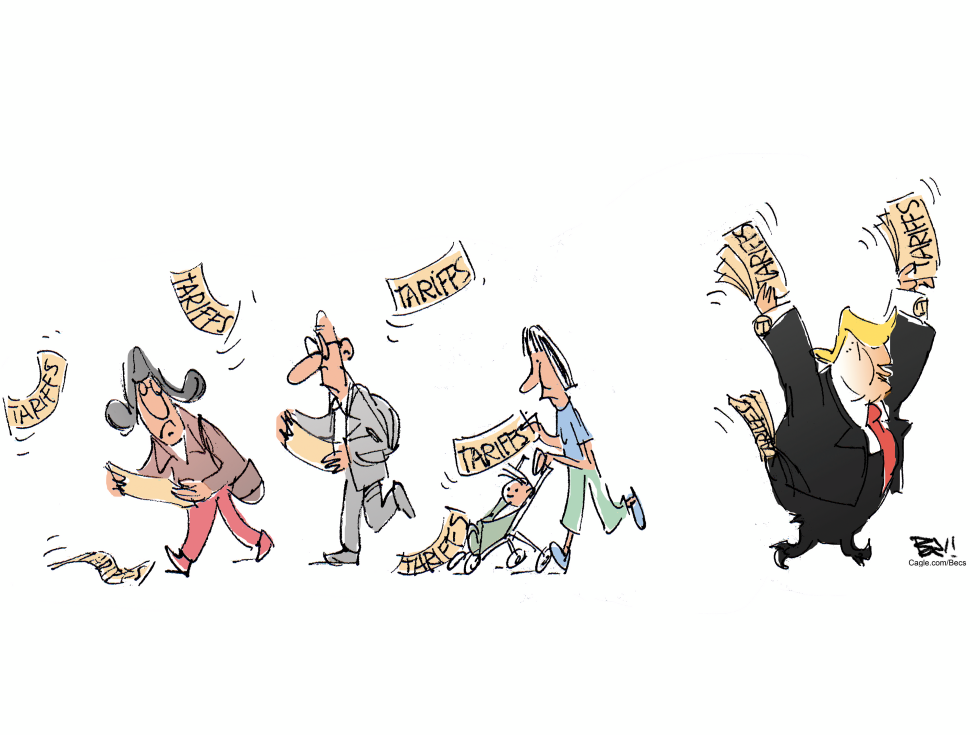
Donald Trump expanded tariffs across trading partners in mid-2026, triggering immediate market volatility and diplomatic pushback. The move raised costs for consumers and businesses reliant on imports. The piece portrays the policy as an indiscriminate barrage that disrupts daily life and global commerce.
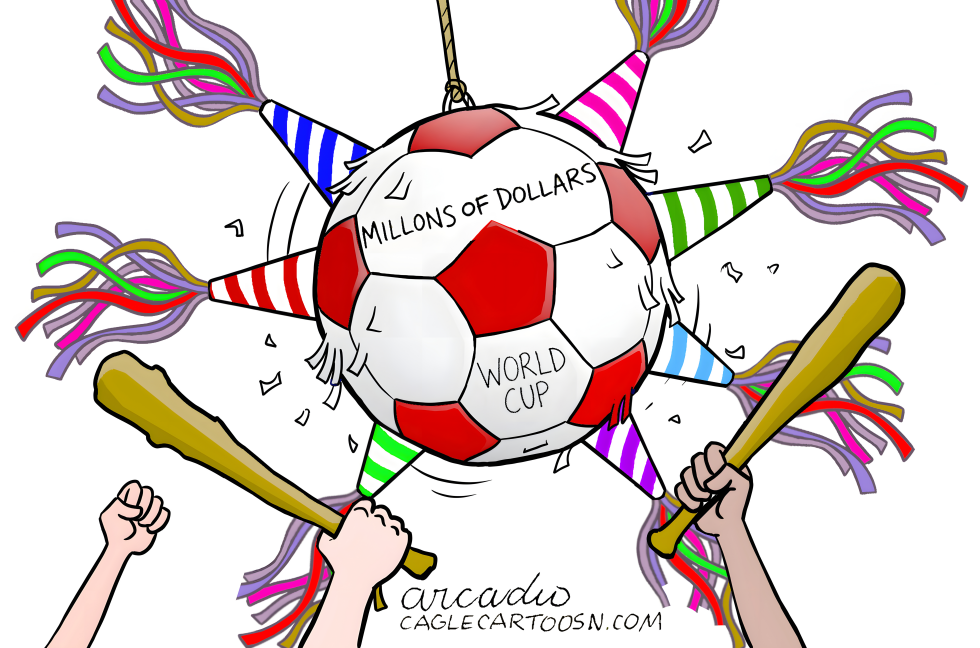
A soccer ball piñata labeled World Cup and Millions of Dollars hangs from a rope while multiple hands swing wooden bats at it. Colorful streamers and paper fragments scatter with each impact. The image appears on July 2 2026 amid ongoing preparations and financial discussions surrounding the 2026 World Cup hosted across North America.
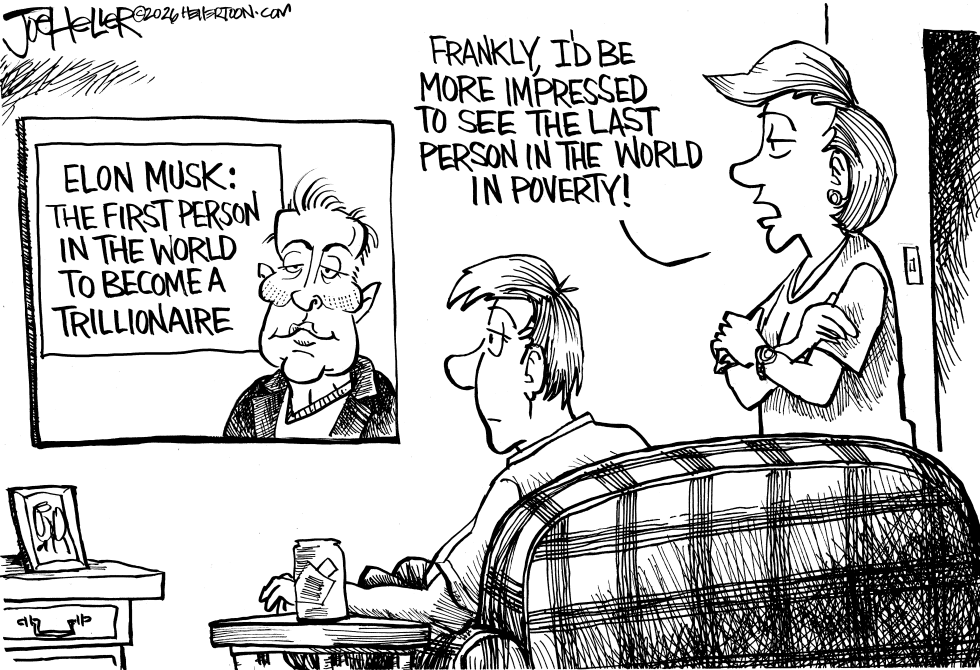
A couple watches a television broadcast announcing Elon Musk as the first person to become a trillionaire. The woman viewer responds that she would be more impressed by the last person in poverty being lifted out of it. The scene captures a living room exchange over the news report.
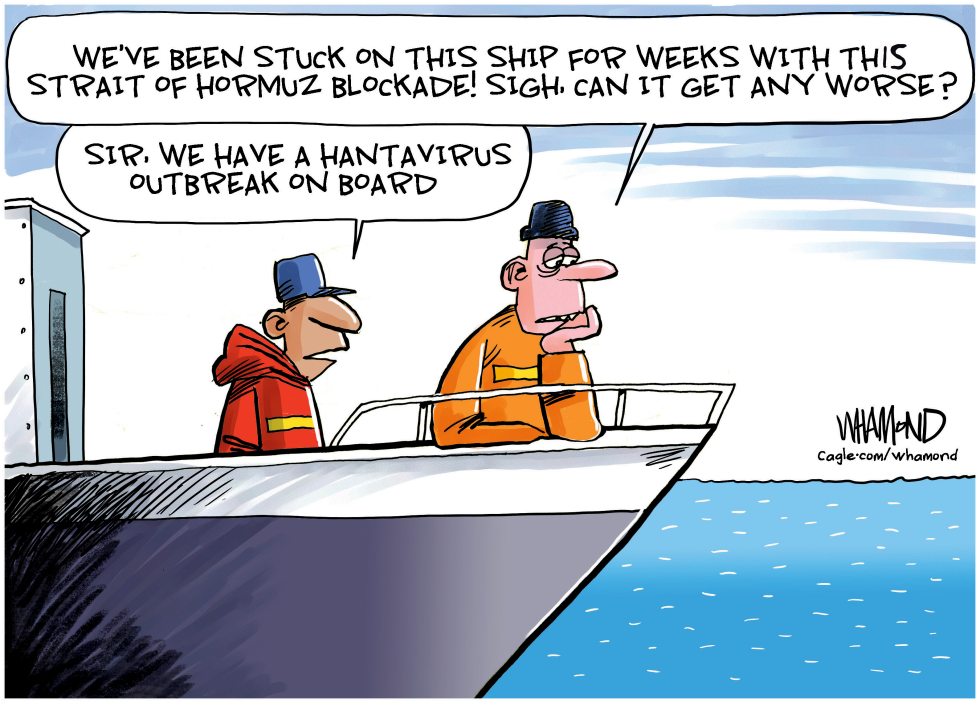
The cartoon depicts two sailors aboard a ship trapped in the Strait of Hormuz due to a naval blockade. One laments the weeks-long delay and wonders if conditions can worsen. The other reports a hantavirus outbreak on board. The image responds to ongoing tensions involving Iran and disruptions to global oil routes. As of the May 2026 publication date, the blockade has halted tanker traffic and strained energy markets. The added health crisis underscores the compounding risks for crews and supply chains. The visual ties geopolitical conflict directly to immediate human and economic consequences.
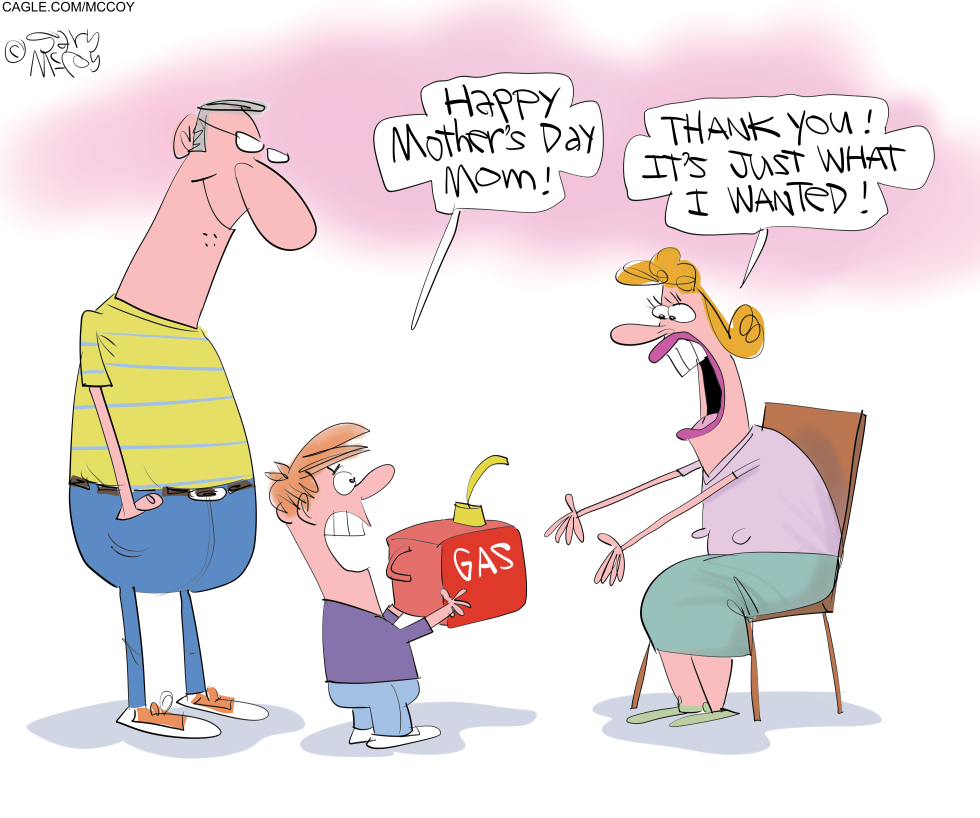
Gary McCoy's cartoon captures a family moment where a young son hands his mother a lit bomb marked GAS, exclaiming Happy Mother's Day, while she thanks him enthusiastically. The image ties into tags like Mom, mother, Mothers Day, gas, oil, petro, prices, economy, inflation. It highlights the burden of rising energy costs on families, with the explosive gift symbolizing volatile fuel markets. Amid references to Iran, strait of hormuz, Trump, the satire underscores how global tensions affect everyday life, blending holiday cheer with economic reality in a straightforward, exaggerated style typical of political cartoons.
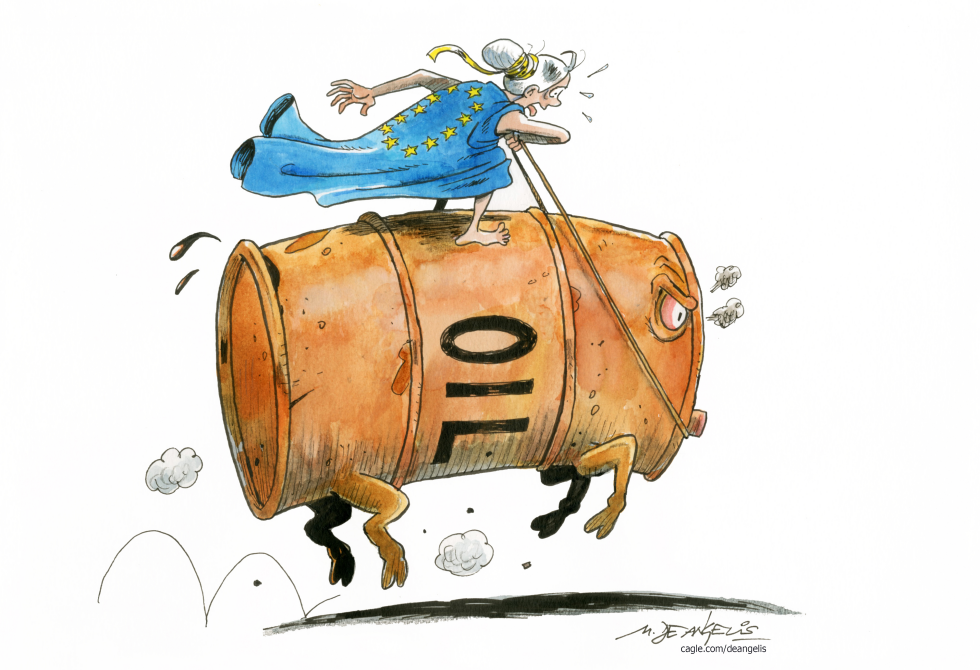
Marco De Angelis draws a sharp symbolic scene where a figure draped in the European Union flag clings to a bucking oil barrel marked OIL, legs kicking like a furious bull, smoke puffing from its nostrils. The rodeo metaphor nails the wild ride of economy and prices amid war in places like Hormuz. Europe looks desperate, one hand waving, mouth open in shock, as the oil tank rears up. It\'s a straightforward jab at how USA policies and global tensions turn energy into a beast no one can tame. Tags like symbolic, European, oil, tank, war, and economy drive the point home without fluff.
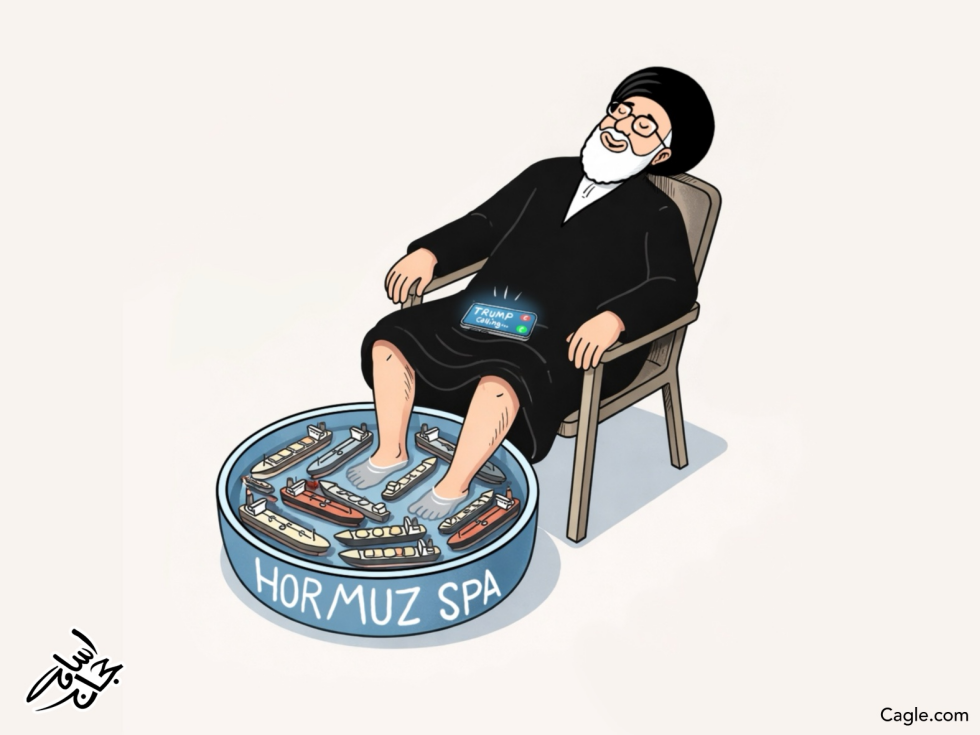
Osama Hajjaj draws an Iranian leader, resembling a cleric in black robes and turban, slouched in a chair with feet immersed in a blue basin labeled Hormuz Spa. Tiny ships float around his feet, evoking the Strait of Hormuz. A phone on his lap displays Trump with a green light, implying a call or alert. The scene captures dry satire on Iran-Trump relations, with the spa pun highlighting control over vital shipping lanes. Tags like Hormuz, Iran, Donald Trump, spa, and political cartoon underscore the humor in geopolitical friction.
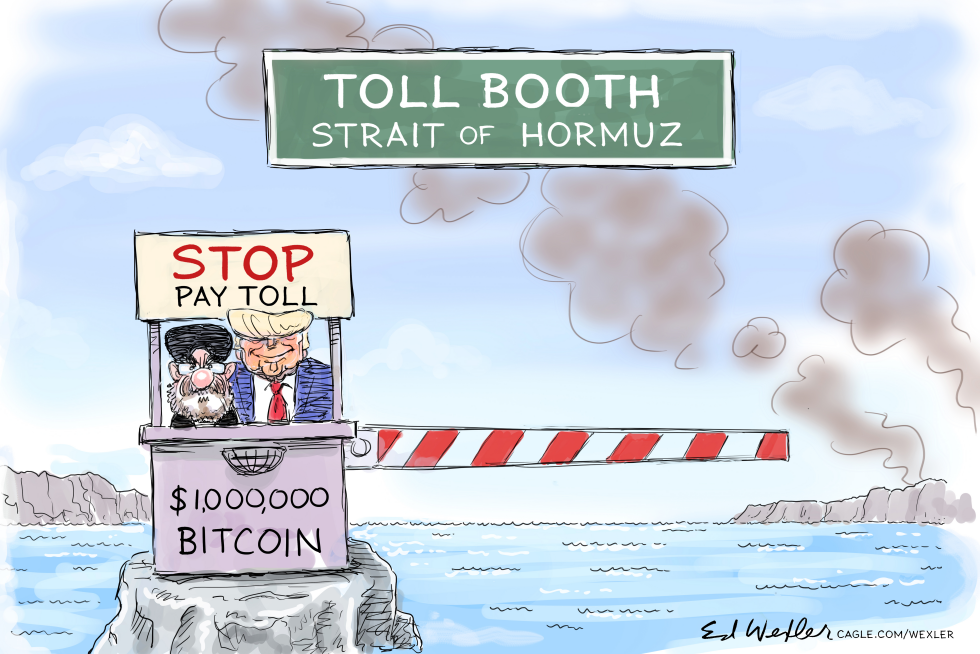
Ed Wexler\\\'s cartoon captures a toll booth in the Strait of Hormuz, where figures resembling Trump and the Ayatollah enforce a $1,000,000 Bitcoin toll. Smoke rises from what look like mines in the water, blending tags like Iran, Strait of Hormuz, tolls, Bitcoin, Trump, Ayatollah, and crypto into a sharp commentary. The barrier arm blocks passage, emphasizing control over this vital shipping lane. It\\\'s a straightforward jab at geopolitical tensions, with the toll sign demanding payment to proceed. No hidden layers here, just clear visuals tying economic pressures to digital currency in a contested area. The dry humor shines through in the absurdity of a Bitcoin booth amid potential explosions.
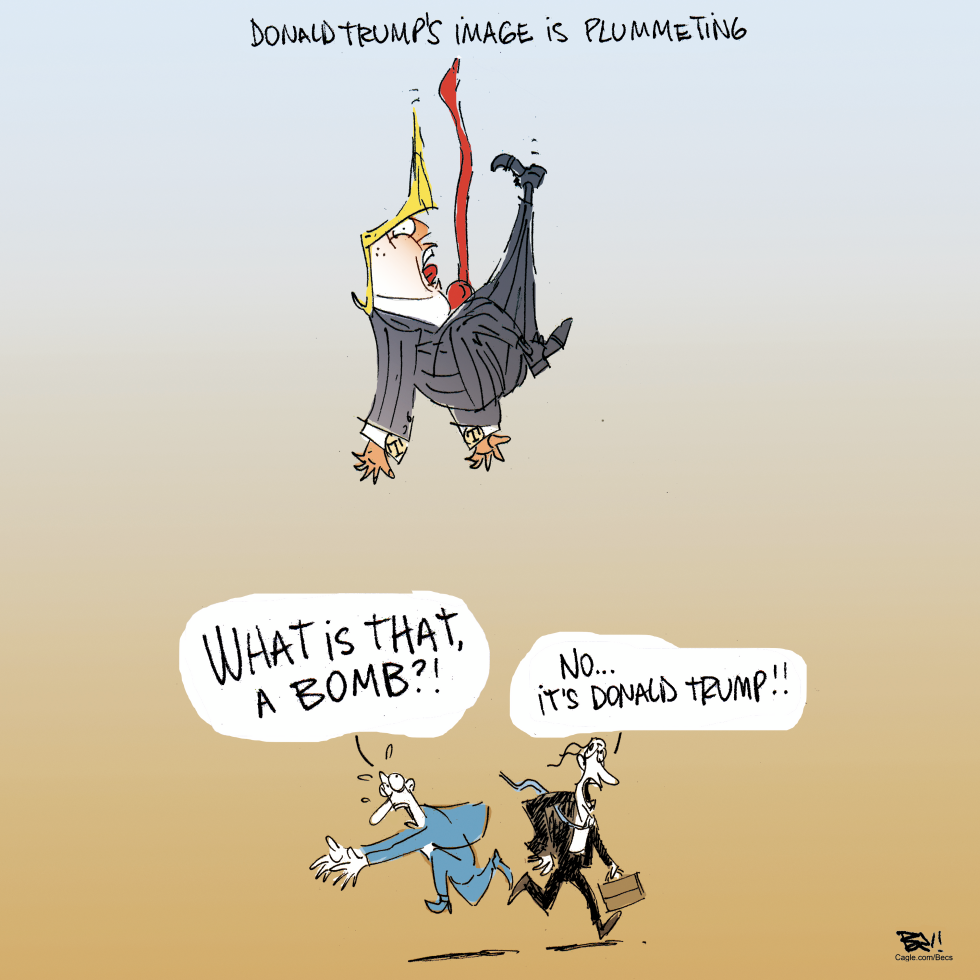
The cartoon depicts a figure with yellow hair and red tie, clearly caricaturing Donald Trump, diving headfirst from the sky like a falling bomb, mouth agape and limbs flailing. Below, two suited men run in panic, one asking if it's a bomb, the other identifying it as Trump. The title declares 'Donald Trumps Image is Plummeting,' playing on the pun of falling popularity. This piece skewers the Trump administration in the US for saying one thing then another, coming off as perverse and arrogant. It portrays him as thinking he's a king, the absolute tyrant of the world, with Europe and the world fed up. The dry humor lands through the visual metaphor, emphasizing global exasperation.