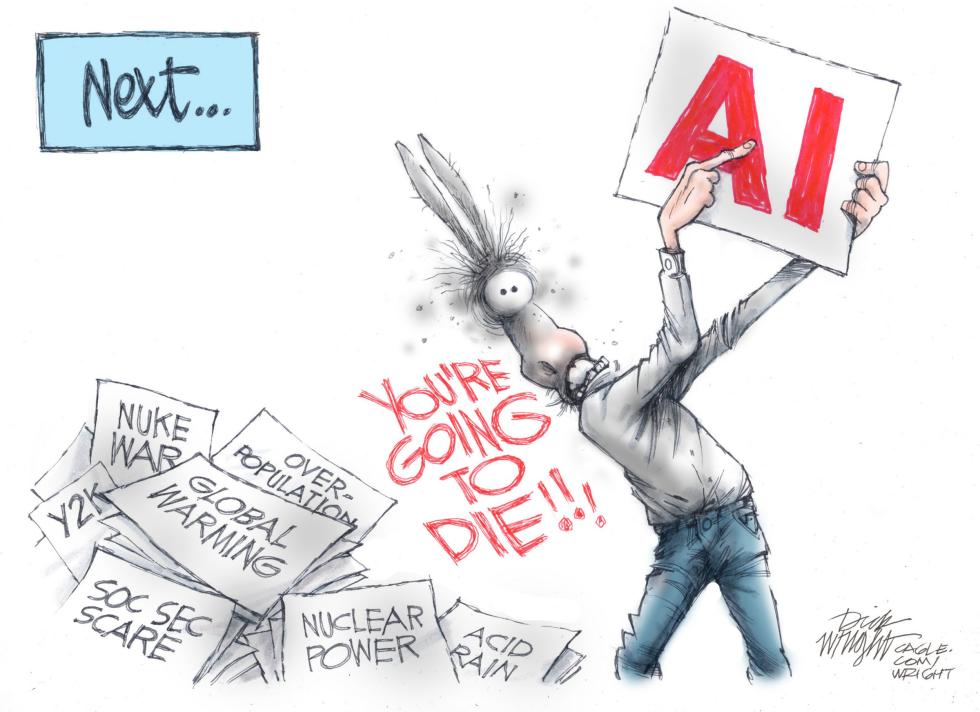
Democrats have renewed warnings that artificial intelligence poses an existential threat, echoing earlier alarms over Y2K, nuclear power, and climate change that later lost urgency. The pattern suggests political use of successive crises to maintain attention. The cartoon argues these claims recycle familiar tactics without new substance.
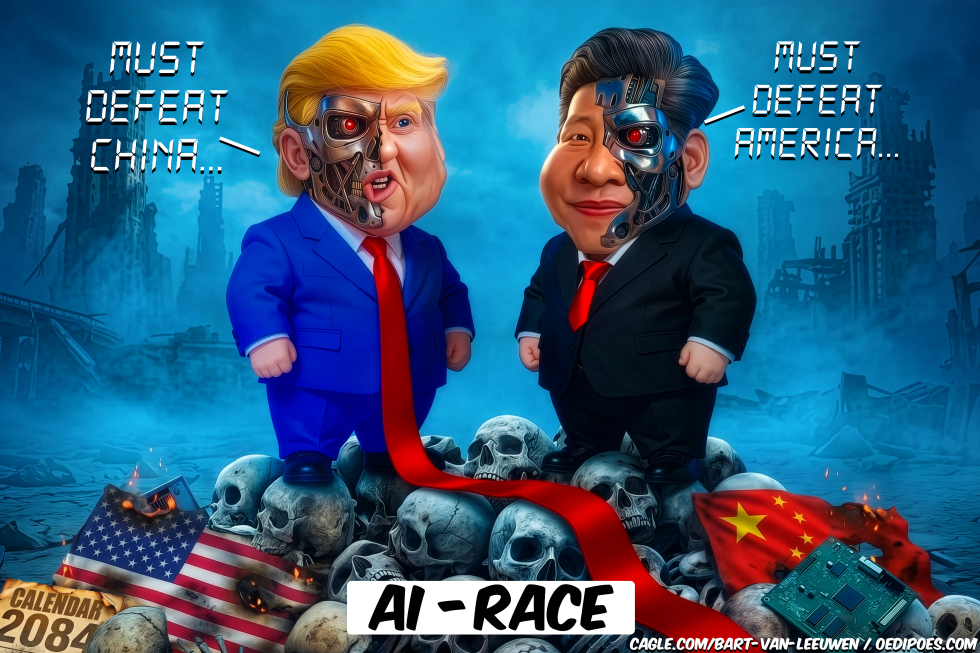
The cartoon depicts Donald Trump and Xi Jinping as half-robotic figures standing atop piles of skulls in a devastated cityscape dated 2084. Each leader is labeled with a directive to defeat the other in an AI race, with American and Chinese flags and a circuit board visible among the debris. The image responds to ongoing US-China technological competition by projecting a grim future of mutual escalation. The visual metaphor underscores how both nations view AI development as a zero-sum contest with potentially catastrophic results. The publication date of September 2026 places the piece amid continued policy focus on semiconductor controls and AI investment bills.
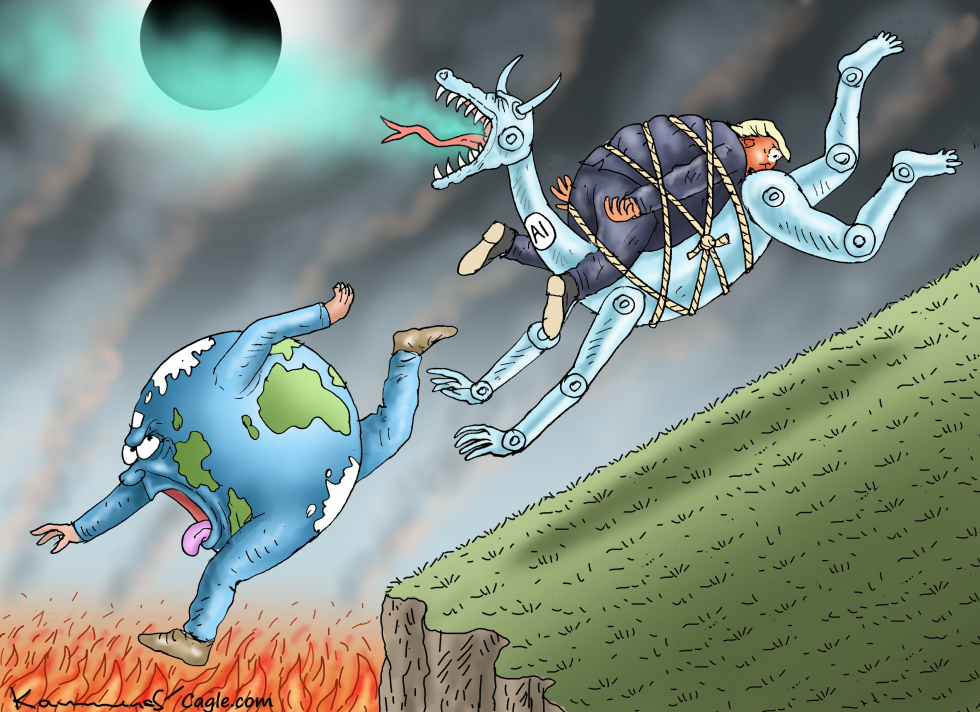
On September 16, 2026, the cartoon responds to growing public alarm over rapid AI development and its potential to disrupt or destroy human society. Donald Trump appears bound to an AI dragon, symbolizing political entanglement with the technology. The piece argues that such alliances accelerate humanity's peril rather than mitigate it, urging caution in policy and leadership choices around emerging tech.
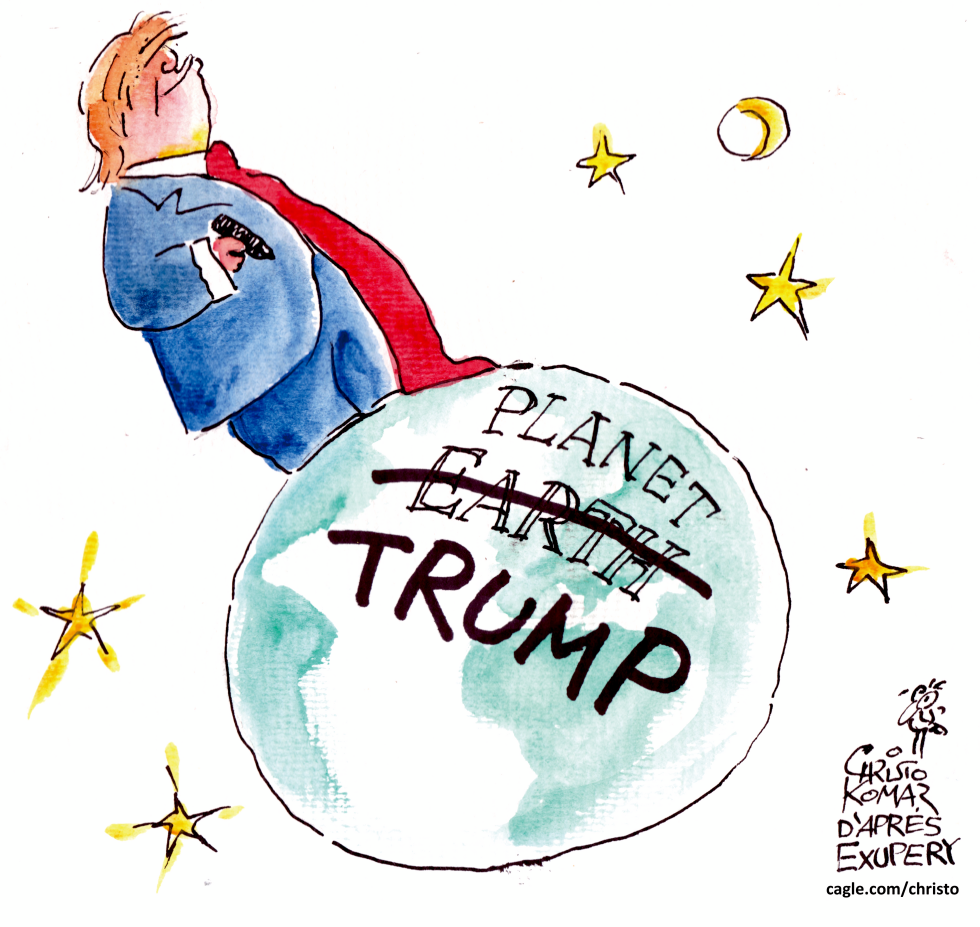
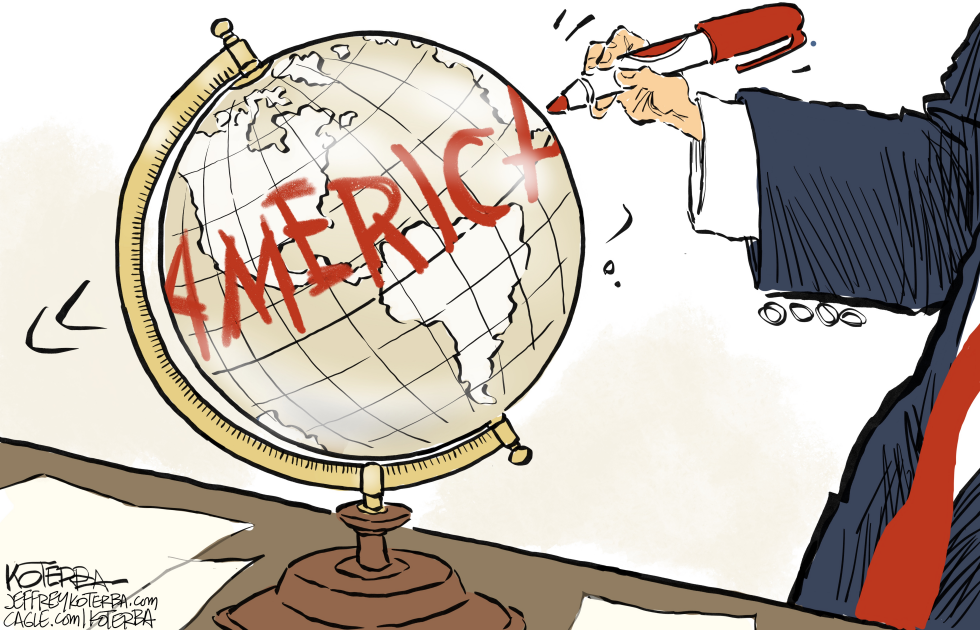
Donald Trump has long projected outsized personal branding onto public institutions and symbols. In this 2026 depiction the former president appears to claim the planet itself. The move reflects an ongoing pattern of self-centered rhetoric that treats national and international assets as extensions of his identity. Critics argue such gestures erode norms of public service and institutional independence. Supporters view them as bold assertions of leadership strength. The cartoon captures the tension between personal ambition and collective governance.
On September 14, 2026, President Trump was depicted altering a globe by crossing out America and writing 4merica. The move reflects ongoing efforts to center his personal brand on national symbols. The cartoon criticizes the action as an exercise in self-promotion that distorts global perspective.
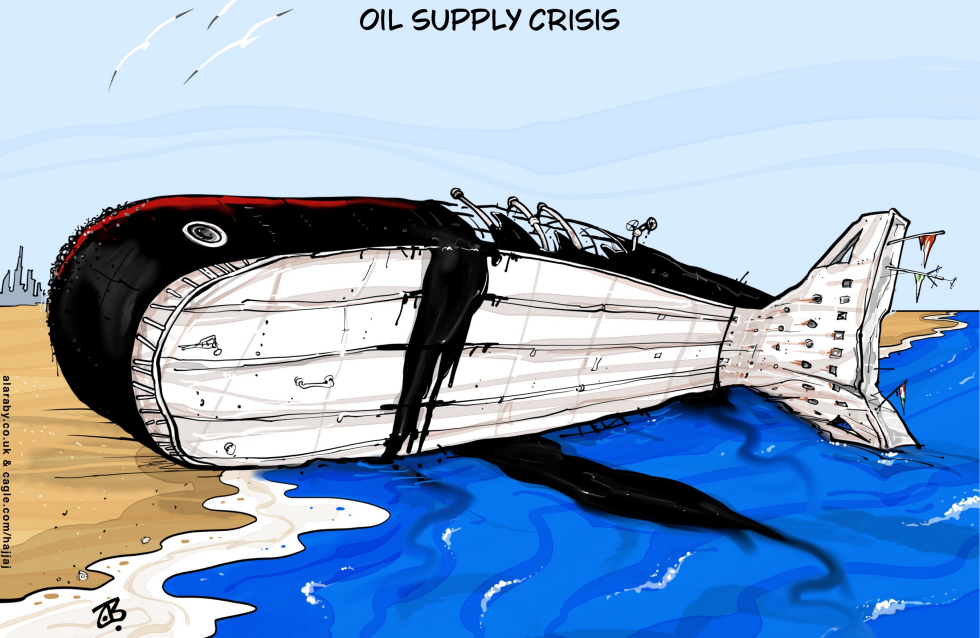
A major oil tanker has run aground, disrupting supply routes and releasing crude into coastal waters. The incident underscores vulnerabilities in global energy transport networks that rely on aging or poorly maintained vessels. Such events can spike fuel prices and trigger immediate cleanup costs for affected regions. The cartoon frames the grounding as a direct cause of the broader supply crisis rather than an isolated accident. It points to systemic weaknesses in oversight and infrastructure that allow one failure to cascade into wider shortages and ecological harm.
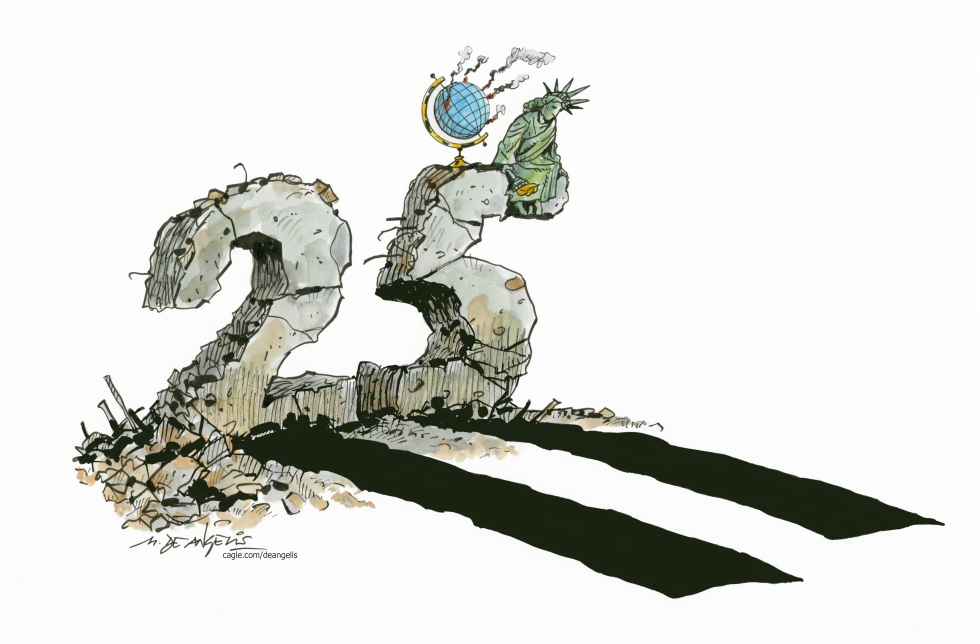
September 11, 2026 marks the 25th anniversary of the attacks that reshaped U.S. foreign policy and domestic security. The milestone arrives amid ongoing global conflicts, eroded alliances, and questions about whether the post-9/11 era delivered promised security. The cartoon frames the anniversary as a moment of visible strain on core American symbols and the broader international order they once anchored.
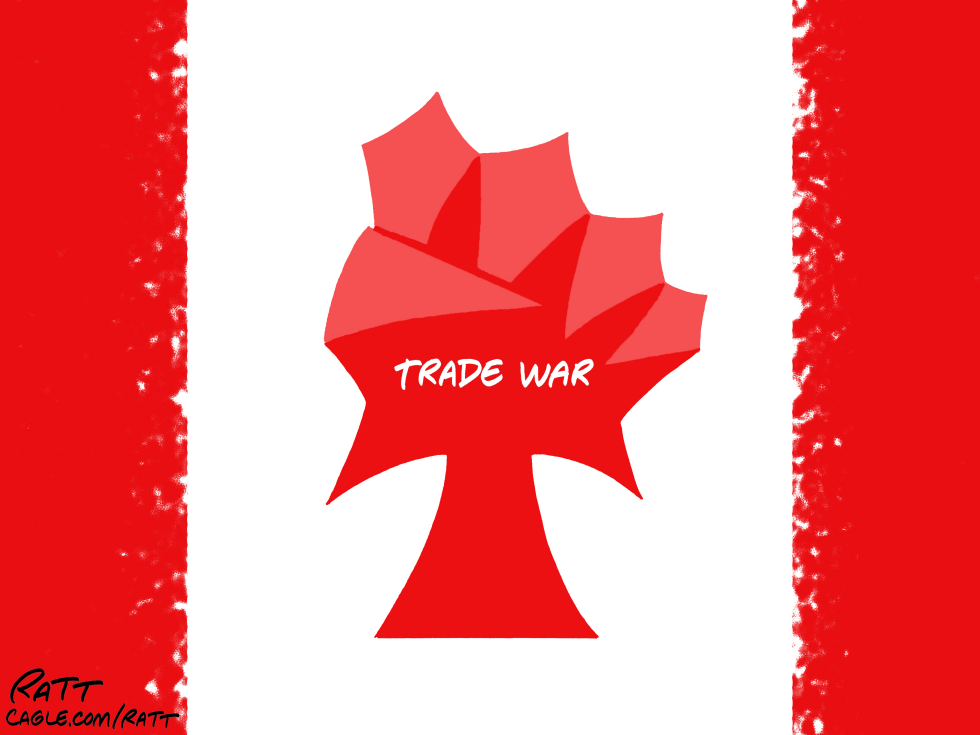
Ongoing US-Canada trade tensions escalated in 2026 with new tariff threats targeting Canadian exports. The dispute threatens key sectors including autos, lumber and agriculture, raising costs for consumers on both sides of the border. Canada has signaled plans to diversify markets and strengthen domestic industry. The cartoon frames the conflict as a direct assault on Canadian sovereignty and economic stability. It portrays the trade war as fracturing national symbols while urging a stronger northern response.
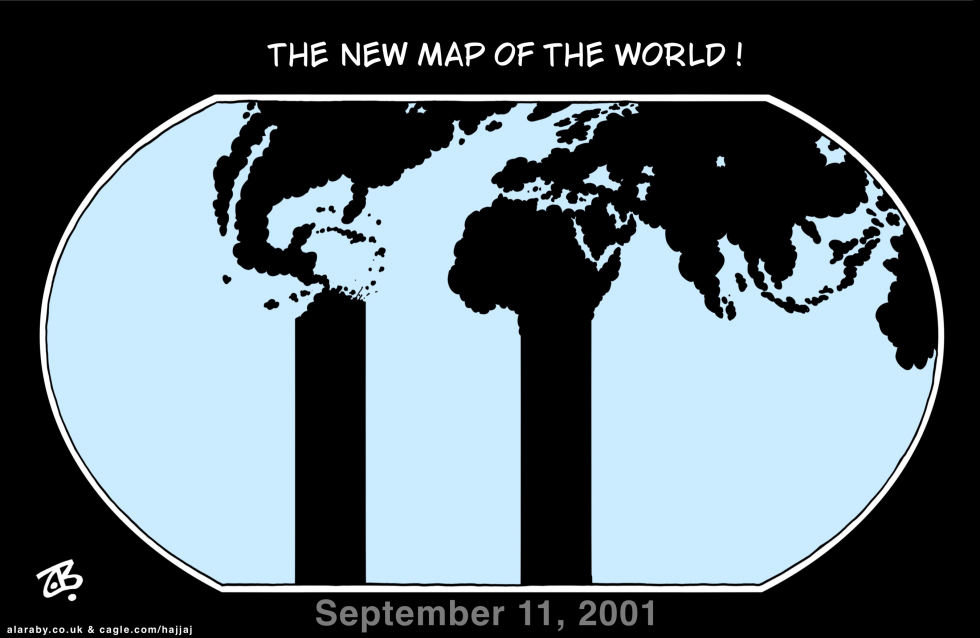
September 11, 2001, attacks on the World Trade Center and Pentagon killed nearly 3,000 people and triggered two decades of wars, surveillance expansions, and realignments in global alliances. The cartoon marks the anniversary by depicting the towers as continents emitting smoke, arguing that the event created an entirely new geopolitical order still felt today.
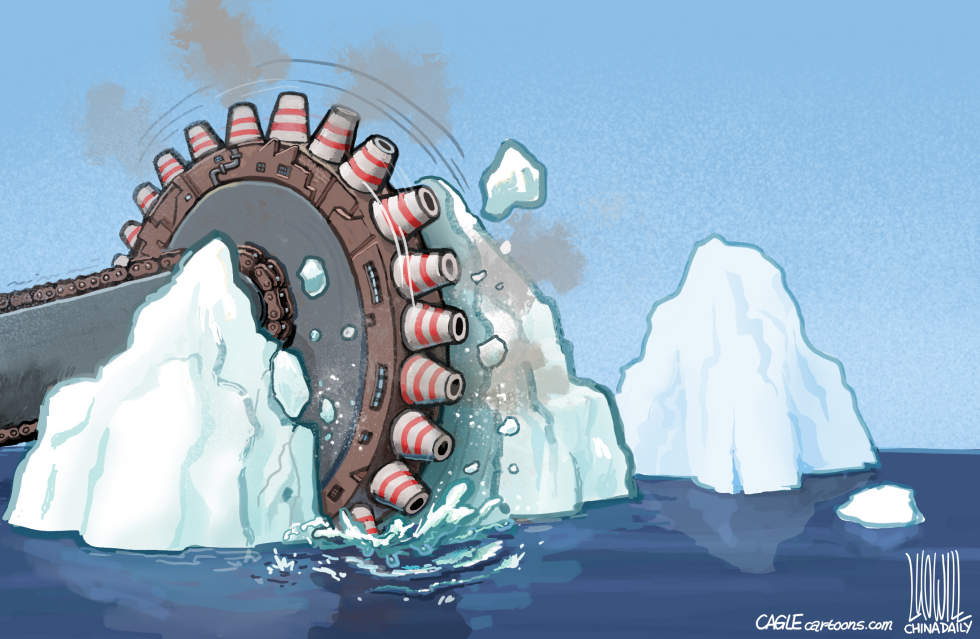
The cartoon depicts a large industrial drilling machine actively breaking through Arctic ice floes in open water. The machine features multiple red-and-white striped cylindrical components and emits dark exhaust. Icebergs float nearby under a clear sky. Published by China Daily, the image addresses ongoing concerns over resource extraction in polar regions and its contribution to ice loss.
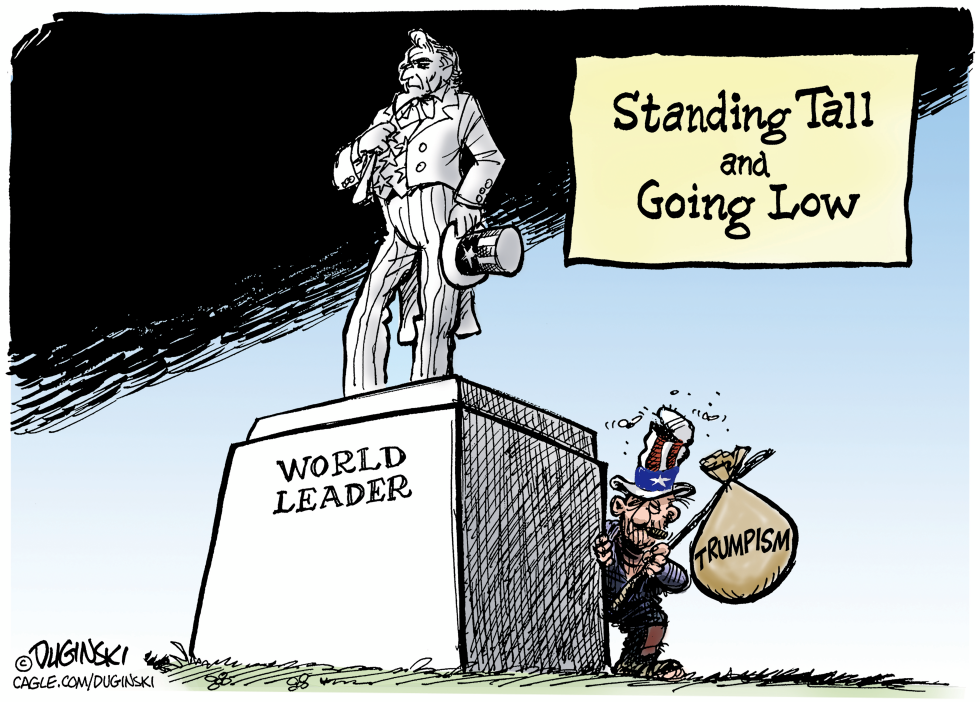
Donald J. Trump’s ideological legacy continues to shape Republican politics and foreign policy debates into 2026. Critics argue that Trumpism’s emphasis on transactional deals and nationalist rhetoric has eroded traditional US alliances and moral authority on the global stage. The cartoon presents this influence as a literal weight pulling the nation downward from its claimed leadership role, underscoring concerns that short-term domestic appeals come at the cost of long-term international credibility.
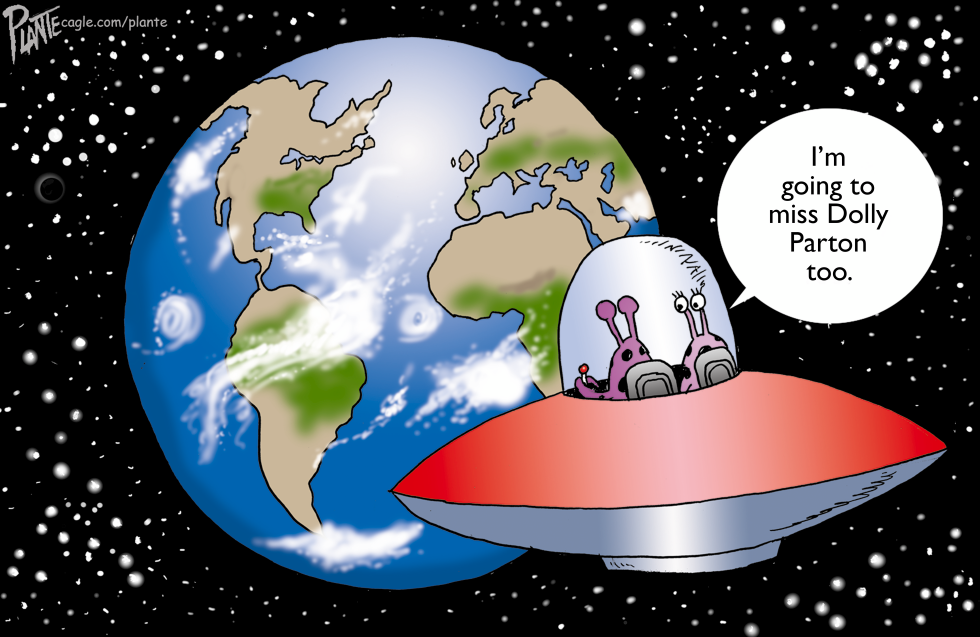
Dolly Parton maintains an unmatched level of public affection decades into her career. Her music, philanthropy, and persona have made her a recognizable figure worldwide. The cartoon uses the alien visitors to underscore how far that recognition extends. It presents her departure or absence as something even outsiders would notice and regret. The editorial stance celebrates her enduring appeal without tying it to any single news event.
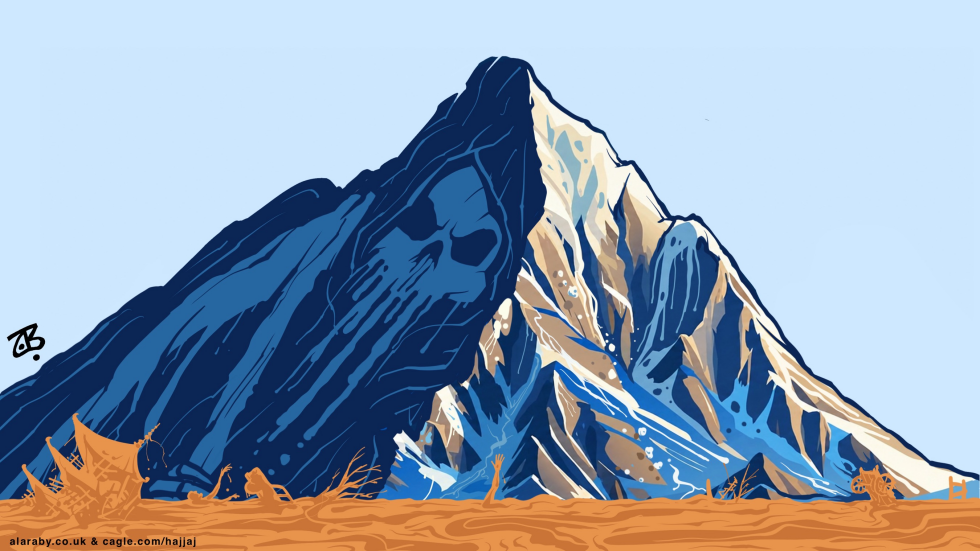
Severe flooding in the Himalayas has displaced thousands and caused significant loss of life amid accelerating glacial melt and intensified monsoon rains linked to climate change. The disaster highlights the vulnerability of mountain communities to extreme weather events that have grown more frequent in recent years. This piece frames the catastrophe as a stark warning of nature's retribution, underscoring the urgent need for global action on emissions to prevent further tragedies in fragile ecosystems.
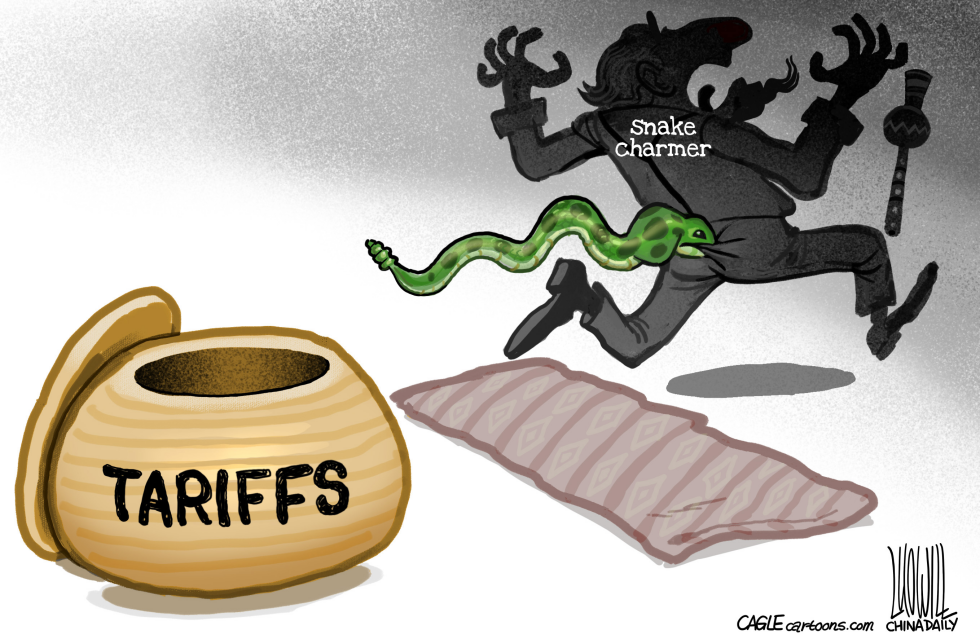
A political cartoon published August 28, 2026, shows a snake charmer fleeing as a green snake emerges from a pot labeled tariffs. The image uses the snake charmer metaphor to comment on tariff policies. The cartoon appeared in China Daily and was distributed via Cagle Cartoons. It responds to ongoing trade tensions involving tariffs. The visual suggests tariffs carry uncontrolled risks similar to an escaped snake.
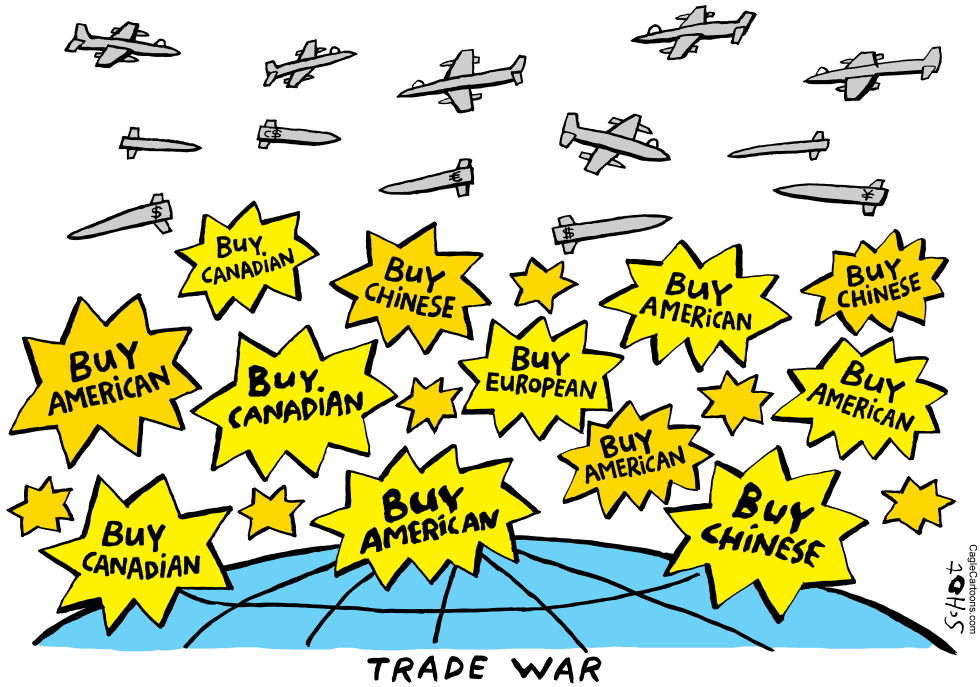
Competing buy national campaigns from multiple countries have intensified trade disputes, raising concerns over economic retaliation and supply chain disruptions. The piece argues these appeals are directly contributing to broader conflict.