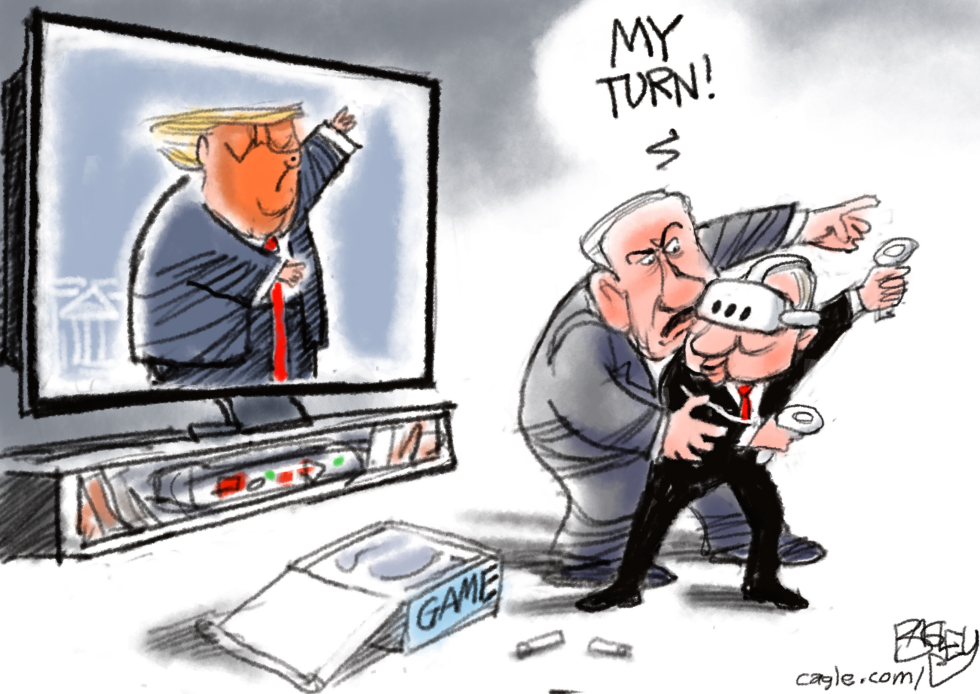
Pat Bagley's cartoon captures Vladimir Putin in a suit, firmly holding a smaller Benjamin Netanyahu who wears a VR headset and wields controllers, exclaiming 'My Turn!!' with frustration. Donald Trump dominates the TV screen, arm raised dramatically against a White House-like backdrop. The floor features a tipped 'GAME' box, underscoring the video game metaphor. This setup highlights themes of manipulation and turn-taking among leaders, delivered with sharp lines and exaggerated features typical of political satire. The dry humor lies in reducing global tensions to childish squabbles over a game, a classic cartoon trope that packs punch without overstatement.
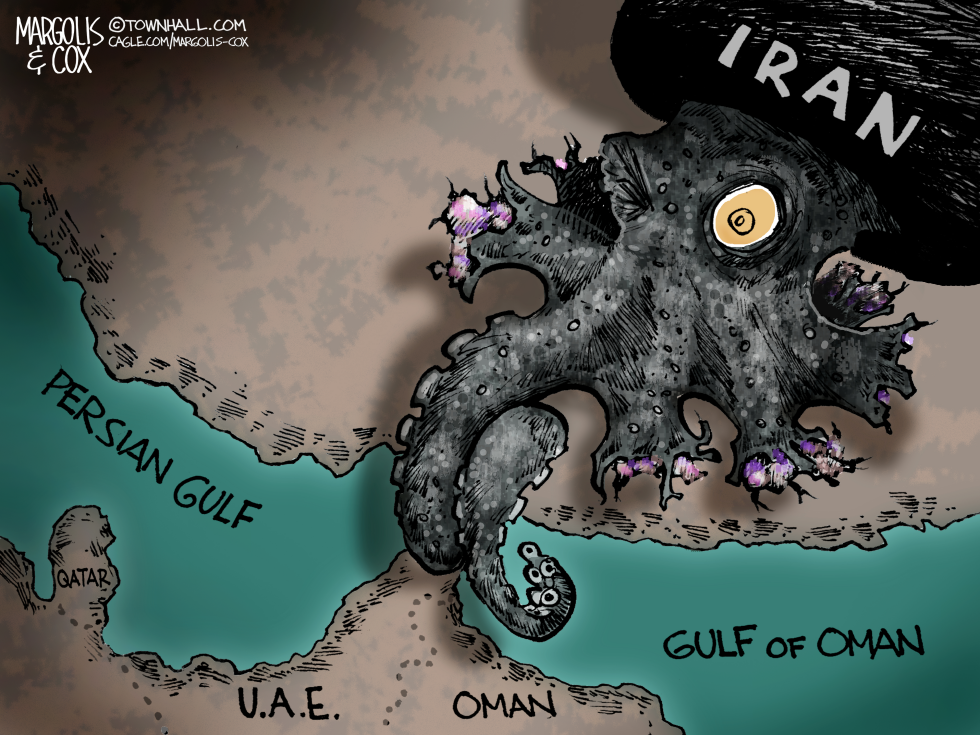
Cartoons like this one from Margolis and Cox cut straight to the absurdity of international posturing. Here, an oversized octopus labeled 'Iran' looms over a simplified map of the Persian Gulf and Gulf of Oman, its tentacles coiling tightly around the Strait of Hormuz. The creature's single eye glares out, while purple-tipped suckers grip the landmasses labeled Qatar, UAE, and Oman. It's a classic visual metaphor for control, poking at Iran's threats to block this crucial oil route. waterway. Such images remind editors how satire distills complex geopolitics into something shareable, even if the humor lands dry as desert sand. With tags like Iran Strait of Hormuz blockade, Persian Gulf tension, octopus metaphor, Middle East satire, oil route choke, and strategic dominance, the piece fits neatly into discussions of global energy security.
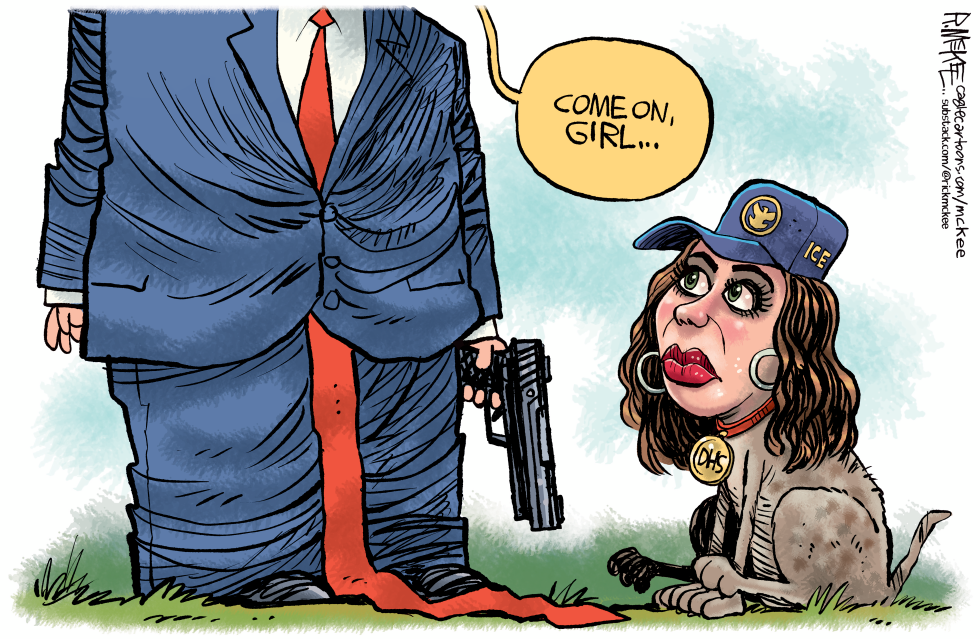
This political cartoon features Donald Trump coaxing a dog-like figure with Alexandria Ocasio-Cortez's face, donned in an ICE cap and DHS tag, gripping a gun on a leash— a sharp satire on immigration enforcement and border control. The image lampoons the Trump administration's hardline stance on deportation and US politics, using caricature to underscore the dehumanizing aspects of border patrol. With elements of political humor, it critiques how figures like AOC are portrayed in opposition, blending viral meme potential with editorial cartoon flair. The scene evokes questions about power dynamics in immigration policy, making it a timely piece for discussions on satire and governance.
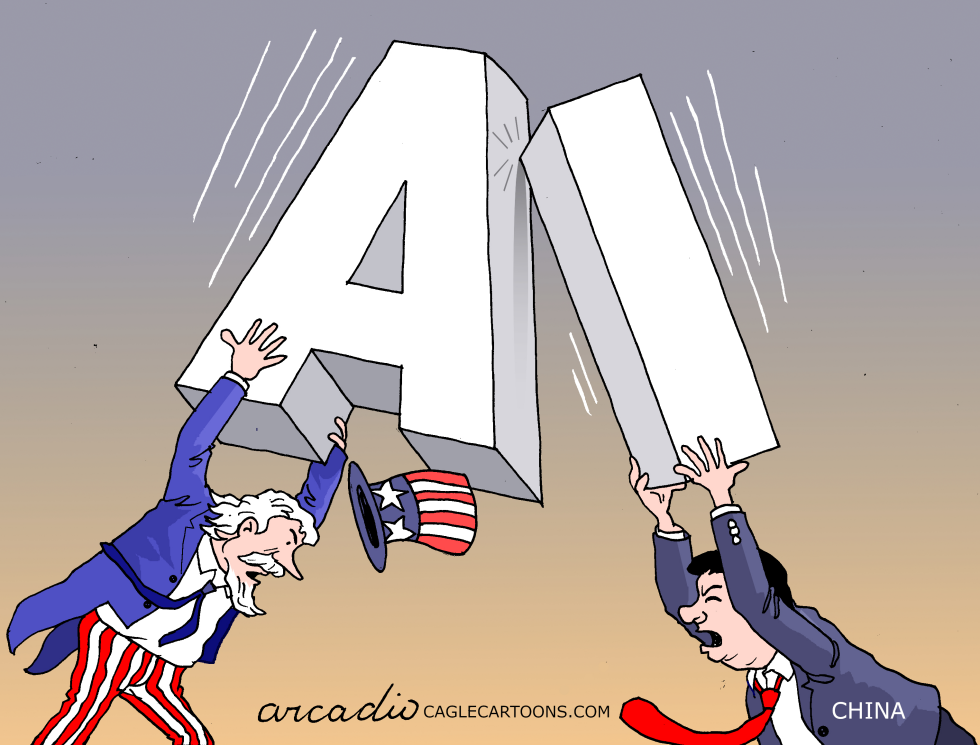
The image depicts Uncle Sam and a representative from China both attempting to support a large AI structure. The scene illustrates the ongoing competition between the United States and China for leadership in artificial intelligence. Published on February 18 2026 the cartoon captures the physical and strategic strain of this technological contest. Both figures appear determined yet challenged by the size of the letters they hold. The rivalry remains a central focus in global technology discussions at the time.
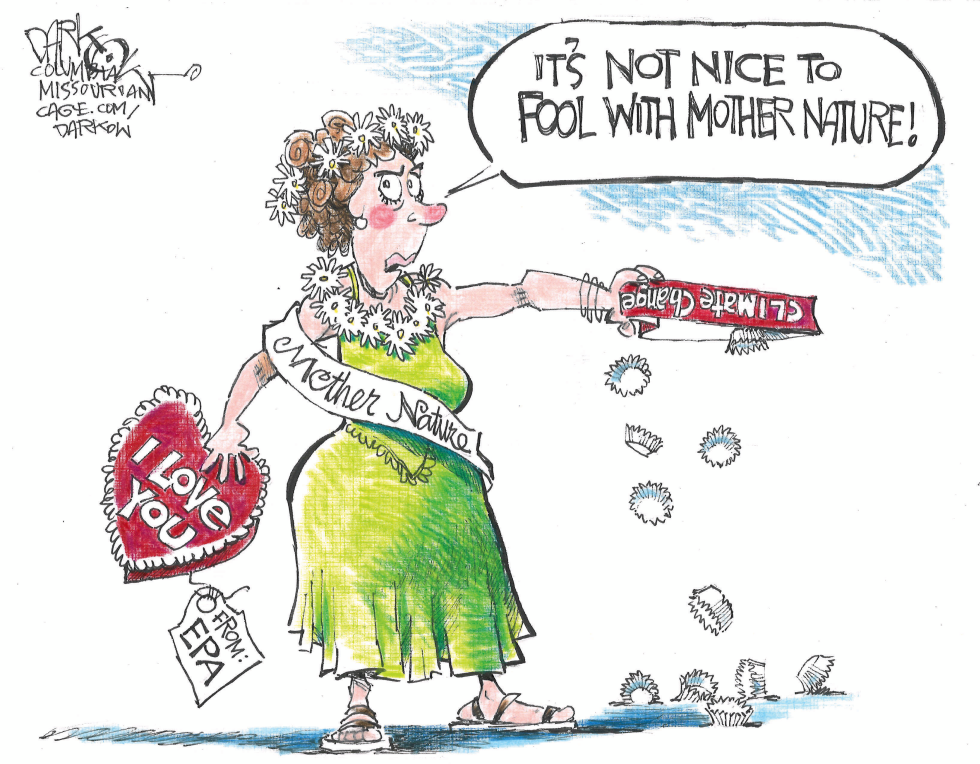
Mother Nature appears in a green dress and floral accessories while holding a heart labeled from the EPA. She discards a banner reading Climate Change. The scene occurs on a date tied to Valentine's Day themes. The image responds to recent EPA actions on regulations and greenhouse gases. It shows the figure turning away from the climate item. The composition places the speech bubble above the action. Broader context involves ongoing debates over clean air rules and energy policy at the time of publication.