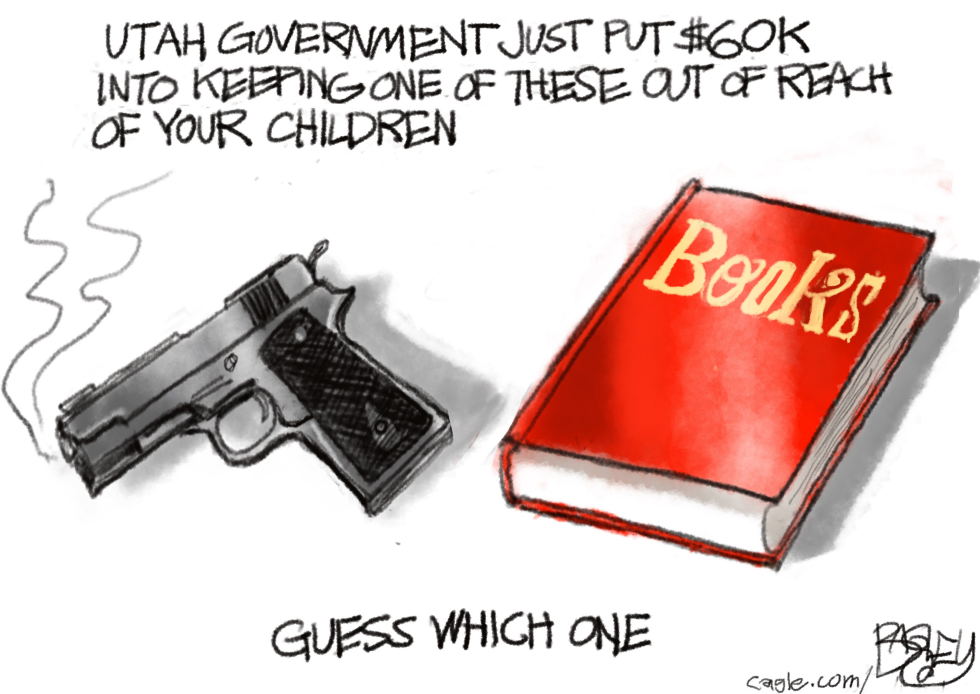
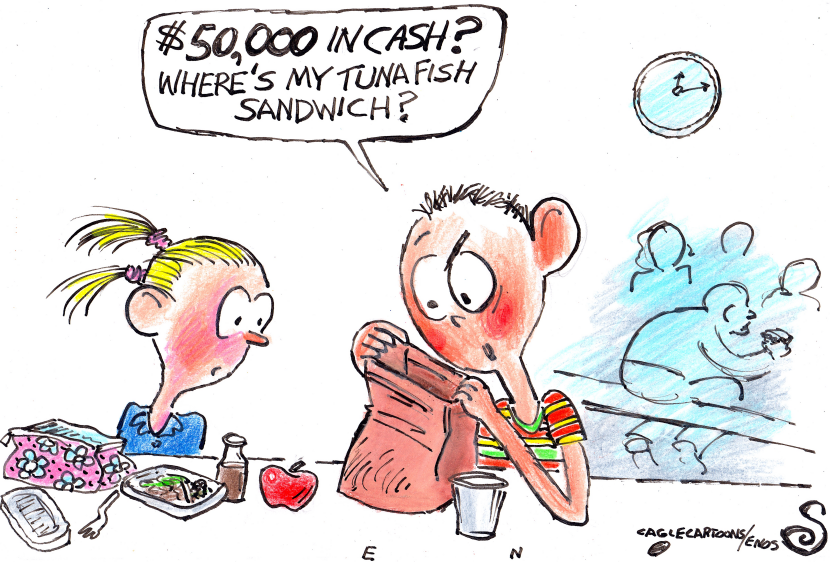
Utah officials directed $60,000 toward measures keeping certain books from children. Firearms remain readily available in the state. The decision highlights priorities in public safety and education policy. The piece criticizes the allocation as misplaced emphasis on censorship instead of addressing gun risks.
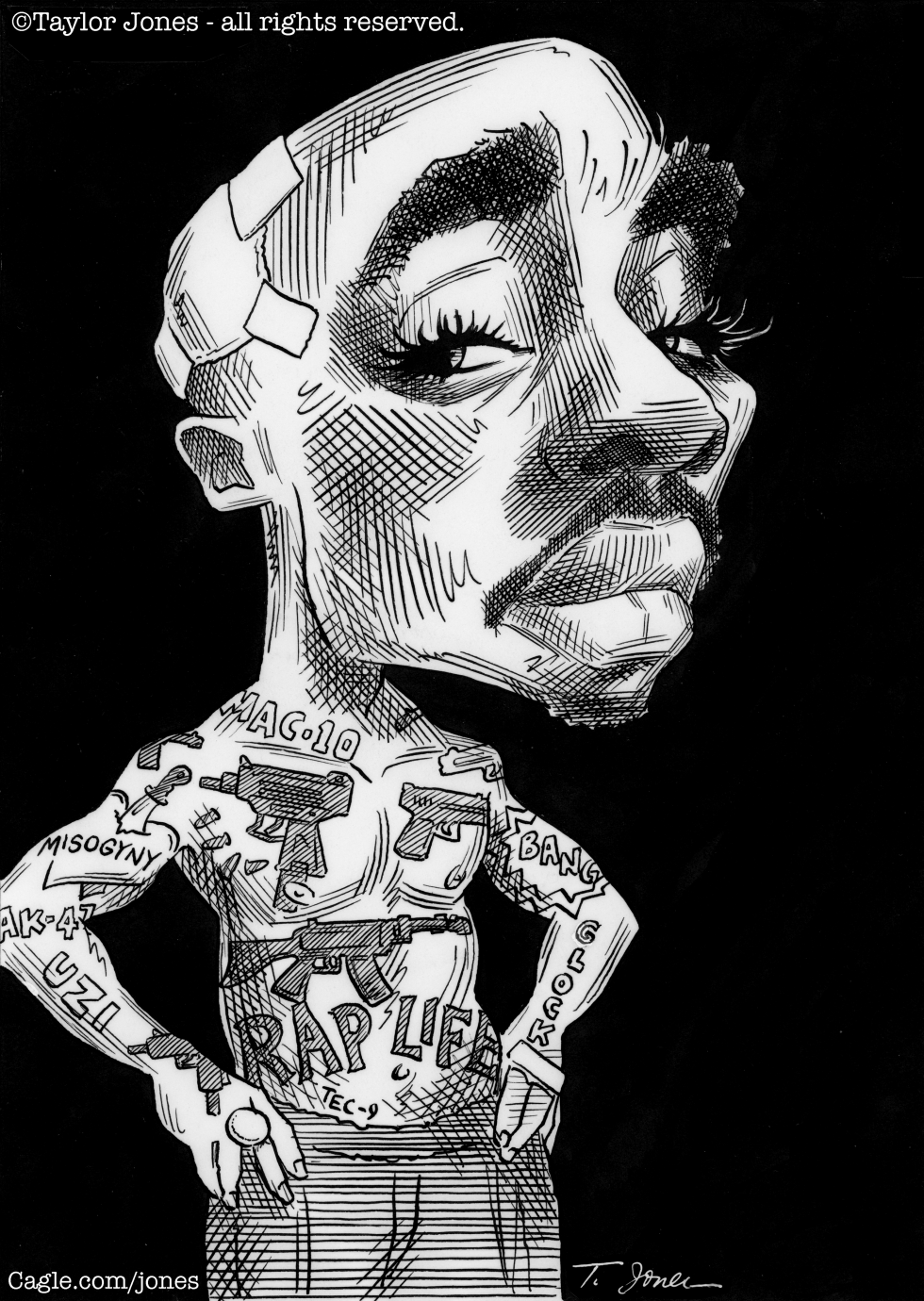
The caricature of Tupac Shakur covered in gun tattoos and the word misogyny responds to the persistent association of rap with firearm imagery and anti-woman themes. It underscores how such elements in hip-hop culture continue to shape public perceptions of the genre and its icons long after Shakur's death. The piece takes the position that these symbols remain central to the rapper's enduring image and the broader problems they represent.
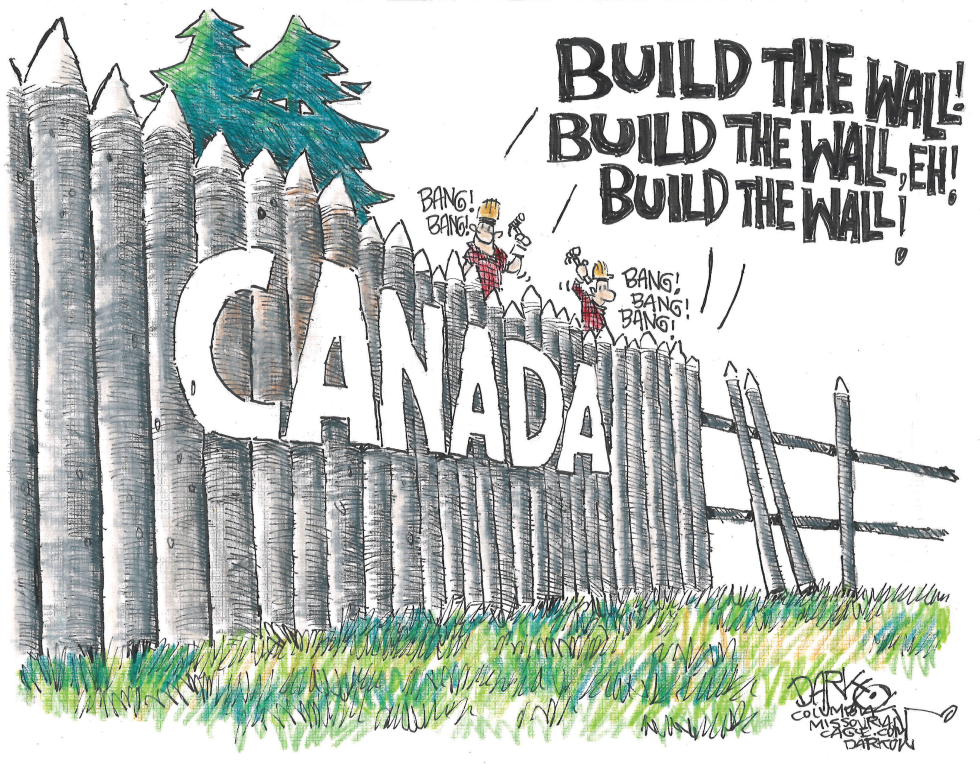
Canada has begun construction of a substantial border barrier along its southern frontier, echoing long-standing calls for stricter immigration controls. Officials cite rising cross-border movements and security concerns as justification for the project. The move marks a notable policy shift for a country historically open to migration. The cartoon portrays this development with pointed irony, highlighting the adoption of aggressive enforcement tactics previously associated with other nations.
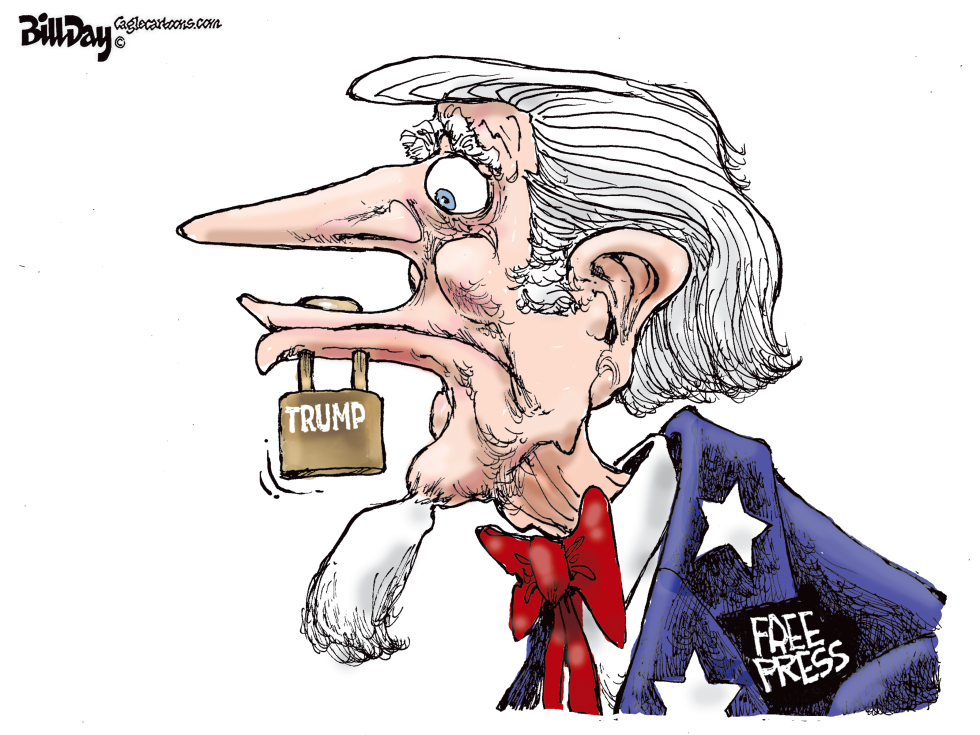
Donald Trump, holding office in 2026, faces renewed scrutiny over efforts to limit press access and information flow. Critics argue these moves undermine democratic oversight. The cartoon portrays the administration as actively securing or restricting the free press through direct control.
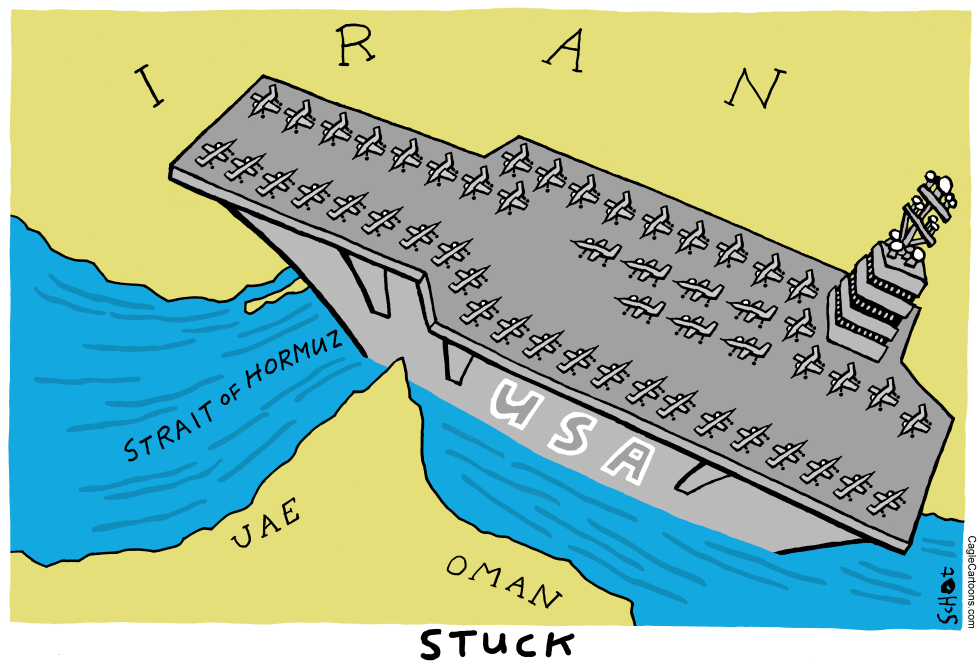
A political cartoon depicts a large US aircraft carrier marked USA jammed in the Strait of Hormuz between land labeled Iran, UAE and Oman. The vessel carries dozens of fighter jets on its deck. The word STUCK appears prominently below the scene. The image responds to persistent concerns over freedom of navigation in the vital oil shipping route. Iran has long threatened to close the strait during conflicts. The cartoon uses the visual of a grounded carrier to illustrate potential US military vulnerability in the narrow passage.
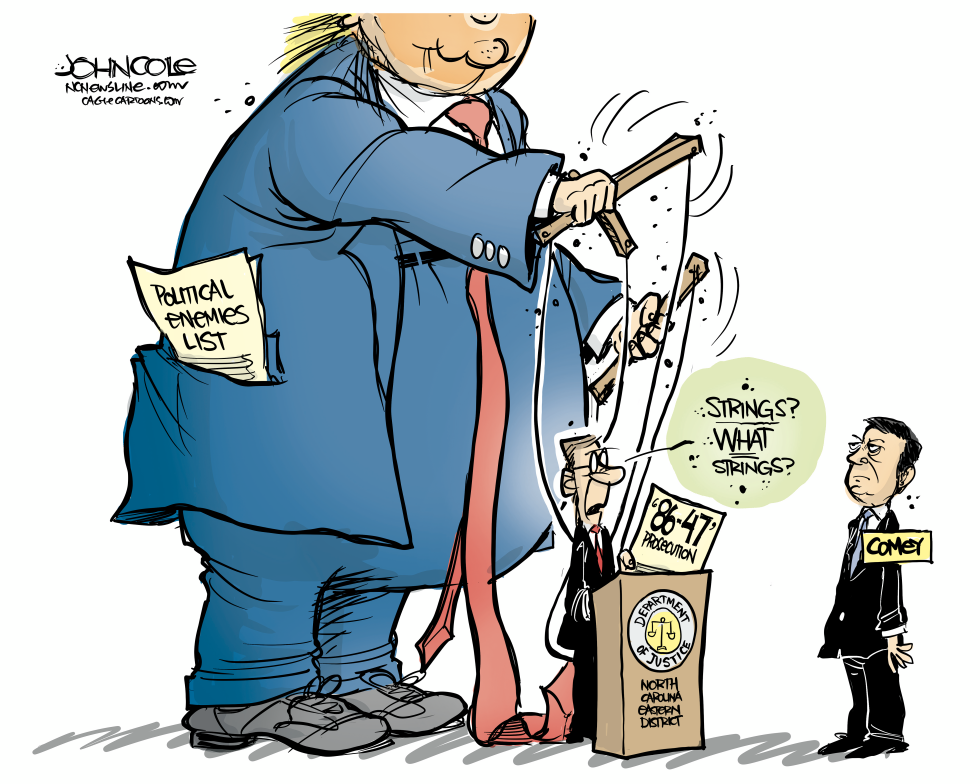
President Trump is shown directing a Department of Justice prosecution of former FBI Director James Comey in the North Carolina Eastern District. The image portrays the president as a puppeteer controlling the case through strings attached to a figure holding an 86-47 prosecution sign. The editorial position criticizes the use of federal prosecutorial power against political opponents.
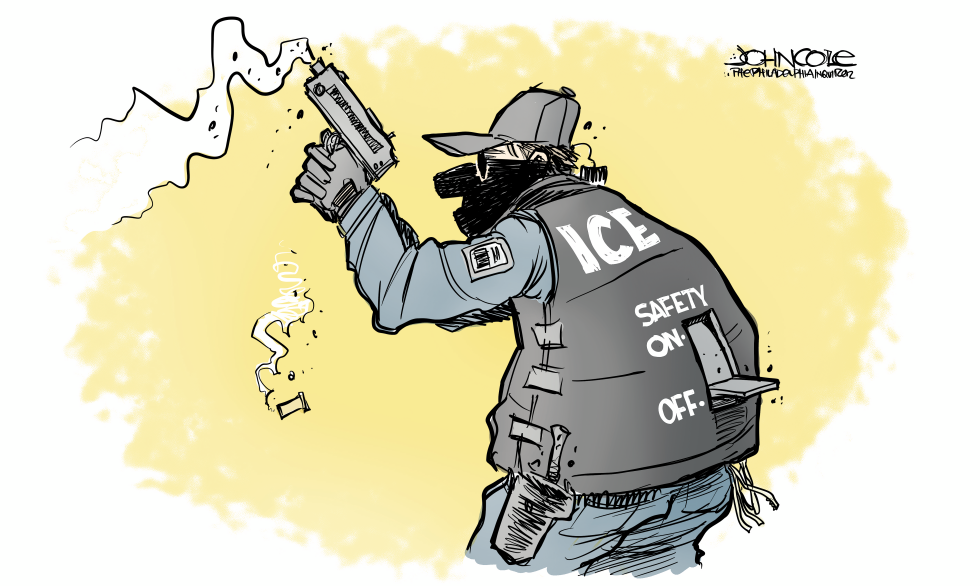
An ICE agent is shown firing a handgun during what appears to be an enforcement action. The vest safety toggle sits in the off position while smoke and a bullet exit the barrel. The image highlights concerns over firearm handling protocols within immigration enforcement operations and questions whether basic safety measures are being followed in the field.
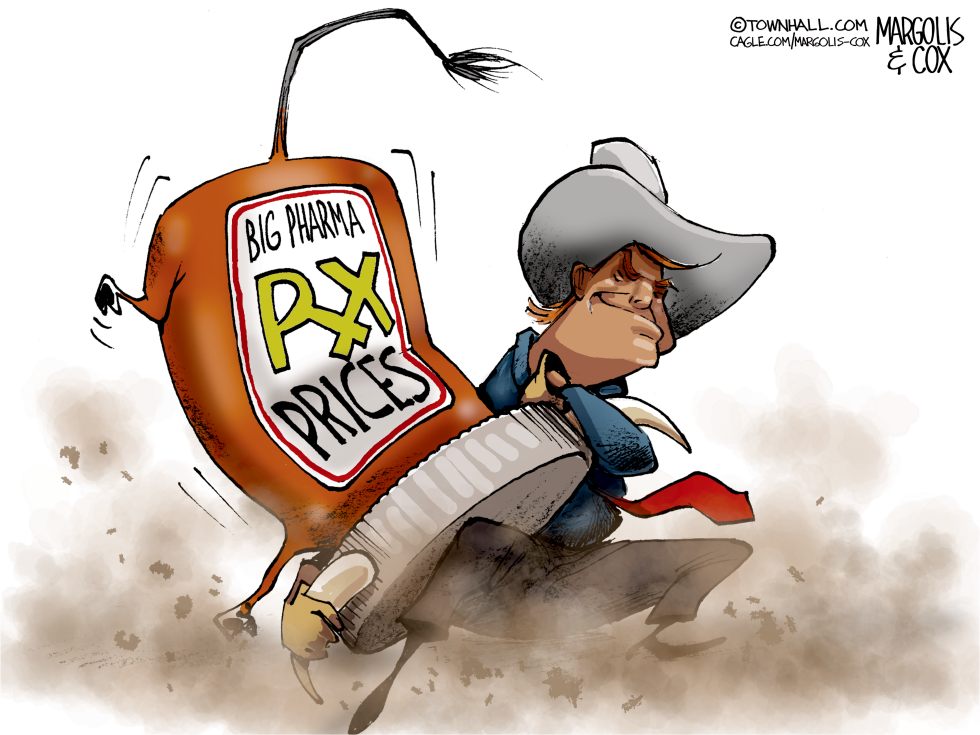
Ongoing debates over high prescription drug costs from major pharmaceutical companies continue to draw political attention. Lawmakers and regulators have pushed measures aimed at lowering prices for consumers. The cartoon depicts the challenge of reining in those costs as a high-stakes contest. It takes the position that aggressive action is needed to bring relief despite industry resistance.
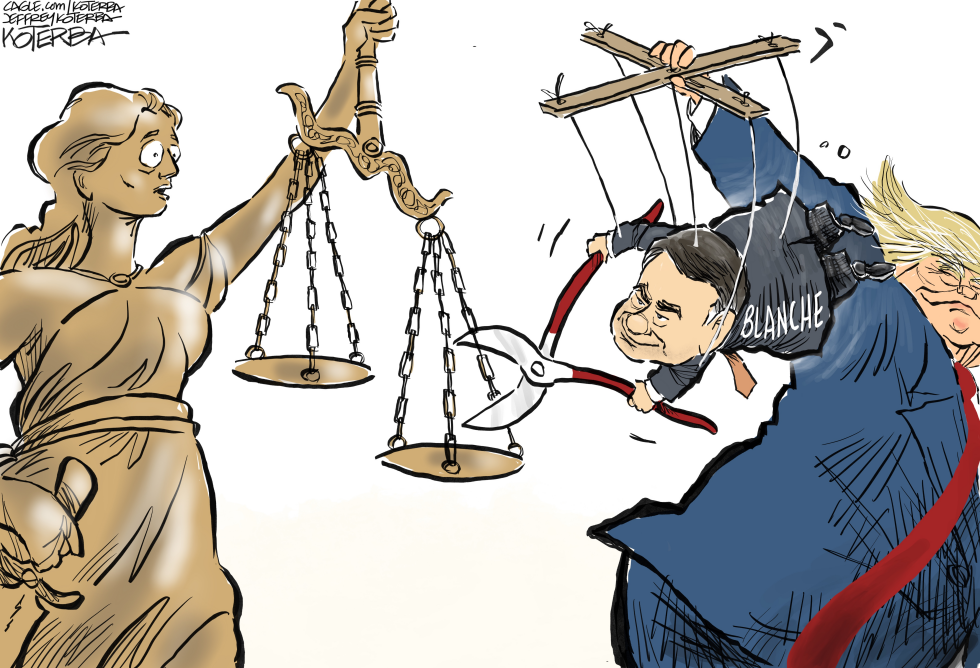
Donald Trump directs his attorney Todd Blanche to undermine judicial processes through direct influence. The move raises concerns over executive interference in legal proceedings. The piece portrays this as an assault on impartial justice.
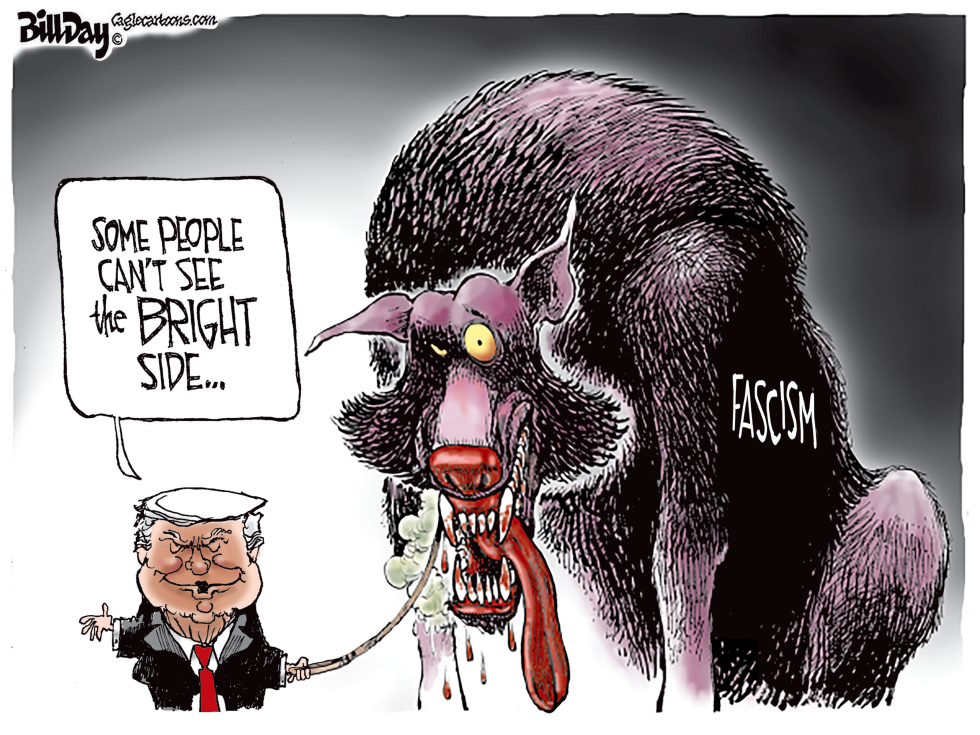
Donald Trump appears in public comments framing his actions in optimistic terms amid ongoing debates over authoritarian tendencies in American politics. The depiction shows him restraining a creature explicitly labeled fascism. Critics argue such rhetoric downplays real institutional risks while supporters view it as resistance to overreach. The piece takes the position that Trump actively manages or embodies the threat rather than opposing it.
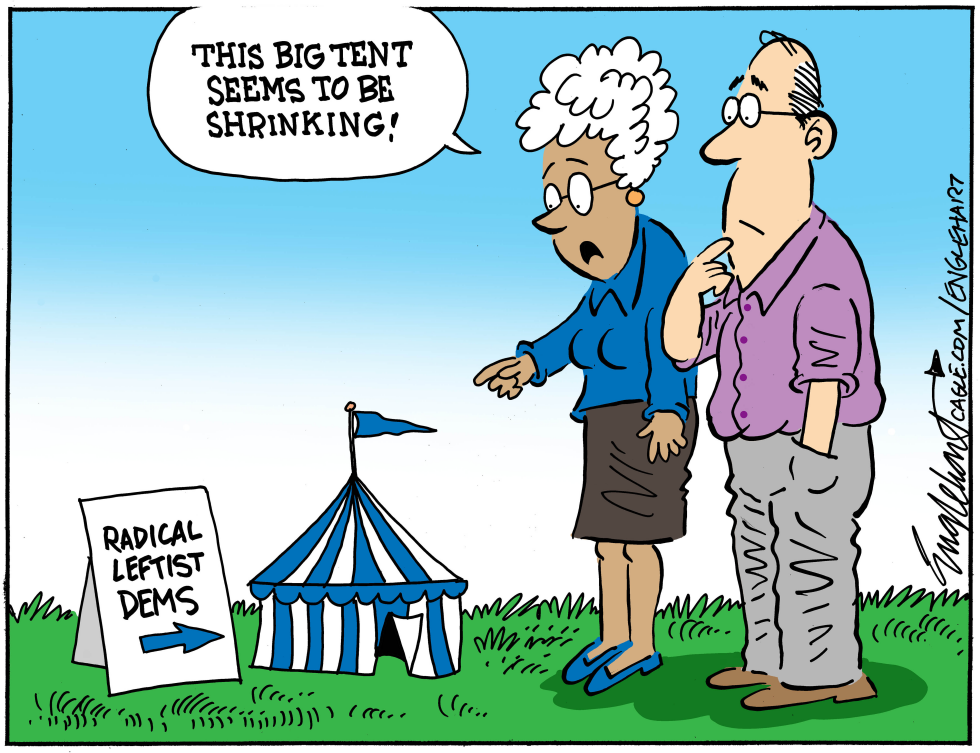
Democratic Party figures have grown concerned that the traditional big tent coalition is contracting as radical leftists consolidate control over the party's direction and messaging. The shift sidelines moderates and narrows the range of acceptable views within the organization. This dynamic raises questions about the party's ability to maintain broad electoral appeal in upcoming cycles. The editorial takes the position that the exclusionary turn is self-defeating and accelerates the party's isolation from mainstream voters.
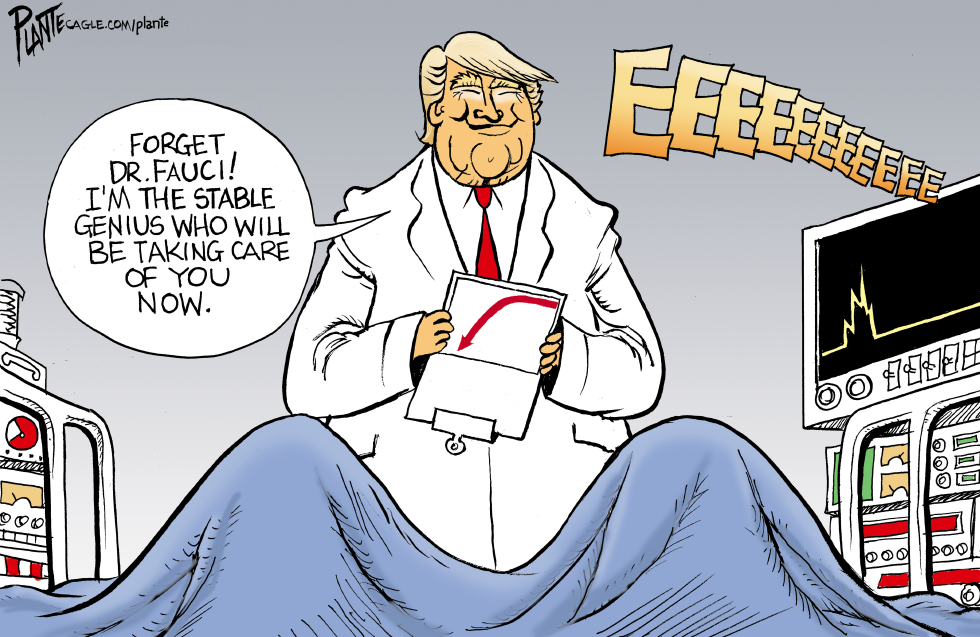
Donald Trump appears in a physician's coat asserting control over patient care and dismissing Dr. Fauci. The depiction occurs amid ongoing debates over federal health policy leadership and executive influence on medical decisions. The piece argues that such assertions risk undermining established expertise in public health administration.
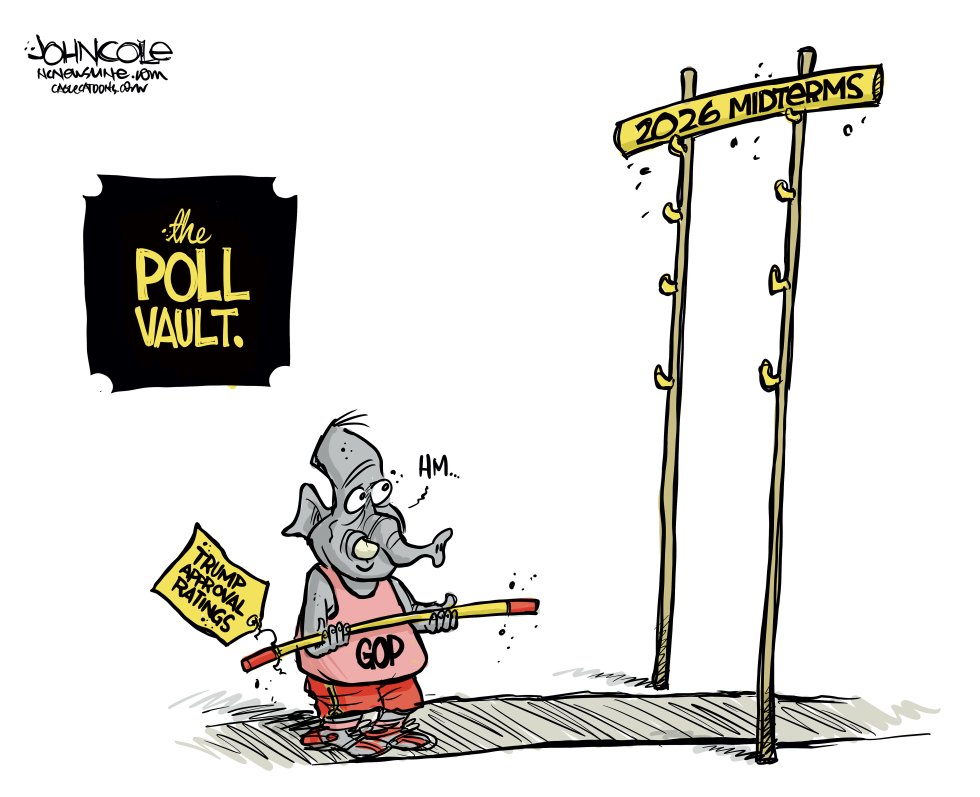
Republicans face the 2026 midterm elections with Donald Trump as a central figure whose approval ratings remain a key variable. Party strategists must decide how heavily to tie their candidates to the former president amid ongoing voter sentiment. The piece portrays the GOP as an athlete preparing to clear the midterm bar but questioning whether the available pole will suffice.
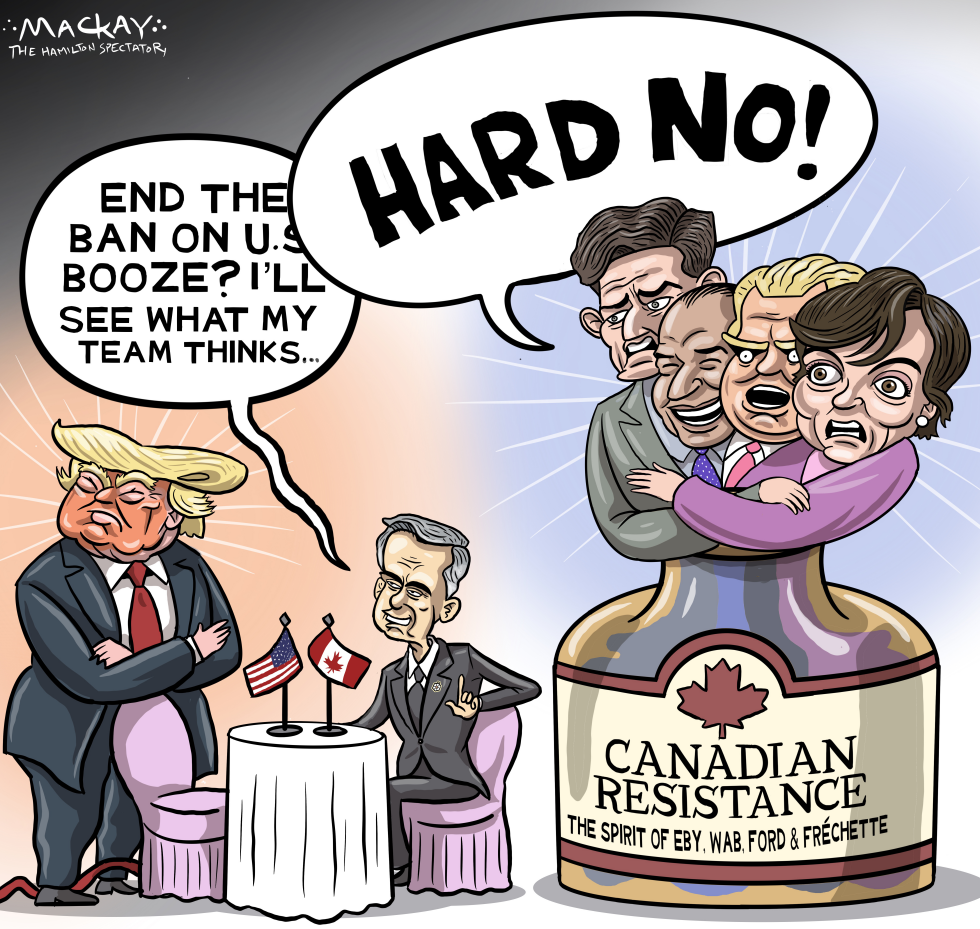
Donald Trump signaled openness to ending a ban on US alcohol imports into Canada during a meeting with Canadian officials. Provincial leaders including David Eby and Doug Ford responded with unified opposition. The cartoon portrays the premiers as a collective force of resistance and shows Trump deferring the decision to his team.
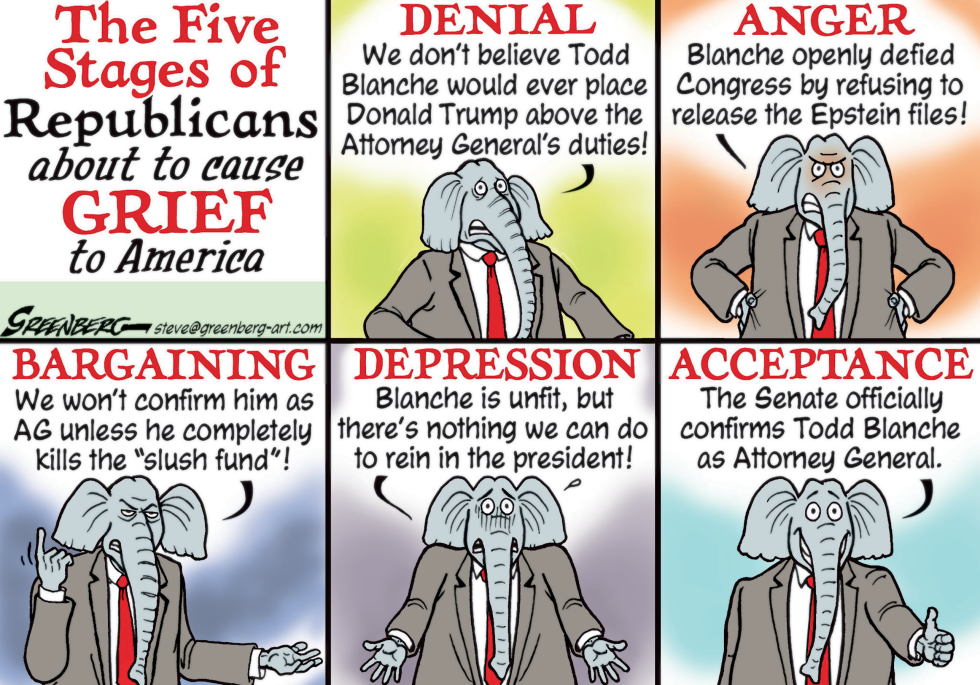
The Senate confirmed Todd Blanche as Attorney General amid Republican internal debate over his ties to Donald Trump and refusal to release Epstein files. The confirmation highlighted limits on congressional oversight of the executive branch. The cartoon frames the process as inevitable acceptance despite earlier objections.