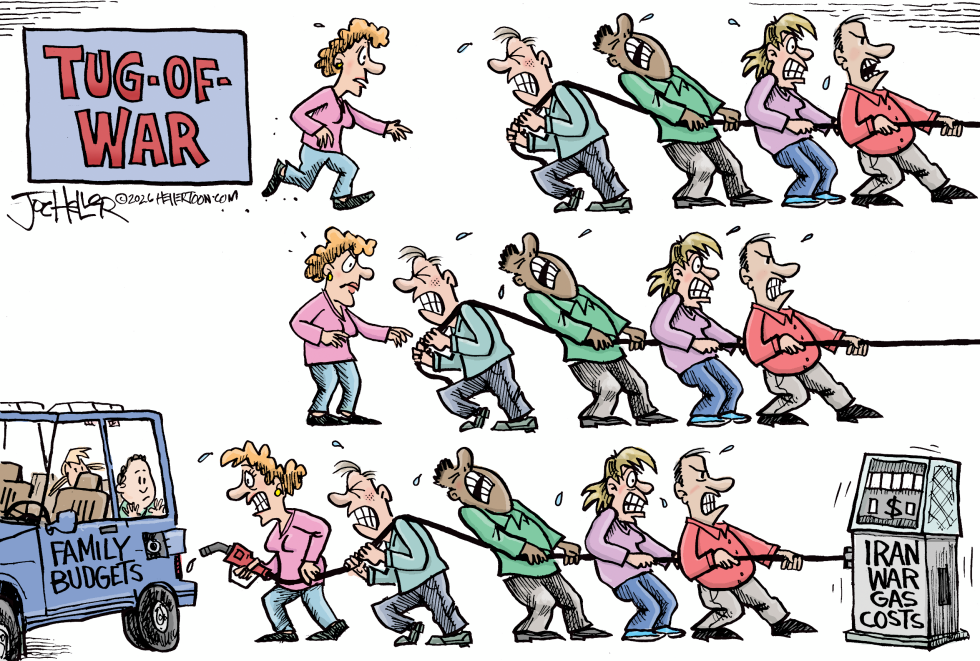
Rising gas prices linked to potential conflict with Iran are pressuring household budgets across the country. The cartoon illustrates the direct economic tug between military action abroad and everyday costs at the pump, arguing that families bear the immediate burden of such decisions.
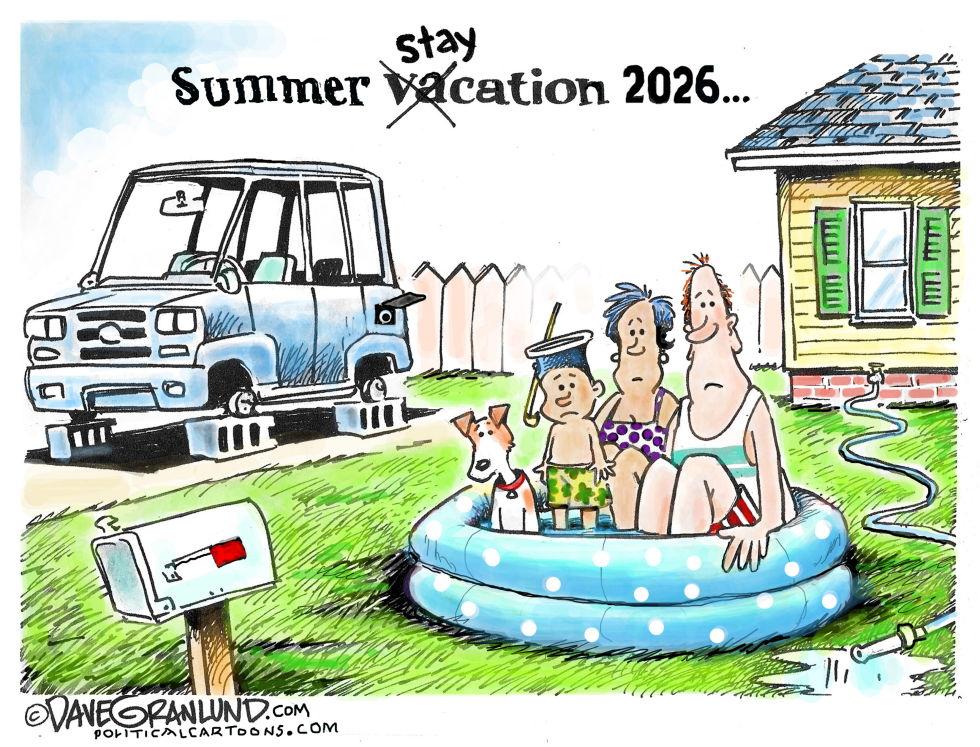
Dave Granlund's cartoon nails the frustration of high gasoline prices derailing summer road trips for families on limited budgets. Instead of hitting the highway in their autos, this crew opts for a stay home vacation, splashing in a backyard kiddie pool with the dog. The jacked-up minivan on blocks screams grounded plans, while the crossed-out 'Va' in vacation turns it into 'Staycation 2026.' It's a sharp poke at how fuel costs force folks to tighten belts, swapping grand adventures for hose-filled pools and mailbox views. Tags like gasoline prices, high cost, and stay home highlight the economic squeeze, making this a relatable jab at everyday belt-tightening.
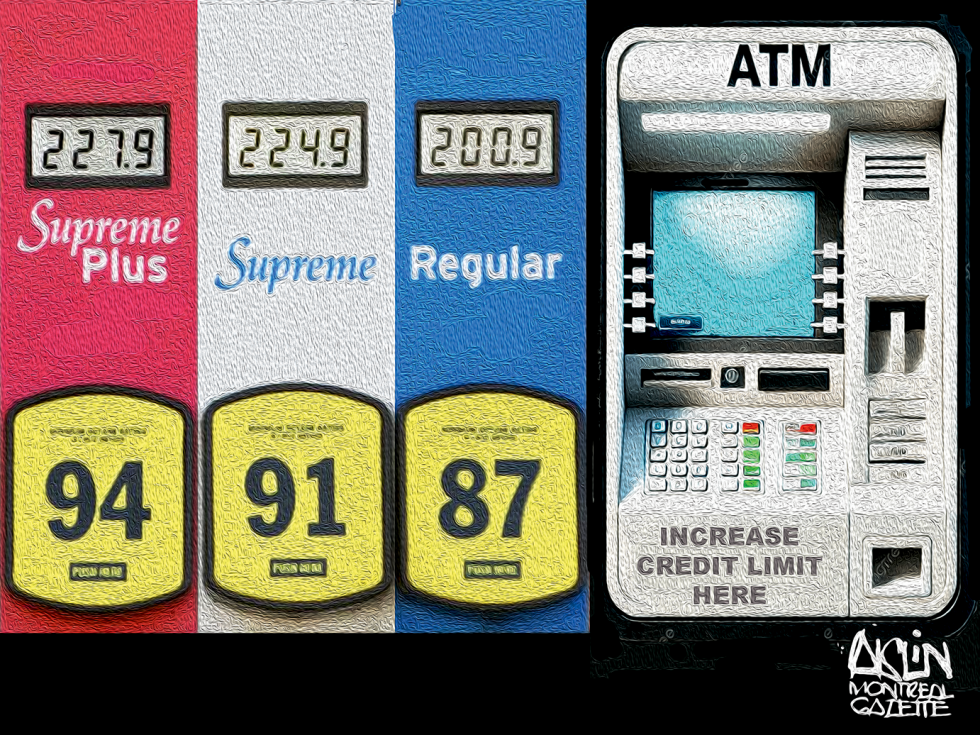
The cartoon shows a gas pump price board with supreme plus at 2.279 per gallon and 94 octane, supreme at 2.249 with 91 octane, and regular at 2.009 with 87 octane. Next to it sits an ATM labeled to increase credit limit here, poking at high gas prices and the economy's push toward more credit. Tags like gas, prices, cost, economy, credit, and pump underline the visual joke on affording fuel through debt. This setup captures the frustration with rising fuel costs without words, relying on the absurdity of blending a gas pump with credit services. Cartoonists often use such direct imagery to comment on everyday economic strains.
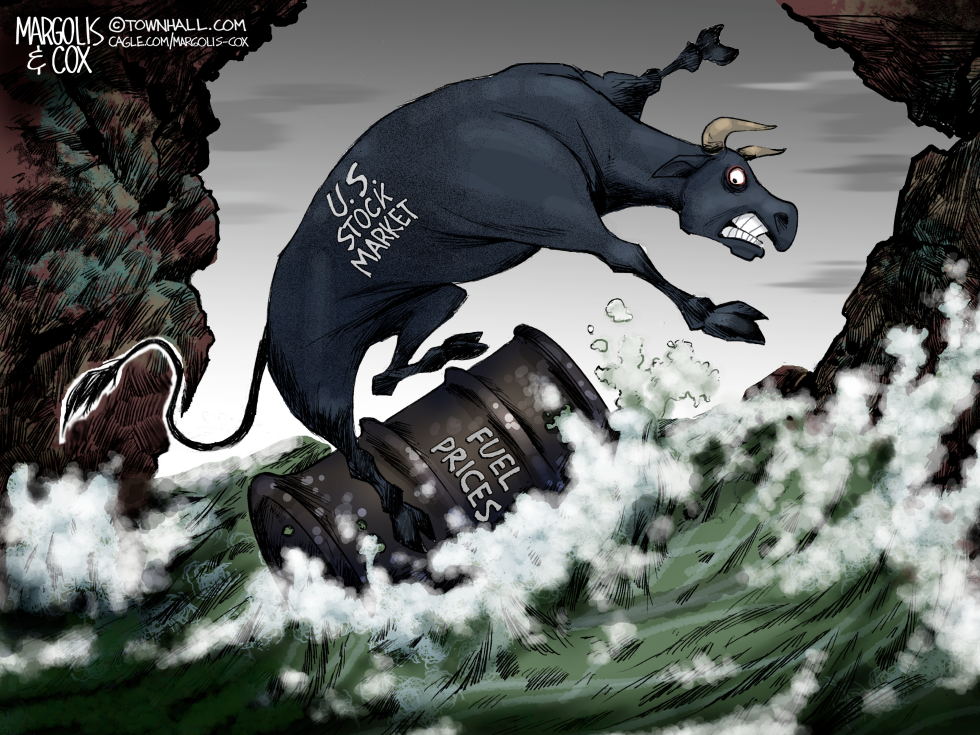
The cartoon shows a fierce black bull, emblazoned with 'U.S. Stock Market,' plummeting off jagged cliffs into a turbulent green sea where an oil barrel labeled 'Fuel Prices' tips over amid white foam. This visual packs a punch on how rising fuel prices can drag down the bull market, touching on economy, stocks, oil, prices, portfolio, and market tags. It's a classic setup: the bull charges ahead but hits the wall of energy costs, splashing into chaos. Editors see these often, where financial optimism meets harsh commodity realities, making it relatable for readers watching their investments swirl in the currents.
John Darkow's cartoon captures the sting of high gas prices amid inflation and war, showing a yellow vehicle at a station with unleaded fuel marked at 3.95 9/10 per gallon, pay in advance. Speech bubbles reveal a conversation where one asks about not going anywhere for spring break, and the reply puns on being 'Spring Broke' due to gas costs. The image underscores travel disruptions, with tags like gas prices, inflation, spring break, travel, war, and economic satire emphasizing how rising fuel expenses halt vacation plans. This straightforward drawing uses dry humor to point out everyday economic frustrations without overcomplicating the scene.
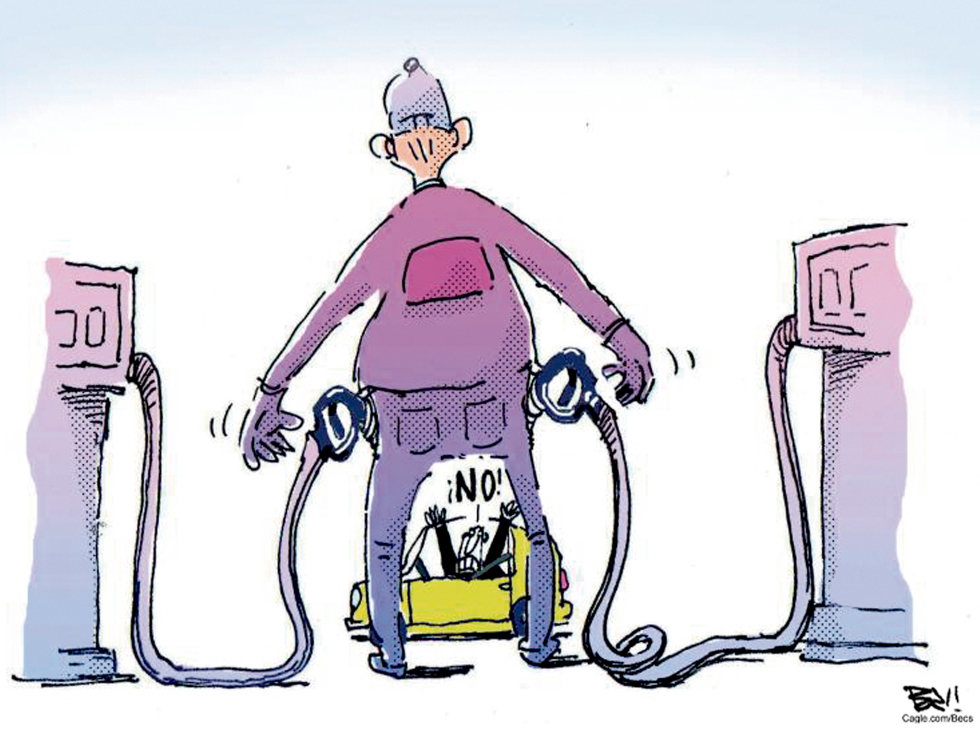
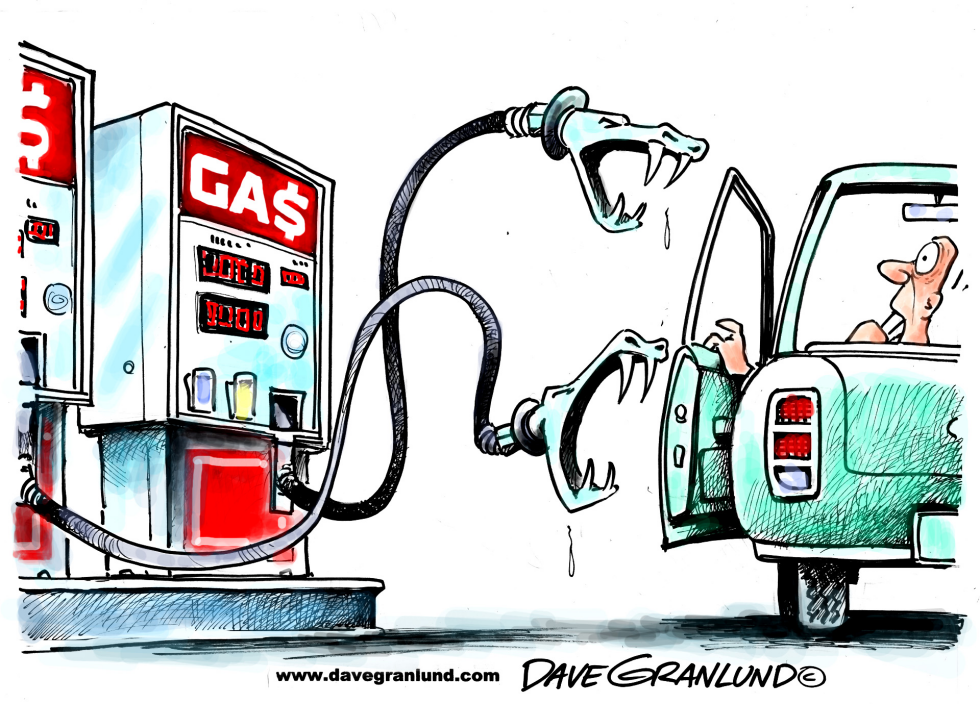
A cartoon published March 23, 2026, shows a figure at gas pumps holding two nozzles over a yellow car with a passenger shouting NO. The image responds to elevated oil prices linked to Middle East developments involving Israel and Iran during the Trump administration. Netanyahu's role in regional dynamics contributes to supply concerns and consumer costs at the pump.
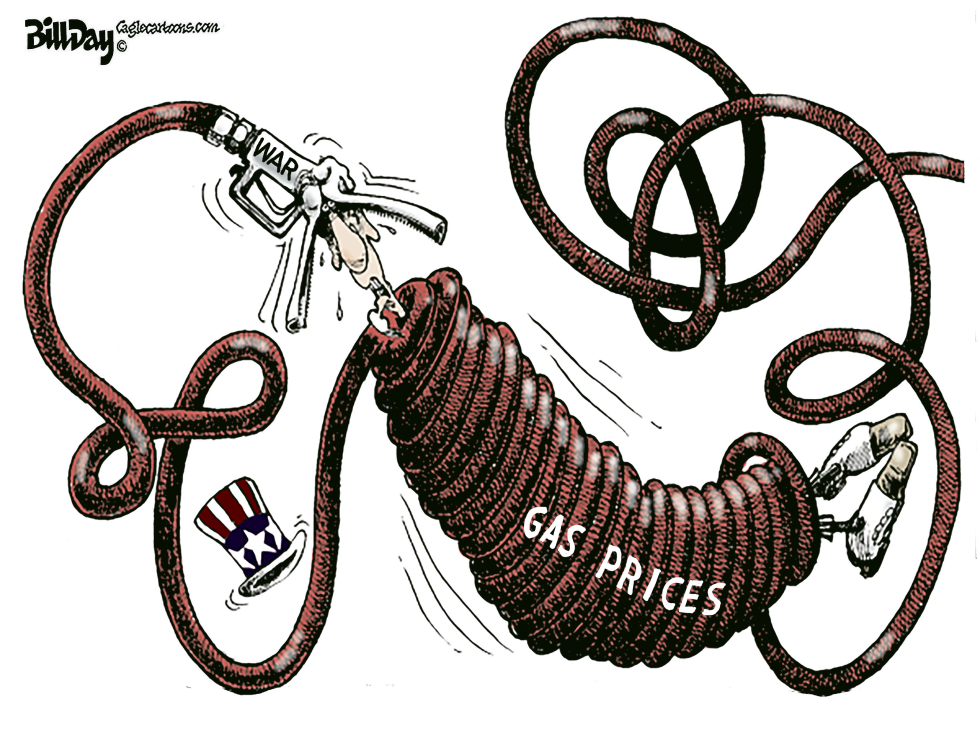
Bill Day's cartoon depicts a gas pump nozzle marked 'WAR' aggressively pumping into a twisted red hose that forms a noose-like figure labeled 'GAS PRICES,' with arms and legs dangling, suggesting strangulation. An Uncle Sam hat adorned with the American flag falls away, emphasizing national impact. This satirical image ties into tags like gas prices, Iran war, gas pump, Strait of Hormuz, and NATO, highlighting how military conflicts drive up fuel costs. The coiled hose resembles a hanged person, underscoring economic peril from oil disruptions. Day's style uses bold lines and clear labels for immediate visual punch, a staple in political cartoons that critique policy fallout.
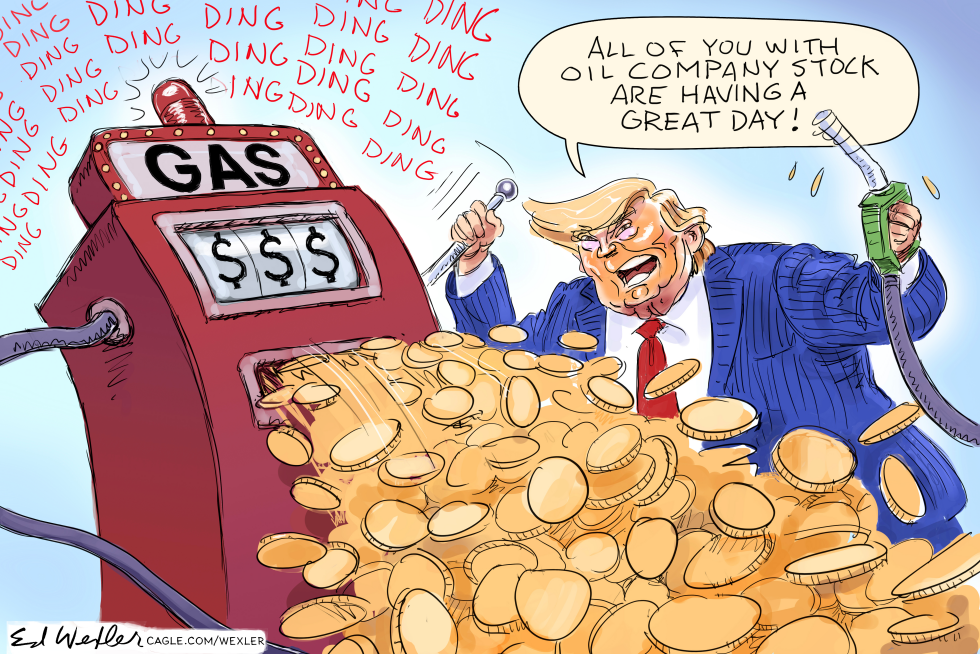
On March 17 2026 the cartoon depicts Donald Trump beside a gas pump dispensing coins instead of fuel. The pump display shows dollar signs while a speech bubble congratulates oil company stockholders. The scene references rising gas prices tied to Middle East tensions and conflict in Iran.