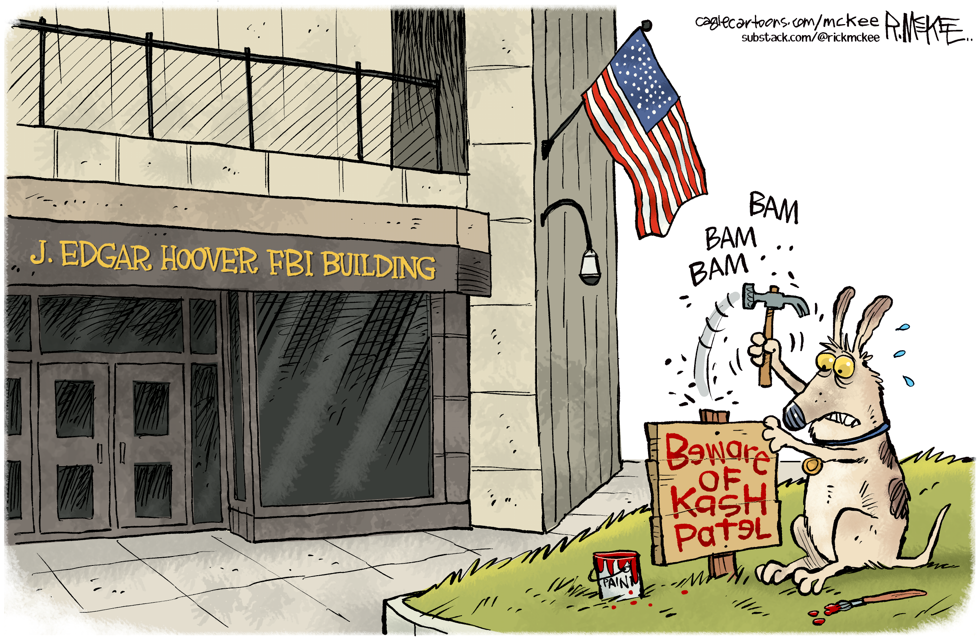
President-elect Trump has selected Kash Patel to lead the FBI, a move that has drawn scrutiny over the nominee's past statements on the bureau and plans for personnel changes. The cartoon portrays the appointment as a threat to the agency's independence, using the J. Edgar Hoover Building as the setting for a direct warning about Patel's influence.
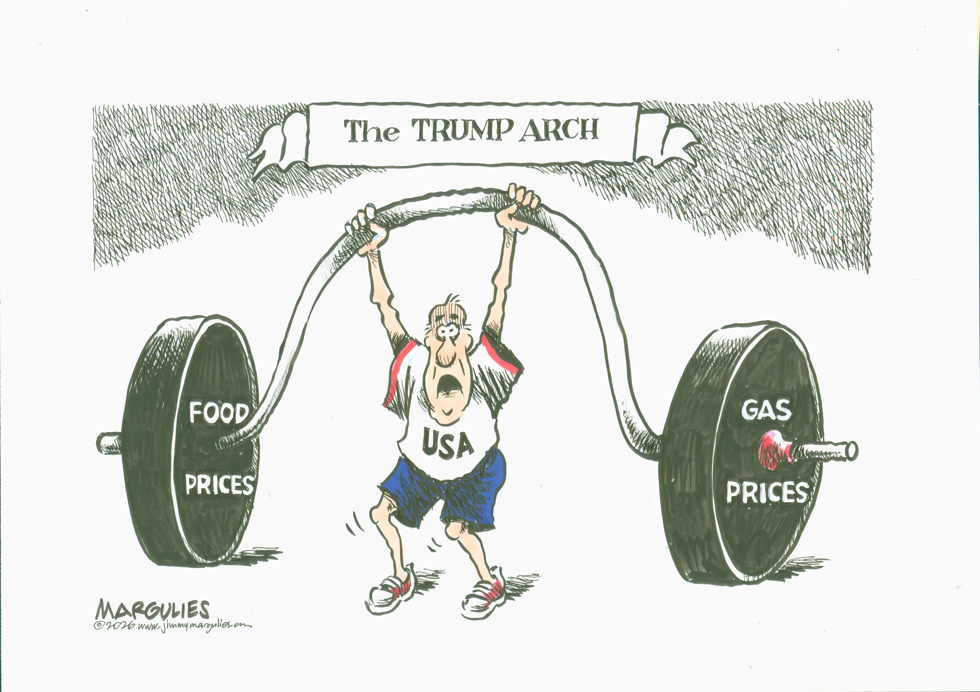
Food and gas prices remain elevated in 2026 under the Trump administration, adding to household costs across the country. The administration's economic approach has not delivered relief on key consumer expenses. Critics argue the policies prioritize other goals over inflation control. The cartoon depicts the USA as overburdened by these dual price burdens. It takes the position that Trump-era governance has left ordinary Americans carrying unsustainable economic weight.
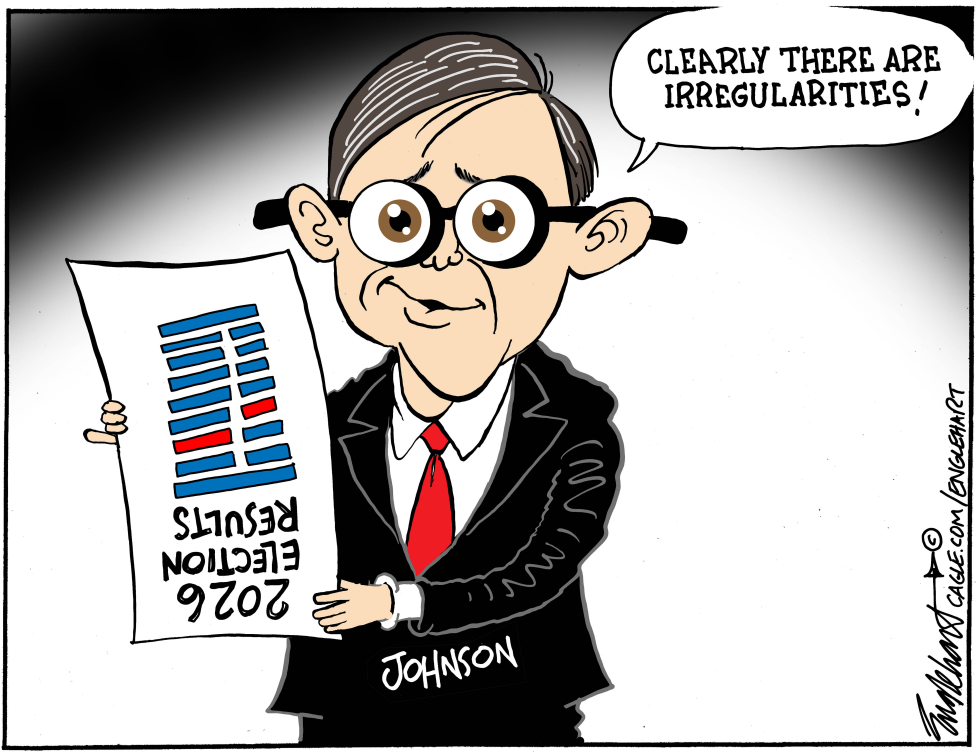
House Speaker Mike Johnson publicly questioned the integrity of the 2026 election results in September 2026, citing irregularities in a bar chart of outcomes. The move raised alarms about potential delays or challenges to congressional certification of the vote. Critics argue the statements undermine public confidence in the electoral process without evidence of widespread fraud. The cartoon portrays Johnson as actively sowing doubt in the results to influence outcomes. It takes the position that such rhetoric from congressional leadership threatens democratic norms and the peaceful transfer of power.
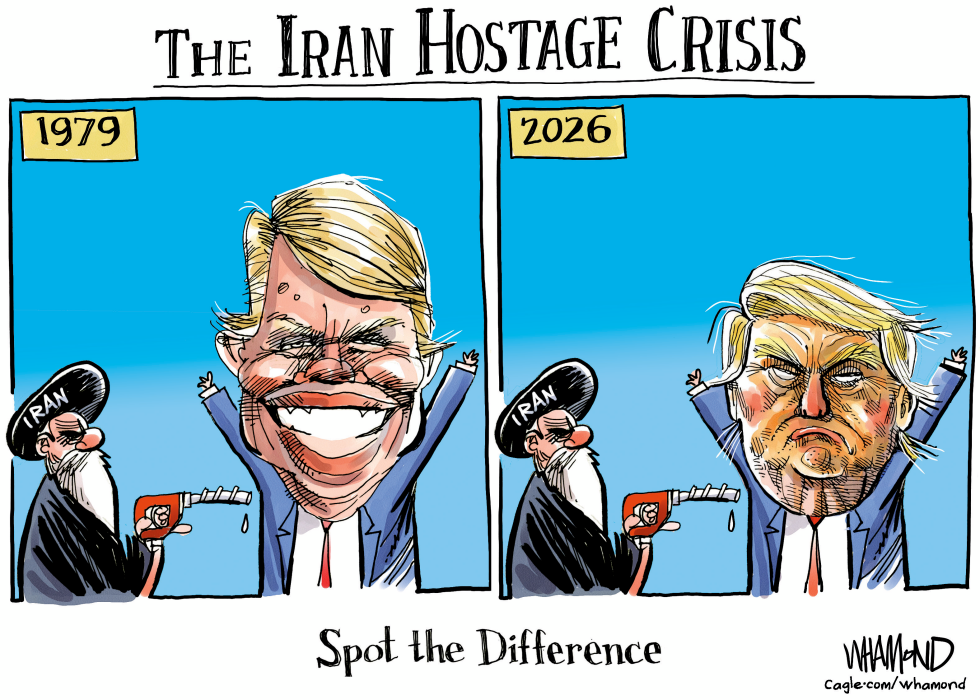
The cartoon splits the Iran Hostage Crisis into 1979 and 2026 panels. In the first Trump appears elated while an Iran-labeled figure holds a gas pump. In the second Trump looks distressed with the same figure present. The piece uses the visual contrast to comment on how Iran-related pressures affect US political figures differently over time.
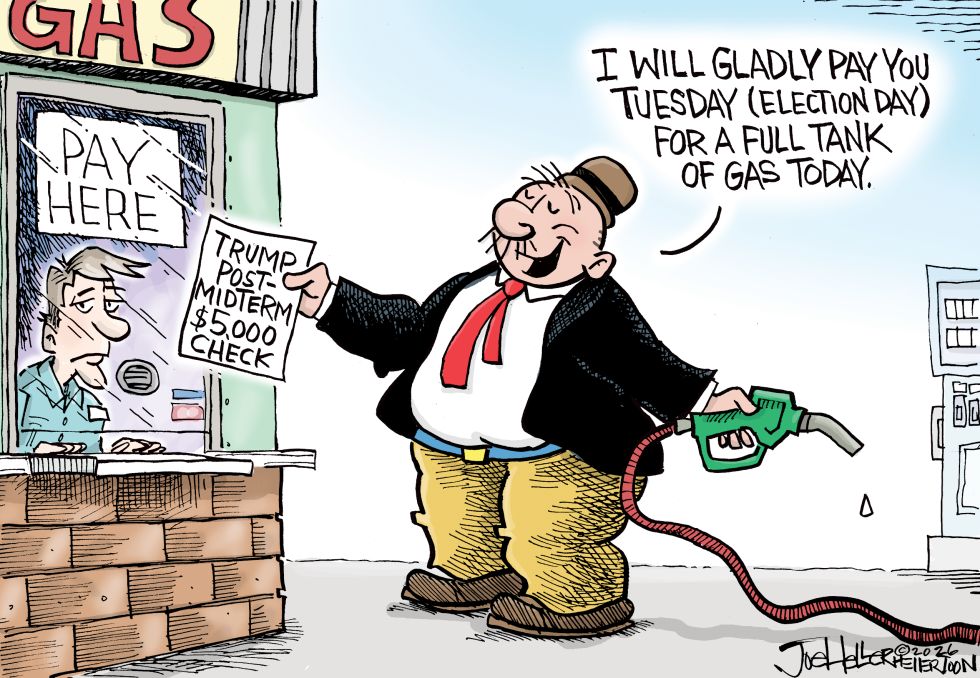
Donald Trump issued a post-midterm gas payment pledge tied to the 2026 election cycle. The promise revives a classic deferral line to link fuel costs with voting day. The cartoon argues the offer functions as an empty election tactic rather than a concrete policy step.
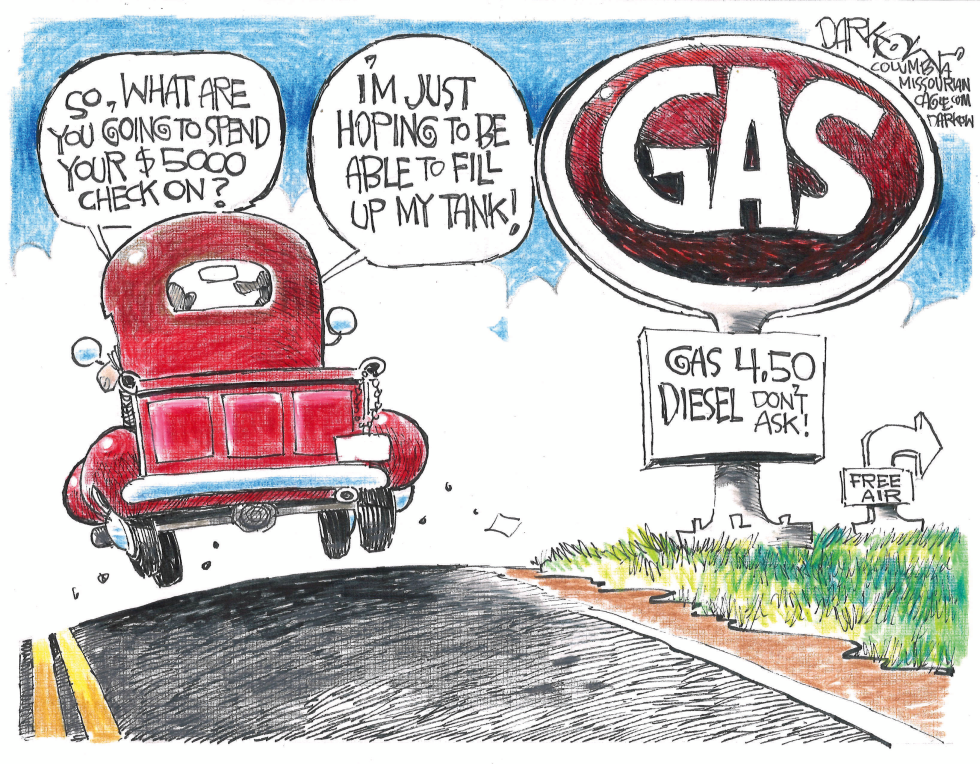
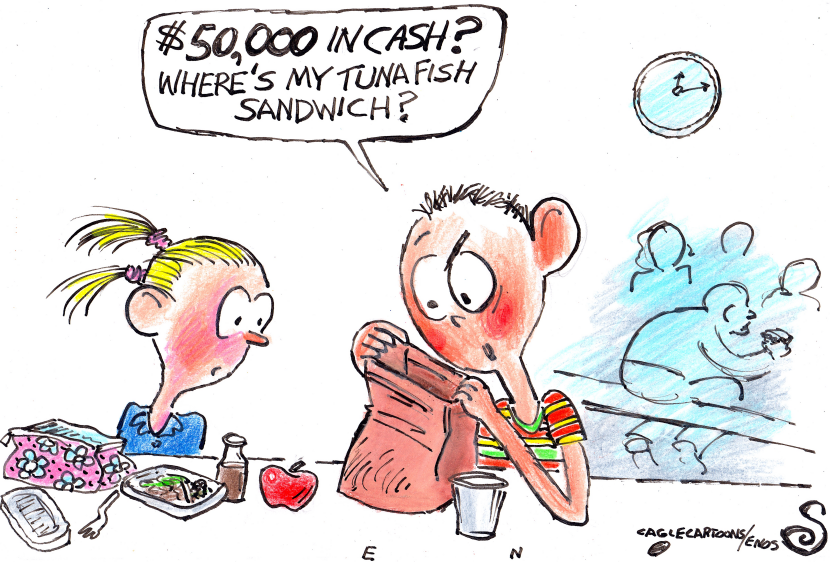
Proposed dividend checks of five thousand dollars are being discussed as economic relief measures. High gas prices at four dollars and fifty cents per gallon mean the payments would cover little more than a single fill up for many drivers. The situation underscores how energy costs continue to outpace targeted relief efforts. The cartoon argues that such checks provide minimal practical benefit when fuel expenses remain elevated. It highlights the disconnect between announced payments and real world household burdens from inflation in the energy sector.
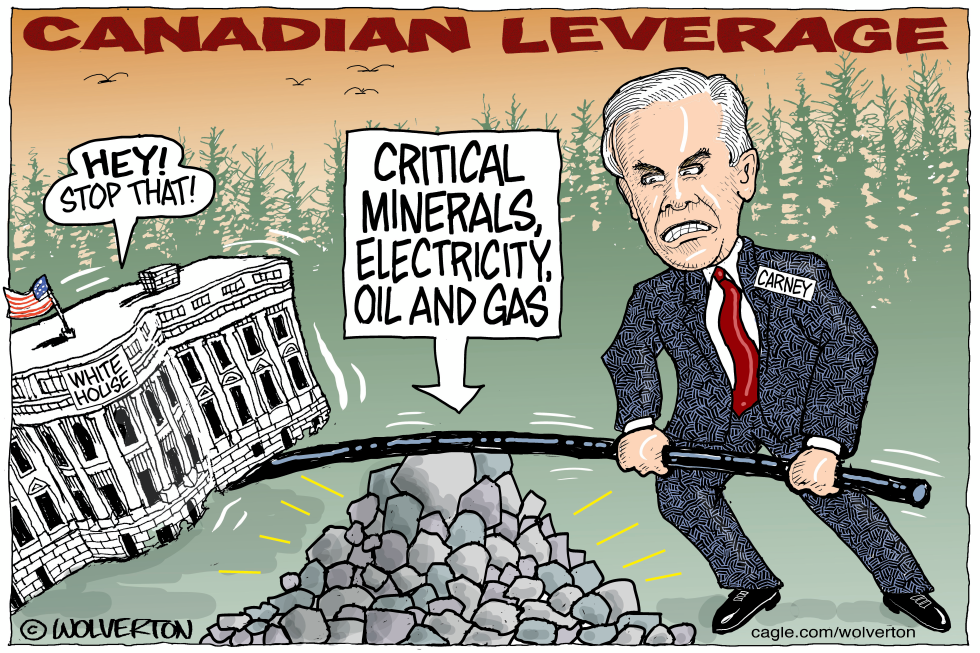
The cartoon depicts former Bank of Canada governor Mark Carney using a pipe labeled critical minerals, electricity, oil and gas as a lever to damage the White House. A speech bubble from the building protests the action. Published on September 12, 2026, the image comments on ongoing Canada-US tensions over resource exports and trade policy. Carney is shown in a suit with a determined expression, standing on rubble. The visual underscores Canada's potential to restrict supplies vital to the American economy. It reflects real-world discussions about critical minerals and energy interdependence between the two nations.
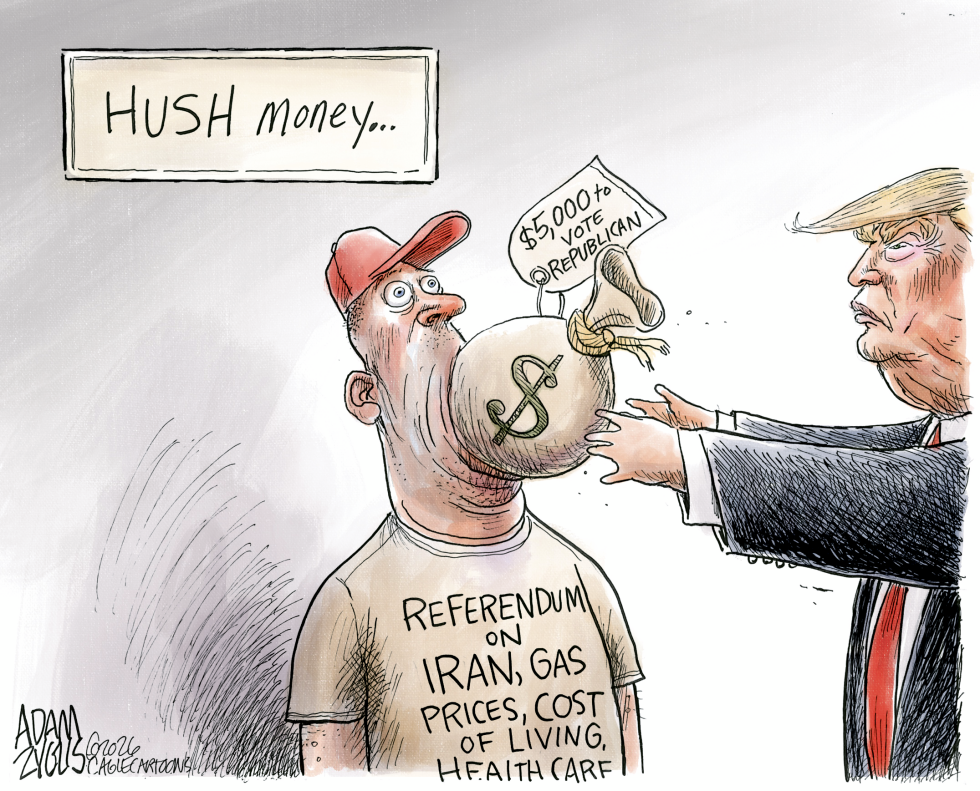
The cartoon shows Donald Trump handing a large bag of cash labeled as hush money to a man in a referendum shirt covering Iran, gas prices, cost of living and health care. A tag on the bag promises $5,000 to vote Republican. The scene responds to ongoing debates over election integrity and foreign policy issues involving Iran as of September 2026. It uses the visual metaphor of a bribe to comment on alleged attempts to influence voter priorities through financial incentives.
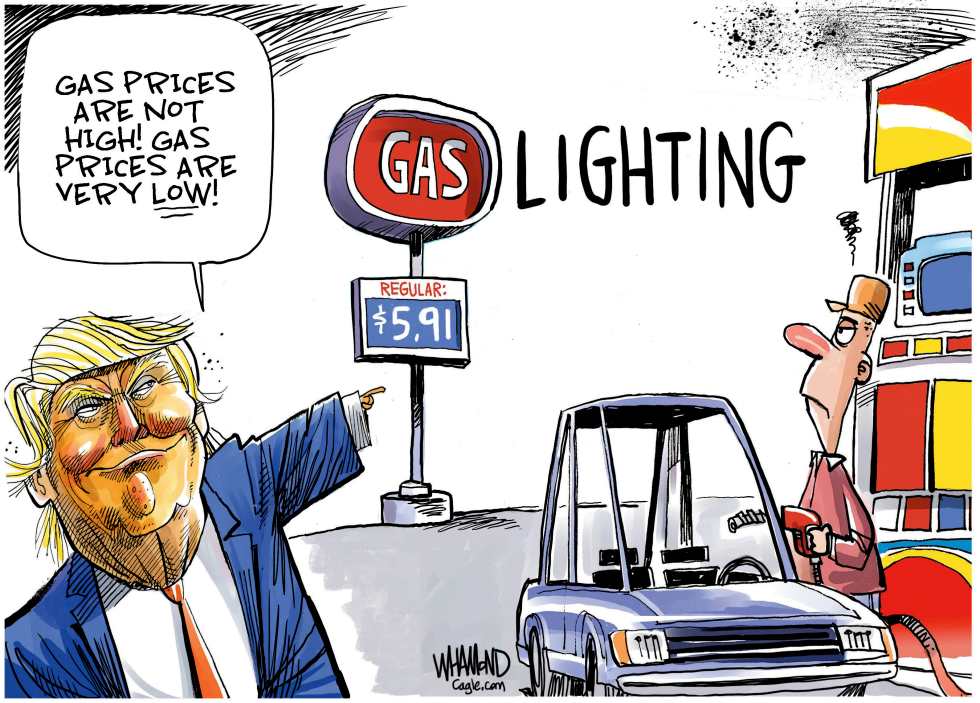
Donald Trump has repeatedly asserted that gas prices are very low even as national averages hover near record territory. The statement comes amid ongoing public frustration with energy costs that have remained elevated for months. The editorial takes the position that such denials amount to deliberate misdirection rather than engagement with economic data.
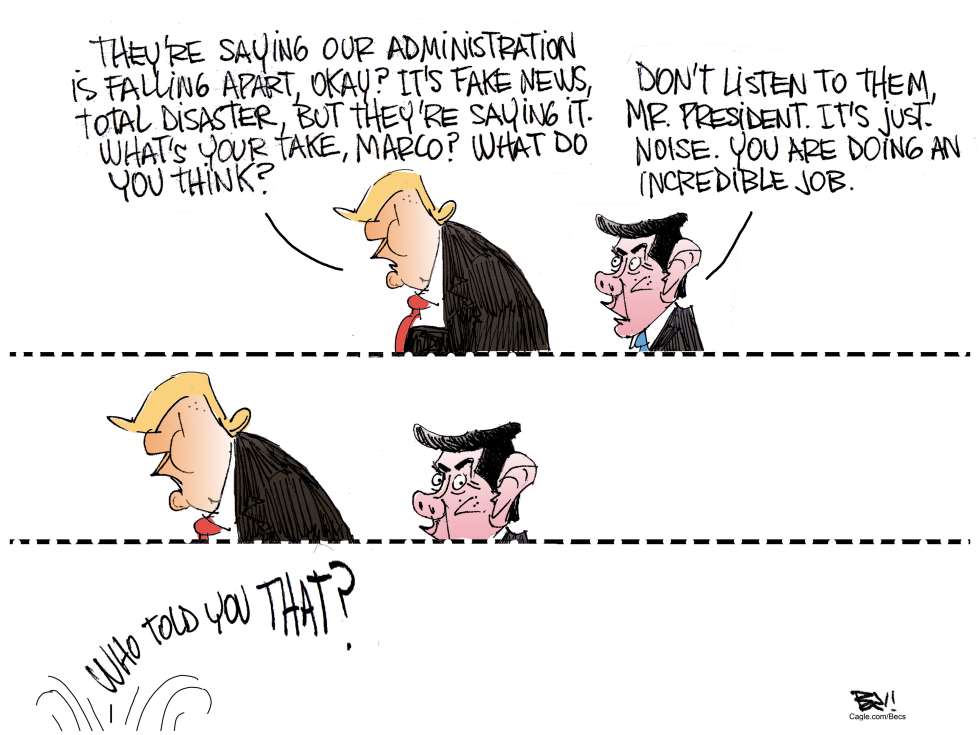
President Trump asked Senator Marco Rubio for his assessment of reports that the administration is in disarray, labeling them fake news. Rubio dismissed the reports as noise and praised Trump's performance. Trump responded by questioning who had told Rubio that assessment. The exchange highlights tensions over loyalty and information flow inside the administration. The cartoon portrays Rubio's positive reply as triggering suspicion rather than reassurance.
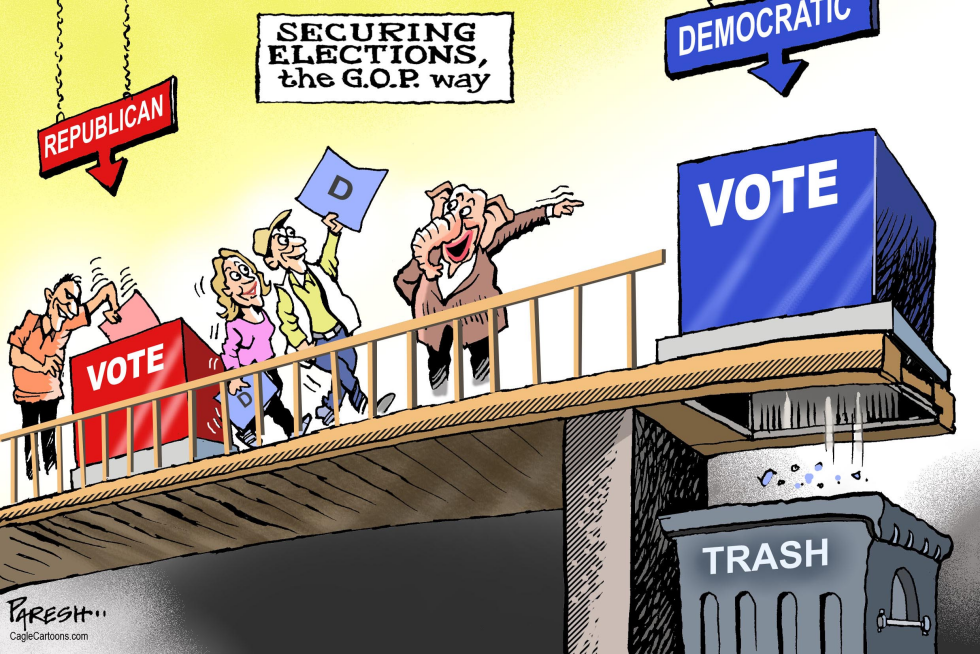
The cartoon depicts Republicans on a platform guiding a large blue vote box labeled Democratic into a trash can below while a red Republican vote box remains on the structure. A sign reads Securing Elections the G.O.P. way. The elephant symbol of the GOP points toward the action as figures including one holding a D flag stand nearby. The image comments on claims of election integrity by showing ballots from one party discarded. This reflects ongoing partisan debates over voting procedures and access as of the 2026 publication date.
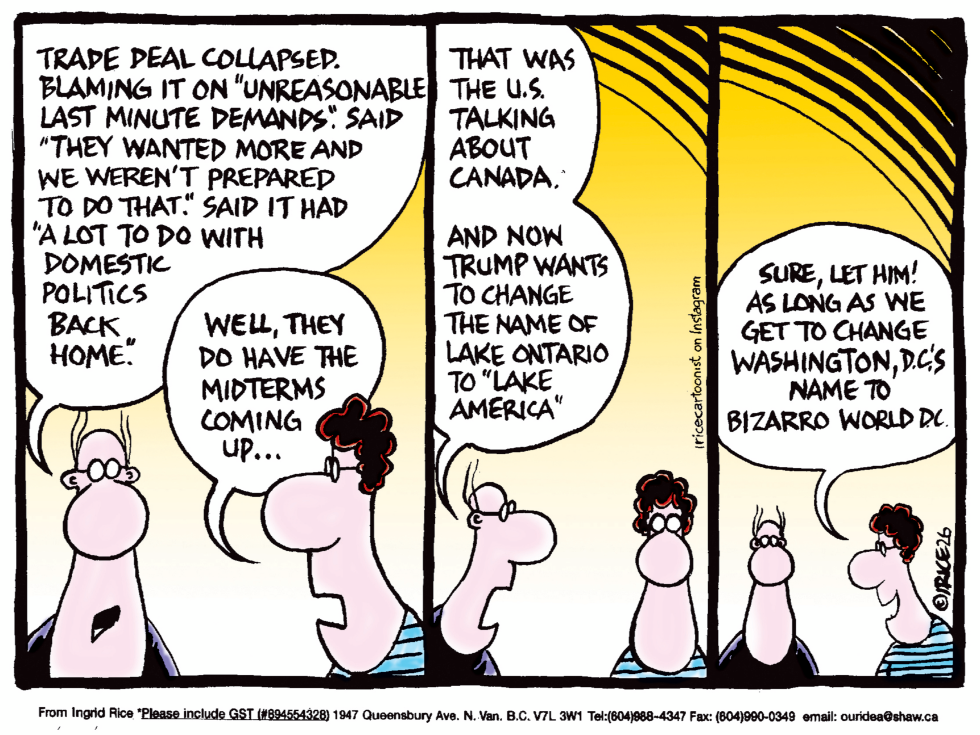
A Canada-U.S. trade deal collapsed after U.S. negotiators cited unreasonable last-minute demands and linked the failure to domestic politics ahead of midterms. President Trump then proposed renaming Lake Ontario to Lake America. Canadian officials responded by offering to rename Washington D.C. to Bizarro World DC if the change proceeds. The exchange highlights how trade tensions and political posturing are escalating between the two countries. The cartoon mocks the name-change idea as emblematic of broader dysfunction in bilateral relations.
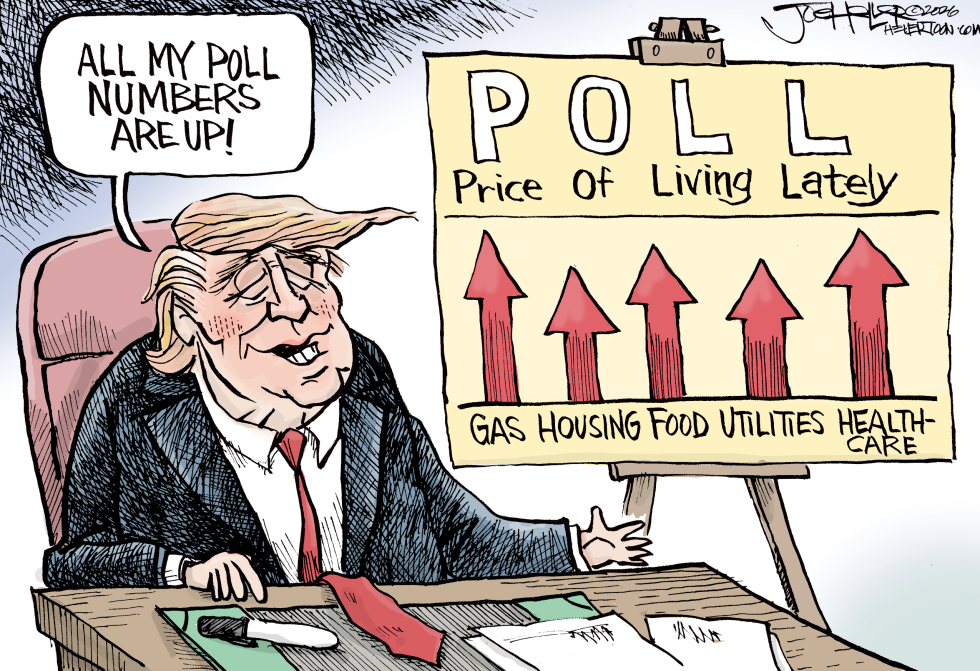
Donald Trump stated that his poll numbers were rising even as the price of living continued to climb across multiple categories. Gas, housing, food, utilities and healthcare costs all posted increases according to the visual data presented. The development matters because household expenses directly affect voter sentiment ahead of upcoming elections. Trump positioned the poll improvement as positive news despite the economic pressures shown. The piece takes the position that any reported poll gains are closely tracking the same upward pressure on everyday costs rather than reflecting broader approval.
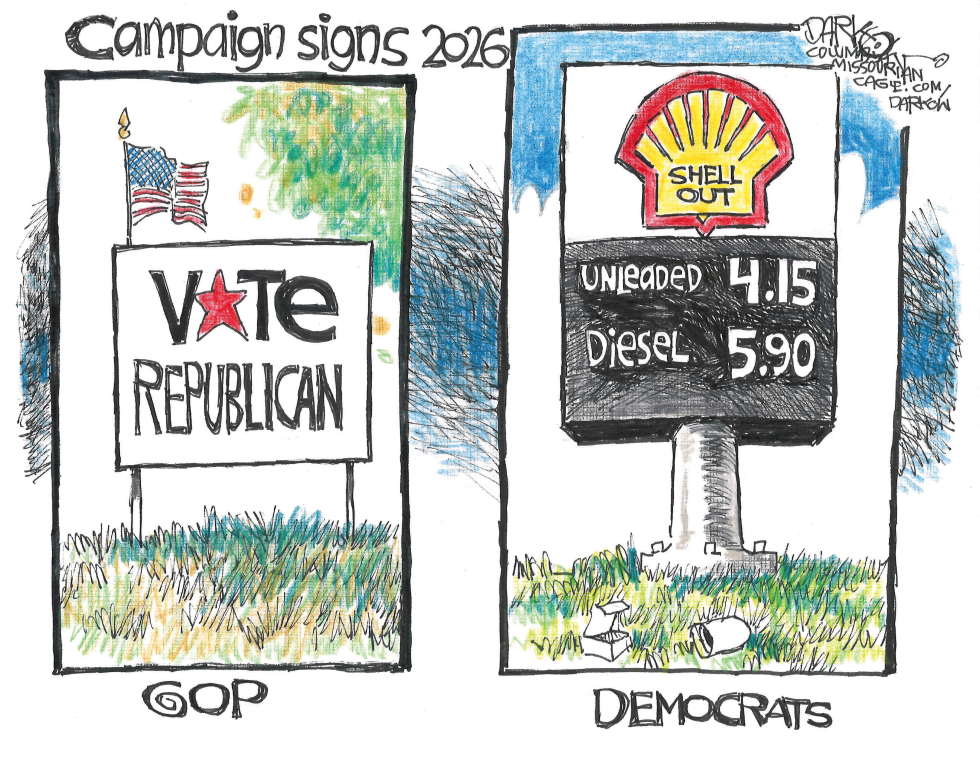
As the 2026 midterm campaigns intensify, Democrats confront voter frustration over elevated gasoline and diesel prices at the pump. The Shell station sign reading Shell Out with unleaded at $4.15 and diesel at $5.90 underscores how economic pressures can overshadow traditional political messaging. Republicans benefit from straightforward campaign signage while Democrats appear tied to the cost increases. The cartoon argues that fuel prices serve as a more potent electoral signal than yard signs for one party.
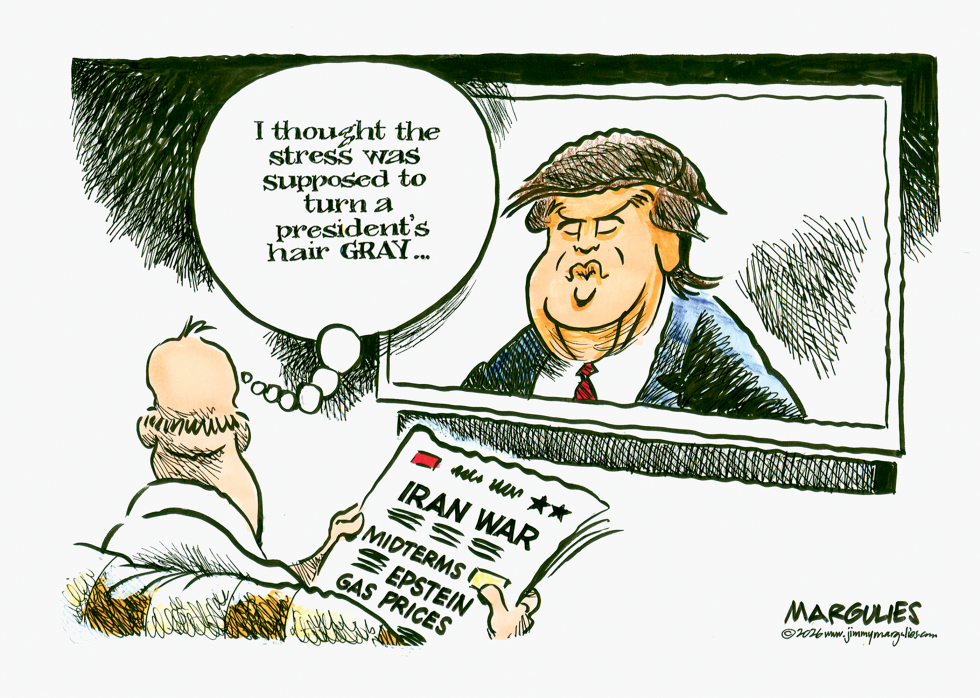
President Donald Trump confronts an Iran war, midterm election pressures, Epstein-related revelations and rising gas prices in September 2026. These overlapping challenges test the administration's capacity to manage foreign conflict and domestic economic strain simultaneously. The cartoon argues that the expected physical toll of such stress on the president has not materialized in the anticipated way.