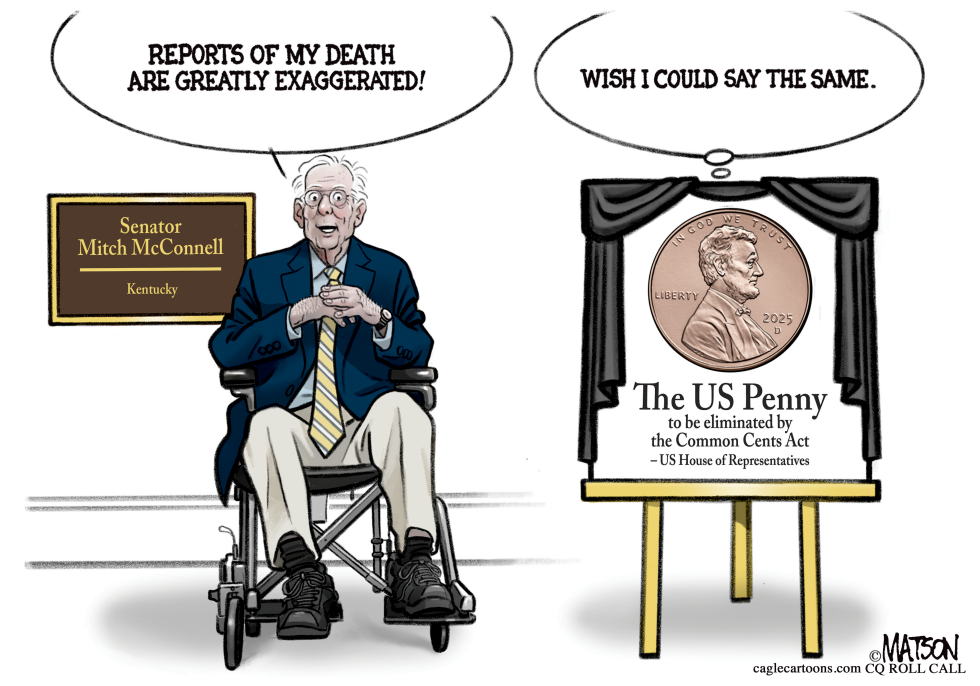
Senator Mitch McConnell returned to the Senate floor on September 15, 2026, after health-related absences, directly addressing rumors of his political demise. At the same time the House has advanced the Common Cents Act to eliminate the US penny. The move reflects ongoing efforts to modernize currency amid rising production costs. McConnell's return underscores his enduring influence in the chamber despite physical challenges. The cartoon uses a classic quote to juxtapose the senator's resilience against the penny's planned demise, suggesting one survives while the other does not.
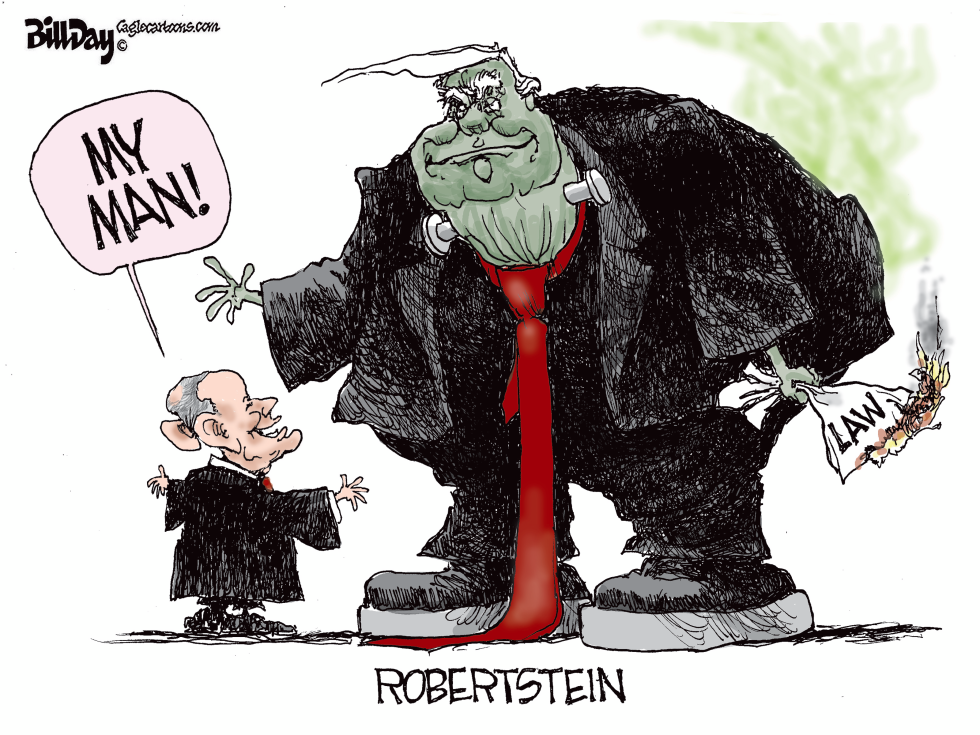
A judge nicknamed Robertstein appears as a stitched-together monster clutching a burning copy of the law while a smaller political figure hails him as 'my man.' The image responds to ongoing concerns over judicial appointments that produce ideologically driven rulings. Critics argue such selections prioritize loyalty over legal restraint, weakening institutional guardrails. The cartoon takes the position that these appointments create uncontrollable forces that damage the rule of law.
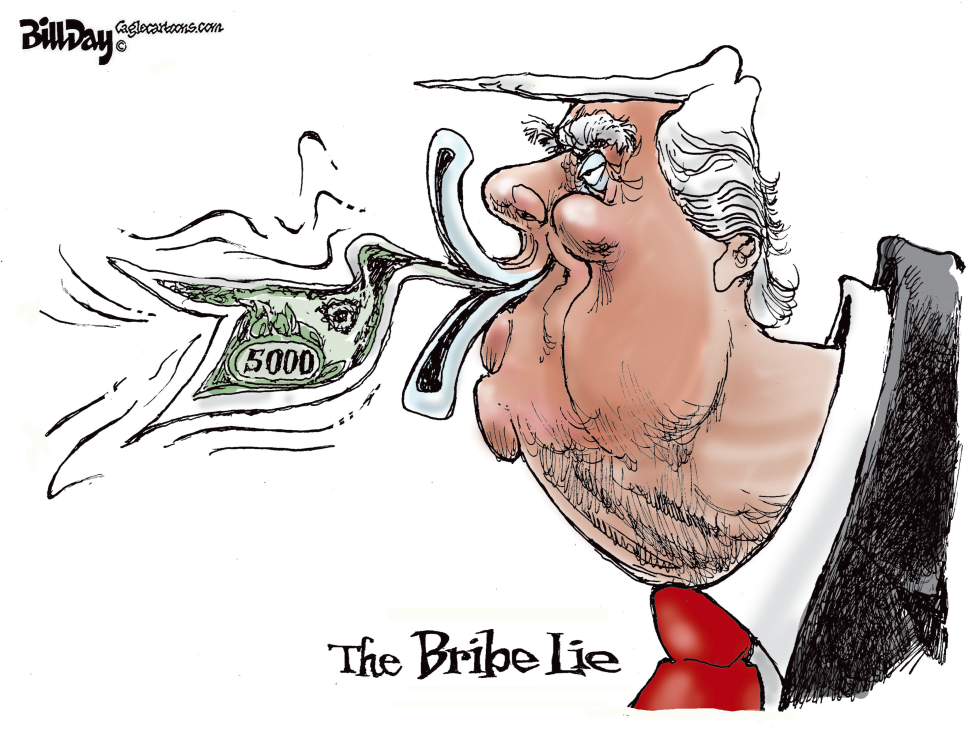
Donald Trump has repeatedly denied receiving improper payments or bribes tied to official actions. Recent reports have raised questions about large cash transfers and their origins. The cartoon argues that these denials amount to a lie, with the money trail contradicting public statements. It positions the issue as a test of accountability for the former president and his circle. The piece suggests the public should view such explanations with skepticism given the visible evidence of financial gain.
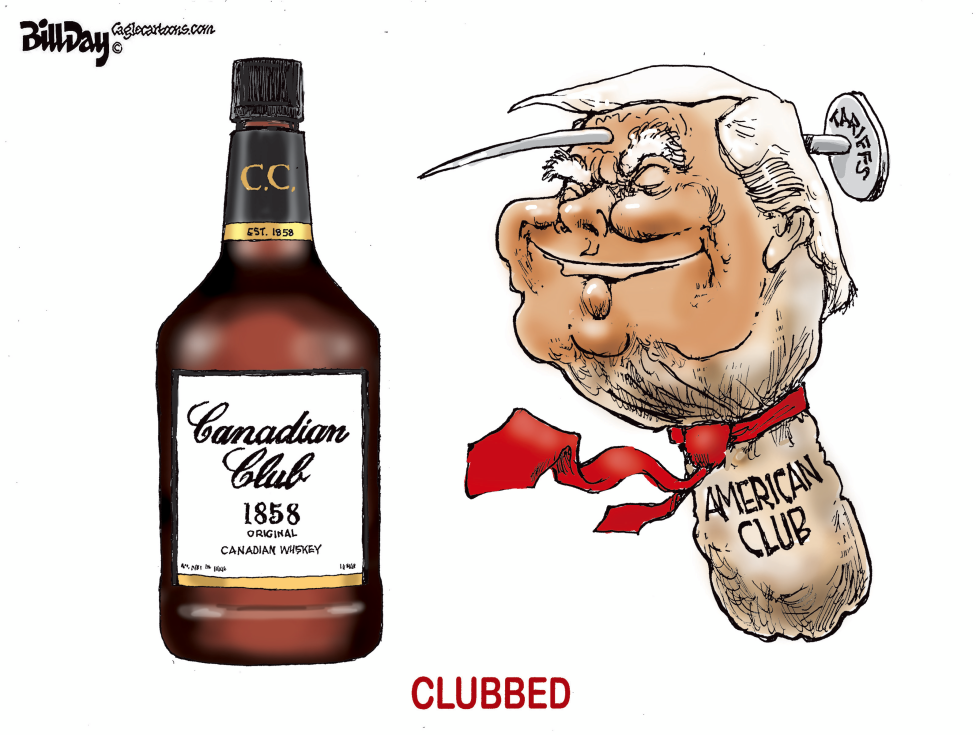
On September 9, 2026, the cartoon responds to ongoing US-Canada trade friction under the second Trump administration. Trump has pursued aggressive tariff policies against Canadian imports, prompting Ottawa to consider reciprocal measures. The piece uses the Canadian Club whiskey brand to illustrate how such policies rebound on American interests. It argues that Trump's approach harms US businesses and consumers rather than strengthening them.
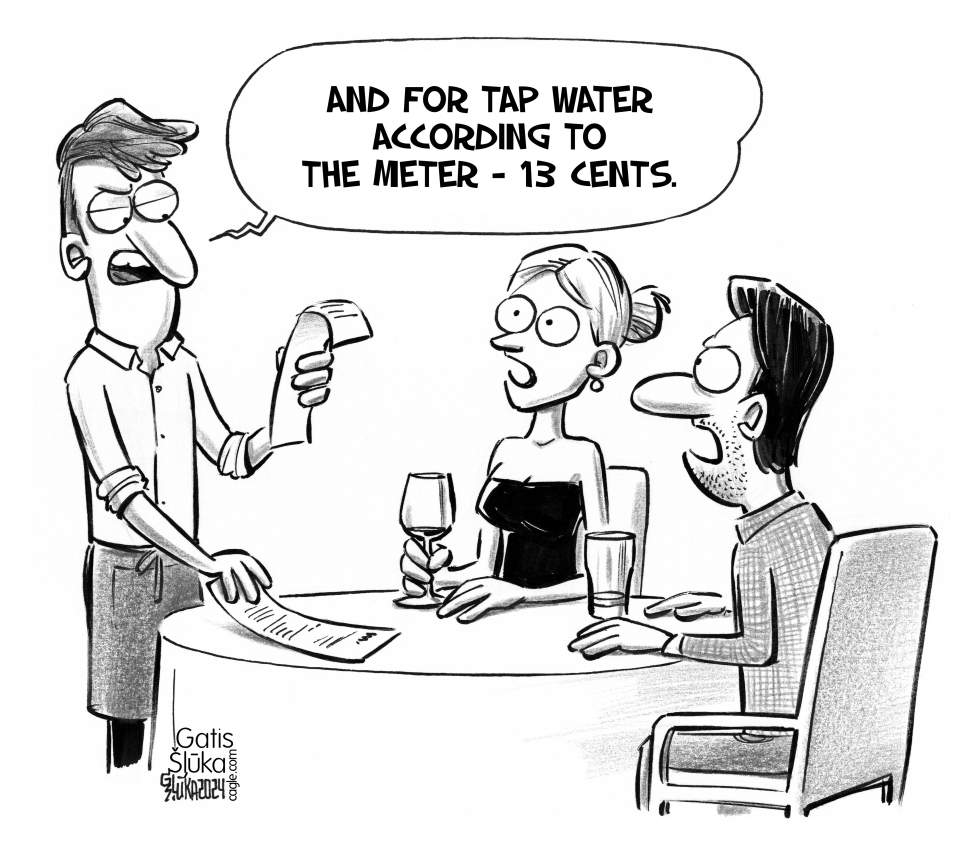
The cartoon depicts a waiter informing two diners that tap water costs 13 cents based on meter readings. It responds to ongoing discussions about restaurants charging for previously free tap water. The visual uses the meter concept to highlight billing surprises in dining.
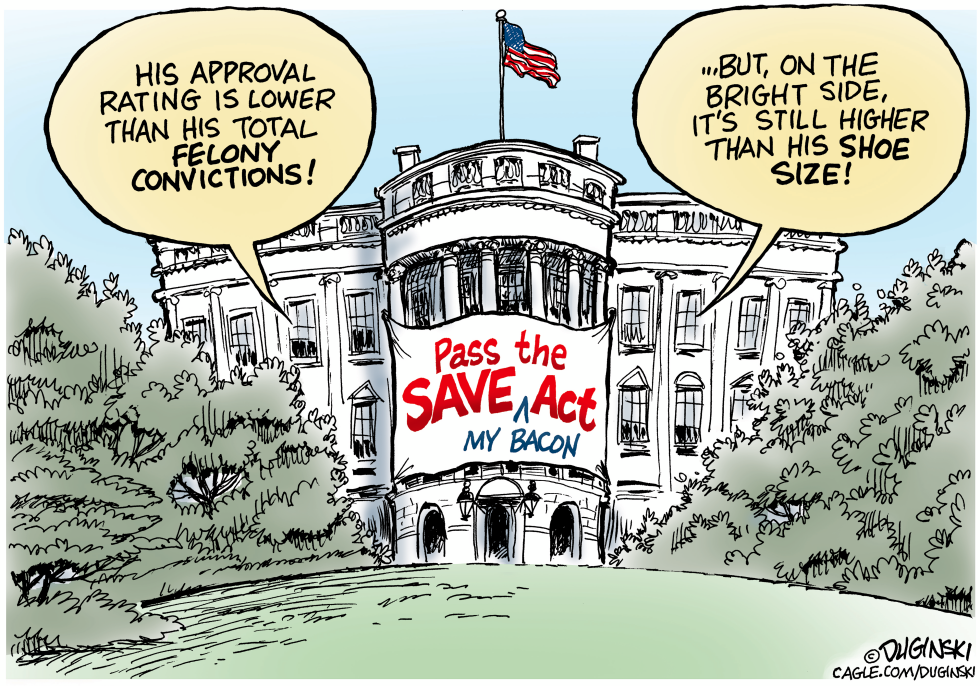
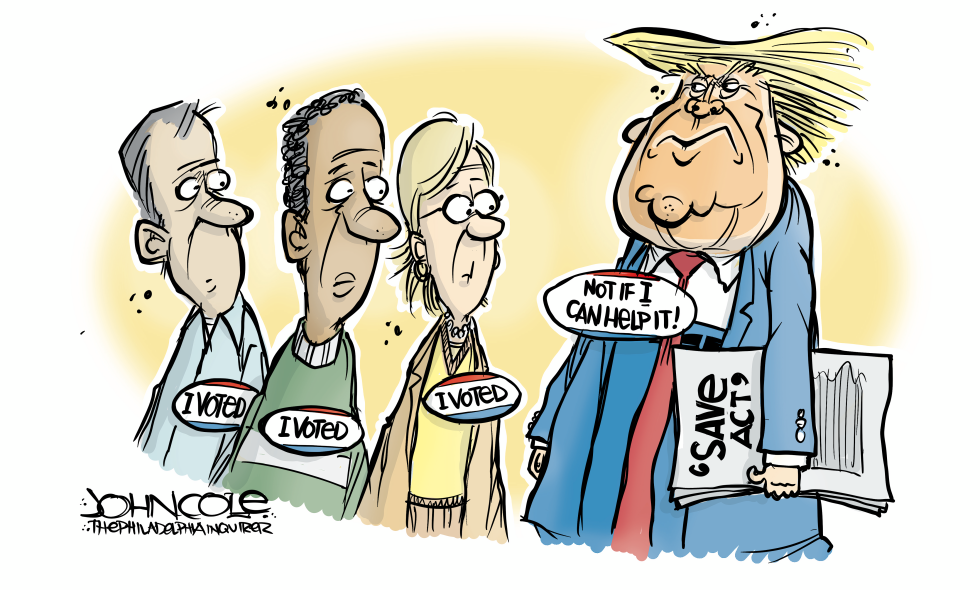
A president facing historically low approval ratings tied to prior felony convictions pushes the SAVE Act through Congress in late summer 2026. The legislation aims to require proof of citizenship for federal voting. The editorial view holds that the effort serves mainly as a lifeline for an embattled administration rather than a substantive reform.
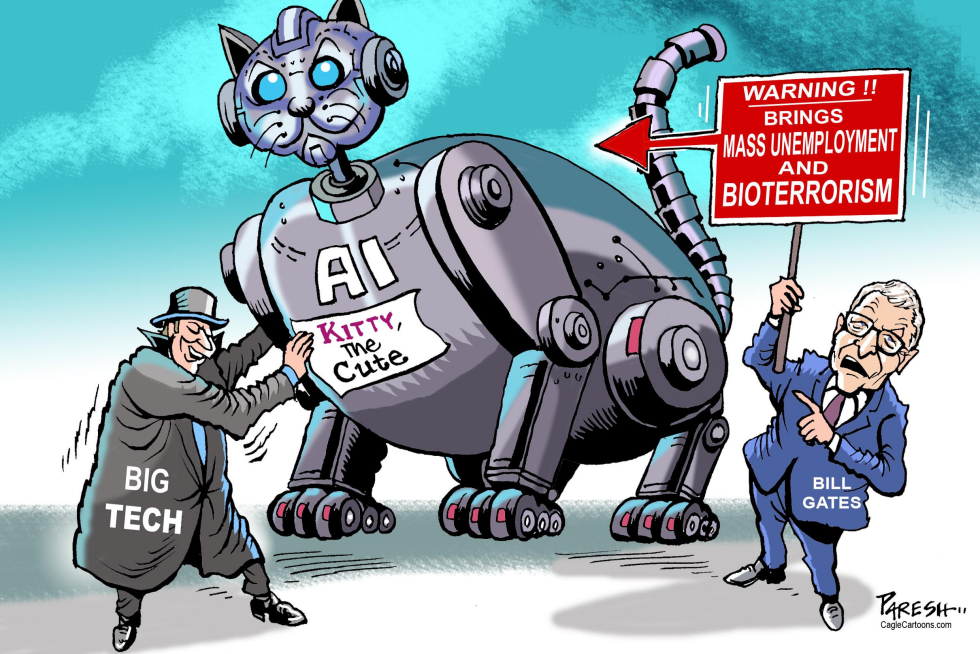
Bill Gates stands beside a large AI robot topped with a cat head while holding a sign warning of mass unemployment and bioterrorism. A Big Tech figure pushes the machine forward. The cartoon, published August 27, 2026, responds to ongoing debates about artificial intelligence safety and economic impacts. Gates has publicly discussed AI risks in recent years, including job displacement and potential misuse. The image contrasts industry enthusiasm with cautionary views on unchecked development. It highlights tensions between innovation and societal safeguards in the technology sector.
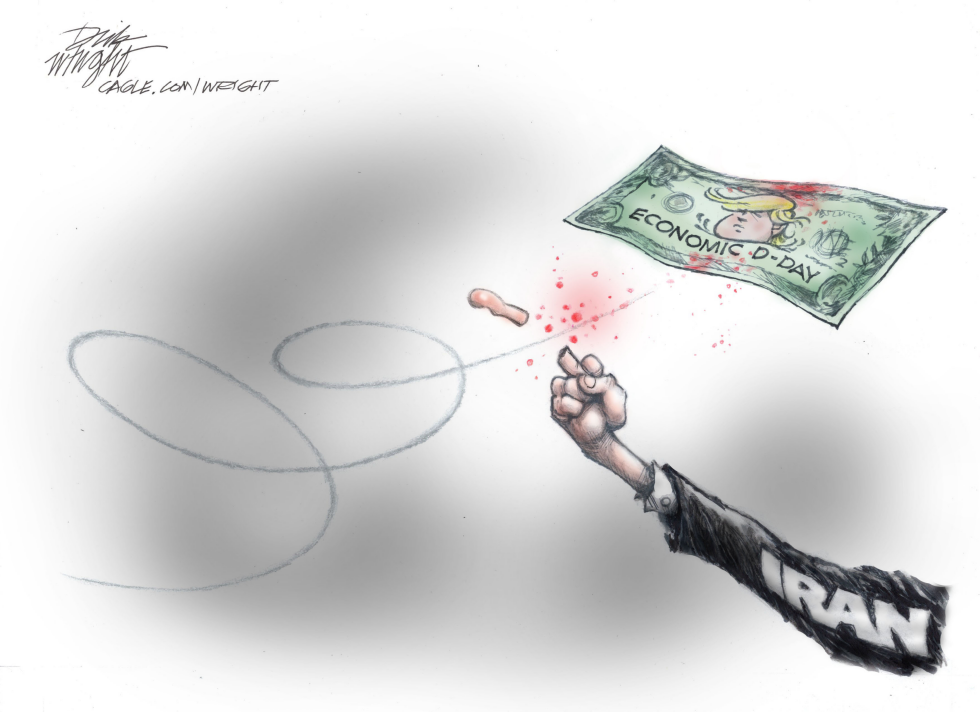
Iran has positioned itself to ignite economic pressure on the United States through direct actions targeting financial stability. The move comes amid ongoing tensions with the Trump administration over sanctions and regional influence. This development raises stakes for global markets already sensitive to Middle East volatility. The piece frames Iran as deliberately lighting a fuse aimed at an economic tipping point centered on Trump.
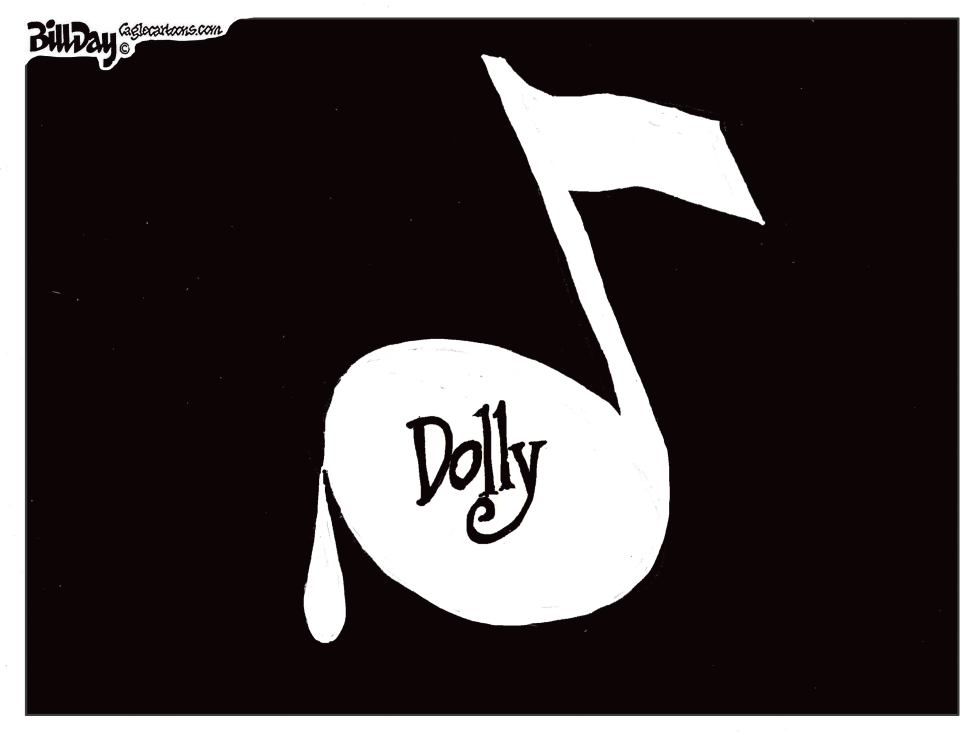
A musical figure named Dolly receives public recognition through a minimalist graphic tribute. The image responds to the ongoing role of music icons in popular culture by marking their passing or legacy with a single symbolic note and tear. The editorial position emphasizes quiet respect over elaborate commentary.
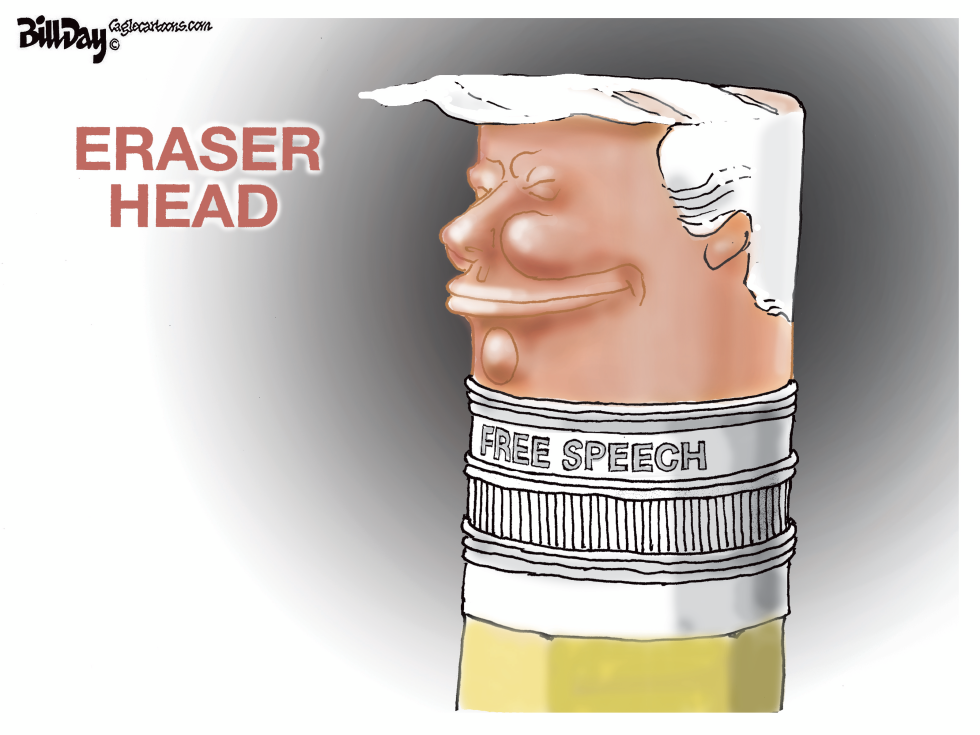
Donald Trump remains a central figure in debates over free speech protections. Critics argue his influence risks undermining open discourse in public institutions and media. The editorial takes the position that such influence acts to erase rather than safeguard those protections.
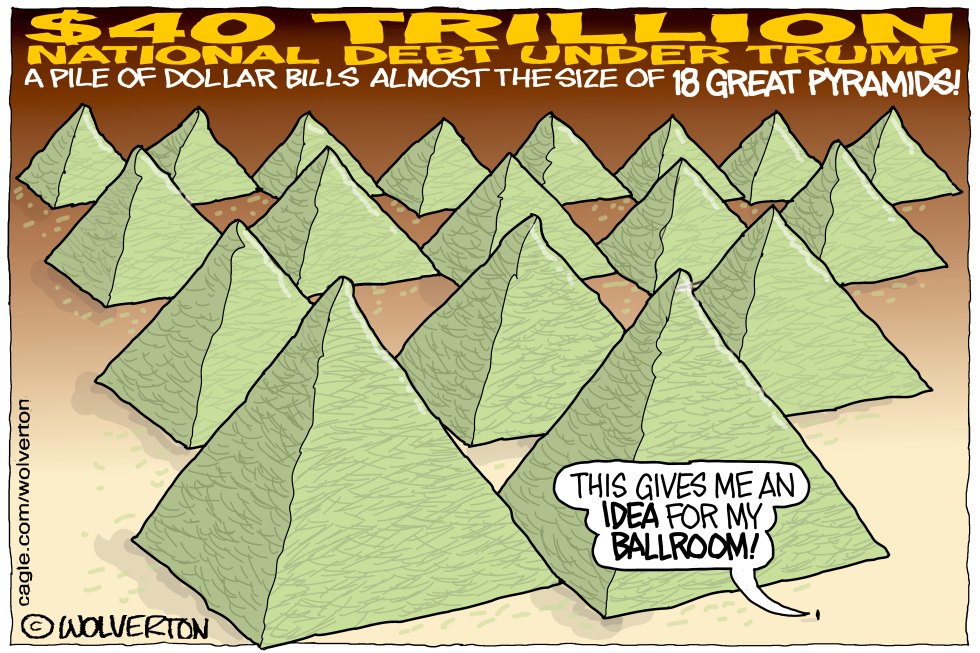
The image presents a field of green pyramids constructed from dollar bills set against a brown and tan background. Large text at the top states the $40 trillion national debt figure under Trump and compares the pile size to 18 great pyramids. A speech bubble emerges from one pyramid in the foreground with a remark about a ballroom idea. The composition places the largest structures toward the front and smaller ones receding into the distance. The visual ties the debt total directly to the current administration period referenced in the text.
The cartoon shows Donald Trump on the right clutching documents labeled SAVE Act and declaring through a speech bubble, 'NOT IF I CAN HELP IT!' Three voters on the left, an older white man, a Black man and a white woman, each wear prominent I Voted stickers. The composition contrasts the former president's stance against the visible participation of citizens in elections. Published August 16, 2026, the image addresses Trump's resistance to the SAVE Act, a measure aimed at strengthening voter identification requirements. The visual places emphasis on the disconnect between voter engagement and political opposition to related legislation.
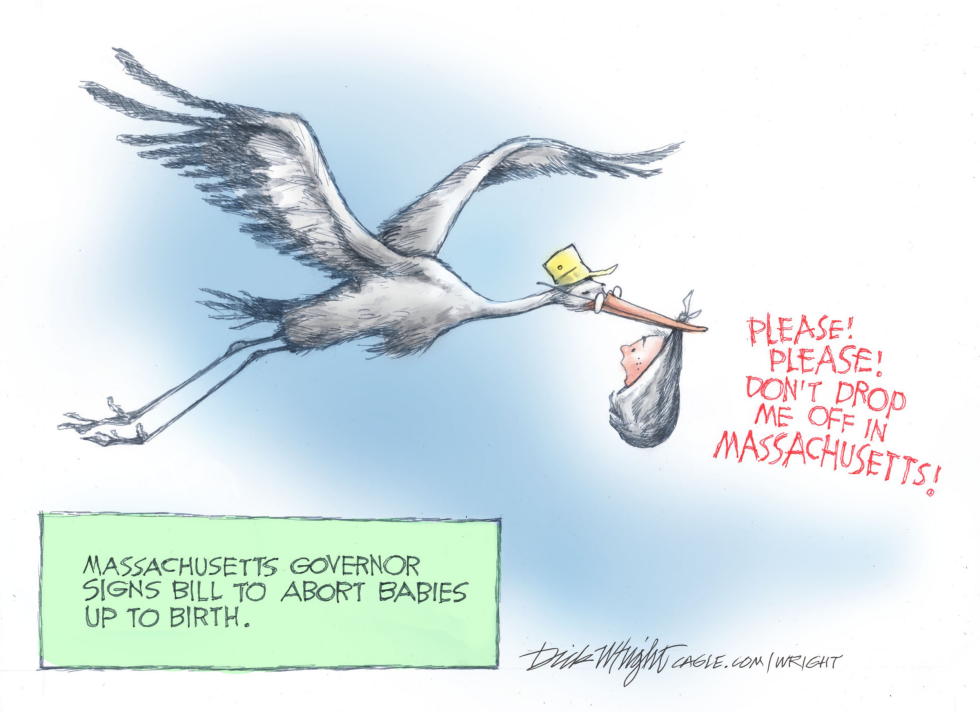
Massachusetts Governor signed legislation permitting abortion up to birth. The measure expands access to the procedure through all stages of pregnancy. The action drew immediate opposition from those who argue it removes all limits on the practice. The editorial takes the position that the law goes too far and treats late-term procedures as routine.
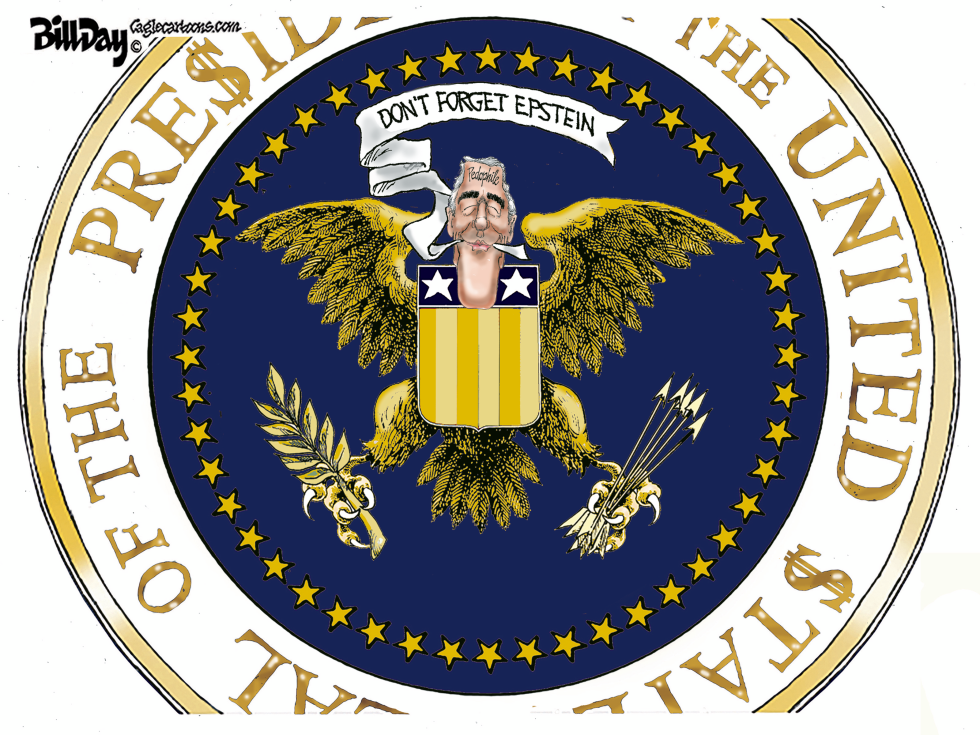
The Epstein scandal continues to generate political scrutiny years after the financier's death. Recent developments keep the case in public view through references to past associations. The piece argues that such connections deserve ongoing attention rather than dismissal.
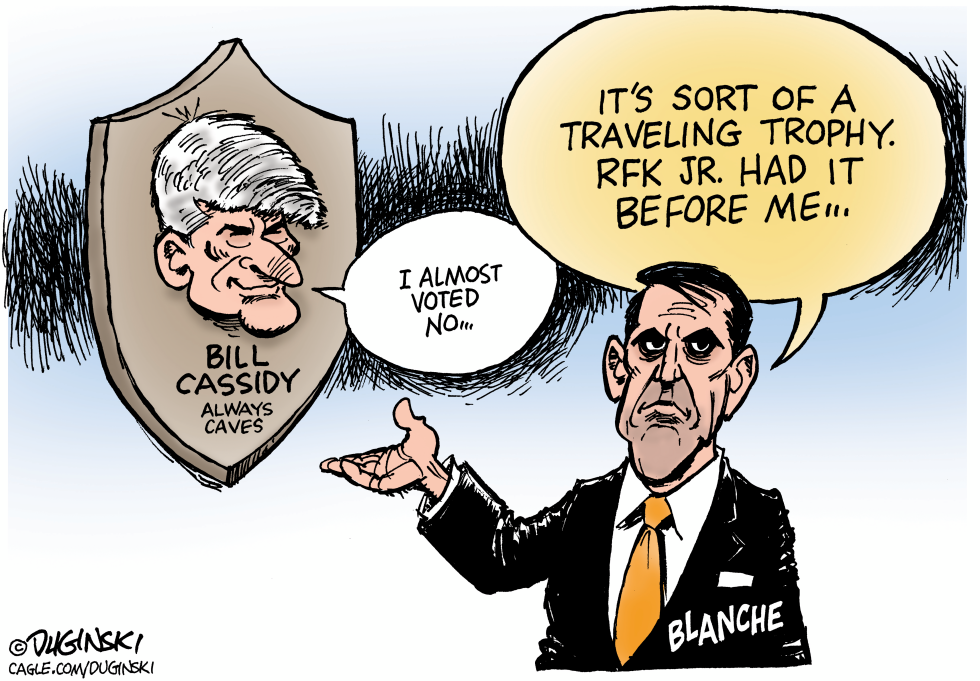
Todd Blanche, recently confirmed to a senior administration post, has mounted a shield bearing Sen. Bill Cassidy\'s likeness on his office wall. The Louisiana Republican, long viewed as a potential swing vote, backed the nomination despite earlier signals of hesitation. RFK Jr. reportedly displayed the same item during his own tenure. The arrangement underscores ongoing tensions within the GOP over loyalty tests and confirmation battles. The piece portrays Cassidy\'s support as another instance of yielding under pressure rather than a principled stand.