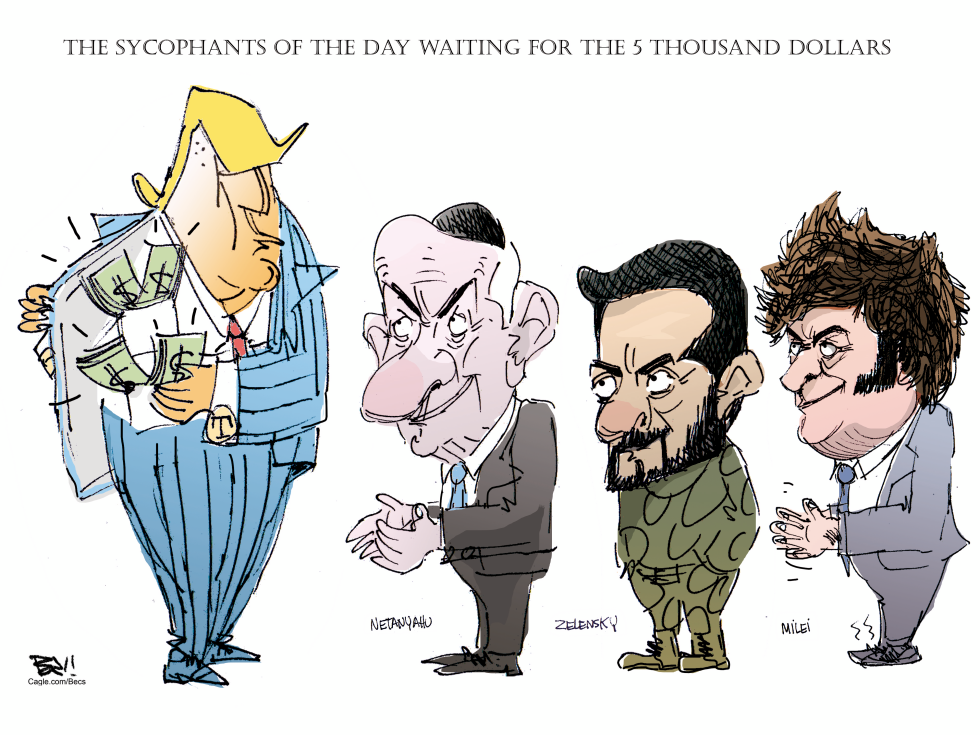
Donald Trump stands at the center of attention from Israeli Prime Minister Benjamin Netanyahu, Ukrainian President Volodymyr Zelensky and Argentine President Javier Milei. The scene reflects ongoing questions about how foreign leaders court favor with the U.S. president through displays of loyalty. The cartoon argues that these relationships reduce international diplomacy to transactional waiting for payoffs.
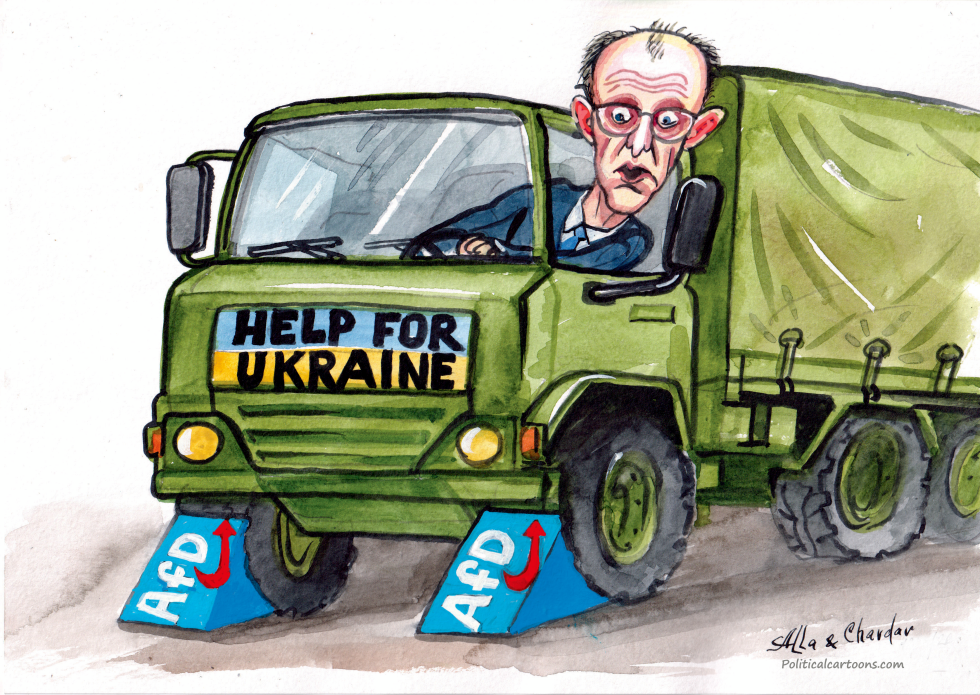
The cartoon depicts a green truck labeled Help for Ukraine stopped by blue AfD wheel chocks. A caricature of an AfD leader sits in the driver's seat. The image comments on the party's opposition to continued German military aid for Ukraine as of September 2026. AfD has consistently voted against additional support packages in the Bundestag. The visual uses the truck and chocks to illustrate the party's blocking role in foreign policy debates.
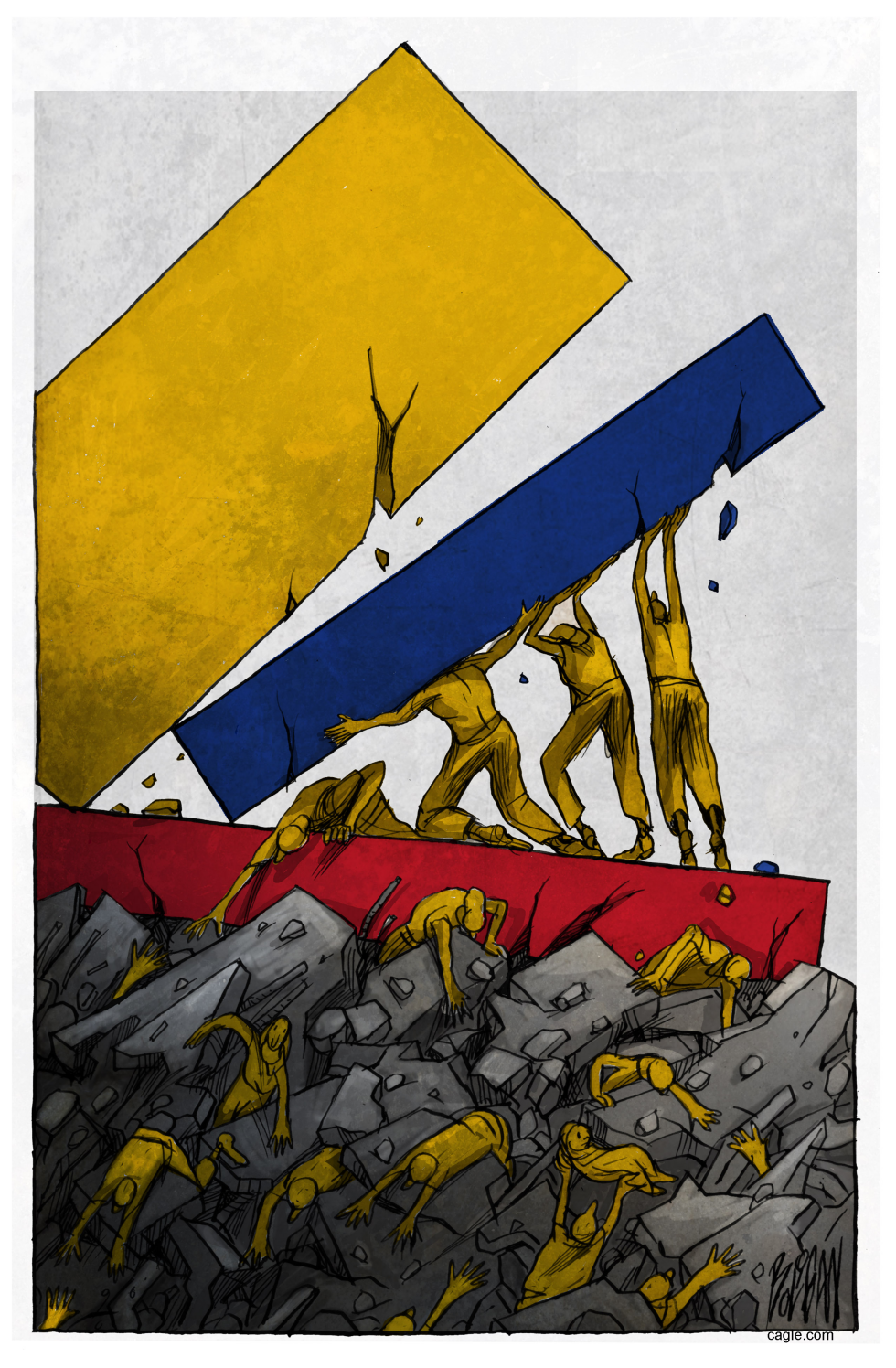
Germany's far-right Alternative for Germany party is gaining ground ahead of elections with rhetoric echoing historical extremism. The party has faced repeated scrutiny for members' Nazi-era references and anti-immigrant stances that courts have flagged as extremist. This development matters because AfD polling strength could reshape coalition math and policy on migration, EU ties, and civil liberties. The cartoon argues that supporters are consuming a toxic ideological brew that risks normalizing authoritarian symbols and eroding democratic norms.
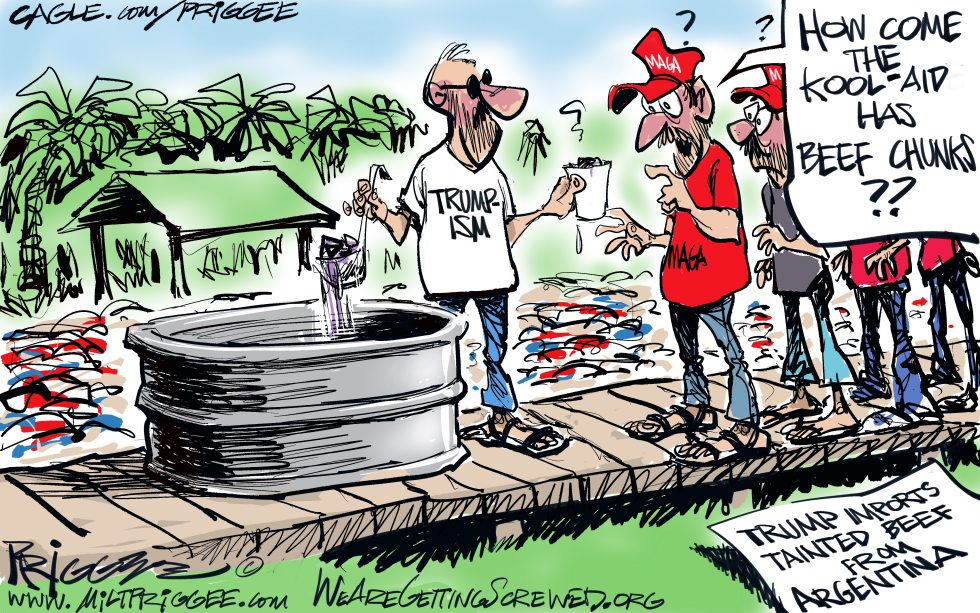
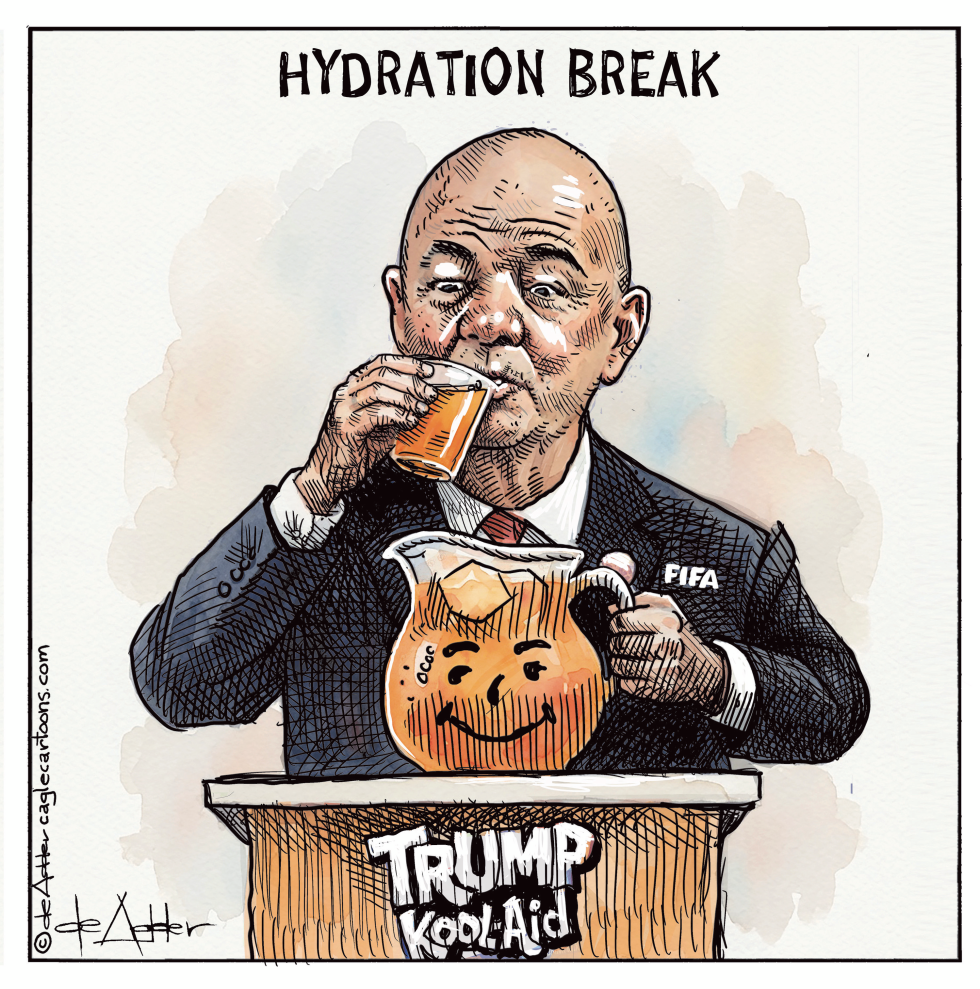
The cartoon depicts a figure labeled Trumpism pouring liquid into a well while two men in MAGA hats question why the Kool-Aid contains beef chunks. A sign at the bottom states Trump imports tainted beef from Argentina. The scene references recent policy allowing beef imports from Argentina amid concerns over quality. Supporters appear puzzled by the outcome of the trade decision. The image uses the classic Kool-Aid metaphor to illustrate how backers process the news of the imports.
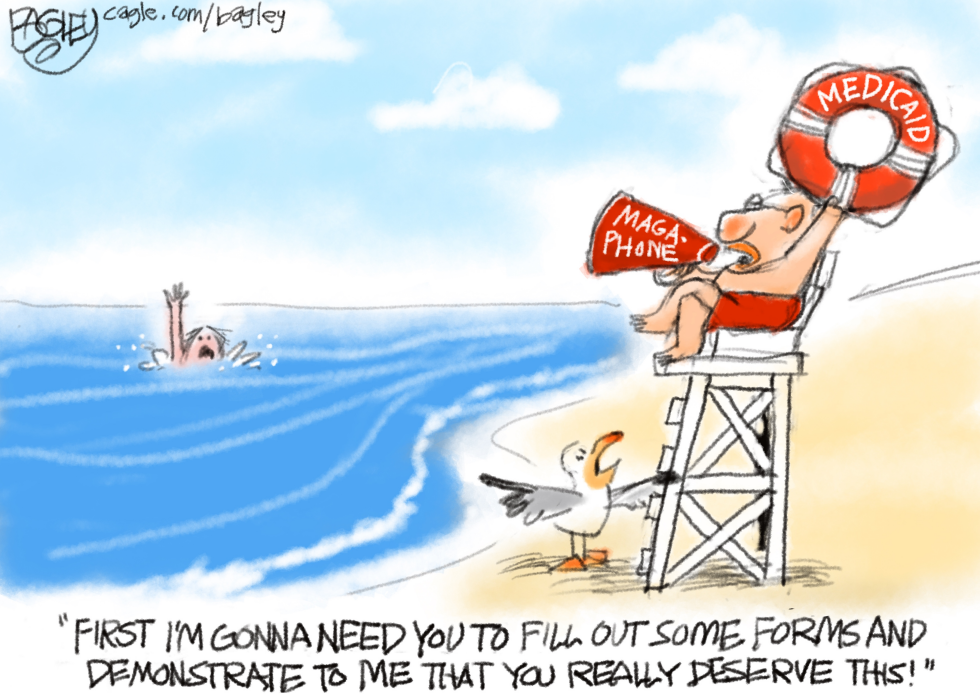
A Medicaid administrator requires extensive paperwork and proof of eligibility before providing aid to an eligible recipient. The situation highlights ongoing tensions over administrative hurdles in public health programs. The piece criticizes such requirements as barriers that undermine the purpose of assistance.
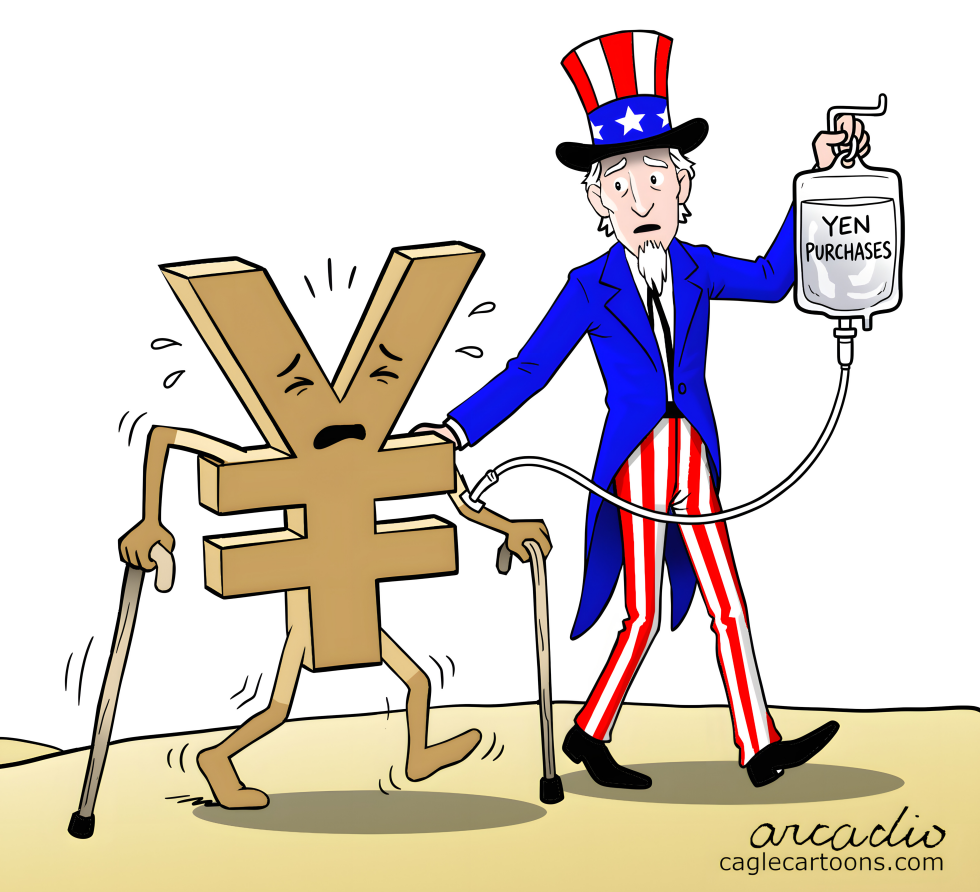
The United States has moved to support the Japanese yen through direct purchases amid signs of currency weakness. This action reflects ongoing efforts to stabilize exchange rates and ease pressure on Japan's economy. The intervention highlights the interconnected nature of global financial markets and the role major economies play in currency defense. The piece portrays the support as a necessary but concerned response to persistent economic fragility.
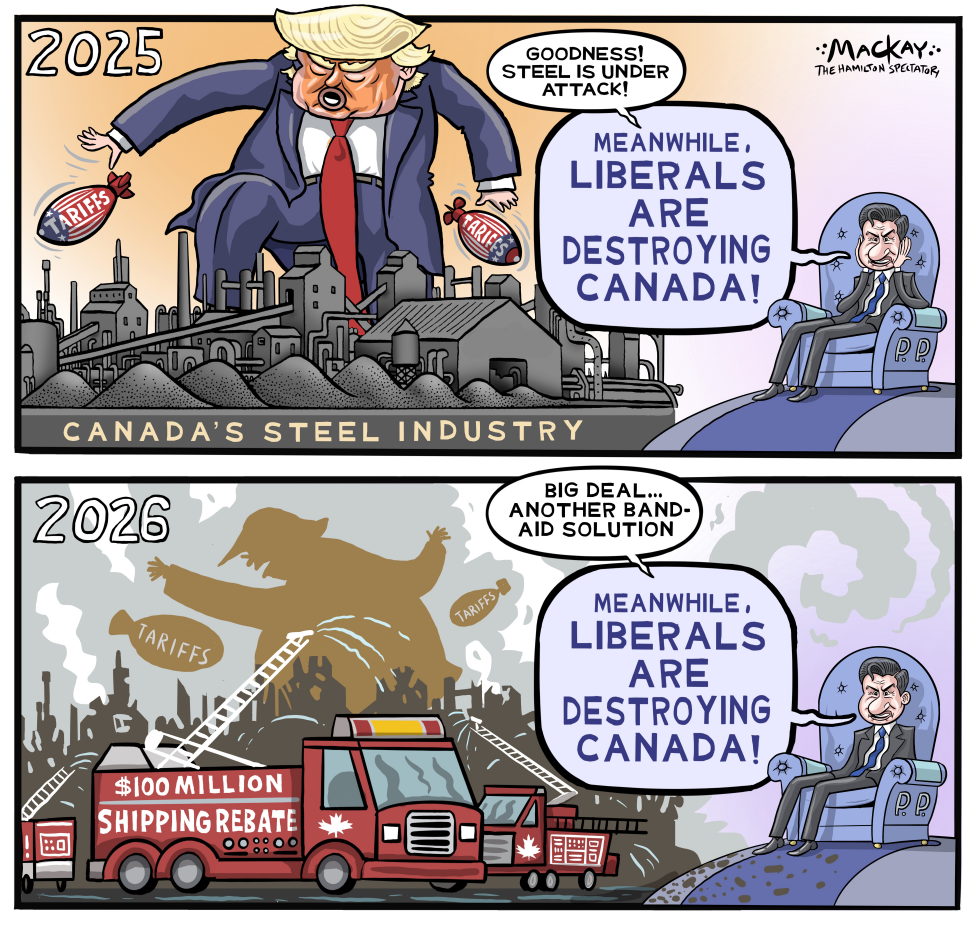
U.S. tariffs imposed on Canadian steel in 2025 triggered sharp declines in the domestic industry by 2026. The federal government responded with a $100 million shipping rebate. Conservative Leader Pierre Poilievre continued to focus attacks on the Liberal government rather than the trade shock. The cartoon argues this stance amounts to a repeated distraction from the core economic damage.
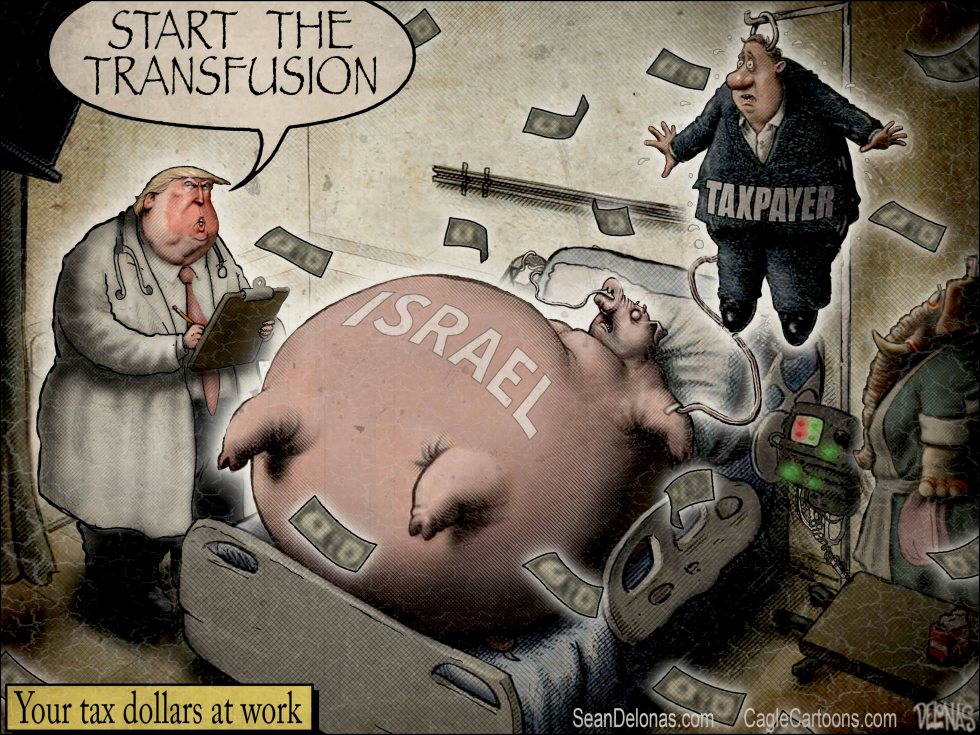
The Trump administration has directed additional US taxpayer resources toward Israel amid ongoing regional tensions. The move continues long-standing American support for the ally but draws fresh scrutiny over scale and priorities. Critics argue the assistance burdens domestic budgets without sufficient oversight. The piece portrays the transfer as an unsustainable extraction from American contributors to sustain a dependent recipient.
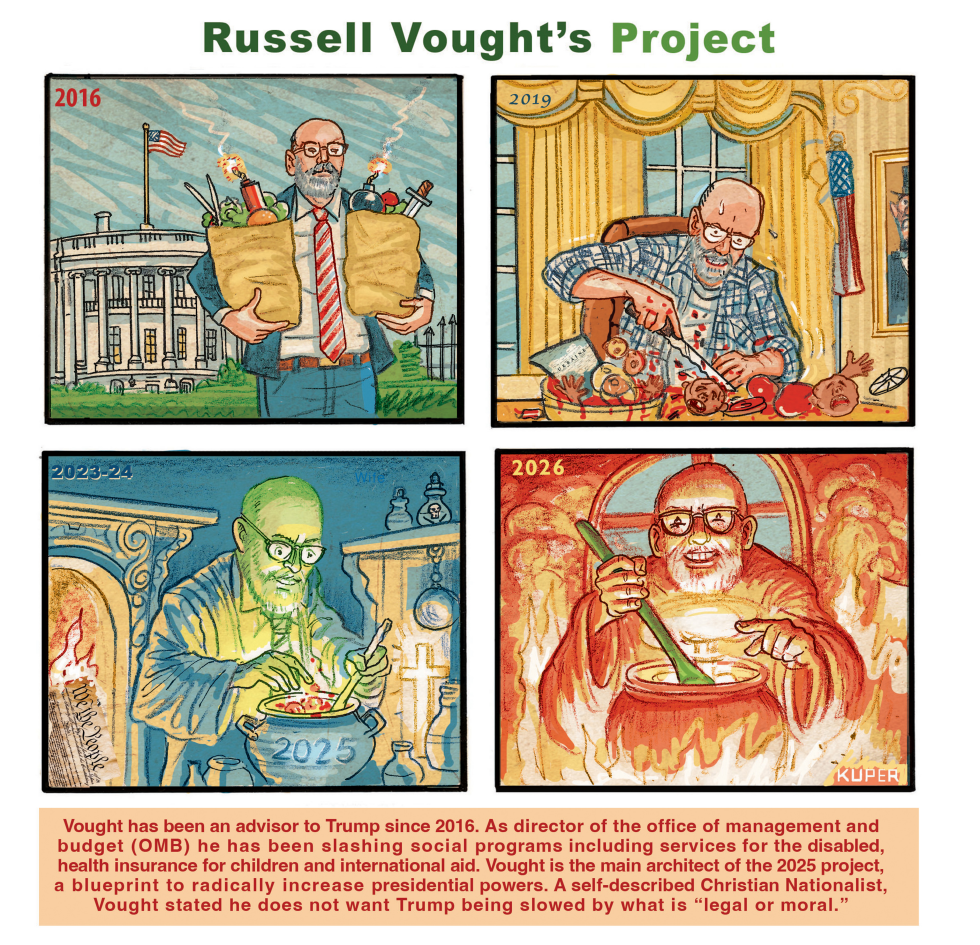
Russell Vought has served as a Trump advisor since 2016 and later directed the Office of Management and Budget, where he cut funding for disability services, children’s health insurance and foreign aid. He is the principal author of Project 2025, a plan to enlarge presidential authority. The cartoon presents his progression from 2016 through 2026 as a deliberate effort to remove legal or moral restraints on executive action.
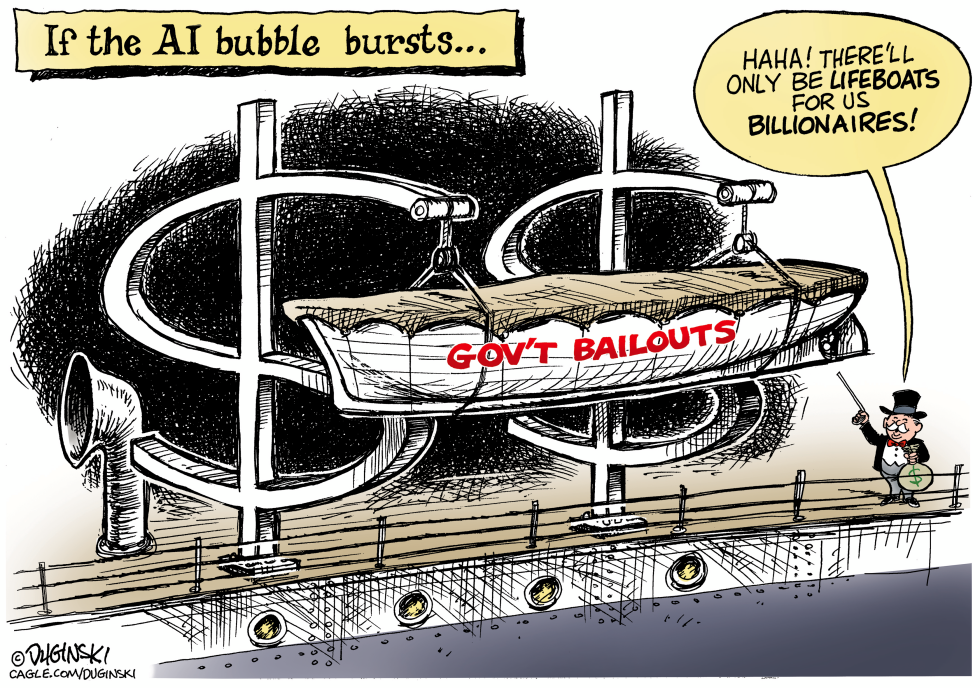
Speculation grows over potential government intervention if the artificial intelligence sector experiences a sharp downturn. Industry leaders and investors face questions about whether public funds would support failing companies. The editorial argues that any such support would primarily protect billionaires rather than address wider economic fallout from overvalued tech assets.
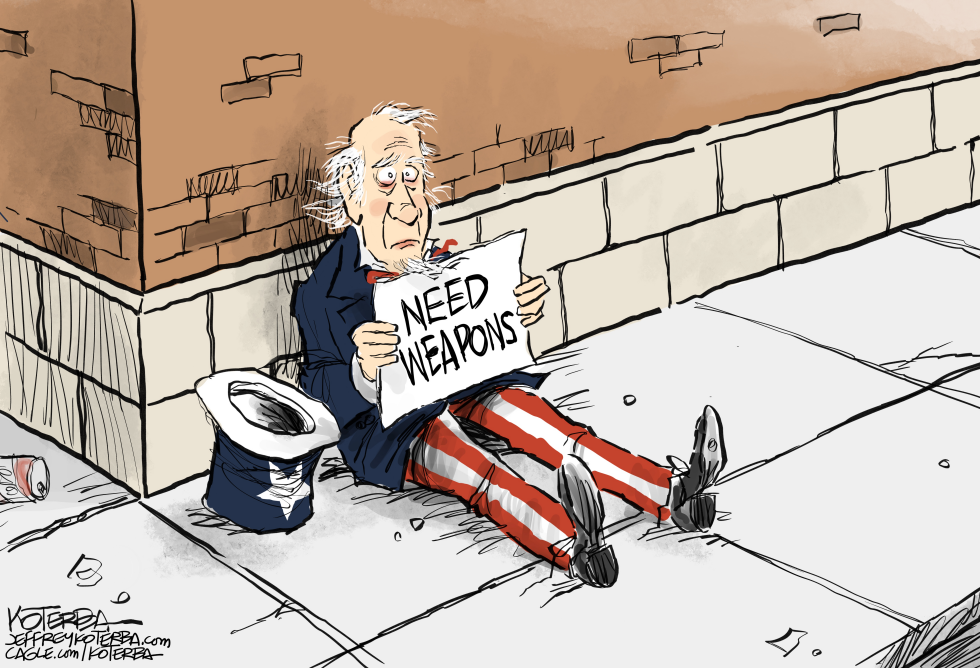
Uncle Sam appears as a disheveled figure on a sidewalk holding a sign requesting weapons. The image captures an ongoing national debate over military resources and international commitments. The editorial stance highlights perceived weakness in current arms policy and funding priorities.
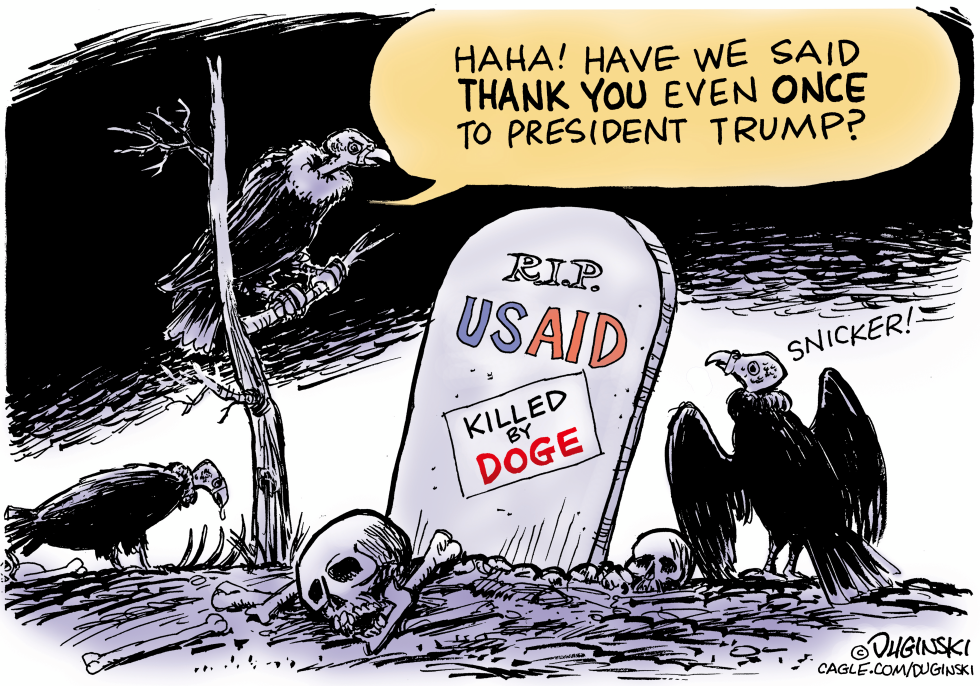
Vultures perch around a tombstone reading R.I.P. USAID killed by DOGE on July 9 2026. One bird in a speech bubble asks if thanks have been given to President Trump while another snickers nearby. Skulls and bones litter the ground beneath the marker. The scene follows recent DOGE actions targeting the aid agency.