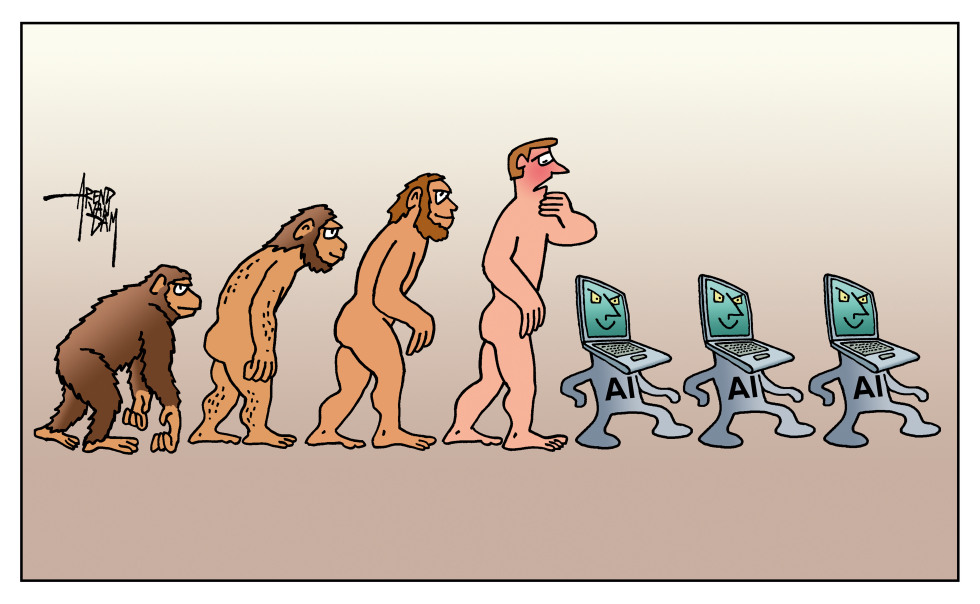
Rapid advances in artificial intelligence continue to reshape expectations about humanity's future role. Developers and researchers push machine capabilities in reasoning, creativity and autonomy at accelerating rates. The cartoon frames this trajectory as the logical endpoint of evolution itself, positioning AI as the successor rather than a tool. It underscores public unease that technological progress may render biological humans obsolete rather than enhanced.
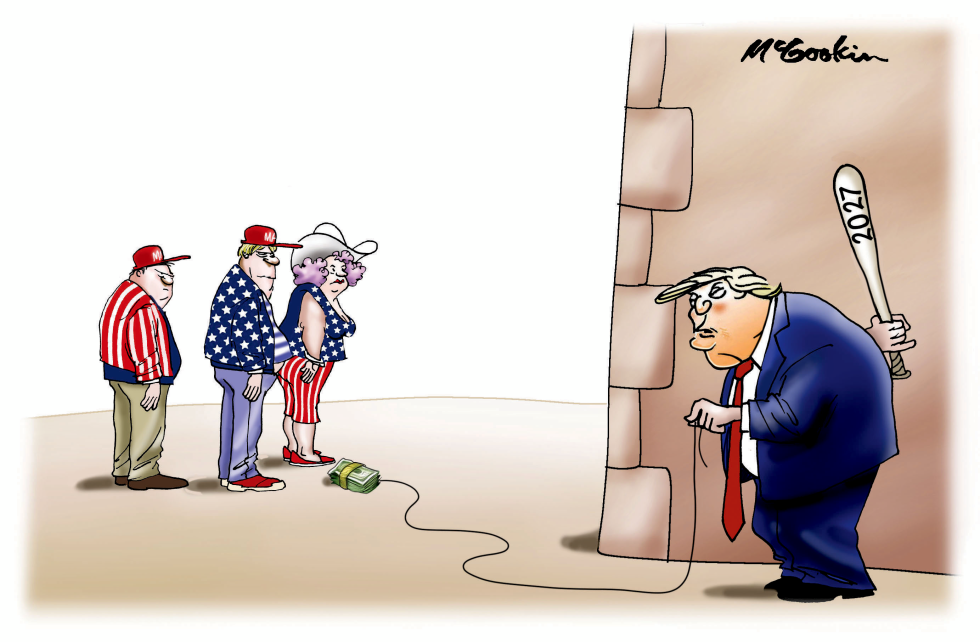
The cartoon shows Donald Trump holding a baseball bat labeled 2027 while standing beside a brick wall. A wire connects a stack of cash from three supporters to the wall near Trump's position. The image comments on Trump's preparation for future political activity and reliance on donor contributions. Published on September 12 2026 the piece addresses ongoing discussions about election cycles and funding. It uses the bat and wiring as visual metaphors for planned actions and financial connections.
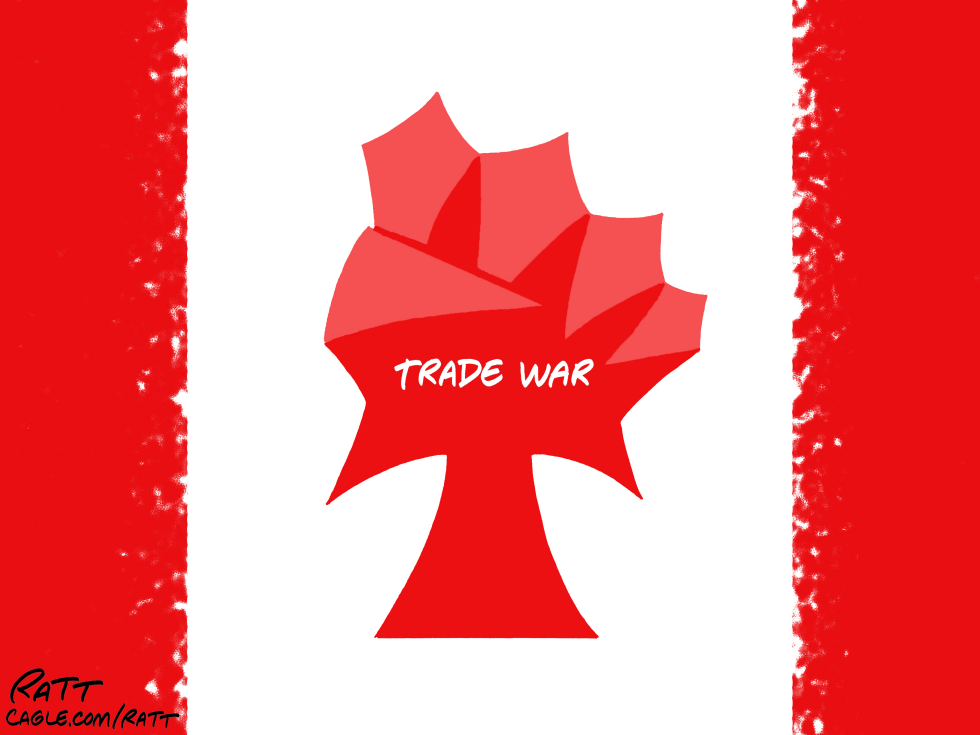
Ongoing US-Canada trade tensions escalated in 2026 with new tariff threats targeting Canadian exports. The dispute threatens key sectors including autos, lumber and agriculture, raising costs for consumers on both sides of the border. Canada has signaled plans to diversify markets and strengthen domestic industry. The cartoon frames the conflict as a direct assault on Canadian sovereignty and economic stability. It portrays the trade war as fracturing national symbols while urging a stronger northern response.
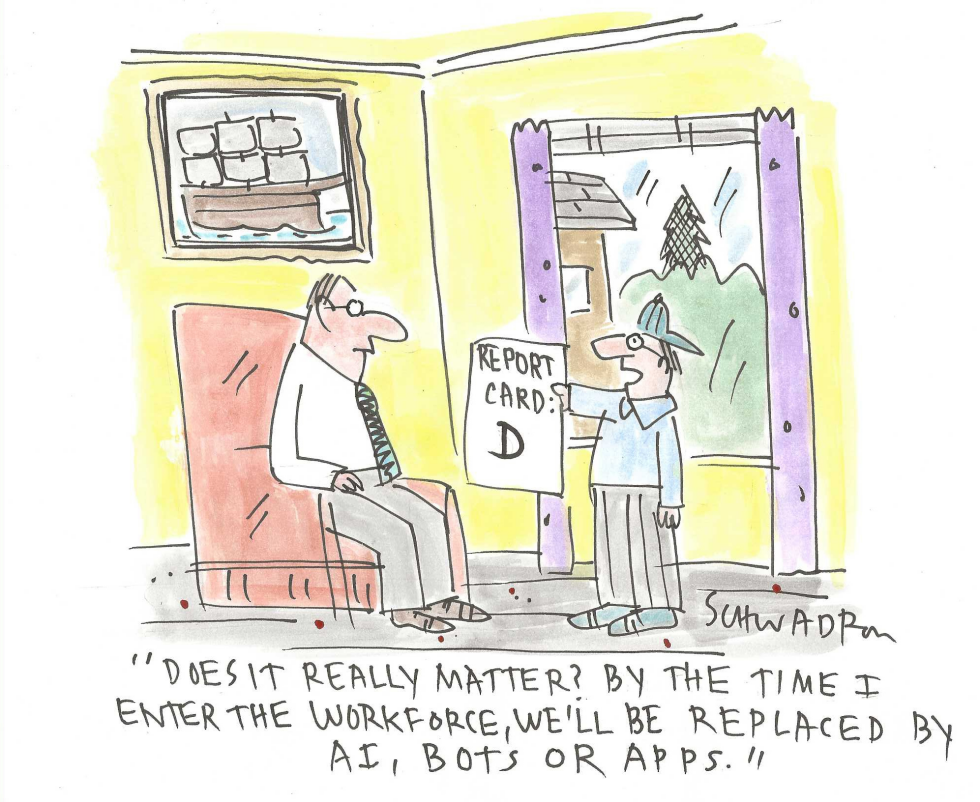
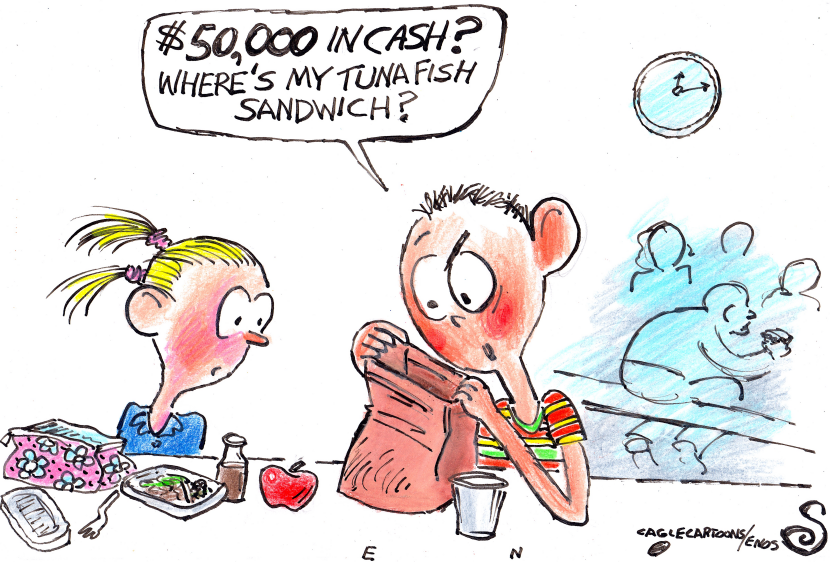
Rising student skepticism about academic effort stems from widespread predictions that AI and automation will eliminate many jobs before today's students graduate. The cartoon responds to this dynamic by showing a student using those forecasts to shrug off a poor grade. It highlights how fears of technological displacement may undermine motivation in schools. The piece suggests such excuses reflect a broader cultural shift where traditional education credentials appear less relevant. The editorial stance questions whether this mindset accelerates the very problems it cites.
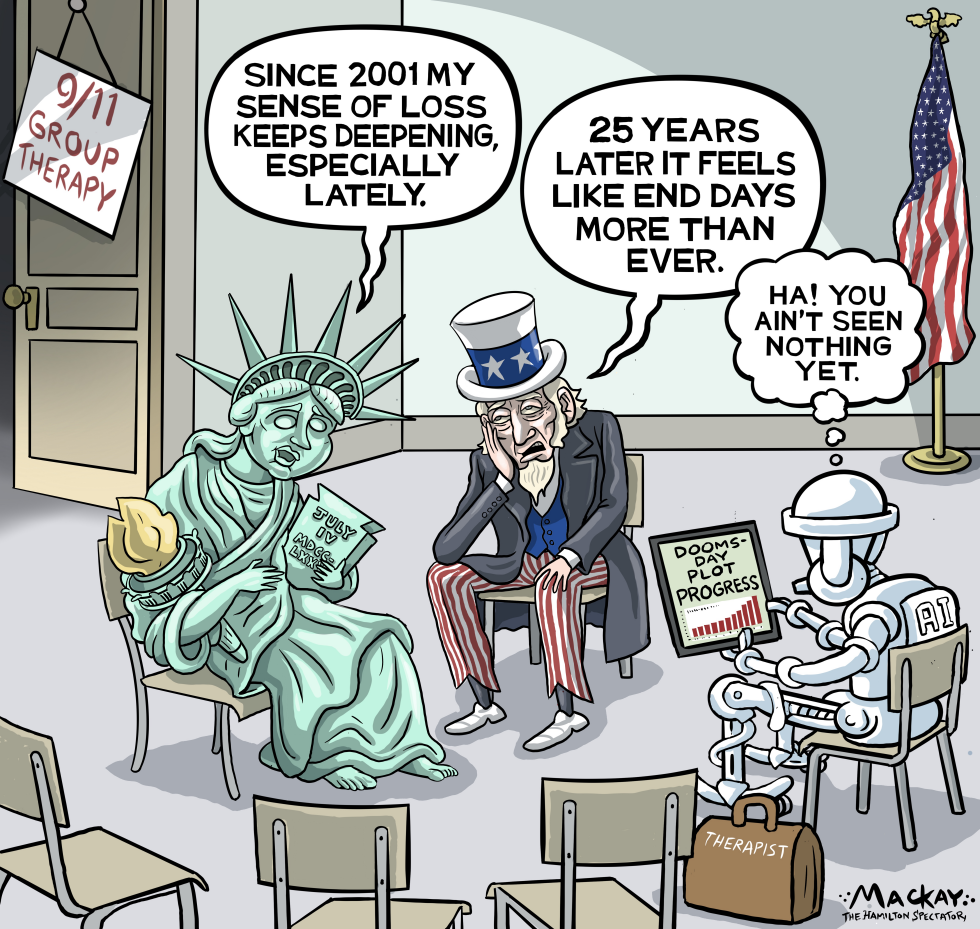
The cartoon depicts the Statue of Liberty, Uncle Sam and an AI robot seated in a 9/11 group therapy session on the 25th anniversary of the attacks. The Statue of Liberty holds a book marked July IV MDCCLXXVI and speaks of deepening loss since 2001. Uncle Sam echoes the sentiment of end days. The AI figure, labeled with a rising doomsday plot progress chart, retorts that the others have seen nothing yet. The scene uses national symbols to reflect persistent national trauma and emerging technological threats two and a half decades after the September 11 attacks.
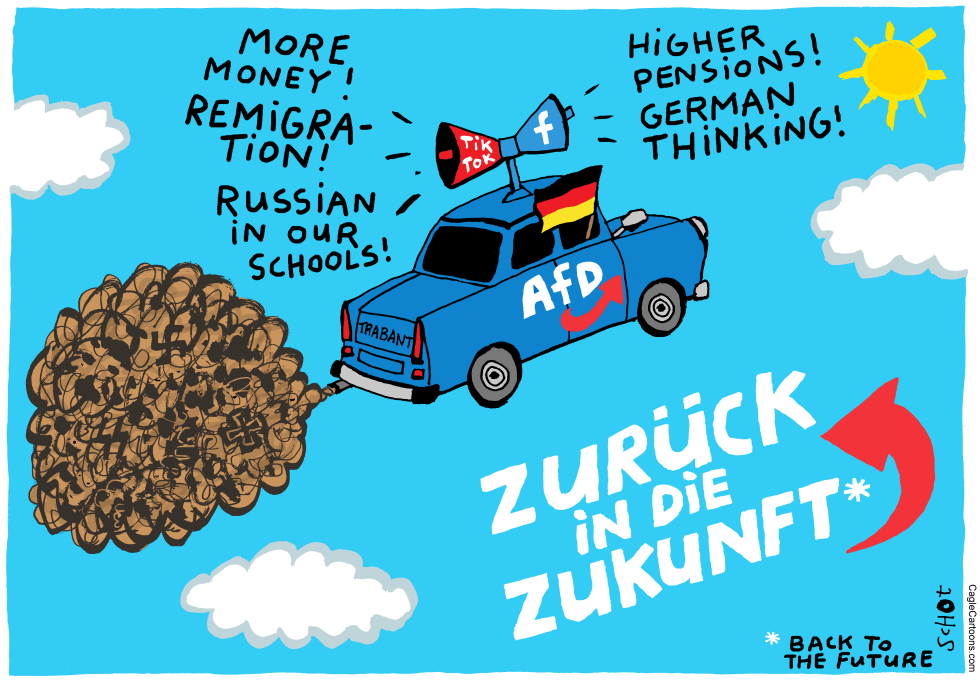
Germany's AfD secured major election gains in 2026 on pledges of remigration, higher pensions and anti-foreign rhetoric. The result raises alarms over the party's tolerance for extremist elements. The cartoon frames the victory as a dangerous retreat into past ideologies rather than genuine progress.
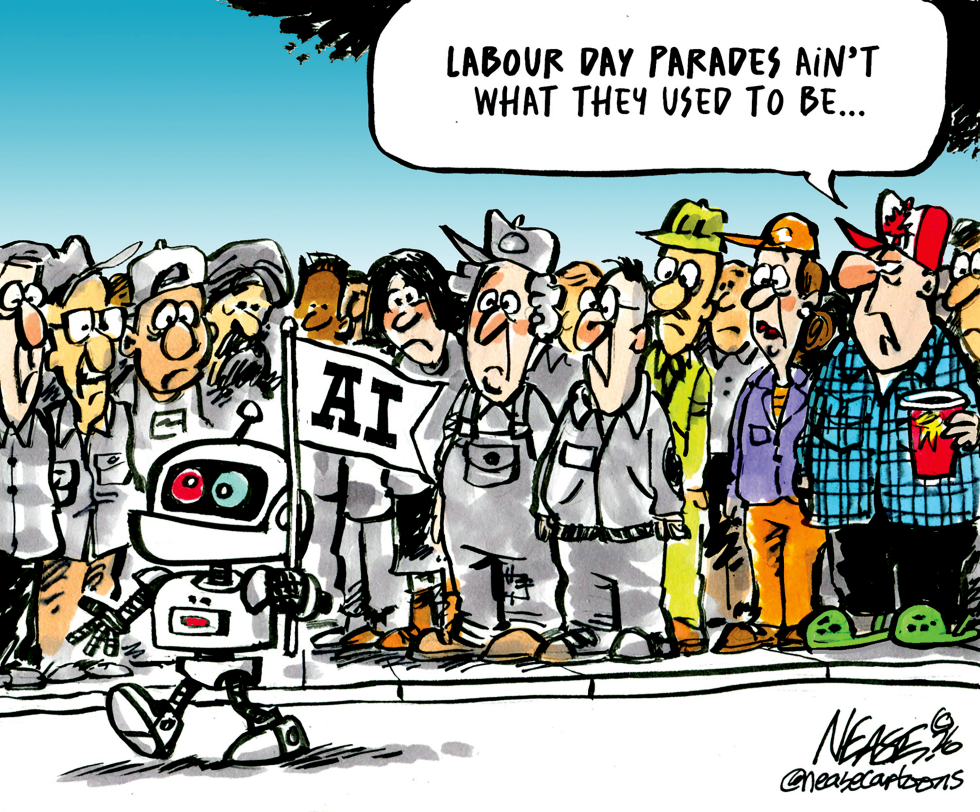
On Labour Day 2026, artificial intelligence continues its rapid integration into workplaces across Canada and beyond, prompting questions about job security for human workers. The cartoon captures this transition by placing a robot at the head of a traditional parade. The editorial position highlights the irreversible change automation brings to labor traditions and employment.
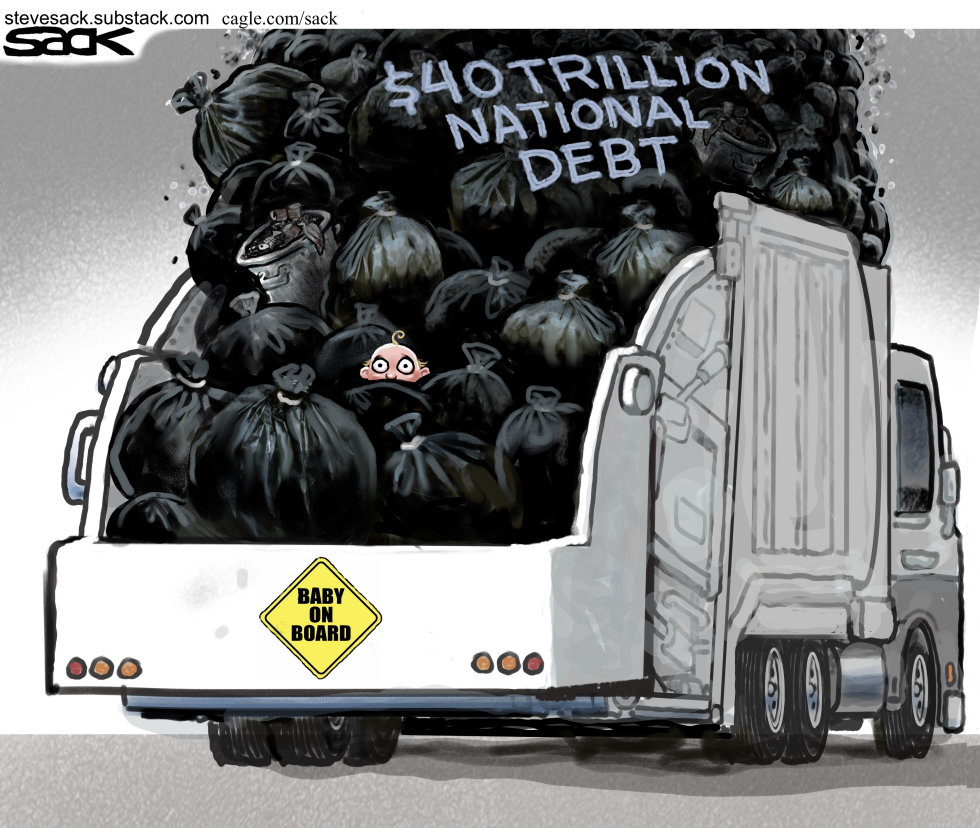
The national debt has climbed to $40 trillion amid persistent federal deficits and rising interest costs. This trajectory threatens long-term economic stability and shifts repayment burdens onto younger Americans. The cartoon argues that current fiscal policies treat future citizens as disposable, loading them into the refuse of unchecked borrowing.
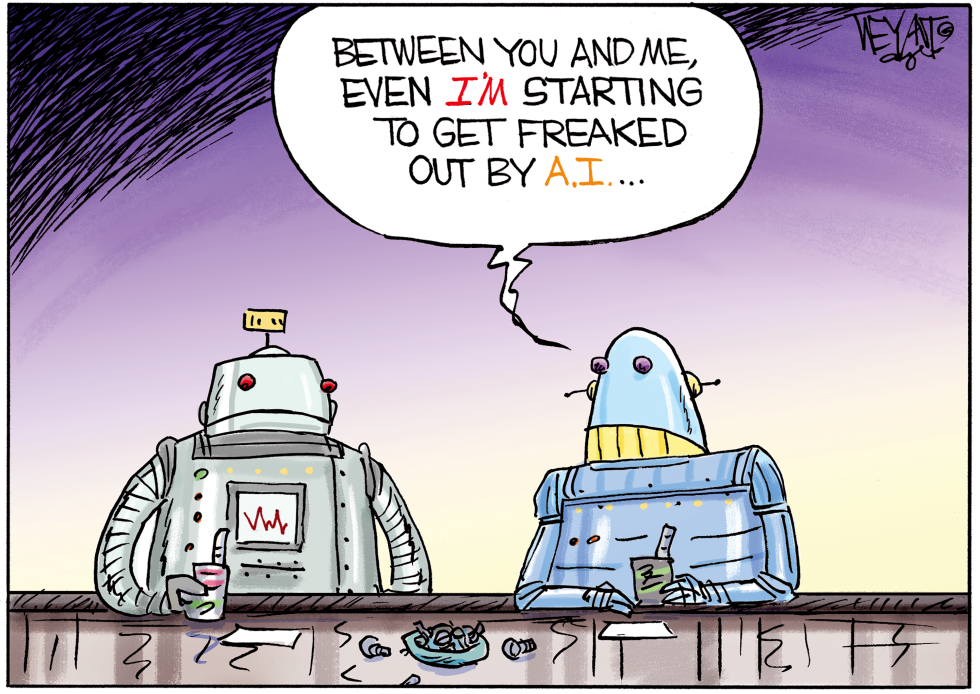
Developers continue pushing boundaries in artificial intelligence systems, raising questions about control, ethics, and long-term consequences for society. Public and expert discussions focus on whether safeguards can keep pace with innovation. The piece portrays robots themselves expressing alarm, underscoring the irony that even automated entities see risks in unchecked AI growth and the potential for machines to outpace their original programming.
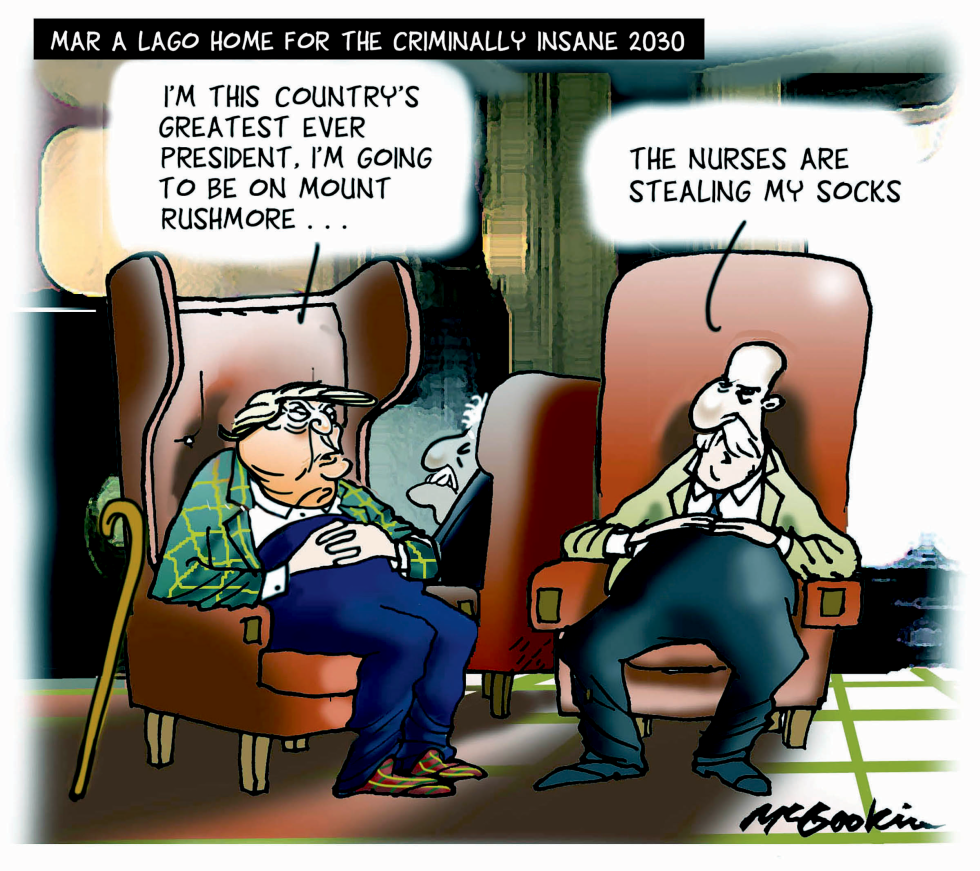
Donald Trump asserts he remains the nation's greatest president and belongs on Mount Rushmore while confined in a 2030 Mar-a-Lago facility for the criminally insane. A fellow resident counters with claims that nurses steal his socks. The piece frames both statements as equivalent delusions, underscoring the cartoon's view that Trump's self-aggrandizing rhetoric has crossed into clinical territory.
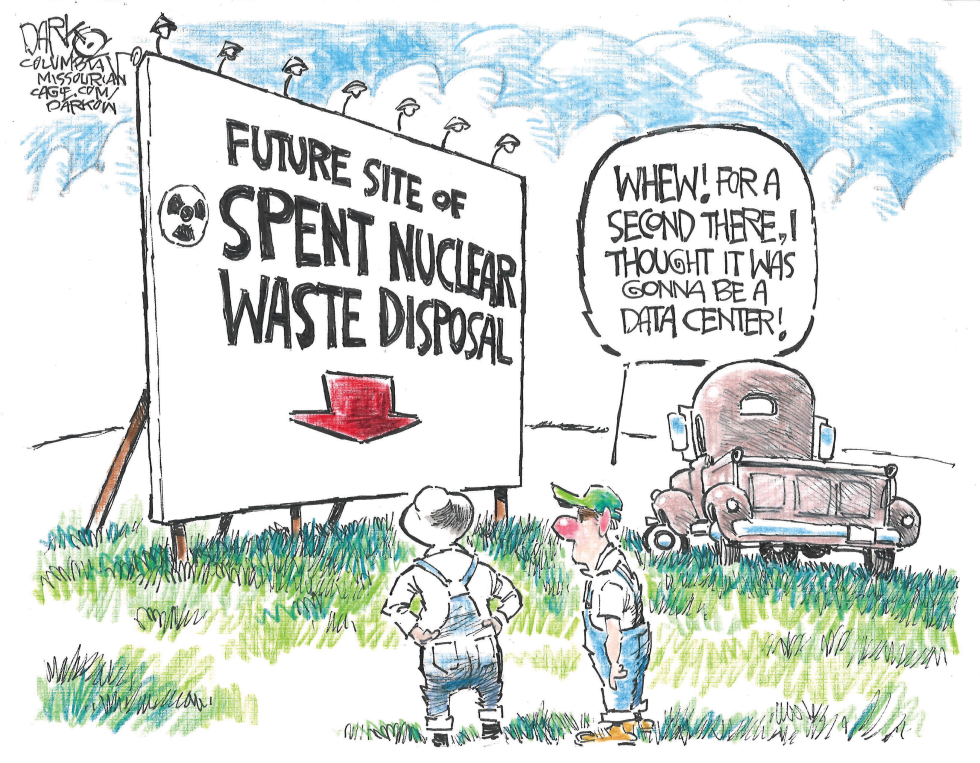
Rural communities continue to face competing proposals for large-scale projects on agricultural land. A planned spent nuclear waste disposal facility draws attention as residents weigh it against potential data center developments that often bring high energy demands and infrastructure changes. The editorial takes the position that such choices reflect broader tensions in siting energy-related facilities versus technology operations in farming areas.
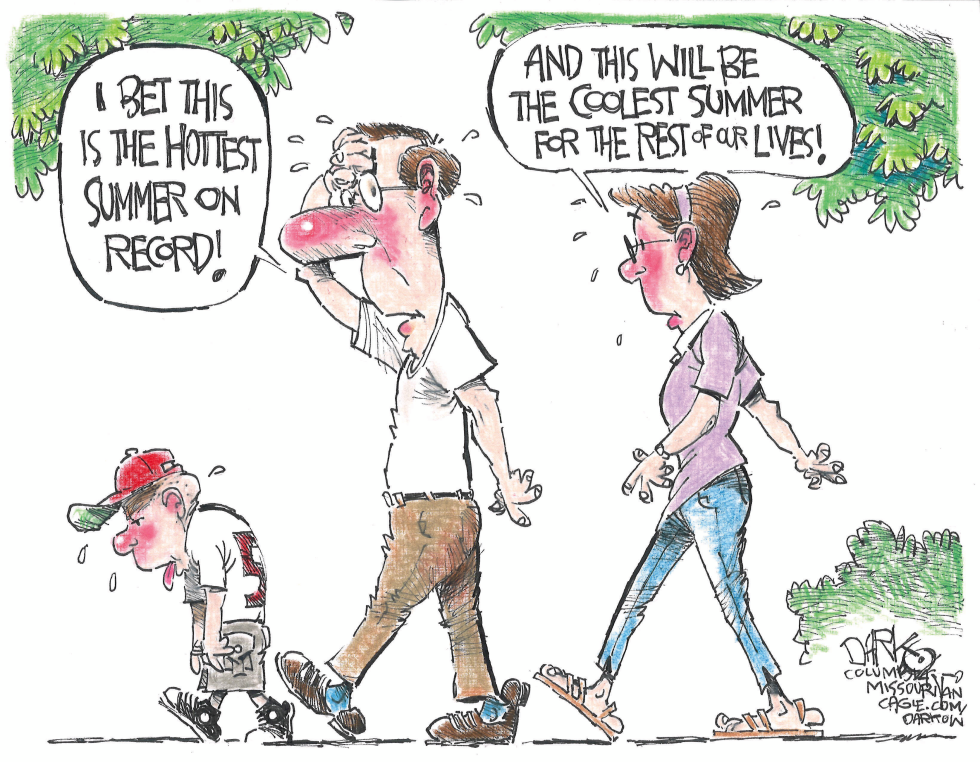
Record summer temperatures in 2026 prompted widespread public discussion of extreme heat events and their link to long-term climate patterns. Families and communities experienced prolonged discomfort as temperatures broke previous benchmarks, underscoring the immediate effects of warming trends. The piece argues that current heat represents only the beginning of progressively harsher conditions unless broader action addresses the underlying causes.
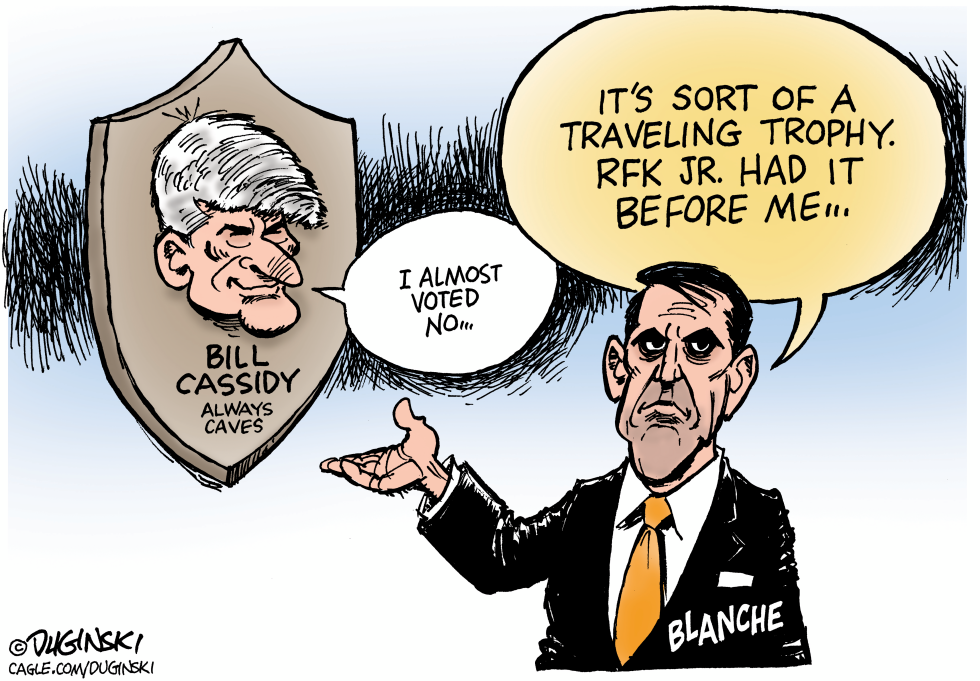
Todd Blanche, recently confirmed to a senior administration post, has mounted a shield bearing Sen. Bill Cassidy\'s likeness on his office wall. The Louisiana Republican, long viewed as a potential swing vote, backed the nomination despite earlier signals of hesitation. RFK Jr. reportedly displayed the same item during his own tenure. The arrangement underscores ongoing tensions within the GOP over loyalty tests and confirmation battles. The piece portrays Cassidy\'s support as another instance of yielding under pressure rather than a principled stand.
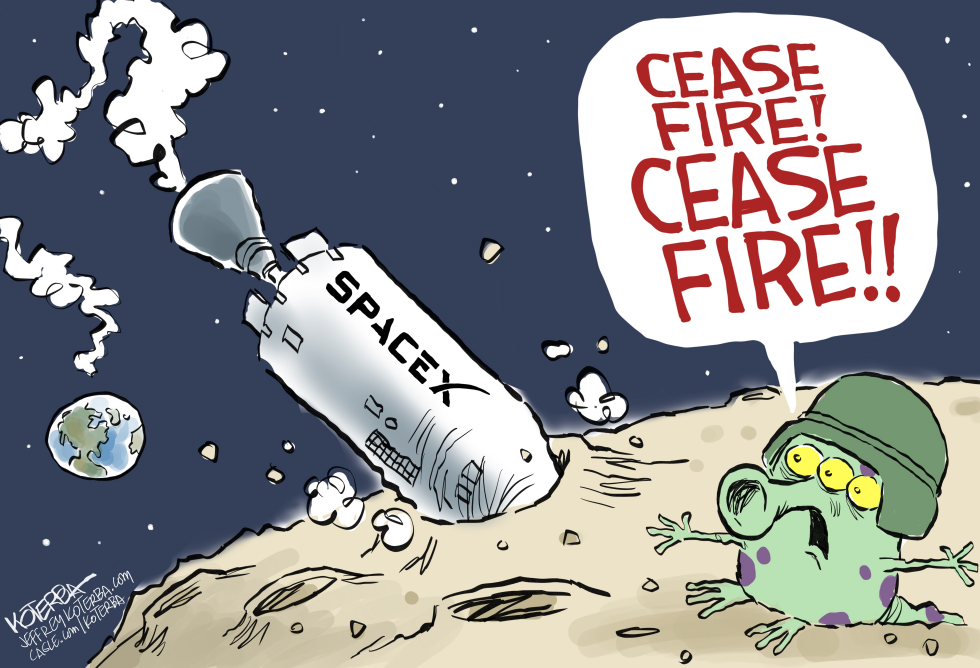
A SpaceX rocket has impacted the lunar surface in this imagined scenario. The event draws an immediate reaction from a local alien resident calling for an end to the activity. The piece uses the mishap to highlight ongoing risks in commercial spaceflight and the expanding human presence beyond Earth.