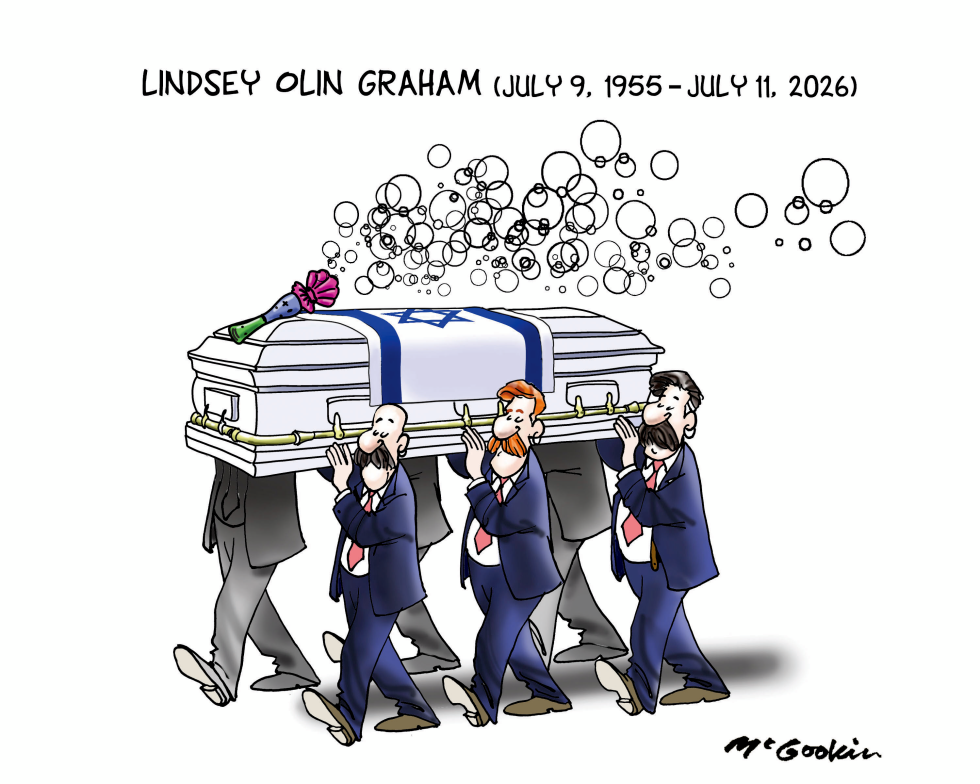
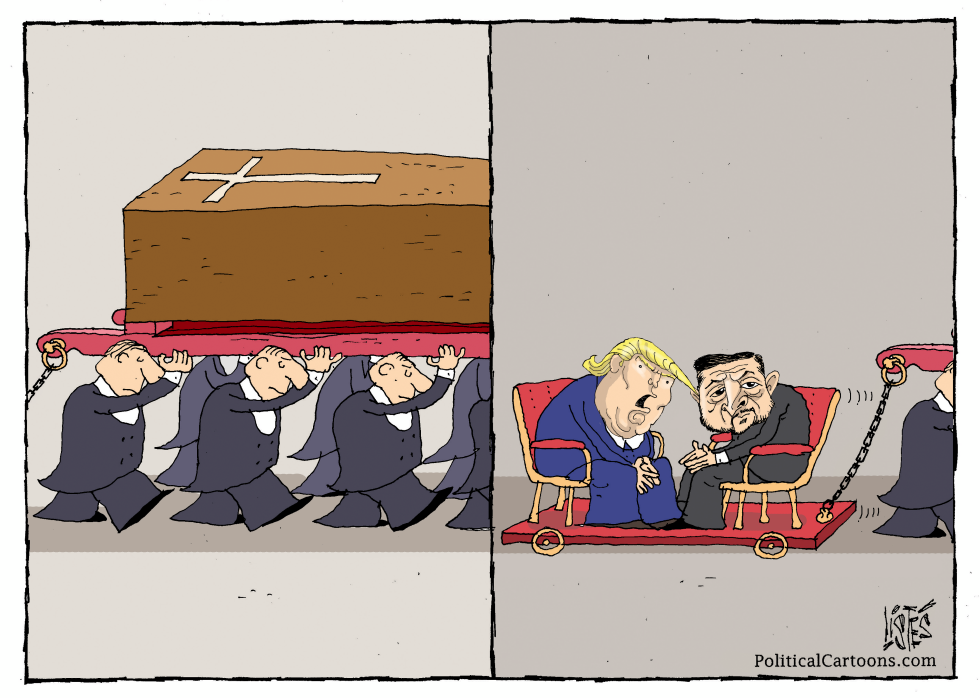
Senator Lindsey Graham died on July 11, 2026. His funeral procession featured a coffin draped in the Israeli flag carried by several pallbearers. The image highlights his long record of strong support for Israel as a key element of his political identity. The piece presents this connection as central to how his legacy is viewed at the time of his death.
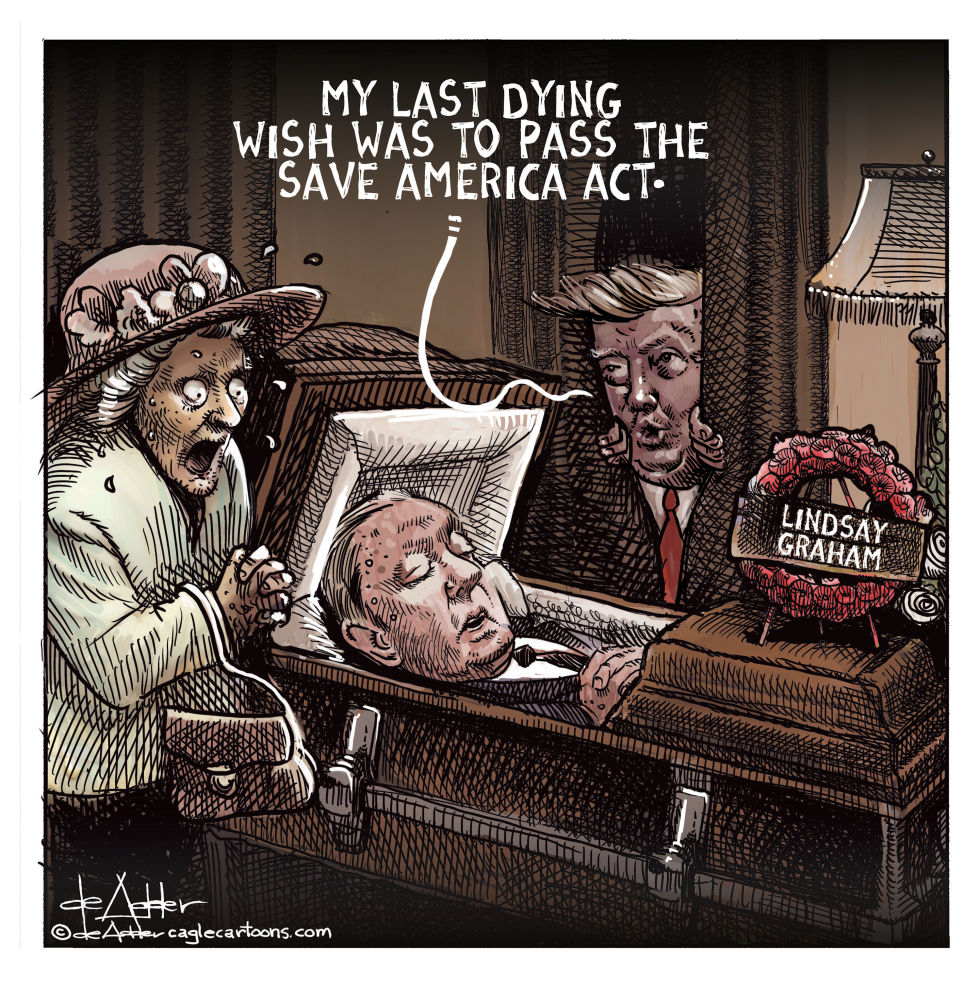
The cartoon depicts Lindsey Graham in an open casket declaring his dying wish to pass the Save America Act. Donald Trump appears behind the coffin while an elderly woman reacts in surprise. The scene responds to ongoing legislative debates involving the two figures in mid-2026.
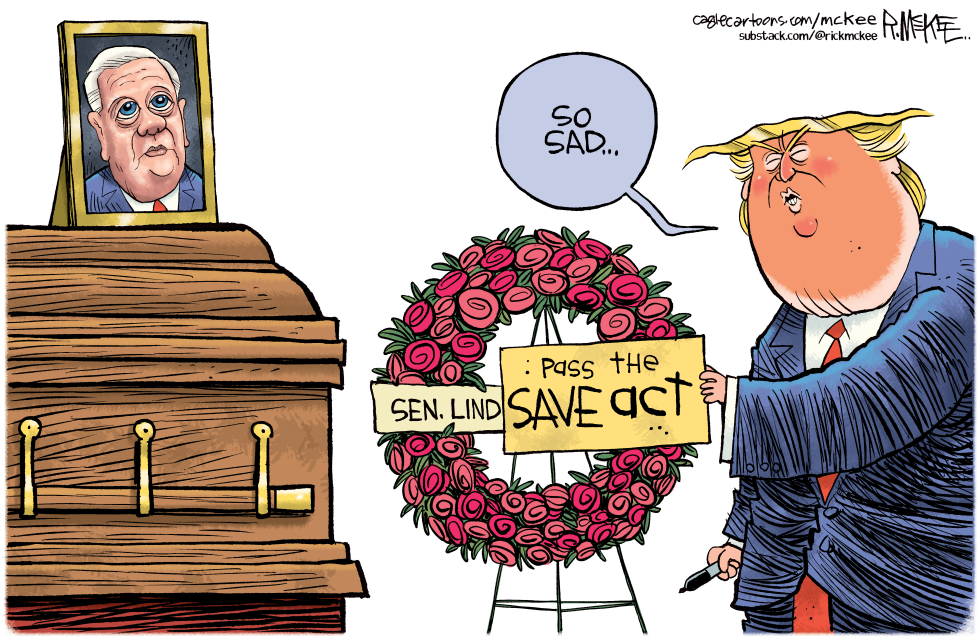
Donald Trump stands beside the casket of Sen. Lind on July 13, 2026, holding a sign urging passage of the SAVE Act. A portrait of the late senator rests atop the wooden coffin while a floral wreath displays the legislative message. Trump remarks that the situation is so sad. The image captures the intersection of a Senate vacancy and ongoing efforts to advance voter eligibility legislation.
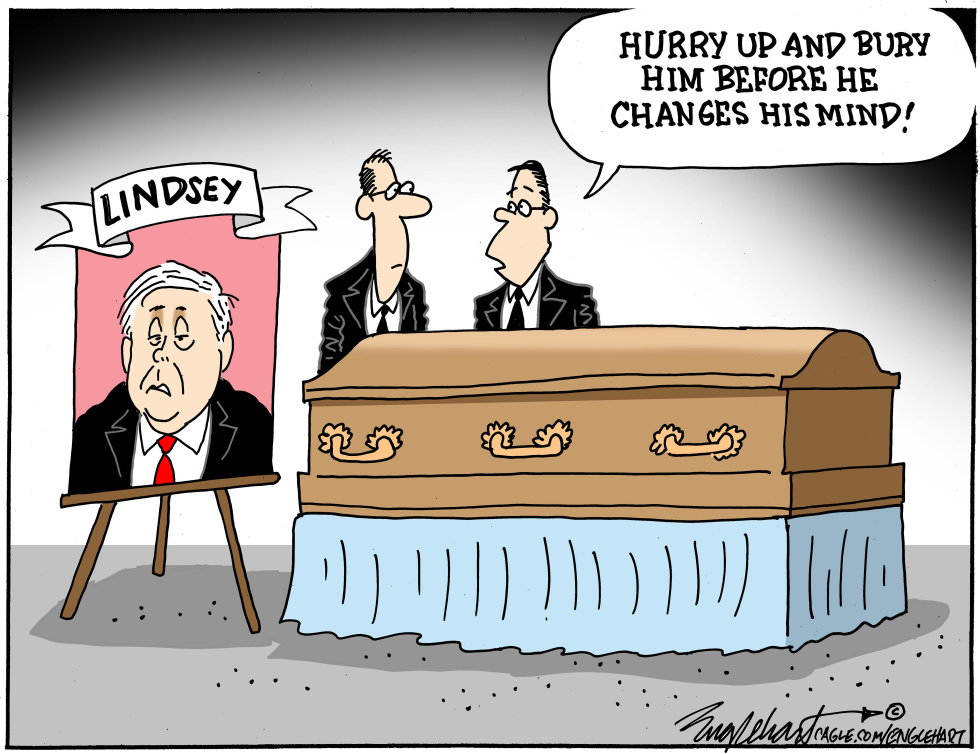
A portrait labeled Lindsey sits on an easel beside a casket while two men in dark suits stand behind it. One delivers a speech bubble line calling for a quick burial before the deceased can change his mind. The July 2026 image uses the funeral setting to comment on political indecision.
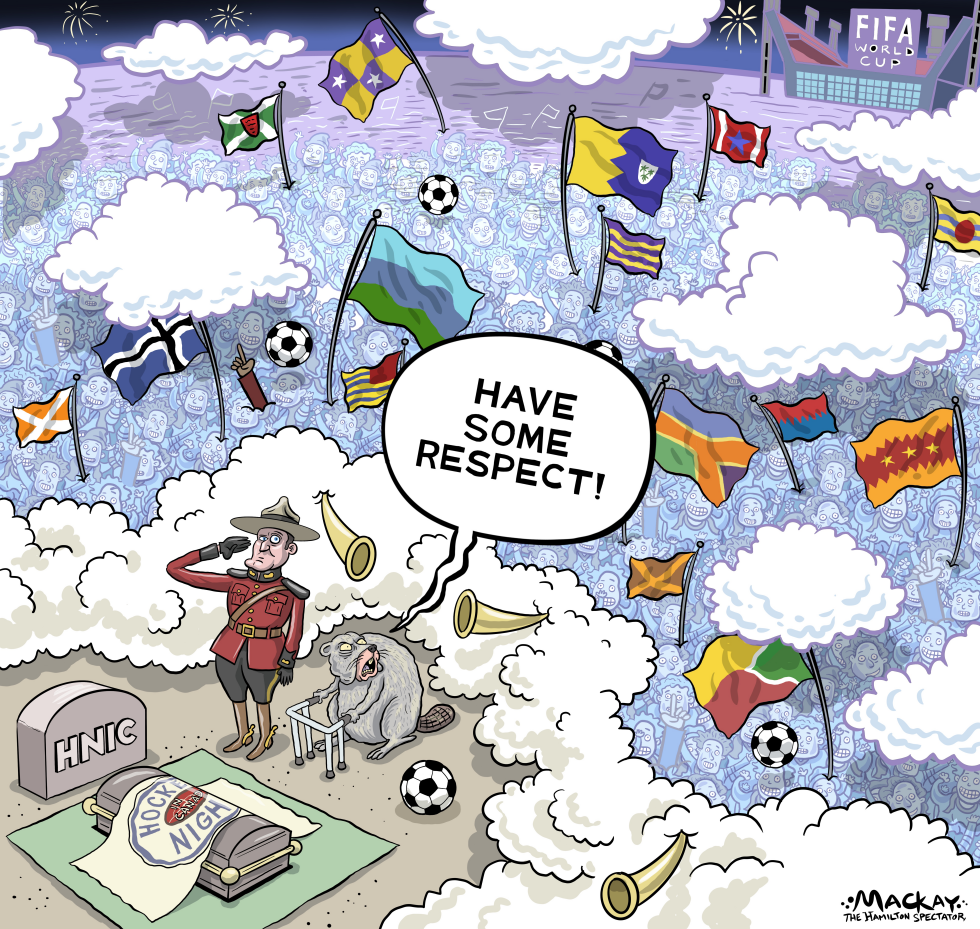
The image depicts the symbolic funeral of Hockey Night in Canada during the 2026 FIFA World Cup. A Mountie salutes while a beaver weeps beside the coffin labeled Hockey Night in Canada. A large crowd of soccer supporters fills the background waving flags from many nations and holding soccer balls. A speech bubble from the crowd reads Have Some Respect. The scene captures the shift from Canada's traditional winter sport broadcast ritual to the global summer soccer event.
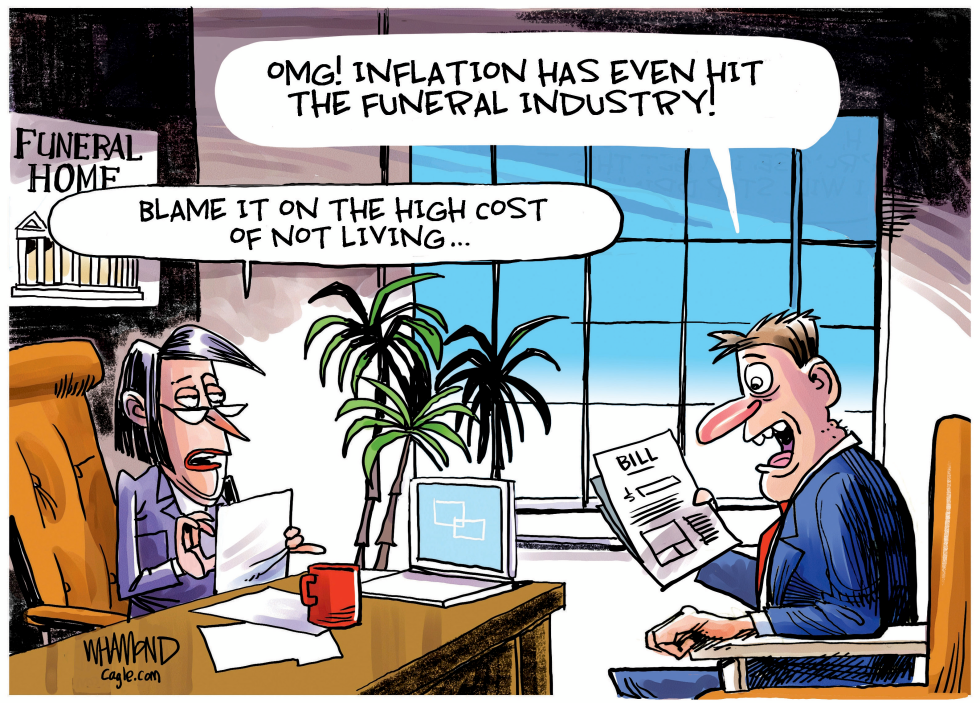
A funeral home director and client react to a high bill in an office setting. The exchange highlights how inflation has extended to the funeral sector. Speech bubbles deliver a pun on the high cost of not living. The scene reflects ongoing economic pressures on consumers including tariffs and rising prices for essentials. Publication occurs amid discussions of affordability challenges tied to recent policy decisions.