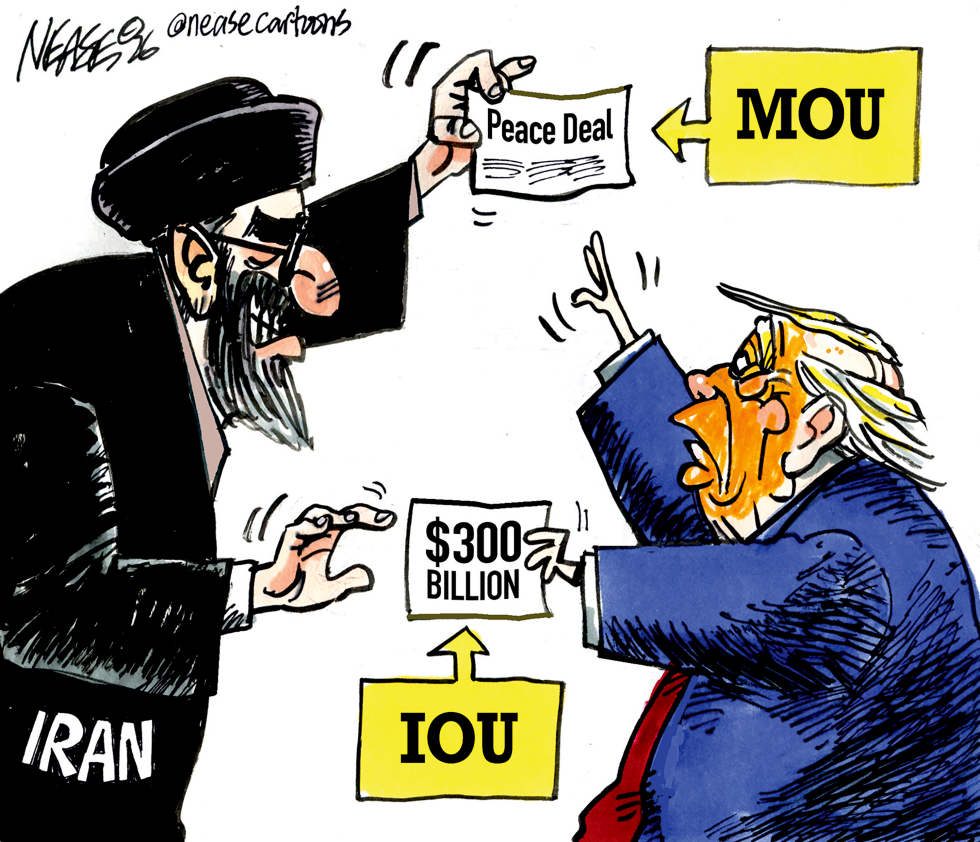
Nease, a Canadian cartoonist, examines the hidden costs of the peace agreements being brokered by Trump across multiple conflict zones. The cartoon suggests that peace achieved through coercion and abandonment of allies carries enormous human costs. The accounting metaphor frames diplomacy as a transactional exercise with losers.
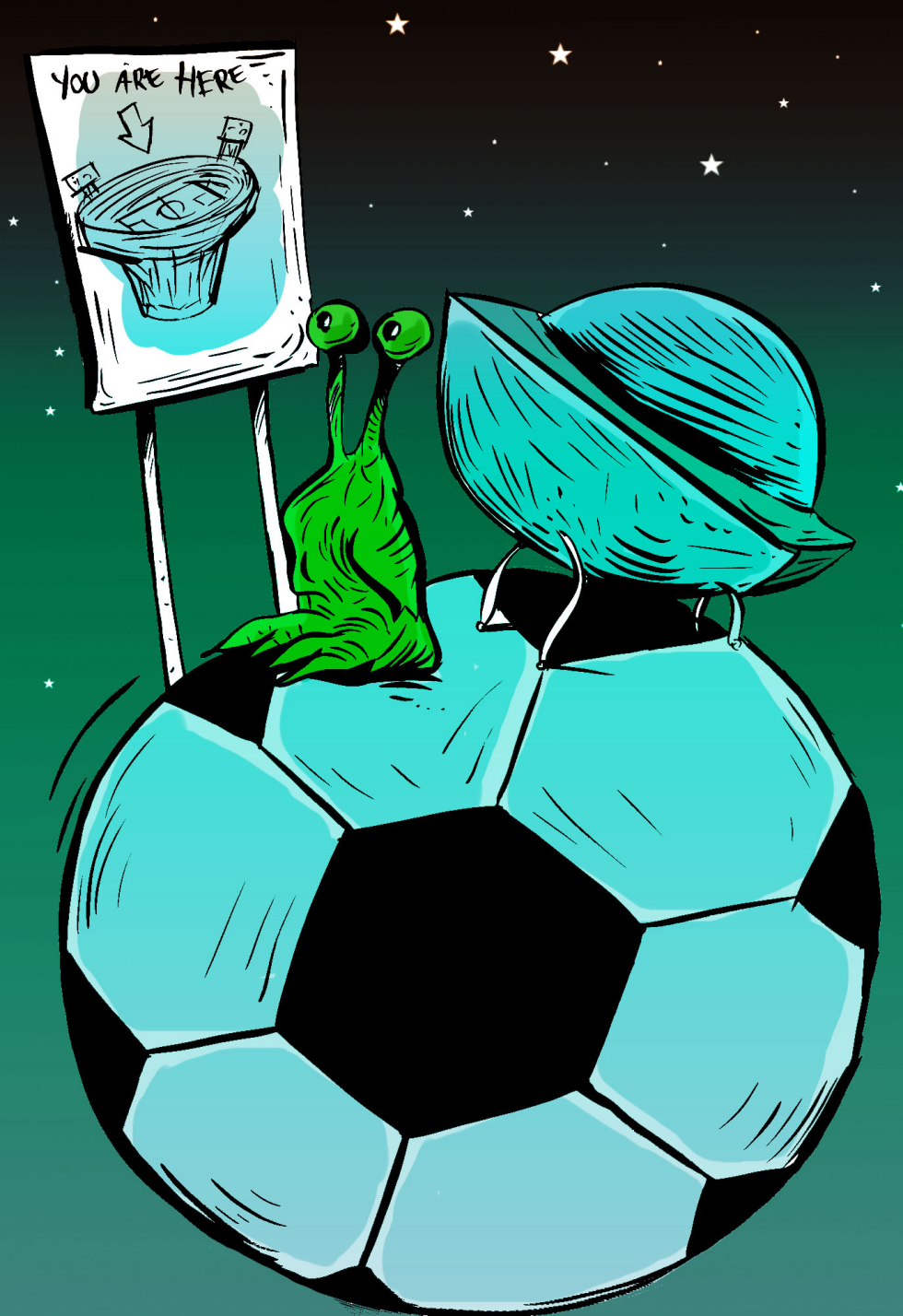
A whimsical space scene places a snail on a soccer ball next to a ringed planet under a you are here sign pointing to a drain. The image captures a sense of smallness in the universe. The editorial position highlights the ongoing human tendency to feel insignificant when confronting vast cosmic scales and personal limitations.
A drawing depicts a U.S.-labeled figure in a dramatic pose yawning at a paper announcing an Ebola global emergency. The scene references recent health alerts involving outbreaks in Africa. The image highlights perceived U.S. indifference to the declaration from international health bodies. Publication occurs on June 5, 2026, during ongoing discussions of pandemic preparedness involving agencies like the CDC.
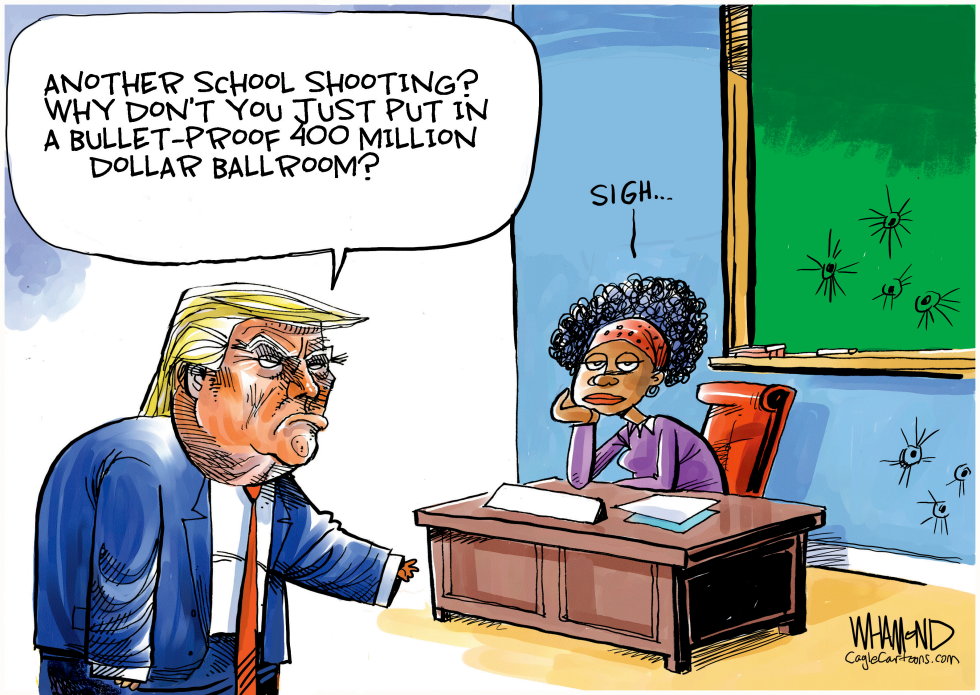
Dave Whamond's cartoon captures a man resembling a political figure leaning over a desk in a classroom, suggesting a bullet-proof 400 million dollar ballroom as a fix for another school shooting. The woman at the desk sighs in response, with a green blackboard showing marks that look like bullet impacts. Tags like school shootings, national issue, security, guns, education, and bullet proof underscore the satire on misplaced priorities, where vanity projects like a top secret ballroom or Trump bunker get funding justifications, echoing build the wall rhetoric and emergency exemptions amid issues like WHCD shooting.
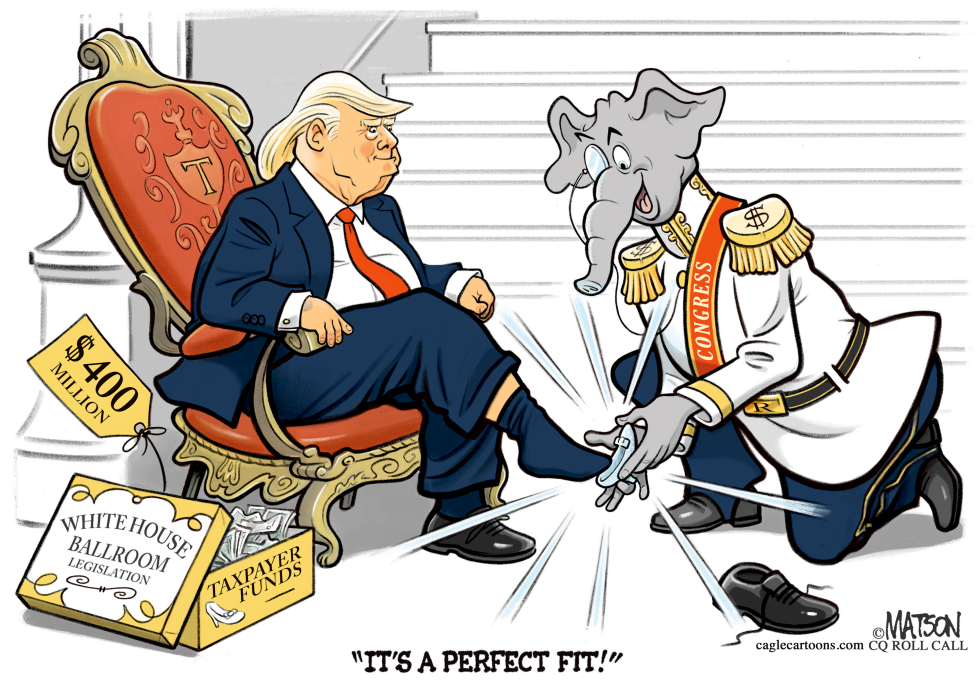
RJ Matson's cartoon depicts President Trump as Cinderella, lounging on a throne while a grinning Congress elephant, adorned with a sash and dollar-sign epaulets, slips a black shoe onto his foot, exclaiming 'It's a perfect fit!!' A box labeled 'White House Ballroom' overflows with 'Taxpayer Funds,' and a $400 million tag dangles nearby. This sharp satire targets Congressional Republicans' approval of hefty taxpayer funding for White House upgrades, echoing the fairy tale but with a political twist on government spending and Donald Trump's influence. The White House Correspondents Association Dinner at the Hilton Hotel lurks in the background tags, highlighting budget priorities amid fiscal debates.
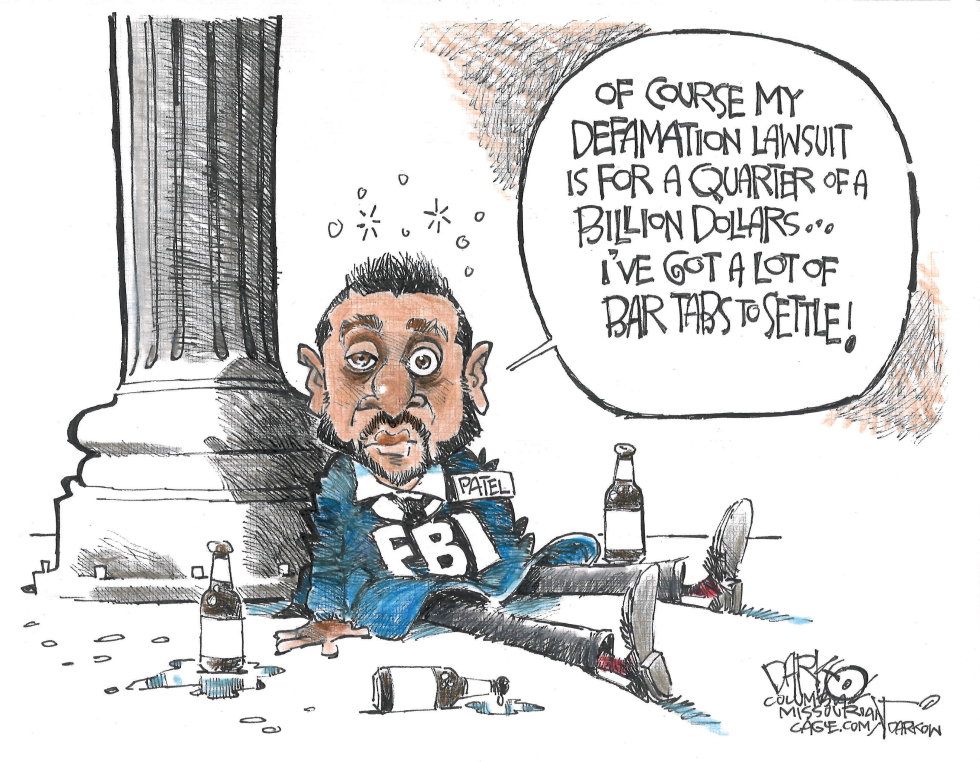
John Darkow's cartoon captures Kash Patel in a state of drunkenness, leaning against a grand pillar with empty beer bottles scattered around, his suit jacket labeled FBI and a name tag reading Patel. The speech bubble delivers the punchline about his defamation lawsuit being for a quarter of a billion dollars to settle bar tabs, tying into themes of DOJ, justice department, and availability. This piece offers a sharp satirical commentary on Patel's potential role as FBI director, using booze as a metaphor visible in the littered bottles and dazed expression. The artwork stays grounded in the visible elements, avoiding speculation, and highlights the humor in exaggerated features and setting.
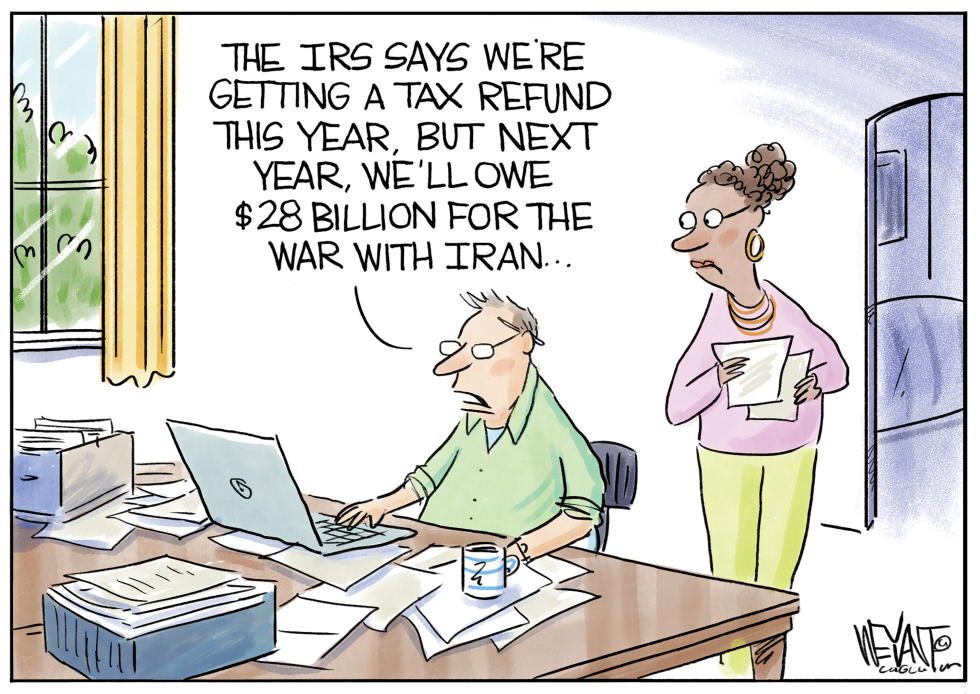
Dive into this biting political cartoon tax refund piece where a woman, holding papers, informs a laptop-working man about their IRS windfall this year, only to drop the bomb of owing $28 billion next for the war with Iran. The satirical cartoon Iran war vibe captures the absurdity of US taxes funding wars, with cluttered desks and exasperated expressions underscoring the humorous take on federal spending. It's a classic taxpayer burden Iran conflict jab, poking fun at government spending satire while illustrating the disconnect between personal finances and massive military expenses. Through cartoon about military expenses, it cleverly critiques fiscal policy in an office setting, making the war with Iran taxpayer joke both relatable and irreverently insightful for viewers pondering editorial cartoon fiscal policy.