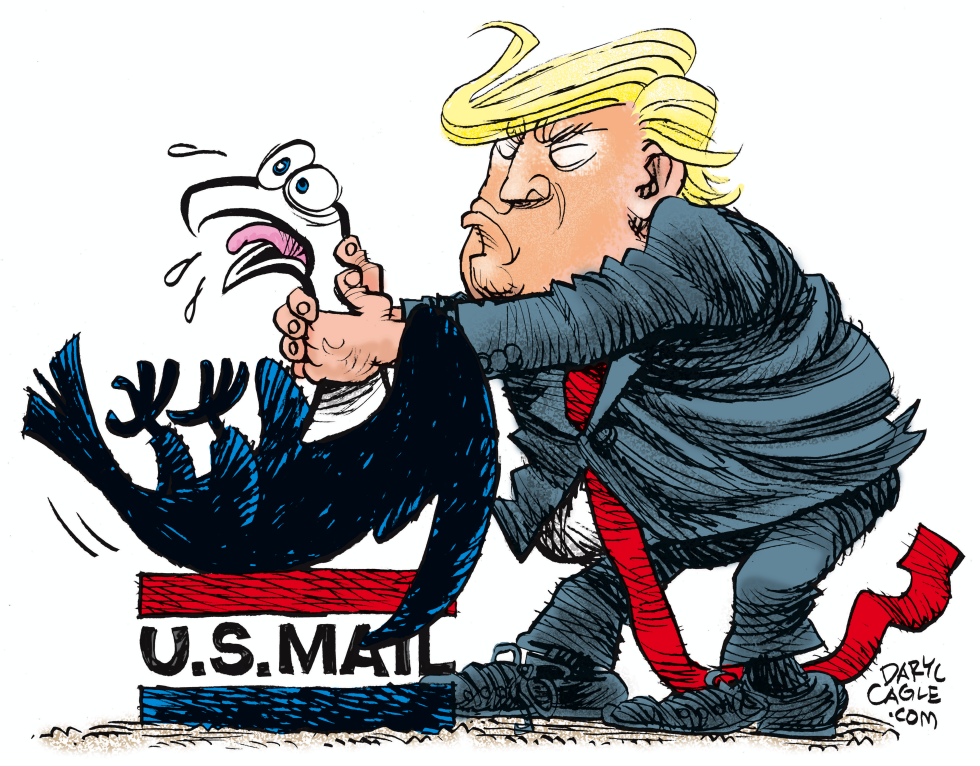
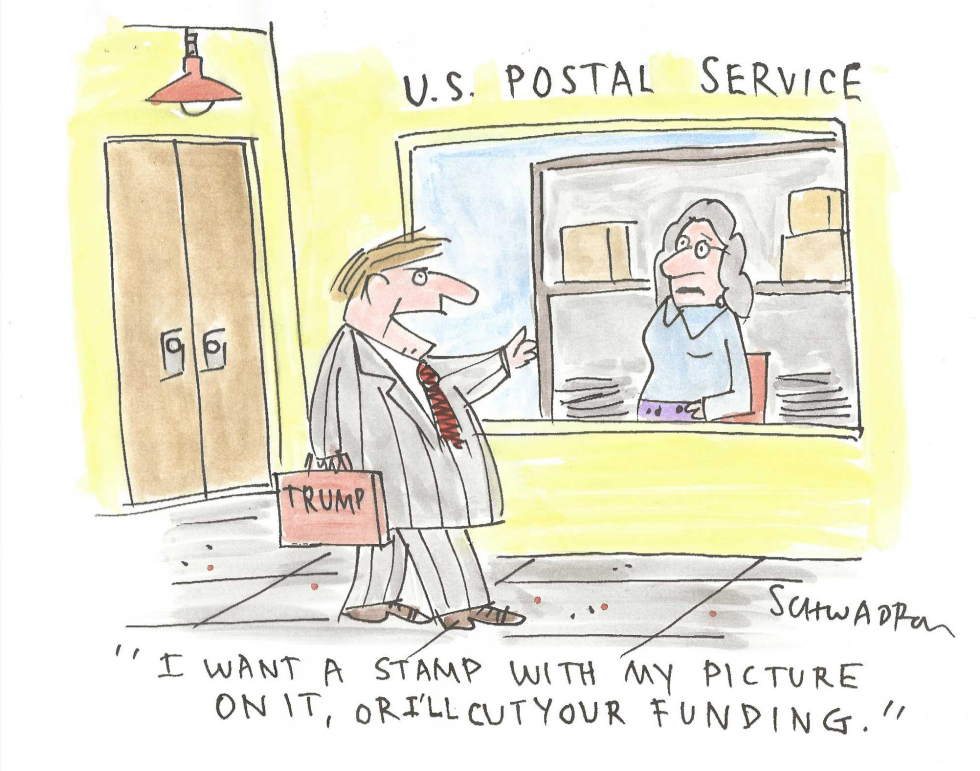
Donald Trump has renewed criticism of the U.S. Postal Service, calling for major operational changes amid reports of delivery slowdowns and budget shortfalls. The agency faces pressure to cut costs while maintaining universal service standards. Lawmakers from both parties have pushed back, arguing that further reductions would harm rural communities and election mail. The editorial takes the position that such attacks weaken a vital public institution without addressing root causes like underfunding and outdated infrastructure.
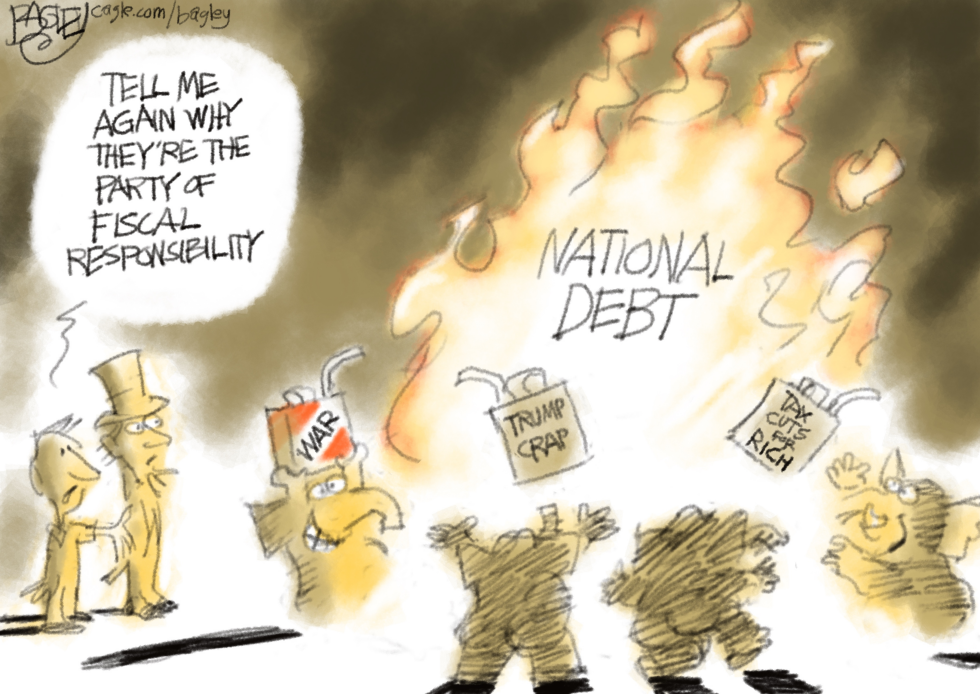
Republicans continue to promote themselves as the party of fiscal responsibility even as national debt rises sharply from sustained war spending and tax cuts favoring the wealthy. The editorial takes the position that these policies directly contradict the fiscal responsibility label.
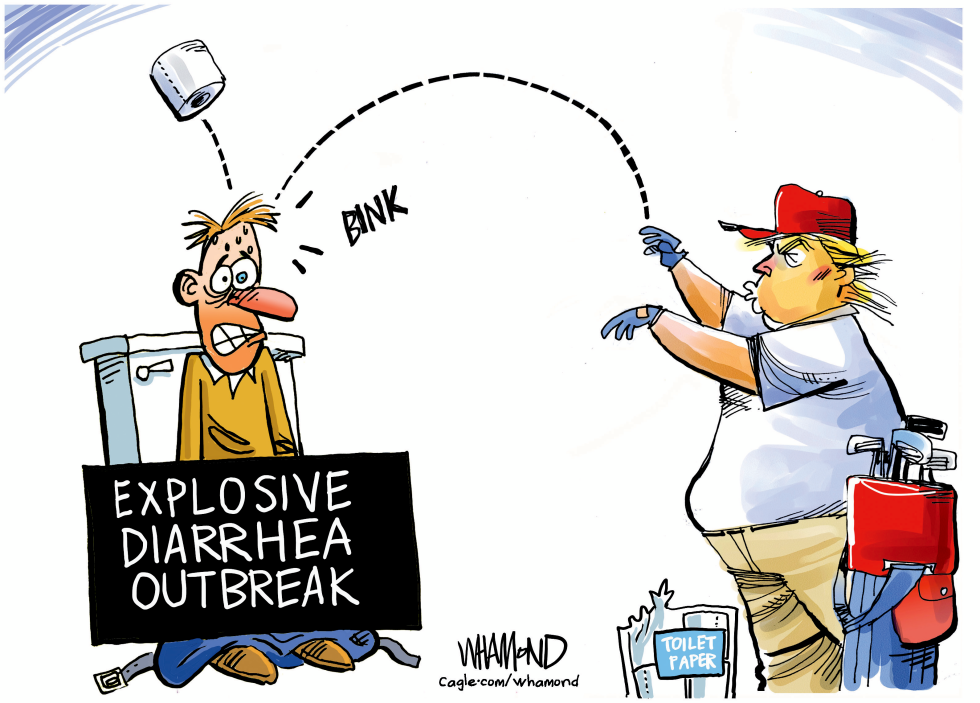
A public health crisis involving widespread illness draws attention to supply shortages and leadership responses. The piece critiques the handling of the outbreak through a visual metaphor involving golf and basic necessities.
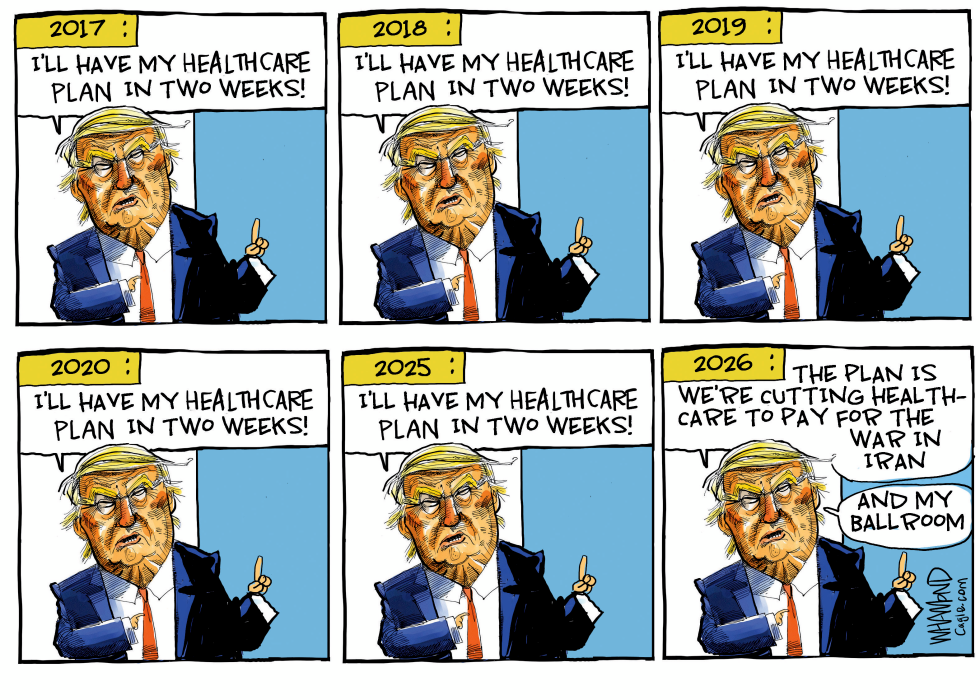
Dave Whamond's political cartoon depicts a recurring figure with distinctive blonde hair and suit, pointing emphatically while promising a healthcare plan 'in two weeks' from 2017 through 2025. The sequence builds to a 2026 punchline where the promise shifts to cutting healthcare to fund a war in Iran and a personal ballroom. This Trump healthcare plan political cartoon employs dry humor to critique endless delays and misplaced priorities. The US politics war funding criticism underscores how domestic needs like healthcare reform delay comic strip give way to military spending in this Republican healthcare policy parody. The endless two weeks promise meme captures the frustration with unfulfilled pledges in a sharp, sequential format.
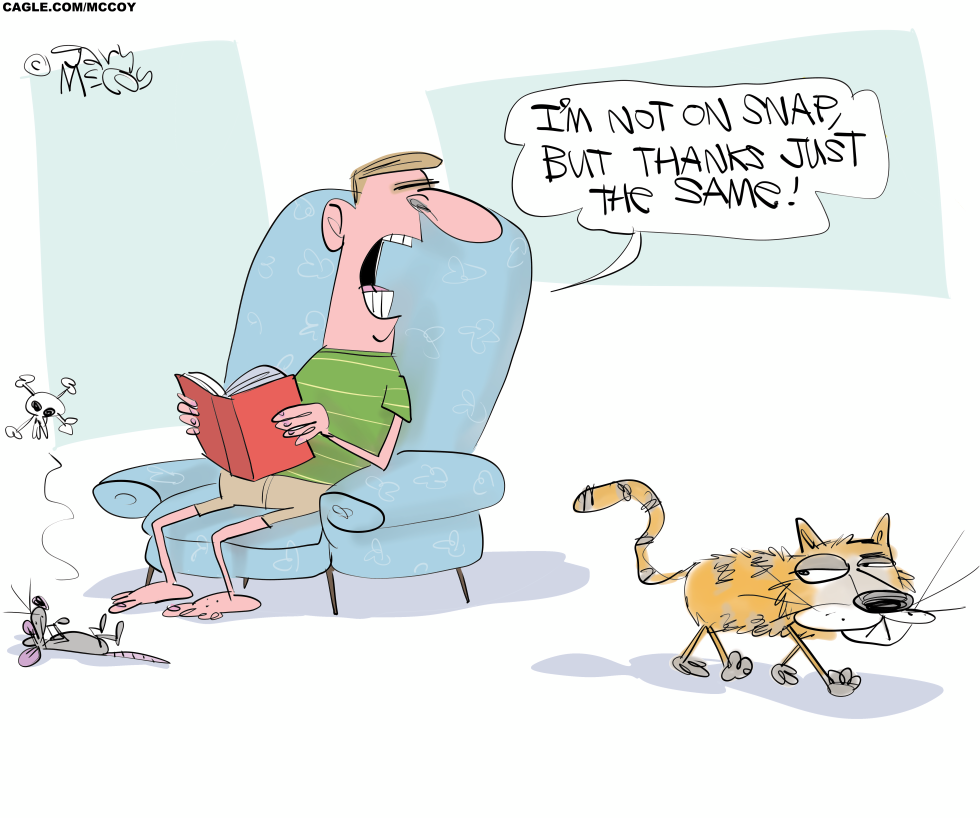
The cartoon depicts a man seated in an armchair who rejects a bandaged cat's offer of a mouse on a plate, declaring he is not on SNAP. The scene comments on debates over Supplemental Nutrition Assistance Program funding during government budget negotiations between parties. It highlights public attitudes toward food aid amid concerns about hunger and program cuts.