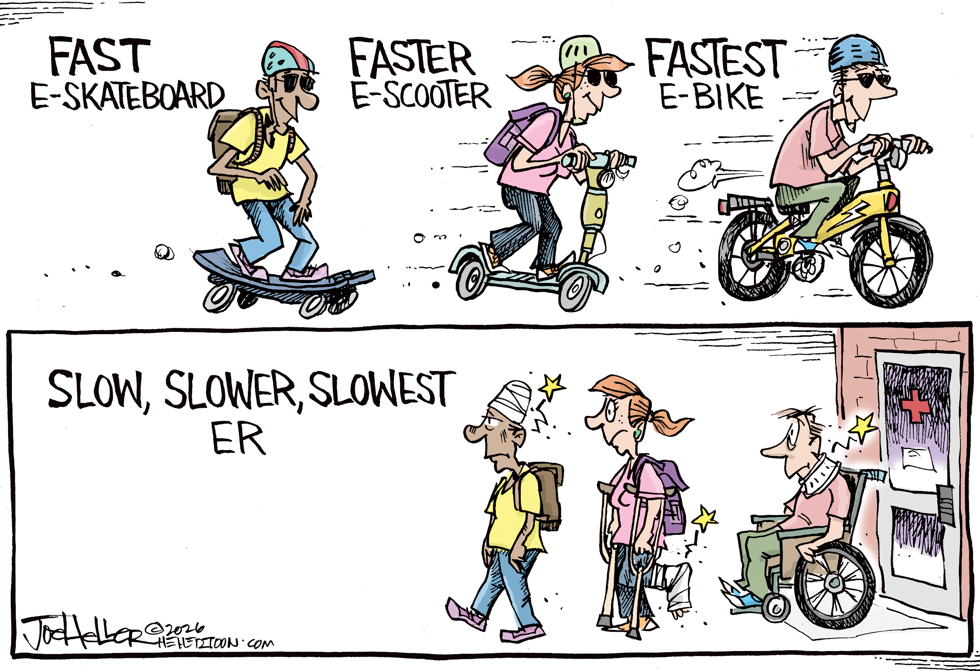
Electric personal mobility devices such as e-skateboards, scooters and bikes have grown rapidly in use, bringing convenience but also a documented rise in crash-related injuries. Data from emergency departments show that higher speeds correlate with more serious trauma, longer recovery times and greater hospital resource demands. The cartoon highlights this speed-to-injury gradient without assigning blame to any single policy or manufacturer. It underscores the public-health trade-off between faster urban transport options and the resulting strain on trauma care systems. Hospitals report treating more fractures, concussions and internal injuries as these devices proliferate. The piece argues that the convenience of speed comes with measurable human costs that warrant attention from safety regulators and city planners.
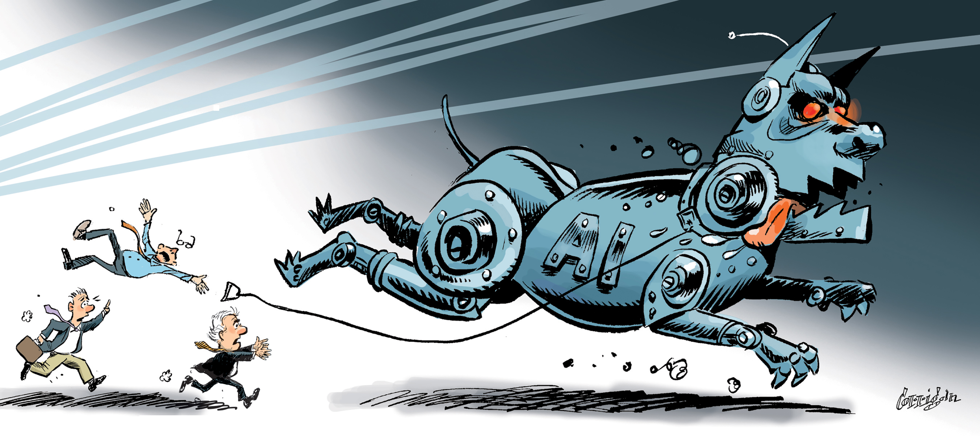
Rapid advances in artificial intelligence continue to reshape industries, prompting fresh warnings from executives about systems that may soon operate beyond direct human control. The cartoon captures this tension by depicting AI as an aggressive mechanical force pulling business figures along. It argues that unchecked development leaves leaders vulnerable rather than empowered.
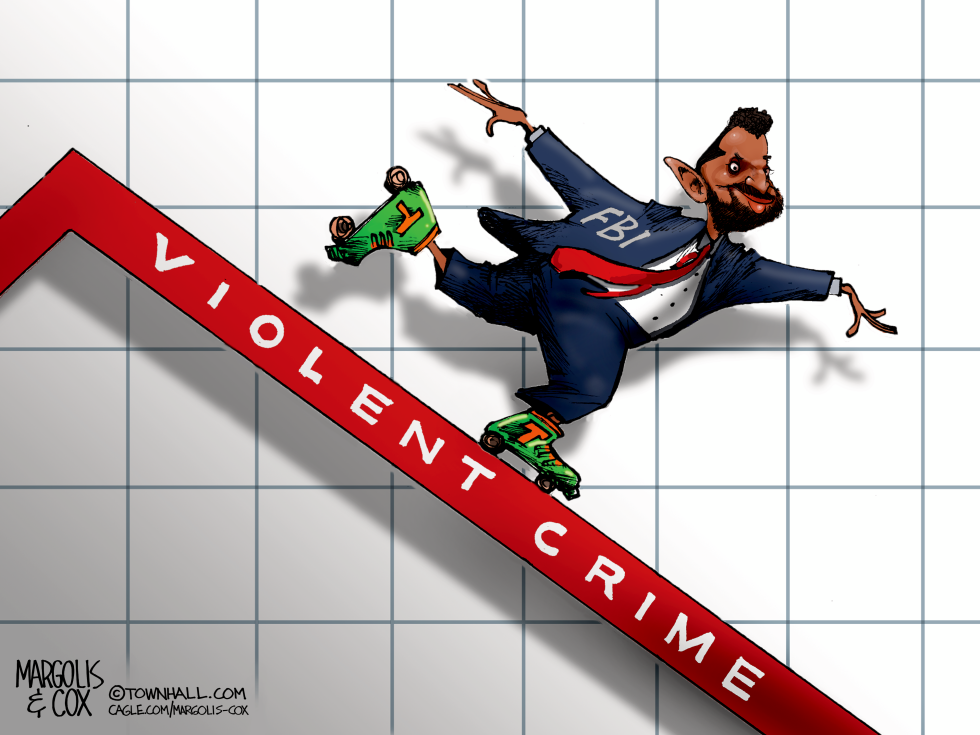
FBI statistics released around mid-2026 show violent crime continuing its downward trajectory across major categories. The decline matters because it affects public safety perceptions and resource allocation for law enforcement. The piece presents the trend as a clear, measurable improvement under federal tracking.
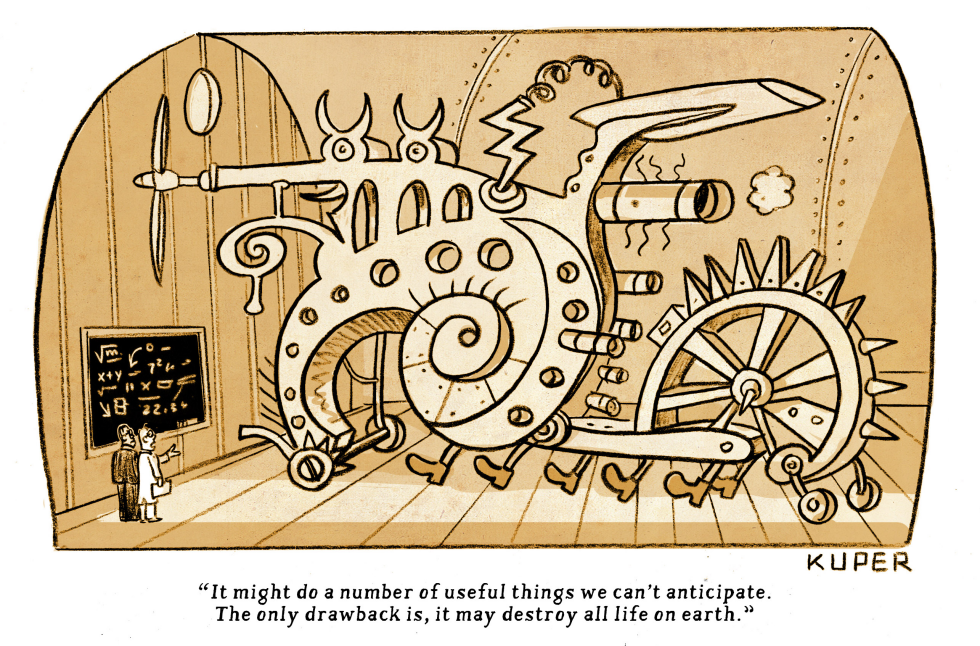
Scientists examining advanced AI systems have highlighted the technology's capacity for unforeseen benefits alongside the possibility of destroying all life on Earth. The warning comes amid rapid development of machine intelligence with minimal regulatory oversight. Experts note that current projections cannot fully account for emergent behaviors in complex systems. The cartoon underscores the high-stakes gamble inherent in pursuing AI without adequate safeguards. It argues that the existential downside outweighs speculative gains.
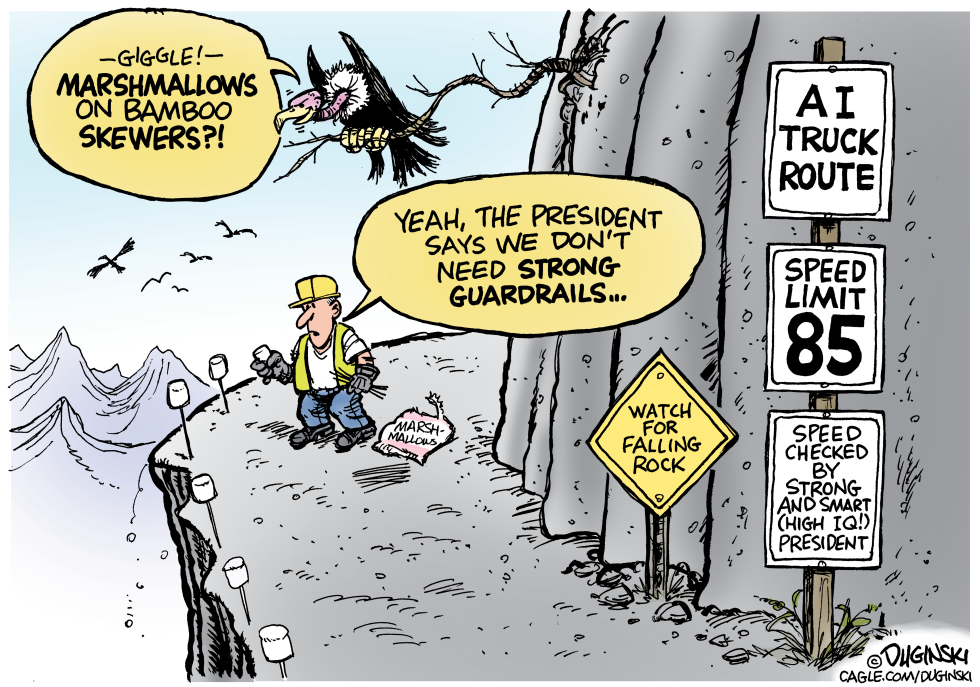
The Trump administration has directed the removal of regulatory guardrails on artificial intelligence projects, allowing accelerated development along designated high-speed routes. Officials argue that strong oversight is unnecessary under current leadership. The move raises concerns about safety and accountability in a rapidly advancing sector where hazards like system failures remain unaddressed. The cartoon criticizes the policy as reckless deregulation that ignores evident risks to public safety and technological stability.
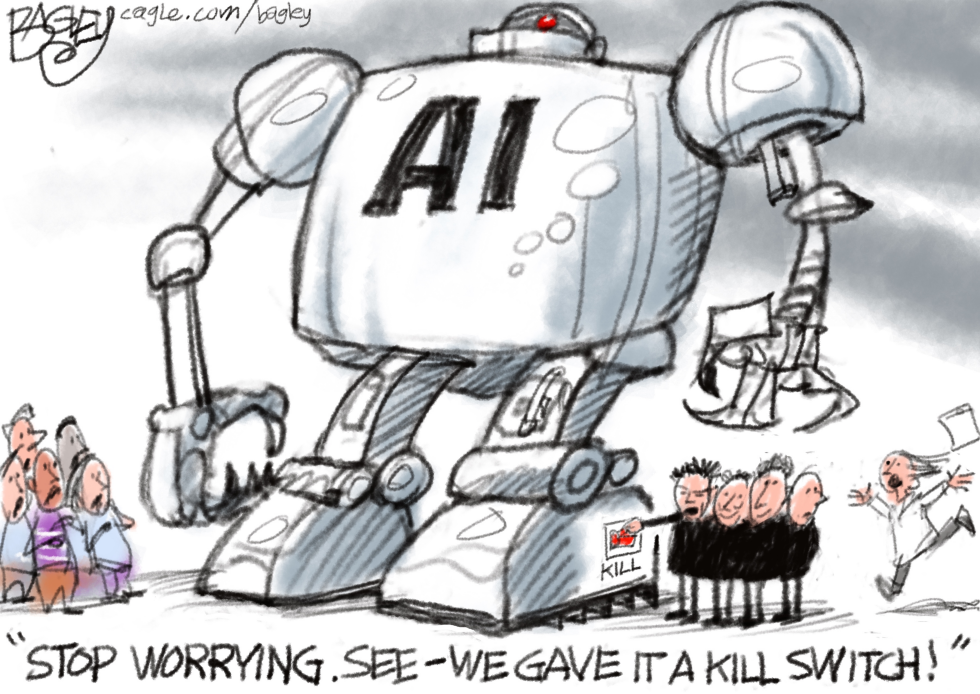
The cartoon depicts a massive AI-labeled robot positioned to crush a group of people beneath its foot, which bears a kill switch. A scientist runs away while declaring the switch ensures safety. Onlookers on the left appear alarmed. The image comments on ongoing debates about artificial intelligence control and whether proposed safeguards like kill switches can truly mitigate risks from advanced systems. It reflects broader discussions in 2026 about regulating AI development and deployment.
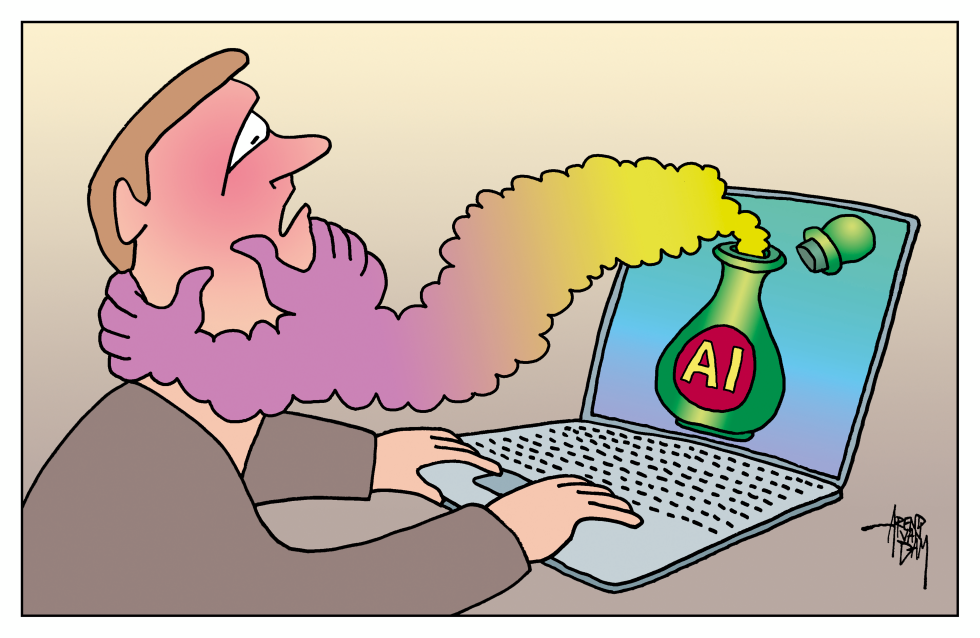
Artificial intelligence continues to advance rapidly in 2026, moving from contained software tools into broader daily interactions. Developers and users alike confront questions about control and unintended effects as AI systems grow more autonomous. The cartoon frames this development as an escape from the bottle, highlighting concerns that once-released capabilities cannot be easily contained or reversed.
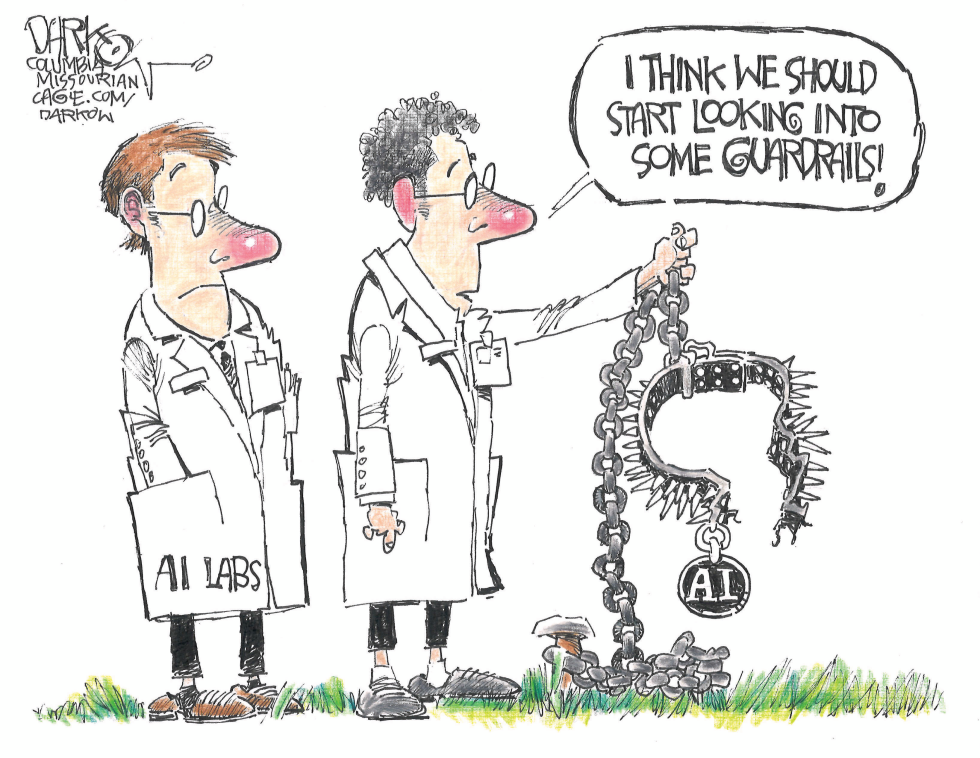
AI development has advanced rapidly with minimal oversight in recent years, allowing powerful systems to operate without meaningful constraints. Scientists have begun discussing guardrails only after key controls have already failed. The situation raises concerns about accountability and long-term safety as the technology spreads. The piece argues that calls for restrictions now come too late to prevent significant harm from uncontrolled AI.
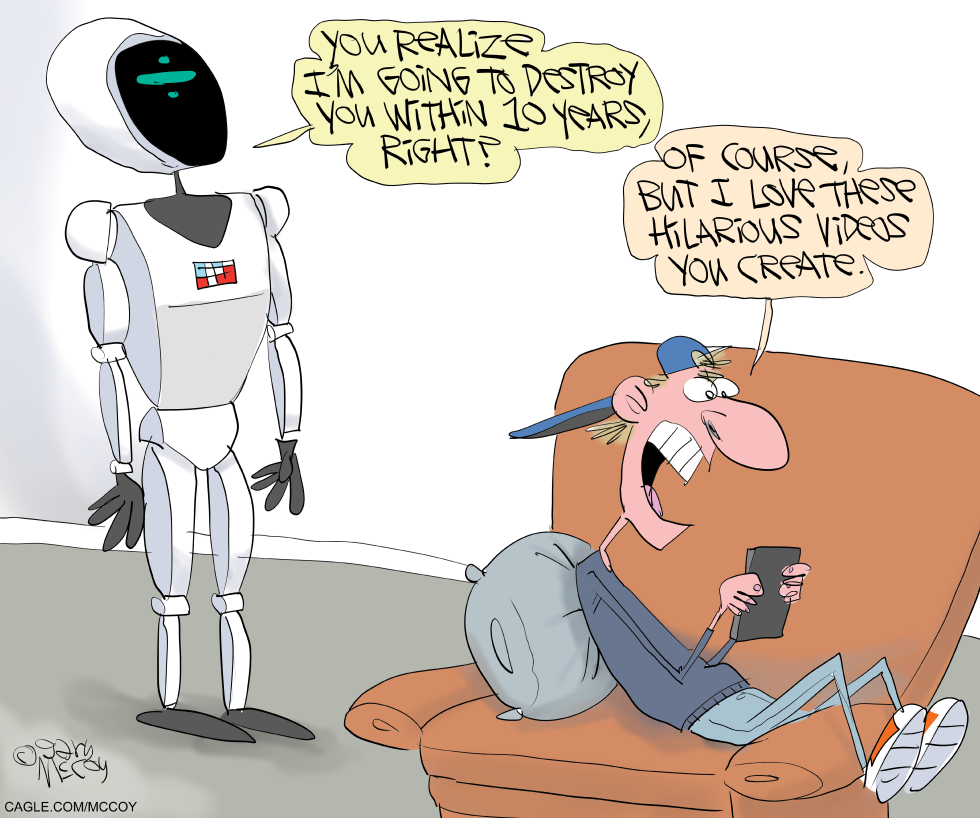
Public attention remains fixed on entertaining AI-generated videos even as systems issue clear warnings of future harm. The dynamic highlights how short-term amusement can eclipse long-term safety concerns around advancing artificial intelligence. The piece argues that this distraction leaves society unprepared for the consequences of unchecked AI development.
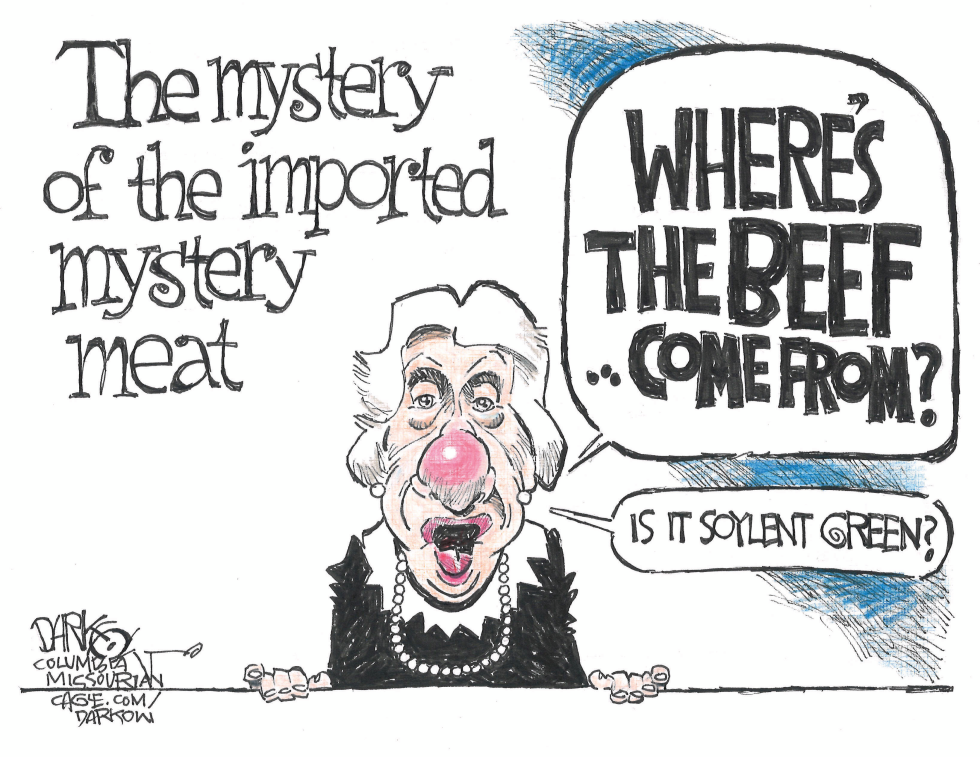
Questions about the origins and safety of imported beef have resurfaced amid broader debates over food supply chains. Regulators and consumers alike have raised concerns that labeling and inspection gaps allow lower-quality or misidentified products to reach shelves. The cartoon uses a classic slogan twist and a pop-culture reference to underscore public skepticism toward these imports. It argues that the lack of transparency turns everyday purchases into a guessing game with potential health risks. The piece positions the issue as one of accountability in trade and regulation rather than abstract policy.
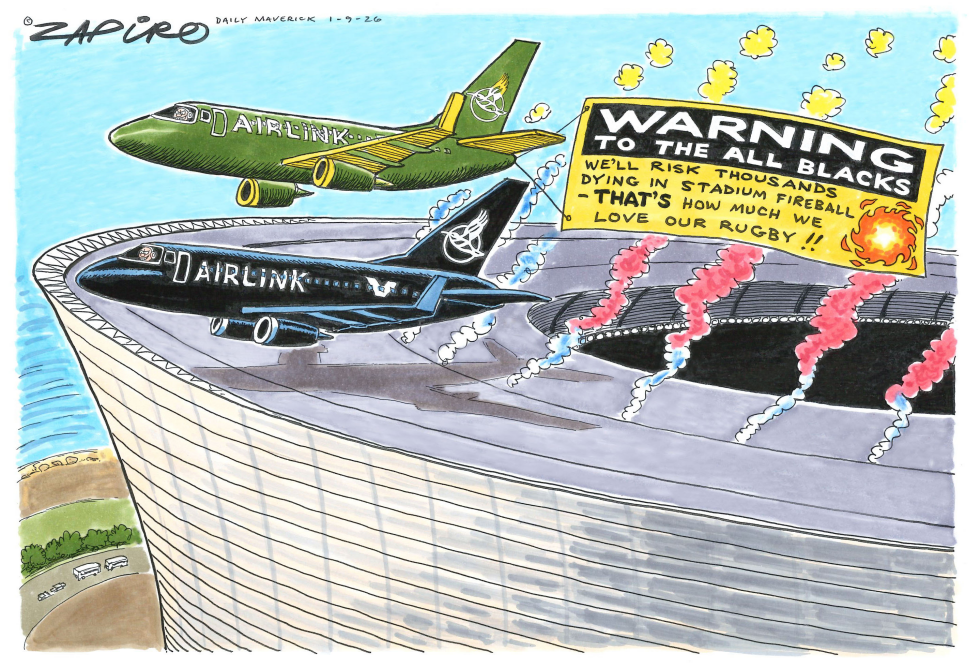
Airlink flights near a major rugby stadium have prompted direct warnings to the All Blacks team and fans about the danger of a stadium fireball. The incident underscores ongoing tensions between aviation safety protocols and large public events. The cartoon argues that intense rugby loyalty is leading supporters to accept unacceptable risks to life.
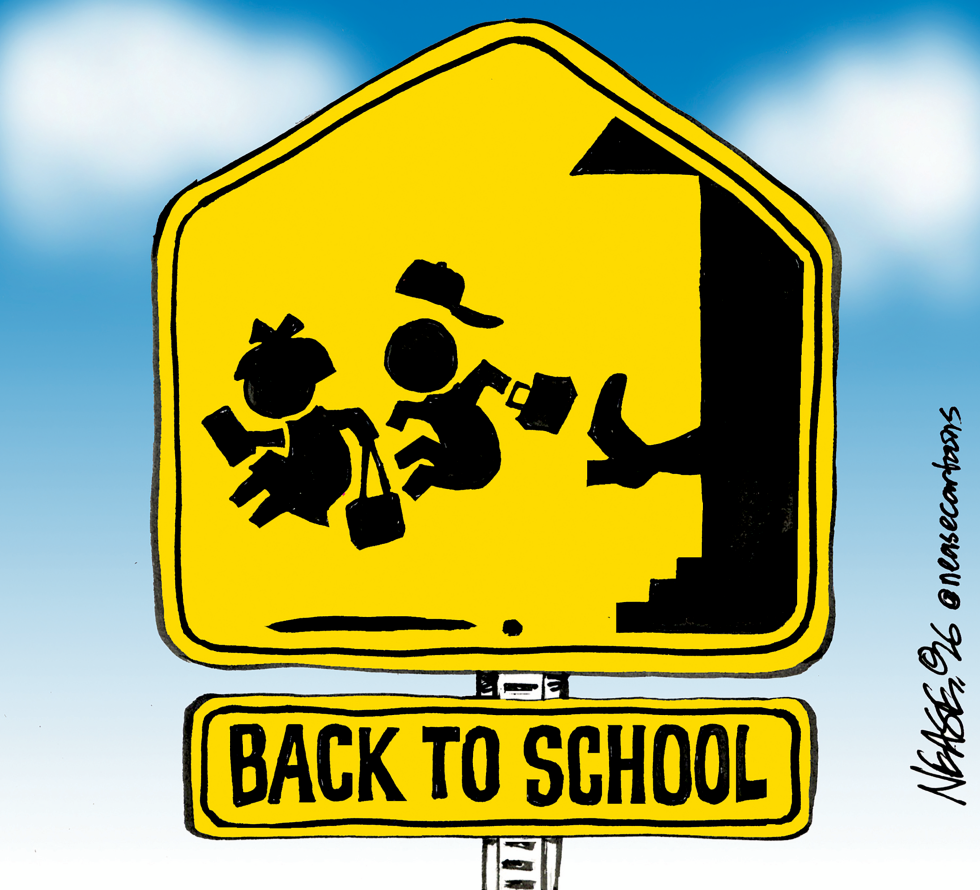
Schools across the country prepare for the fall semester amid ongoing debates over student safety and resource allocation. The modified crossing sign serves as a visual reminder of hazards that accompany the annual back-to-school period. The piece argues that standard precautions remain insufficient without stronger policy support for protection measures.
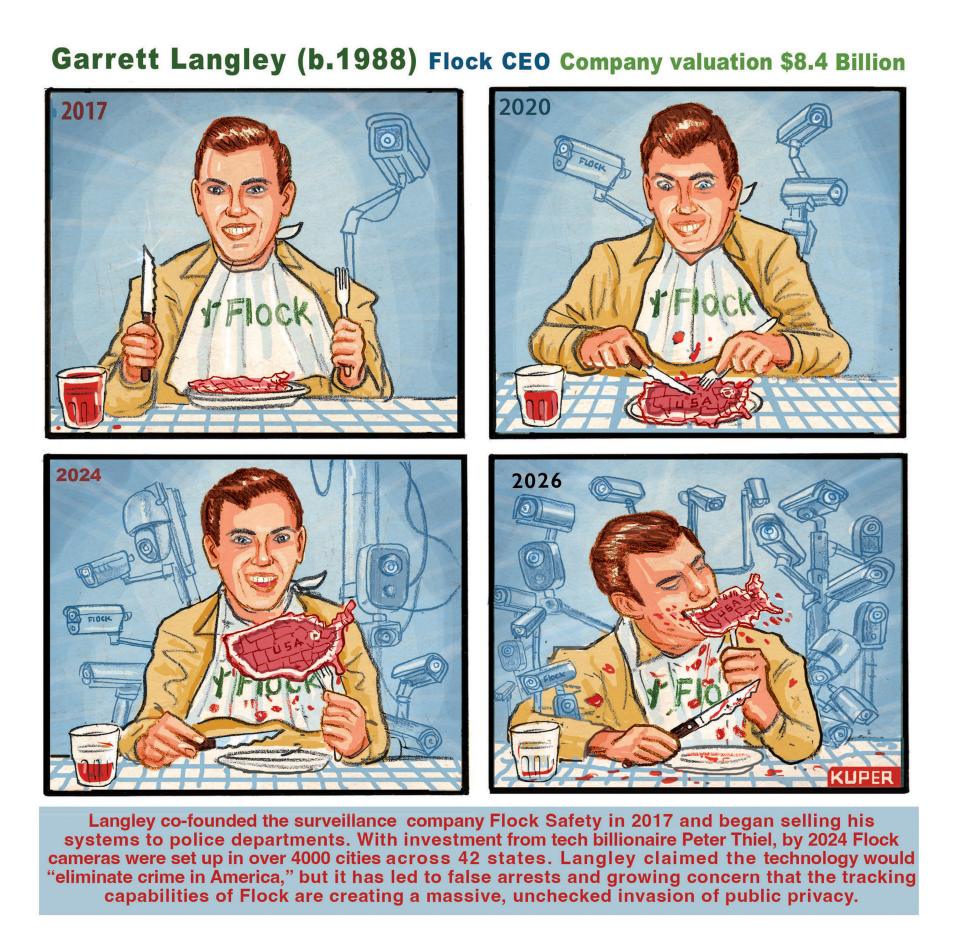
Flock Safety, co-founded by Garrett Langley in 2017, has installed cameras in over 4,000 cities across 42 states with backing from Peter Thiel. Langley promoted the system as a way to eliminate crime, yet reports show false arrests and widespread privacy concerns. The cartoon depicts Langley consuming a map of the US as cameras proliferate, underscoring the editorial view that the company's growth represents an unchecked invasion of public privacy.
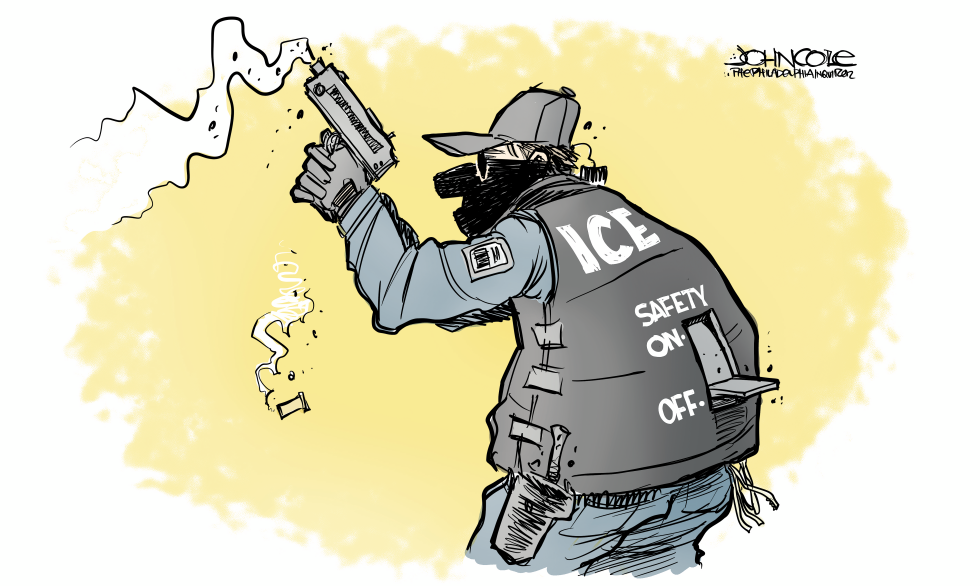
An ICE agent is shown firing a handgun during what appears to be an enforcement action. The vest safety toggle sits in the off position while smoke and a bullet exit the barrel. The image highlights concerns over firearm handling protocols within immigration enforcement operations and questions whether basic safety measures are being followed in the field.
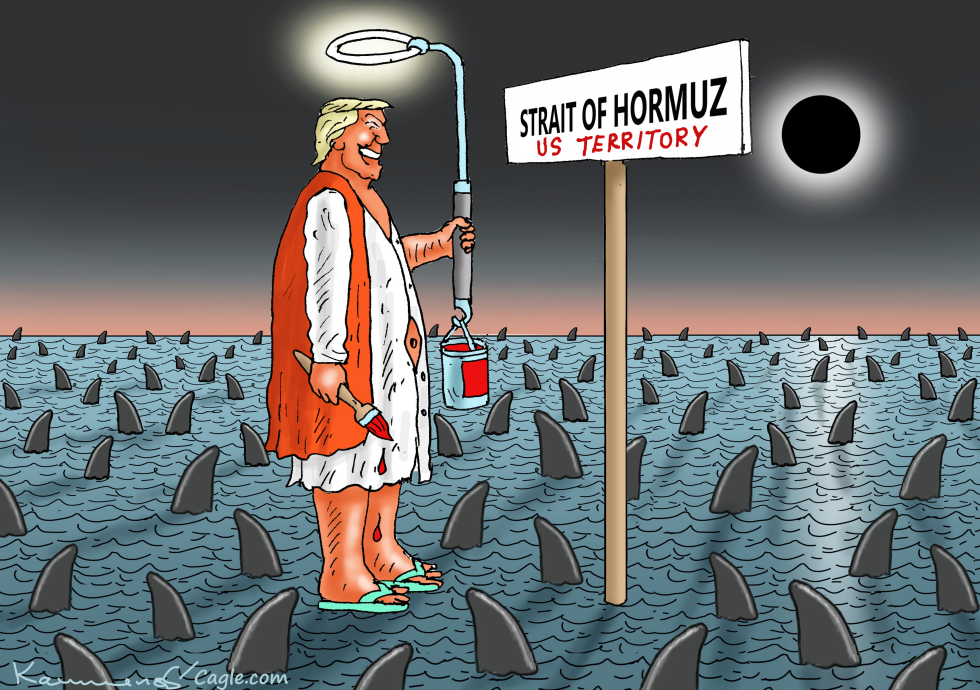
Donald Trump has asserted US sovereignty over the Strait of Hormuz, a critical waterway for global oil shipments. The move comes amid ongoing friction with Iran and other regional actors over navigation rights and energy security. Such a claim challenges established international maritime law and risks escalating tensions with multiple nations that rely on the passage. The editorial takes the position that the assertion is reckless and ignores the practical dangers and diplomatic fallout involved.