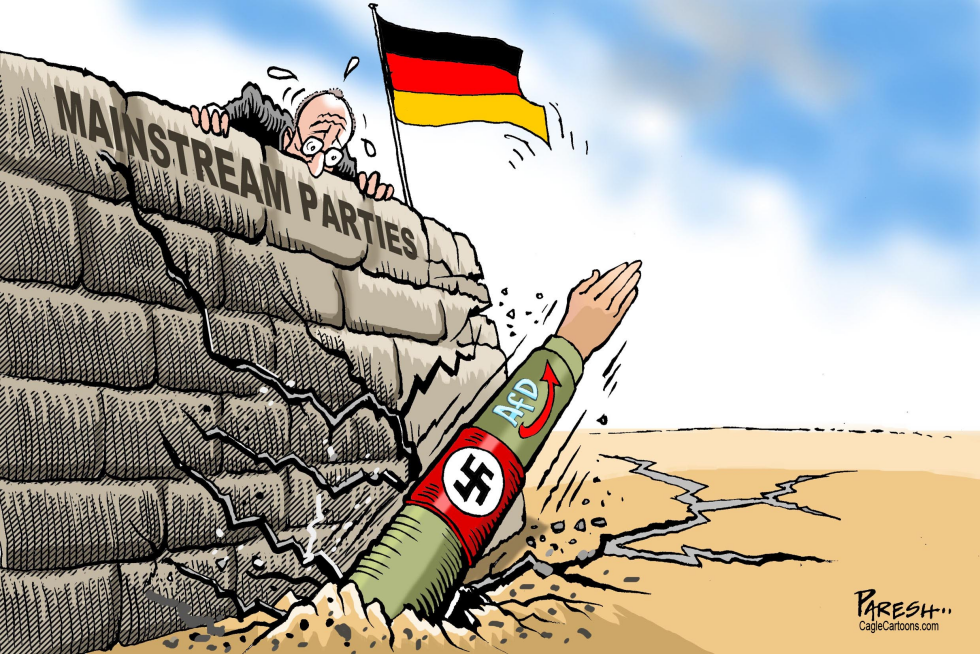
The cartoon depicts Germany's mainstream parties as a fracturing wall under assault from the AfD, portrayed as an extremist force with Nazi imagery. Published on September 10, 2026, it responds to the party's growing electoral strength and its impact on traditional coalitions ahead of key votes. The image shows a distressed mainstream figure atop the wall while the AfD arm breaks through from below, symbolizing how the party's advances erode established political structures. This reflects ongoing concerns about coalition stability and the mainstream's struggle to contain far-right momentum in German politics.
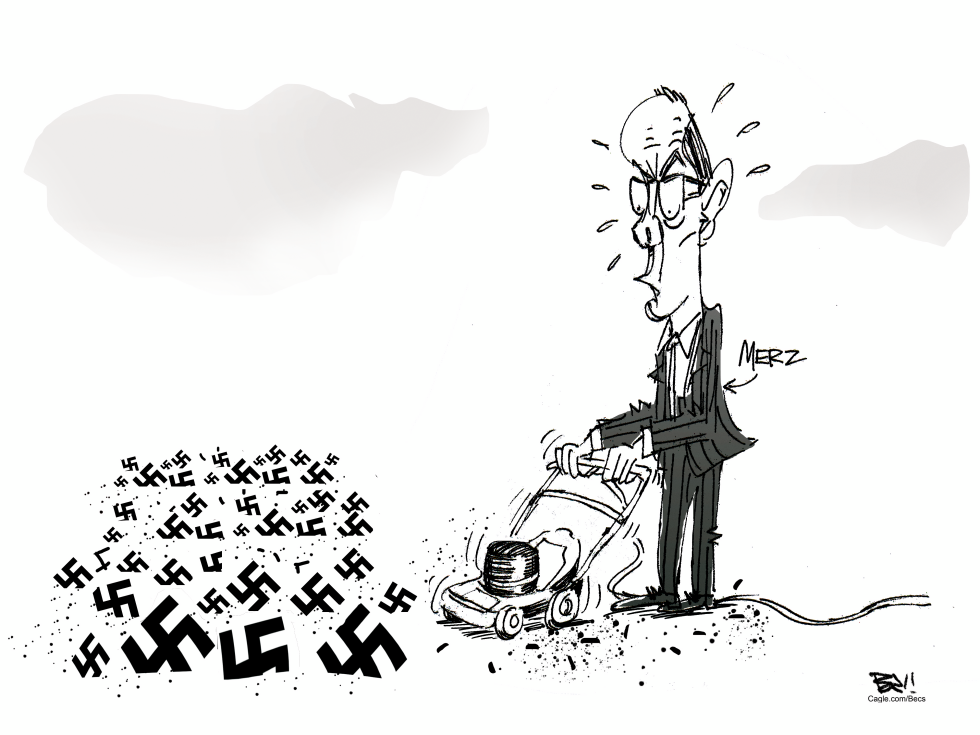
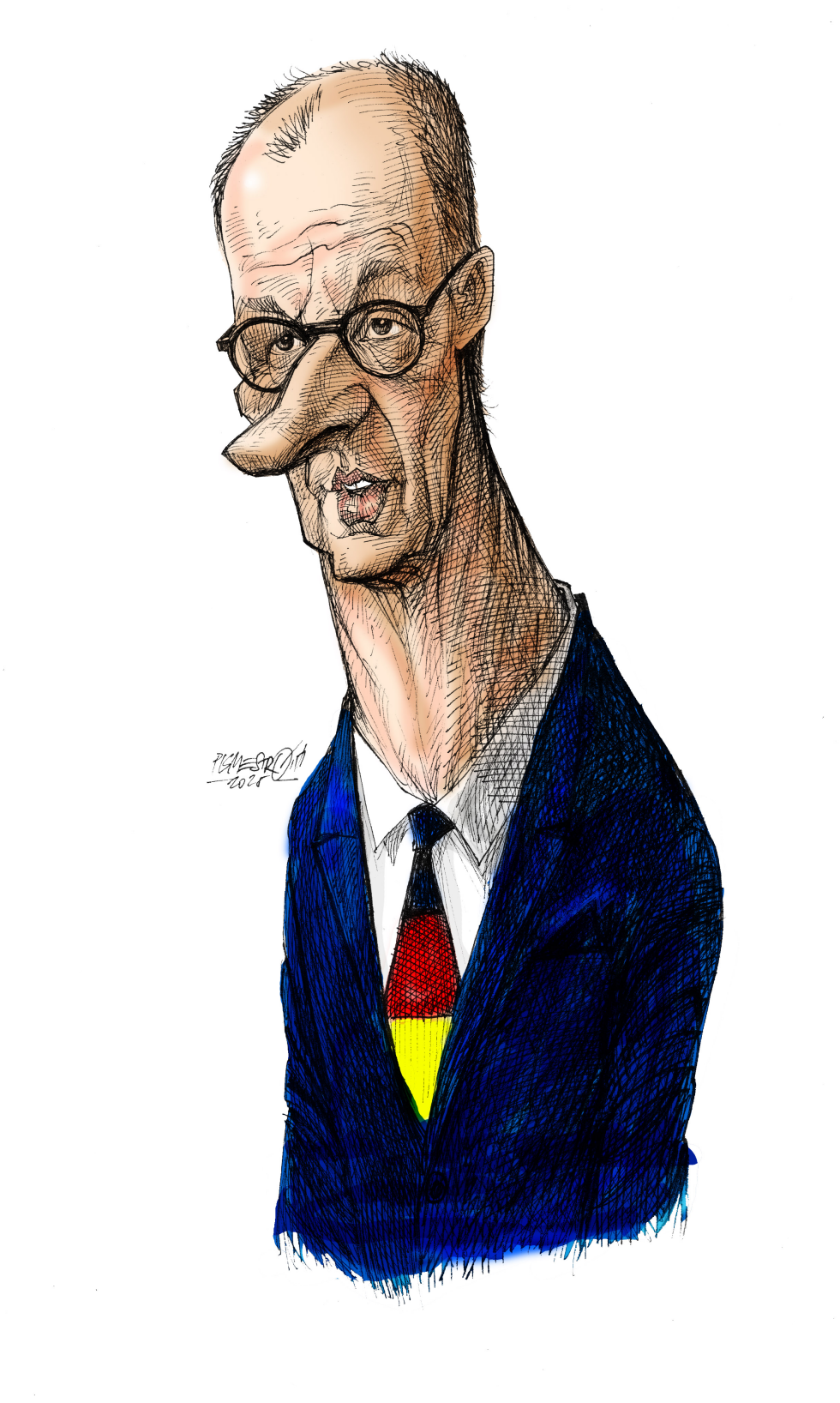
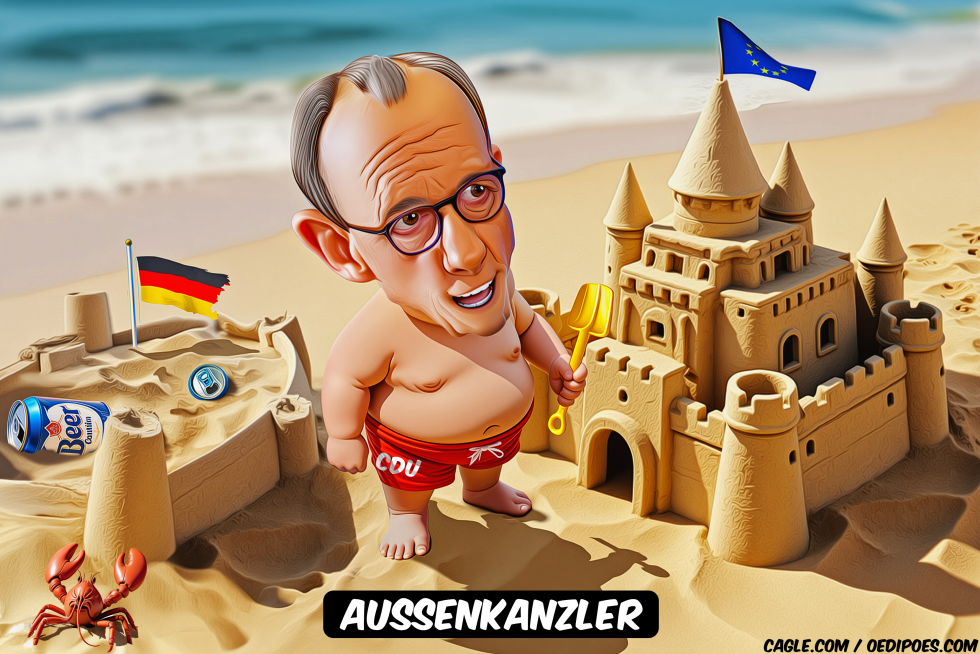
Friedrich Merz, a leading German conservative, has positioned himself against far-right extremism by publicly rejecting Nazi symbols and associated groups. The move comes as Germany faces growing concerns over rising far-right activity ahead of key political contests. Merz's stance aims to draw a clear line separating mainstream conservatism from extremist fringes. The cartoon portrays this effort as a deliberate cleanup of dangerous symbols. It endorses the push to isolate and diminish far-right influence in German politics.
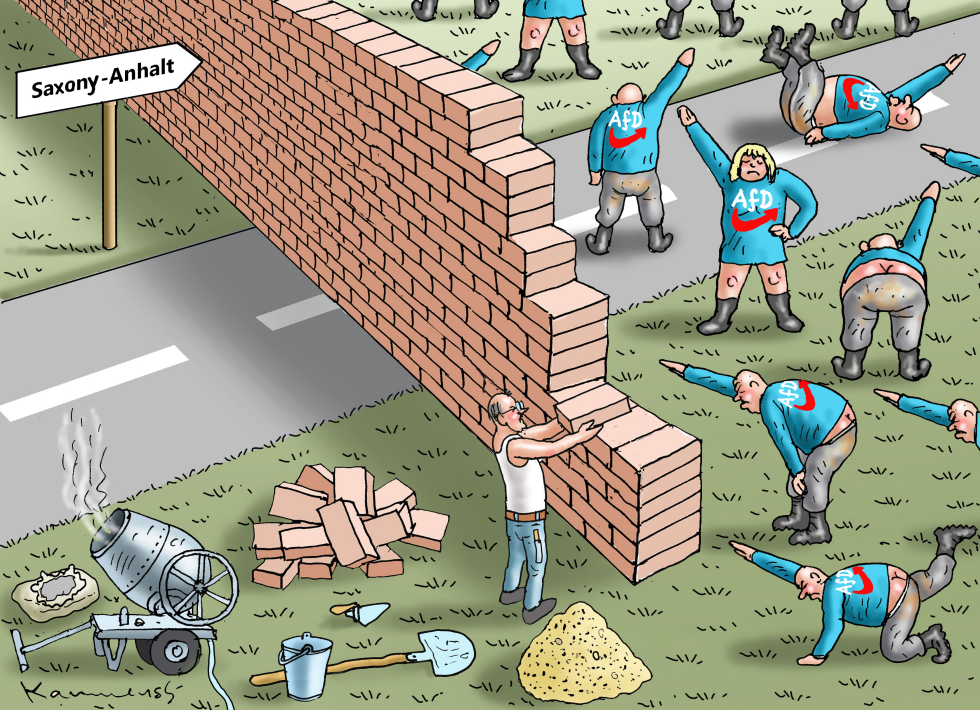
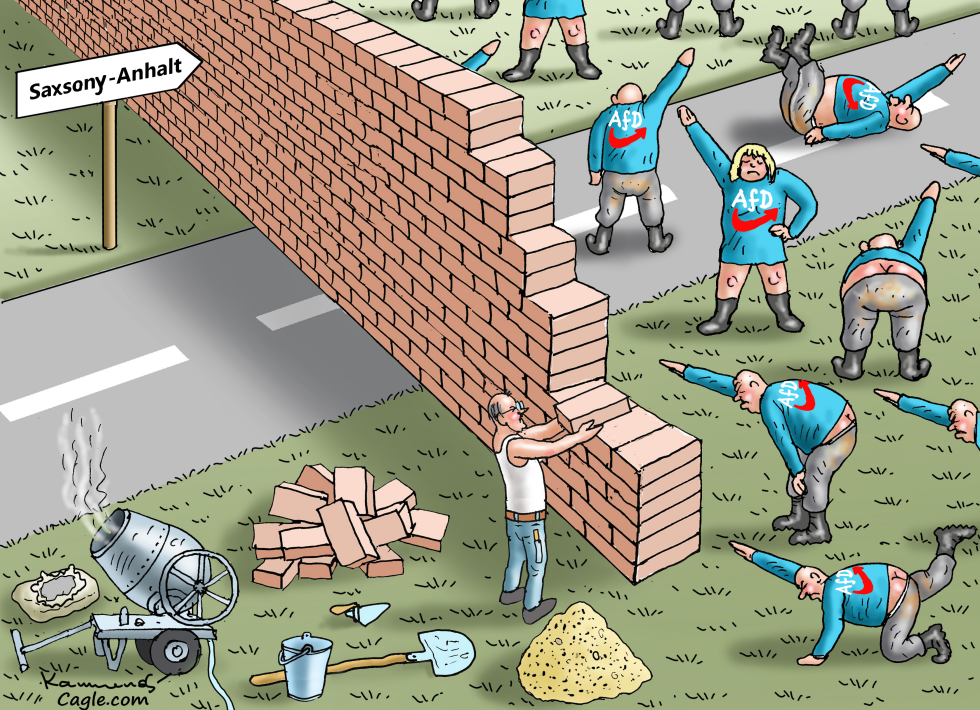
Friedrich Merz has positioned himself as a bulwark against Alternative for Germany advances ahead of state elections in Saxony-Anhalt. The cartoon depicts Merz personally laying bricks for a wall labeled for the eastern state while AfD figures in branded shirts struggle to cross it. The image underscores the CDU leader's strategy of containment rather than engagement with the far-right party. It reflects ongoing debates within German center-right circles about how to address AfD electoral strength without legitimizing its platform. The editorial stance presents the wall-building as a necessary, if blunt, defensive measure.
German opposition leader Friedrich Merz has positioned himself as a bulwark against the Alternative for Germany party ahead of state elections in Saxony-Anhalt. The move comes as AfD polls strongly in eastern regions, prompting mainstream parties to draw sharper lines. Merz's approach emphasizes containment over engagement. The cartoon frames this as literal wall-building, underscoring the defensive posture parties adopt when facing AfD momentum. It highlights the ongoing struggle within German politics to isolate the far-right without ceding ground on immigration and national identity issues that fuel AfD support.
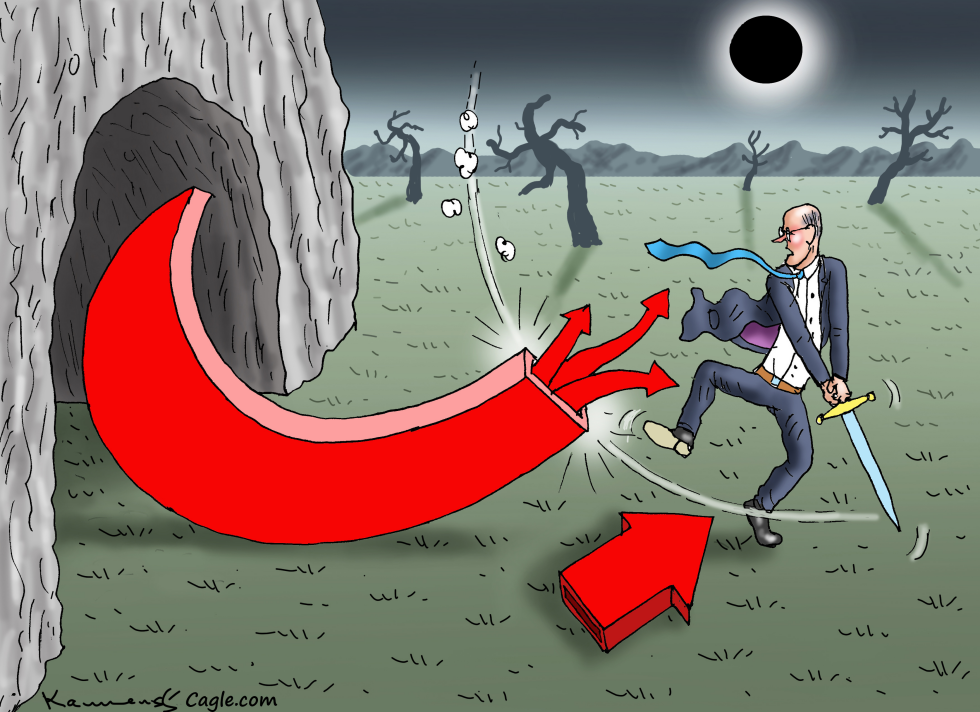
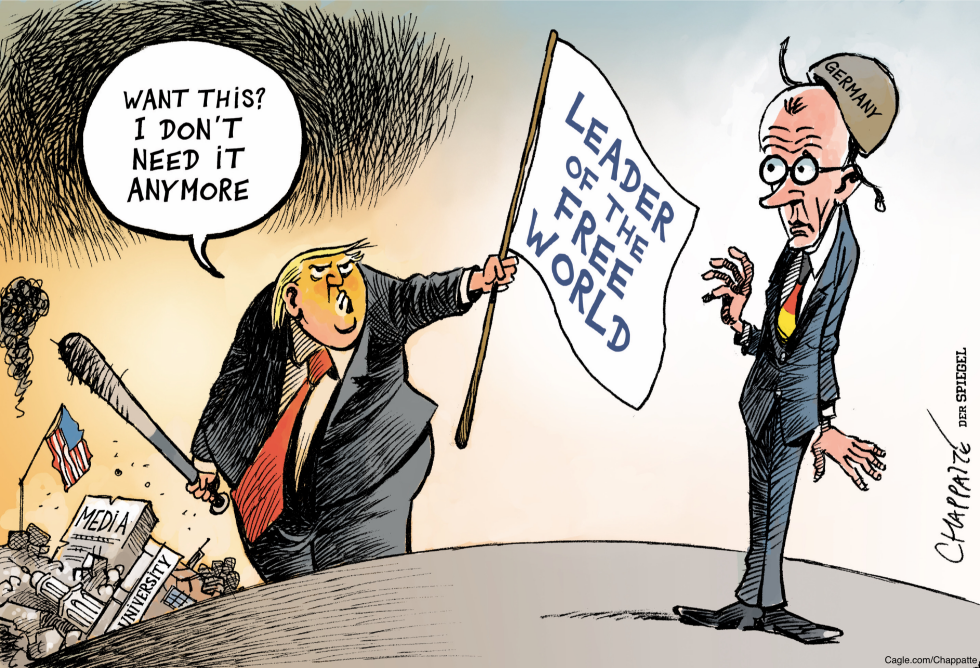
Friedrich Merz, CDU leader, faces a rising challenge from the Alternative for Germany party ahead of upcoming elections. The AfD has gained ground in recent state votes by capitalizing on economic discontent and migration concerns. Merz has positioned himself as the main bulwark against the far-right grouping. The cartoon frames this contest as a direct heroic struggle, with Merz cast as the defender wielding traditional weapons against a powerful, emerging threat. It endorses the view that mainstream conservatives must actively combat the AfD rather than accommodate it.
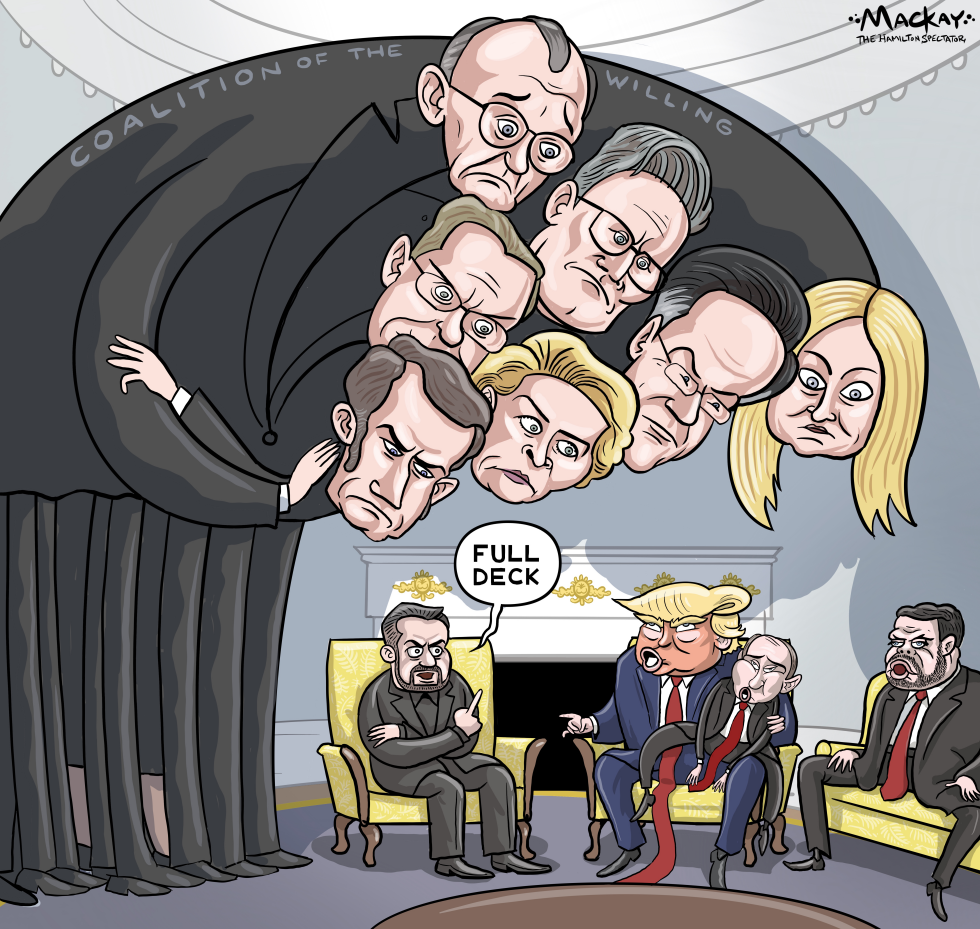
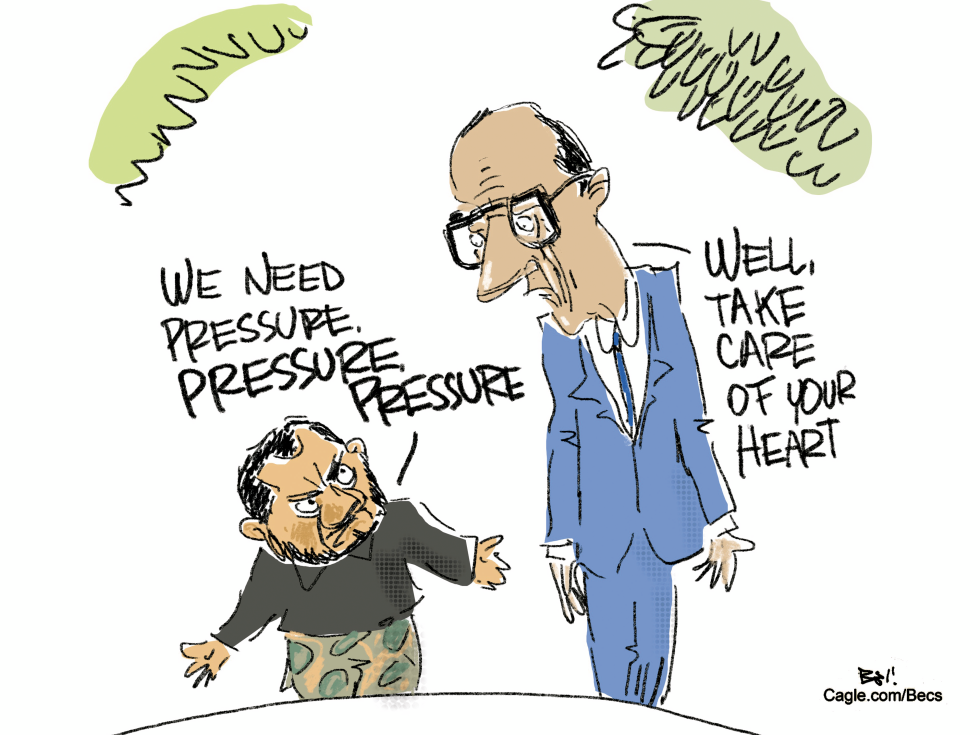
MacKay depicts Volodymyr Zelensky arriving at a fresh meeting with Donald Trump bearing negotiating leverage, suggesting Ukraine learned from earlier humiliations. The cartoon shows Zelensky as better prepared to resist Trump's pressure tactics. The card metaphor implies a more strategic diplomatic game.