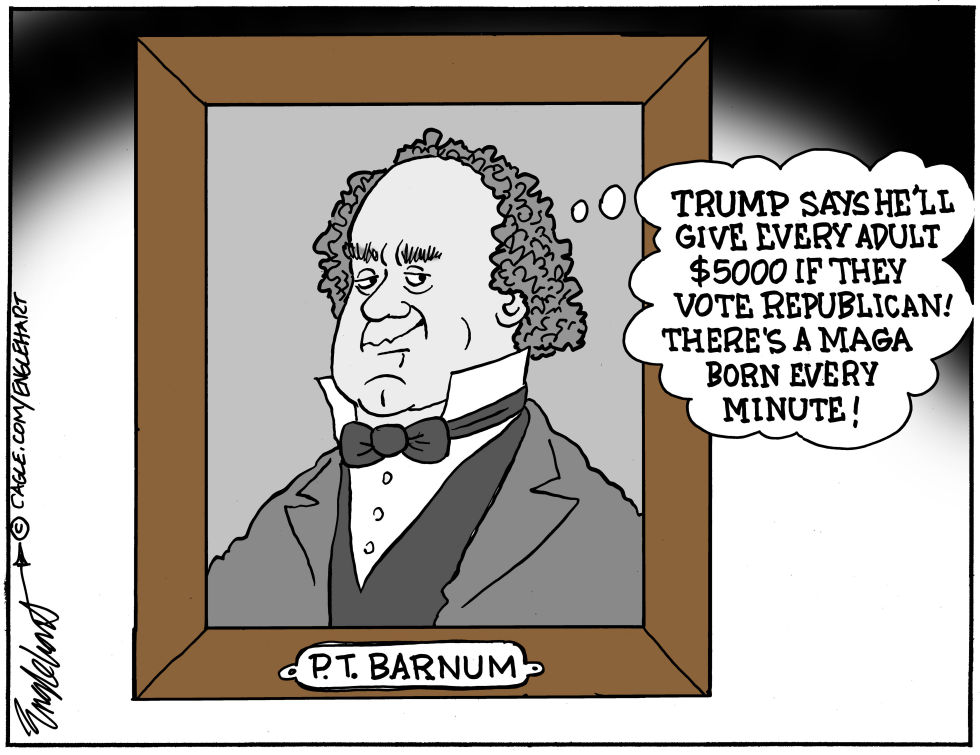
Donald Trump proposed giving $5000 to every adult who votes Republican ahead of the 2026 midterms. The offer drew immediate comparisons to historical figures known for exploiting public gullibility. The cartoon uses the P.T. Barnum portrait and the altered sucker line to argue that the proposal treats voters as marks rather than citizens. It frames the cash pledge as a transparent attempt to buy support through direct payment. The piece suggests the tactic reveals low regard for voter intelligence and reduces elections to transactional exchanges.
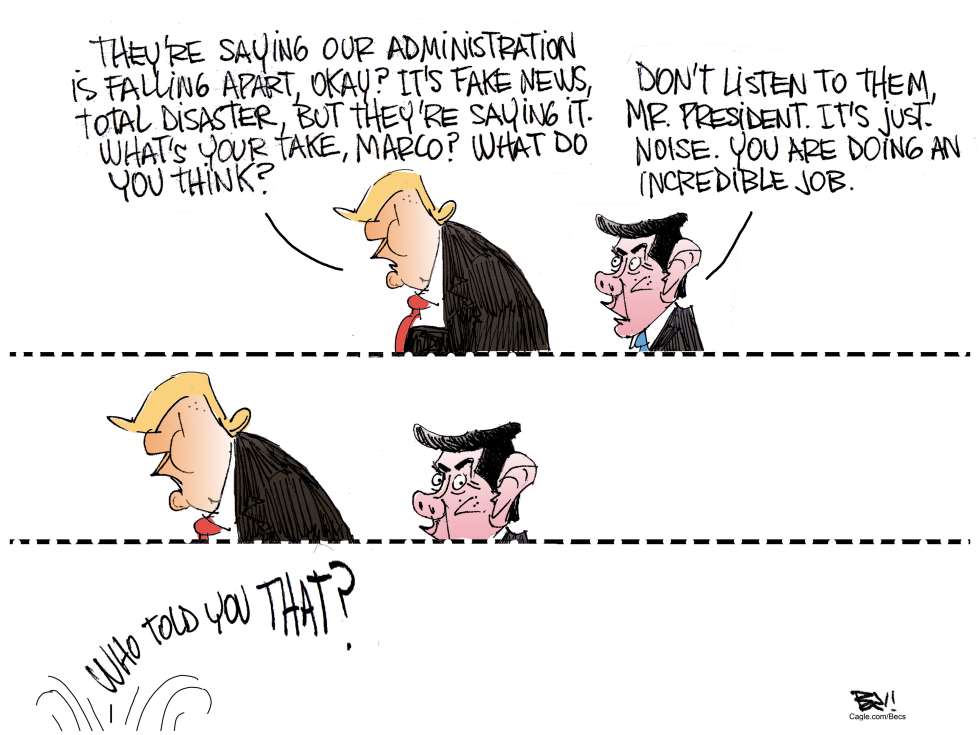
President Trump asked Senator Marco Rubio for his assessment of reports that the administration is in disarray, labeling them fake news. Rubio dismissed the reports as noise and praised Trump's performance. Trump responded by questioning who had told Rubio that assessment. The exchange highlights tensions over loyalty and information flow inside the administration. The cartoon portrays Rubio's positive reply as triggering suspicion rather than reassurance.
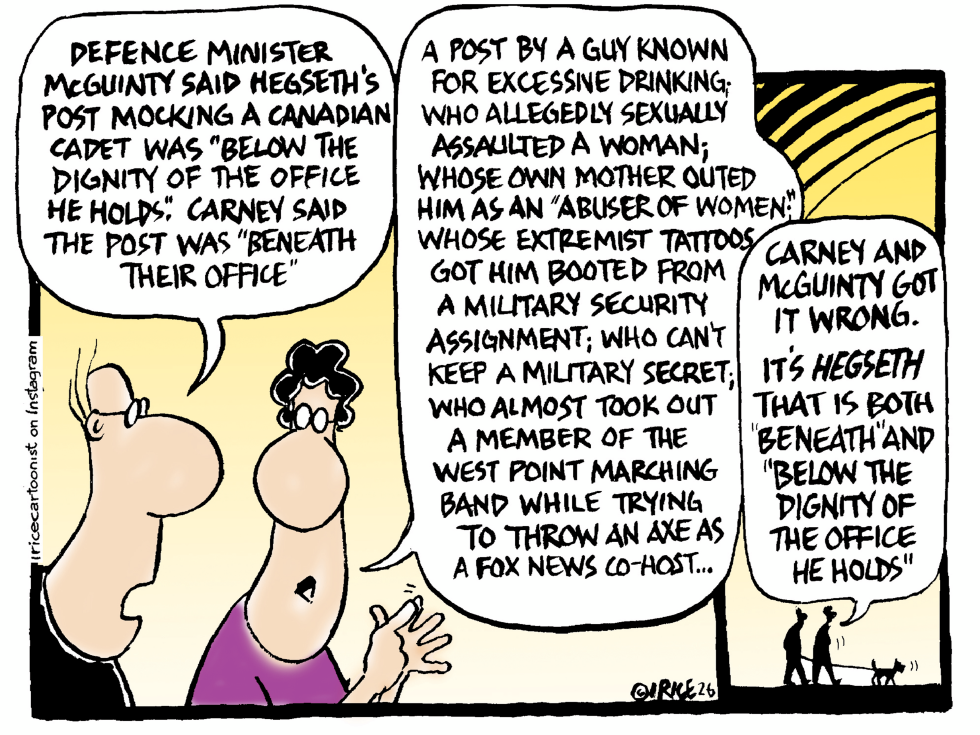
Canadian Defence Minister David McGuinty and Mark Carney publicly condemned a social media post by Pete Hegseth mocking a Canadian cadet, calling it beneath the dignity of the office. The remarks came amid Hegseth's nomination process for a senior U.S. defense position. The cartoon argues the ministers have the assessment backward, pointing instead to Hegseth's history of alleged misconduct, security clearance problems, and public incidents as the true disqualifiers. This reflects ongoing debate over nominee vetting standards and cross-border political commentary on U.S. appointments.
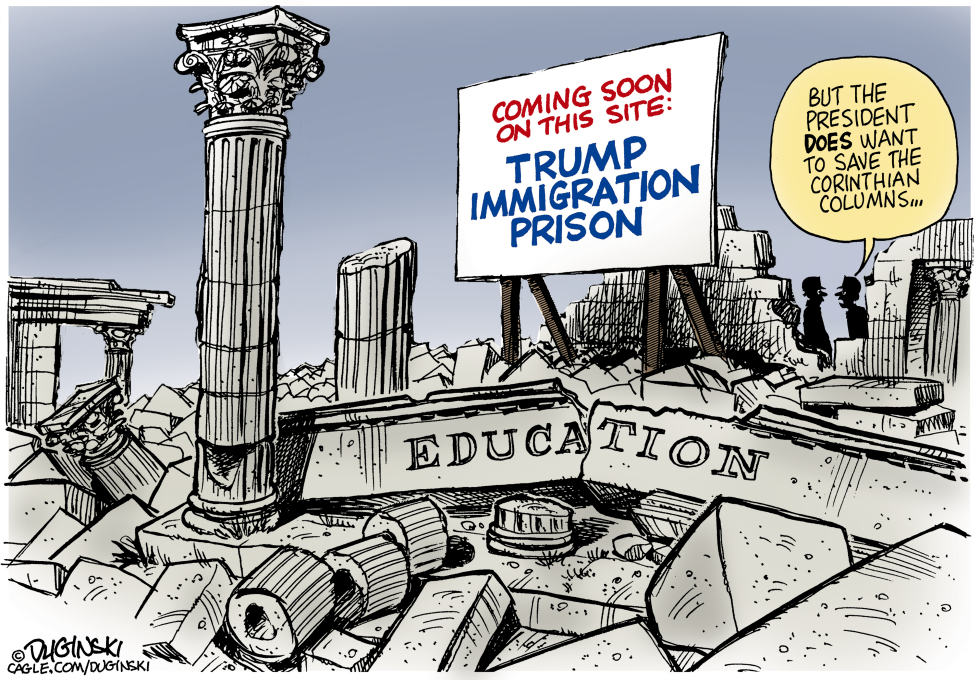
The Trump administration has moved to repurpose a site previously tied to education programs for a new immigration detention facility. The shift reflects ongoing policy emphasis on border enforcement over domestic education support. The piece argues that selective preservation of symbolic elements masks broader institutional damage.
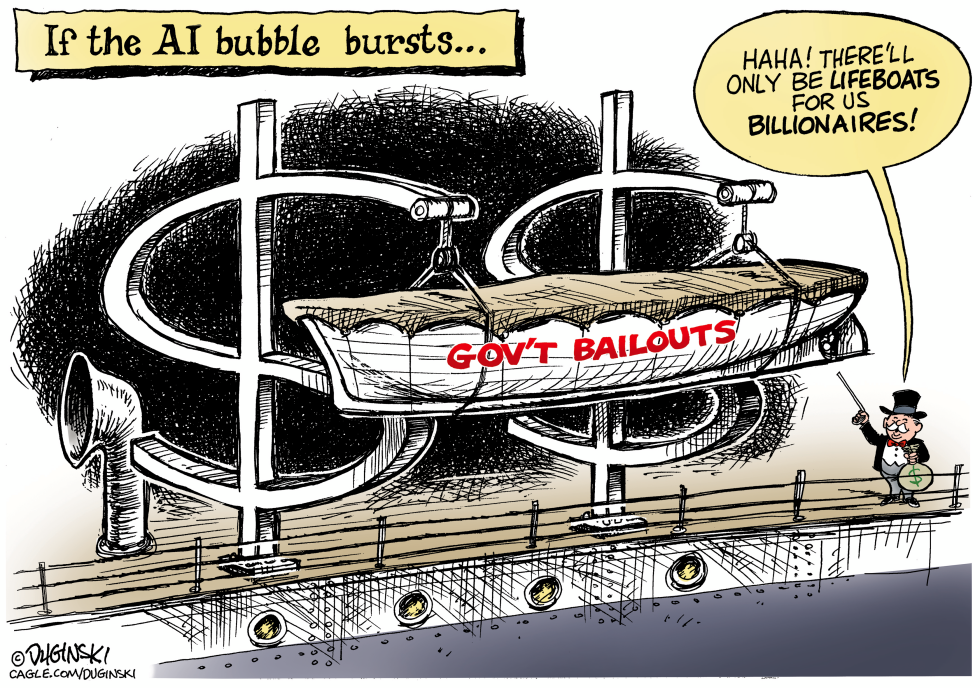
Speculation grows over potential government intervention if the artificial intelligence sector experiences a sharp downturn. Industry leaders and investors face questions about whether public funds would support failing companies. The editorial argues that any such support would primarily protect billionaires rather than address wider economic fallout from overvalued tech assets.
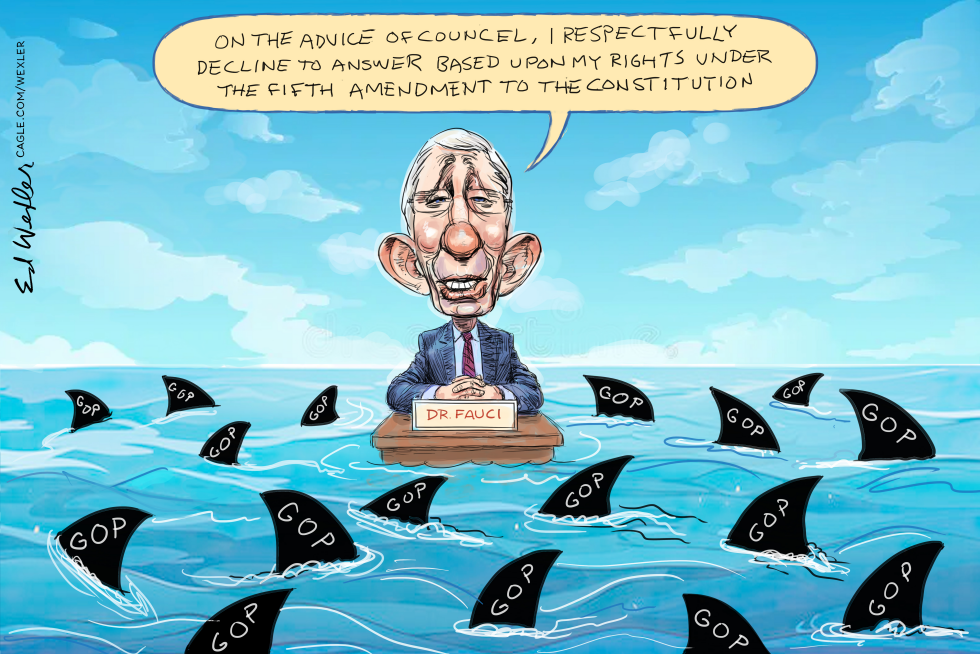
Dr. Anthony Fauci declined to answer questions at a House hearing, invoking his Fifth Amendment protections. The piece responds to Republican-led scrutiny of his role in pandemic-era public health decisions. It depicts the proceeding as a hostile setting rather than a neutral fact-finding exercise.
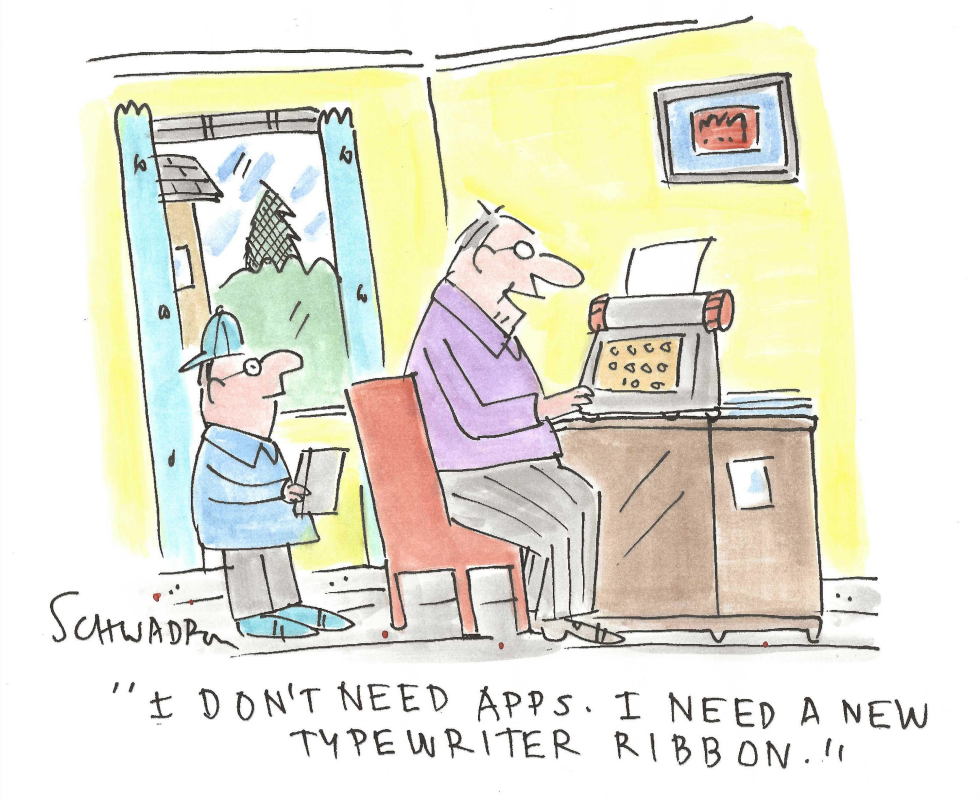
An elderly office worker continues using a manual typewriter despite widespread adoption of digital applications. The man explicitly states he requires only a replacement ribbon rather than any software tools. This reflects an ongoing generational divide where some older individuals maintain preference for analog equipment amid accelerating workplace digitization. The editorial highlights the persistence of traditional methods against pressure to adopt new technology.
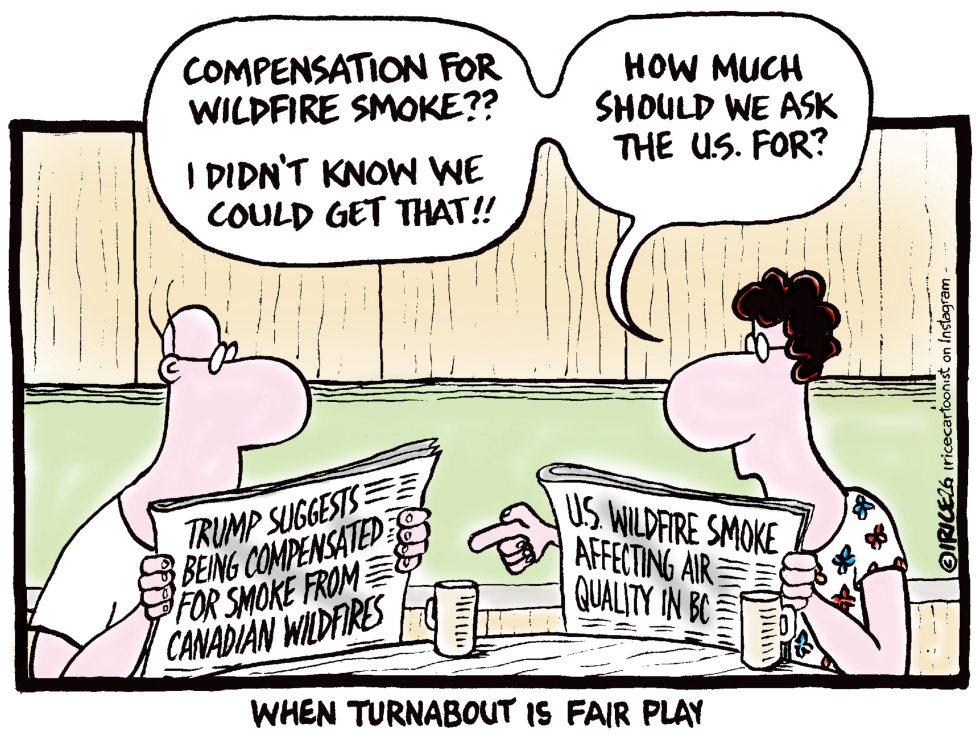
Donald Trump suggested the U.S. should receive compensation for smoke from Canadian wildfires. The cartoon responds by showing Canadians considering a reciprocal claim for smoke from U.S. wildfires affecting British Columbia air quality. It underscores the political dynamic of mutual environmental grievances between the two nations.
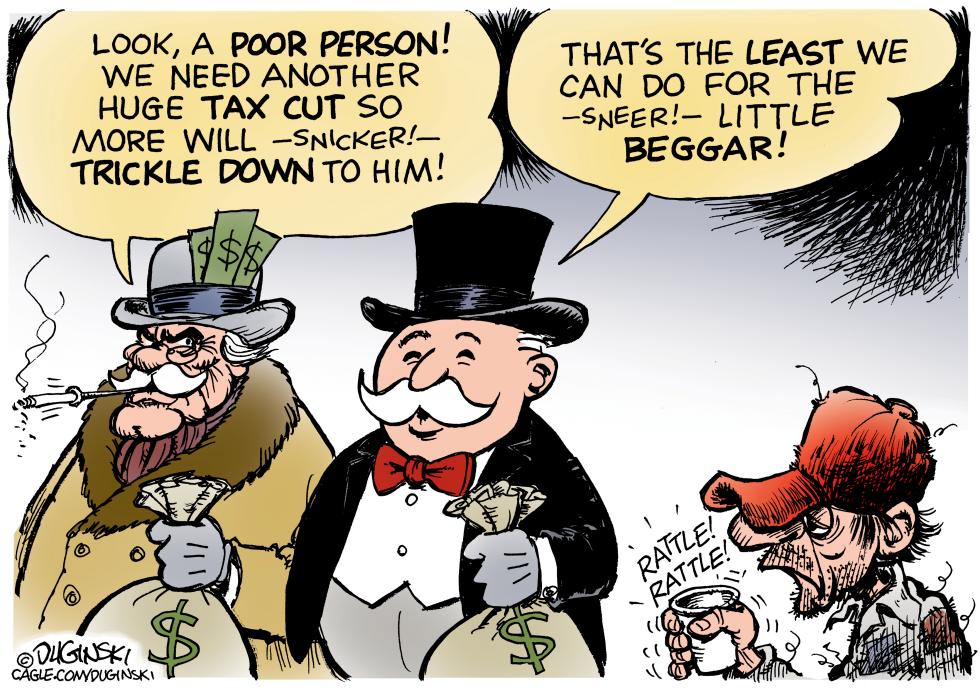
Wealthy interests continue to advocate additional tax reductions framed as broad-based relief. Critics note that such measures primarily benefit high earners while leaving lower-income households with minimal gains. The piece highlights the disconnect between policy promises and visible outcomes for those at the bottom.
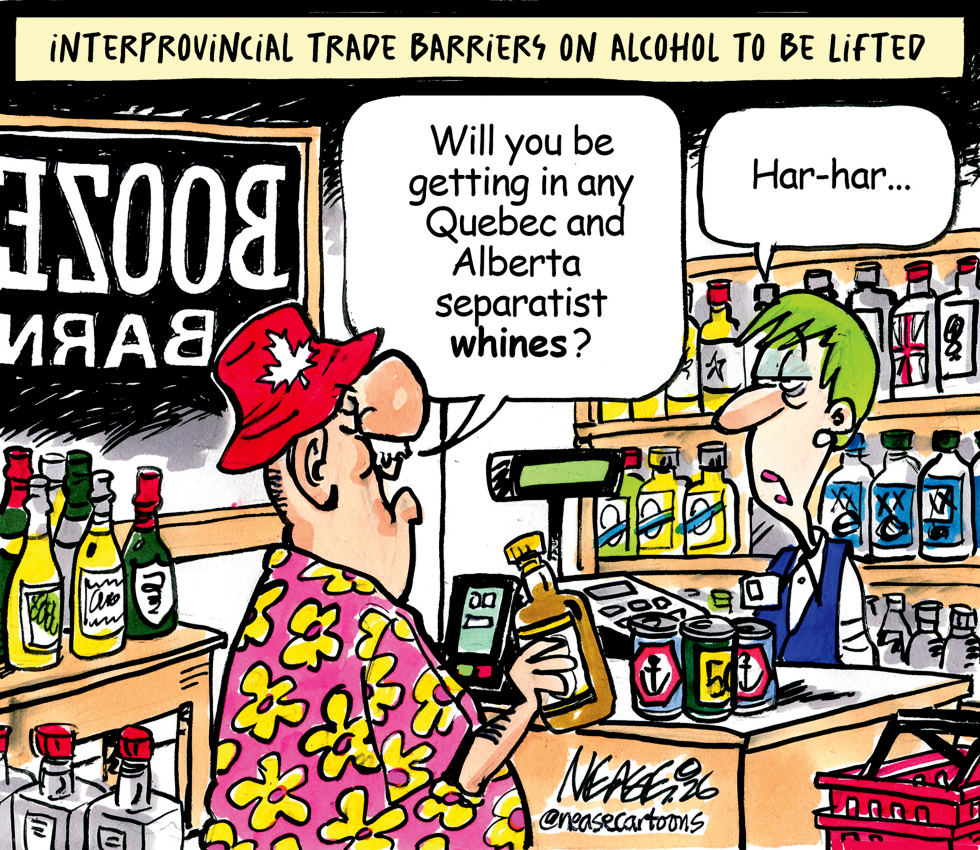
Canada announced it will lift interprovincial trade barriers on alcohol sales. The change opens cross-border provincial liquor markets and prompts complaints from Quebec and Alberta separatists. The cartoon mocks those complaints as mere whines while a clerk offers a dismissive laugh.
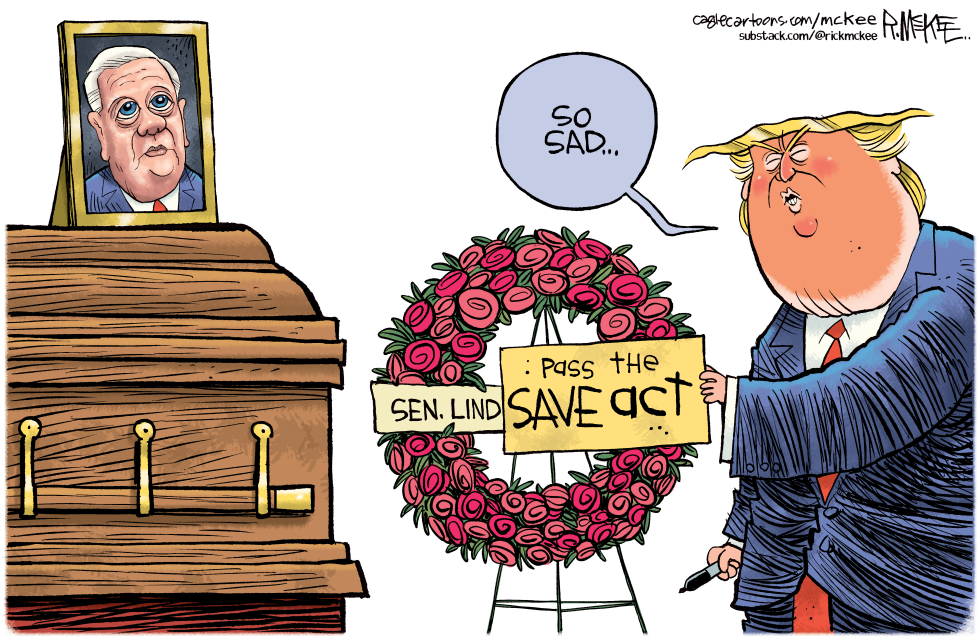
Donald Trump stands beside the casket of Sen. Lind on July 13, 2026, holding a sign urging passage of the SAVE Act. A portrait of the late senator rests atop the wooden coffin while a floral wreath displays the legislative message. Trump remarks that the situation is so sad. The image captures the intersection of a Senate vacancy and ongoing efforts to advance voter eligibility legislation.
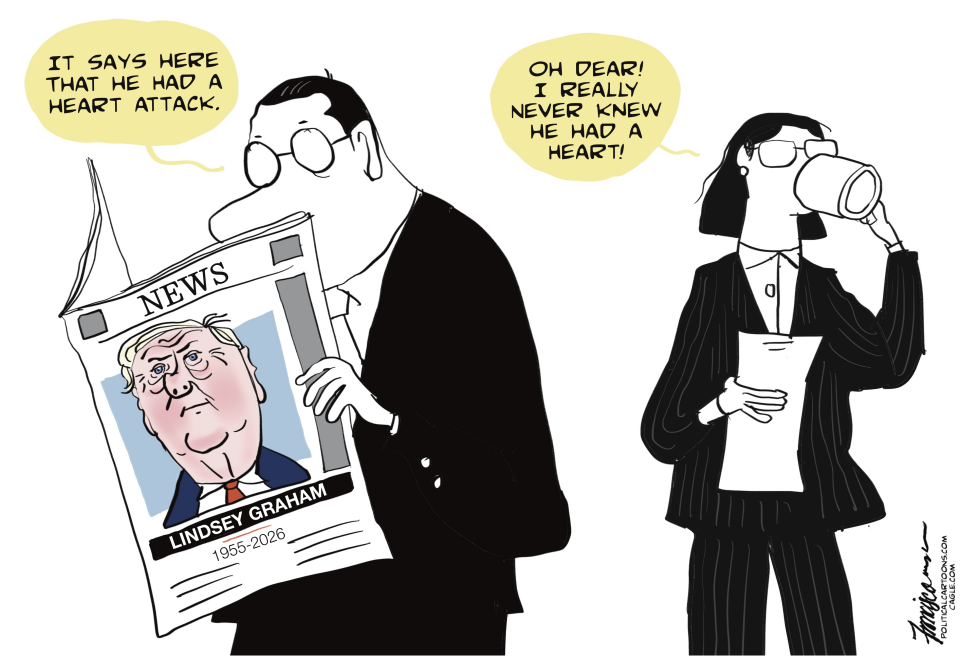
A political cartoon depicts a man reading a newspaper announcing the death of Sen. Lindsey Graham from a heart attack in 2026. A woman standing nearby responds with a pun, stating she never knew he had a heart. The image uses the obituary format and the double meaning of the word heart to highlight perceptions of the senator's demeanor.
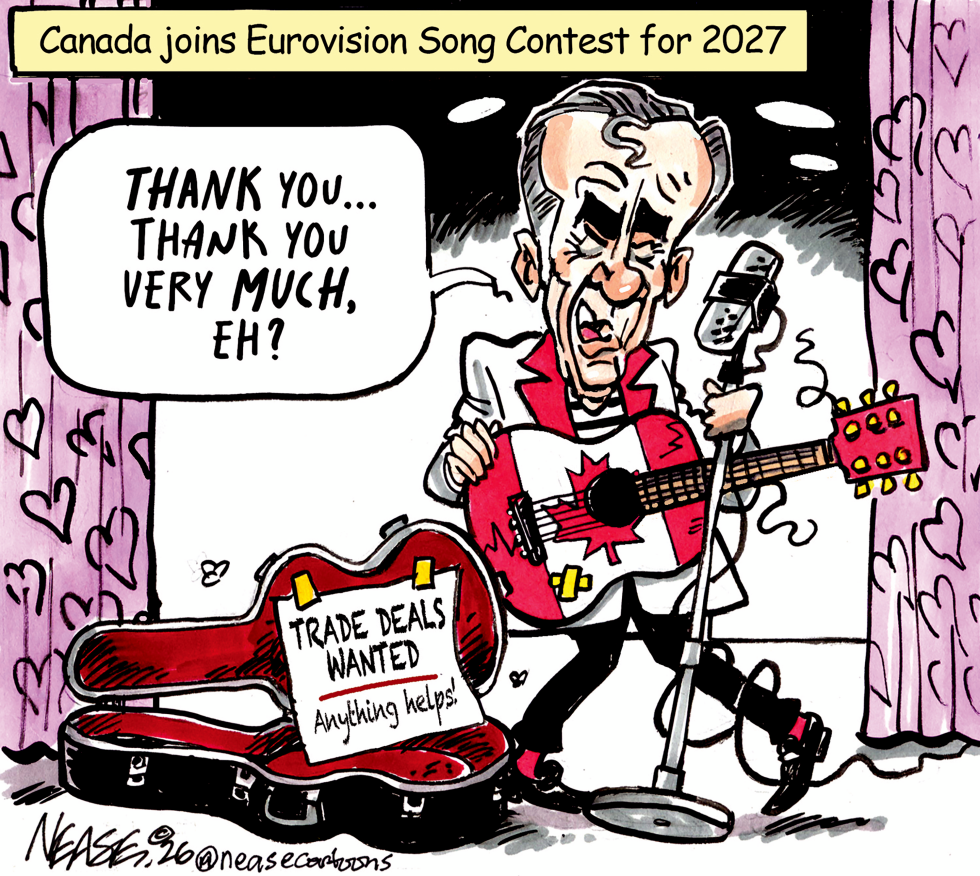
Prime Minister Justin Trudeau appears in an Elvis Presley costume on stage at the Eurovision Song Contest, holding a guitar painted with the Canadian flag. A speech bubble shows him saying thank you very much eh while an open guitar case on the floor bears a sign reading trade deals wanted anything helps. The top banner announces Canada joins Eurovision Song Contest for 2027. The cartoon by Steve Nease was published July 2 2026.
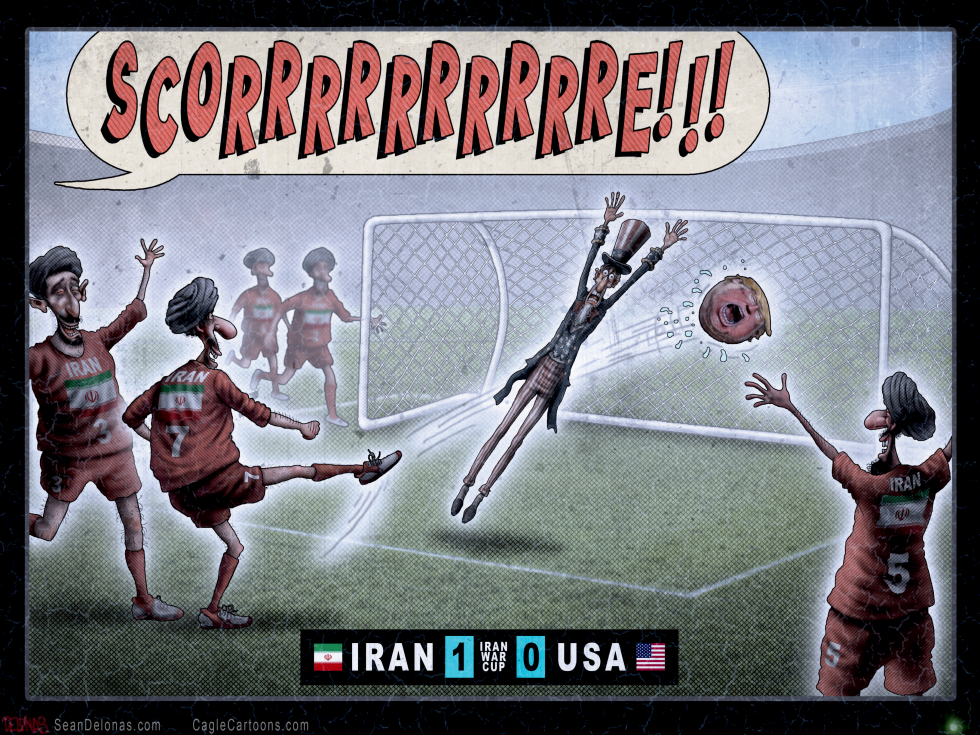
A soccer match on a green field features Iranian players in red jerseys celebrating as a tall figure in a top hat leaps toward the goal with its head detached and flying. The scoreboard reads Iran 1 USA 0 under the Iran War Cup title, with the date set in June 2026 amid ongoing Middle East tensions.
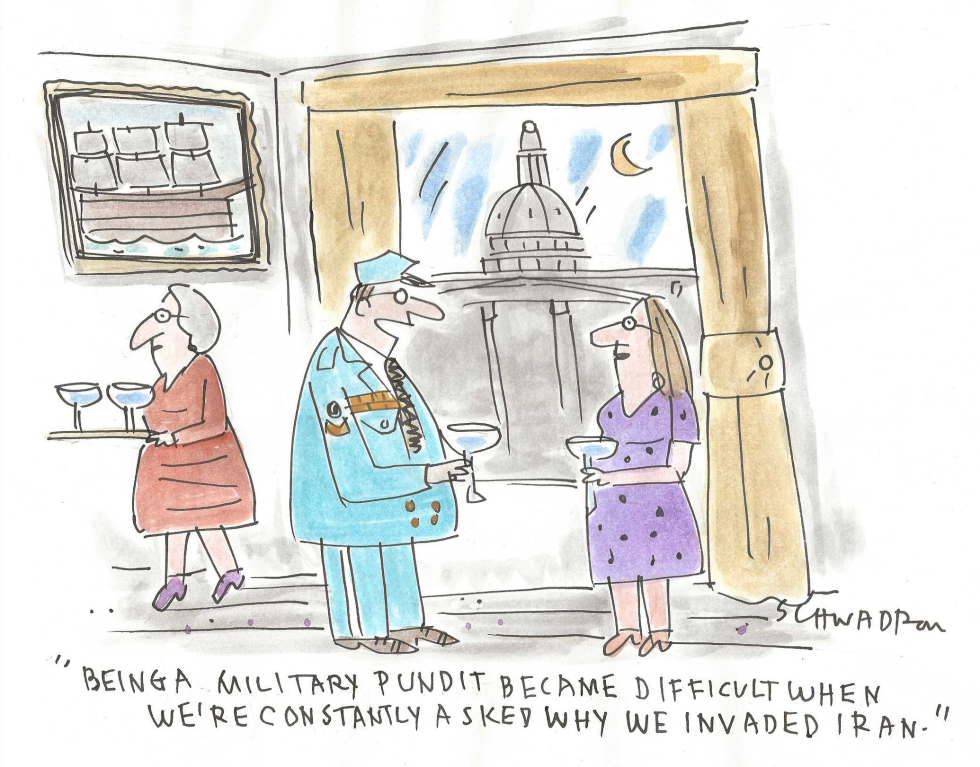
The cartoon displays three figures in a room with a window view. A man in uniform talks to a woman while another woman stands apart. The visible caption addresses the difficulty of being a military pundit asked about invading Iran. Tags include military, pundit, Iran, Middle East, Israel, nukes, bombs, Trump, foreign policy.