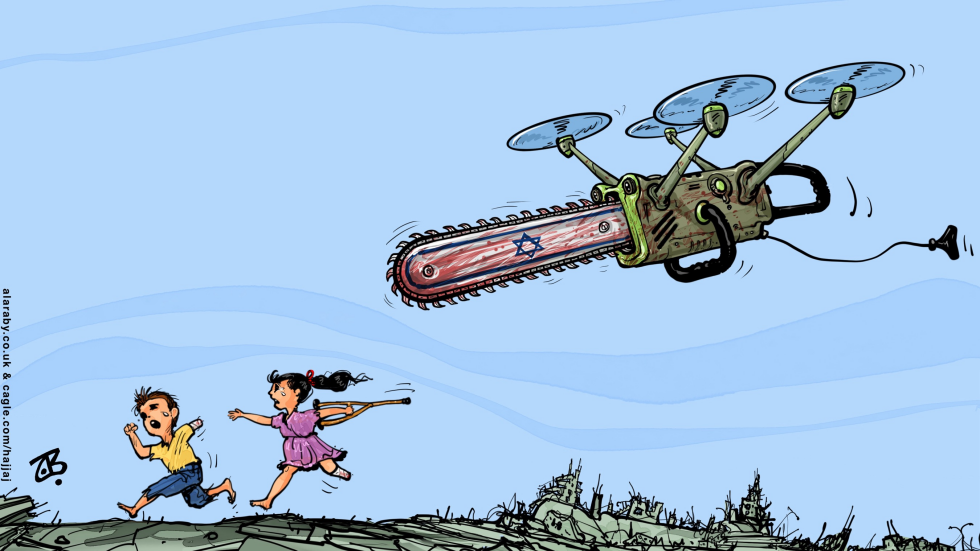
Israeli forces have deployed quadcopter drones equipped for combat in Gaza operations. The tactic has intensified scrutiny over risks to noncombatants in dense urban zones. Critics argue the approach blurs lines between targeted strikes and broader harm. The cartoon frames these weapons as indiscriminate threats to local populations. It takes the position that such technology exacerbates the humanitarian toll of the conflict.
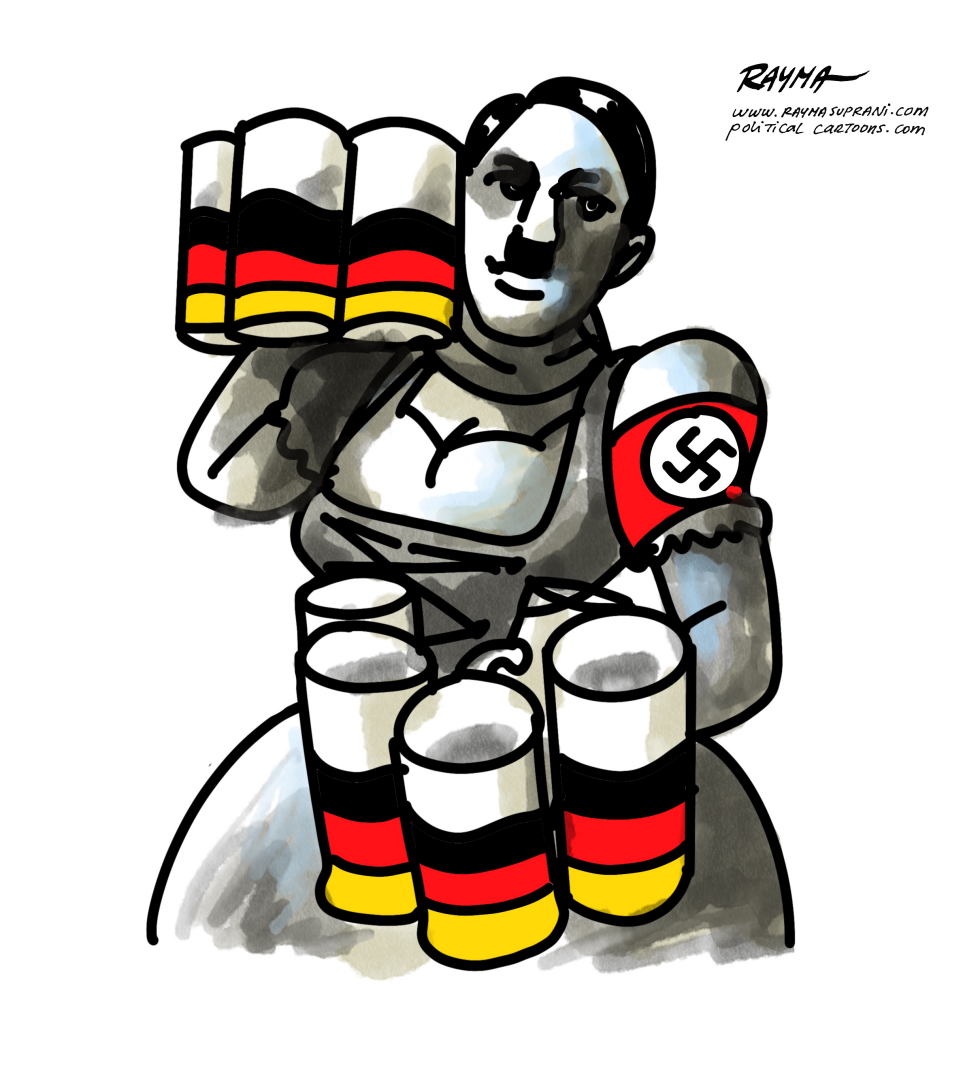
The cartoon depicts a figure resembling Adolf Hitler clad in armor and bearing a swastika armband while surrounded by beer mugs colored like the German flag. It responds to ongoing discussions about far-right movements in Germany by blending historical Nazi references with contemporary beer culture symbols. The work highlights perceived connections between political radicalism and national social customs as of the 2026 publication date. No specific recent event anchors the piece beyond recurring themes of extremism in European politics.
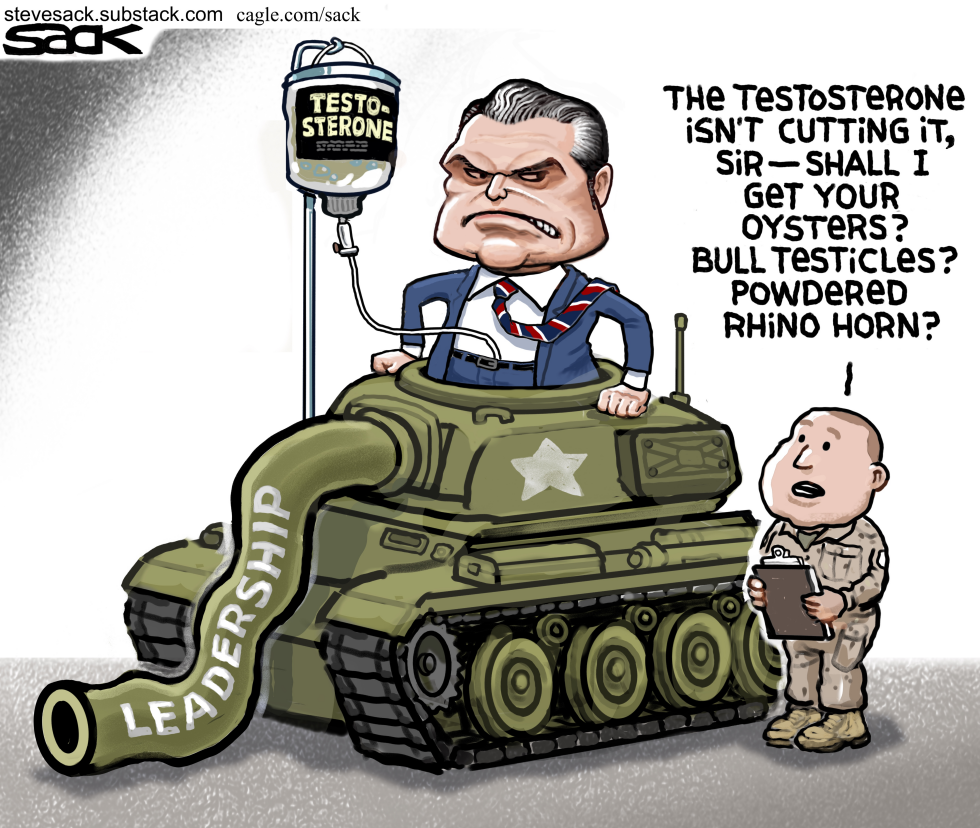
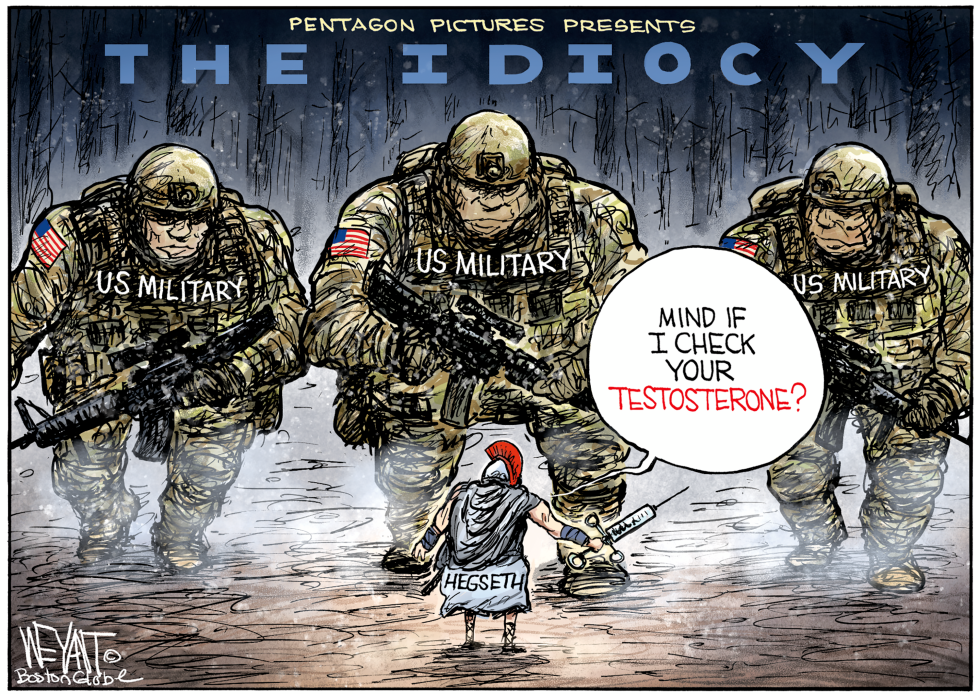
Pete Hegseth's nomination and early actions as a top defense official have spotlighted his emphasis on testosterone levels as a solution to perceived military leadership gaps. The approach has prompted questions from within the ranks about whether hormone supplements address core readiness and command issues. The cartoon portrays the policy as misguided and ineffective.
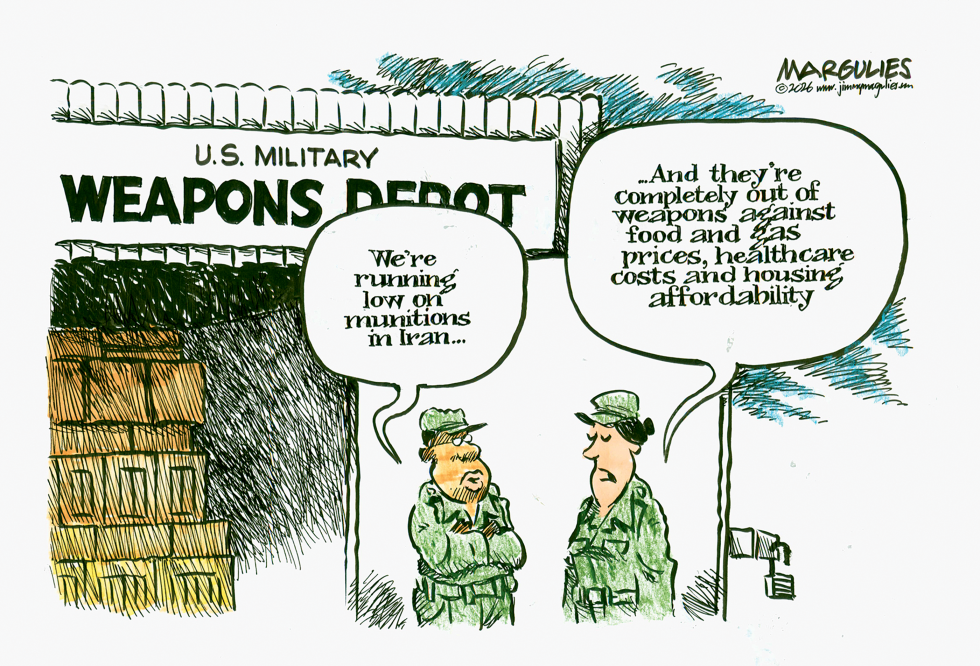
The cartoon depicts two U.S. soldiers outside a weapons depot labeled U.S. Military Weapons Depot. One soldier states the facility is running low on munitions in Iran. The second replies that domestic fronts are out of weapons against food and gas prices, healthcare costs and housing affordability. The image responds to ongoing debates over U.S. military aid commitments abroad and competing budget pressures at home as of the August 2026 publication date. It uses the depot setting and dialogue to contrast foreign military demands with economic challenges facing American households.
Defense Secretary Pete Hegseth has directed new scrutiny of testosterone levels across US military units. The move comes as the Pentagon reviews physical readiness standards for combat roles. Critics argue the focus distracts from broader readiness issues while supporters say it enforces accountability. The editorial takes the position that such micromanagement undermines troop morale and operational effectiveness.
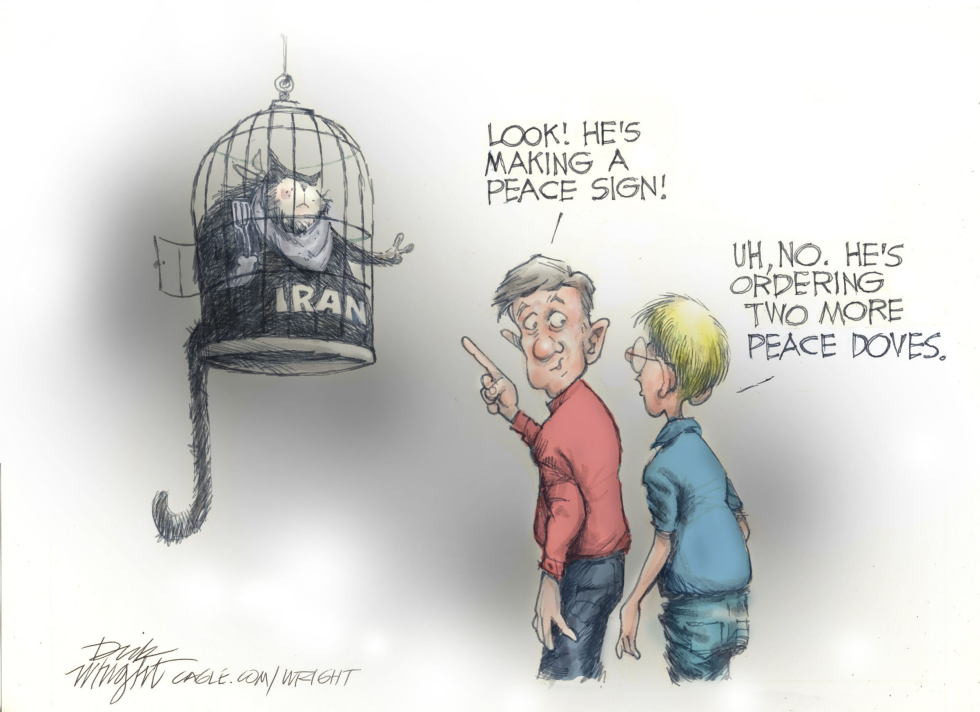
Iran continues to project peaceful intentions while advancing its military capabilities. Recent diplomatic overtures have been met with skepticism from observers who note ongoing weapons development. The piece argues that Iran's gestures are being misinterpreted as peaceful when they signal further aggression.
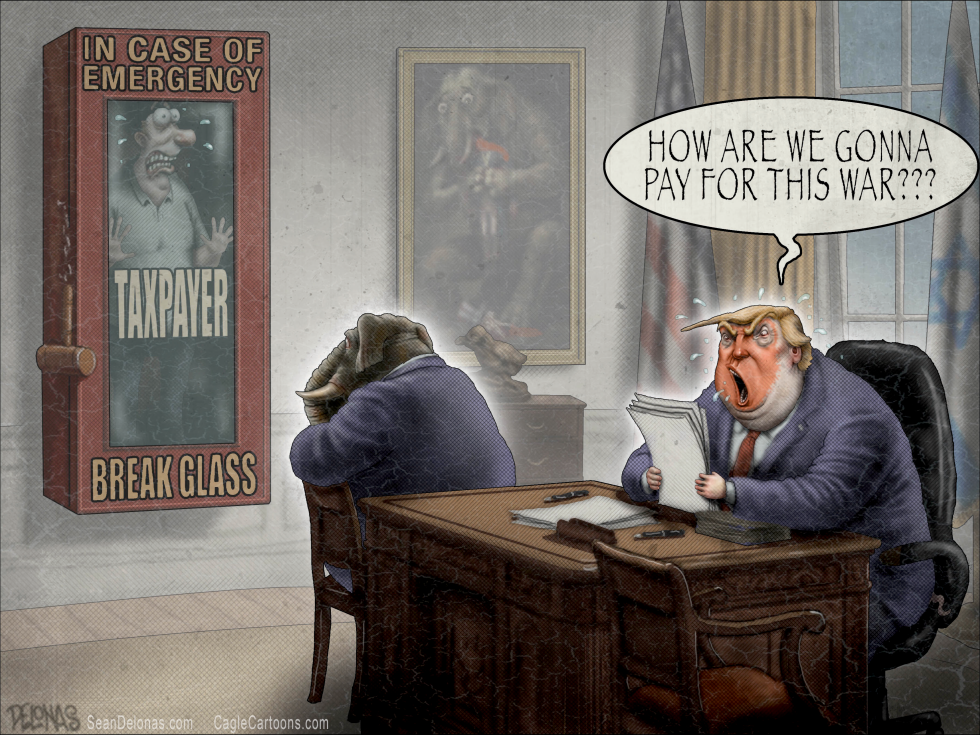
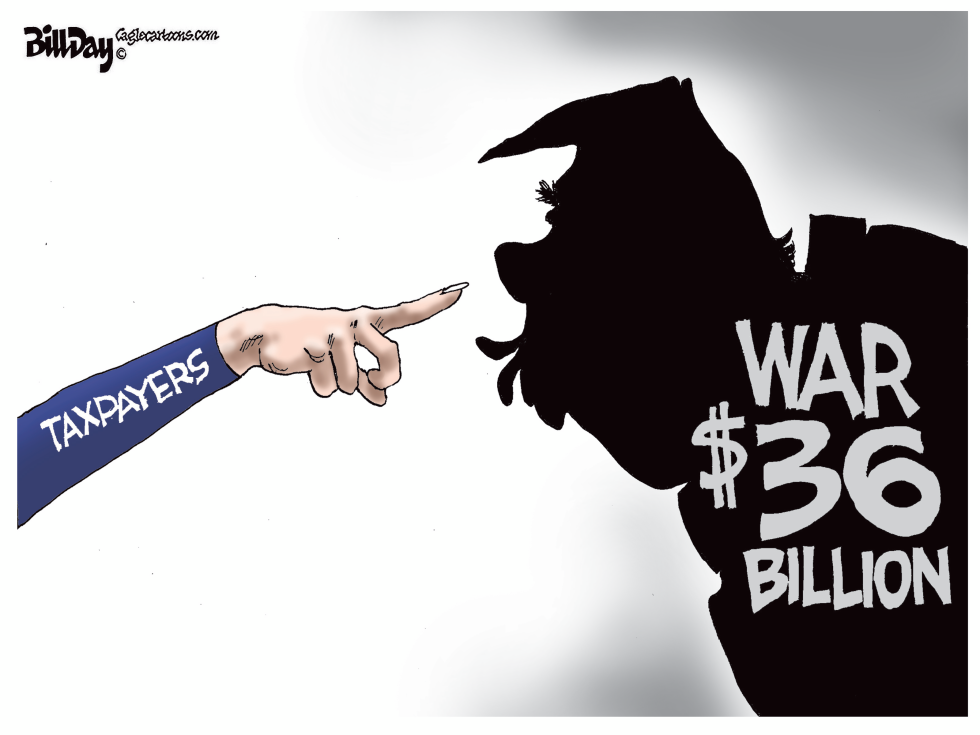
Donald Trump publicly questions the costs of ongoing war funding in mid-2026, highlighting taxpayer burdens during budget debates. The move underscores tensions within Republican circles over defense spending priorities and fiscal responsibility. The piece portrays the concern as an emergency response to mounting expenses.
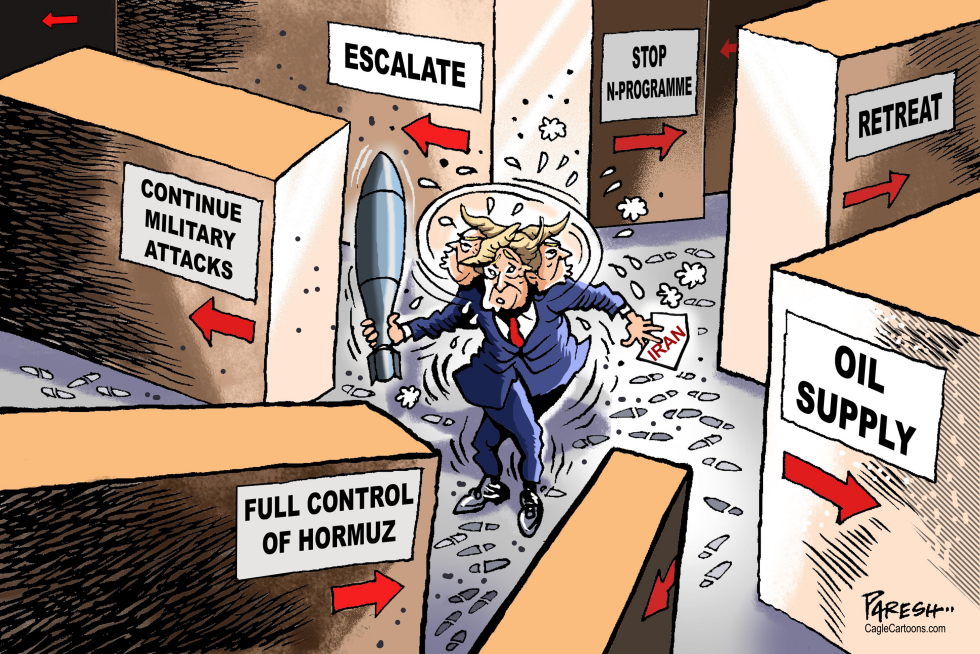
The cartoon shows Donald Trump caught between contradictory policy boxes on Iran, including continuing military attacks, escalating, stopping the nuclear programme, retreating, securing full control of Hormuz and protecting oil supply. Arrows point in conflicting directions while Trump clutches a missile and a paper labeled Iran. Published on July 19, 2026, the image captures the tangled options confronting the administration in the Middle East.
The image presents Lindsey Graham in an obituary format dated 2026. It lists his birth and death years alongside a quote labeling him a consistent supporter of military engagements. The composition places the figure on the right with text blocks on the left. Publication occurred on July 12 2026. The visual focuses on his senate role and foreign policy positions active in prior years.
The cartoon depicts a taxpayers arm pointing directly at a dark silhouette bearing the words WAR $36 BILLION. Published on June 30 2026 the image addresses ongoing debates over military expenditures and public accountability for large scale war costs. The visual uses a simple silhouette to represent the recipient of criticism while the pointing gesture emphasizes taxpayer frustration with the scale of spending.
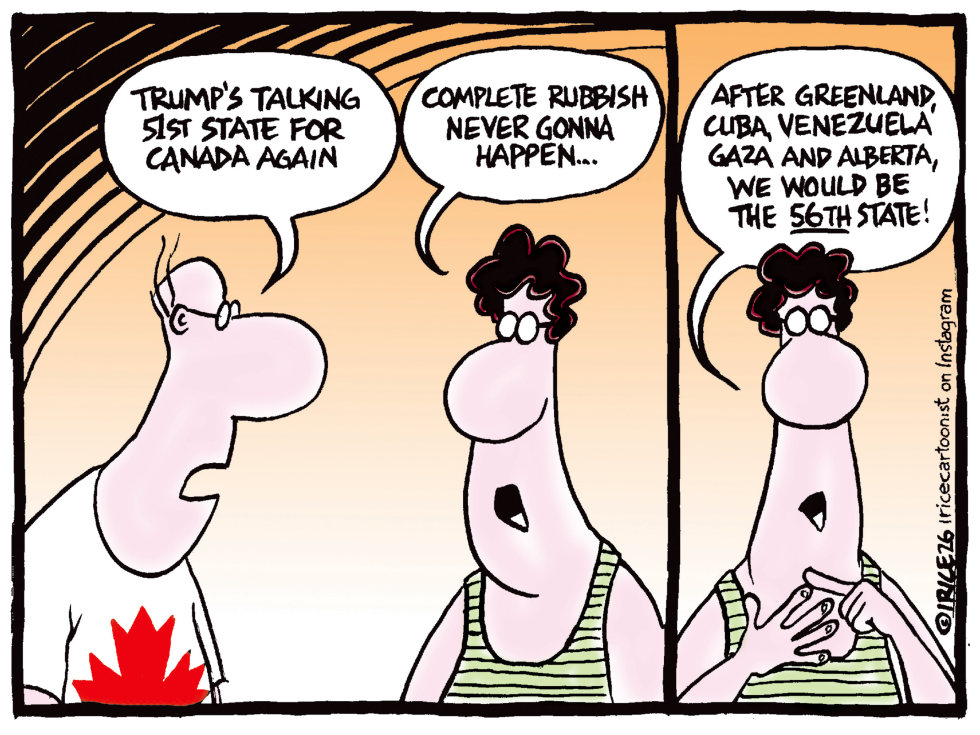
On June 26 2026 two figures appear in a three-panel exchange. The left panel shows a man in a maple leaf shirt noting renewed talk of Canada as the 51st state. The middle panel features a second man calling the notion complete rubbish. The right panel continues the exchange with the second man counting Greenland Cuba Venezuela Gaza and Alberta as prior additions that would make Canada the 56th state.
The cartoon shows the Democratic donkey clutching a handgun labeled uncritical Israel support. A box overhead reads Bibi Gun. The donkey wears a suit and tie. The image responds to ongoing debates over US policy toward Israel and Benjamin Netanyahu in June 2026.
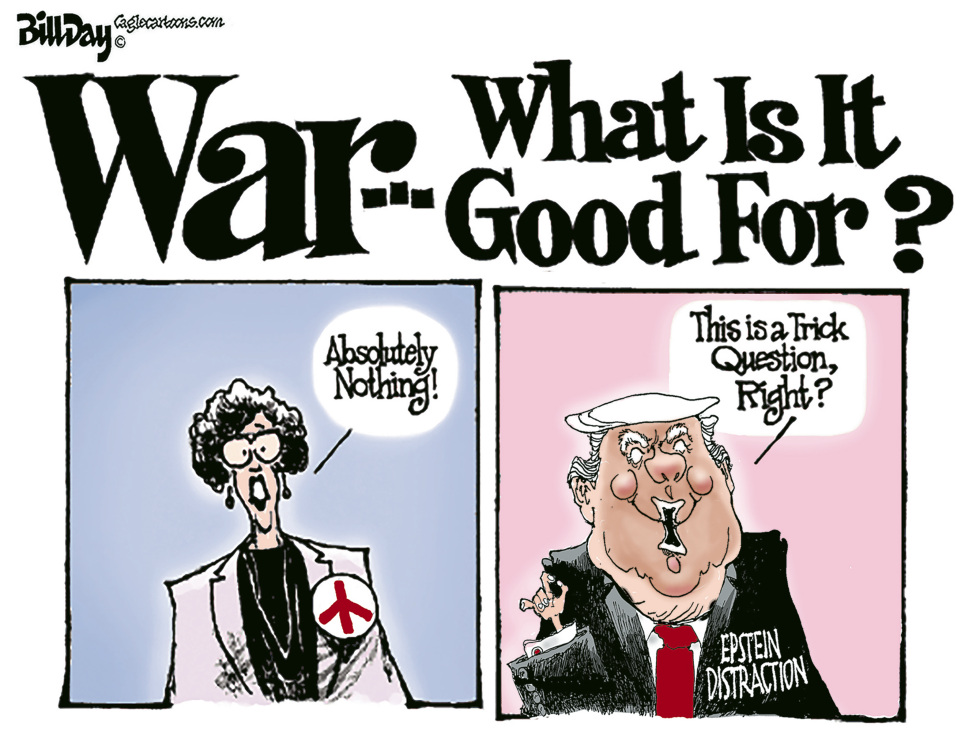
On March 26 2026 Bill Day cartoon depicts Donald Trump dismissing an Epstein files query as a trick question while holding a briefcase labeled Epstein Distraction. The left panel shows a woman resembling Attorney General Pam Bondi declaring war is good for absolutely nothing. The large headline parodies the song War and ties into ongoing Iran conflict coverage and document releases.
This biting political cartoon by Daryl Cagle depicts Donald Trump in his signature suit, his red tie extending into a coil of red tape that binds a furious, bearded figure representing Iran, complete with an 'iRan' hat. The image satirizes US-Iran relations, highlighting how bureaucracy and sanctions create entanglements in foreign policy. Trump's calm demeanor contrasts with Iran's angry struggle, underscoring the Trump administration's approach to Middle East diplomacy. Through clever visual metaphor, it comments on the nuclear deal fallout and ongoing tensions, making it a sharp piece of political humor that's both insightful and irreverent.