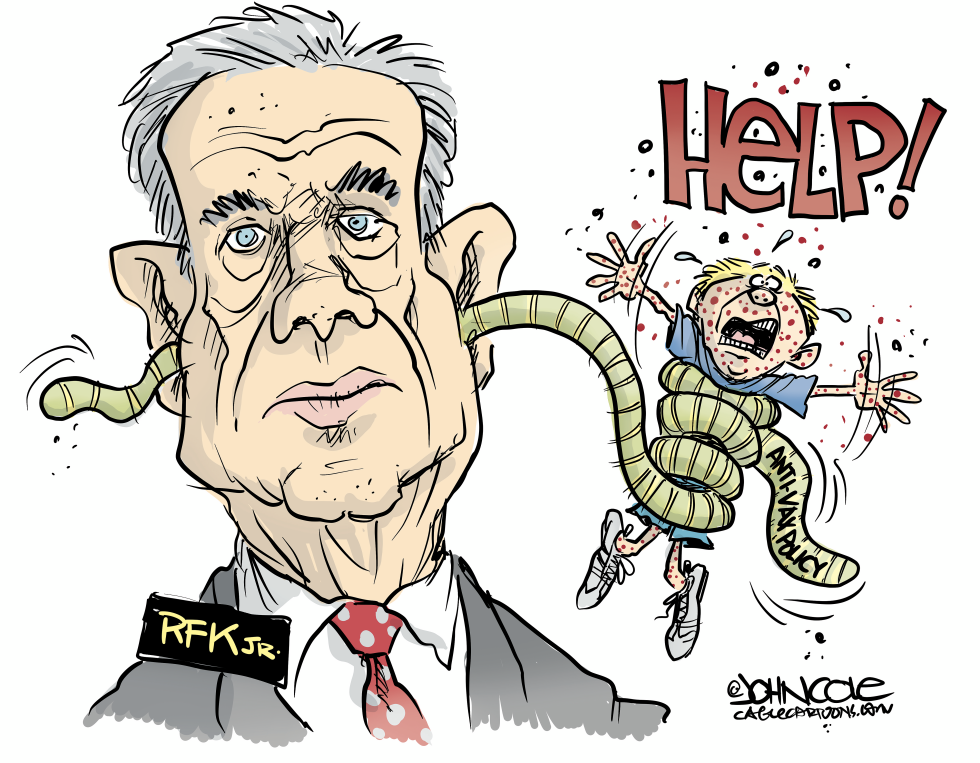
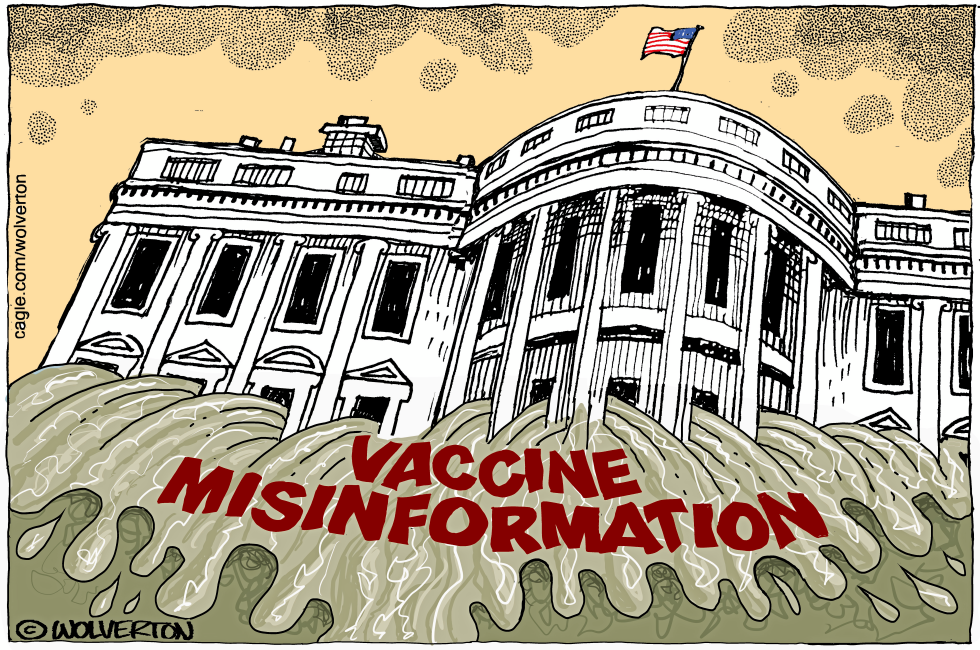
Robert F. Kennedy Jr faces renewed scrutiny over his past brain worm infection and longstanding anti-vaccine positions as he influences health policy. The episode highlights risks to childhood immunization rates and public trust in medical guidance. The piece argues these personal and ideological factors directly threaten child safety.
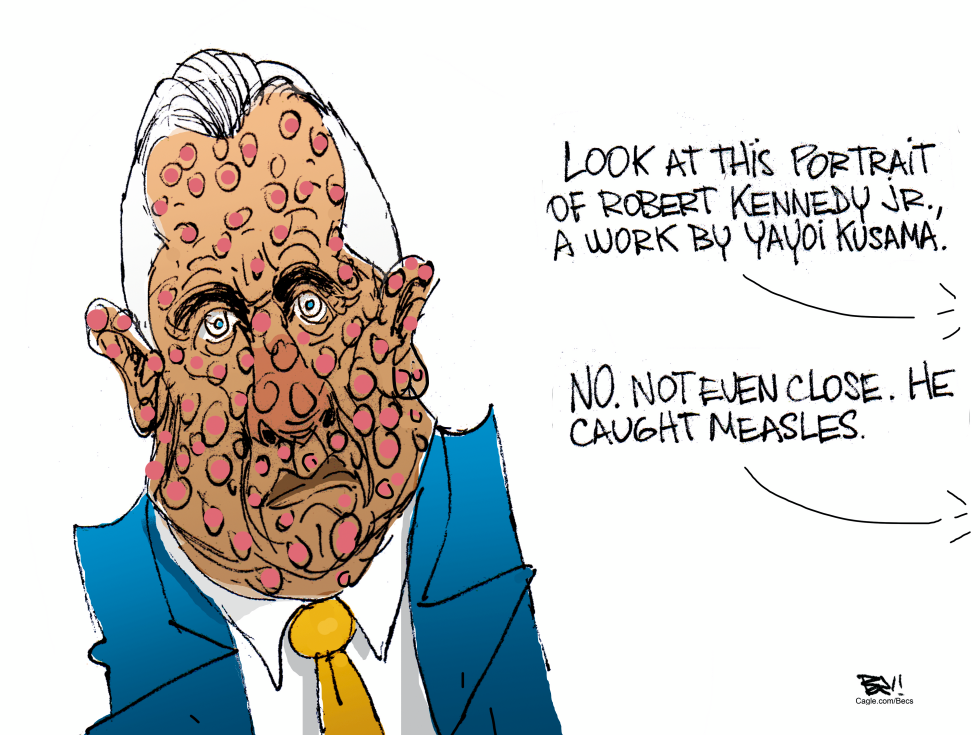
Robert F. Kennedy Jr. contracted measles, drawing attention to his long-standing vaccine positions as Health and Human Services secretary nominee. The diagnosis underscores risks of declining vaccination rates. The piece argues the illness directly contradicts his public stance on disease prevention.
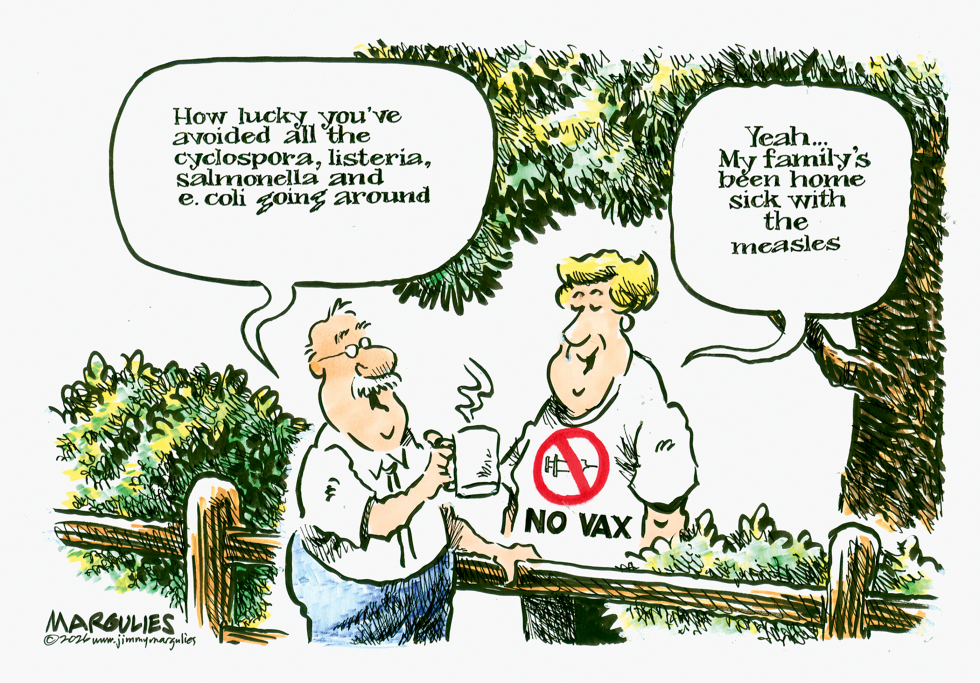
Vaccine-hesitant individuals continue to cite food safety concerns while measles cases rise in unvaccinated communities. The dynamic underscores ongoing public health tensions around immunization decisions and preventable disease spread.
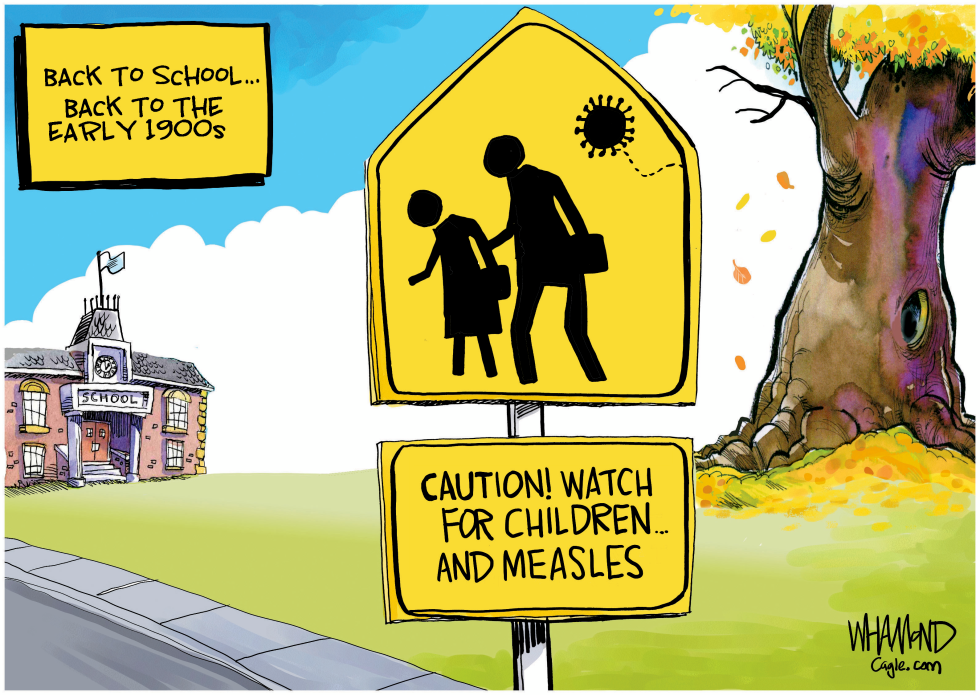
Rising measles cases tied to declining childhood vaccination rates have prompted renewed public health alerts as schools reopen across the country. The development raises concerns about preventable disease spread among students and communities. The piece argues that current conditions echo earlier eras when such illnesses posed routine threats due to insufficient immunization coverage.
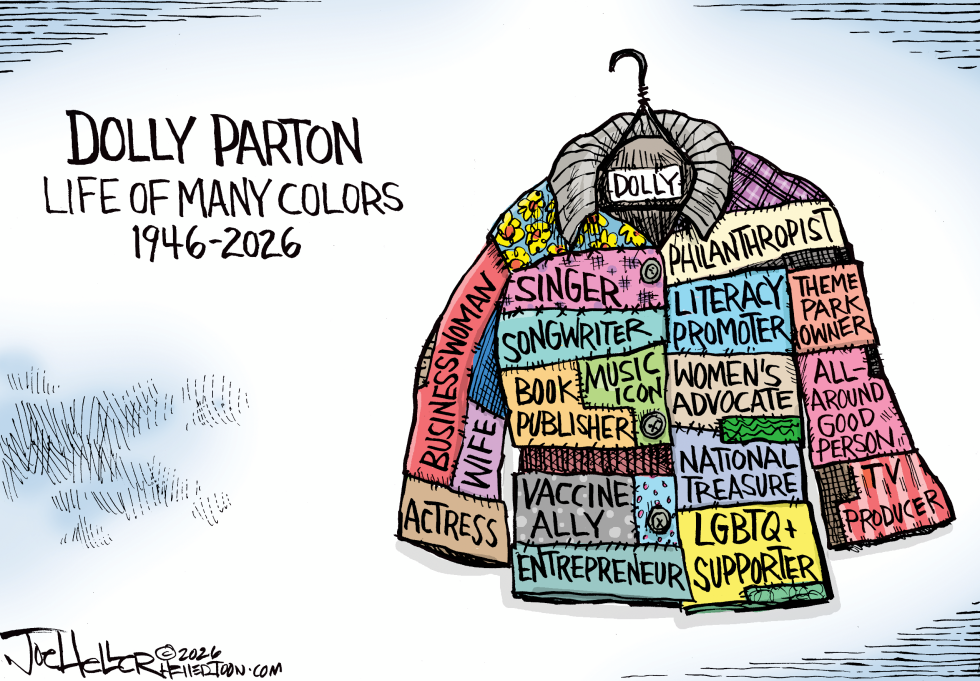
Dolly Parton died in 2026 at age 80. The country music icon built a career spanning singing, songwriting, acting, business and philanthropy while advocating for literacy, women's issues and LGBTQ causes. The tribute highlights her enduring status as a national treasure.
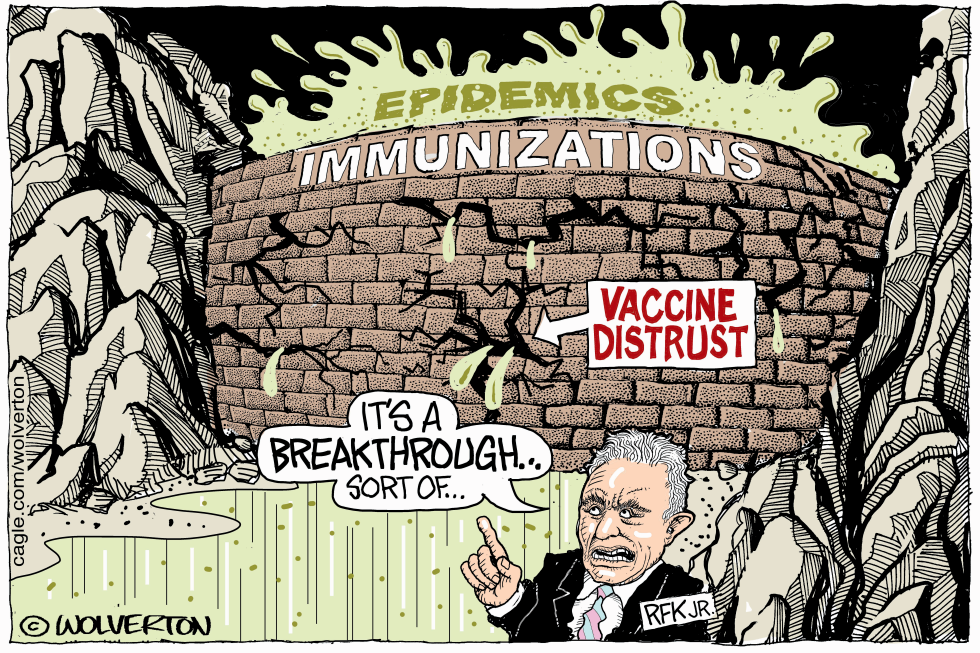
The cartoon depicts Robert F. Kennedy Jr. gesturing toward a brick wall labeled Immunizations that is fracturing under pressure from a Vaccine Distrust sign. Above the wall, the word Epidemics appears in a splash. Kennedy, identified by RFK JR on his jacket, comments in a speech bubble that it is a breakthrough of sorts. The image responds to ongoing debates over vaccine confidence and public health policy in 2026.
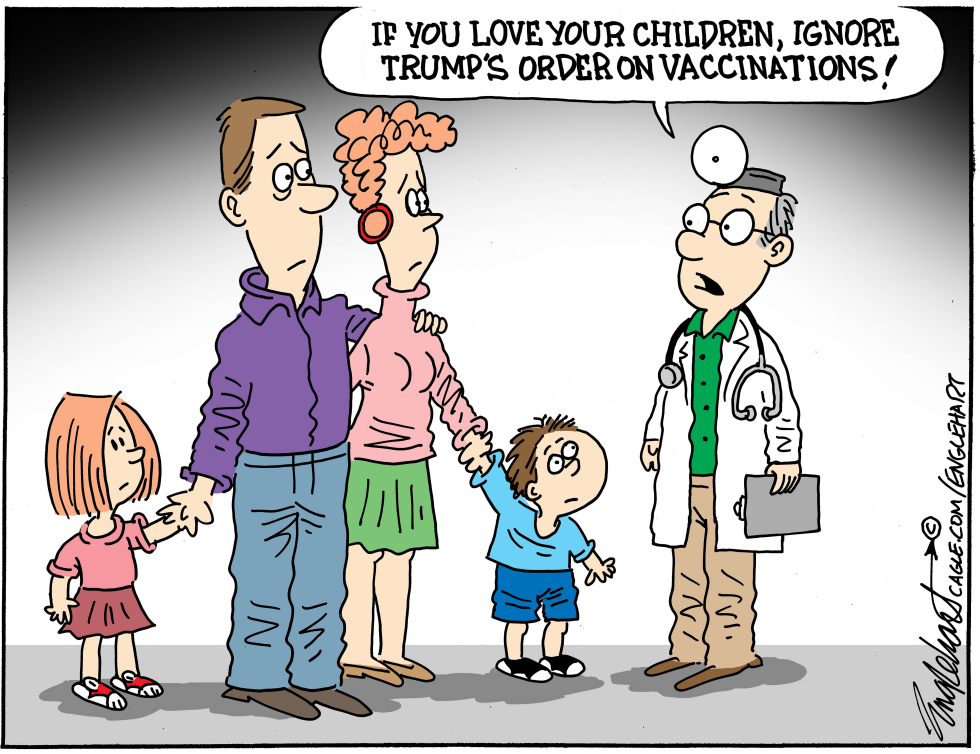
A doctor has publicly advised parents to disregard a presidential order on childhood vaccinations. The recommendation comes as the Trump administration advances new immunization policies. The stance highlights tensions between federal health directives and medical advice given directly to families. The piece presents the doctor's counsel as protective of children and critical of the order's approach.
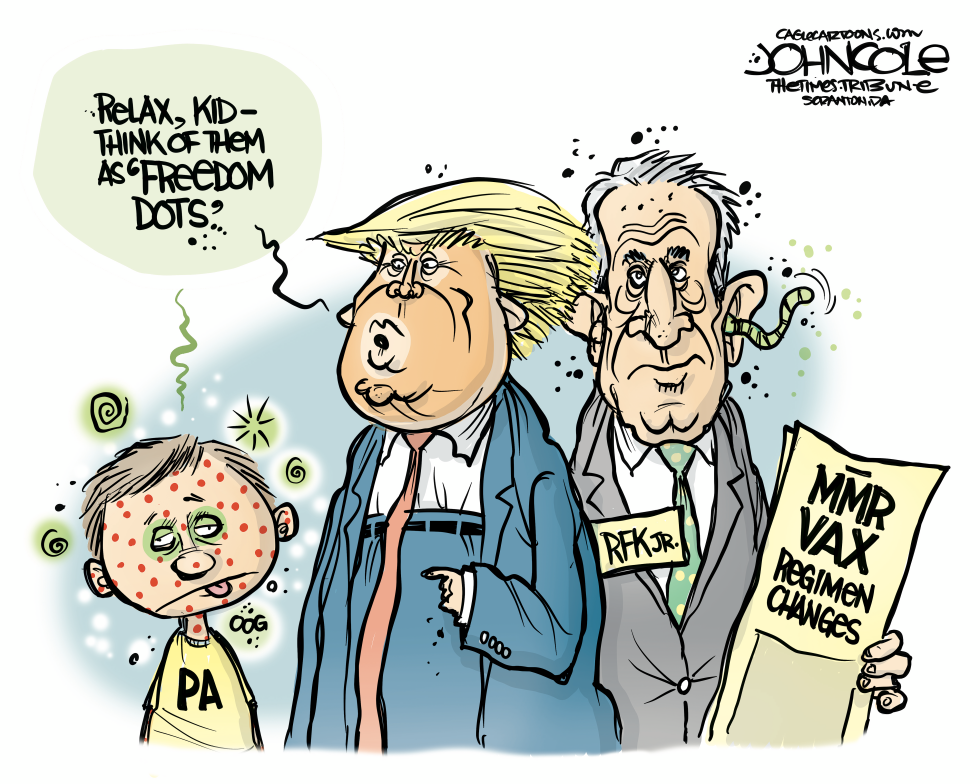
Donald Trump and RFK Jr. drew criticism in mid-August 2026 after Trump referred to measles spots as freedom dots during a Pennsylvania visit. The remarks coincided with proposed changes to MMR vaccine schedules. The piece portrays the comments as dismissive of a child's suffering and questions the administration's public health approach.
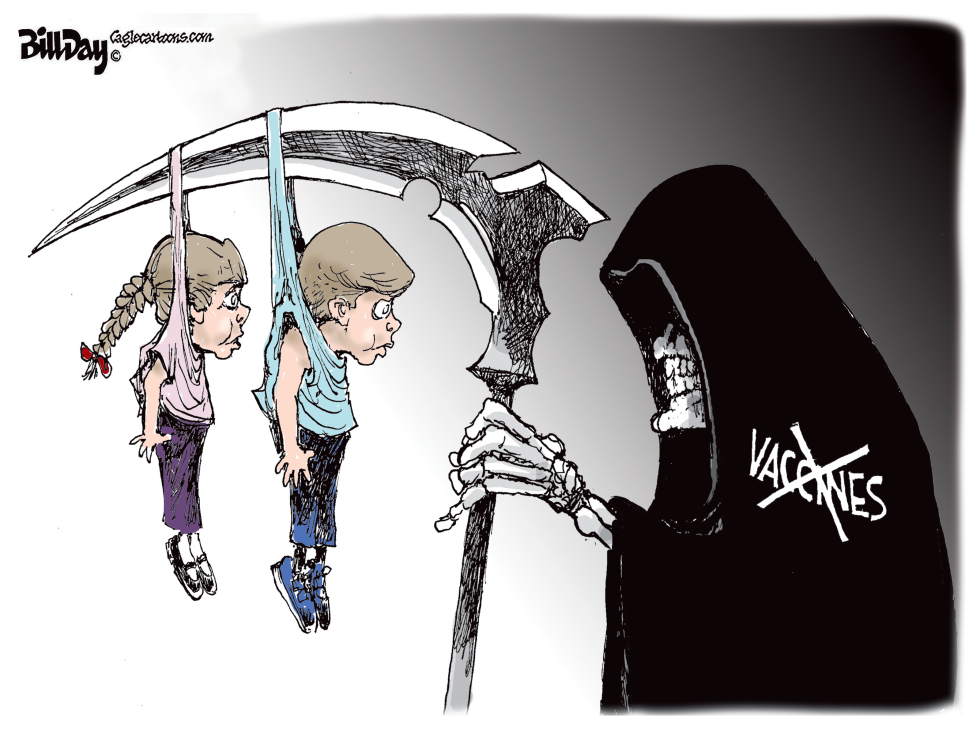
Opposition to routine childhood vaccines continues to surface in public discourse as health officials promote immunization schedules. The debate centers on parental choice versus community protection from preventable diseases. The editorial takes the position that rejecting vaccines endangers children and aligns such views with mortality risks.
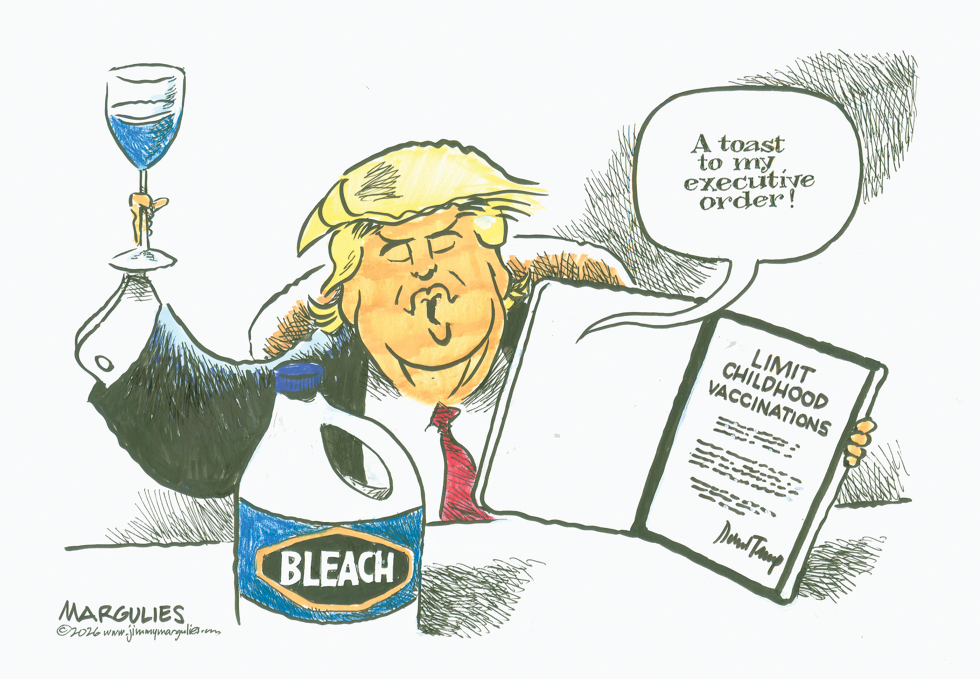
President Donald Trump signed an executive order limiting childhood vaccinations on or around August 2026. The move drew immediate attention for its potential impact on public health access and immunization rates nationwide. Critics argued the policy could increase disease risks for children while supporters framed it as protecting parental choice. The editorial uses the bleach toast imagery to critique the decision as reckless and disconnected from established medical guidance.
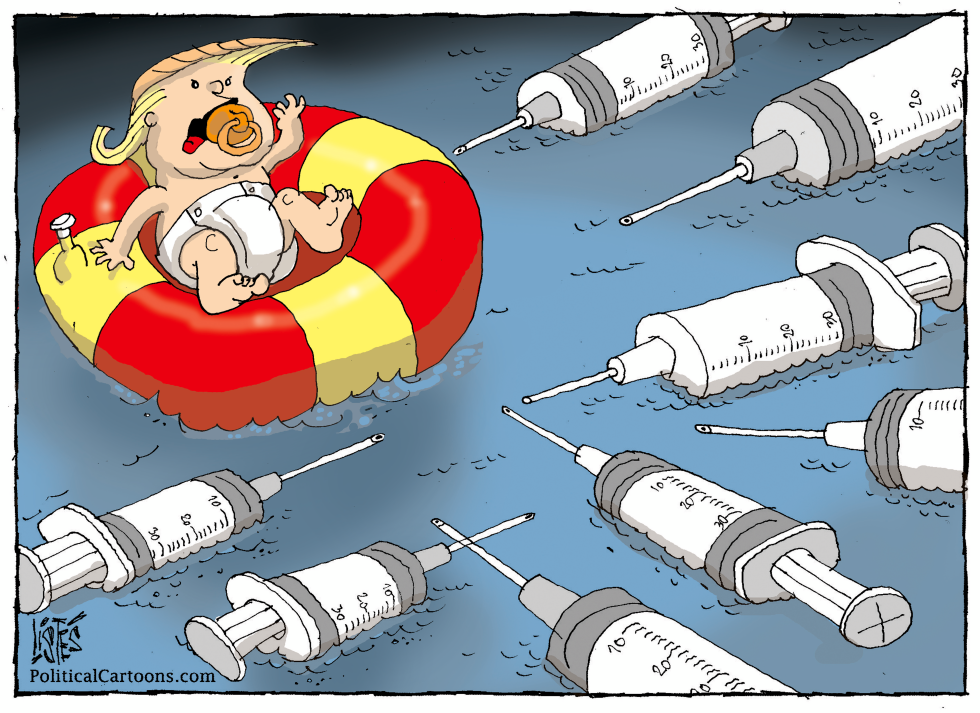
Donald Trump has maintained vocal opposition to certain vaccine mandates and public health measures in recent political discourse. The piece frames this stance through an infant metaphor to underscore perceived vulnerability and fear. It critiques the position as immature amid ongoing public health debates.
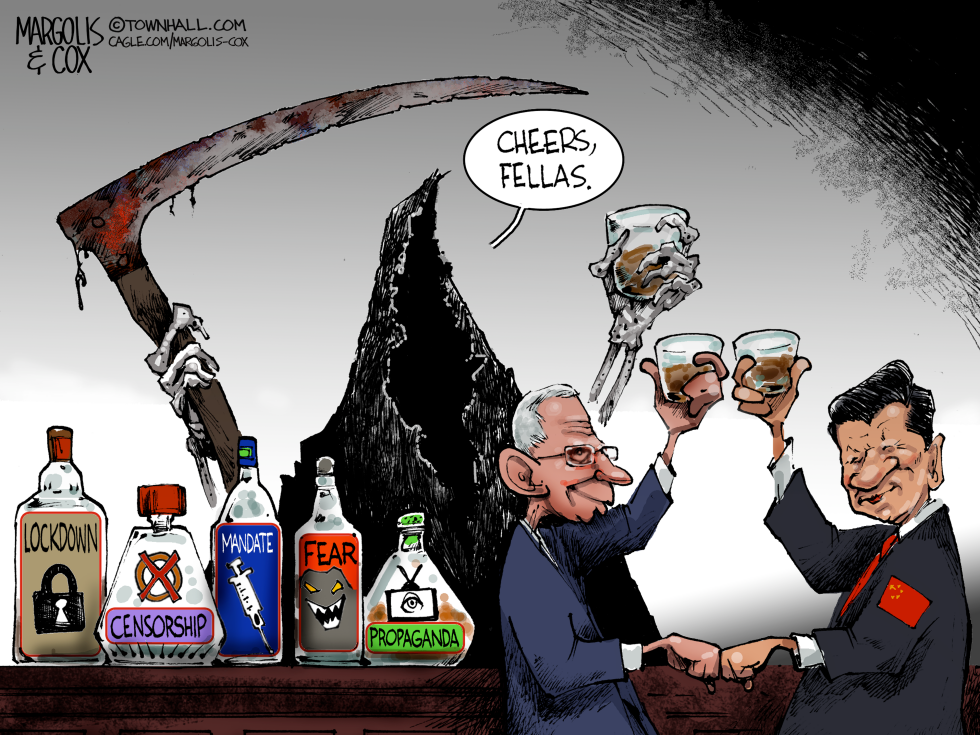
On August 6, 2026, the cartoon responds to lingering debates over COVID-19 policies by depicting former NIAID director Anthony Fauci and Chinese leader Xi Jinping toasting with the Grim Reaper. The image frames pandemic tools as shared instruments of control. The editorial position criticizes both figures for embracing fear-driven measures and information suppression.
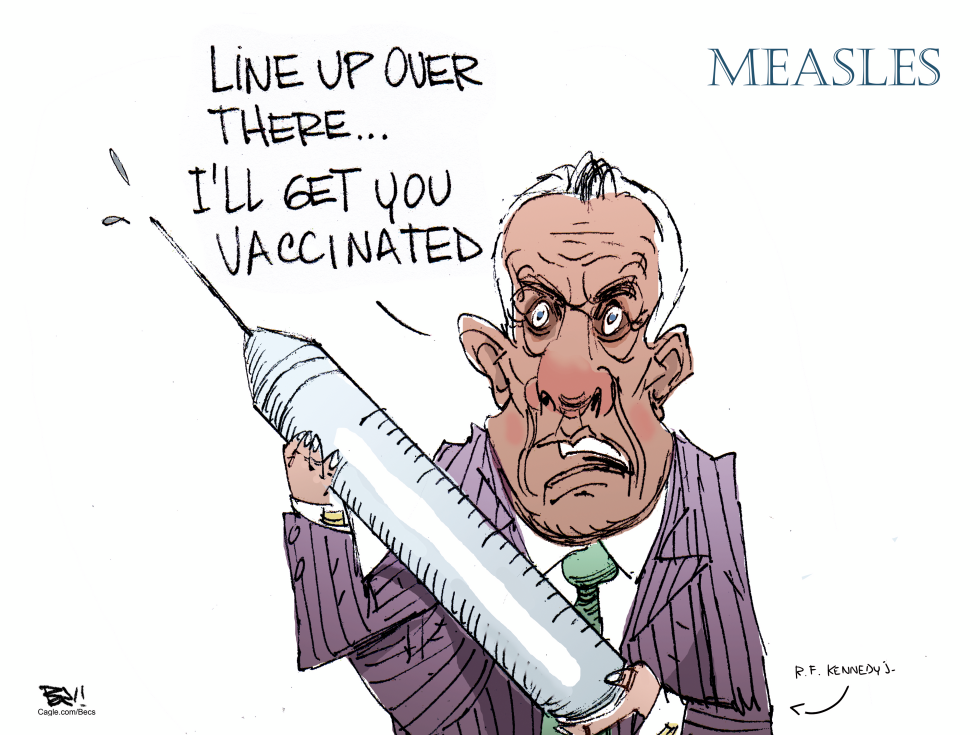
Robert F. Kennedy Jr., serving as a top health official in 2026, faces scrutiny over a sudden push for measles vaccinations. The move comes as cases rise and public skepticism lingers from prior stances. The editorial argues the policy reversal exposes inconsistent leadership on immunization.