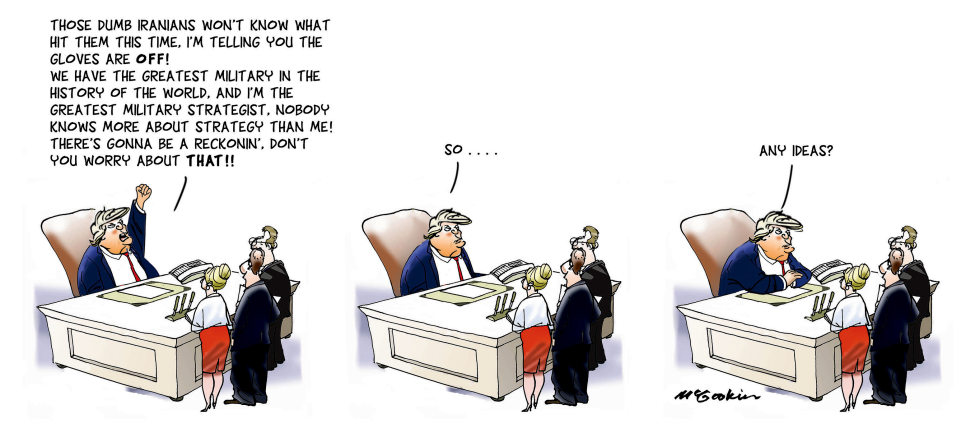
President Trump has directed his national security team to develop new military options regarding Iran. The move comes amid ongoing regional tensions and follows public statements emphasizing U.S. military superiority. The editorial takes the position that such demands reflect an impulsive approach to foreign policy that risks unnecessary escalation without clear strategic direction.
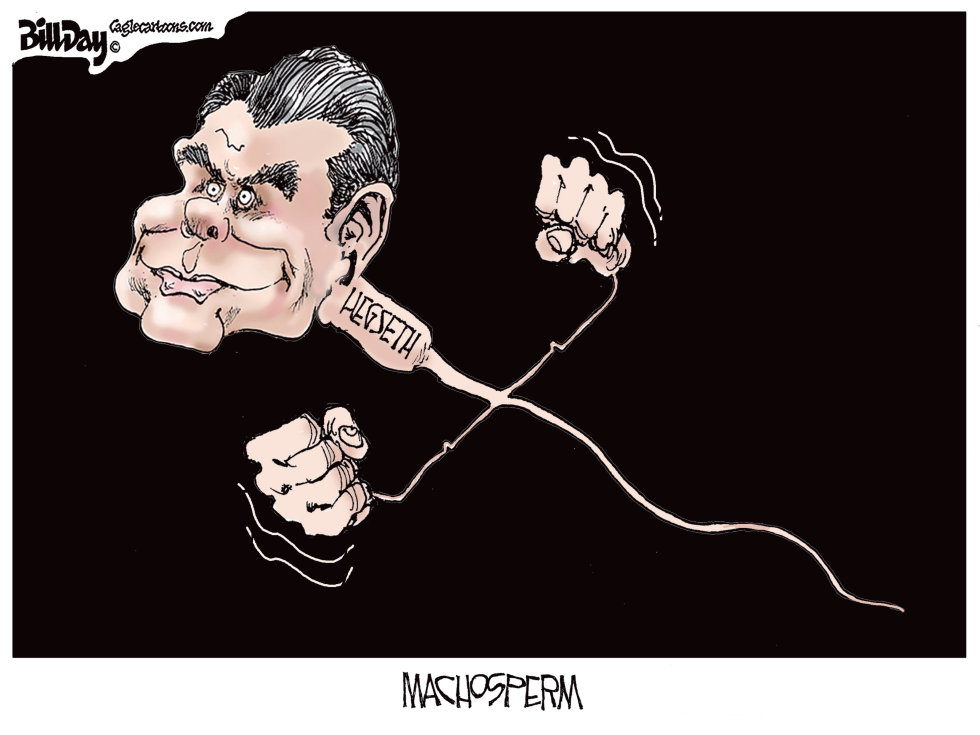
Pete Hegseth has drawn renewed attention in political circles for his public emphasis on toughness and military bearing. The ongoing discussion centers on how such personal branding intersects with his role in defense matters. The piece takes a critical stance toward that branding by reducing it to a simplistic visual metaphor.
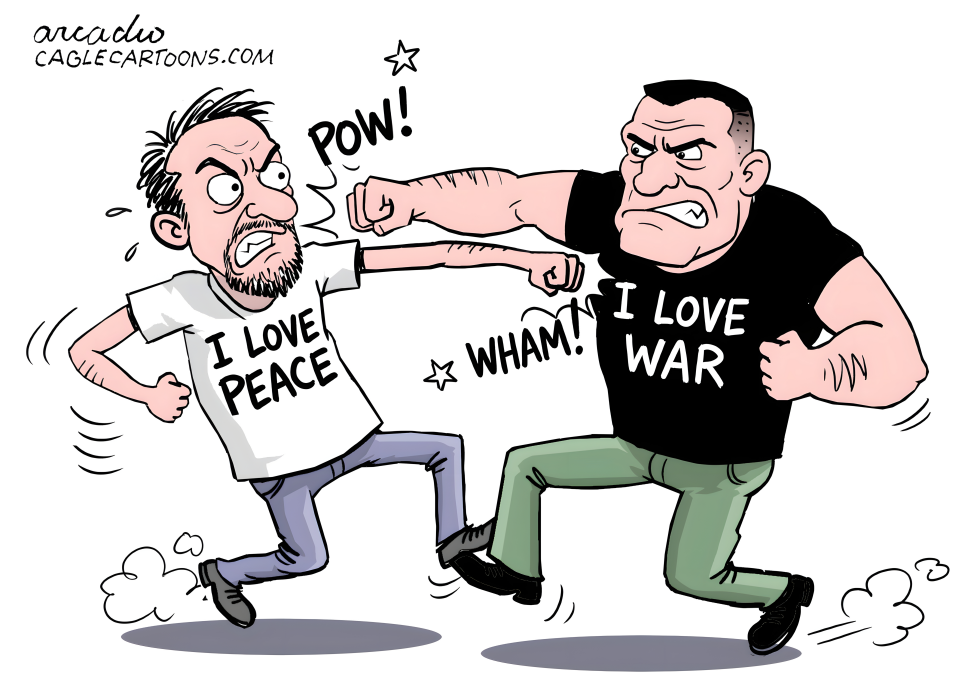
A man in a white shirt reading I LOVE PEACE absorbs a punch to the face from a man in a black shirt reading I LOVE WAR. The two figures clash in a physical fight marked by impact sounds and motion lines. The scene shows the peace advocate recoiling with wide eyes while the war advocate maintains an aggressive forward stance.
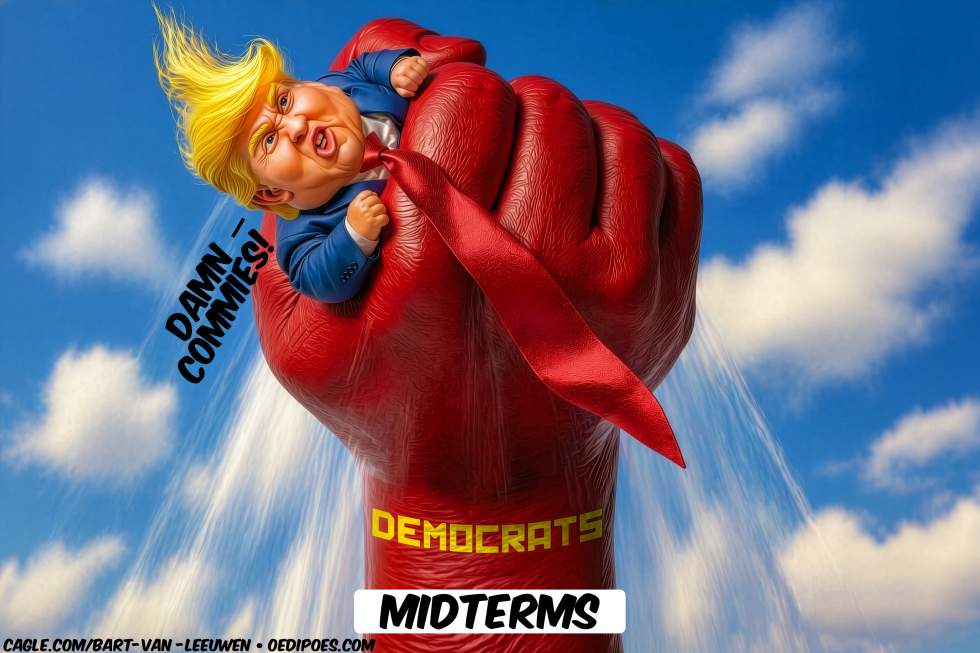
Donald Trump with blond hair and open mouth appears squeezed inside a large red fist marked Democrats. Streams of water pour downward from the grip. The figure clutches at the red tie while shouting the words Damn Commies. Yellow lettering spells Midterms below the fist against a blue sky. The scene responds to the 2026 midterm elections by showing Democratic pressure applied directly to Trump through the image of a tightening hold and visible resistance from the squeezed figure.
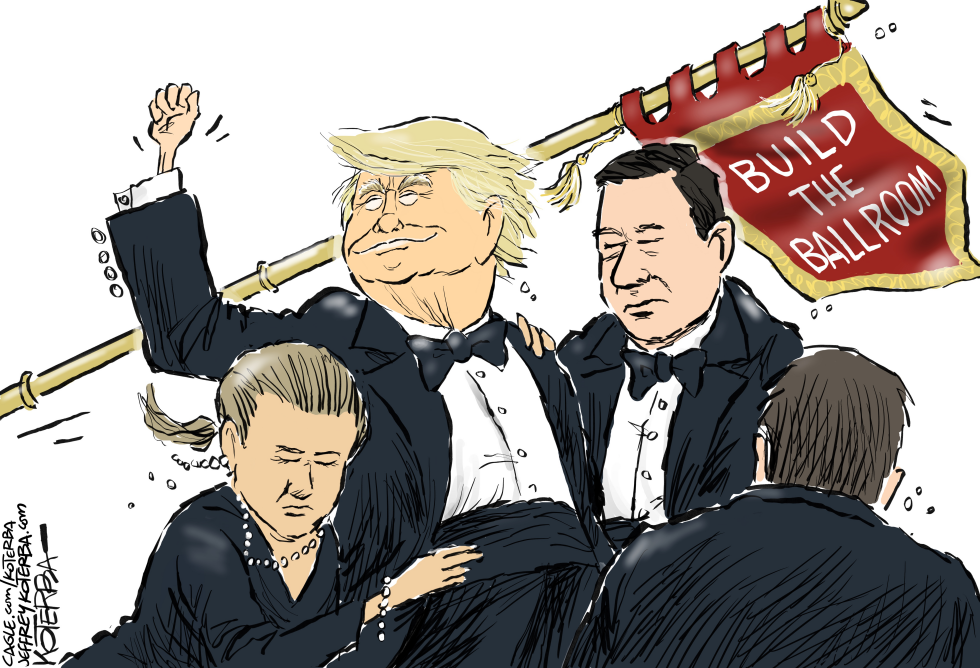
Jeff Koterba draws Trump in tuxedo, fist raised high, gripping a flagpole with a red banner proclaiming 'Build the Ballroom.' Surrounded by figures in formal wear, the scene captures a moment in a Washington ballroom, tagging into press and journalism themes. The cartoon nods to an assassination attempt in Butler, with secret service elements visible. Trump's caricature dominates, his expression set as agents cluster around. This piece fits into White House Correspondents' Dinner aftermath, blending fist symbolism with ballroom absurdity. Tags like flag and tuxedo underscore the satirical take on political resilience.
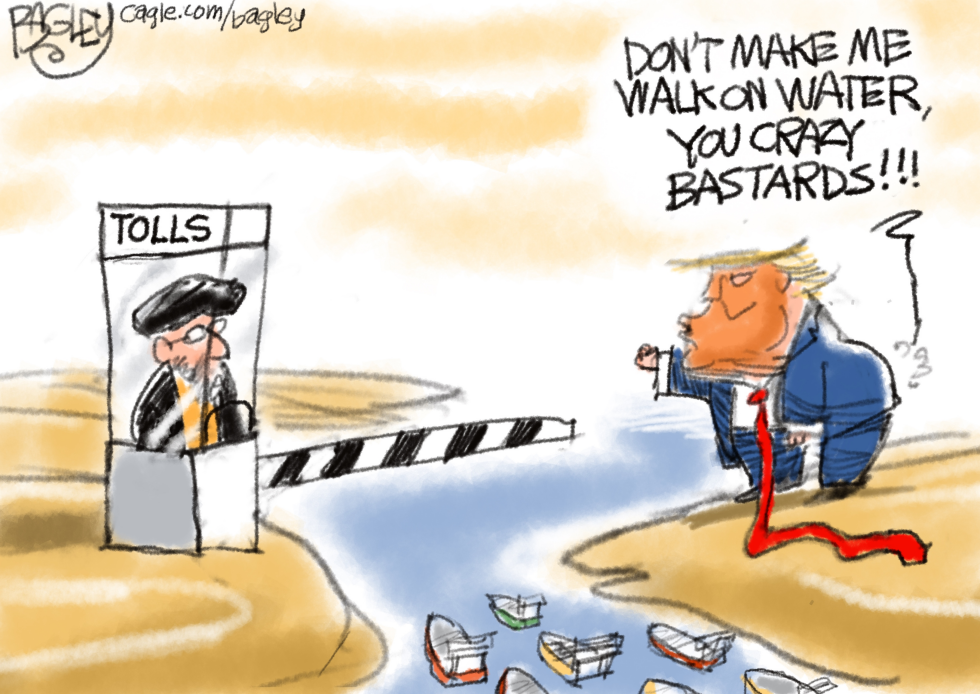
Donald Trump stands at the edge of a body of water confronting a toll booth operated by a figure resembling Ayatollah Khamenei. Small tankers sit in the water below while Trump issues a warning about walking on water. The scene references shipping routes through the Strait of Hormuz and surrounding nations.
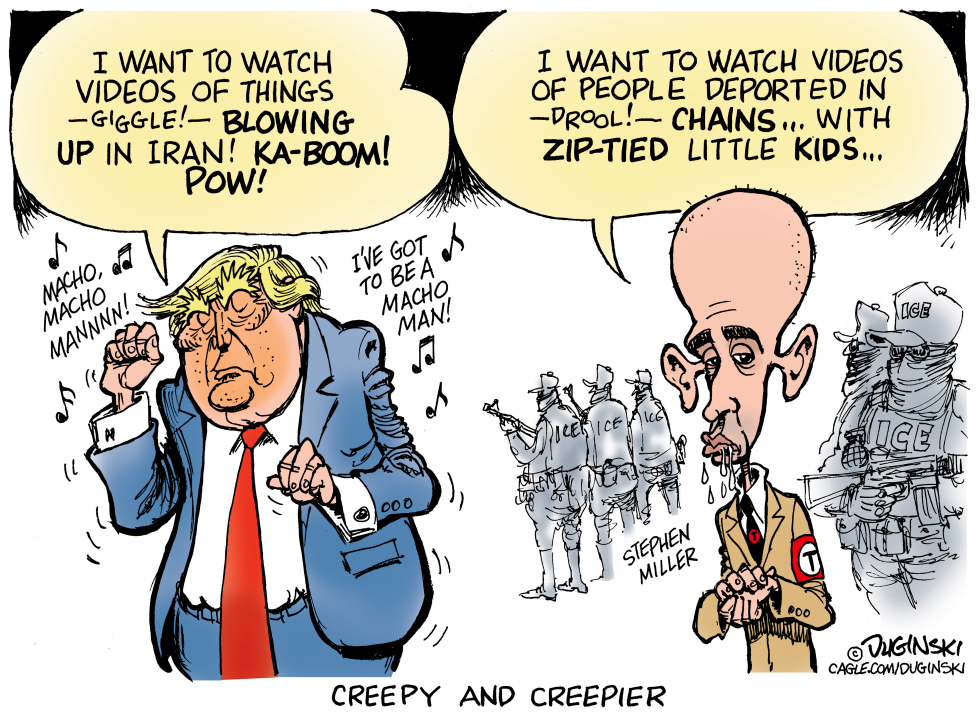
Donald Trump and Stephen Miller appear side by side with speech bubbles detailing their viewing preferences for Iran bombings and chained child deportations. ICE agents stand in formation behind them. The bottom text labels the scene creepy and creepier.
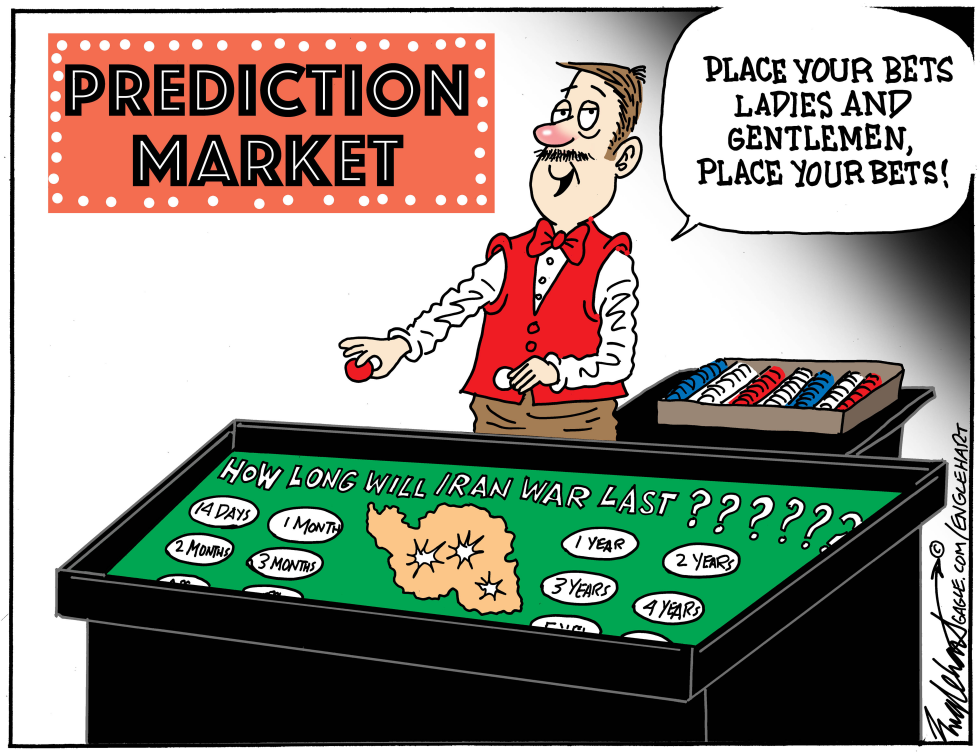
In a biting political cartoon, a smirking croupier oversees a prediction market table shaped like Iran, complete with explosion graphics, where punters can wager on war duration options ranging from 14 days to 5 years. This satirical take skewers the commodification of geopolitical betting, turning grave matters like Iran war into casino-style gambles. By blending elements of gambling on war with Middle East conflict, the artwork highlights the absurdity of prediction markets applied to real-world crises, offering humorous yet insightful commentary on how society speculates on political humor and potential catastrophes. The irreverent style underscores the folly of treating war length wager as just another market fluctuation.
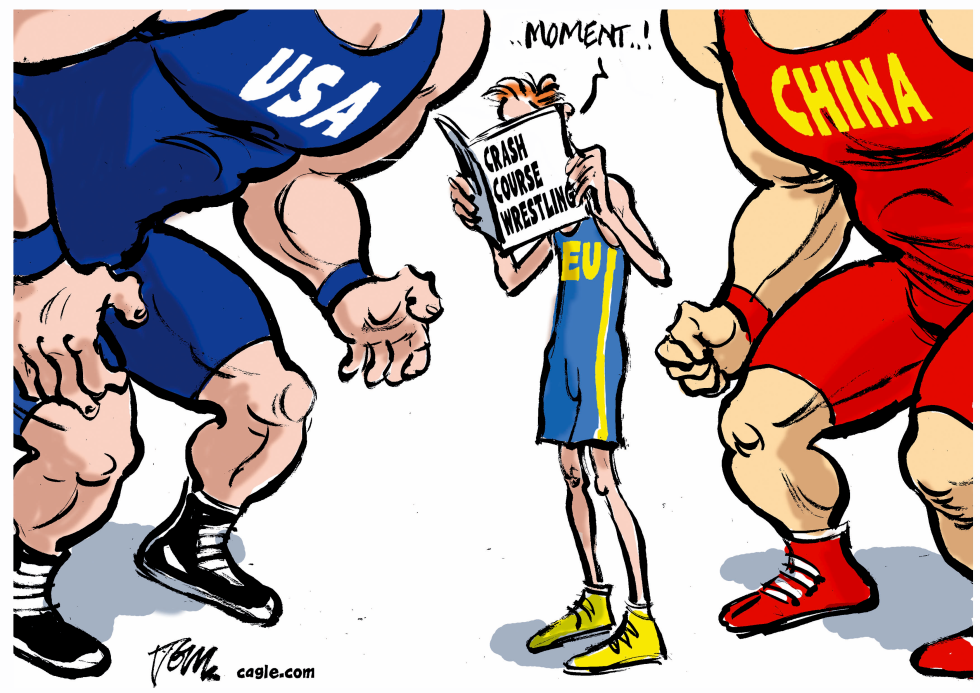
A small EU wrestler stands between two much larger opponents labeled USA and China. The central figure holds a book titled Crash Course Wrestling while the USA athlete extends an open hand and the China athlete raises a clenched fist. The scene shows the EU in a blue singlet with yellow accents between the two superpowers.
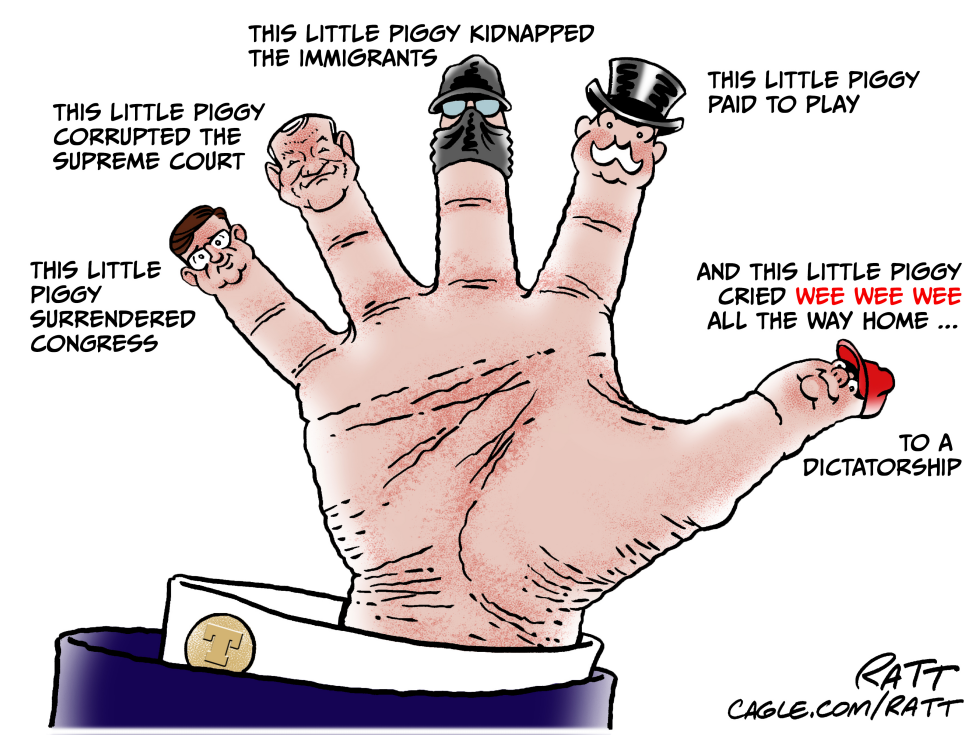
This political cartoon uses the nursery rhyme 'This Little Piggy' to satirize political corruption, power dynamics, and the manipulation of institutions like Congress and the Supreme Court. Each finger represents a different aspect of political critique, from corruption to the surrender of power, culminating in a commentary on dictatorship. The illustration employs humor and allegory to convey a strong political message about the current state of governance and influence.