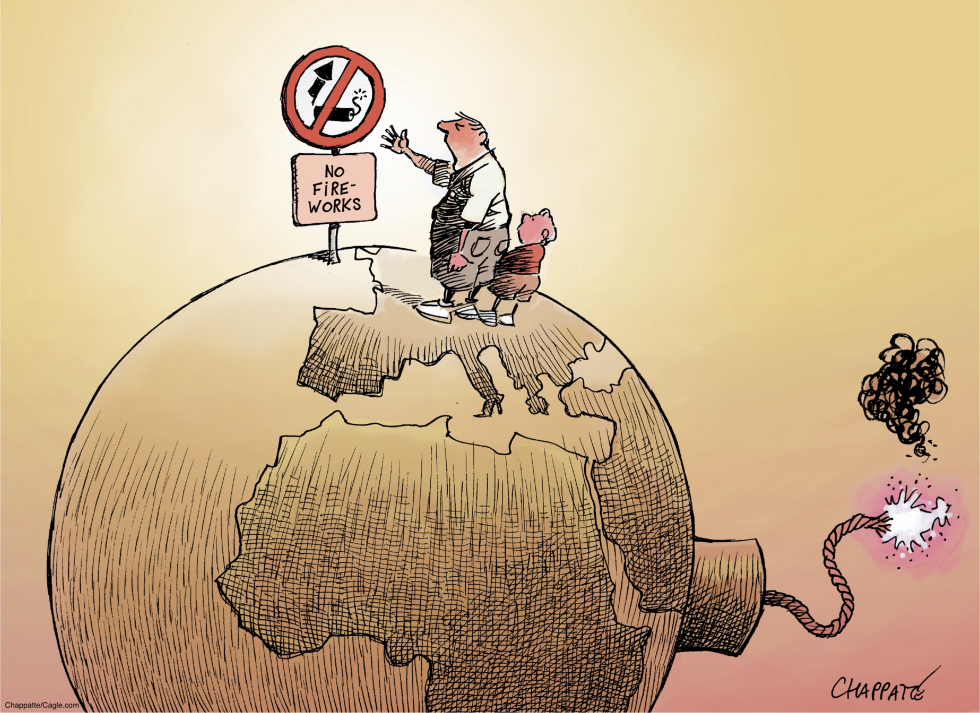
Global leaders continue to dismiss repeated scientific warnings about accelerating climate impacts even as extreme weather events intensify worldwide. The ongoing failure to curb emissions and adopt binding reductions leaves future generations exposed to rising temperatures, sea levels, and resource conflicts. The editorial argues that such willful disregard of clear danger signs amounts to reckless endangerment of the planet itself.
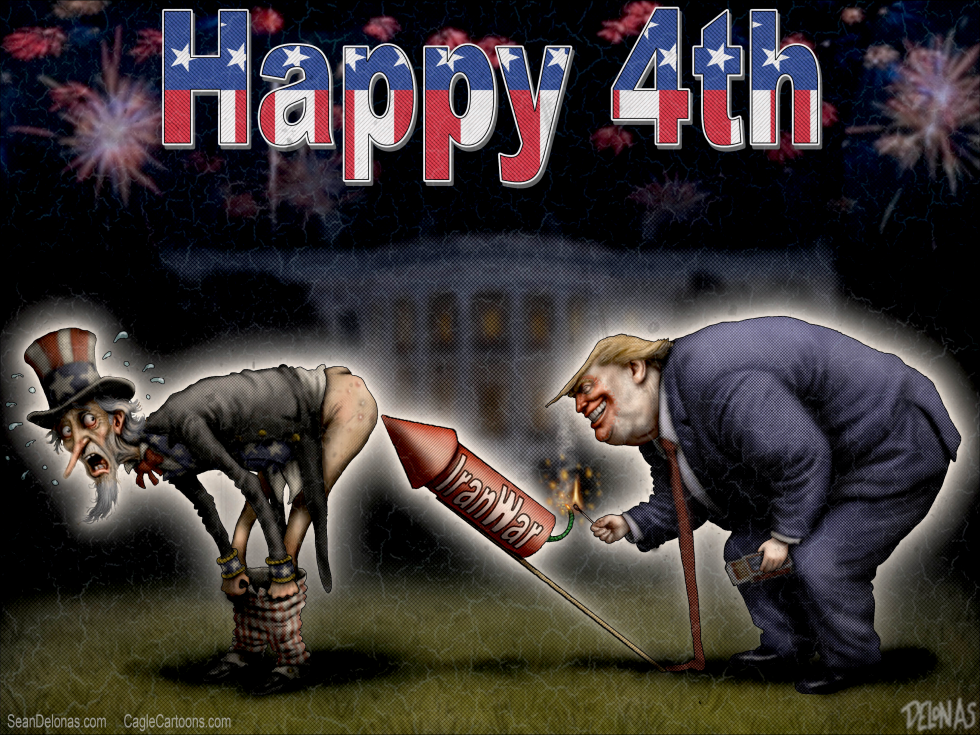
Donald Trump bends to light a large firework labeled Iran War on July 2 2026. The rocket points at a startled Uncle Sam figure in front of the White House. Fireworks burst in the night sky above the lawn. The image ties the ignition directly to the Independence Day setting.
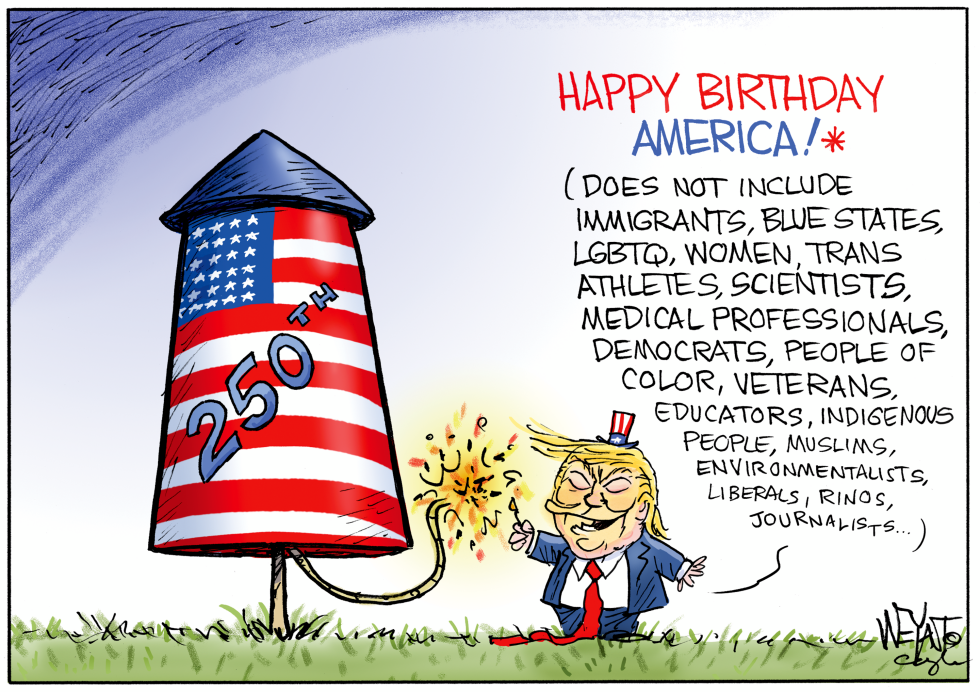
On June 30, 2026, a cartoon depicts Donald Trump lighting the fuse of a large American-flag firework rocket labeled 250th. The greeting Happy Birthday America carries an asterisk that expands into a lengthy parenthetical list of omitted groups including immigrants, blue states, LGBTQ individuals, women, trans athletes, scientists, medical professionals, Democrats, people of color, veterans, educators, Indigenous people, Muslims, environmentalists, liberals, RINOs, and journalists. The image appears days before the July 4, 2026, semiquincentennial.
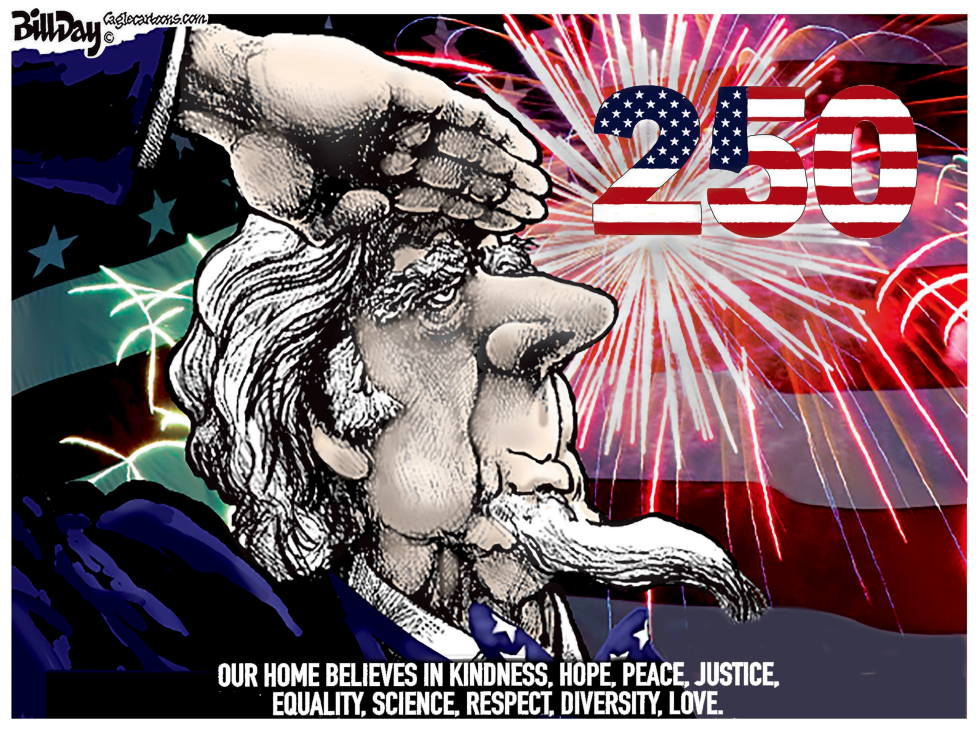
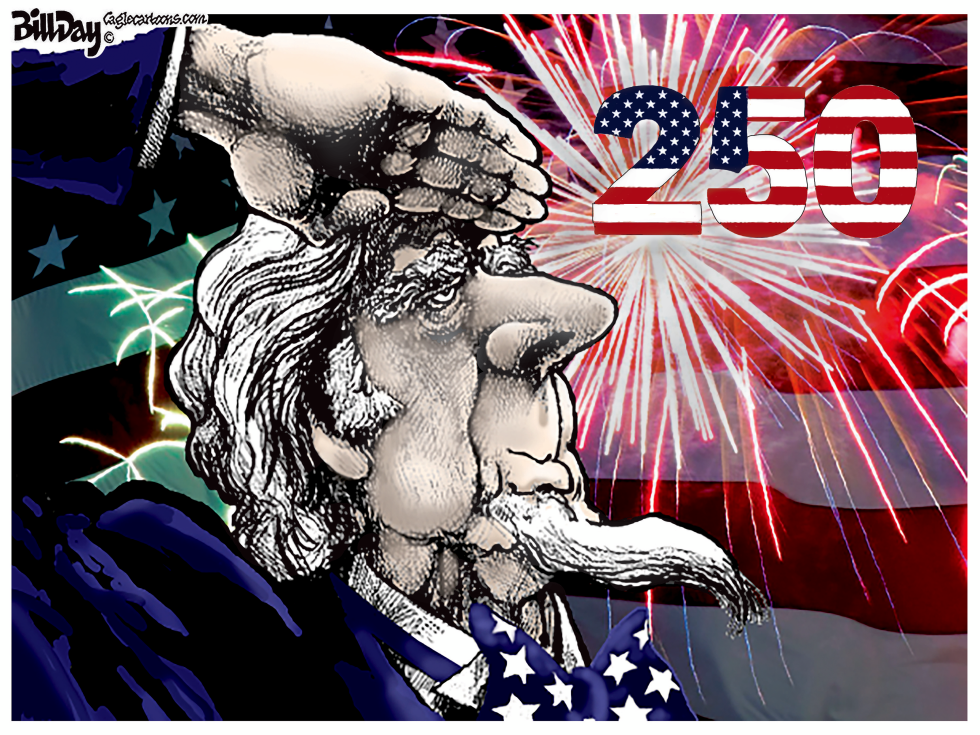
The image depicts a historical figure saluting against a backdrop of American flag and fireworks on June 30, 2026. The 250th anniversary of the United States approaches, and the cartoon emphasizes national values listed in a bottom banner: kindness, hope, peace, justice, equality, science, respect, diversity and love. The composition uses red, white and blue tones with celebratory pyrotechnics to frame the gesture.
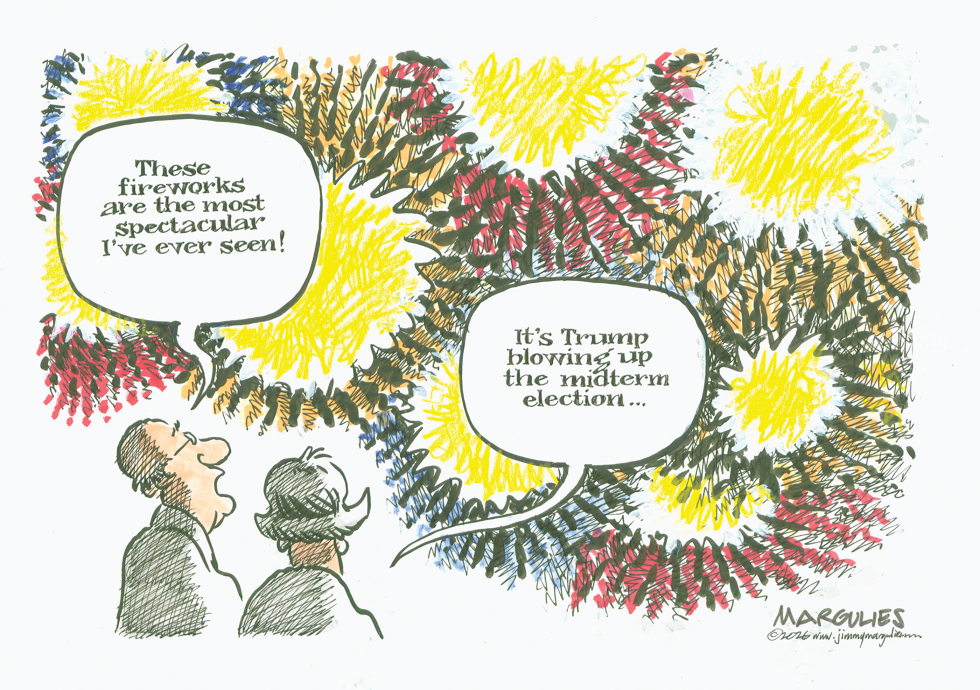
On June 29 2026 two figures stand in the foreground watching a burst of red yellow and blue fireworks fill the sky. One speech bubble praises the spectacular display while the second attributes the chaos to Trump blowing up the midterm election. The scene captures public attention on the upcoming November contests and the former president's continued influence on the political landscape.
A historical figure depicted in profile raises a hand in salute against a backdrop of bursting fireworks and a large American flag. The stylized number 250 appears prominently in red white and blue. The scene marks the approaching 250th anniversary of American independence on the date of publication.
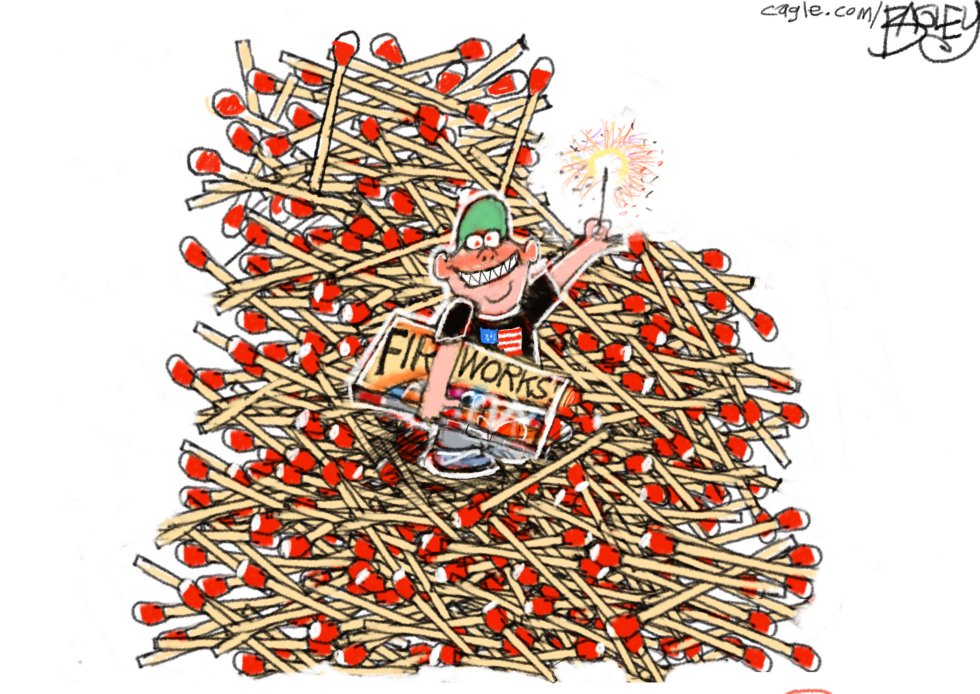
A figure wearing a green cap and flag shirt stands in a large pile of matches while raising a lit sparkler in one hand and gripping a fireworks box in the other. The composition places the figure at the center of the stacked matches that fill most of the frame. The scene responds to seasonal fire concerns in Utah by showing the direct proximity of ignition sources to abundant dry fuel. Publication occurs near the Fourth of July period when such materials see heavy use in the region.
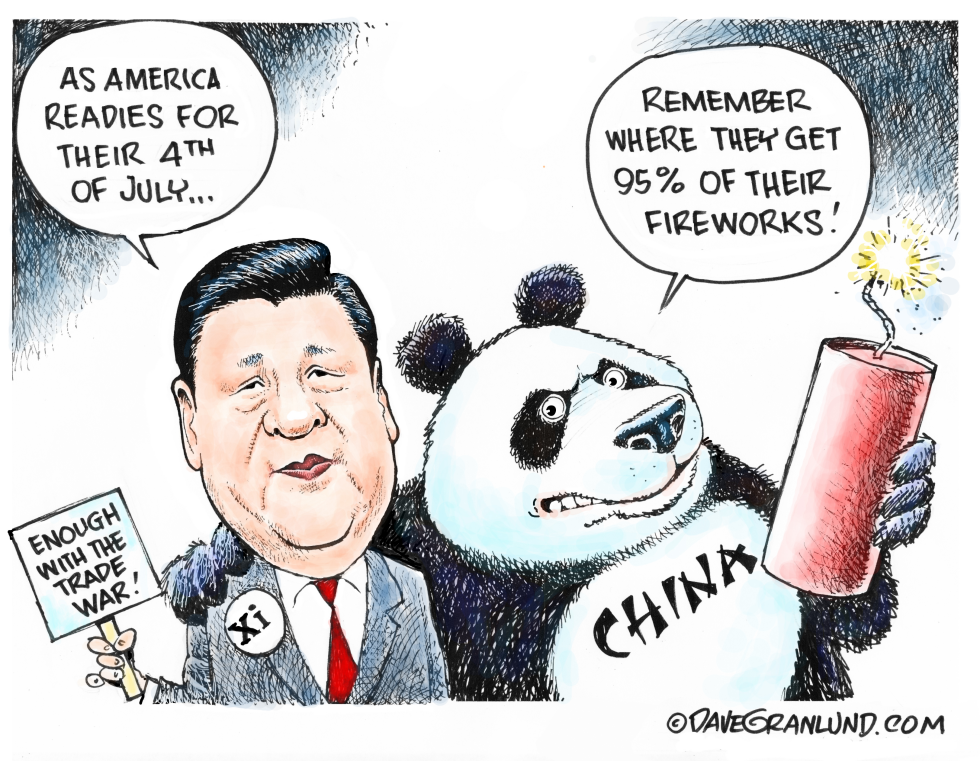
On June 19, 2026, a cartoon by Dave Granlund depicts Chinese leader Xi Jinping alongside a panda representing China. Xi holds a protest sign against the trade war while the panda reminds viewers that China supplies most American fireworks. The image addresses rising costs for July 4th celebrations tied to tariffs and supply issues with the largest provider.
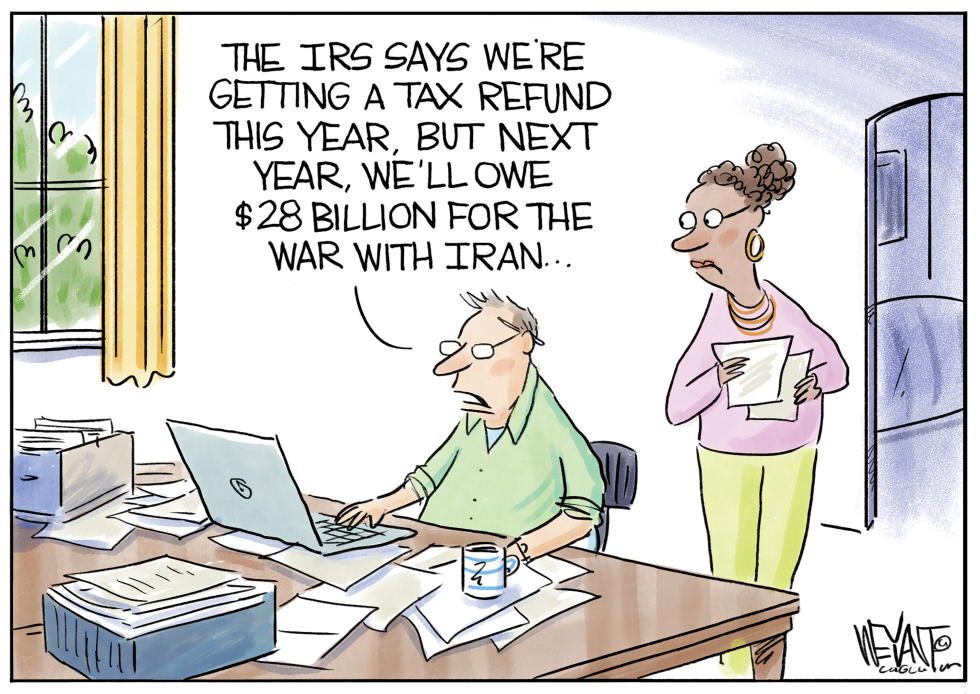
Dive into this biting political cartoon tax refund piece where a woman, holding papers, informs a laptop-working man about their IRS windfall this year, only to drop the bomb of owing $28 billion next for the war with Iran. The satirical cartoon Iran war vibe captures the absurdity of US taxes funding wars, with cluttered desks and exasperated expressions underscoring the humorous take on federal spending. It's a classic taxpayer burden Iran conflict jab, poking fun at government spending satire while illustrating the disconnect between personal finances and massive military expenses. Through cartoon about military expenses, it cleverly critiques fiscal policy in an office setting, making the war with Iran taxpayer joke both relatable and irreverently insightful for viewers pondering editorial cartoon fiscal policy.
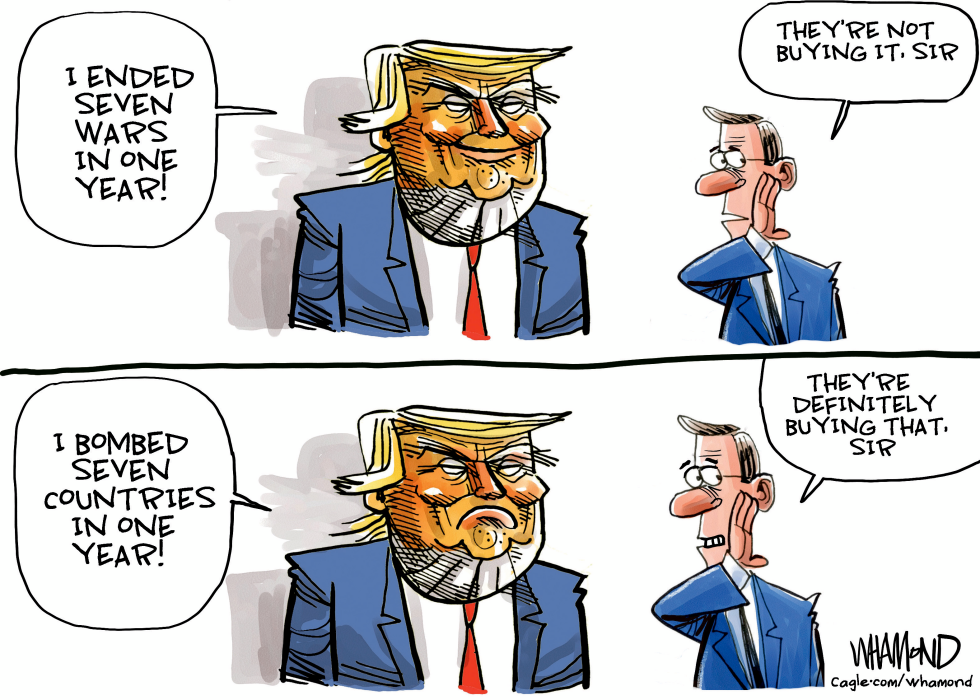
This Donald Trump cartoon masterfully captures the essence of satirical Trump presidency through political bombing humor. Trump boasts about ending seven wars, but his advisor notes the public's skepticism, leading to a pivot where he claims bombing seven countries instead, which the advisor says is 'definitely buying that.' The Trump wars satire underscores inconsistencies in Trump foreign policy cartoon style, poking fun at boastful claims versus reality. Created by Whamond, this political cartoon Whamond piece exemplifies humorous political analysis on US military satire, blending irreverent wit with insightful commentary on leadership and perception.