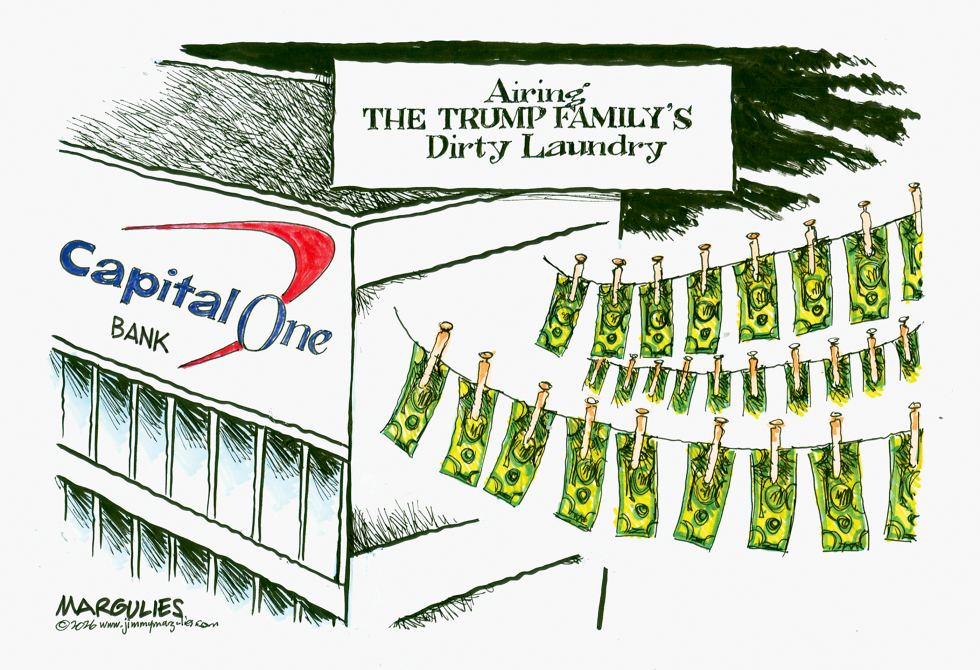
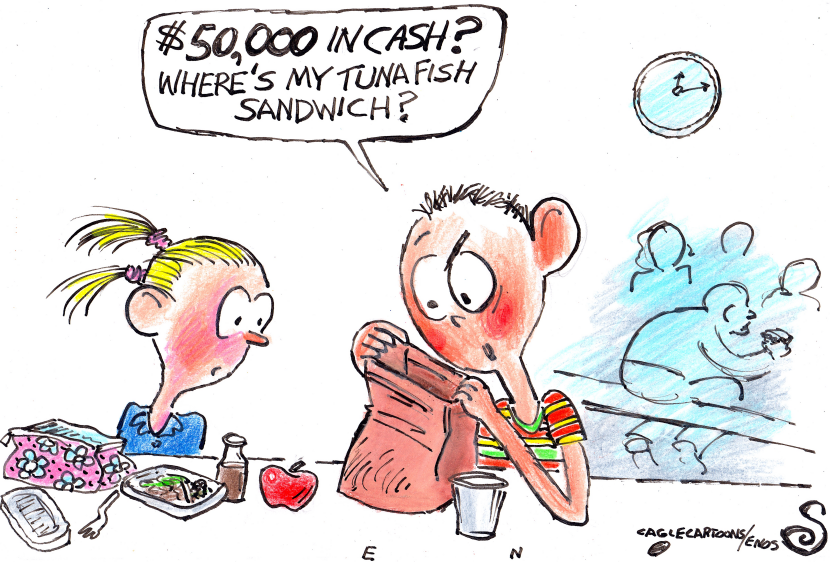
Questions persist over the Trump family's banking relationships and financial disclosures at Capital One. The bank has faced scrutiny for its handling of loans tied to the family businesses. These matters draw attention because they involve a former president and his relatives. Public records and legal filings continue to surface details about debts and repayments. The editorial takes the position that such financial entanglements warrant full transparency to maintain public trust in both political figures and major financial institutions.
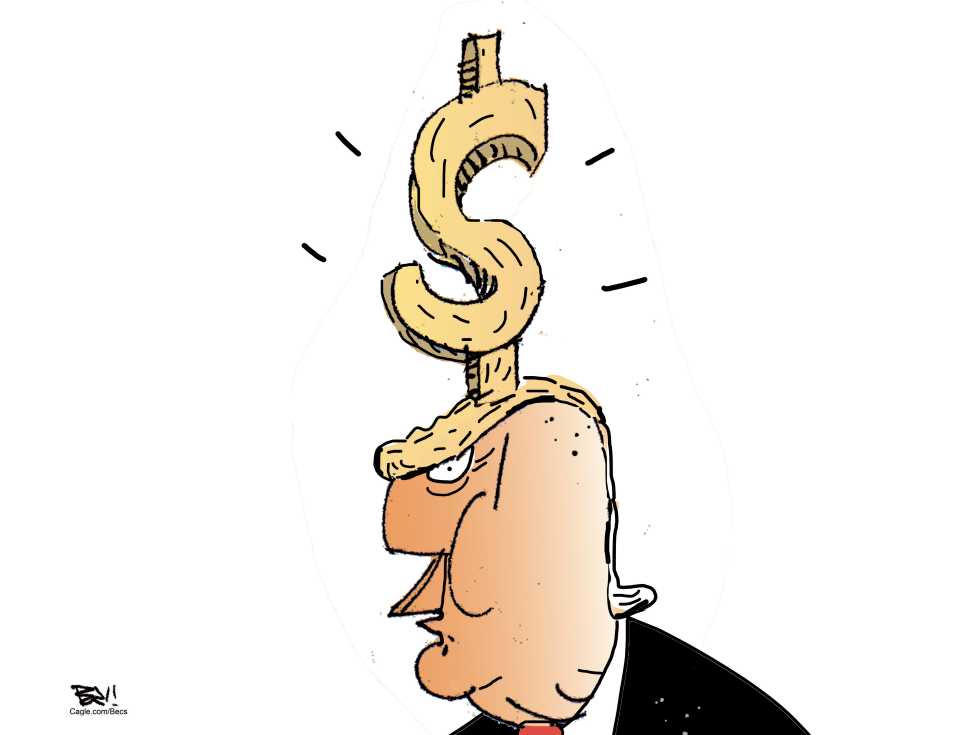
A generic business figure faces ongoing scrutiny over profit motives dominating decision making. Corporate leaders continue to prioritize financial gains amid public concerns about influence and ethics. The piece argues that such fixation distorts priorities and harms broader interests.
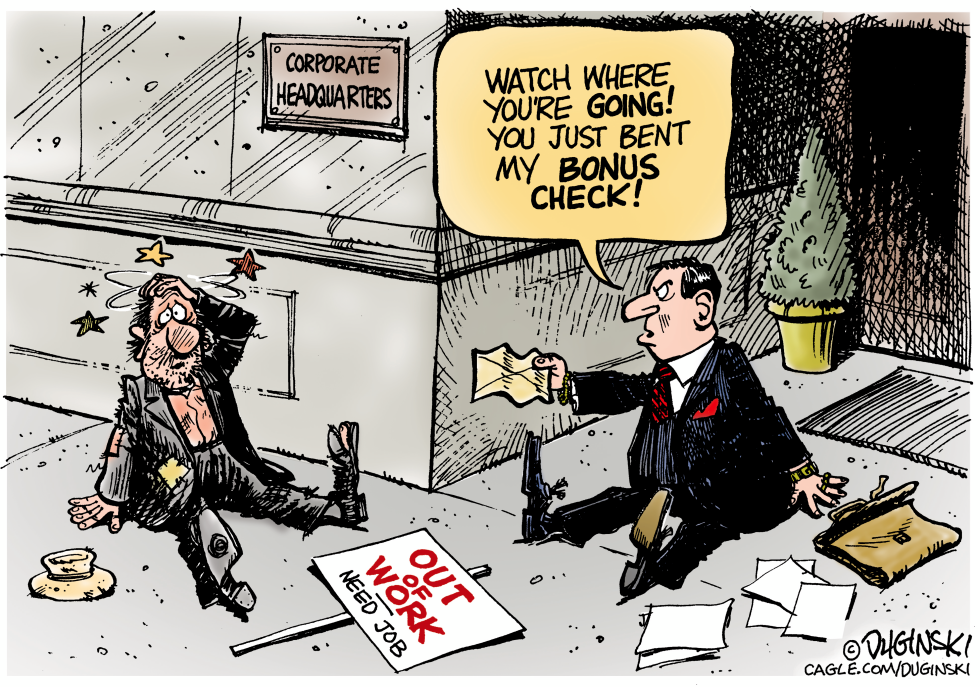
Corporate executives continue to receive large bonuses even as layoffs persist across sectors. The piece responds to ongoing debates over executive compensation packages during periods of workforce reduction. It takes the position that such bonuses appear disconnected from the realities facing displaced employees.
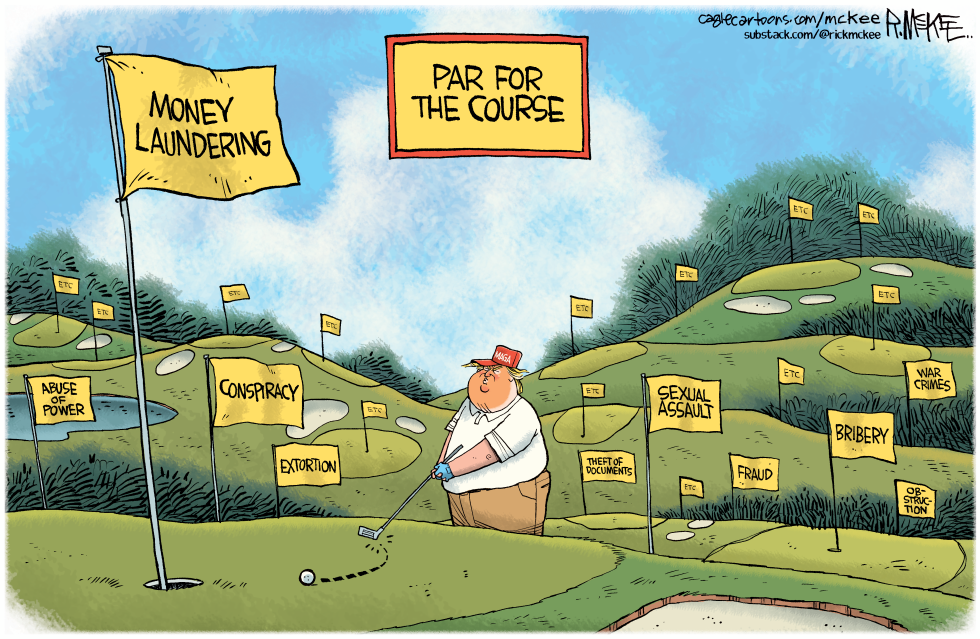
Donald Trump appears on a golf course in an editorial cartoon dated August 6 2026. Multiple yellow flags label alleged offenses including money laundering, conspiracy, extortion, sexual assault, bribery, fraud and obstruction. The piece responds to ongoing legal and political scrutiny of the former president. It frames these issues as routine for Trump through the visual metaphor of a golf course. The editorial position presents the allegations as expected elements of his record.
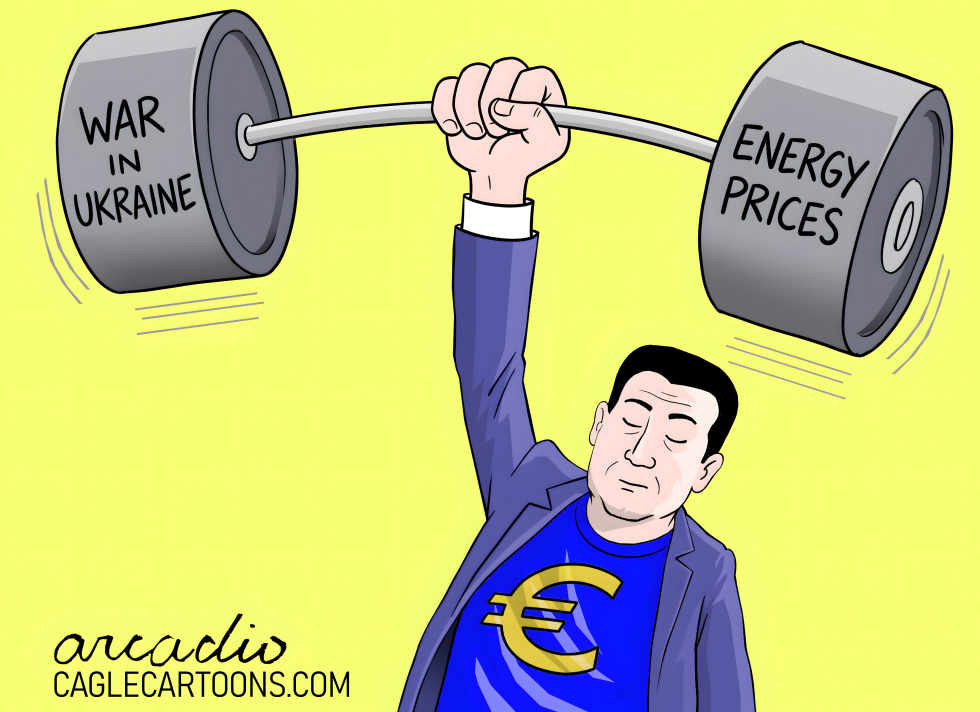
The Eurozone continues to absorb economic shocks from the Ukraine conflict and elevated energy costs. These pressures test the currency's stability and the broader European economy. The image portrays the Euro successfully shouldering both loads, underscoring its capacity to endure without collapse.
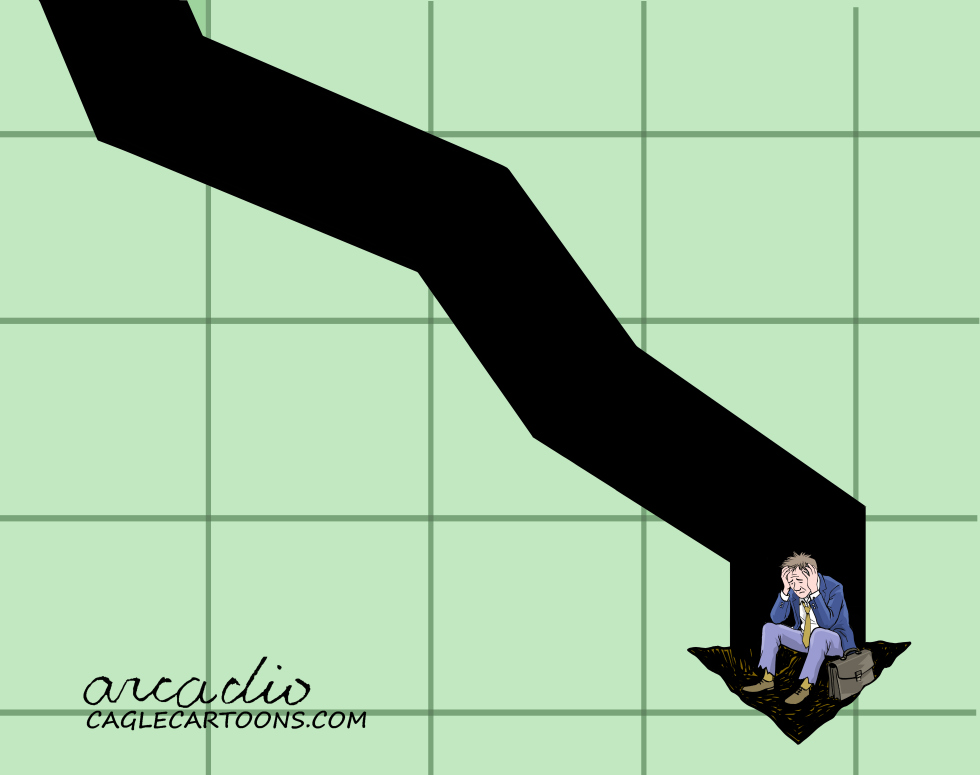
Businesses face mounting pressure from ongoing economic contraction that leaves executives isolated and without clear recovery paths. The decline affects employment, investment, and market stability across sectors. The piece highlights the personal toll on those navigating the downturn and underscores the urgency of addressing root causes before further damage spreads.
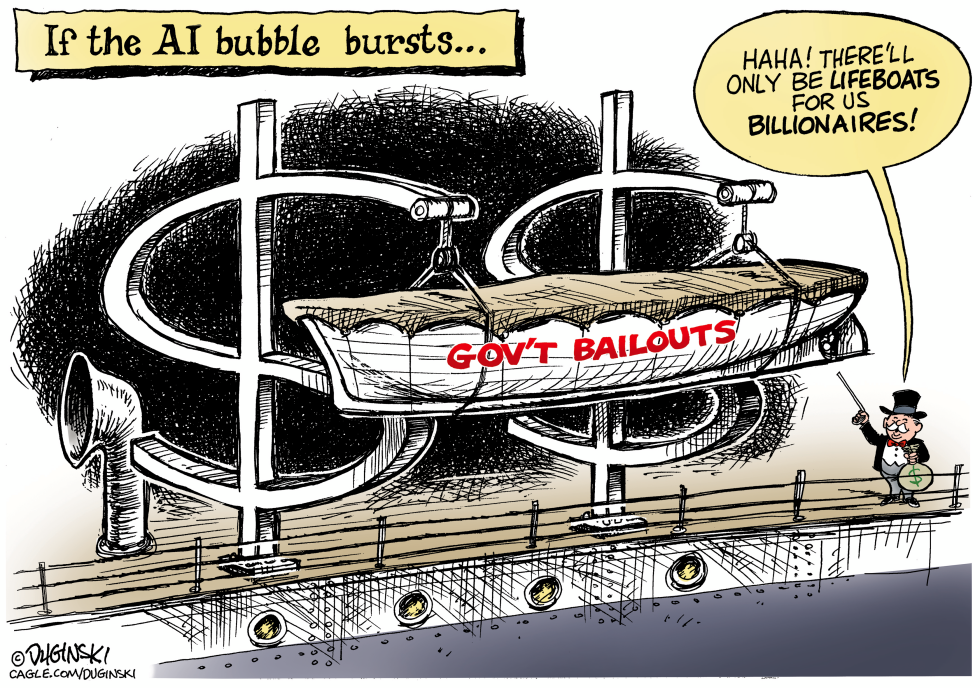
Speculation grows over potential government intervention if the artificial intelligence sector experiences a sharp downturn. Industry leaders and investors face questions about whether public funds would support failing companies. The editorial argues that any such support would primarily protect billionaires rather than address wider economic fallout from overvalued tech assets.
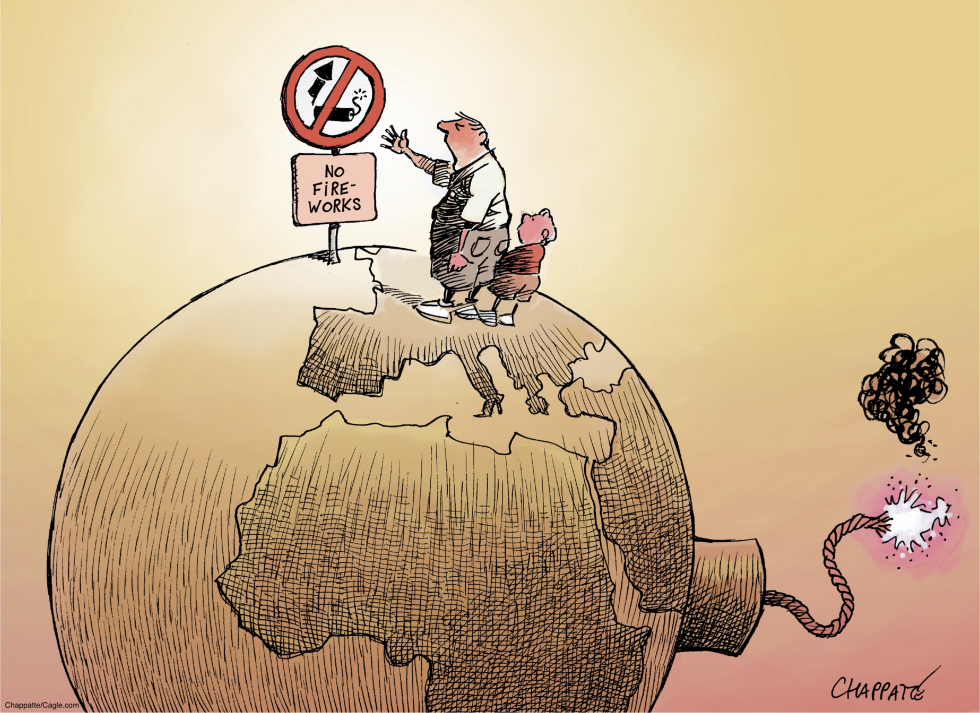
Global leaders continue to dismiss repeated scientific warnings about accelerating climate impacts even as extreme weather events intensify worldwide. The ongoing failure to curb emissions and adopt binding reductions leaves future generations exposed to rising temperatures, sea levels, and resource conflicts. The editorial argues that such willful disregard of clear danger signs amounts to reckless endangerment of the planet itself.
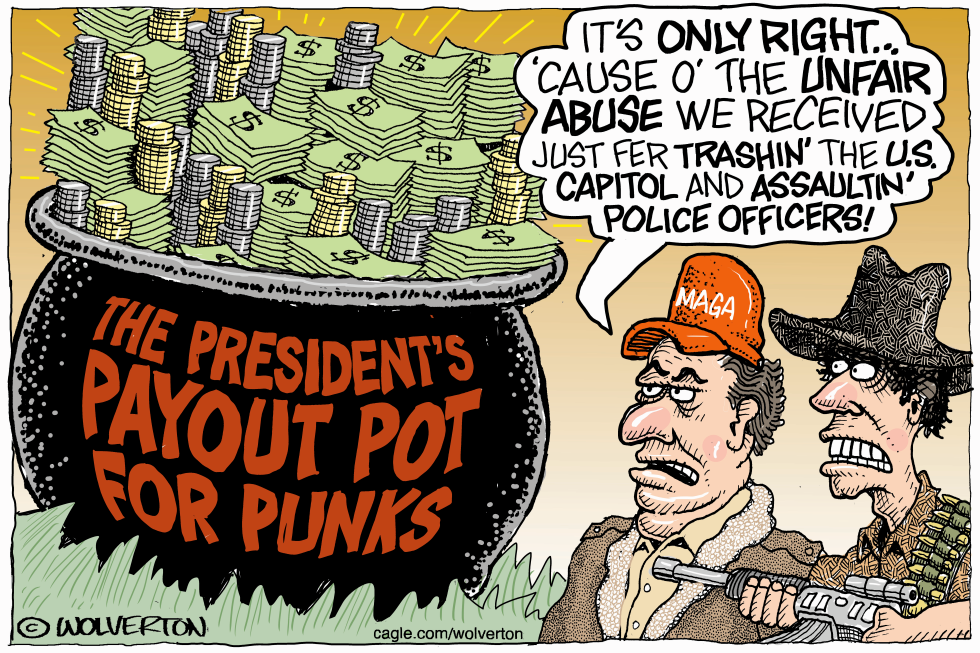
A proposal for compensation to January 6 defendants has drawn sharp criticism from opponents who view it as rewarding those convicted of attacking the Capitol and police. The editorial cartoon portrays the idea as a presidential slush fund for rioters, highlighting the perceived absurdity of compensating participants in the 2021 events.
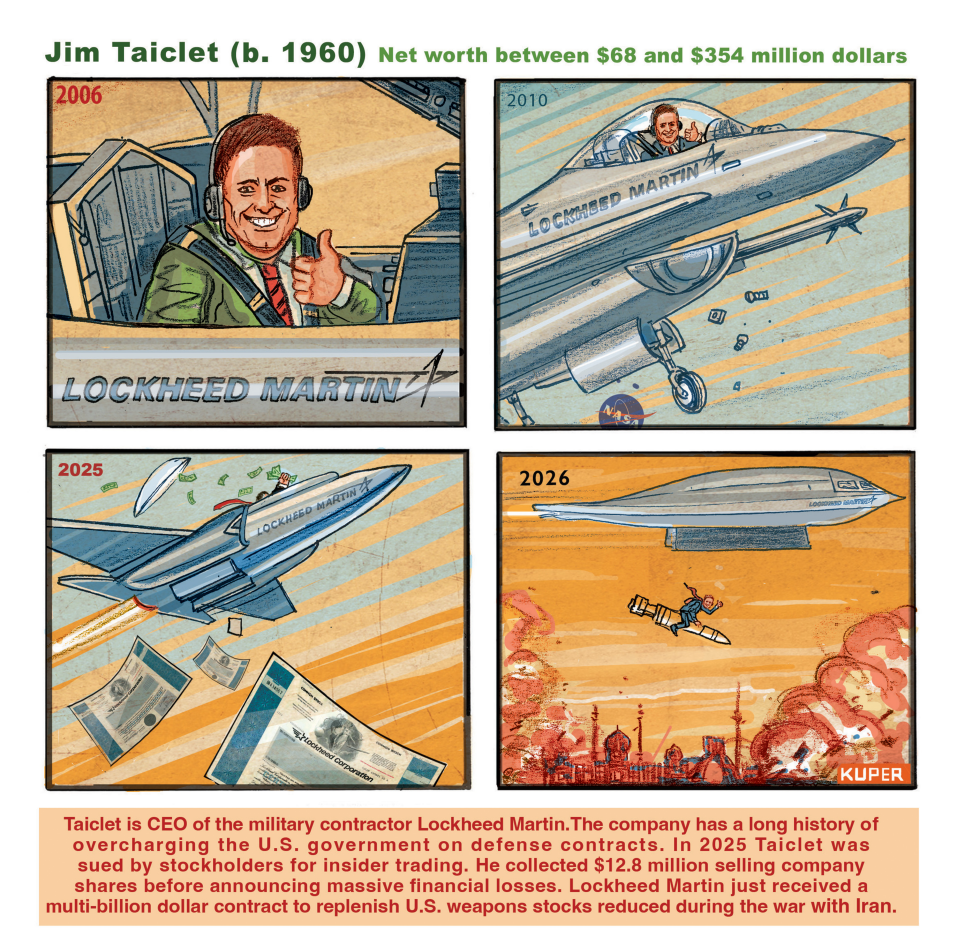
Lockheed Martin CEO Jim Taiclet was sued by stockholders in 2025 for selling $12.8 million in shares before announcing major losses. The company then won a multi-billion contract to replenish weapons depleted in the Iran conflict. The piece criticizes Taiclet and the contractor for insider trading and repeated government overcharging.
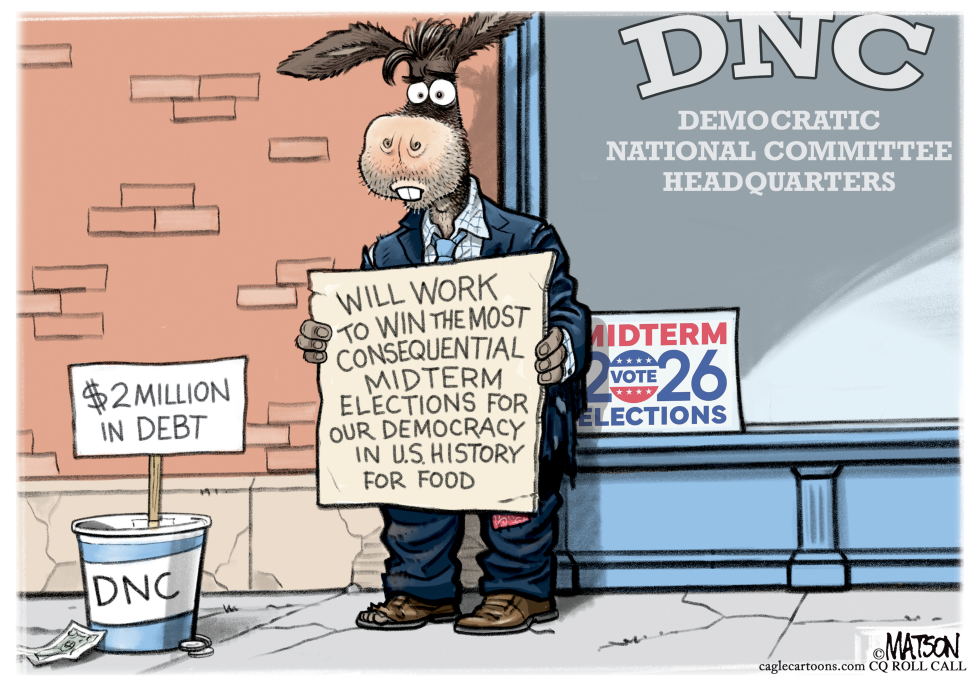
The Democratic National Committee faces a reported $2 million debt as it prepares for the 2026 midterm elections. The party headquarters displays signs of financial strain while promoting the contests as pivotal for democracy. The editorial position criticizes the DNC for prioritizing election rhetoric over addressing its fiscal problems.
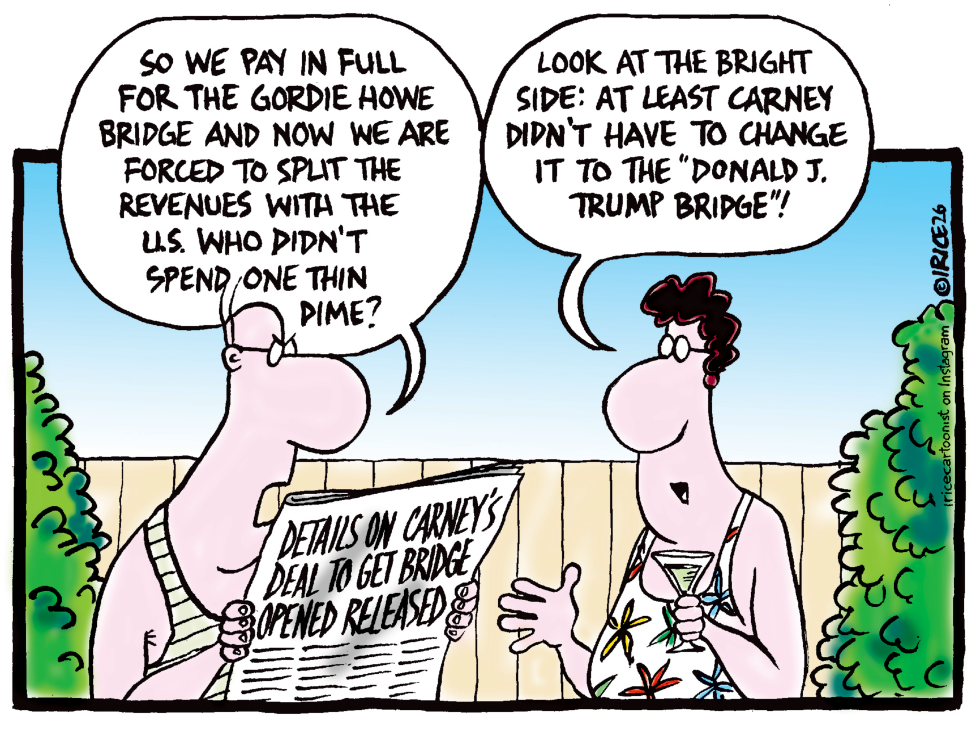
Details of a revenue-sharing agreement for the Gordie Howe Bridge between Canada and the United States have been released. The arrangement requires Canada to split toll revenues despite covering full construction costs. The editorial highlights public frustration with the terms and uses a reference to a potential Trump naming to underscore political sensitivities around the project.
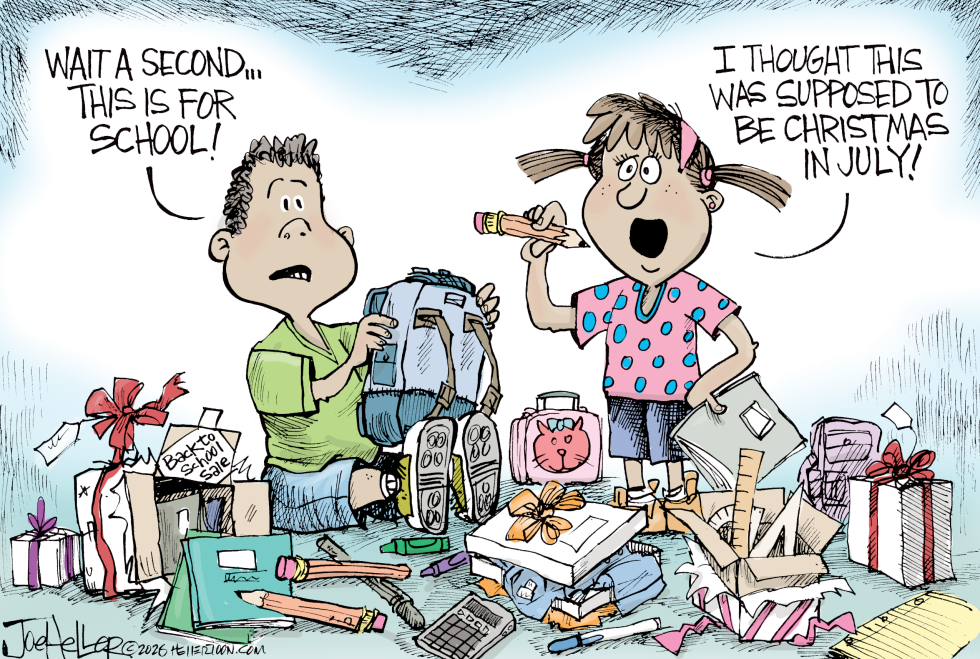
Retailers launched back-to-school promotions in late July, prompting families to stock up on supplies weeks ahead of the academic calendar. The timing overlaps with summer clearance events that mimic holiday marketing tactics. Parents and students face added pressure to buy early amid rising costs for essentials. The piece highlights how commercial calendars compress traditional shopping seasons and shift family routines.
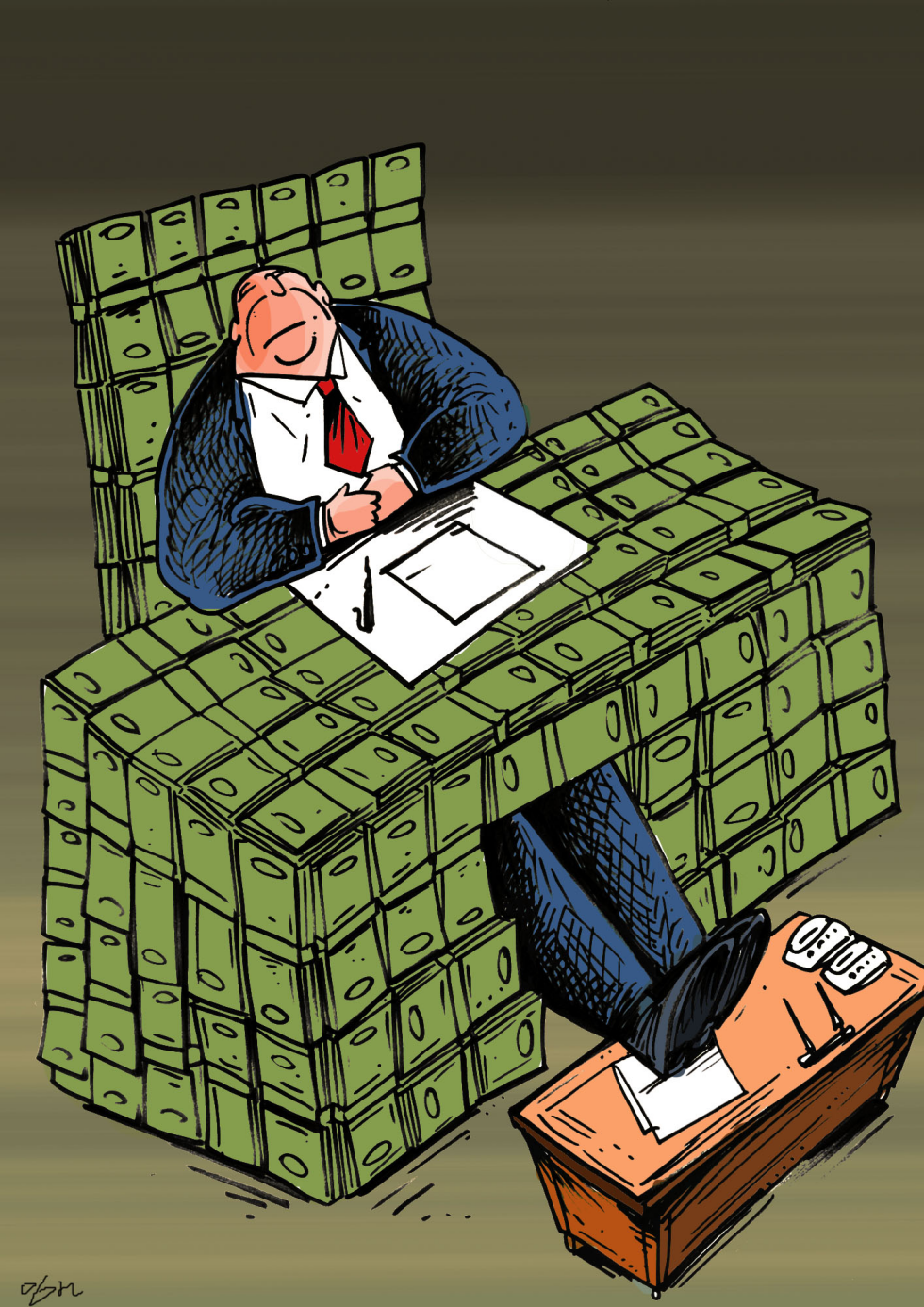
Public officials and business leaders often operate amid substantial financial resources that shape their daily environments and decisions. Recent developments in campaign finance and corporate influence have kept scrutiny on how wealth intersects with governance. The piece portrays an executive fully at ease within a setting constructed entirely from currency, underscoring the normalization of money's central role in positions of authority.
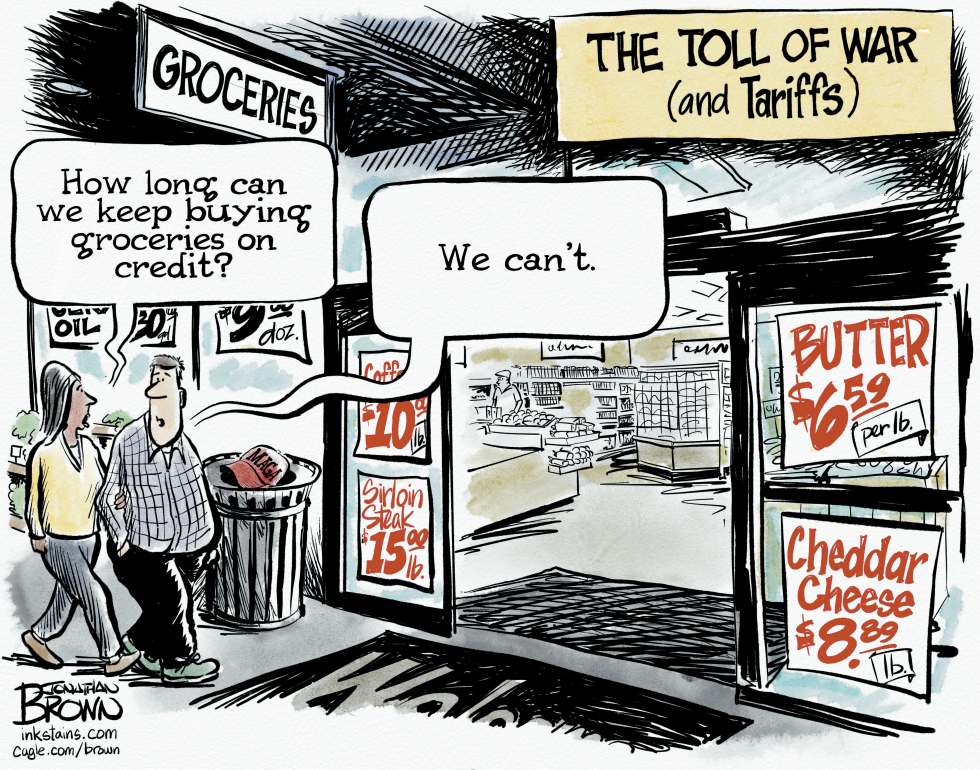
A political cartoon depicts a couple leaving a grocery store after learning they cannot continue buying food on credit. Signs inside show sharply higher prices for butter at $6.59 per pound, cheddar cheese at $8.89 per pound and sirloin steak at $15 per pound. A banner overhead reads The Toll of War (and Tariffs). The scene illustrates how ongoing conflict and trade barriers have driven up everyday food costs leaving households to rely on credit that is no longer sustainable.