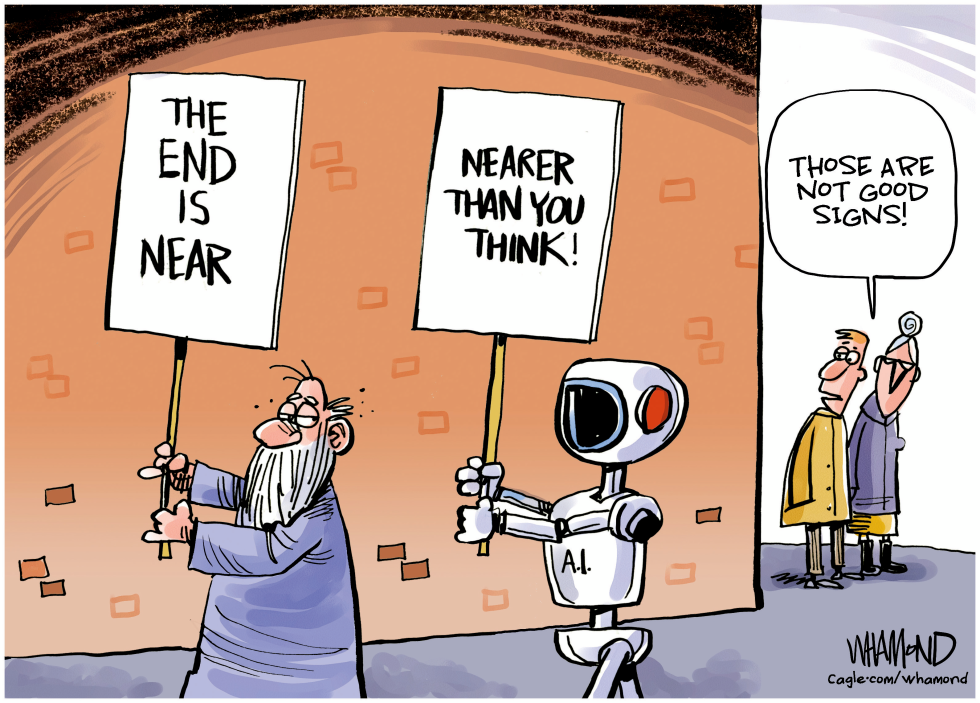
On April 29 2026 Dave Whamond depicts an elderly prophet and an A.I. robot both holding signs warning the end is near. The robot claims the end is nearer than the prophet thinks while two men react that the signs are not good. The image addresses ongoing public debate over artificial intelligence risks and workplace transformation.
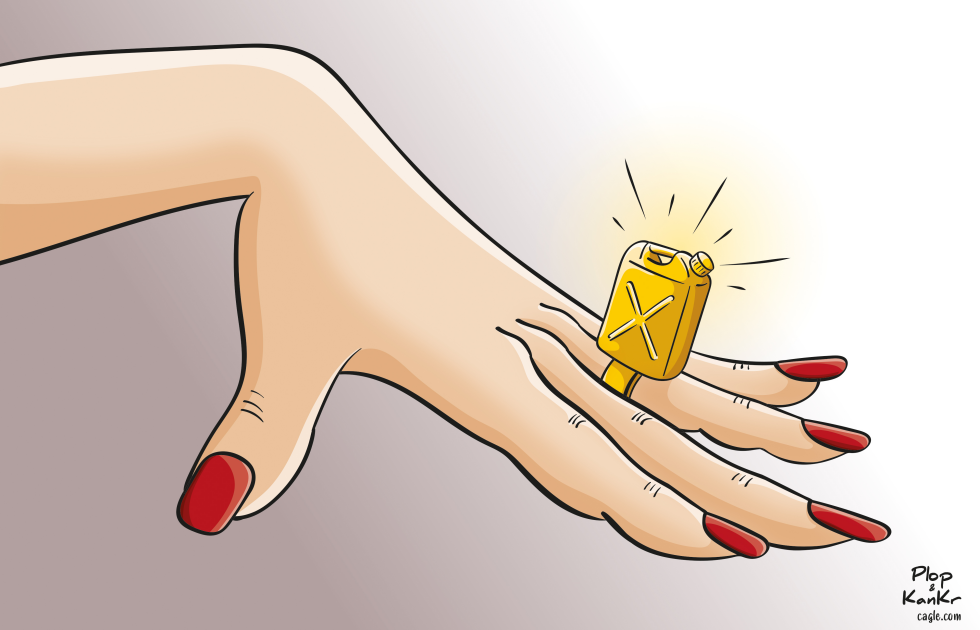
The cartoon shows a hand extended, wearing a ring shaped like a yellow gas can with an X, sparkling as if it's a precious diamond. Red nails add a touch of glamour to the scene against a plain background. This straightforward image pokes fun at oil prices skyrocketing, turning everyday fuel into something as valuable as jewelry. Tags like fuel luxury, energy satire, gasoline bling, petroleum parody, high costs humor, and economic pun capture the dry wit here. Cartoonists Plop and KanKr keep it simple, letting the visual speak without overcomplicating the message. It's a classic setup for editorial pages, reminding readers how energy crises make basics feel extravagant.
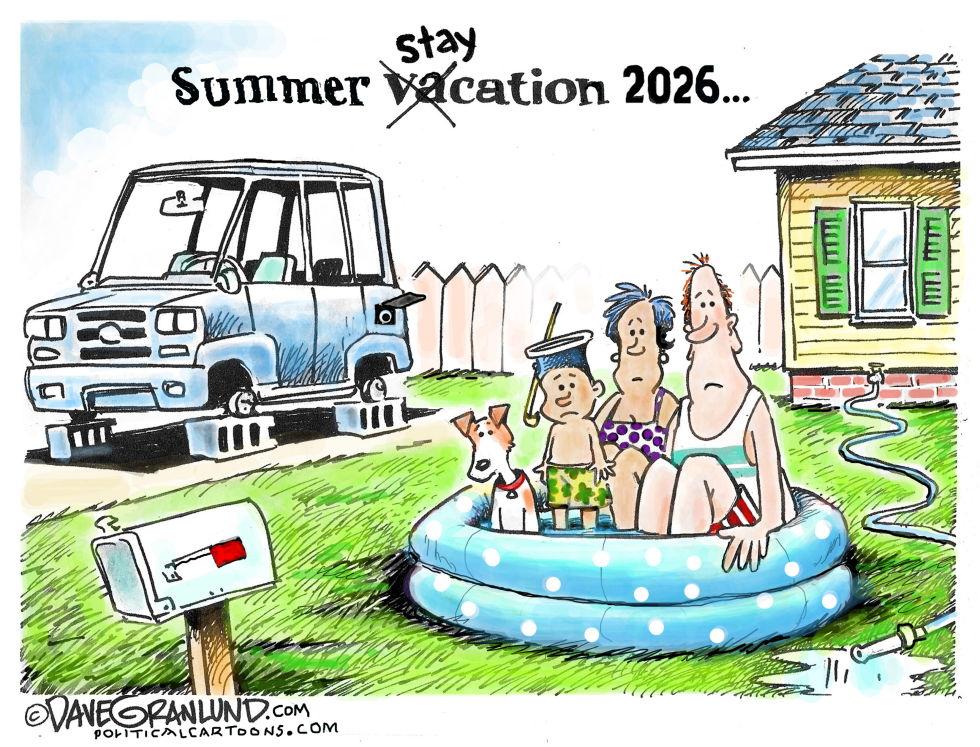
Dave Granlund's cartoon nails the frustration of high gasoline prices derailing summer road trips for families on limited budgets. Instead of hitting the highway in their autos, this crew opts for a stay home vacation, splashing in a backyard kiddie pool with the dog. The jacked-up minivan on blocks screams grounded plans, while the crossed-out 'Va' in vacation turns it into 'Staycation 2026.' It's a sharp poke at how fuel costs force folks to tighten belts, swapping grand adventures for hose-filled pools and mailbox views. Tags like gasoline prices, high cost, and stay home highlight the economic squeeze, making this a relatable jab at everyday belt-tightening.
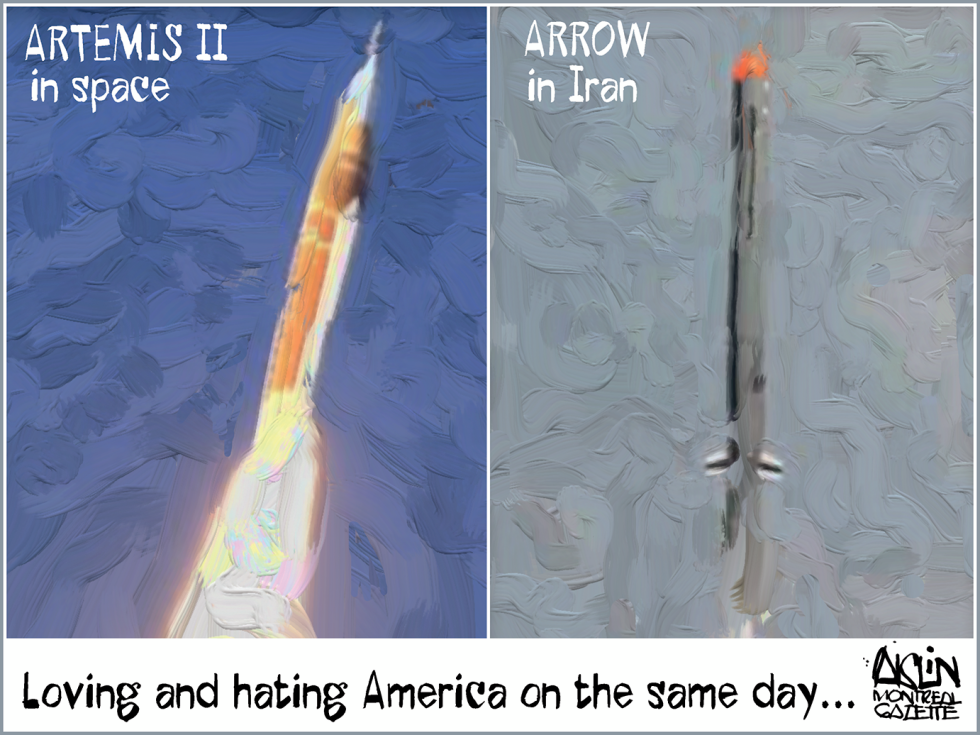
In this irreverent political cartoon, a vibrant Artemis II space launch rockets upward in a blue expanse on the left, symbolizing American innovation and triumph in US space exploration. Contrasting sharply on the right, a stark Arrow in Iran points downward with an orange glow against a gray sky, evoking geopolitical tension and Iranian weaponry. The caption 'Loving and hating America on the same day....' ties it together, offering a humorous take on the bipolar view of America in world news. With its simple yet effective composition, the artwork captures the absurdity of global perceptions, blending satire on international conflict with admiration for NASA's feats. This piece underscores the dichotomy in how the world engages with American power, from awe at space missions to ire over foreign policy frictions.
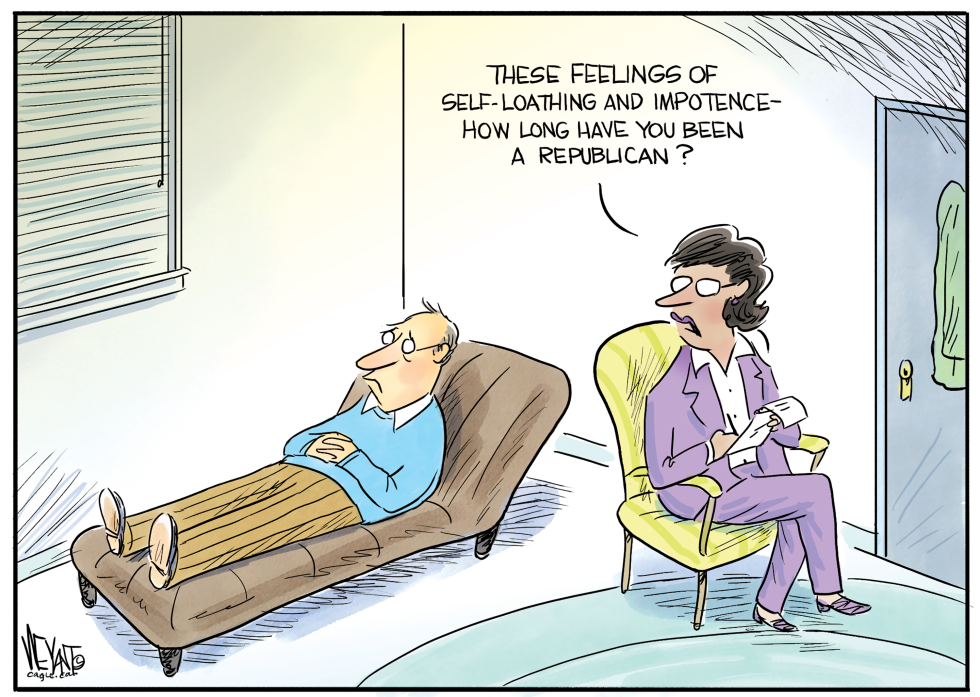
Christopher Weyant's political cartoon shows a therapy room with blinds, a door, and a coat hanger. A balding man in glasses, blue shirt, and brown pants reclines on a brown couch, arms crossed, looking distressed. A woman with dark hair, glasses, purple suit, sits on a yellow chair holding notes, speaking the punchline linking self-loathing and impotence to Republican tenure. The scene captures satirical commentary on political identity, with dry humor evident in the exaggerated expressions and simple setting. Tagged as republican party satire, therapy humor, political cartoon, self-loathing joke, impotence metaphor, and party affiliation critique, it highlights insider views on partisan struggles.
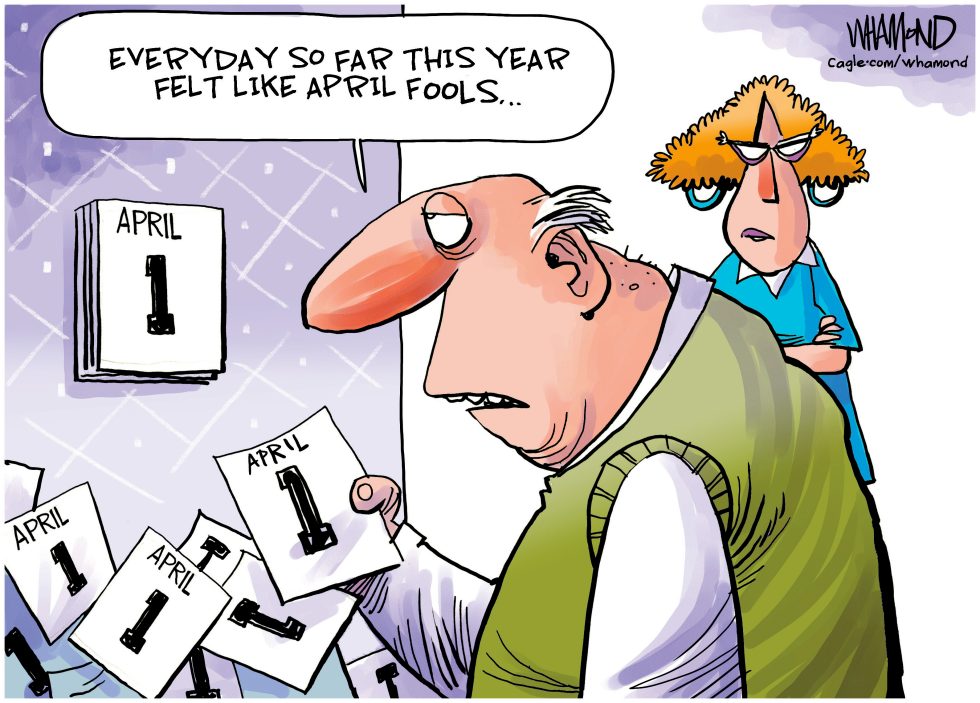
The cartoon depicts a man in a green vest examining several loose April 1 calendar pages that have fallen to the floor. A wall calendar also displays April 1. A woman with orange hair and glasses stands with arms crossed nearby. The speech bubble reads that every day this year felt like April Fools. The scene uses simple lines and limited colors to show the repeated date.
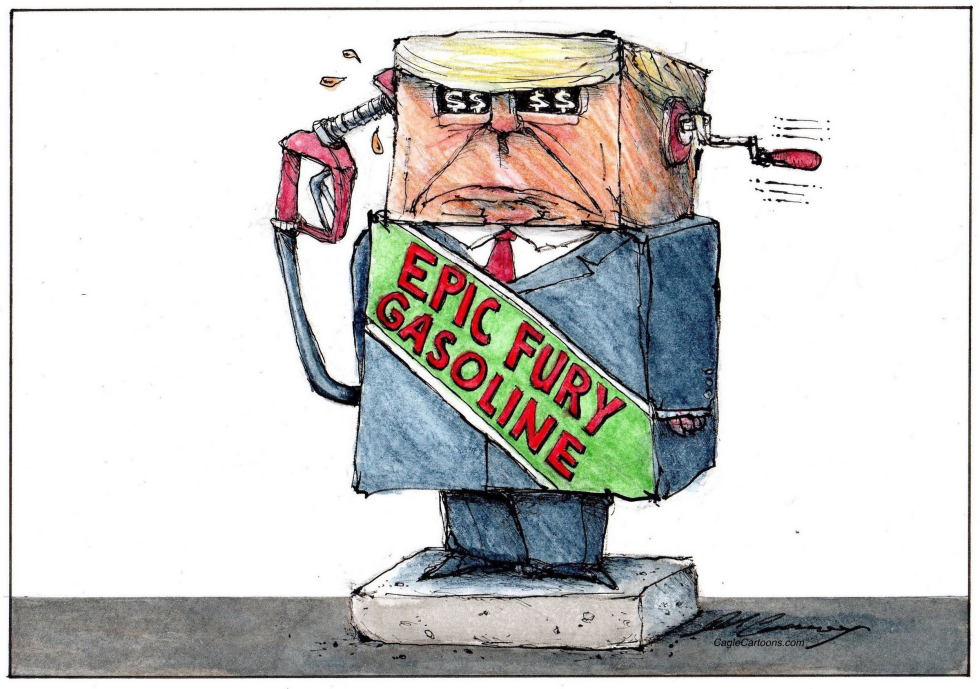
Dale Cummings draws Trump as a boxy gas pump, head topped with a dripping nozzle and $5.55 price tag, frowning in a suit with a green sash screaming Epic Gasoline Fury. Standing on a pedestal, the figure captures the essence of high gas prices tied to War in Iran and Operation Epic Fury. The cartoon skewers oil prices and Strait of Hormuz affordability, blending humor with commentary on economic fallout. It's a straightforward jab at political decisions driving up costs at the pump, rendered in watercolor style for punchy effect. Tags like War in Iran, Operation Epic Fury, oil prices, gas prices, Strait of Hormuz affordability, and affordability underscore the timely critique.
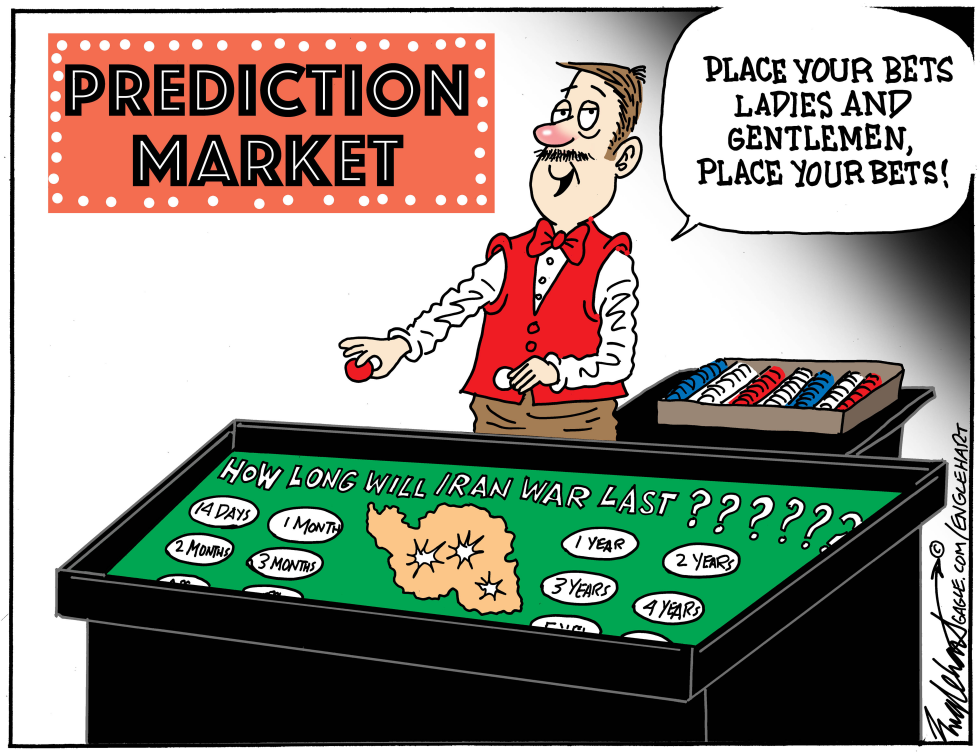
In a biting political cartoon, a smirking croupier oversees a prediction market table shaped like Iran, complete with explosion graphics, where punters can wager on war duration options ranging from 14 days to 5 years. This satirical take skewers the commodification of geopolitical betting, turning grave matters like Iran war into casino-style gambles. By blending elements of gambling on war with Middle East conflict, the artwork highlights the absurdity of prediction markets applied to real-world crises, offering humorous yet insightful commentary on how society speculates on political humor and potential catastrophes. The irreverent style underscores the folly of treating war length wager as just another market fluctuation.
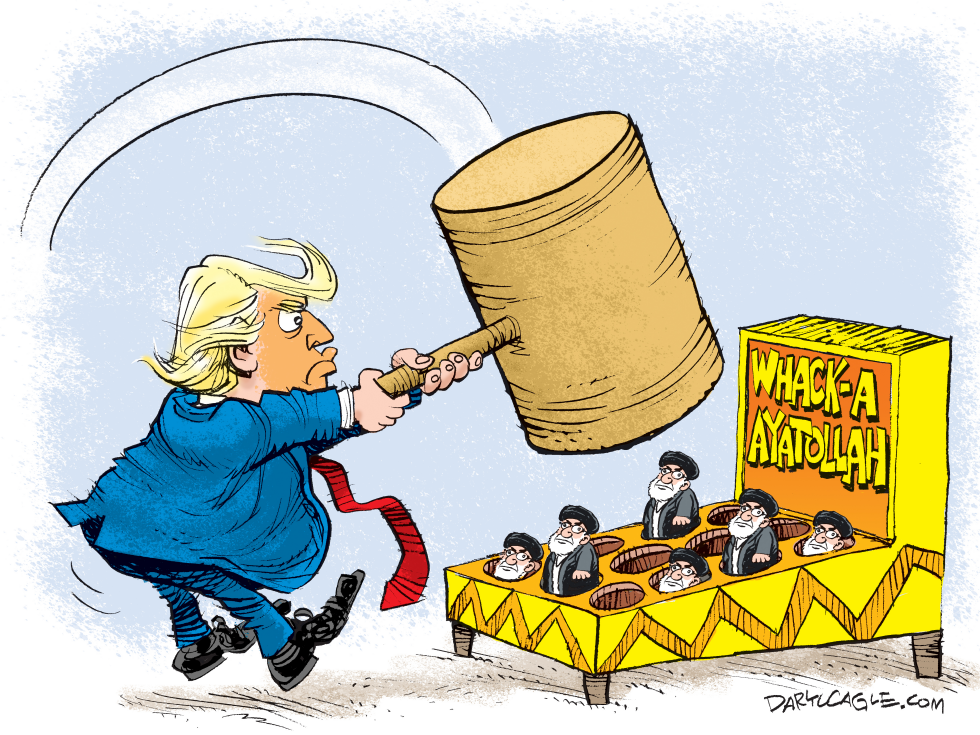
The cartoon shows Donald Trump in a blue suit swinging a massive wooden mallet at figures resembling Iranian Ayatollahs emerging from holes in a yellow arcade machine labeled Whack-A Ayatollah. The president appears mid-swing with motion lines indicating effort. The image comments on US policy toward Iran by framing the conflict as a repetitive carnival game where targets keep reappearing. Publication occurs during a period of heightened US-Iran tensions over nuclear issues and regional influence. The visual metaphor suggests difficulty in permanently resolving the challenge despite repeated attempts.
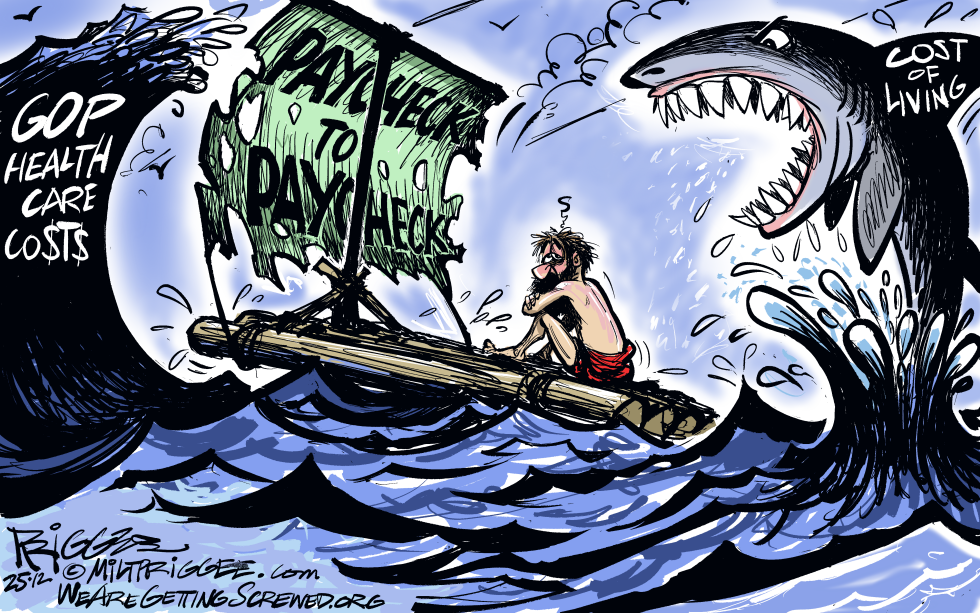
A man on a raft labeled paycheck to paycheck navigates rough seas. One wave carries the label GOP health care costs while a shark marked cost of living approaches from the other side. The image from January 2026 captures ongoing concerns over healthcare expenses and daily living costs for working families.
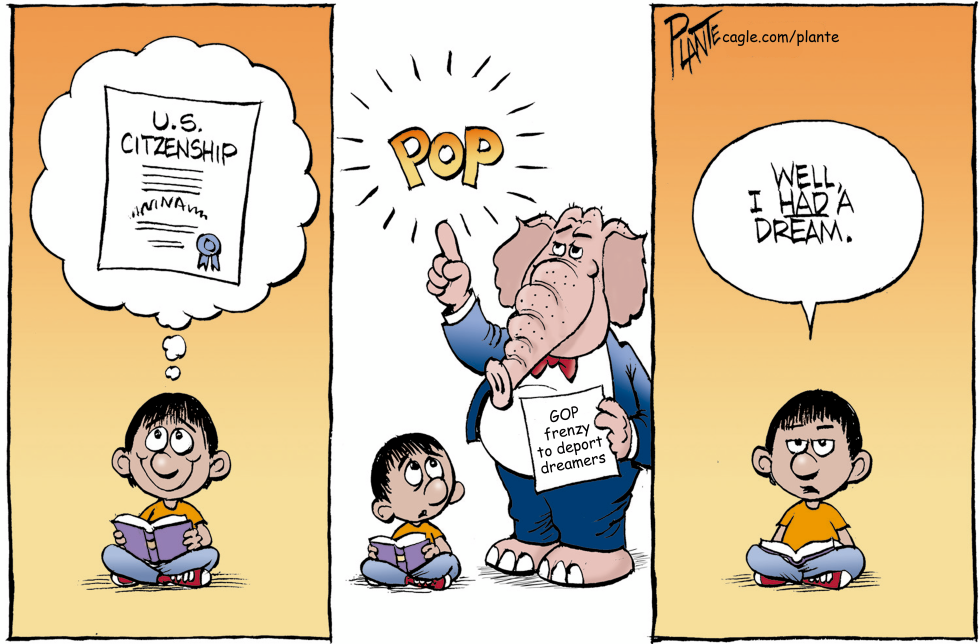
This political cartoon critiques the GOP stance on immigration policy, particularly regarding dreamers. It depicts an elephant, symbolizing the Republican Party, popping the dream bubble of a young immigrant aspiring for U.S. citizenship. The satire highlights the dashed hopes of dreamers, emphasizing the political commentary on immigration reform and the conservative viewpoint on DACA.
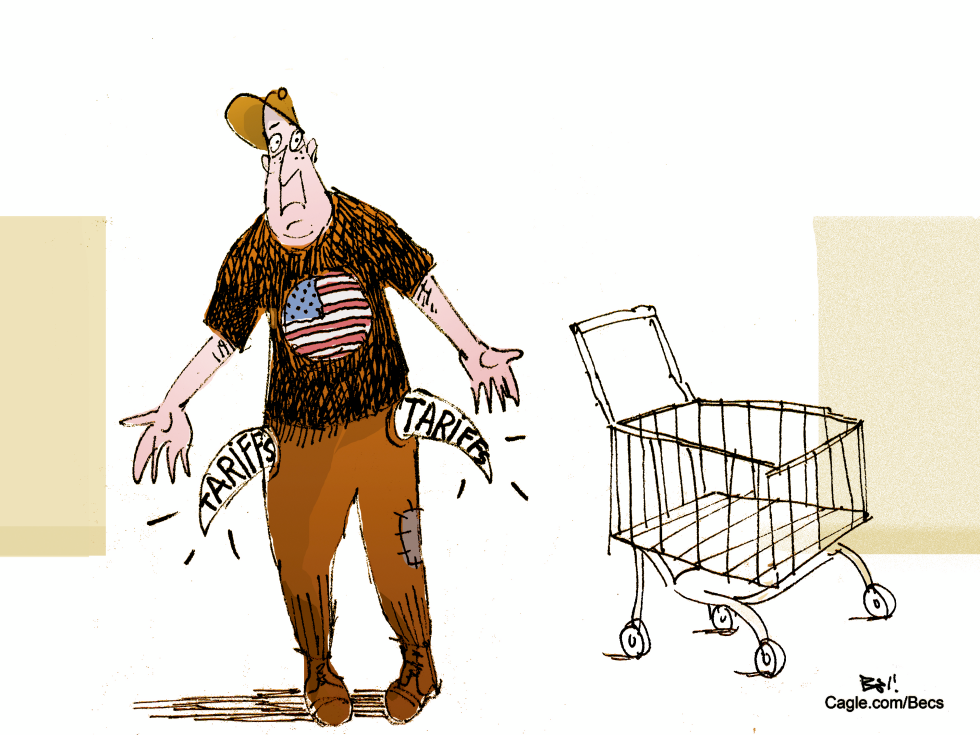
A figure wearing a tattered American flag shirt and brown pants labeled tariffs stands with empty hands next to an empty shopping cart. The scene responds to 2025 tariff increases under the Trump administration that have contributed to higher consumer prices and reduced purchasing power. The image highlights the direct effect on everyday Americans facing inflation and limited spending ability.
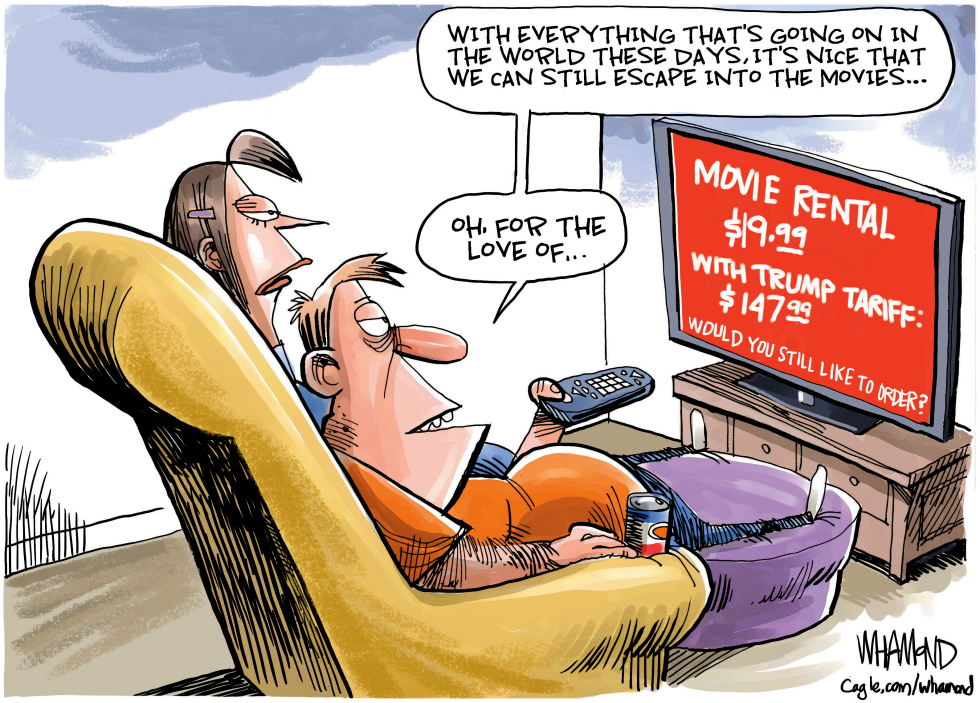
A couple relaxes on a yellow couch watching television when a movie rental offer appears on screen. The base price of $19.99 jumps to $147.99 once the Trump tariff is added. The woman comments on escaping into movies amid world events while the man reacts with dismay. The scene highlights rising costs for film rentals tied to proposed trade measures affecting foreign productions and streaming platforms.
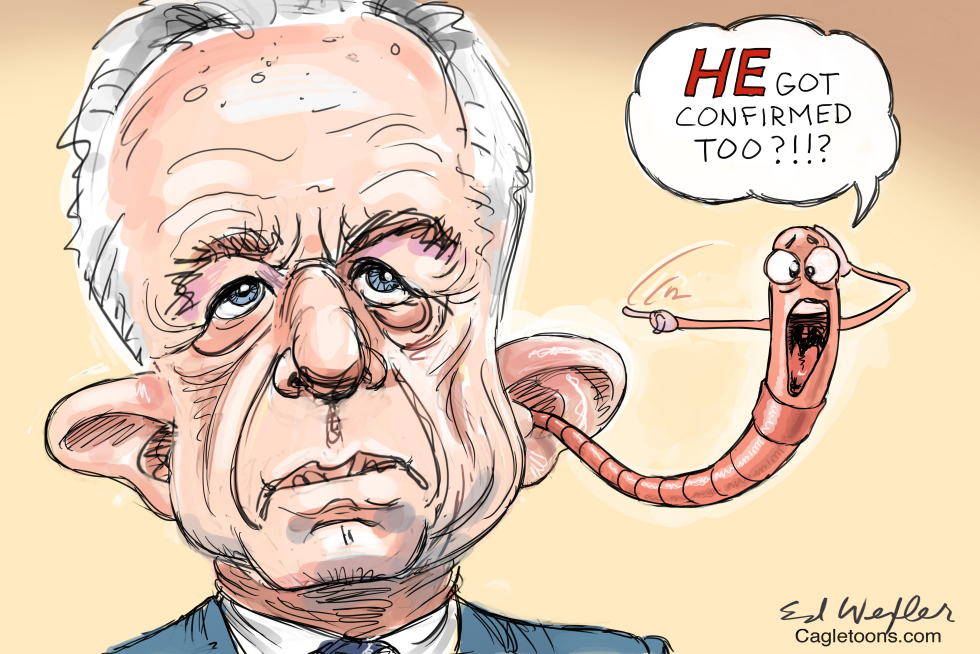
The cartoon depicts Robert F. Kennedy Jr. with a wide-eyed worm emerging from his ear, reacting in shock to his confirmation as HHS secretary. The speech bubble reads 'HE GOT CONFIRMED TOO?!?!' The February 2025 image references the recent Senate confirmation and Kennedy's publicized history with a brain parasite. Wexler uses the visual to highlight public and internal surprise at the appointment to lead federal health agencies.
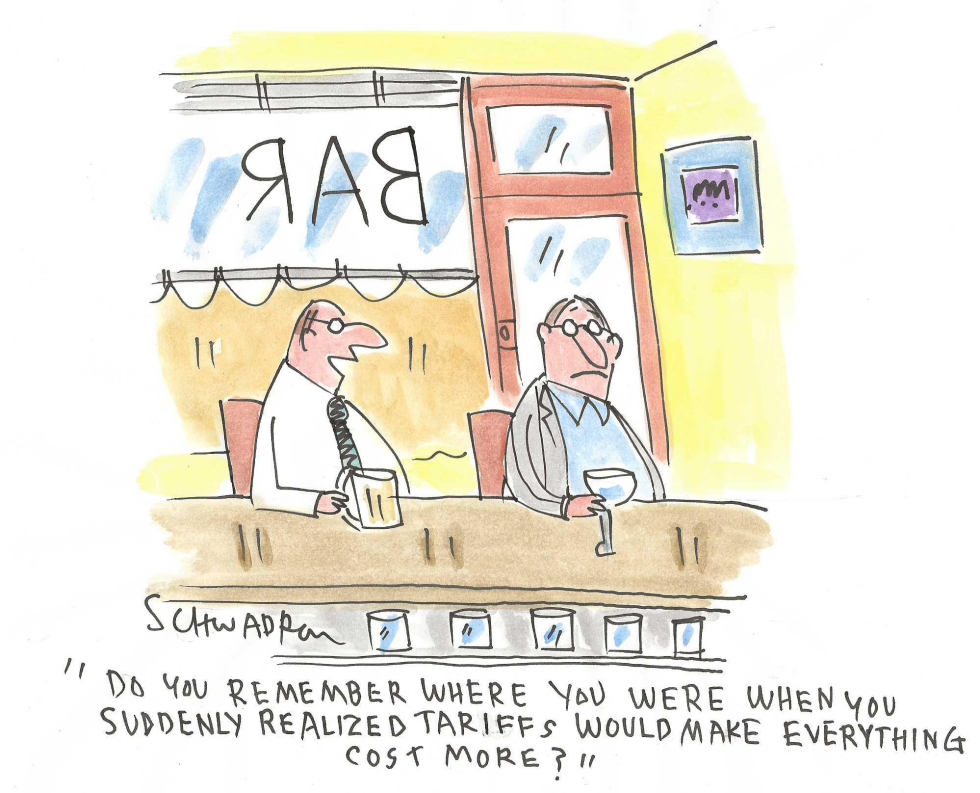
On January 14 2025 a cartoon depicts two men at a bar discussing the economic shock of import tariffs. The exchange focuses on the sudden awareness that duties on foreign goods drive up everyday costs. This reflects ongoing debates over trade policy and its effects on inflation and consumer spending.