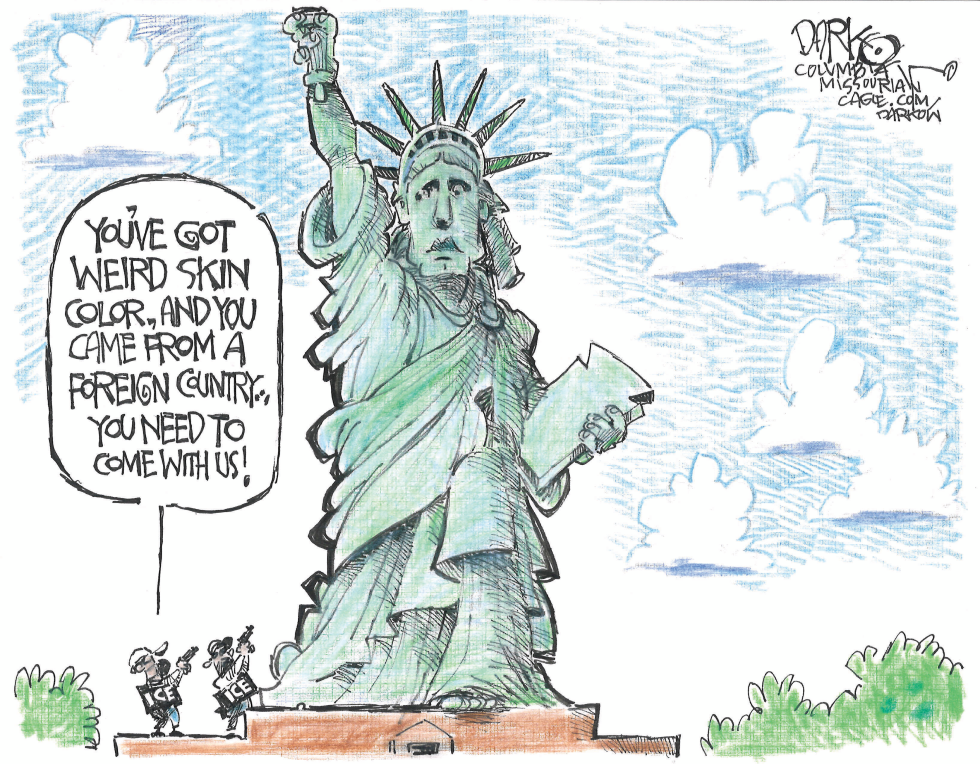
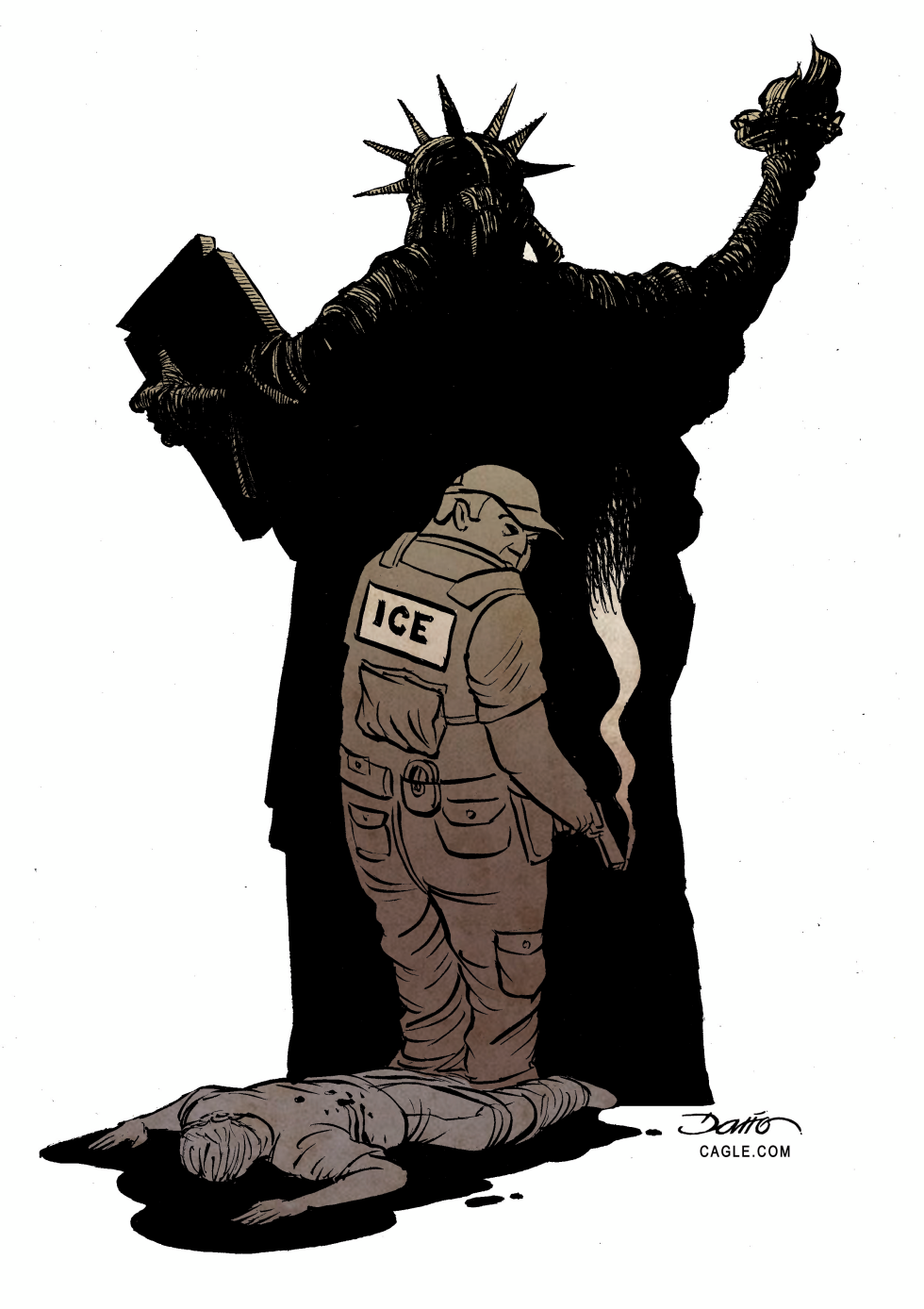
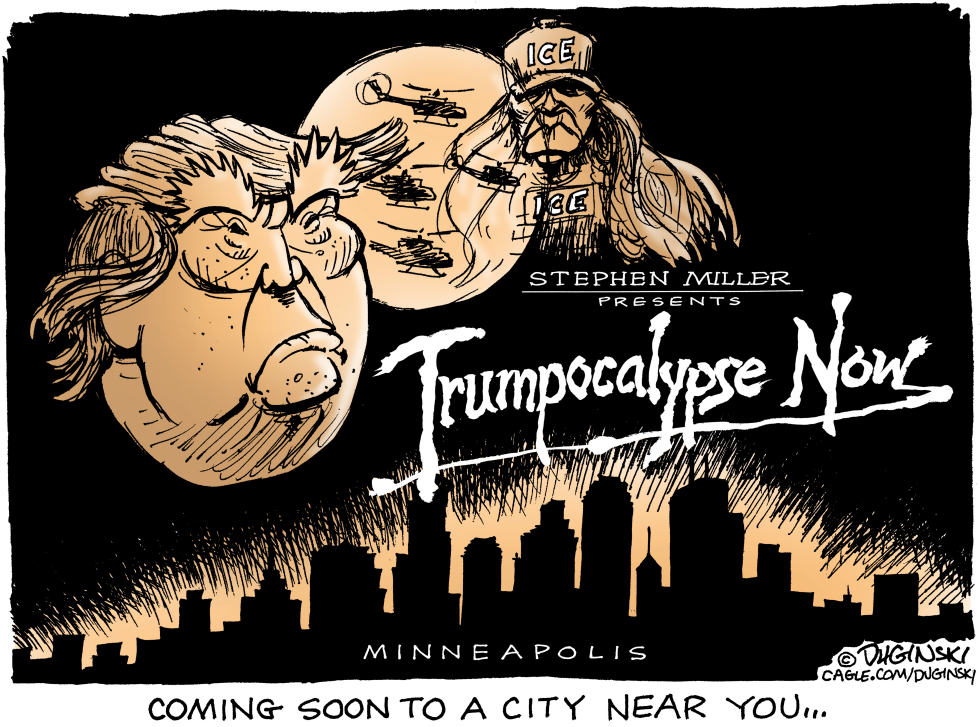
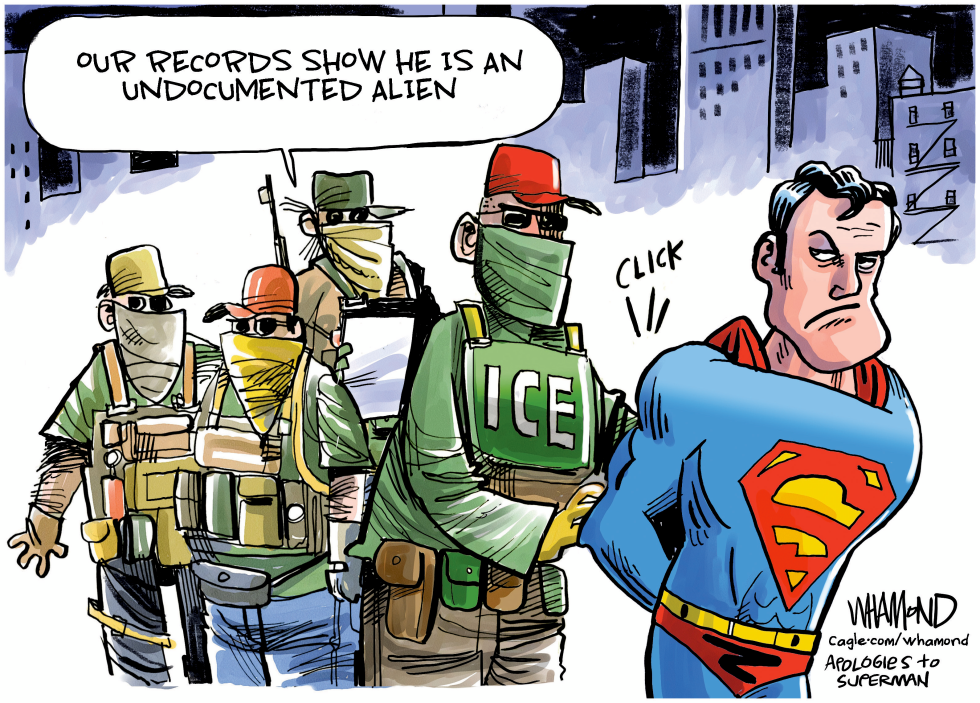
ICE agents have been depicted confronting the Statue of Liberty at its base while citing the monument's skin color and foreign origin as grounds for removal. The action highlights ongoing debates over immigration enforcement priorities and the use of appearance-based criteria in federal operations. The editorial position frames such tactics as inconsistent with the monument's historic role welcoming immigrants.
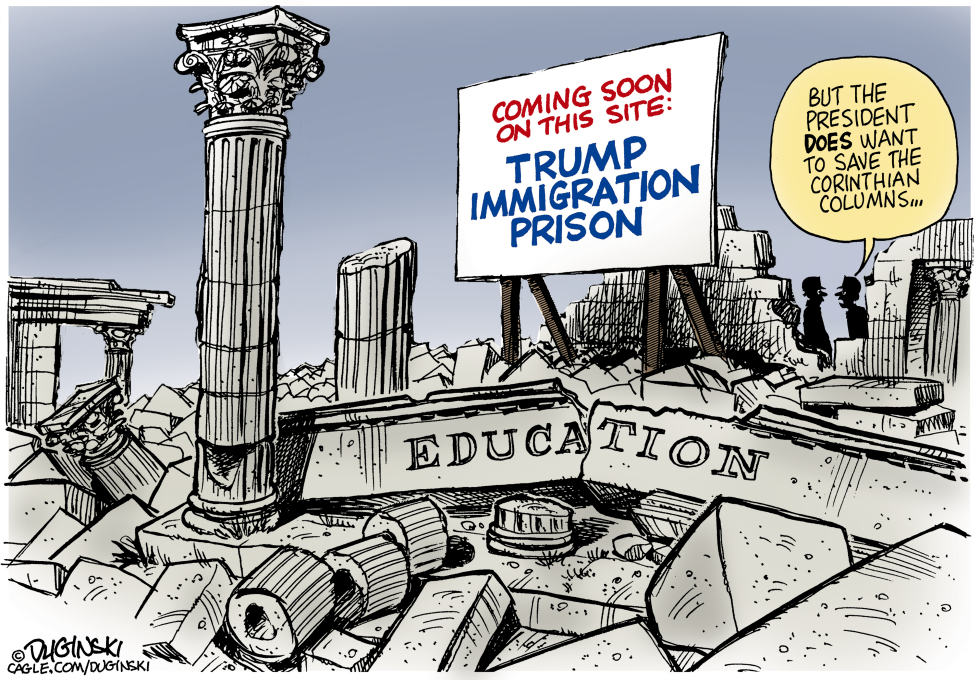
The Trump administration has moved to repurpose a site previously tied to education programs for a new immigration detention facility. The shift reflects ongoing policy emphasis on border enforcement over domestic education support. The piece argues that selective preservation of symbolic elements masks broader institutional damage.
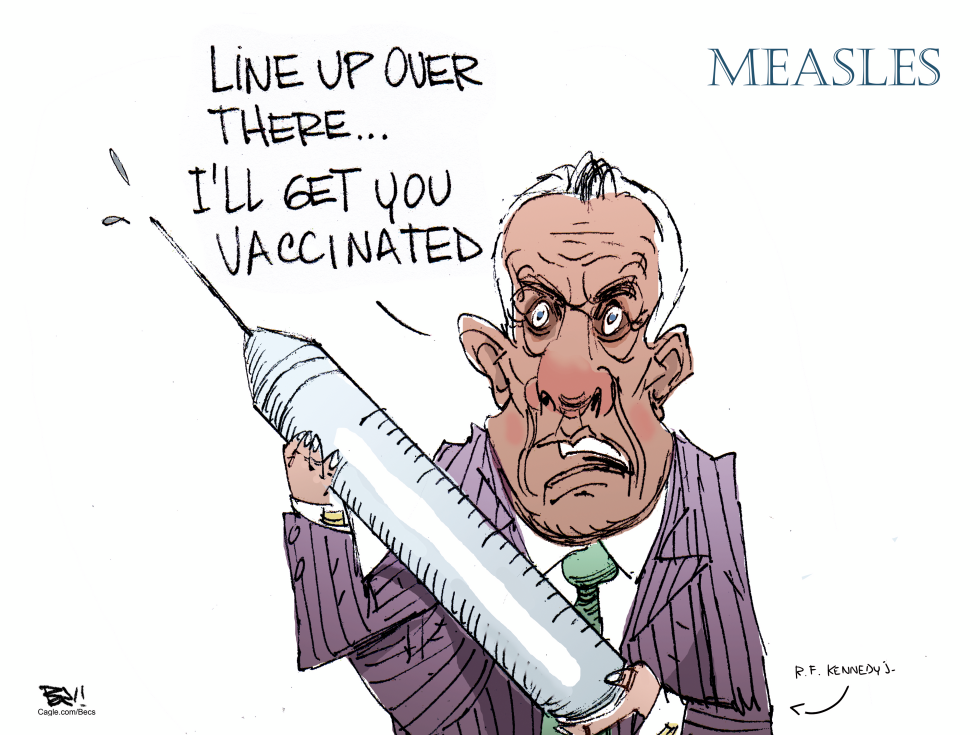
Robert F. Kennedy Jr., serving as a top health official in 2026, faces scrutiny over a sudden push for measles vaccinations. The move comes as cases rise and public skepticism lingers from prior stances. The editorial argues the policy reversal exposes inconsistent leadership on immunization.
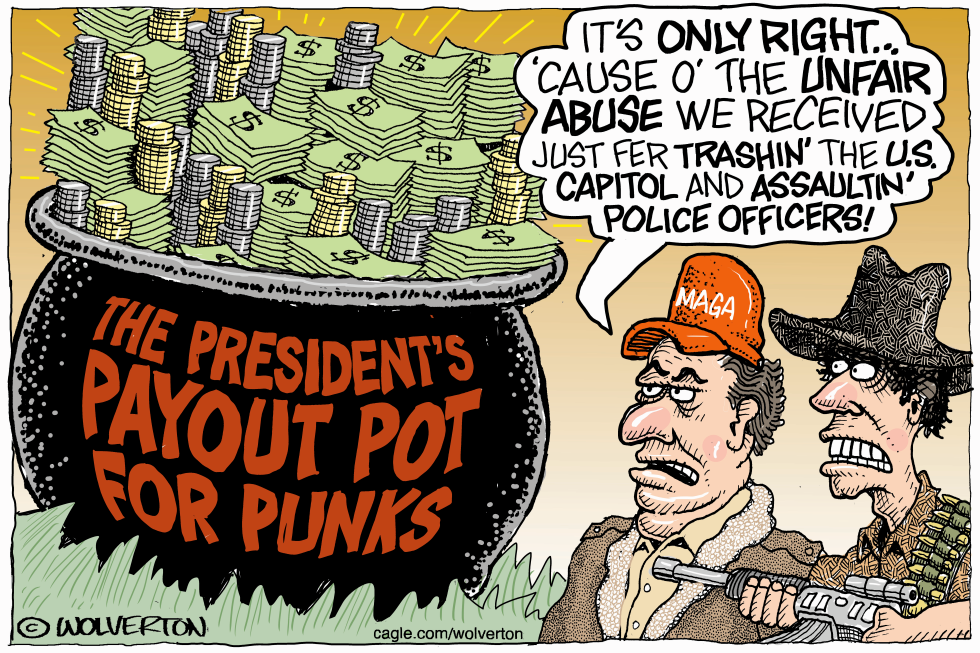
A proposal for compensation to January 6 defendants has drawn sharp criticism from opponents who view it as rewarding those convicted of attacking the Capitol and police. The editorial cartoon portrays the idea as a presidential slush fund for rioters, highlighting the perceived absurdity of compensating participants in the 2021 events.
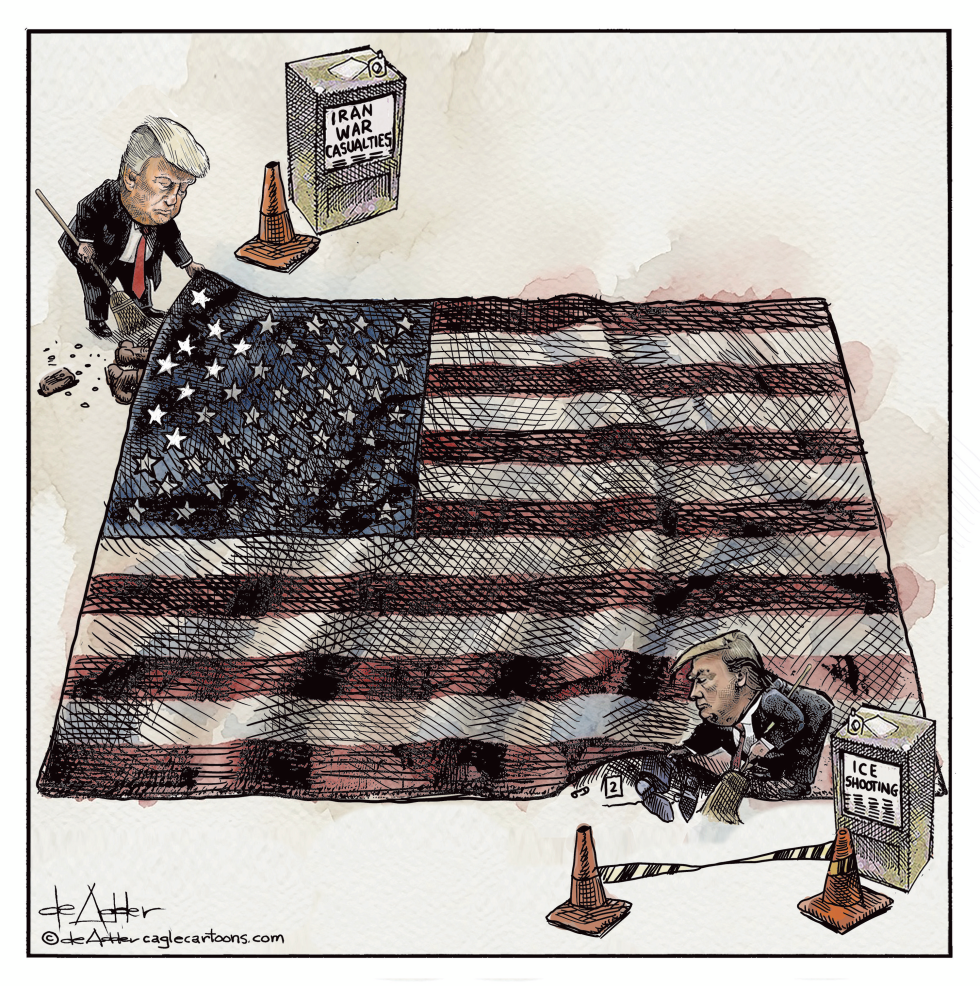
Donald Trump faces scrutiny over reported casualties from potential Iran conflict and an ICE-related shooting incident in mid-2026. The administration's handling of these events draws criticism for downplaying accountability. The piece argues that attempts to minimize these issues undermine public trust in governance.
ICE continues targeted enforcement operations at the border and interior sites amid ongoing debates over detention practices and use of force. The agency reports increased arrests tied to recent policy directives on removals. Critics argue the approach undermines America's historic welcome to newcomers. The cartoon frames the tension between security duties and foundational ideals of freedom.
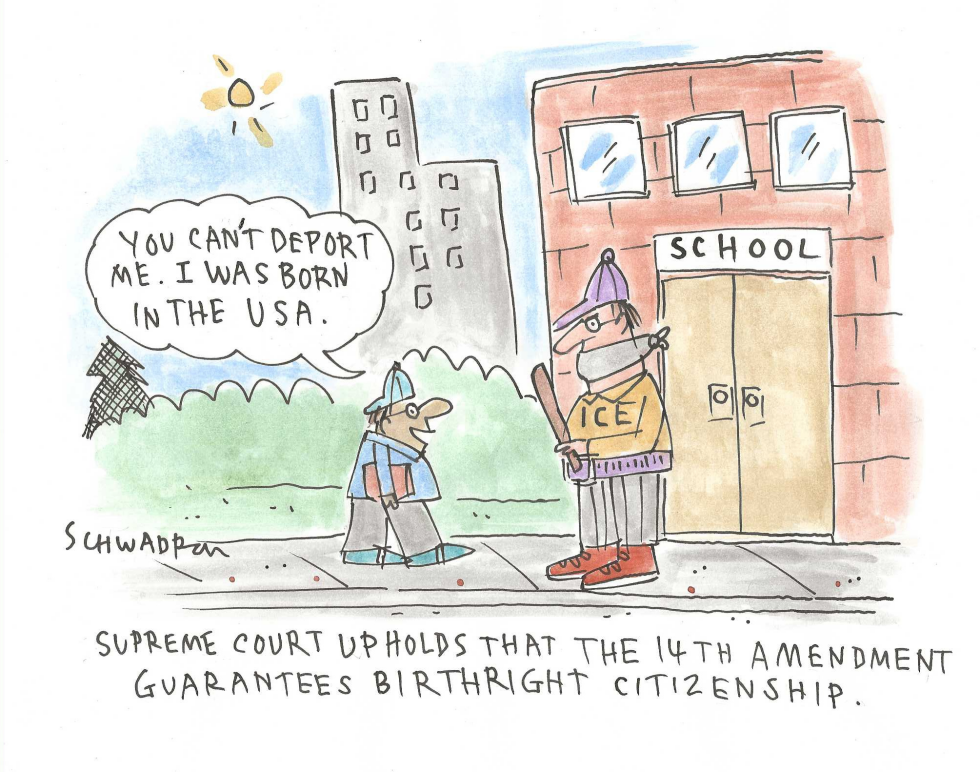
The image shows a student asserting US birth to an ICE agent holding a bat outside a school. The caption states the Supreme Court upheld 14th Amendment birthright citizenship. This responds to ongoing deportation policy debates involving the amendment and enforcement actions as of the 2026 publication date.
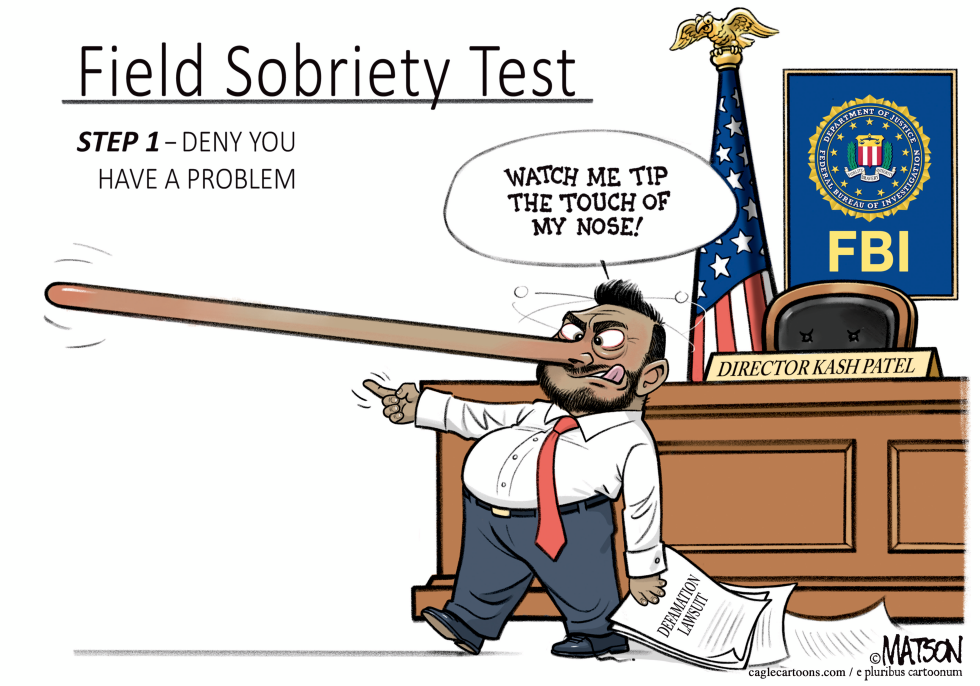
R.J. Matson's cartoon depicts Director Kash Patel behind an FBI desk, his nose elongated like Pinocchio's, as he mangles a sobriety test phrase: 'Watch me tip the touch of my nose!' The setup labels it Step 1: Deny you have a problem, with a defamation lawsuit paper slipping away. American and FBI flags frame the scene, tying into tags like Federal Bureau of Investigation, Kash Patel, field sobriety test, intoxication, drinking problem, and criminal justice. This visual pokes at perceptions of denial in leadership, blending humor with commentary on domestic policy without overreaching into unseen motives.
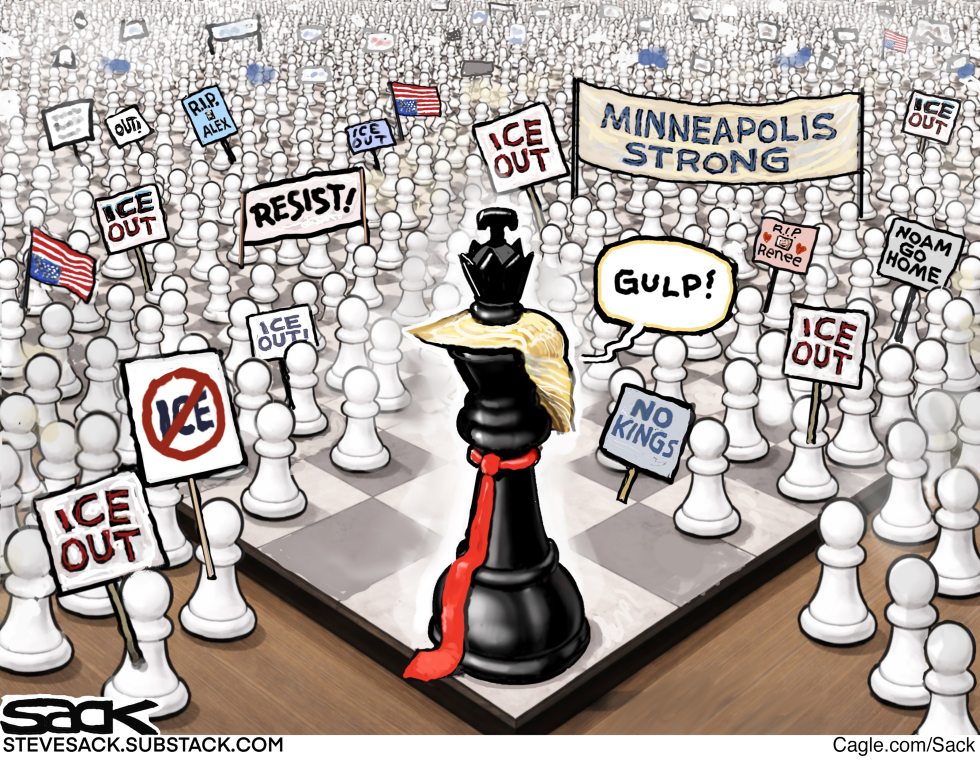
In this political cartoon, a vast army of white chess pawns, each holding protest signs like ICE out and resist, encircles a solitary black king resembling Trump, complete with blonde hair and red tie, uttering a nervous gulp. The scene unfolds on a chessboard, symbolizing confrontation, with banners proclaiming Minneapolis strong and no kings amid American flags and memorial RIP signs for Alex and Renee. Tags such as Minneapolis ICE protests, Trump king chess, ICE out pawns, anti-ICE rally, chess protest imagery, and gulp ICE king highlight the visual satire of resistance against immigration enforcement. The composition captures a moment of overwhelming protest, emphasizing themes of uprising and defiance in a straightforward, unambiguous depiction.
Daryl Cagle's political cartoon cleverly twists the classic monster under bed scenario into a commentary on immigration fear, with a parent assuring a terrified child that there are no ICE agents lurking below. The image captures the essence of deportation fears plaguing families amid strict border enforcement and Trump era politics. Through satirical humor, it highlights childhood anxiety amplified by real-world immigration policy, family separation, and immigrant rights concerns, making a poignant statement on how political decisions invade even the sanctity of bedtime stories.