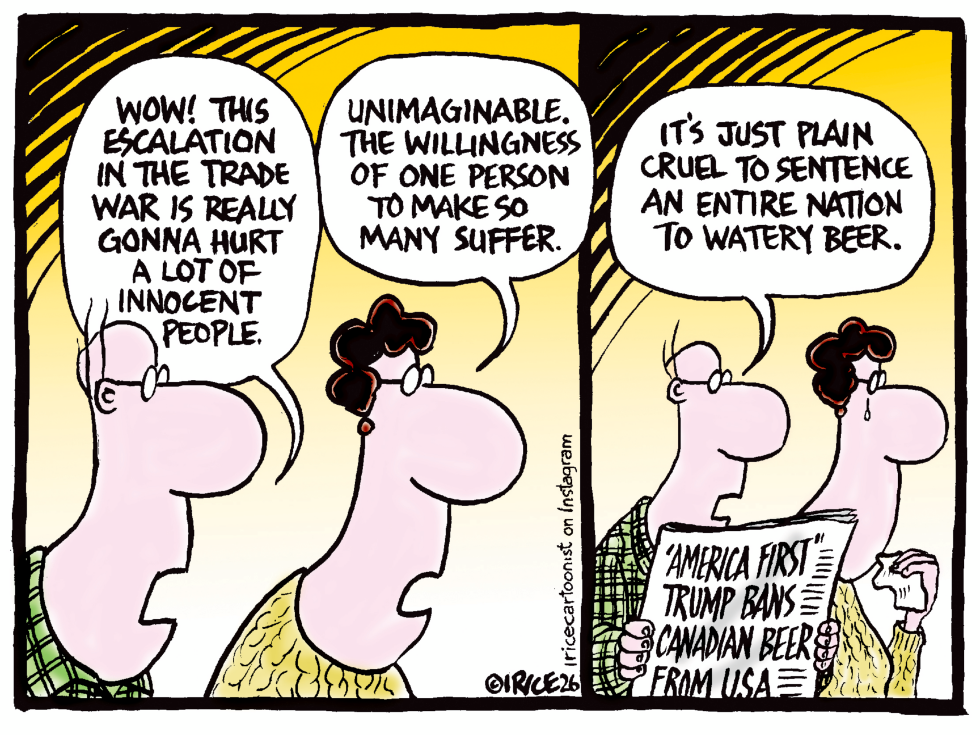
President Trump announced a ban on Canadian beer imports as part of an escalating trade dispute with Canada. The move, framed under the America First banner, immediately drew criticism for punishing ordinary citizens on both sides of the border. The policy extends earlier tariff threats into consumer goods, raising prices and limiting choices for American drinkers. Canadian exporters face sudden market loss while U.S. retailers scramble for alternatives. The editorial cartoon portrays the decision as petty and disproportionate, arguing that one leader's willingness to inflict broad pain reveals the human cost of personal political theater.
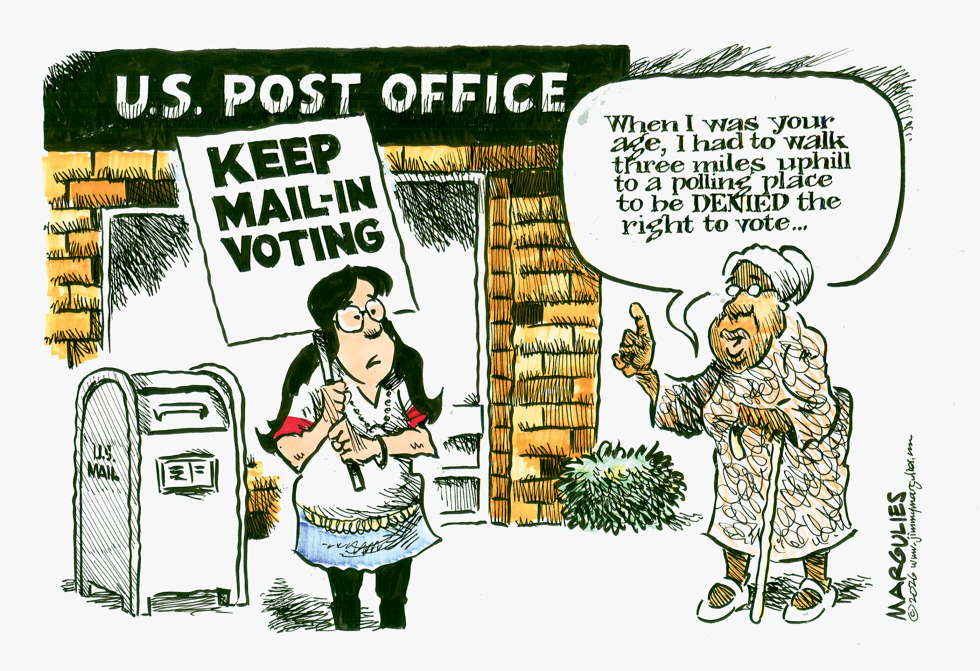
A protest sign at a U.S. Post Office calls for an end to mail-in voting. The cartoon responds to ongoing state-level efforts to restrict mail ballots after expanded use in recent elections. Such limits disproportionately affect older voters and those with mobility issues who previously faced physical barriers at polling places. The piece argues that rolling back mail-in options revives the very obstacles elderly citizens once endured, undermining broader access to the ballot.
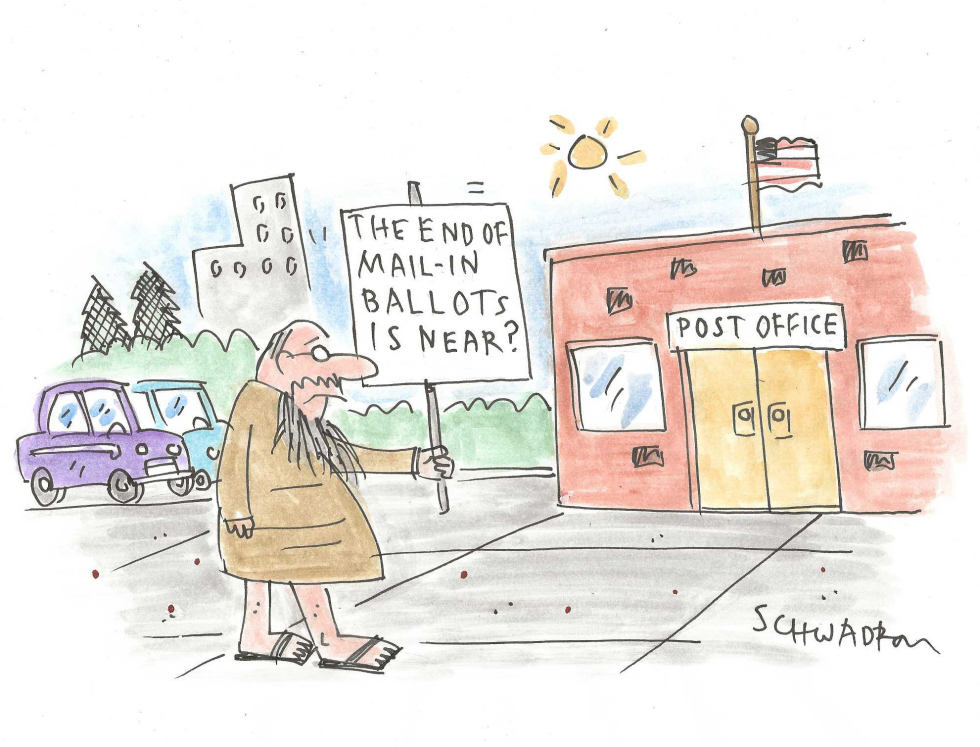
Proposals to restrict or end mail-in ballots have gained traction in several states ahead of upcoming elections, prompting concerns from voting rights advocates about reduced access for elderly, rural, and disabled voters. The post office has long served as a key conduit for absentee ballots. Critics argue the changes prioritize unproven fraud concerns over convenience and turnout. Supporters say tighter rules restore confidence in results. The cartoon frames the debate as an abrupt shift that could sideline a proven voting method.
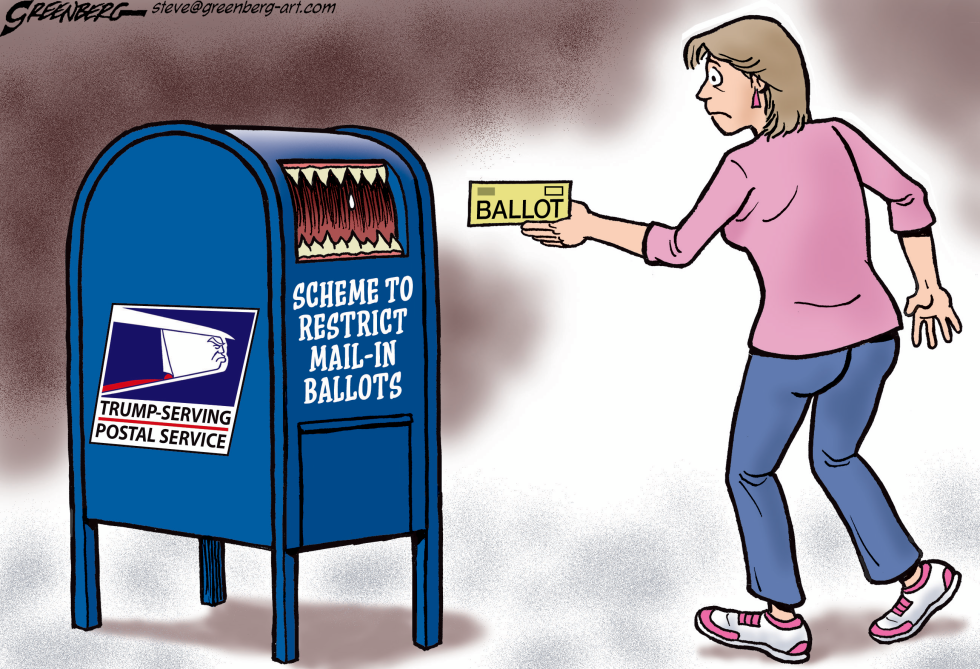
The U.S. Postal Service under Trump influence has implemented measures to restrict mail-in ballots ahead of the 2026 elections. These actions limit voter access through operational changes and heightened scrutiny of mail ballots. The moves raise concerns about equitable participation in elections. Critics argue the changes disproportionately affect certain voter groups and undermine trust in the process. The cartoon portrays the postal service as actively hostile to mail-in voting, framing the restrictions as a deliberate scheme to suppress turnout.
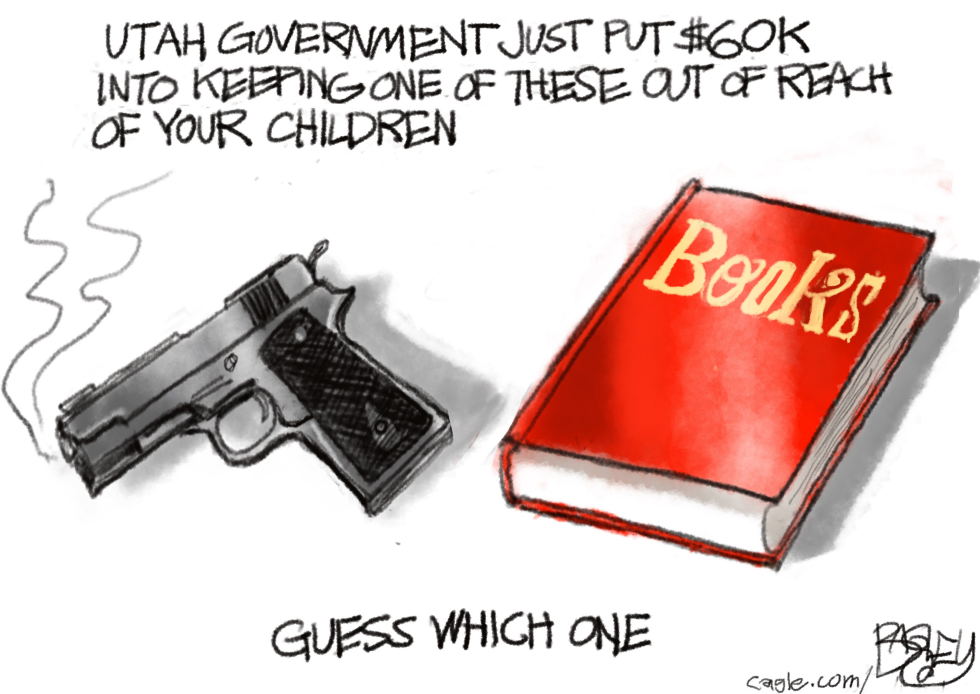
Utah officials directed $60,000 toward measures keeping certain books from children. Firearms remain readily available in the state. The decision highlights priorities in public safety and education policy. The piece criticizes the allocation as misplaced emphasis on censorship instead of addressing gun risks.
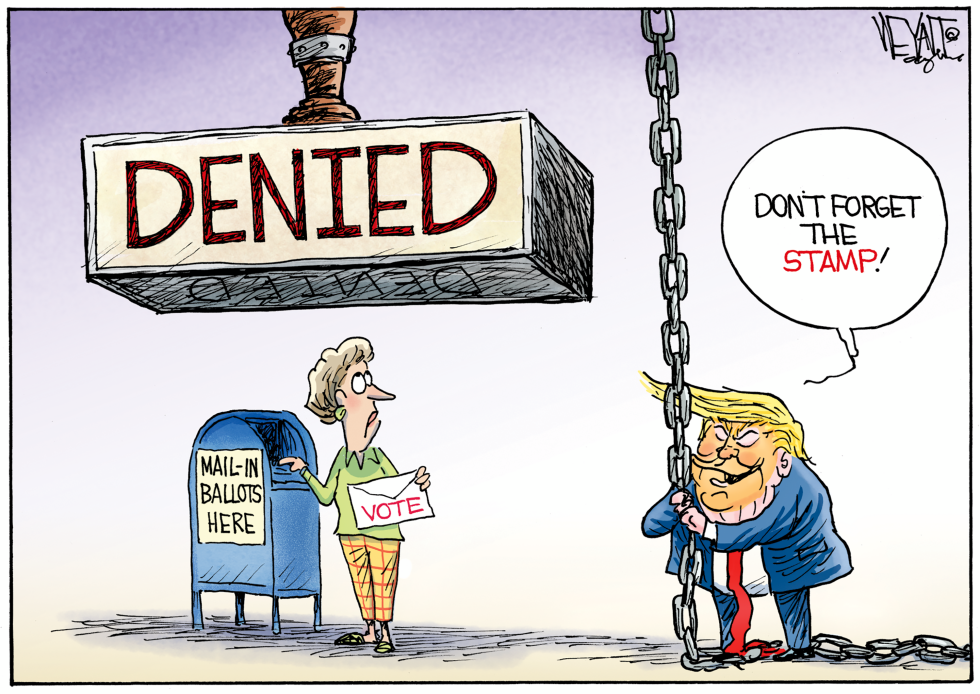
President Trump has directed efforts to deny mail-in ballots in the 2026 election cycle, citing concerns over fraud and integrity. The move affects millions of voters who rely on absentee and mail voting. Critics argue the policy suppresses turnout and favors in-person Republican voters. The cartoon portrays Trump personally enforcing the denial mechanism.
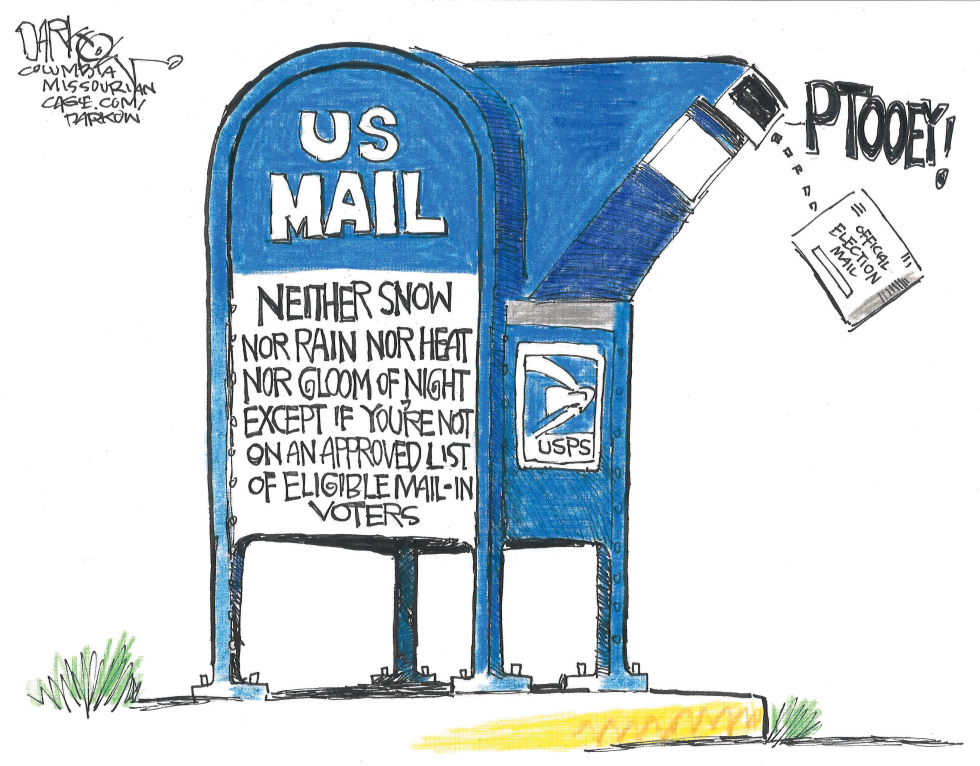
A USPS mailbox rejects mail-in ballots unless the sender appears on an approved list of eligible voters. The action highlights ongoing debates over mail voting security and access ahead of elections. Critics argue such restrictions disproportionately affect certain voter groups and undermine confidence in the postal system. Supporters claim the measures prevent fraud. The cartoon portrays the mailbox as actively enforcing these limits, suggesting institutional barriers to participation.
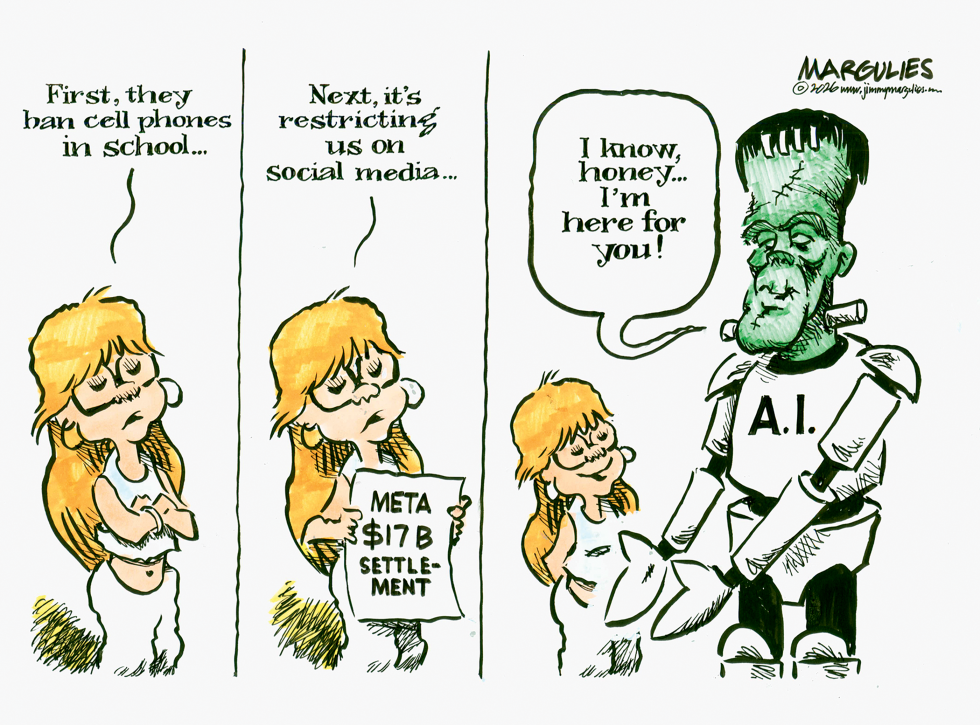
A $17 billion Meta settlement and expanding school cell phone bans have accelerated restrictions on teen social media use. The developments raise questions about how young users will fill the gap left by reduced platform access. The cartoon frames artificial intelligence as the unexpected beneficiary, positioning an AI Frankenstein figure as a comforting presence for a disappointed girl. This visual argument suggests that limits on social media may simply shift reliance toward unregulated AI tools rather than solving underlying concerns about youth screen time.
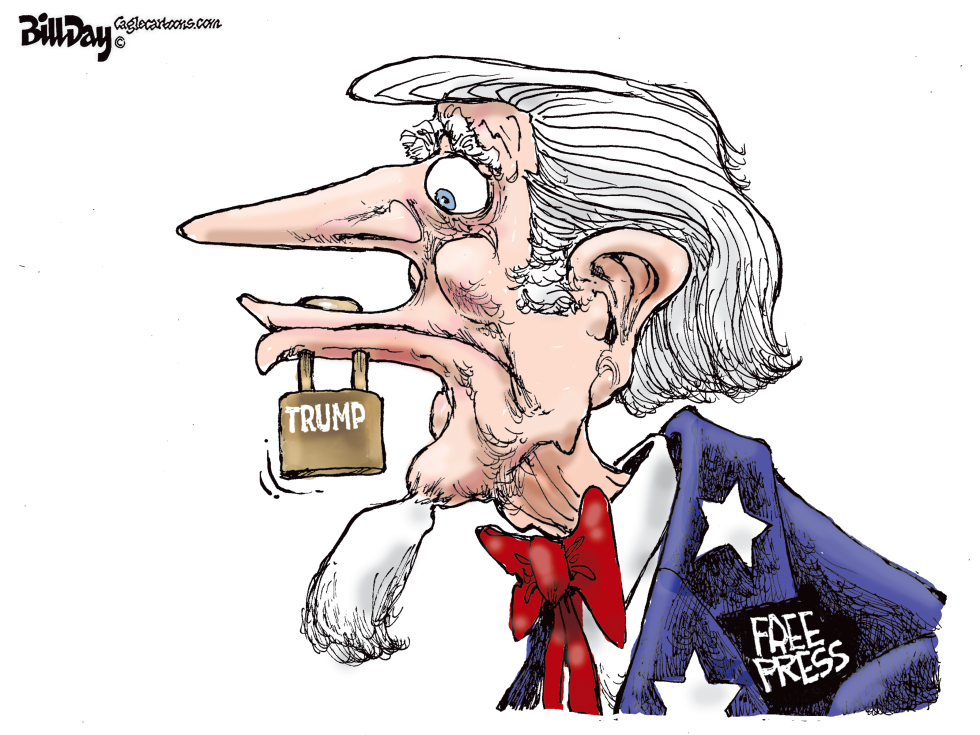
Donald Trump, holding office in 2026, faces renewed scrutiny over efforts to limit press access and information flow. Critics argue these moves undermine democratic oversight. The cartoon portrays the administration as actively securing or restricting the free press through direct control.
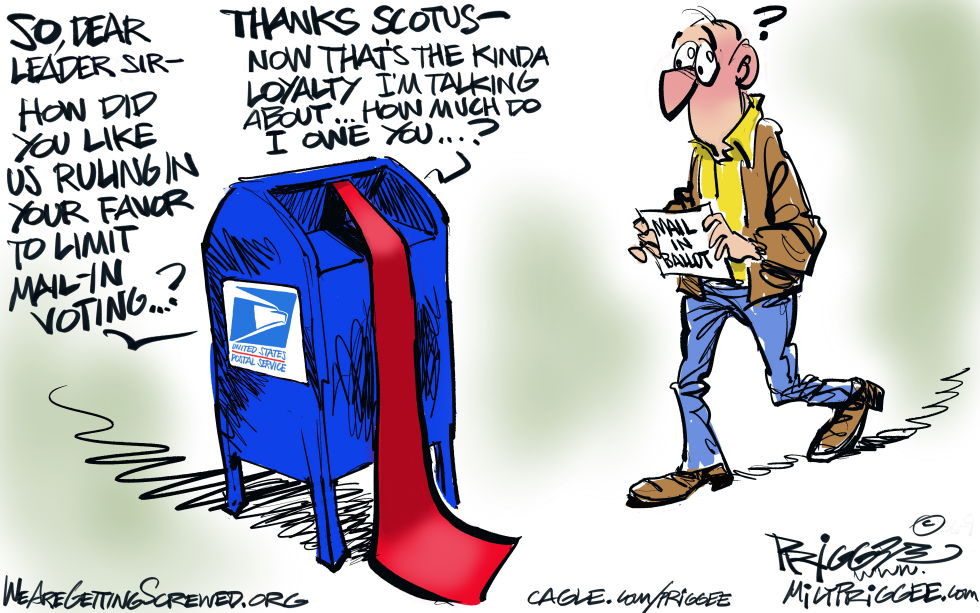
The cartoon shows a voter holding a mail-in ballot and questioning a USPS mailbox about a Supreme Court ruling that limited mail-in voting in favor of a political leader. The mailbox responds with thanks for the loyalty and an offer to pay. The image highlights concerns over judicial influence on elections and voter access as of the 2026 publication date.
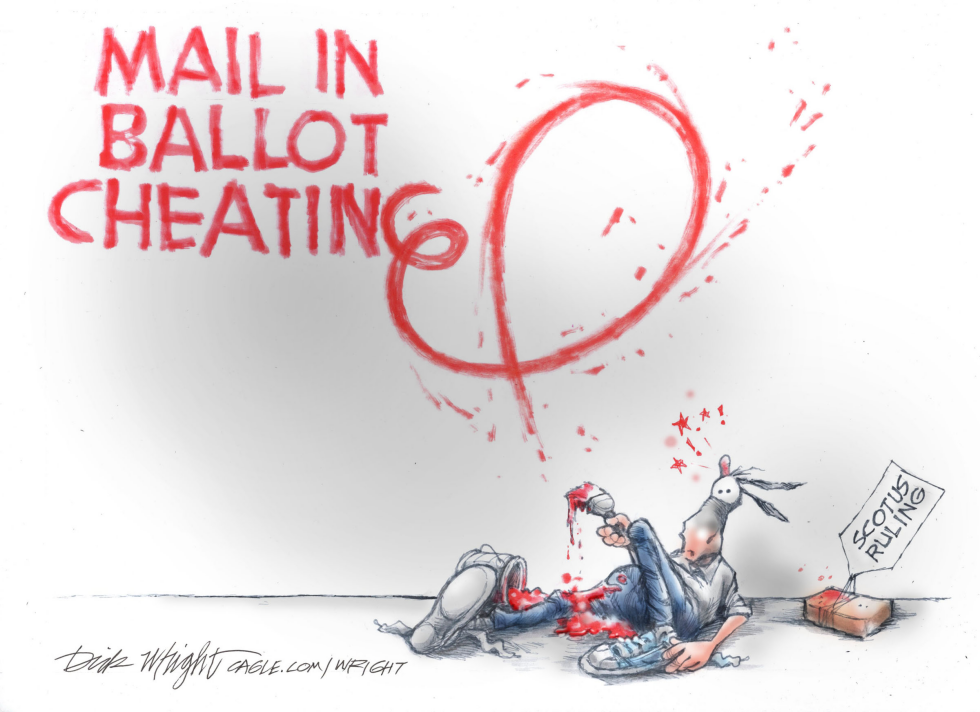
The image depicts the Democratic Party symbol as a donkey lying wounded on the ground with red liquid visible near its body. A large red prohibition symbol covers the words mail in ballot cheating at the top. A sign reading SCOTUS ruling stands nearby next to a box. The composition responds to a Supreme Court decision limiting certain mail-in ballot procedures. The visual argument centers on claims of reduced opportunities for improper voting practices. Publication occurred on August 25 2026. The work uses the party emblem to illustrate the effect of the ruling on one political side. No specific prior case details appear in the image itself.
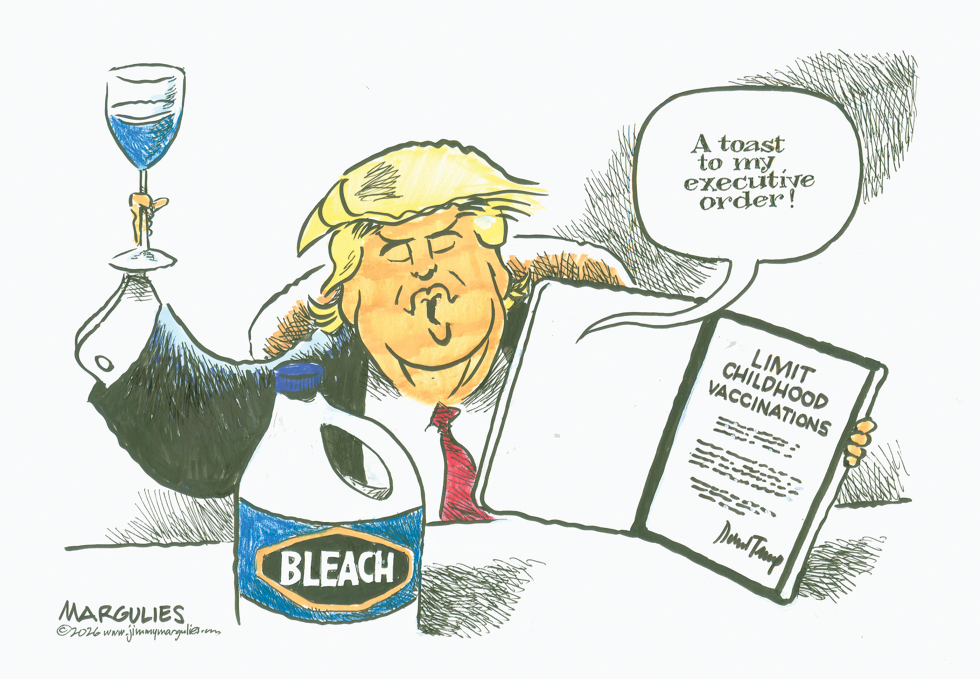
President Donald Trump signed an executive order limiting childhood vaccinations on or around August 2026. The move drew immediate attention for its potential impact on public health access and immunization rates nationwide. Critics argued the policy could increase disease risks for children while supporters framed it as protecting parental choice. The editorial uses the bleach toast imagery to critique the decision as reckless and disconnected from established medical guidance.
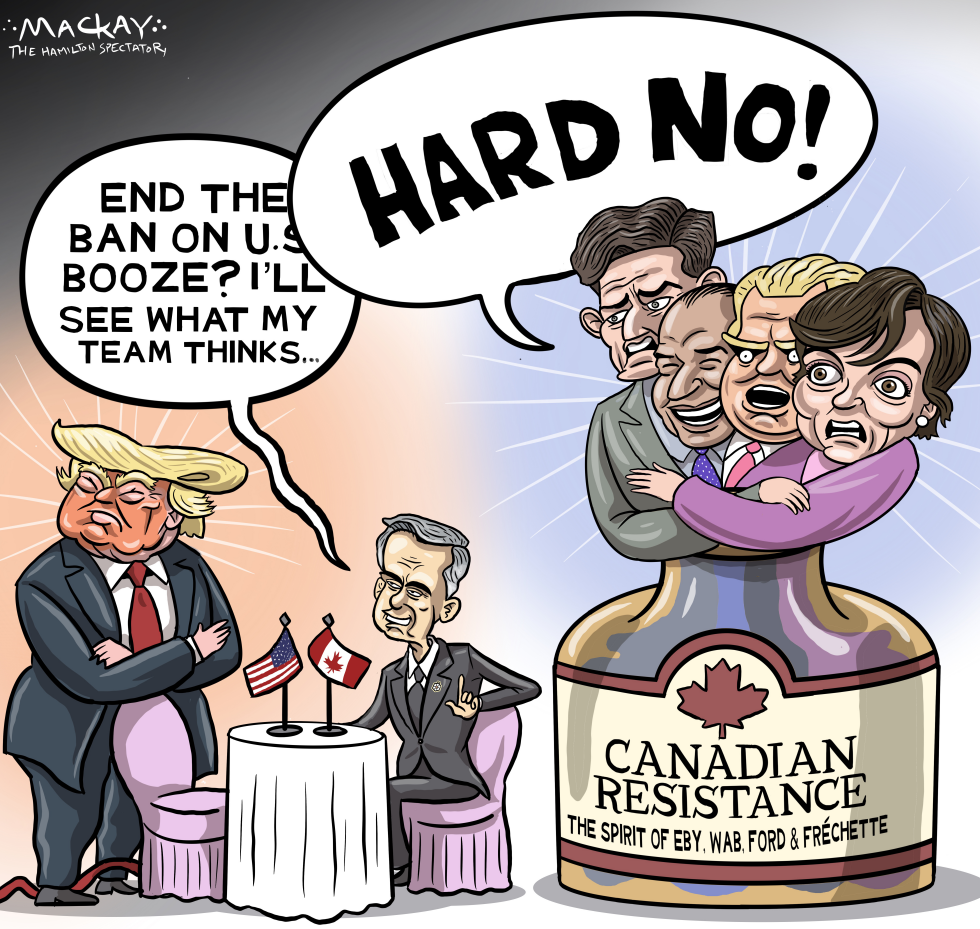
Donald Trump signaled openness to ending a ban on US alcohol imports into Canada during a meeting with Canadian officials. Provincial leaders including David Eby and Doug Ford responded with unified opposition. The cartoon portrays the premiers as a collective force of resistance and shows Trump deferring the decision to his team.
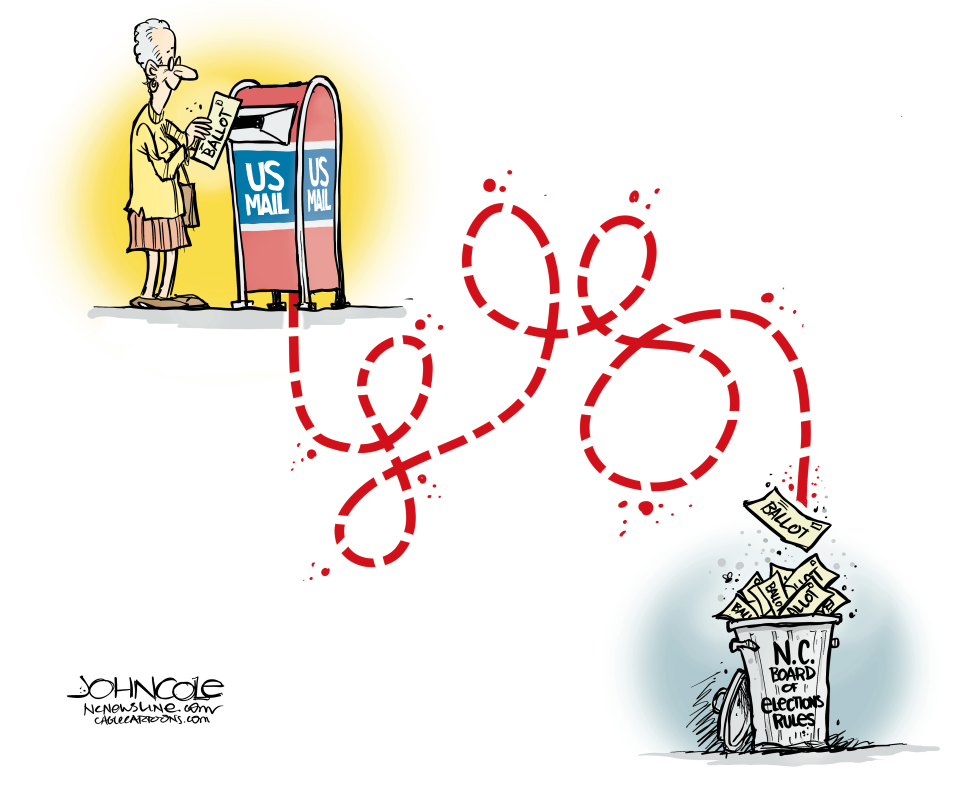
North Carolina election officials have implemented rules that invalidate or discard large numbers of mail ballots. The changes affect voter access in the state. The editorial criticizes the policy as an unnecessary barrier to participation.
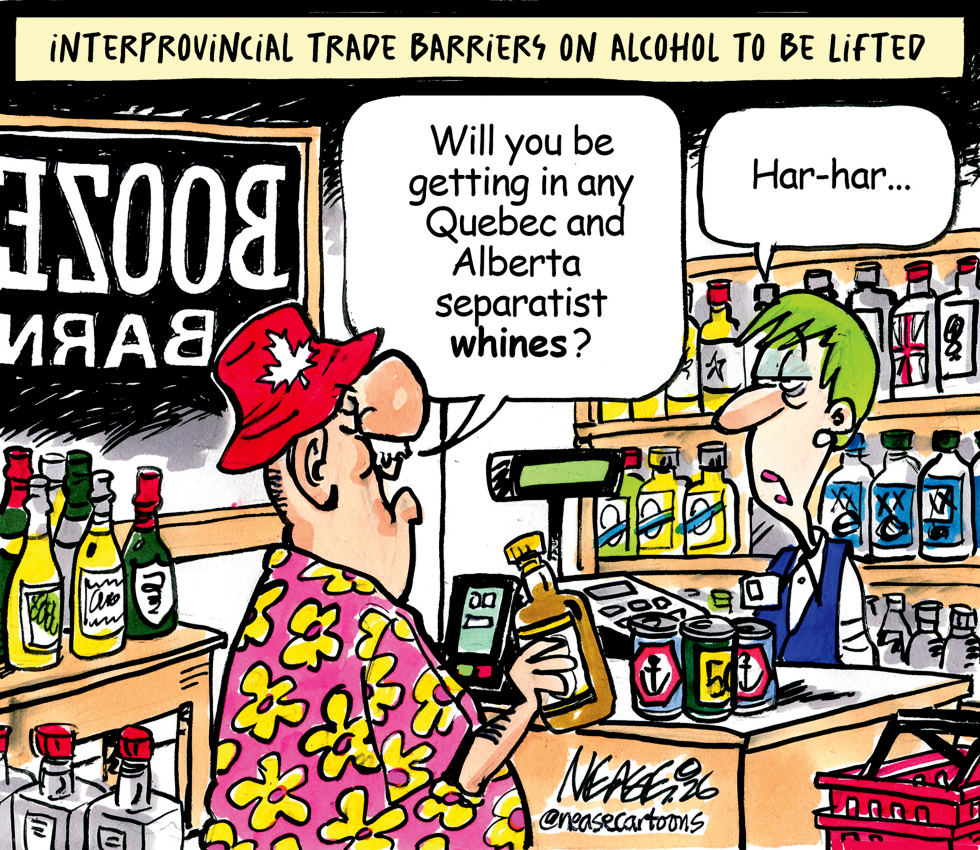
Canada announced it will lift interprovincial trade barriers on alcohol sales. The change opens cross-border provincial liquor markets and prompts complaints from Quebec and Alberta separatists. The cartoon mocks those complaints as mere whines while a clerk offers a dismissive laugh.