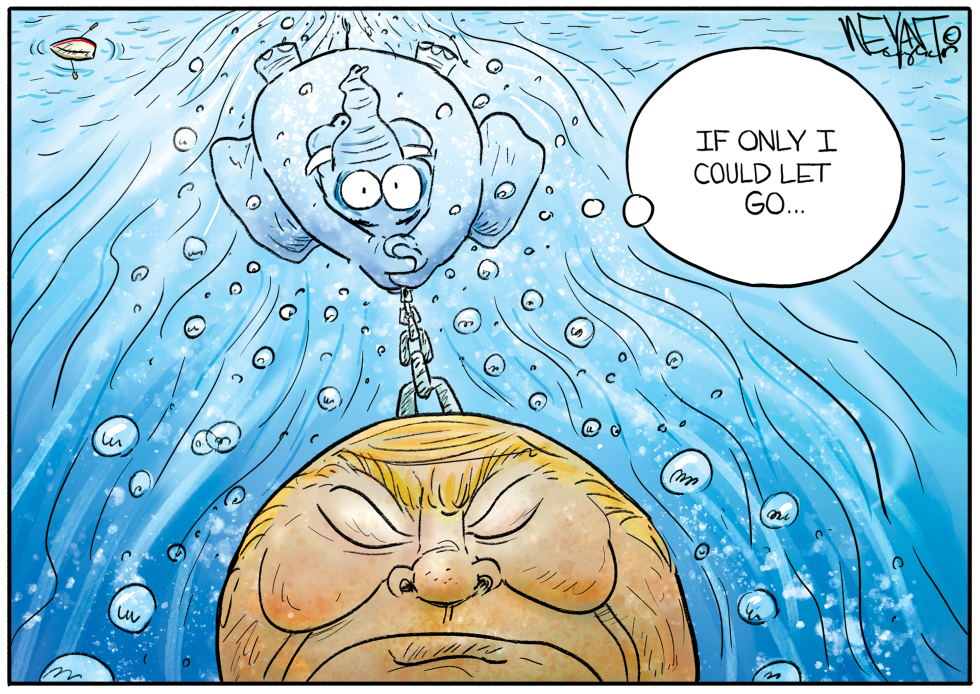
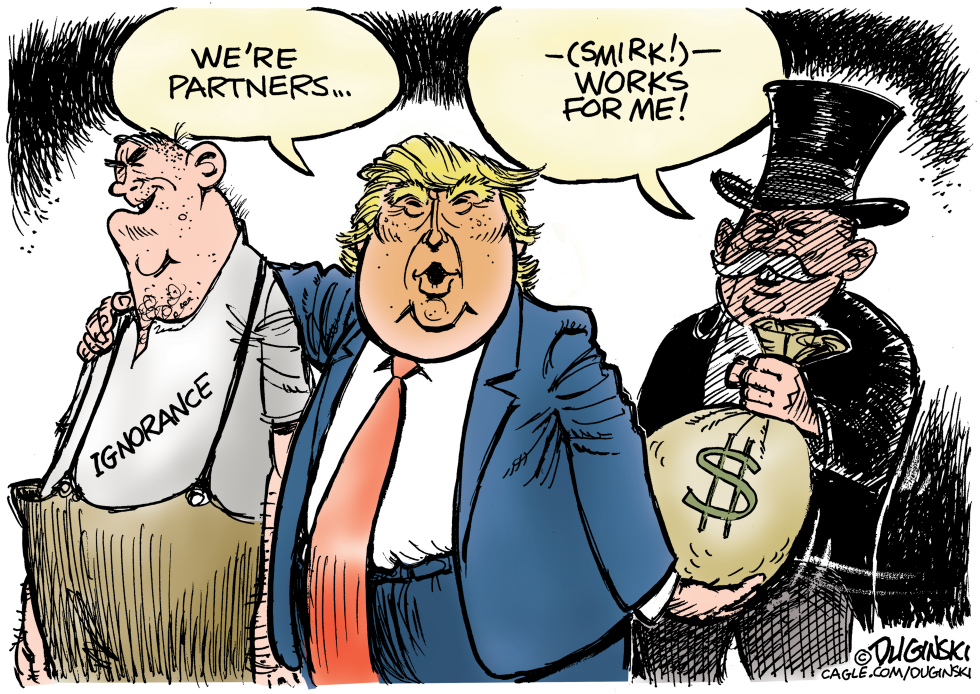
The Republican Party continues to grapple with its deep ties to Donald Trump as the 2026 election cycle approaches. Trump remains the dominant force within the GOP, and efforts to distance the party from him have repeatedly failed. This dynamic risks further electoral damage as voters grow weary of the internal conflict. The cartoon argues that the GOP's inability to break free from Trump is self-inflicted and will lead to its continued decline.
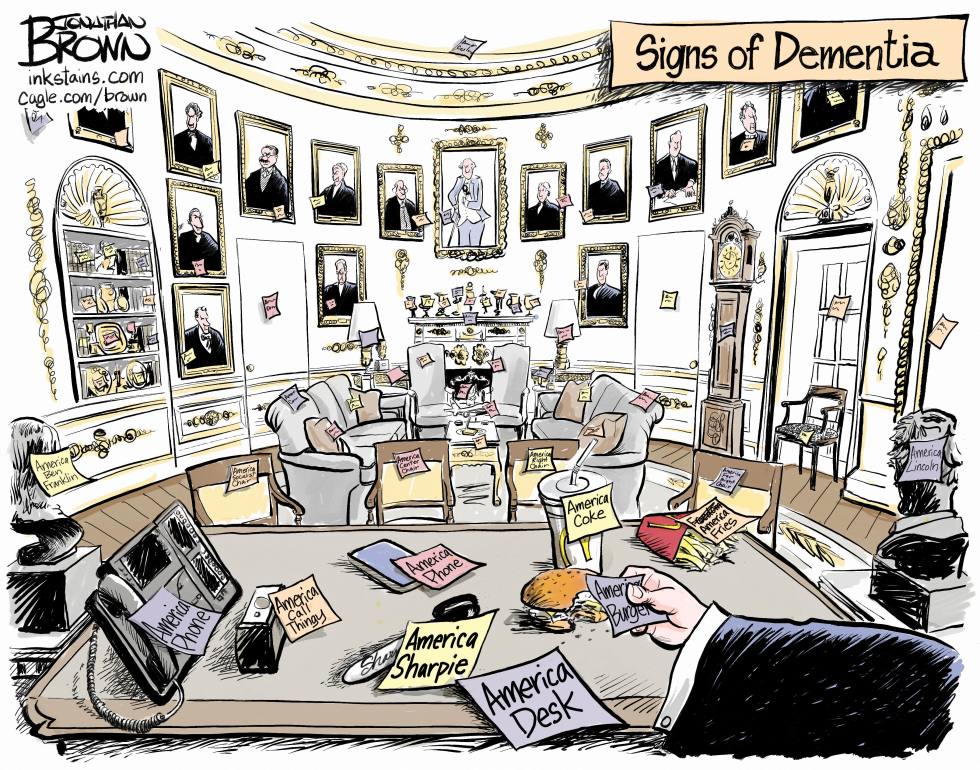
A new editorial cartoon depicts the Oval Office overrun with sticky notes labeling everyday items as America. The scene highlights signs of dementia through repeated branding on phones, desks, food and furniture. Published on September 9, 2026, the work comments on ongoing concerns about cognitive fitness in the presidency. The visual uses the familiar setting of the White House to underscore confusion and memory issues. Observers note the cartoon captures public debate over leadership capacity without naming specific individuals.
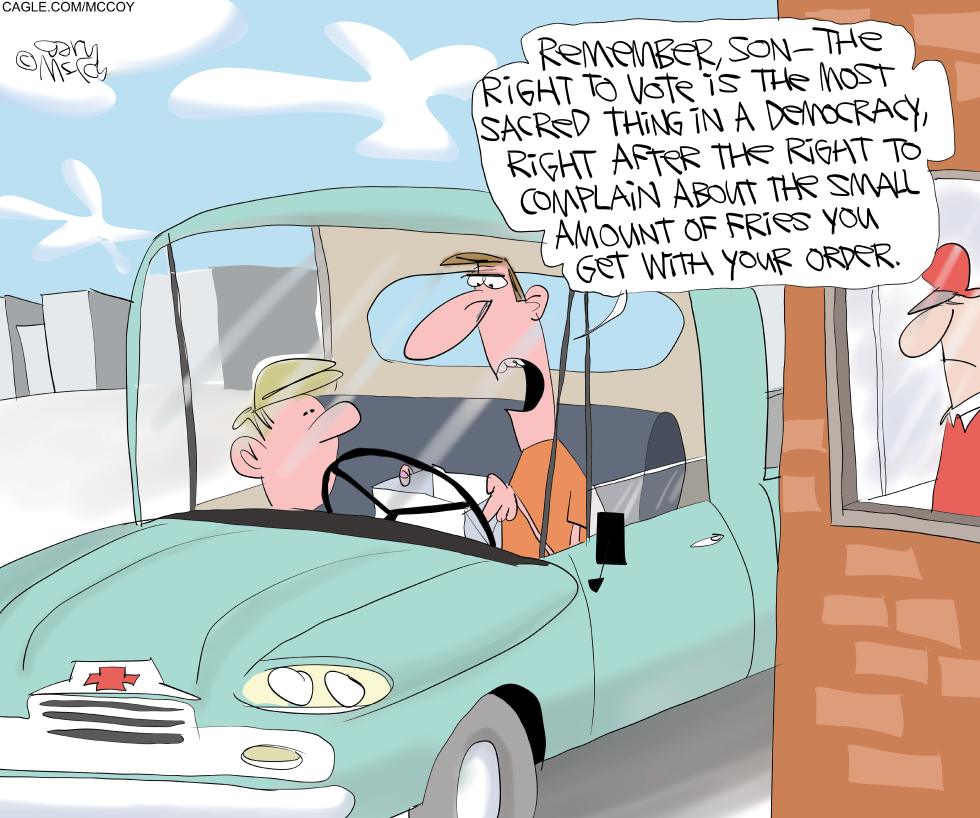
A father uses a drive-thru moment to stress that voting ranks as the most sacred democratic right, just behind complaining about insufficient fries. The exchange highlights how citizens often treat civic participation as secondary to everyday gripes. The piece argues that such misplaced priorities undermine engagement in elections and weaken democratic foundations.
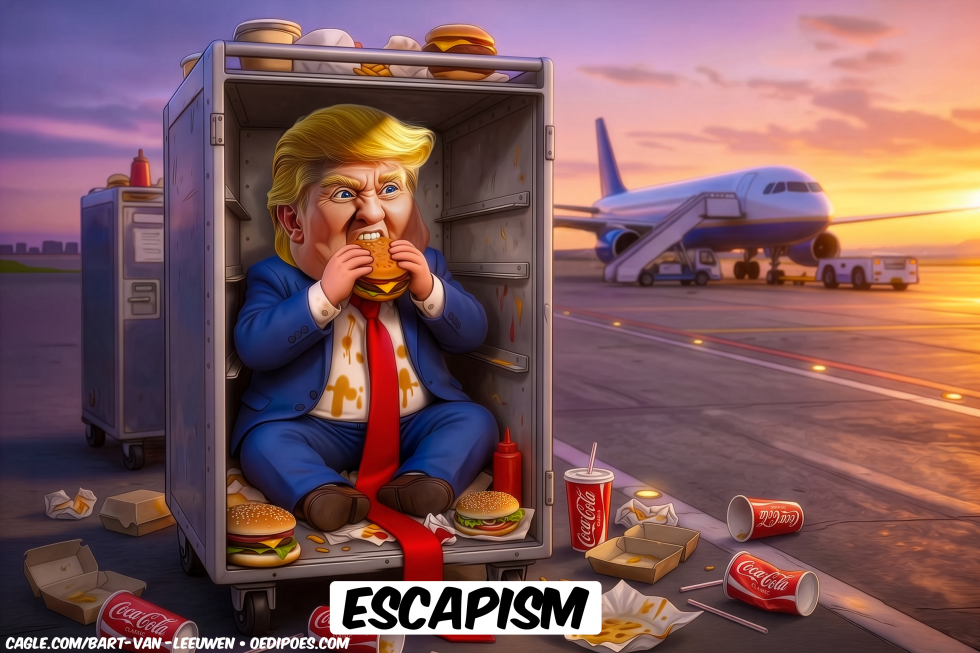
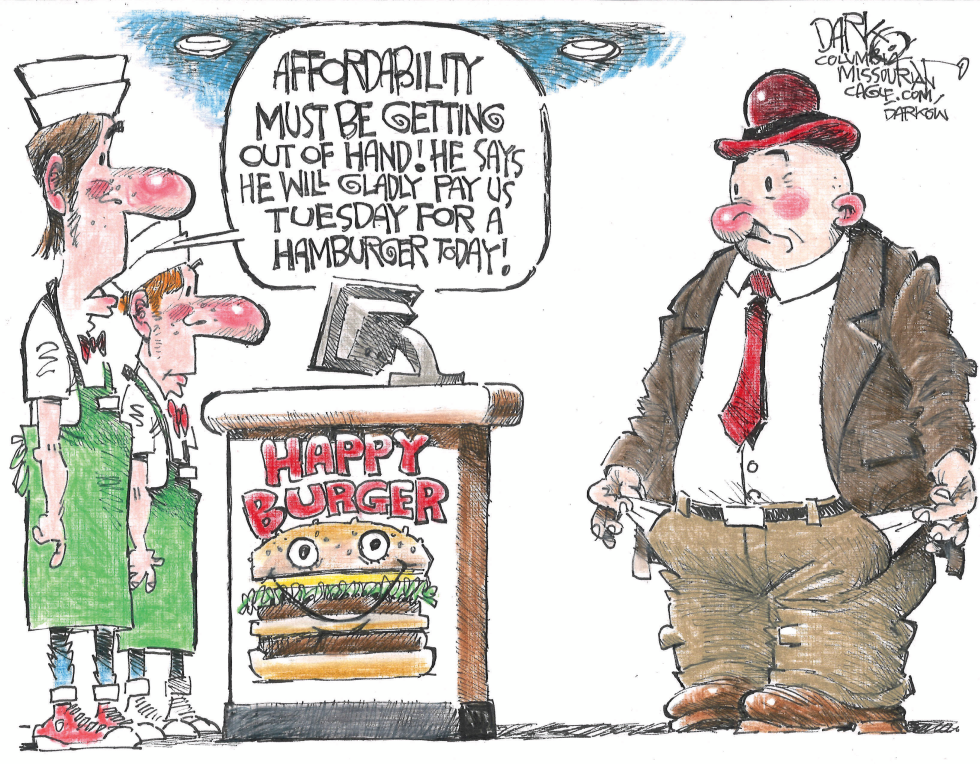
Rising living costs continue to strain household budgets across the country as consumers delay payments and stretch resources. The situation reflects persistent pressure on everyday purchases like meals. The piece takes the position that such affordability challenges have become so widespread they invite classic cultural comparisons to underscore the frustration.
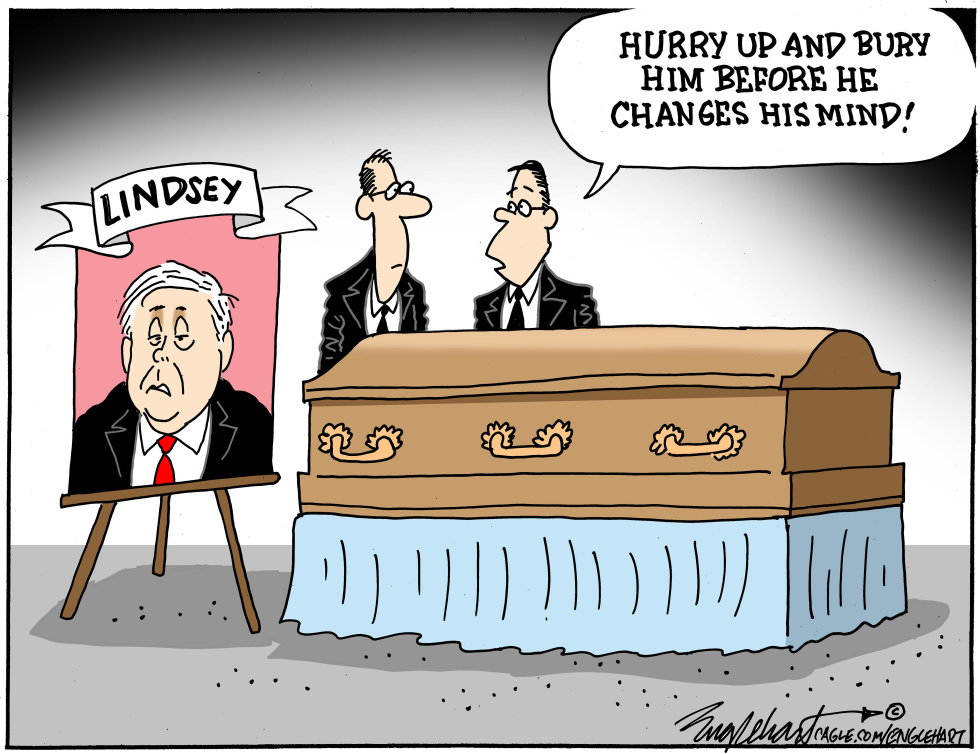
A portrait labeled Lindsey sits on an easel beside a casket while two men in dark suits stand behind it. One delivers a speech bubble line calling for a quick burial before the deceased can change his mind. The July 2026 image uses the funeral setting to comment on political indecision.
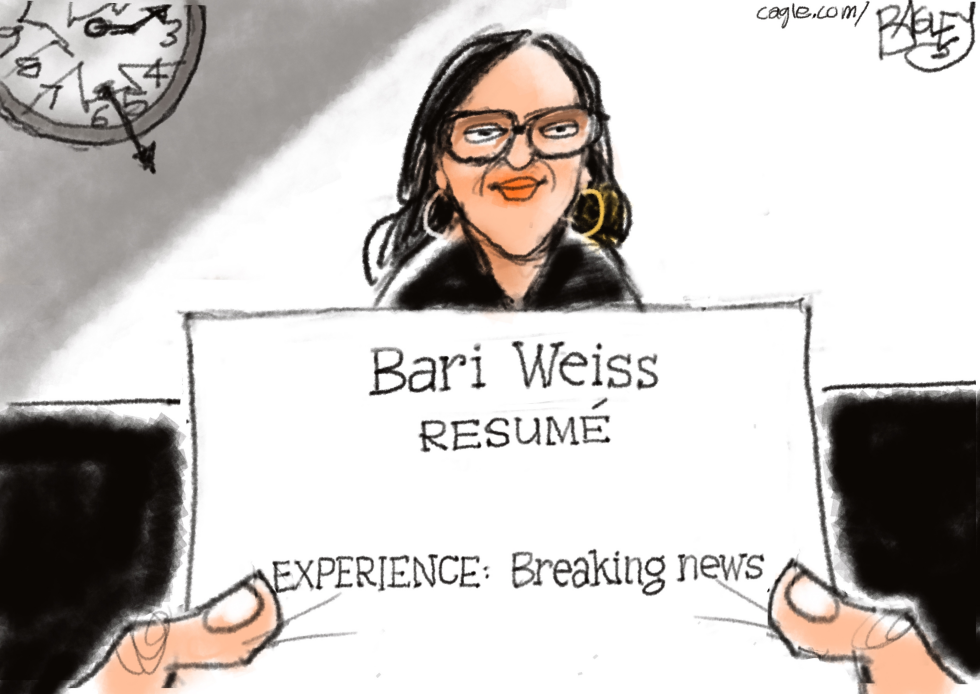
Bari Weiss holds a resume centered on breaking news experience. The document appears amid discussions of CBS News leadership changes and media ownership shifts at Paramount. The presentation occurs on June 11 2026.
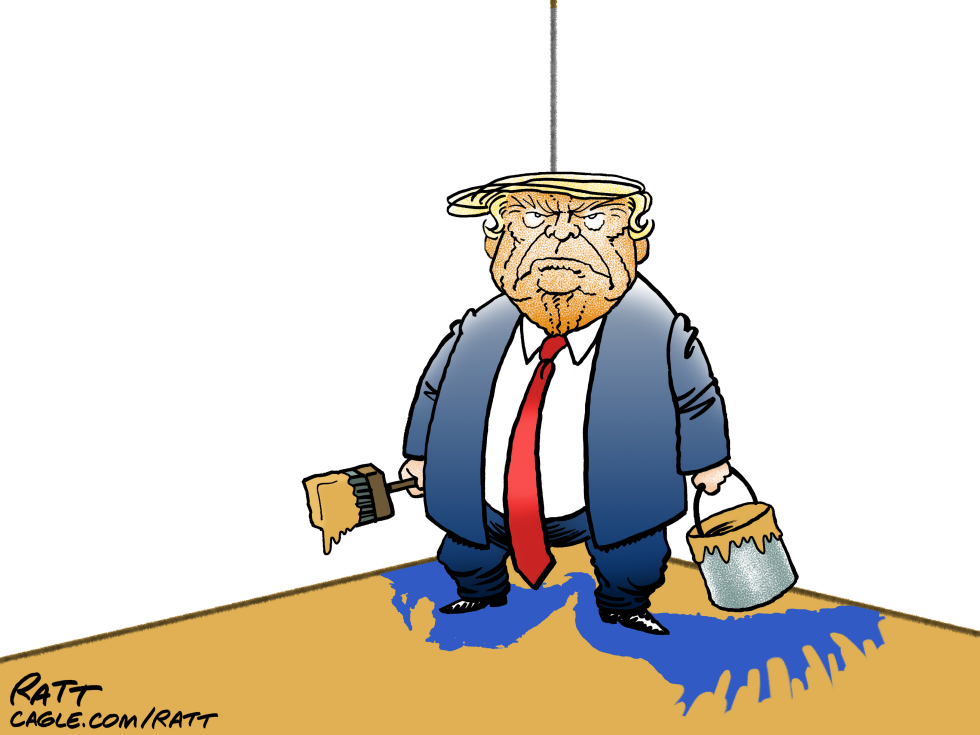
Donald Trump appears in a 2026 editorial image holding a paintbrush and bucket while standing on a blue painted area resembling the Strait of Hormuz. The scene responds to ongoing concerns over Iranian oil routes, potential conflict, and resulting effects on global oil and gas prices. The visual shows the figure applying paint that creates a path leading to restricted movement.
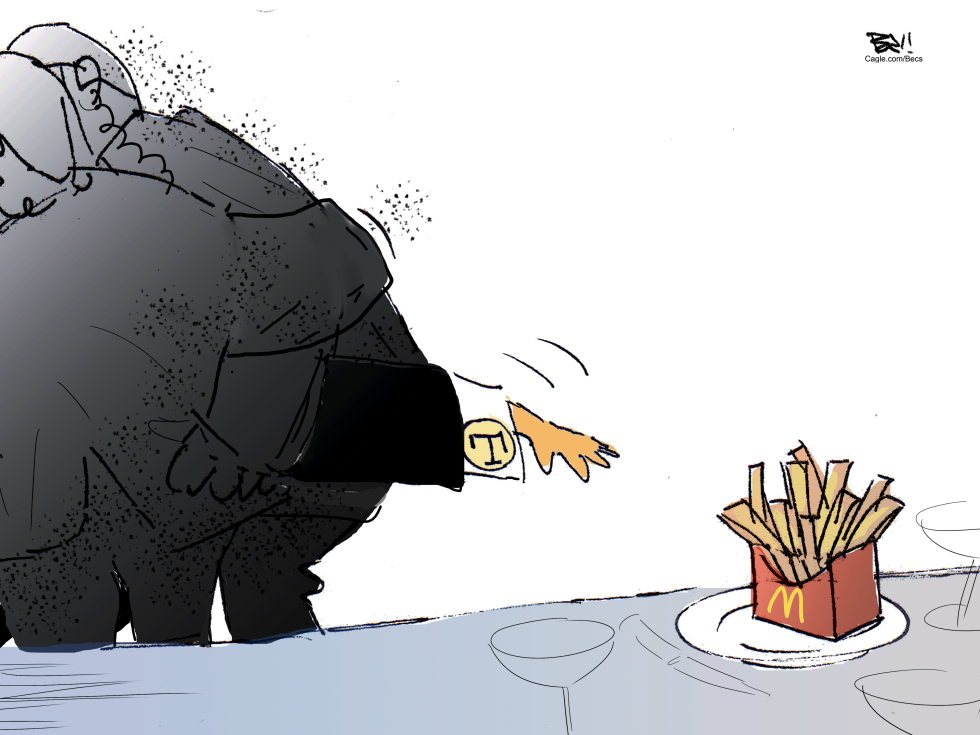
This political cartoon shows a bulky figure in a dark suit, viewed from behind, with a hand bearing a cufflink labeled TRUMP reaching out toward a red box of McDonalds fries overflowing on a white plate. The scene is set on a table with stemmed glasses, and there's a dusting of particles on the figure's shoulder. Incorporating tags such as Donald Trump Administration USA, attack, Hilton Hotel, shooting, terrorist, lone wolf, the image pokes fun at familiar tropes of excess and impulse. The artist's signature Becs and Cagle.com/Becs appear in the corner, grounding it in syndicated cartoon tradition. Such drawings often go viral for their sharp, relatable jabs at public figures. At around 100 words, this summary captures the essence without overreaching what's drawn.
Monte Wolverton\'s cartoon depicts a doctor holding up an xray that reveals an intestine shaped like the Strait of Hormuz, complete with stars indicating blockages and inflammation. Trump peers over the top, his distinctive hair visible, as the doctor diagnoses intermittent blockages, polyps, and suggests consuming more fiber while cutting back on fast food. Tags like Iran War and blockade tie into the visual pun, turning a geopolitical chokepoint into a medical ailment. The piece uses dry humor to highlight discomfort in a straightforward way, with the xray\'s pinkish intestine contrasting against the black background. Artistic elements include the doctor\'s pointing finger and Trump\'s curious pose, emphasizing the satire without overcomplicating the scene.
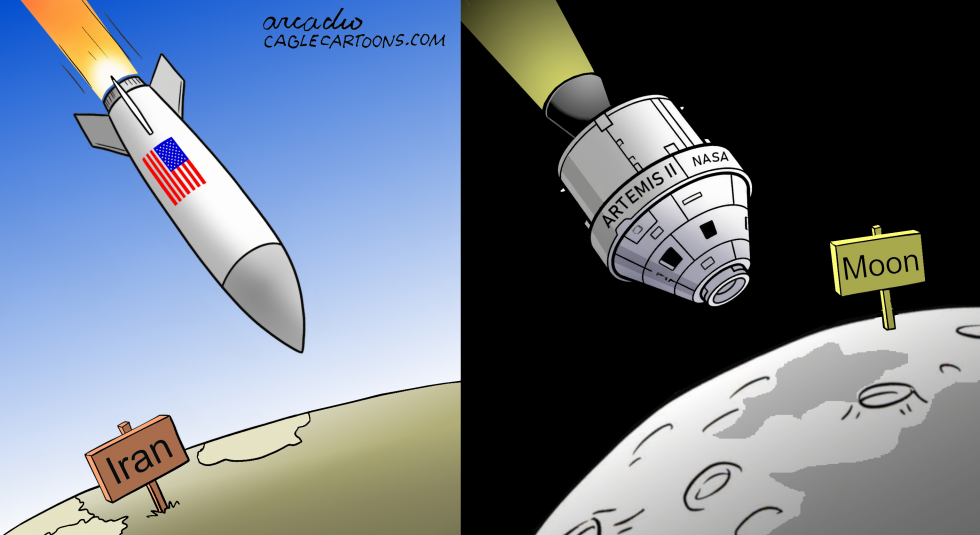
Arcadio Esquivel's cartoon splits the scene: on one side, a missile with an American flag streaks toward a planetary surface marked 'Iran,' flames trailing from its base against a blue sky. On the other, the Artemis II NASA capsule floats in space, nearing a gray lunar landscape labeled 'Moon' under a starry black backdrop. Tags including war, moon, exploration, Artemis II, NASA, Middle East, and Iran capture the visual pun. The dry humor points to misplaced priorities, where grand goals like space missions veer into military misadventures. Cagle Cartoons syndicates such pointed commentary, blending current events with sharp satire.
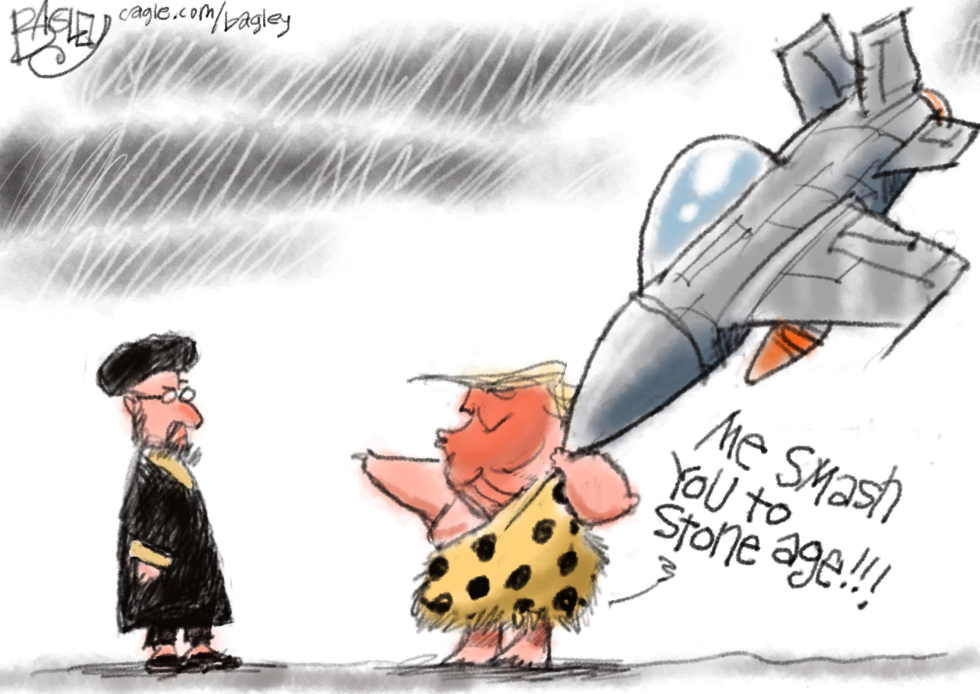
Pat Bagley's cartoon captures Trump as a caveman in a spotted tunic, gripping a fighter jet like a club, his face red with anger as he shouts 'Me Smash You to Stome age!!!' at a stern-faced man in black robes, beard, glasses, and hat under stormy skies. The scene underscores Trump threats, political satire, caveman caricature, fighter jet weapon, judge figure, and primitive aggression in a straightforward jab at regressive tactics. Editors see these kinds of drawings often, where exaggeration drives the point home without subtlety, making it shareable for those tracking US politics Trump style. The dry humor lies in the absurdity of modern weaponry in prehistoric hands, a classic cartoon trope that lands with insider familiarity.