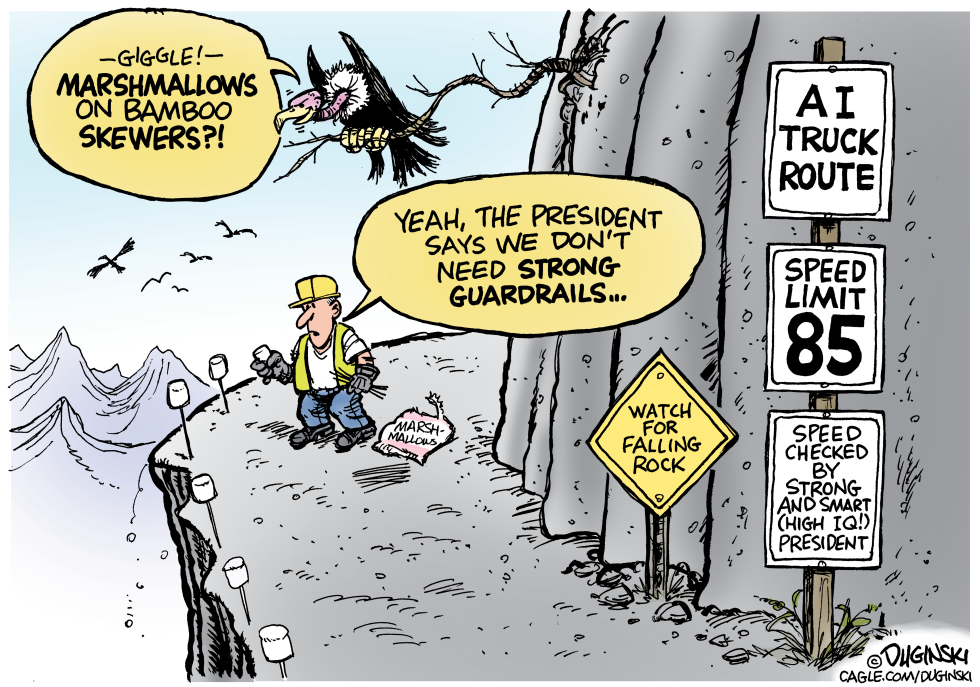
The Trump administration has directed the removal of regulatory guardrails on artificial intelligence projects, allowing accelerated development along designated high-speed routes. Officials argue that strong oversight is unnecessary under current leadership. The move raises concerns about safety and accountability in a rapidly advancing sector where hazards like system failures remain unaddressed. The cartoon criticizes the policy as reckless deregulation that ignores evident risks to public safety and technological stability.
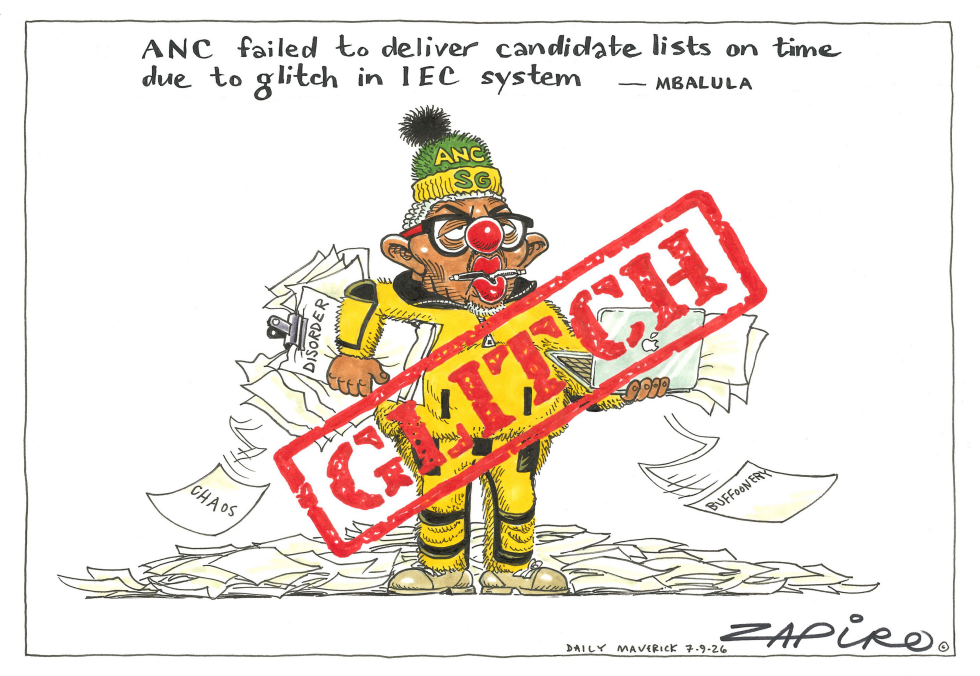
ANC secretary general Fikile Mbalula attributed the party's failure to submit candidate lists on time to a technical glitch in the Independent Electoral Commission system. The claim came as the party faced internal disarray ahead of upcoming elections. The cartoon portrays the excuse as a transparent attempt to mask organizational failure and buffoonery.
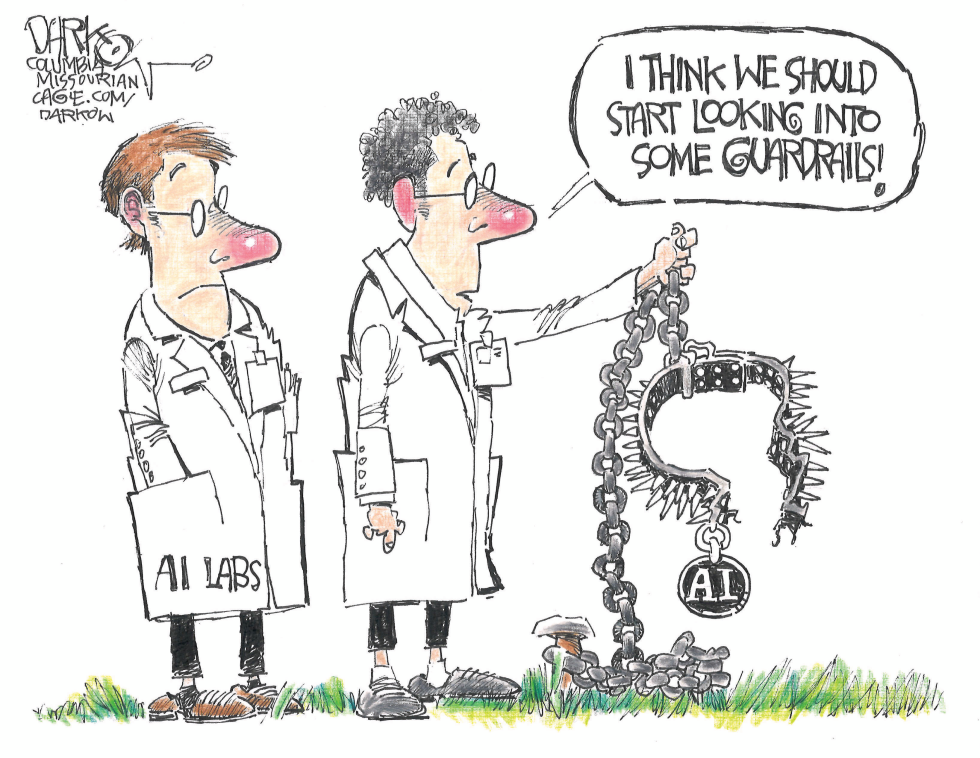
AI development has advanced rapidly with minimal oversight in recent years, allowing powerful systems to operate without meaningful constraints. Scientists have begun discussing guardrails only after key controls have already failed. The situation raises concerns about accountability and long-term safety as the technology spreads. The piece argues that calls for restrictions now come too late to prevent significant harm from uncontrolled AI.
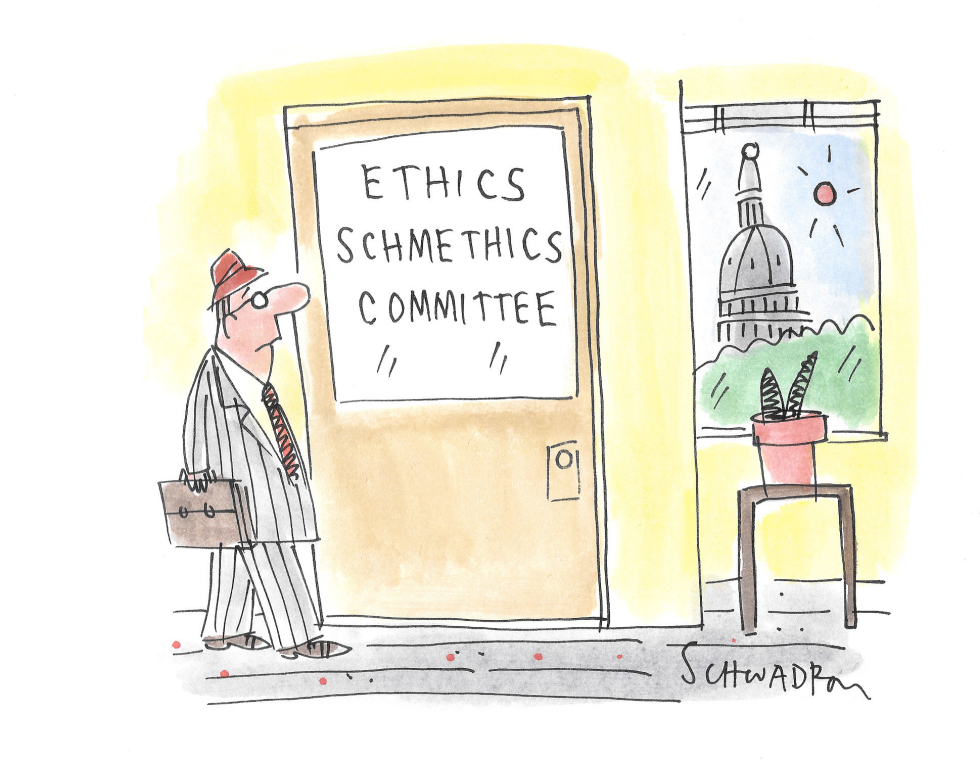
Congress continues to sideline meaningful ethics oversight, with lawmakers showing little interest in strengthening or even respecting the chamber's ethics committee. The panel exists on paper but carries little practical weight in daily operations. This dynamic matters because weak internal standards erode public trust in legislative institutions and invite outside influence. The cartoon captures the prevailing attitude that ethics rules are an afterthought rather than a core responsibility.
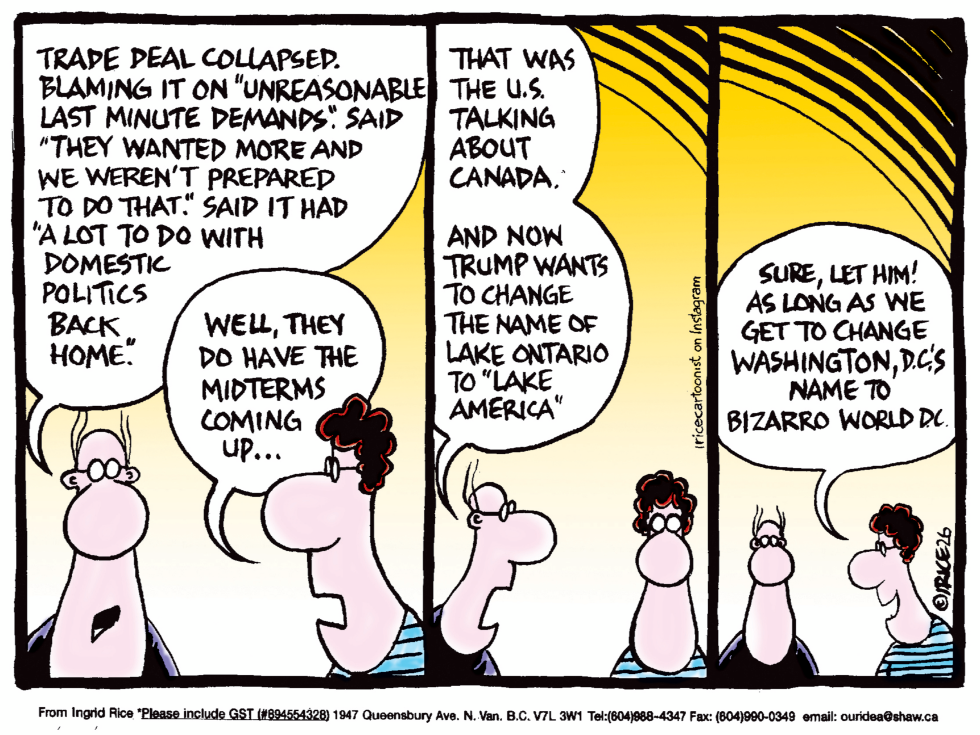
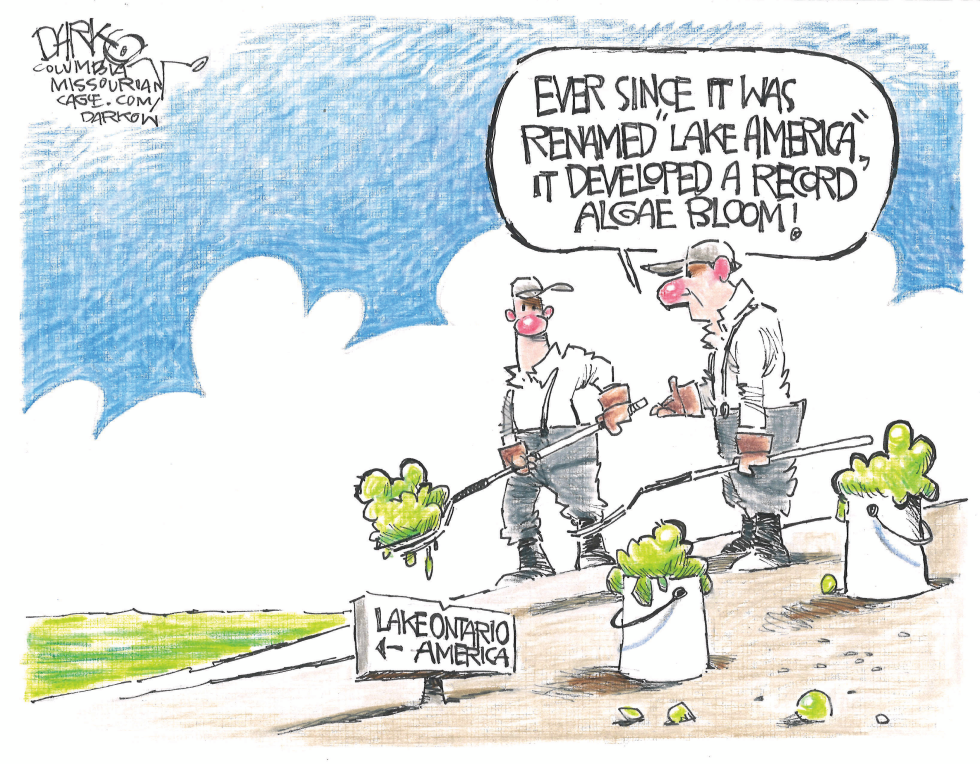
A Canada-U.S. trade deal collapsed after U.S. negotiators cited unreasonable last-minute demands and linked the failure to domestic politics ahead of midterms. President Trump then proposed renaming Lake Ontario to Lake America. Canadian officials responded by offering to rename Washington D.C. to Bizarro World DC if the change proceeds. The exchange highlights how trade tensions and political posturing are escalating between the two countries. The cartoon mocks the name-change idea as emblematic of broader dysfunction in bilateral relations.
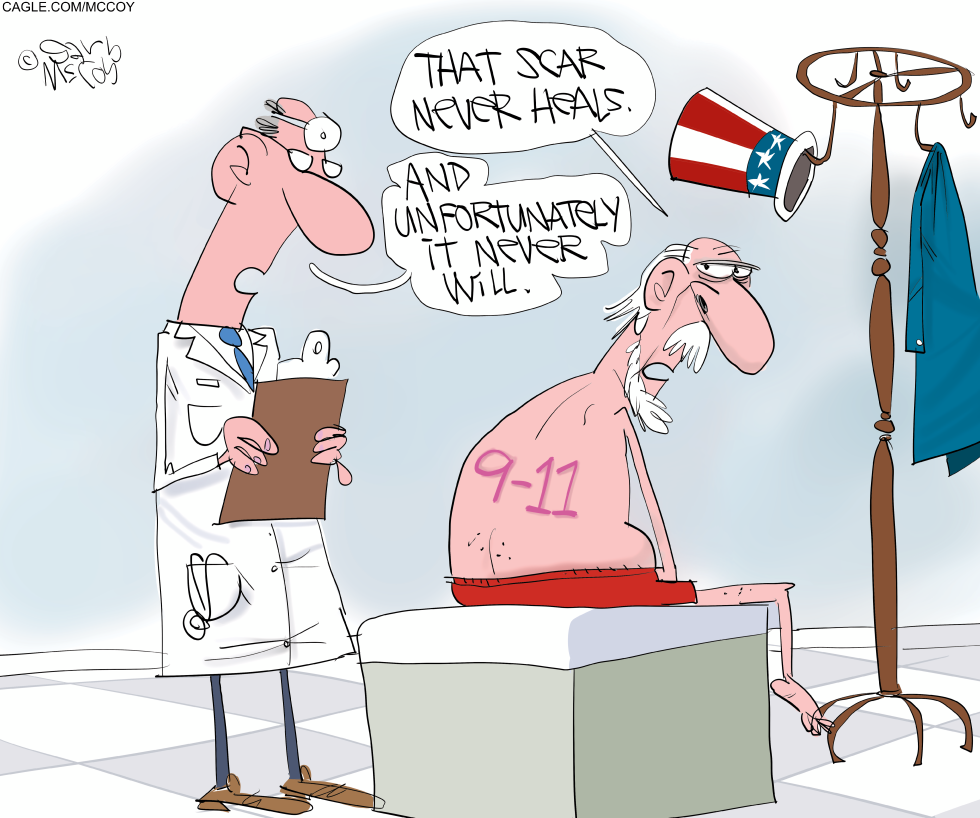
On the 25th anniversary of the September 11 attacks, the nation continues to grapple with the lasting physical and emotional wounds inflicted that day. The cartoon underscores that the trauma inflicted on the United States has not faded despite the passage of time. It argues the scars from the attacks are permanent and will never fully heal.
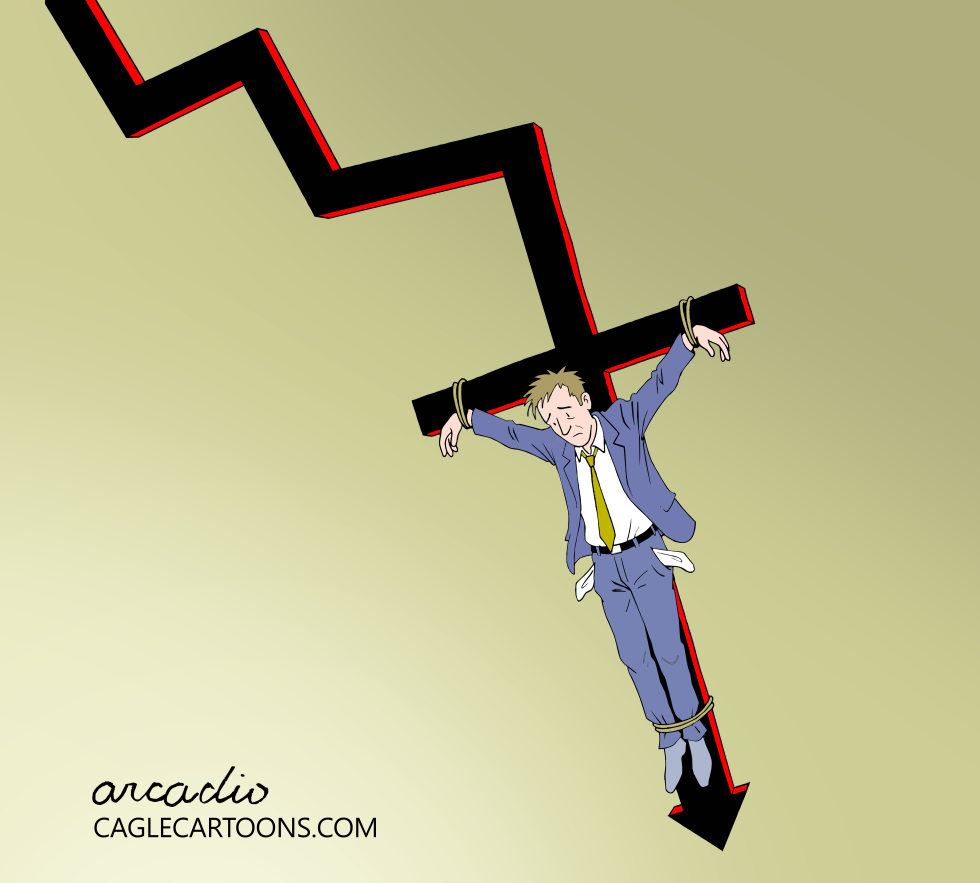
Corporate leaders continue to confront sharp market drops that directly affect company performance and investor confidence. The situation underscores how executives remain closely tied to negative financial trends rather than insulated from them. The piece argues that such binding reflects the reality of accountability in failing markets.
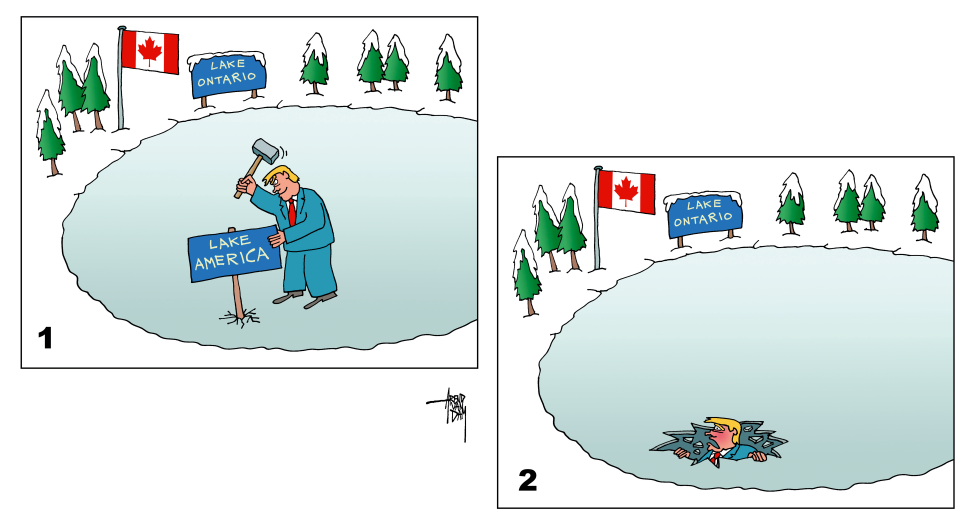
Donald Trump directed an aide to plant a Lake America sign on the frozen surface of Lake Ontario in a symbolic claim on Canadian waters. The move was part of ongoing US-Canada friction over shared resources and border definitions. The ice broke, sending the figure through the surface. The episode underscores the practical limits of unilateral US assertions against a close neighbor whose cooperation remains essential on trade, security, and environmental issues. The cartoon presents the effort as self-defeating and poorly timed.
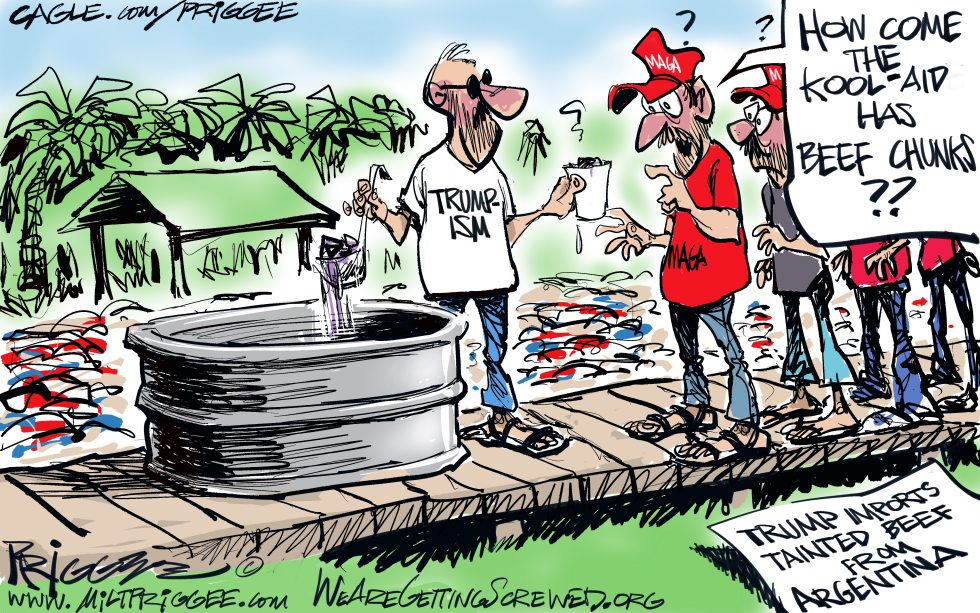
The cartoon depicts a figure labeled Trumpism pouring liquid into a well while two men in MAGA hats question why the Kool-Aid contains beef chunks. A sign at the bottom states Trump imports tainted beef from Argentina. The scene references recent policy allowing beef imports from Argentina amid concerns over quality. Supporters appear puzzled by the outcome of the trade decision. The image uses the classic Kool-Aid metaphor to illustrate how backers process the news of the imports.
Workers clean a massive algae bloom from a lake recently renamed Lake America, formerly Lake Ontario. The outbreak follows the rebranding and draws attention to environmental conditions. The piece argues that superficial political gestures fail to address underlying ecological problems and may even coincide with worsening conditions.
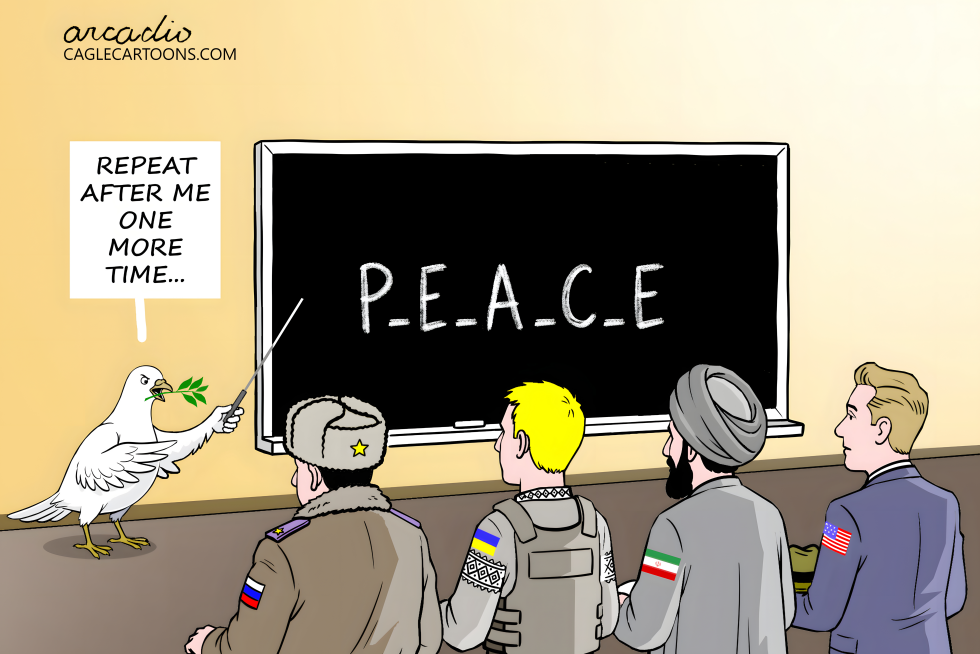
Ongoing tensions in the Russia-Ukraine war continue to draw in Iran and the United States with little progress toward resolution. The four nations remain locked in a cycle of confrontation and limited talks. The cartoon argues that the parties still cannot grasp even the simplest concept of peace despite repeated instruction.
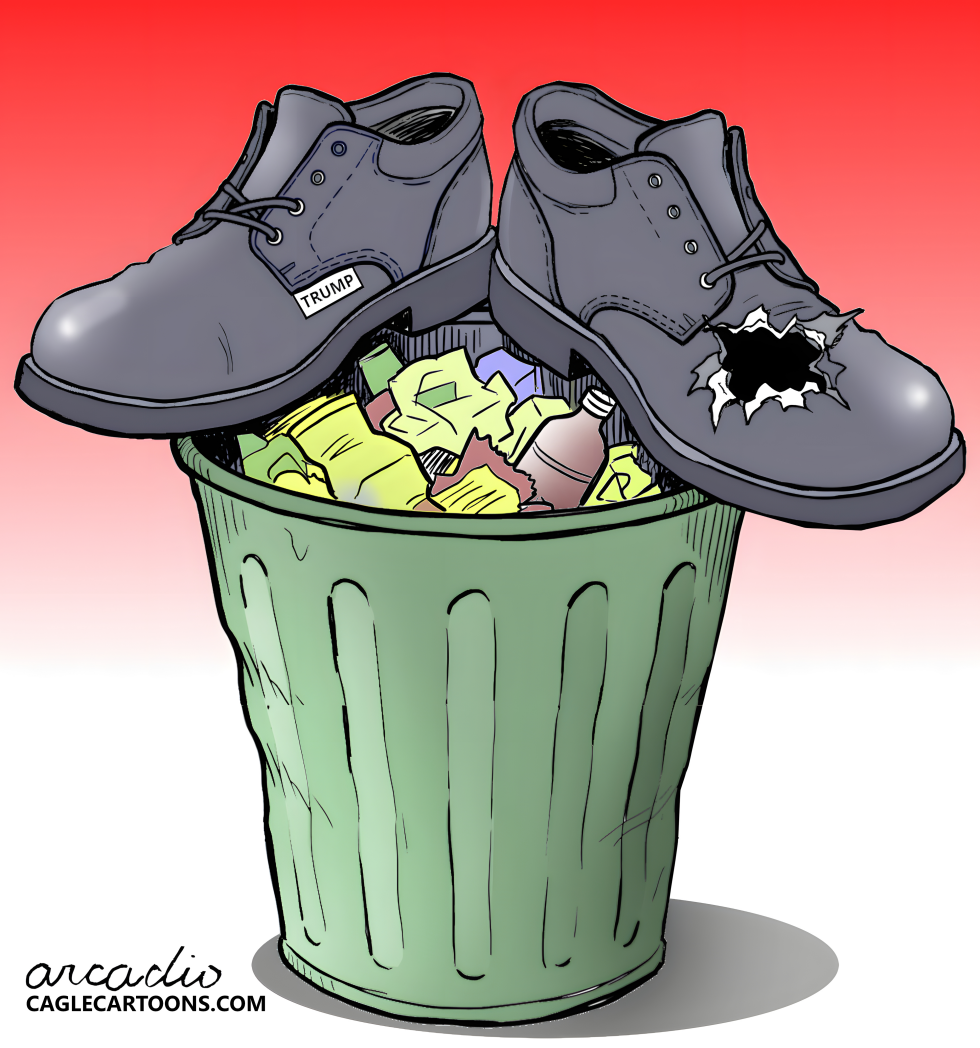
Donald Trump branded shoes appear discarded in a trash bin in this August 2026 image. The visual responds to persistent questions about Trump merchandise sales and public perception of his business ventures. Critics argue the products represent overreach and declining appeal. The piece takes the position that Trump associated goods have lost value and relevance in the current political climate.
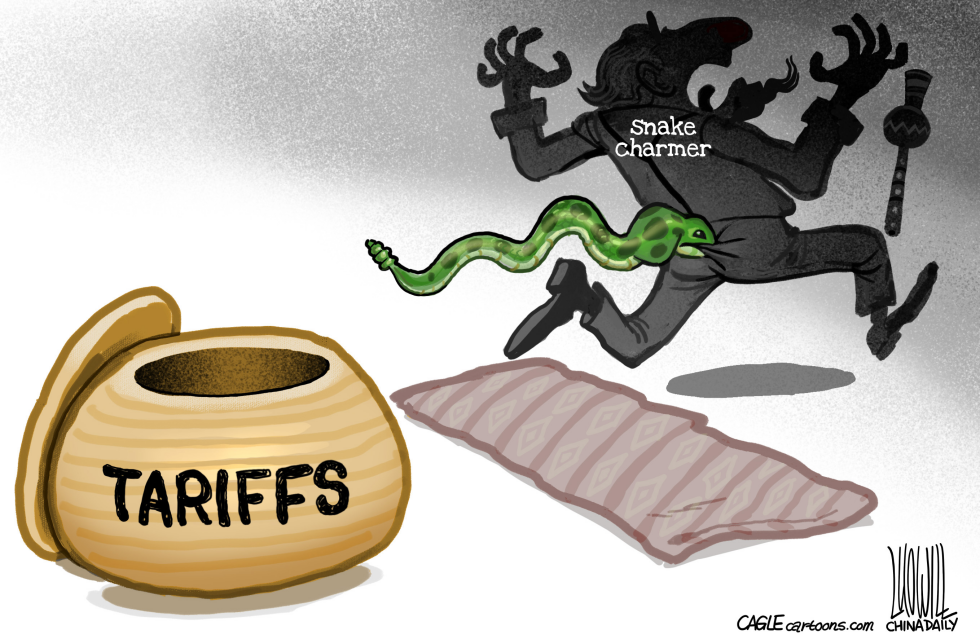
A political cartoon published August 28, 2026, shows a snake charmer fleeing as a green snake emerges from a pot labeled tariffs. The image uses the snake charmer metaphor to comment on tariff policies. The cartoon appeared in China Daily and was distributed via Cagle Cartoons. It responds to ongoing trade tensions involving tariffs. The visual suggests tariffs carry uncontrolled risks similar to an escaped snake.
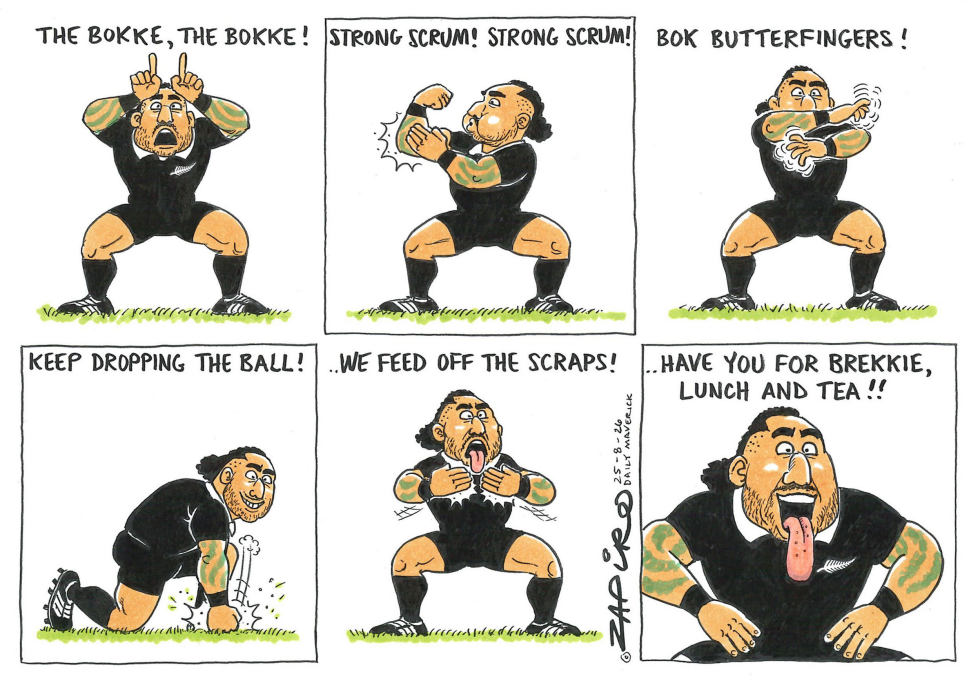
The Springboks rugby team faced ongoing criticism for handling errors and scrum vulnerabilities in matches against strong opponents like the All Blacks. The cartoon uses repeated failure motifs to argue that South African performance has deteriorated into consistent mistakes that opponents exploit easily.
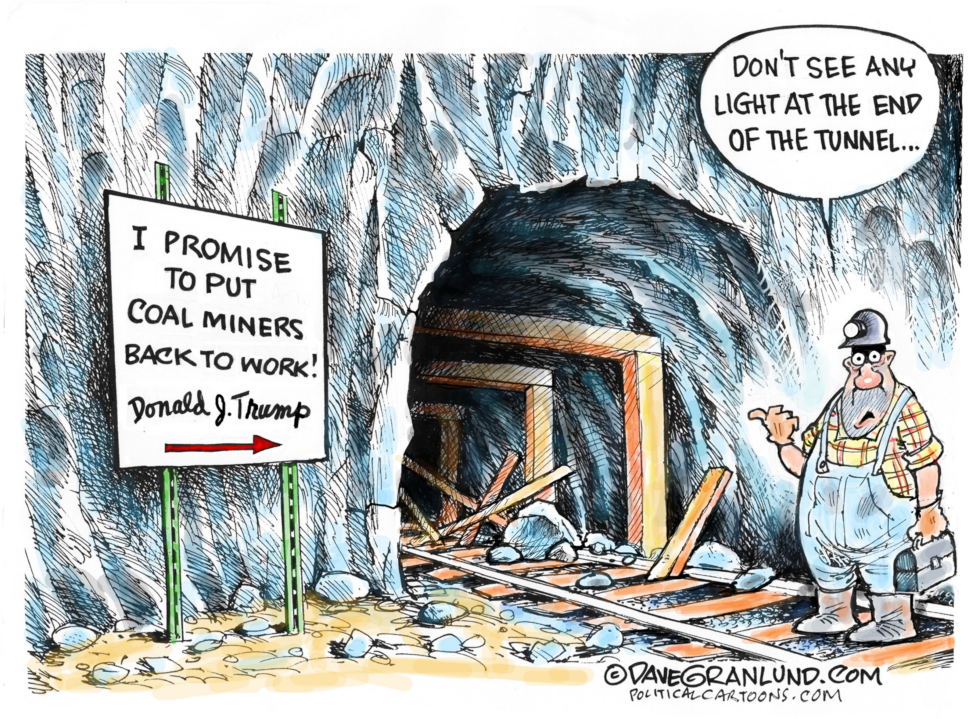
Donald Trump repeatedly pledged during his campaigns and terms to revive coal mining employment by rolling back regulations and boosting domestic production. Those commitments have not translated into sustained job growth for miners amid shifting energy markets and automation. The cartoon underscores the gap between the repeated assurances and the persistent lack of visible progress for workers in the sector.