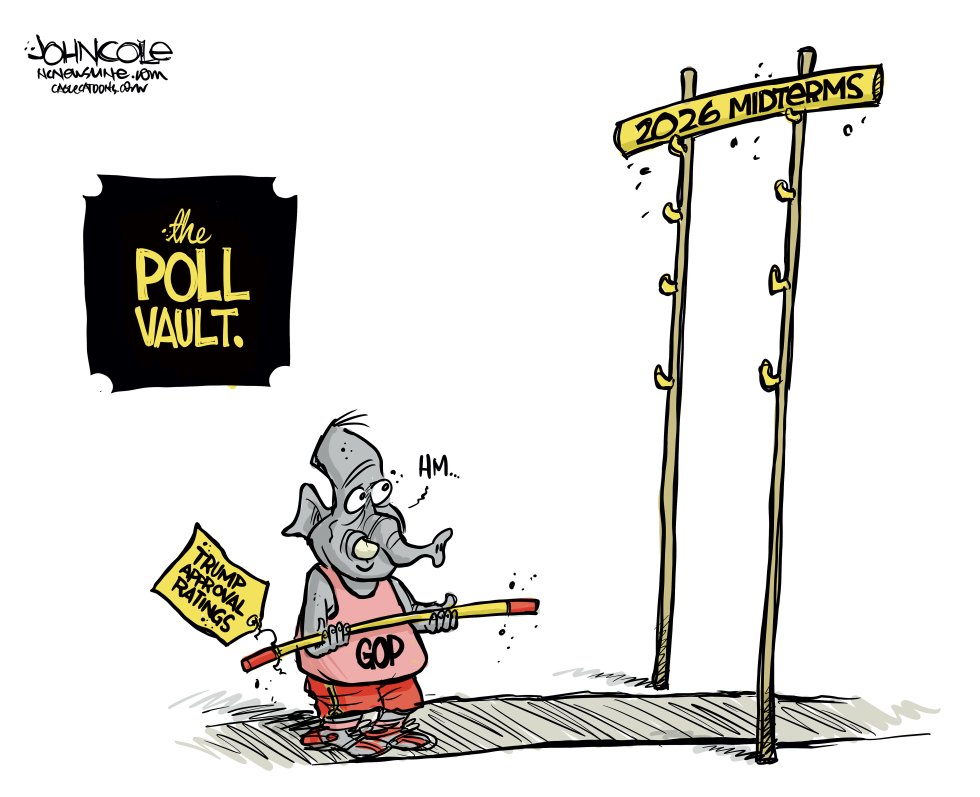
Republicans face the 2026 midterm elections with Donald Trump as a central figure whose approval ratings remain a key variable. Party strategists must decide how heavily to tie their candidates to the former president amid ongoing voter sentiment. The piece portrays the GOP as an athlete preparing to clear the midterm bar but questioning whether the available pole will suffice.
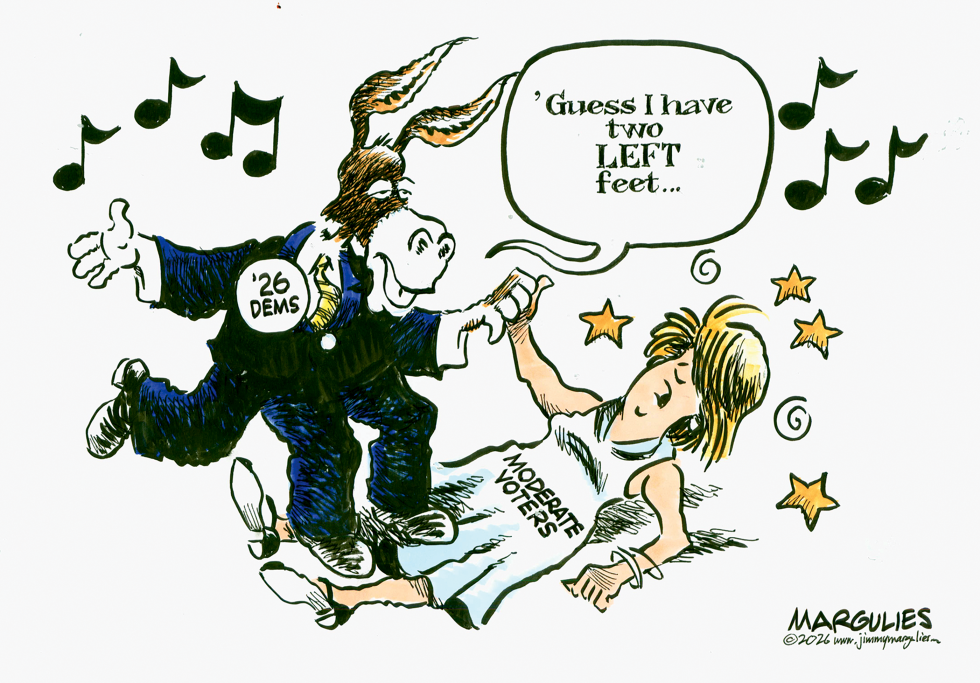
Democrats heading into the 2026 midterms face internal pressure to energize their base with progressive policies, yet this risks further distancing moderate voters essential for broader electoral success. The party has advanced left-leaning positions on issues like spending and social policy in recent cycles. Critics argue this approach prioritizes ideological purity over coalition building. The piece portrays the Democratic donkey as stepping on moderates while acknowledging its own missteps, highlighting the tension between base mobilization and centrist appeal.
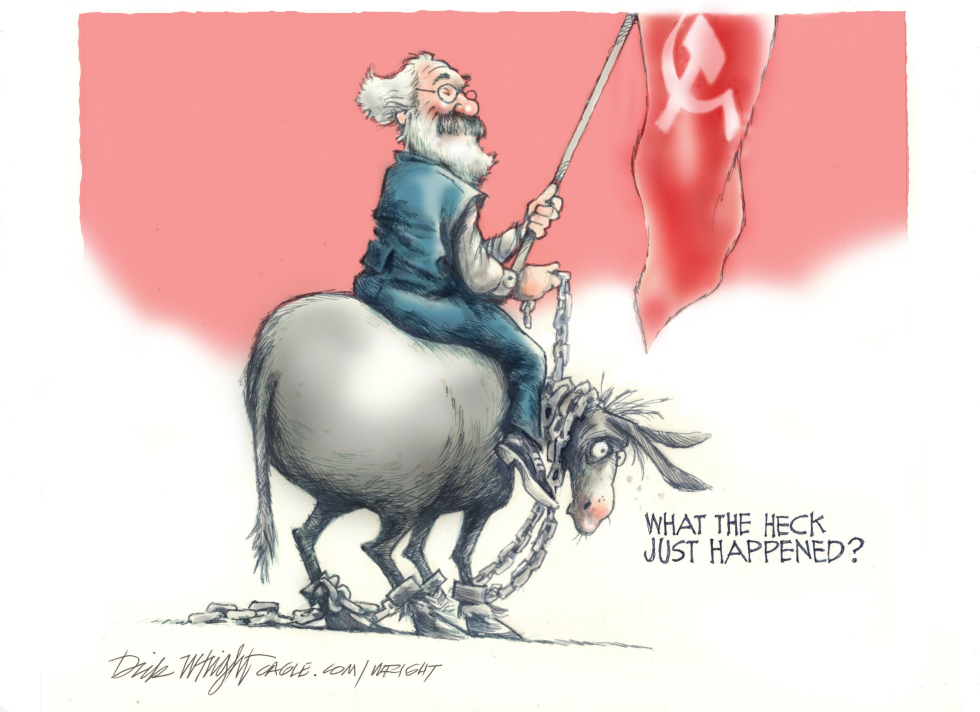
A Marxist figure has taken the reins of the Democratic Party symbol, raising a hammer-and-sickle flag over a donkey bound in chains. The image captures the moment the animal registers the shift in control. The editorial argues that radical communist influence has overtaken the party and left its traditional base bewildered by the abrupt change in direction.
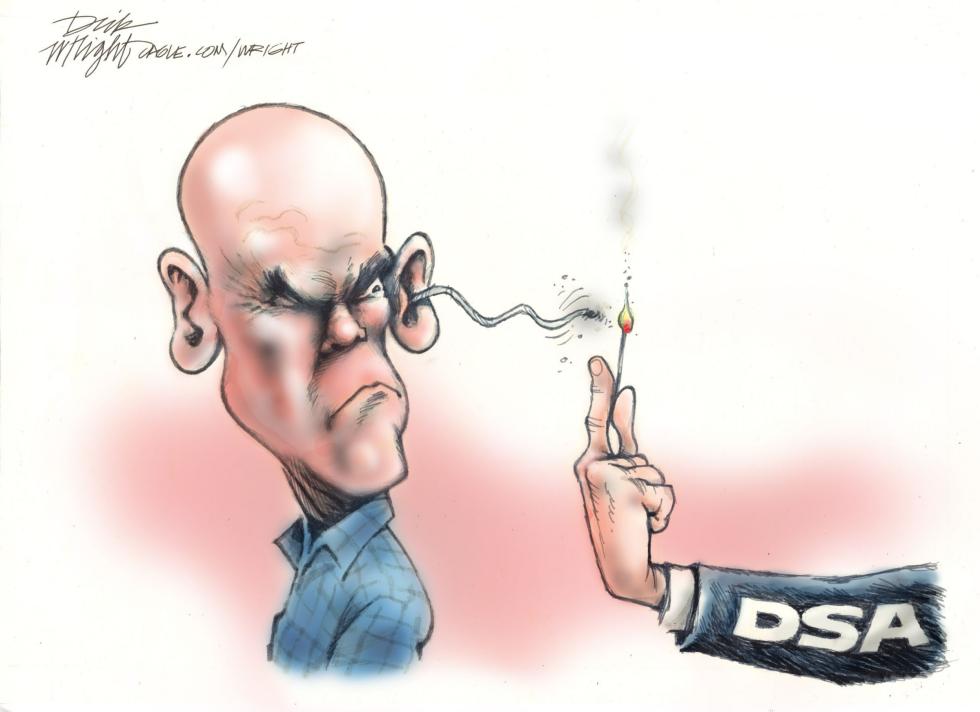
James Carville faces provocation from the Democratic Socialists of America in an ongoing internal party dynamic. The piece portrays DSA actions as directly inflaming tensions with established Democratic figures.
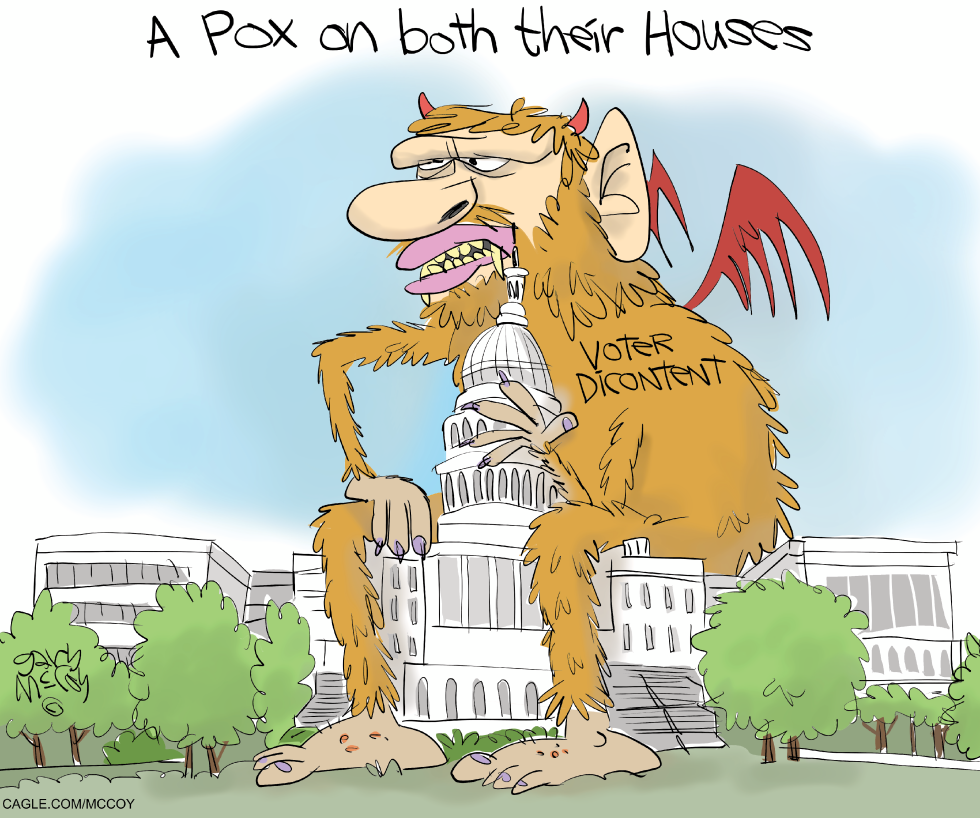
Voter frustration with Congress has grown amid stalled legislation and partisan gridlock on Capitol Hill. The piece portrays this sentiment as a towering monstrous force looming over the legislative branch. It argues that public anger targets both parties equally for failing to address key issues.
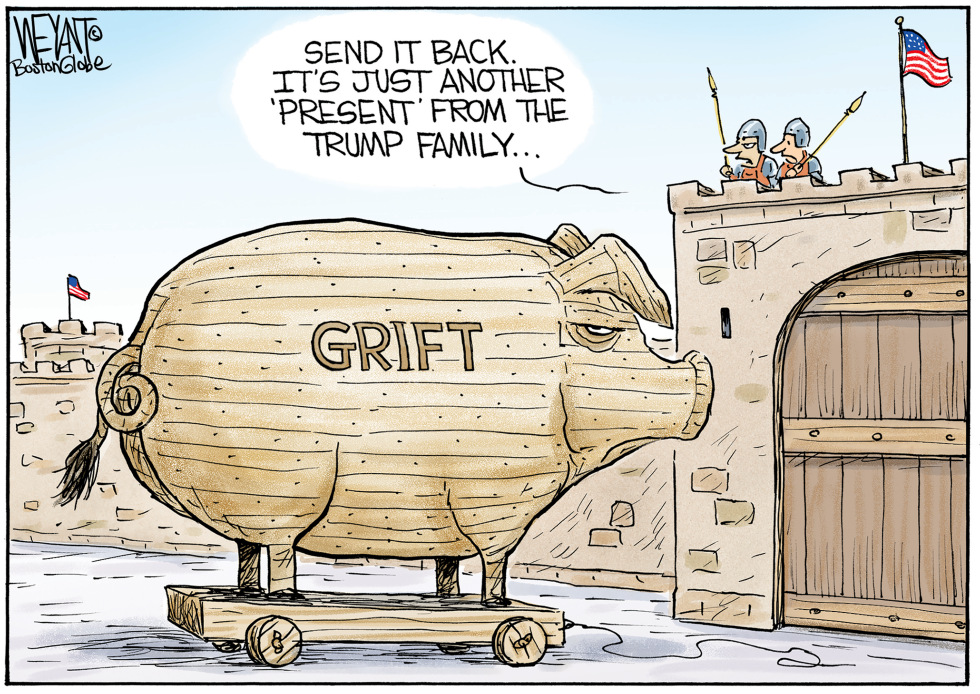
The Trump family faces renewed scrutiny over business dealings and influence peddling. Guards at a symbolic fortress receive a large wooden pig marked grift and immediately demand its return. The episode highlights ongoing concerns about gifts and favors tied to the family name.
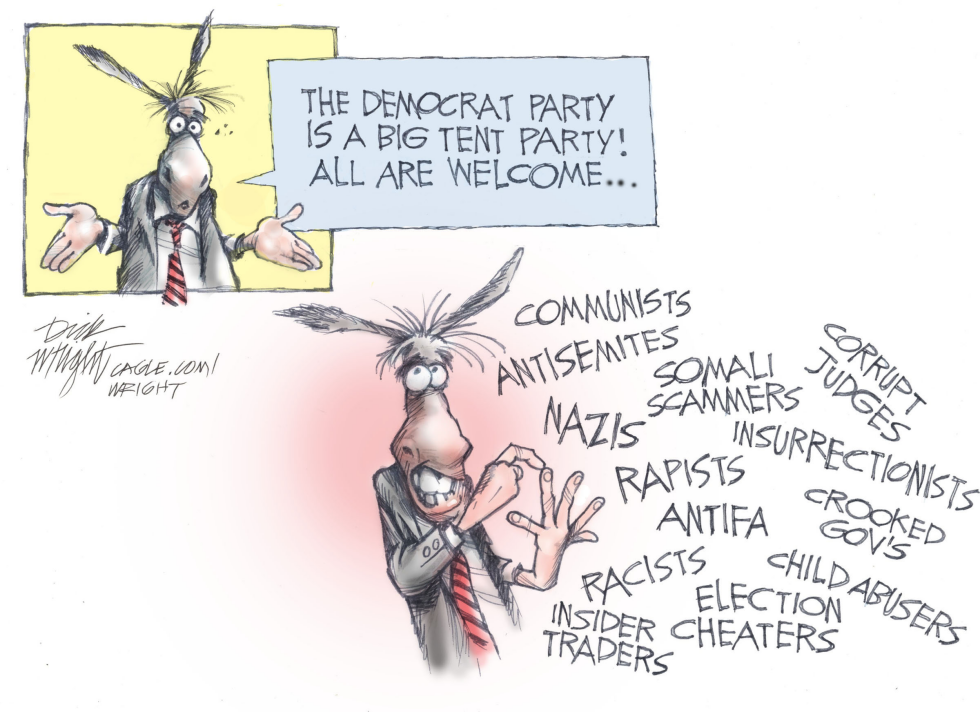
A July 2026 cartoon by Dick Wright depicts the Democrat Party's big tent claim through an inset donkey figure. The main character, also a donkey in a suit, gestures amid a cloud of labels naming groups such as communists, antisemites, Nazis, rapists, Antifa, racists, and election cheaters. The image critiques the party's inclusivity rhetoric by associating it with these categories. Publication occurs amid ongoing partisan debates over party platforms and voter bases.
The cartoon shows the Democratic donkey clutching a handgun labeled uncritical Israel support. A box overhead reads Bibi Gun. The donkey wears a suit and tie. The image responds to ongoing debates over US policy toward Israel and Benjamin Netanyahu in June 2026.
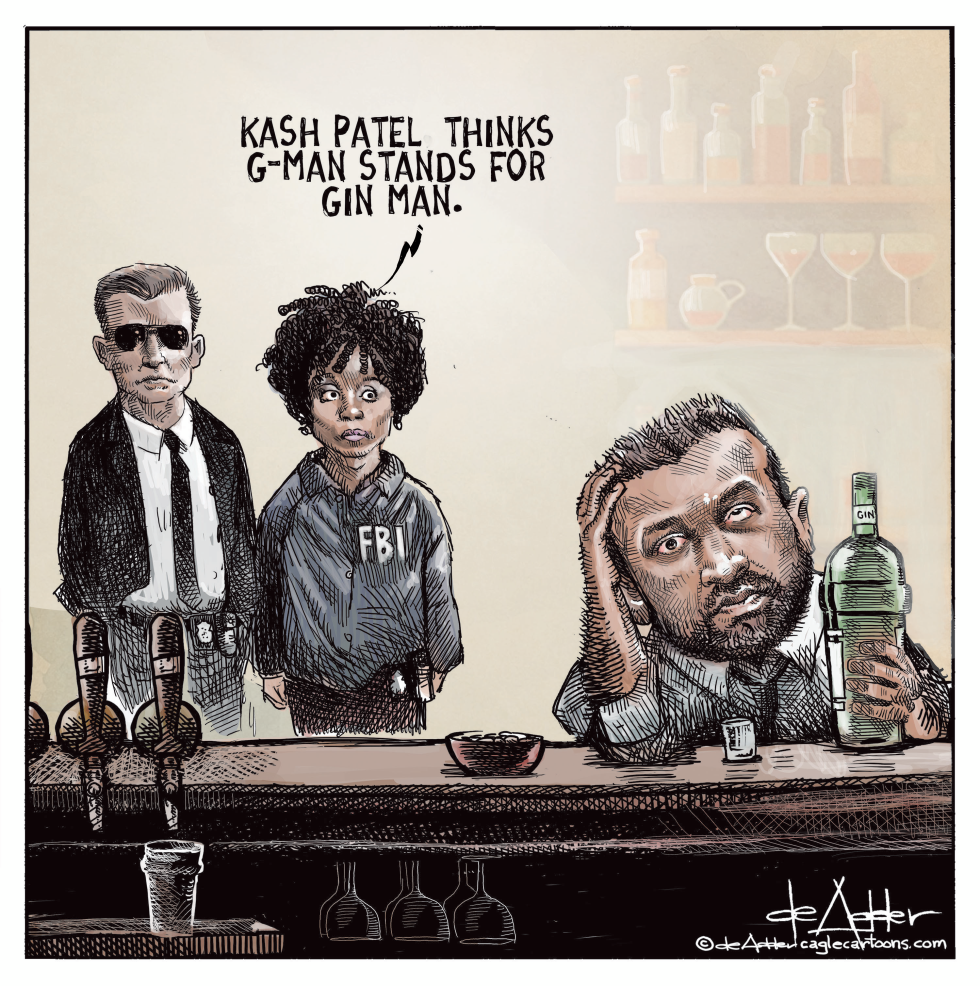
Michael de Adder's cartoon depicts a bearded man at a bar, hand on forehead, holding a green gin bottle, looking inebriated. Two figures stand behind: one in a suit with sunglasses, another in an FBI jacket. The text reads 'Kash Patel thinks G-man stands for gin man.' Bottles line the shelf, beer taps and glasses on the counter. Tags like Kash Patel, FBI, gin, drinking, alcohol, drunk underscore the visual pun on FBI agents as 'G-men' versus a 'gin man' in a bar setting. The scene captures a straightforward satirical jab without deeper layers visible.
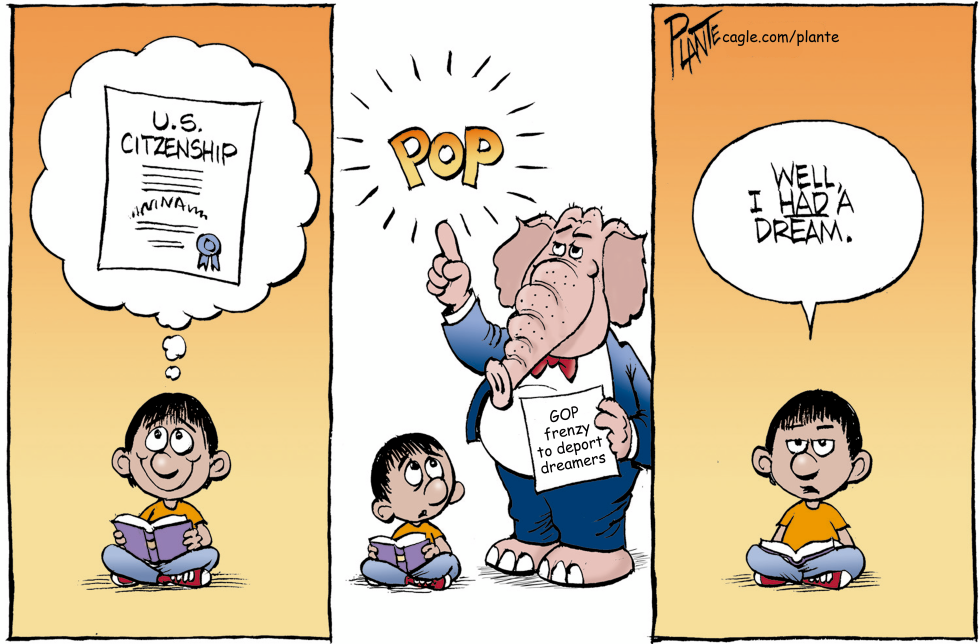
This political cartoon critiques the GOP stance on immigration policy, particularly regarding dreamers. It depicts an elephant, symbolizing the Republican Party, popping the dream bubble of a young immigrant aspiring for U.S. citizenship. The satire highlights the dashed hopes of dreamers, emphasizing the political commentary on immigration reform and the conservative viewpoint on DACA.
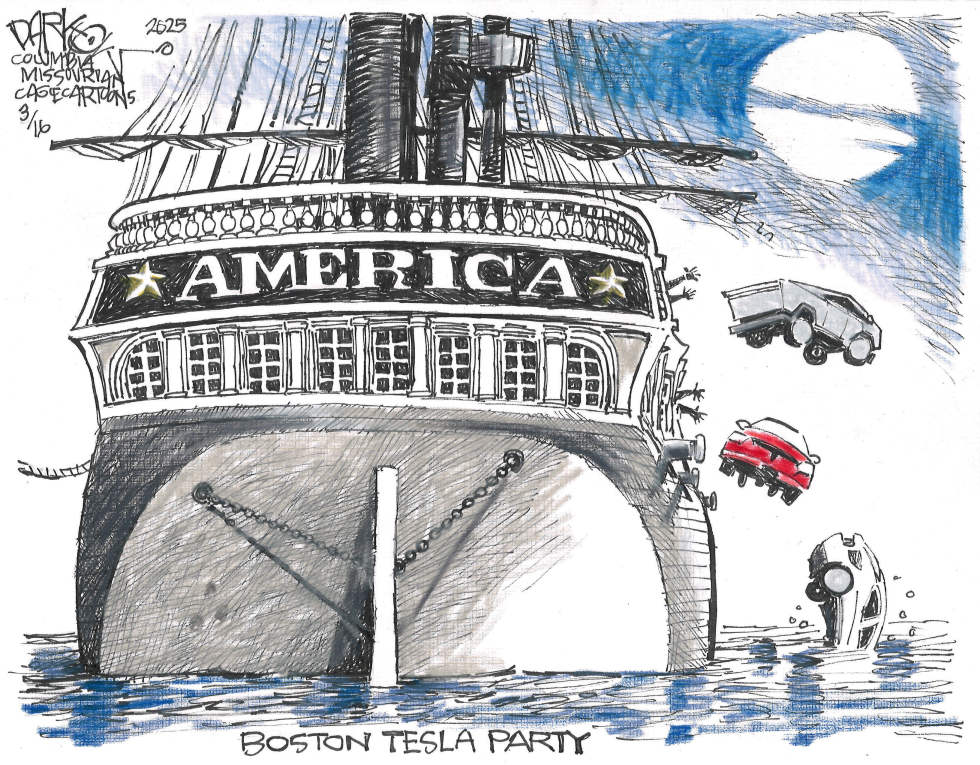
The March 2025 cartoon by John Darkow shows the ship America sinking while Tesla vehicles including a Cybertruck are thrown overboard. The image updates the Boston Tea Party to reference recent backlash against Elon Musk and Tesla linked to DOGE initiatives and tariffs under the Trump administration. Buyers remorse and anxiety appear as the central visual theme.
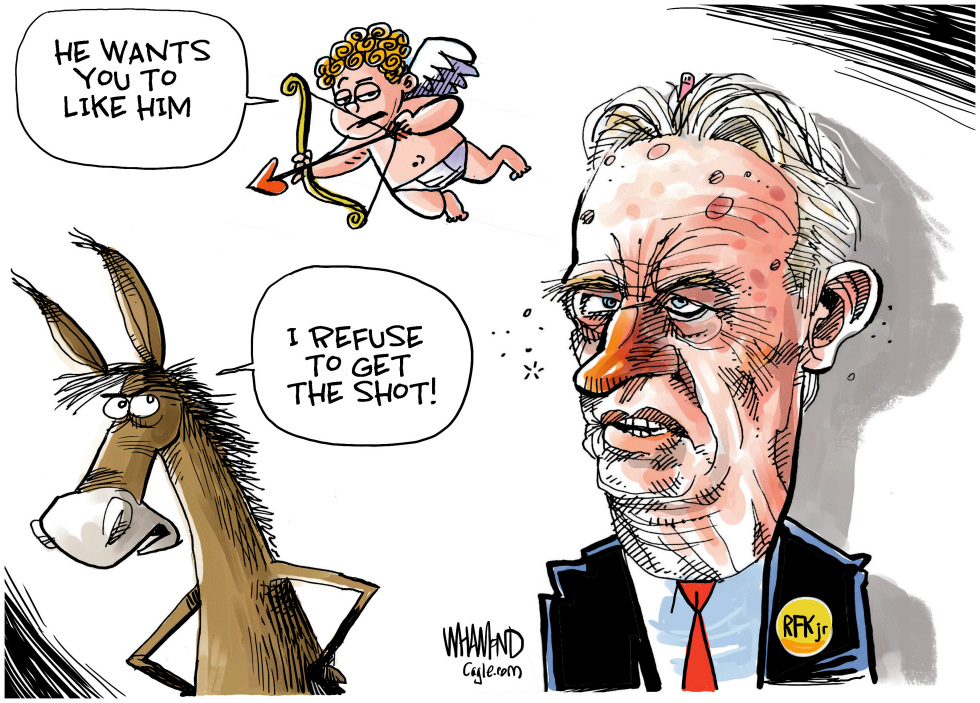
On February 6 2025 Dave Whamond depicts RFK Jr. as the subject of a failed Cupid attempt to win over a Democratic donkey that refuses vaccination. The image coincides with ongoing Senate confirmation hearings for the HHS nominee whose past statements on vaccines have drawn sharp criticism from Democrats. The visual uses the Valentine motif to underscore resistance to the appointment.
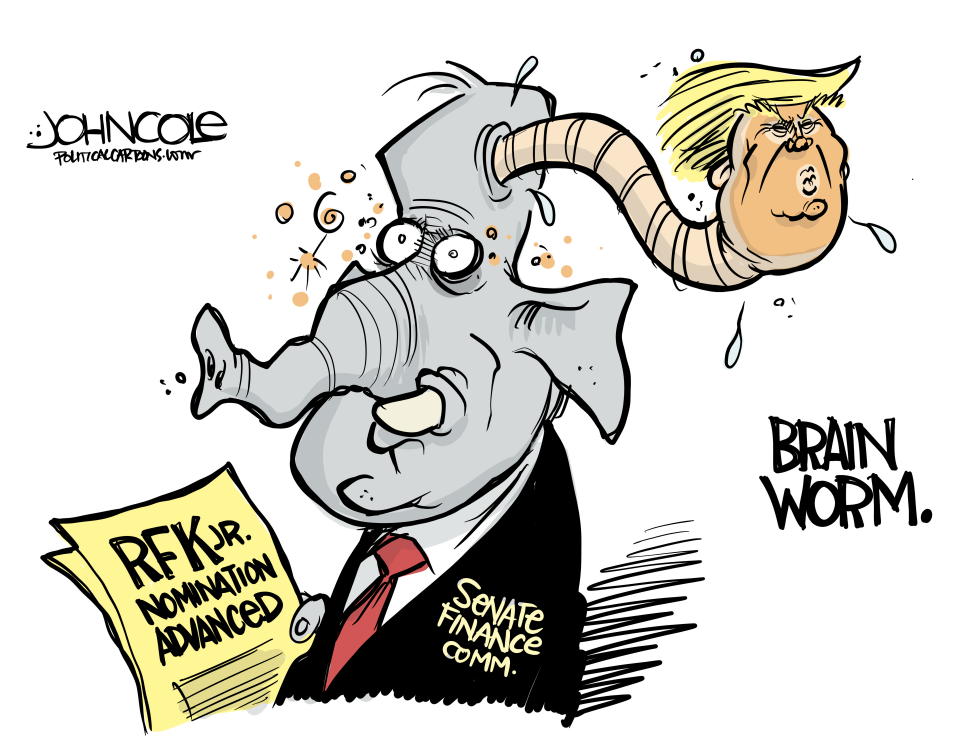
On February 4, 2025, John Cole's cartoon portrays Donald Trump as a brain worm emerging from the head of a Republican elephant. The elephant clutches a document noting RFK Jr.'s nomination advanced by the Senate Finance Committee.