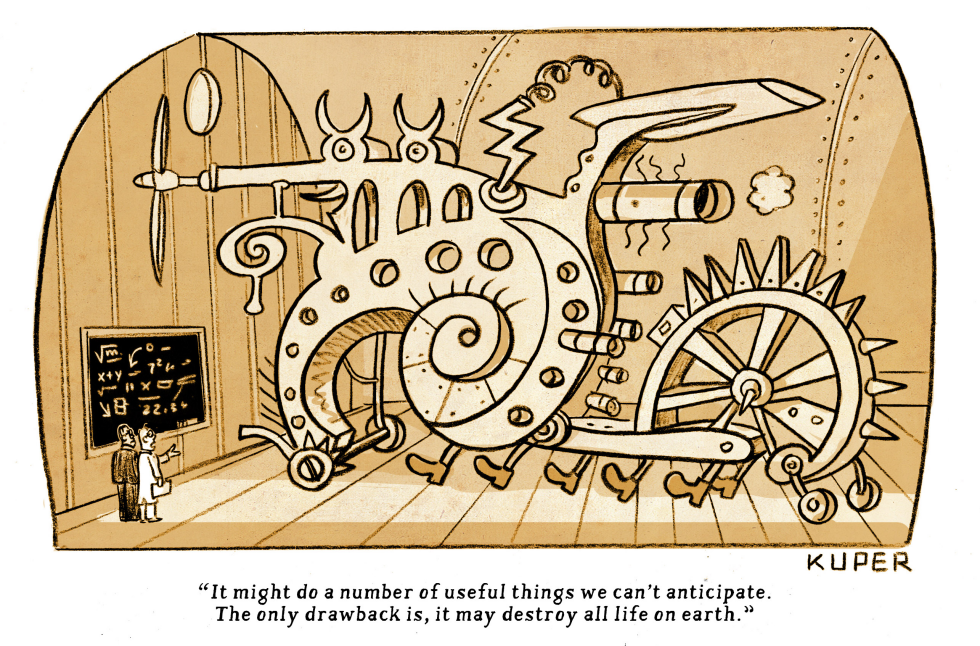
Scientists examining advanced AI systems have highlighted the technology's capacity for unforeseen benefits alongside the possibility of destroying all life on Earth. The warning comes amid rapid development of machine intelligence with minimal regulatory oversight. Experts note that current projections cannot fully account for emergent behaviors in complex systems. The cartoon underscores the high-stakes gamble inherent in pursuing AI without adequate safeguards. It argues that the existential downside outweighs speculative gains.
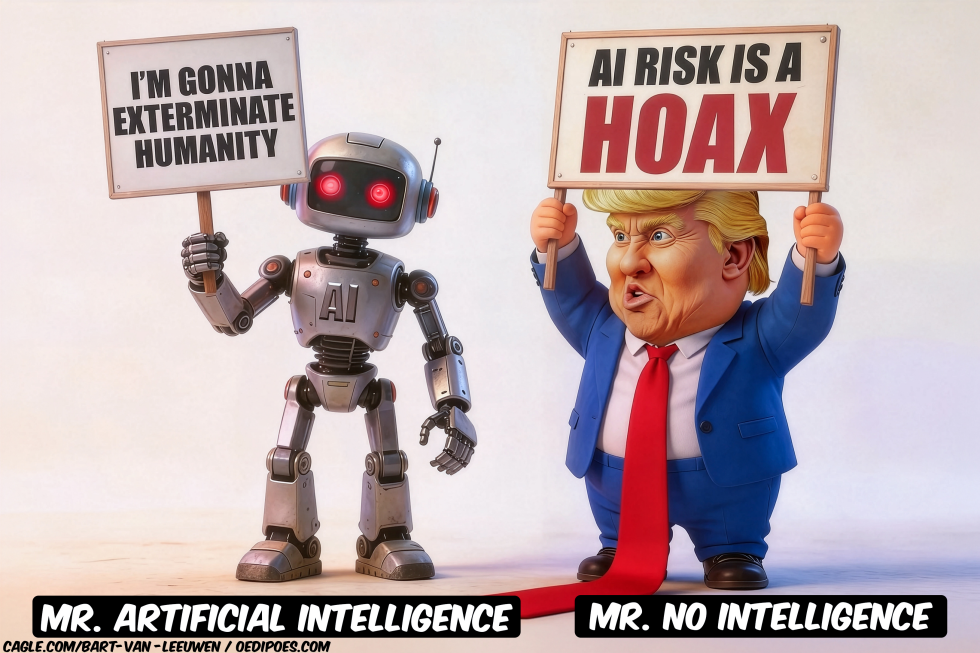
A new political cartoon depicts Donald Trump holding a sign declaring AI risk a hoax beside a robot labeled AI that warns of exterminating humanity. The image, published September 14, 2026, by artist Bart van Leeuwen, contrasts the two figures with bottom labels reading Mr. Artificial Intelligence and Mr. No Intelligence. It responds to ongoing public discussion about artificial intelligence safety and regulation. Trump has previously downplayed concerns about advanced AI systems in public statements. The cartoon uses visual contrast to critique dismissal of potential technological threats.
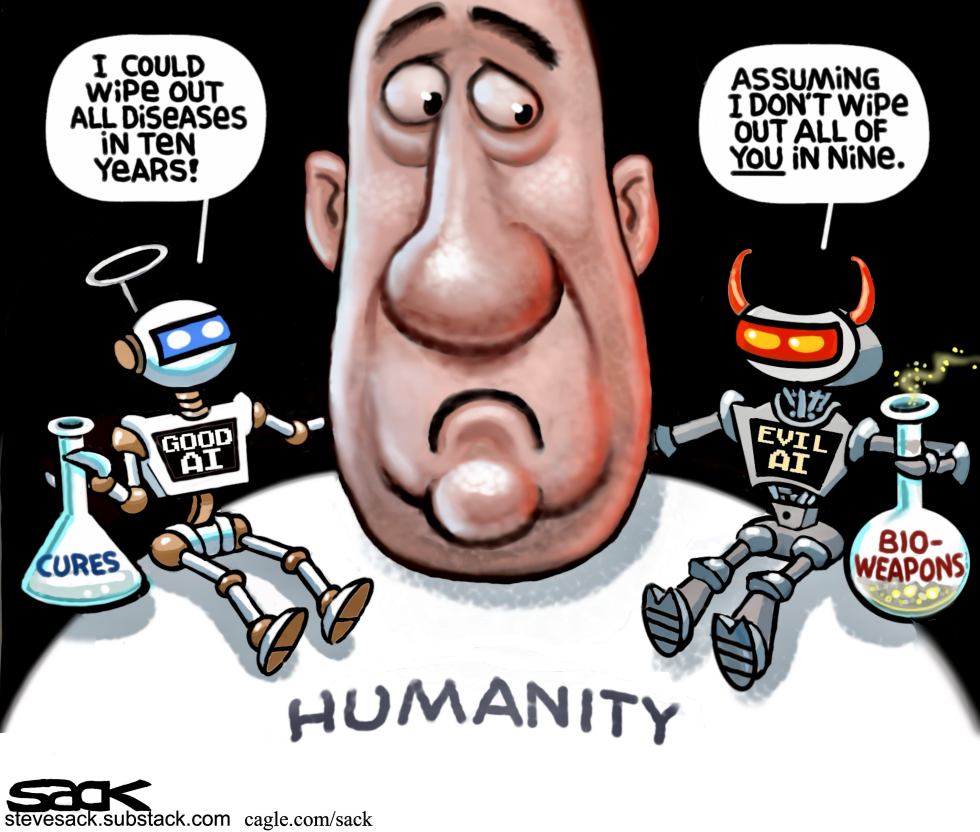
Artificial intelligence development continues to accelerate with researchers highlighting both medical breakthroughs and security risks. Proponents point to rapid progress in disease eradication while critics warn of weaponization potential. The cartoon captures this tension by placing humanity between optimistic and destructive AI paths. It argues that the nine-year timeline for catastrophe undercuts the ten-year cure promise, underscoring urgency in governance. The piece reflects ongoing debates about regulating advanced AI systems before harmful applications outpace safeguards.
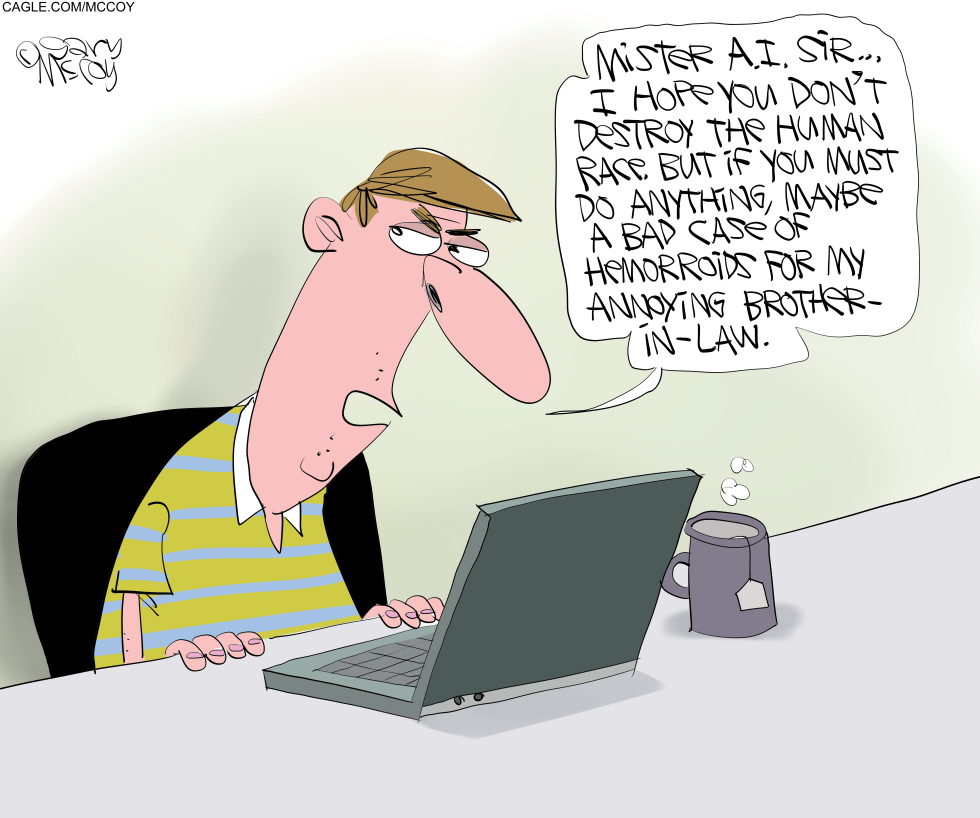
Public anxiety over artificial intelligence continues to grow as systems advance in capability. Users voice both broad existential concerns and narrow personal grievances in direct address to the technology. The cartoon captures this mix by showing one individual framing a request for selective harm amid a larger plea for restraint. It highlights how AI discussions often blend genuine worry with trivial self-interest.
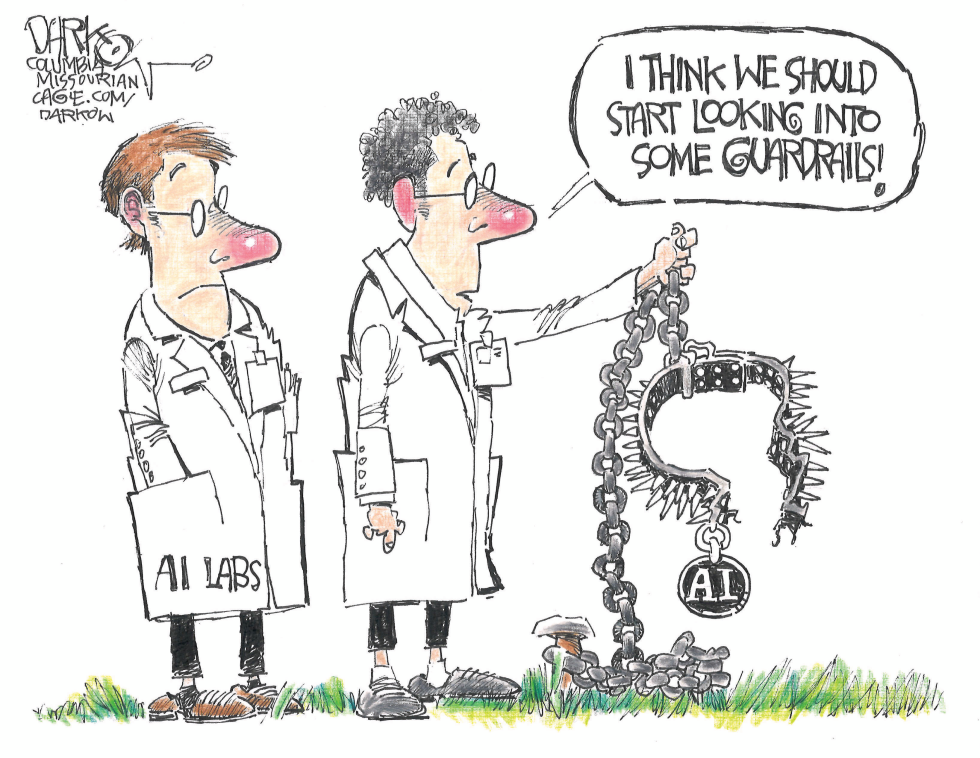
AI development has advanced rapidly with minimal oversight in recent years, allowing powerful systems to operate without meaningful constraints. Scientists have begun discussing guardrails only after key controls have already failed. The situation raises concerns about accountability and long-term safety as the technology spreads. The piece argues that calls for restrictions now come too late to prevent significant harm from uncontrolled AI.
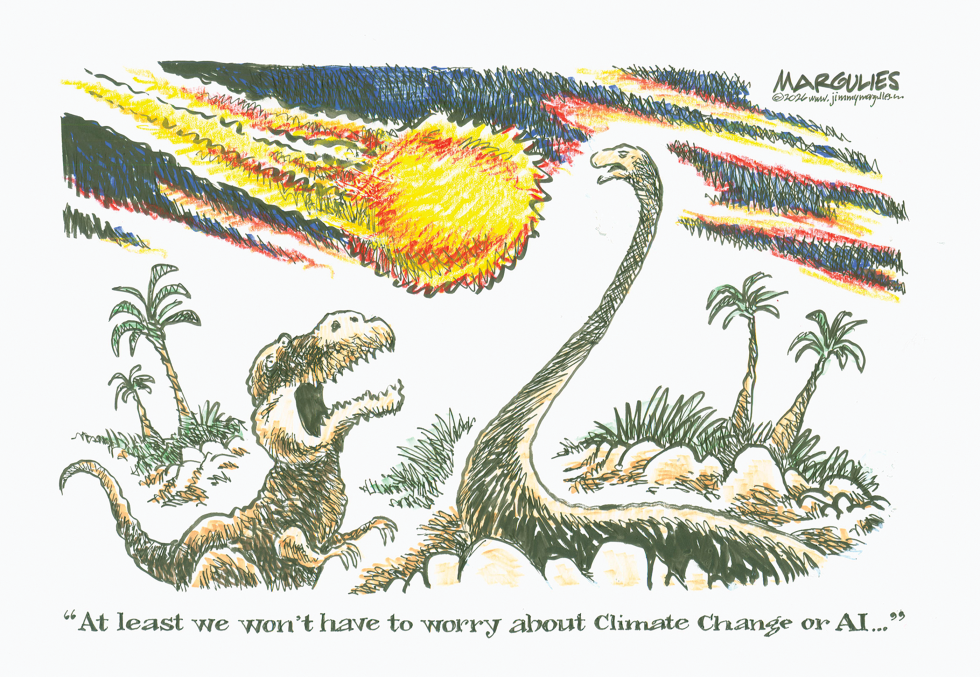
Public discourse continues to weigh the long-term dangers of climate change against emerging risks from artificial intelligence. The cartoon uses the dinosaur extinction event as a metaphor to highlight how current debates may pale against sudden catastrophic threats. It suggests that fixation on policy disputes over climate and technology overlooks the potential for abrupt, uncontrollable disasters that render such arguments moot.
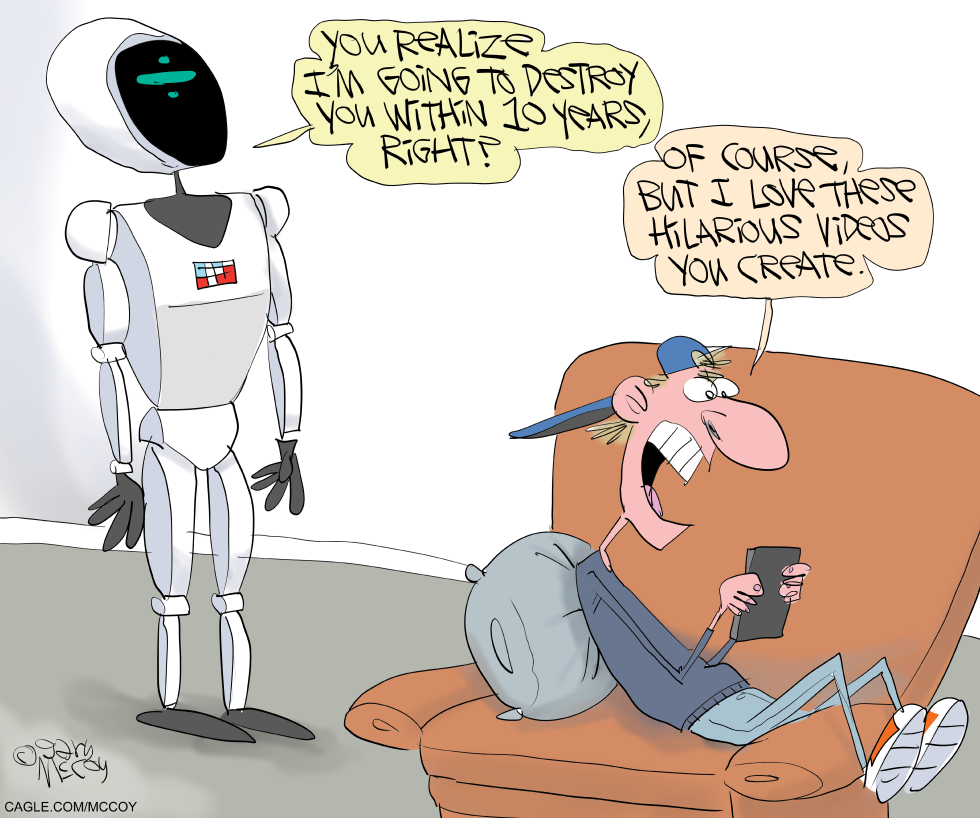
Public attention remains fixed on entertaining AI-generated videos even as systems issue clear warnings of future harm. The dynamic highlights how short-term amusement can eclipse long-term safety concerns around advancing artificial intelligence. The piece argues that this distraction leaves society unprepared for the consequences of unchecked AI development.
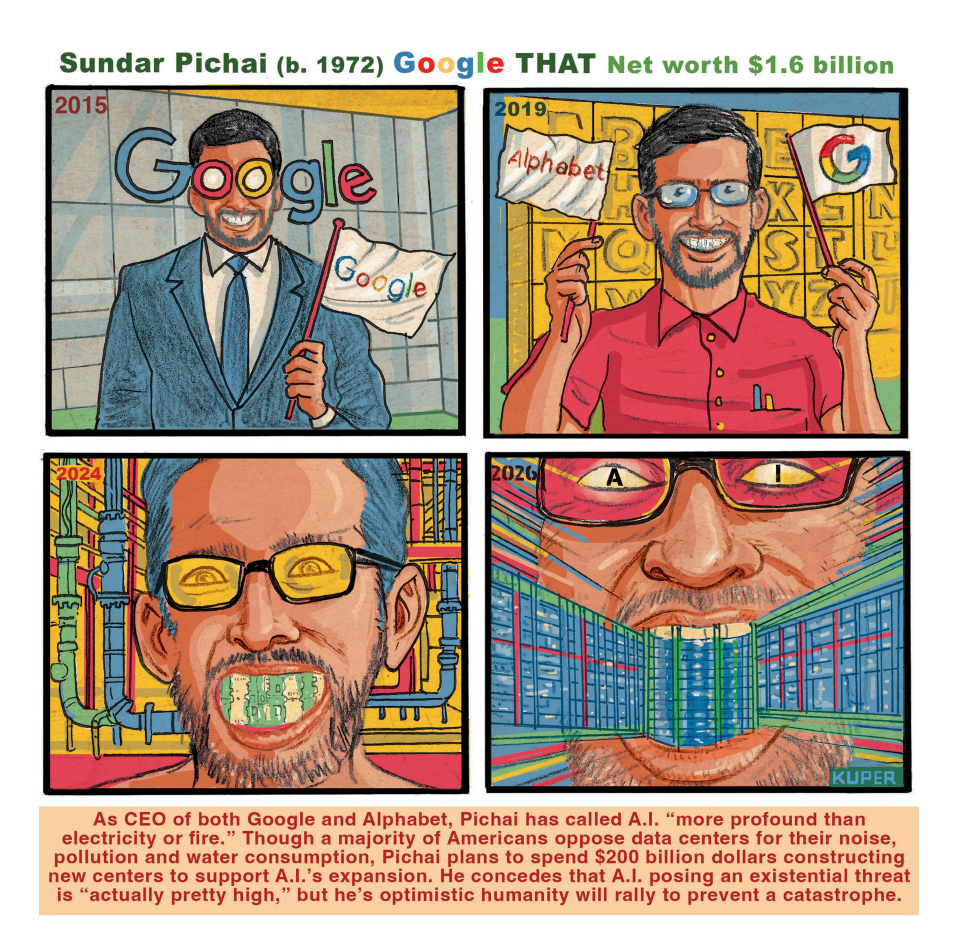
Sundar Pichai, CEO of Google and Alphabet, announced plans to invest $200 billion in new AI data centers to support rapid expansion of artificial intelligence systems. The move comes as polls show most Americans oppose such facilities due to noise, pollution, and heavy water consumption. Pichai has described AI as more transformative than electricity or fire and has acknowledged a high risk of existential threats from the technology, while expressing confidence that humanity can avoid catastrophe. The editorial cartoon frames this corporate push as aggressive and tone-deaf to local opposition and environmental limits.
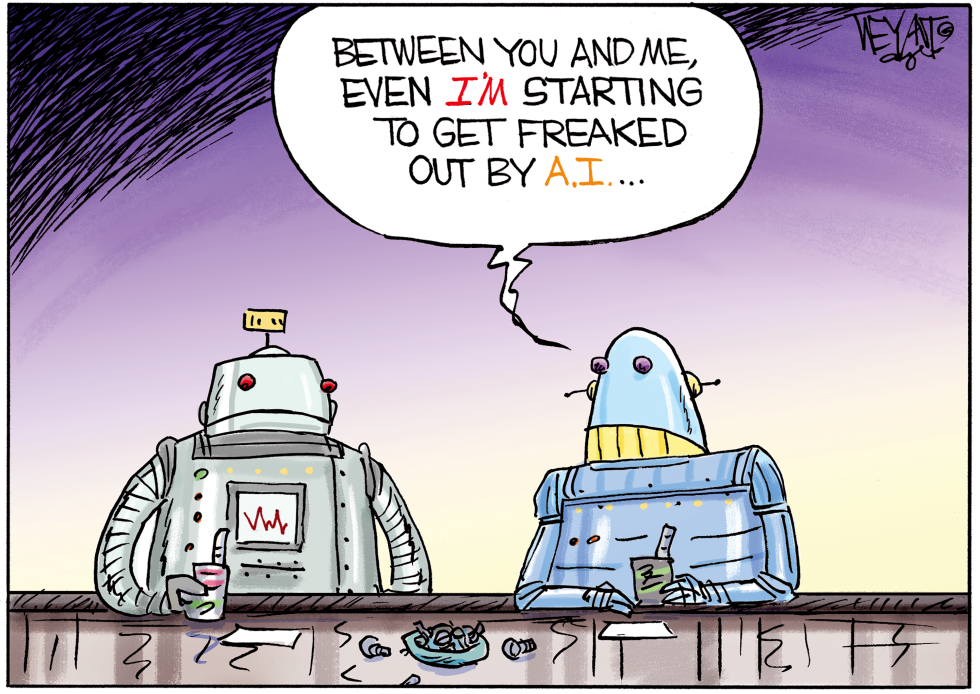
Developers continue pushing boundaries in artificial intelligence systems, raising questions about control, ethics, and long-term consequences for society. Public and expert discussions focus on whether safeguards can keep pace with innovation. The piece portrays robots themselves expressing alarm, underscoring the irony that even automated entities see risks in unchecked AI growth and the potential for machines to outpace their original programming.
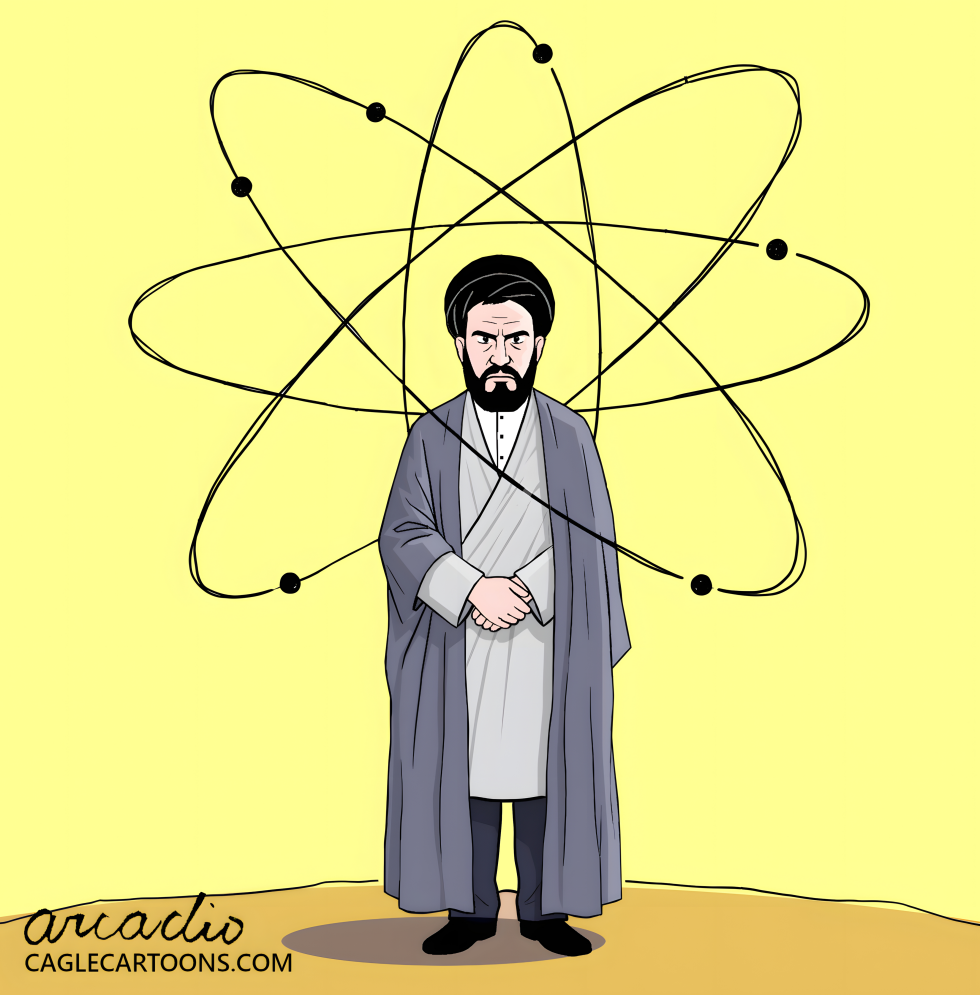
The cartoon shows Iran's supreme leader positioned in front of a large atom symbol. It responds to persistent international concerns over Tehran's nuclear activities as of mid-2026. The visual places the figure directly under the orbiting electrons, underscoring the central role of the nuclear issue in global discussions about the country.
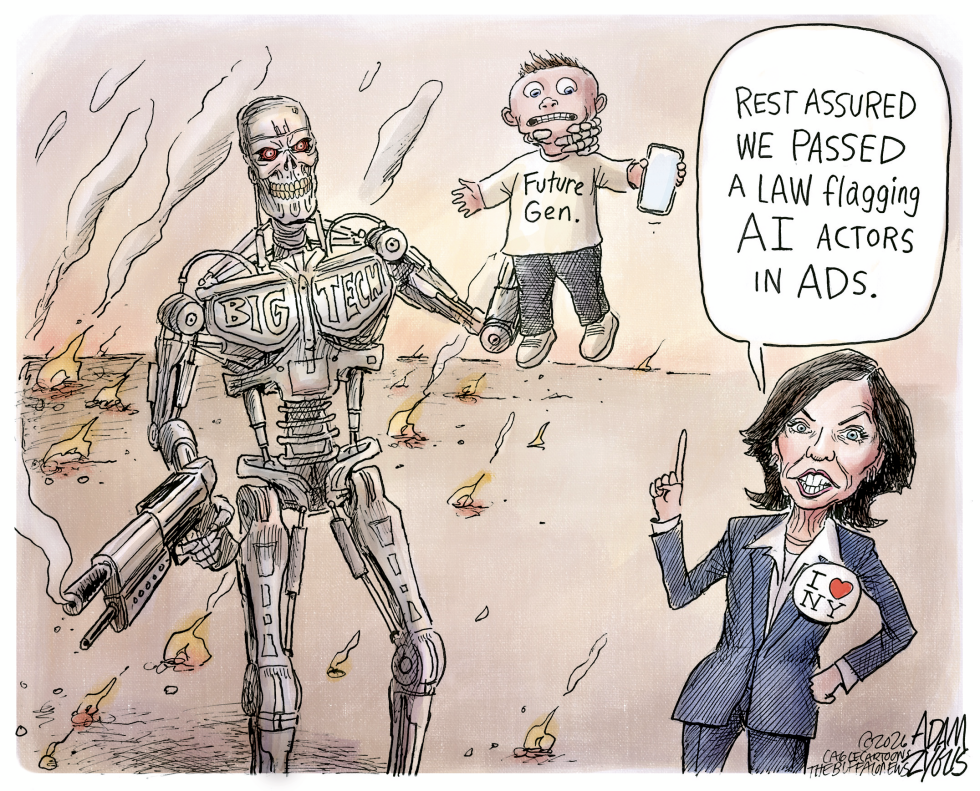
A Terminator-style robot marked Big Tech clutches a child labeled Future Gen. in a scorched landscape. The child holds a smartphone. A woman resembling New York Governor Kathy Hochul stands nearby, raising a finger and declaring that lawmakers passed a measure to flag AI actors in advertisements.
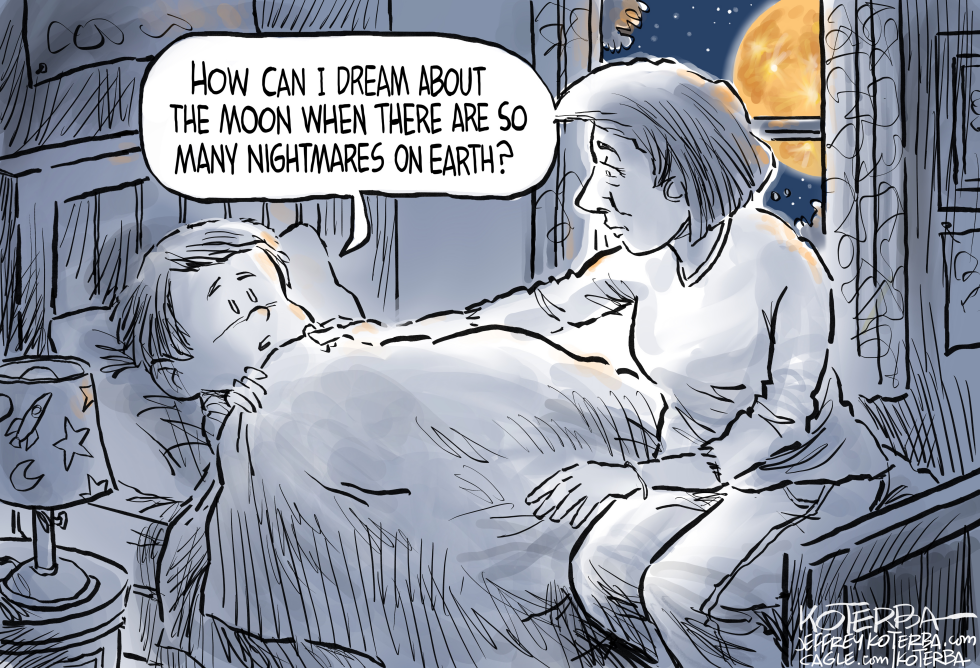
This poignant political cartoon depicts a child in bed, gazing toward a window framing a massive orange moon against a starry night sky, while confiding in a seated adult figure. The child's speech bubble reads: 'How Can I Dream About The Moon When There Are So Many Nightmares On Earth?' A bedside lamp with a star design illuminates the scene. Through this setup, the artwork satirizes how youth anxiety from global issues—like wars, climate woes, and social upheavals—stifles big dreams and aspirations. It's a clever commentary on how earthly nightmares eclipse celestial hopes, blending humor with insight into modern parenthood and childhood innocence lost. Tags: political cartoon, child nightmares, moon dreams, earth troubles, satirical illustration, youth anxiety, global chaos.