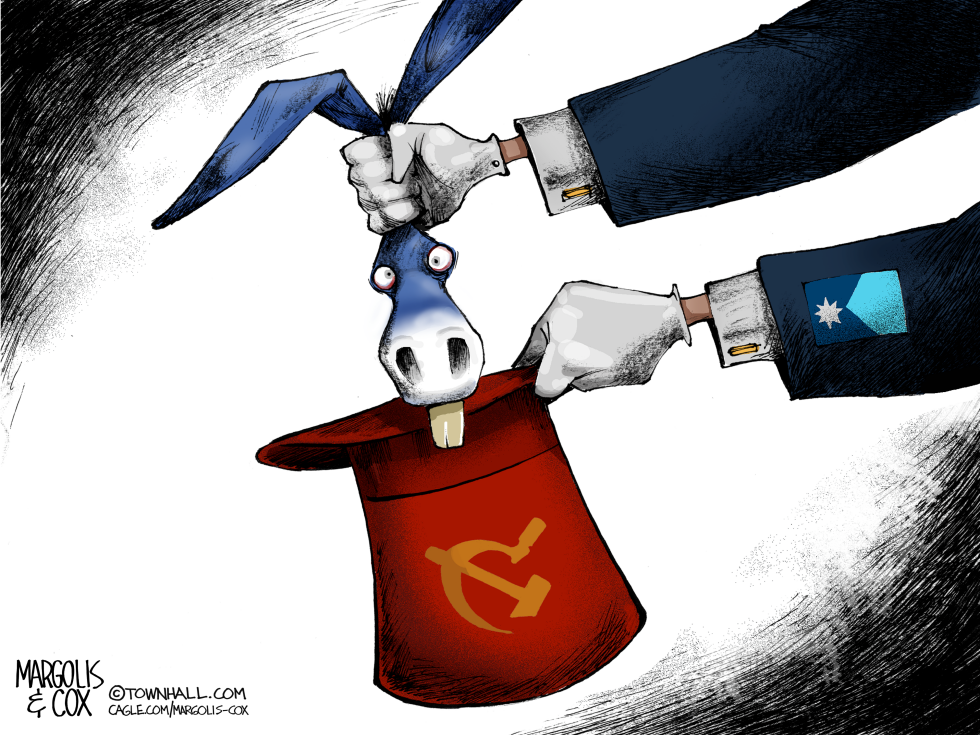
Accusations that Democratic policies carry communist undertones have persisted in partisan debate for years. The image frames the party as emerging directly from a communist emblem through a conjurer's reveal. This visual argument underscores ongoing conservative critiques that Democratic governance veers toward authoritarian economic controls rather than traditional American principles.
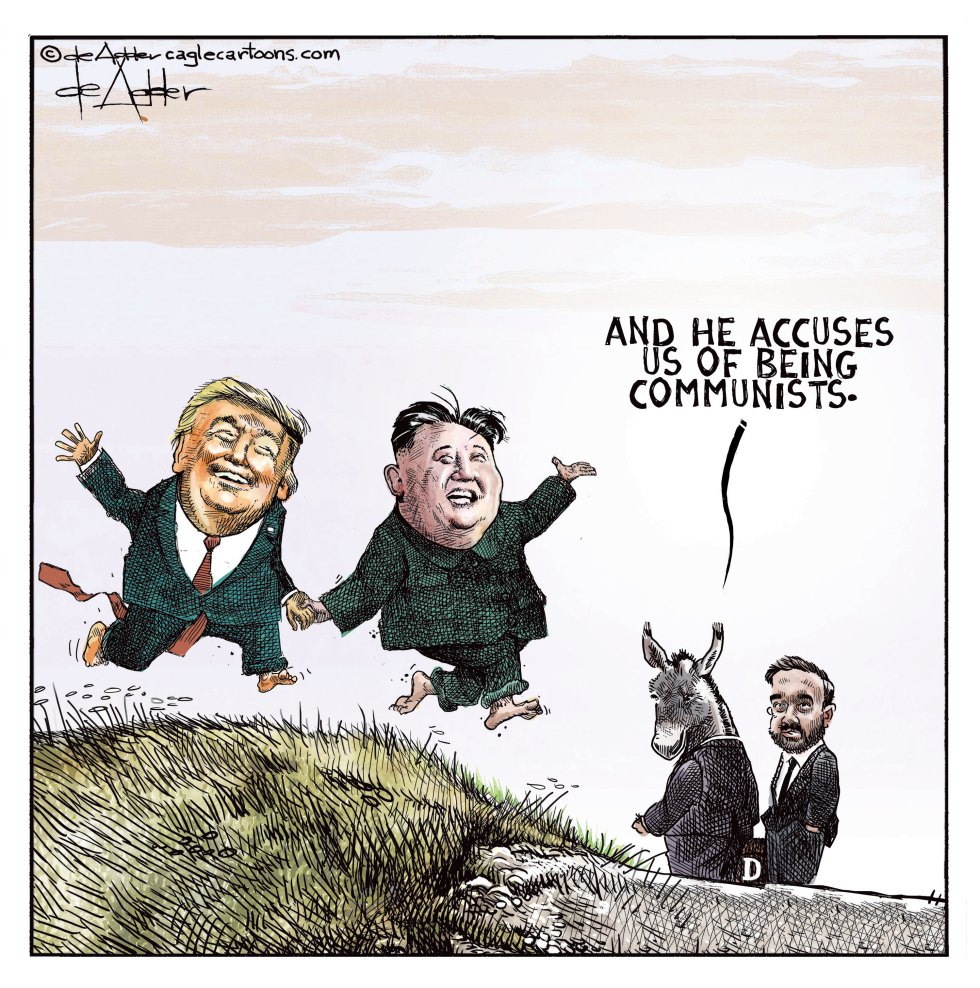
Donald Trump and Kim Jong Un appear together in a political scene accusing Democrats of communist leanings. The depiction highlights their joint action amid ongoing partisan rhetoric. The editorial position frames the accusation as inconsistent given the shared leap.
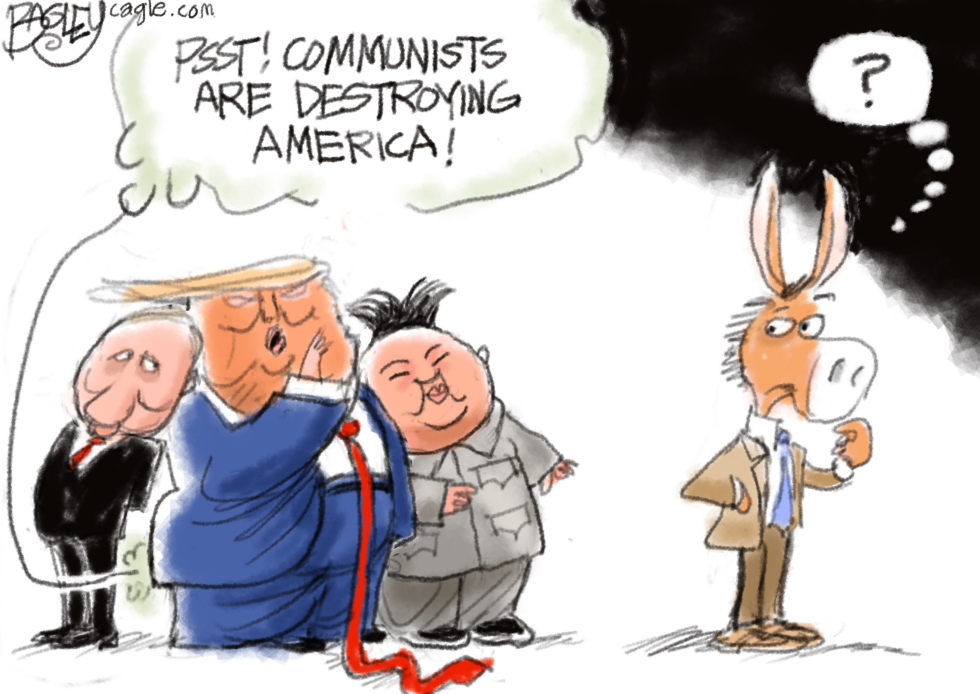
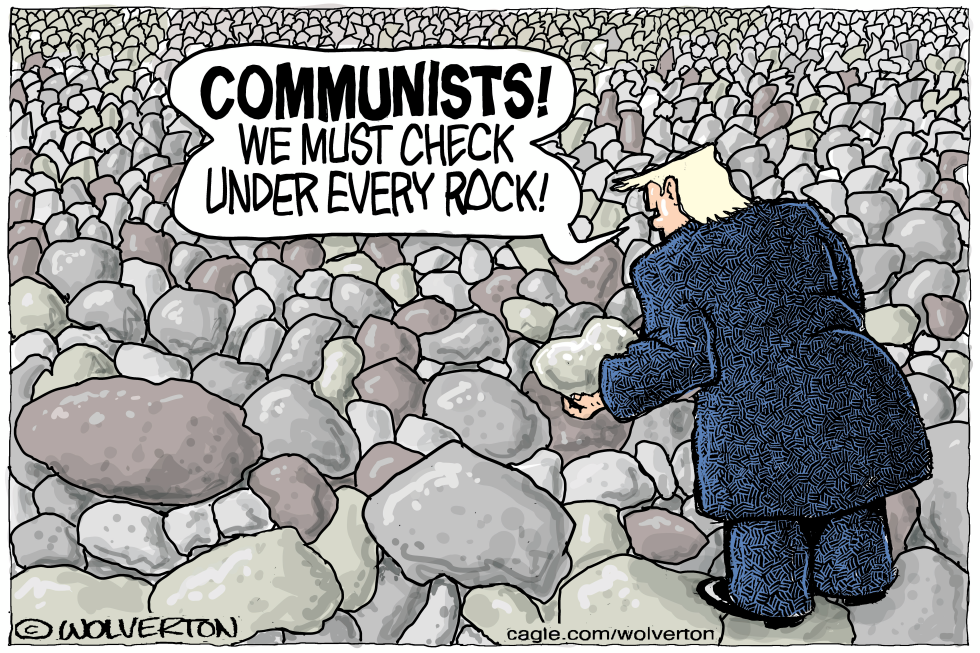
Donald Trump has renewed warnings that communists are undermining the United States, directing the message at Democratic leaders. The claim comes amid ongoing partisan clashes over domestic policy and foreign influence. The piece presents the Democratic response as skeptical and uncertain.
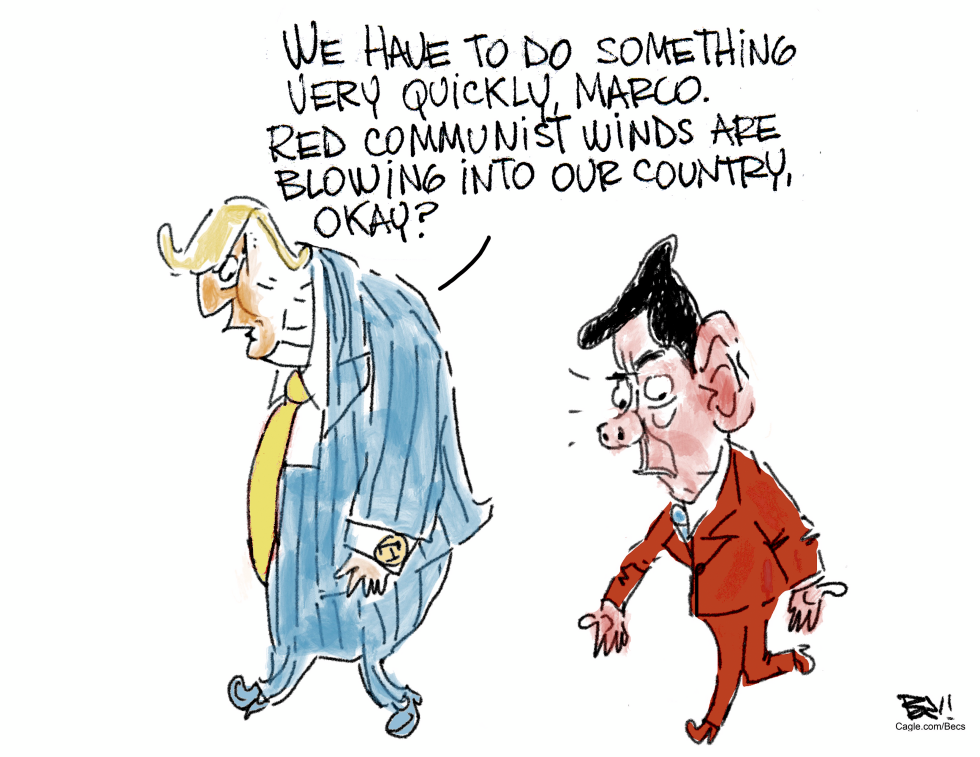
Donald Trump delivered a direct warning to Marco about communist influences reaching Argentina. The alert highlights concerns over rapid political changes and external pressures affecting the region. The piece portrays the warning as a call for immediate attention to prevent further shifts.
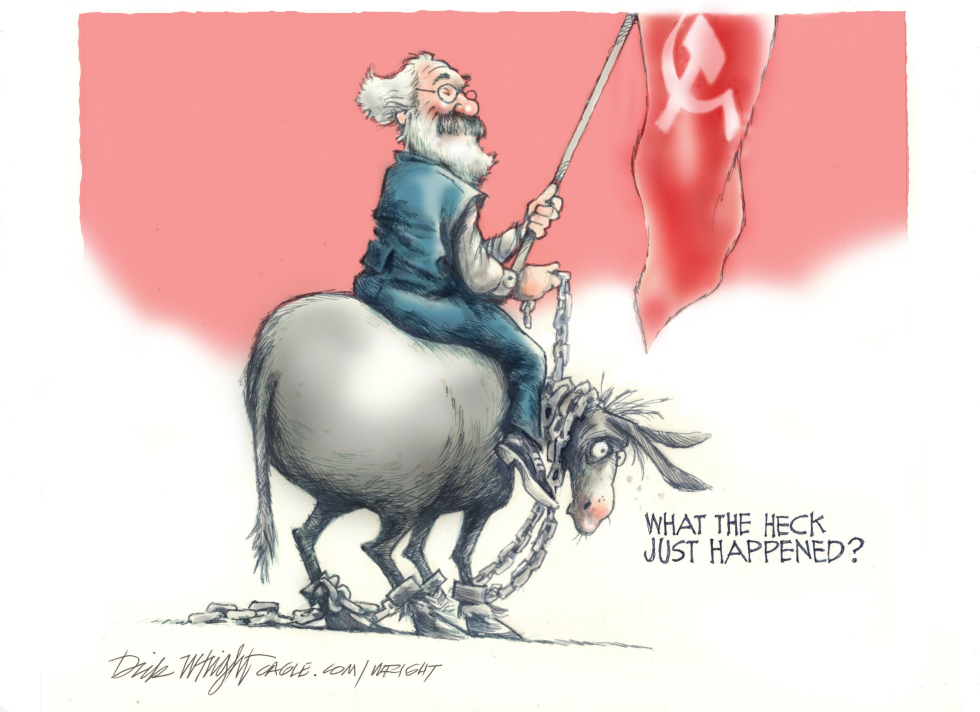
A Marxist figure has taken the reins of the Democratic Party symbol, raising a hammer-and-sickle flag over a donkey bound in chains. The image captures the moment the animal registers the shift in control. The editorial argues that radical communist influence has overtaken the party and left its traditional base bewildered by the abrupt change in direction.
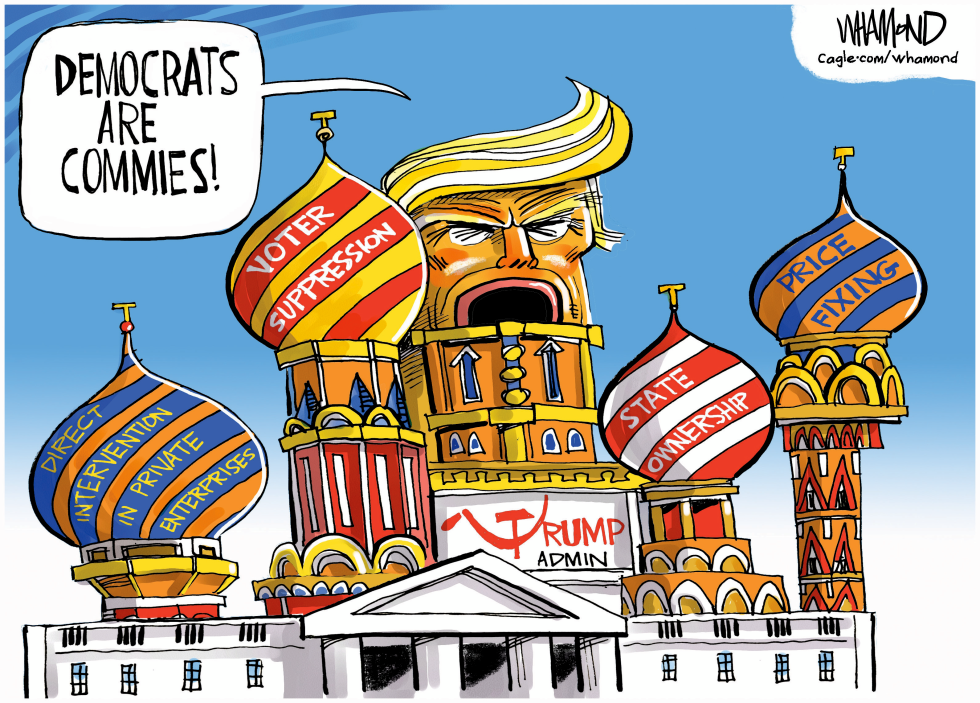
Donald Trump has renewed attacks labeling Democrats as communists amid ongoing debates over election rules and economic interventions. The accusation revives Cold War-era rhetoric in current political discourse. The piece portrays the Trump administration itself as adopting the very state-control measures it condemns.
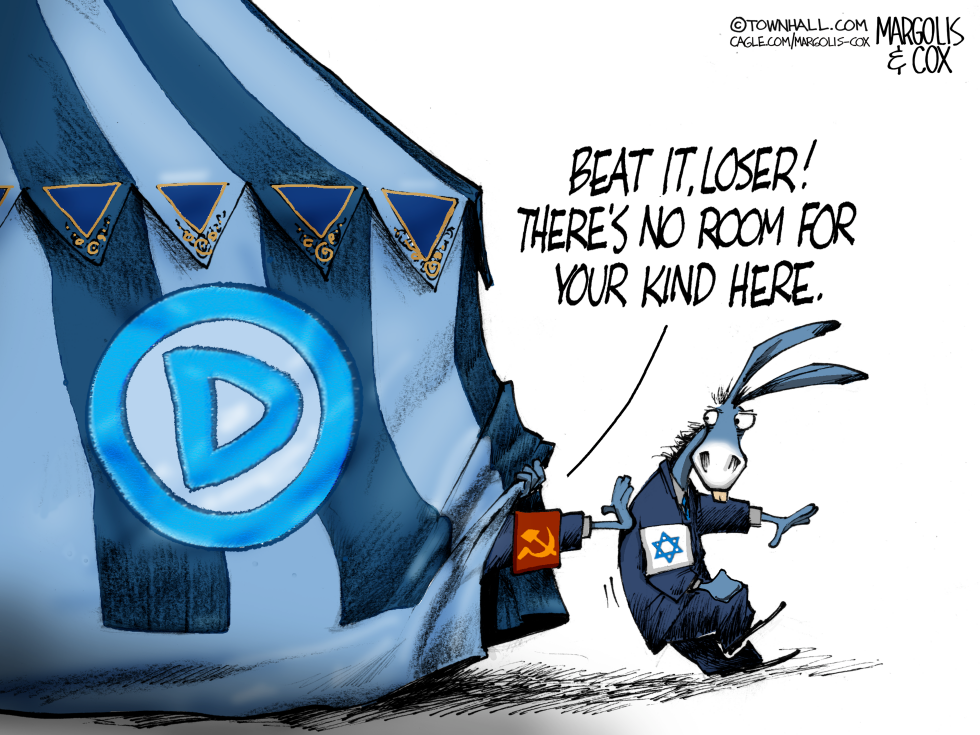
The Democratic Party's big tent faces internal pressure over its stance on Israel and ideological extremes as the traditional donkey mascot is shown being expelled. The cartoon highlights tensions between inclusivity claims and rejection of certain viewpoints. It argues the party is narrowing its base by excluding elements tied to both pro-Israel positions and communism.
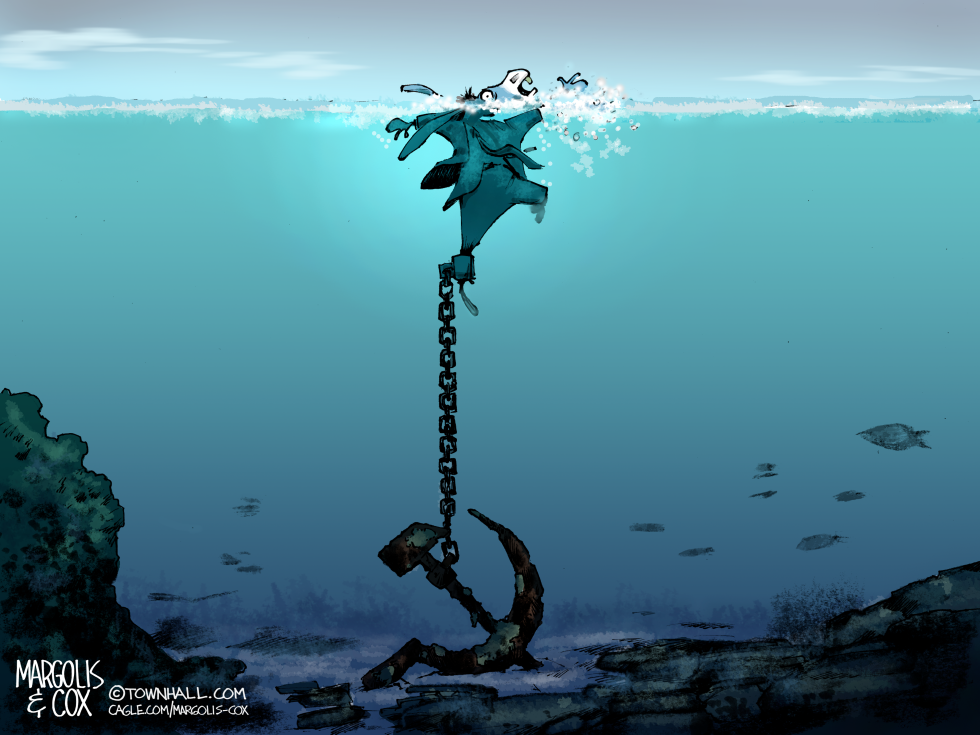
A democrat politician appears chained to a heavy communist anchor marked with the hammer and sickle, struggling to stay afloat. The image captures an ongoing political dynamic in which critics argue that democratic figures remain tethered to outdated or extreme leftist ideologies. The piece takes the position that such associations weigh down the party and limit its ability to move forward independently.
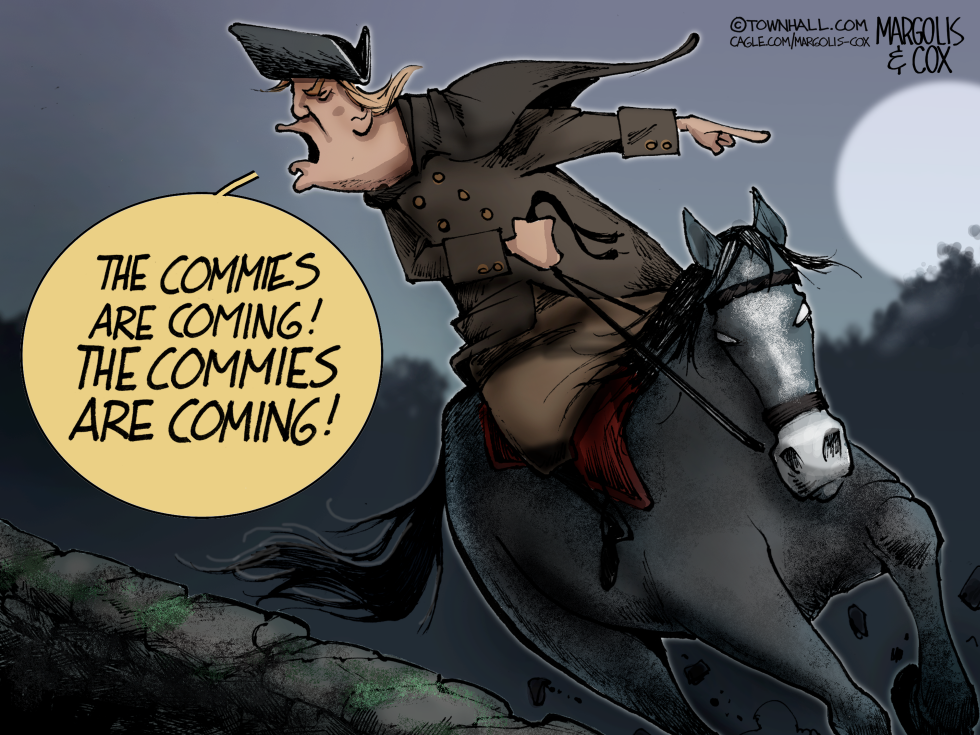
A rider on a dark horse gallops across rocky ground at night under a full moon. The figure, with blonde hair and dark coat, leans forward and points ahead while shouting a repeated warning about communists arriving. The scene draws on a historical ride motif updated to current concerns about communist influence. Publication occurred on July 5, 2026, amid ongoing political debates over foreign policy threats.
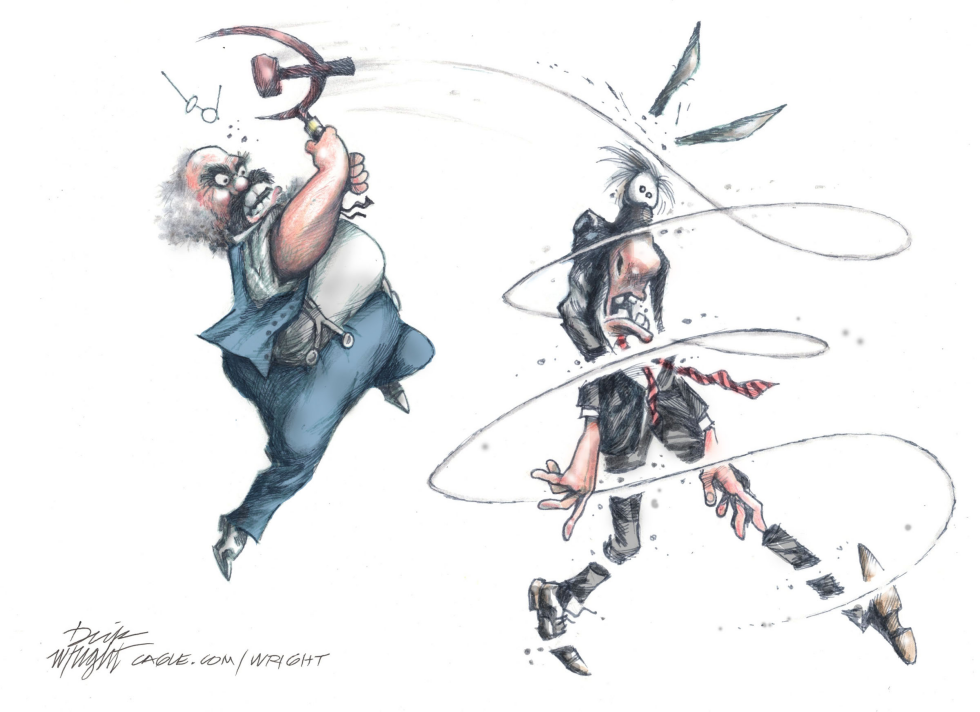
On June 30 2026 Dick Wright depicts a hammer and sickle wielding figure lunging at a suited Democrat form. The strike sends the target figure flying apart in fragments. The image responds to ongoing debates over ideological influences within the Democratic Party during the 2026 election cycle.
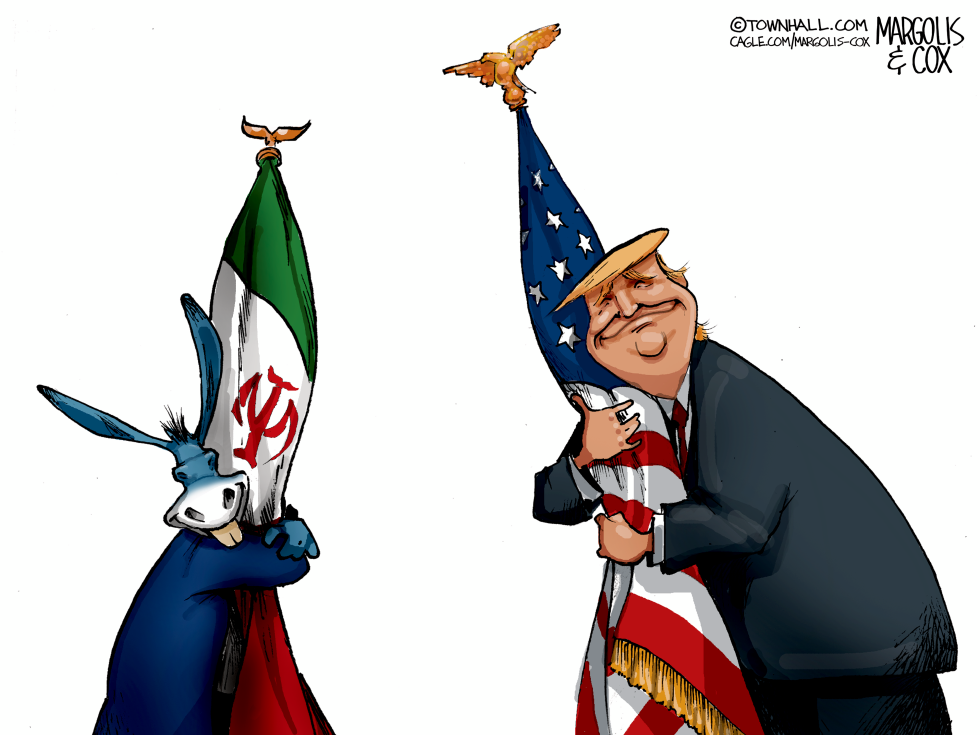
On June 21, 2026, the Margolis & Cox cartoon depicts Donald Trump wrapped in the American flag with an eagle perched above, facing a Democratic donkey wrapped in a flag resembling Italy's but marked with a hammer and sickle. The image responds to ongoing partisan debates over national identity and ideological leanings during the 2026 election cycle. Trump appears in a dark suit, smiling while holding the flag, while the donkey faces away. The visual argument centers on symbols of patriotism versus communism. Publication occurred via Townhall and Cagle.