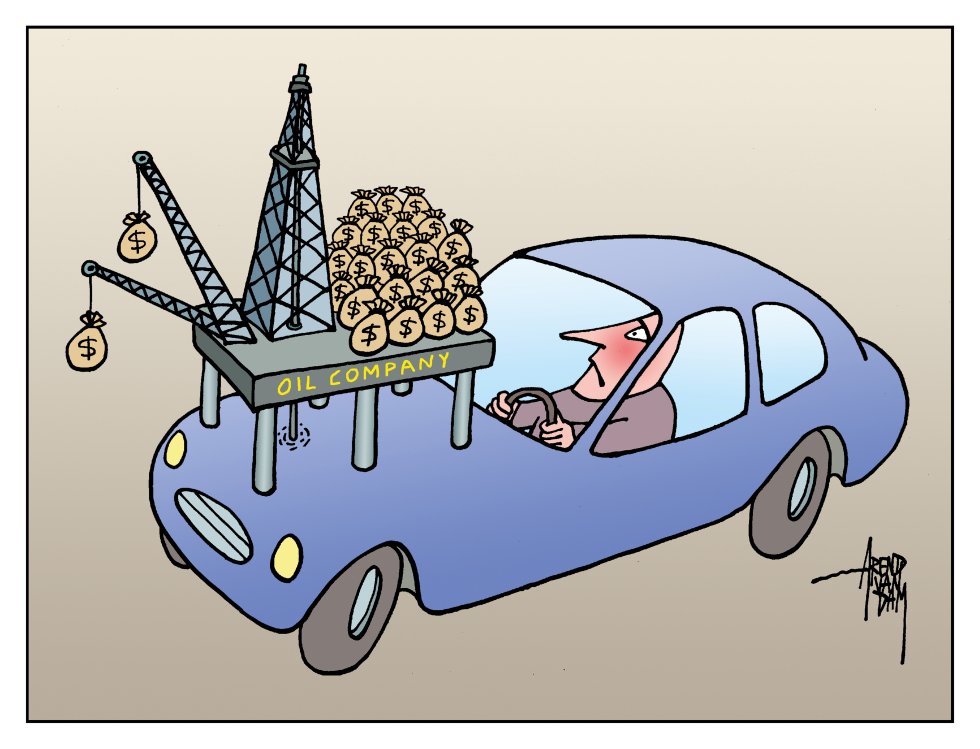
In this pointed political cartoon, an oil company platform sits atop a blue car, loaded with piles of dollar-sign money bags, while cranes dangle more profits. The frustrated motorist grips the wheel, face red with anger, illustrating how excessive profits from oil companies crush consumers at the pump. Tags like excessive profits, motorists, fuel, petrol, and refuel capture the essence, with Iran and Strait of Hormuz hinting at geopolitical tensions driving prices. This visual satire underscores the disparity between corporate windfalls and everyday drivers' pain, a timeless theme in energy politics.
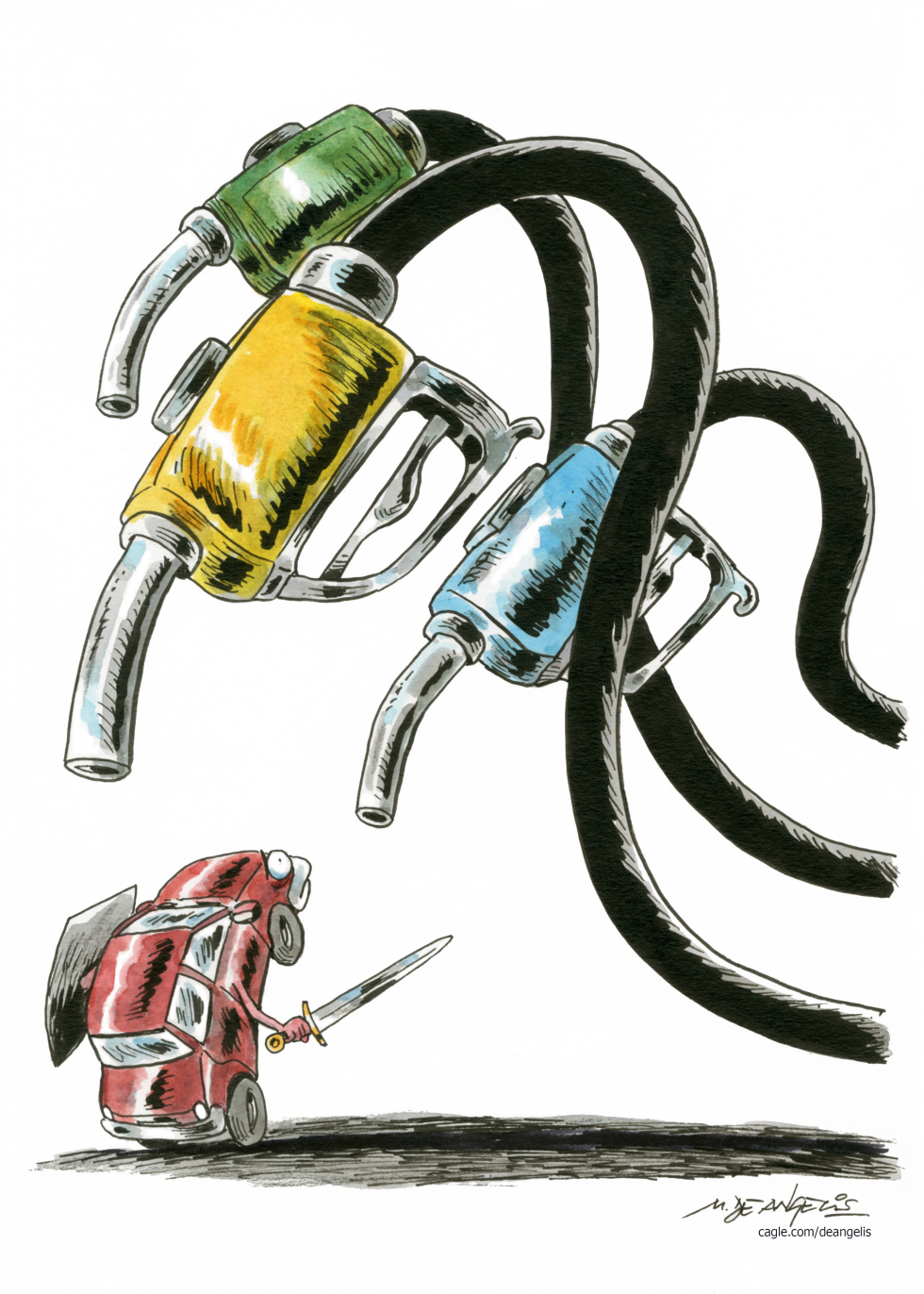
Marco De Angelis draws a clever twist on the ancient HYDRA myth, where a plucky red CAR, sword in hand, squares off against a beastly creature formed by three FUEL pump nozzles—green, yellow, and blue—attached to writhing black hoses. The scene plays on the endless battles drivers face with soaring OIL PRICES and FUEL costs, tying into broader ECONOMY woes. Tags like TRANSPORTATION, TRADE, WAR, CRISIS, IRAN, USA, and HORMUZ hint at real-world tensions in the Strait of Hormuz, where geopolitical strife disrupts global OIL supplies. It's a sharp commentary on how these issues regenerate like hydra heads, making every victory temporary in the fight against economic pressures.
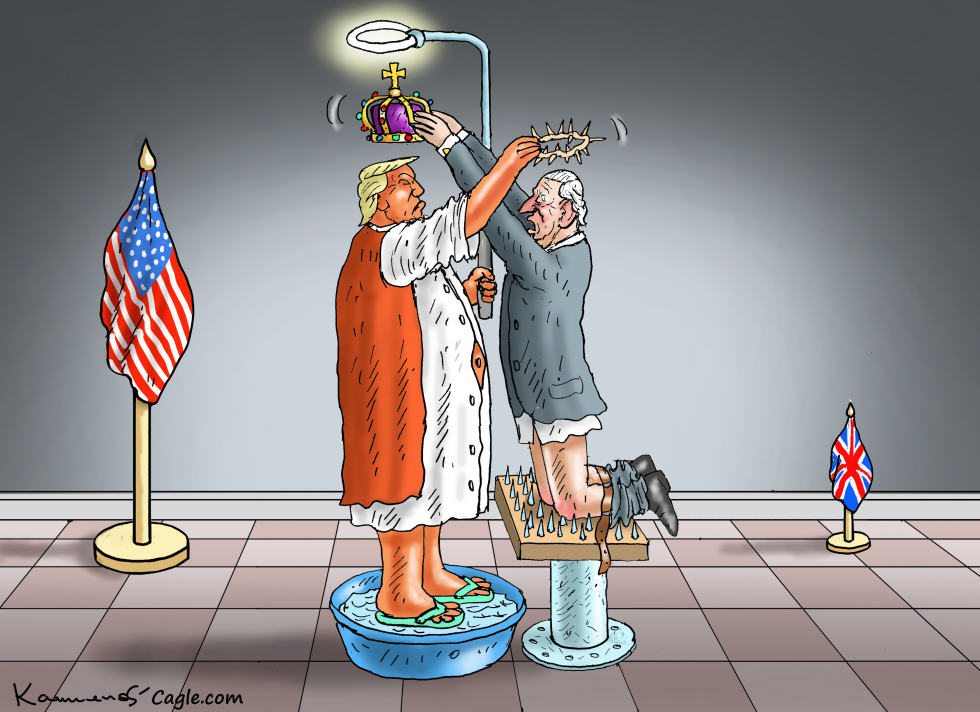
Marian Kamensky's cartoon depicts Trump holding a jeweled crown over King Charles's head while King Charles extends a crown of thorns, set against US and UK flags. The image, tagged Trump, King Charles, MAGA terror, Doctor Jesus, fascism, shows King Charles in a suit with pants down, standing in a basin on a spiked stool. This setup underscores themes of painful power exchanges, with Trump in a robe-like garment. The dark background and illuminated halo add to the satirical edge, commenting on political alliances and suffering in leadership.
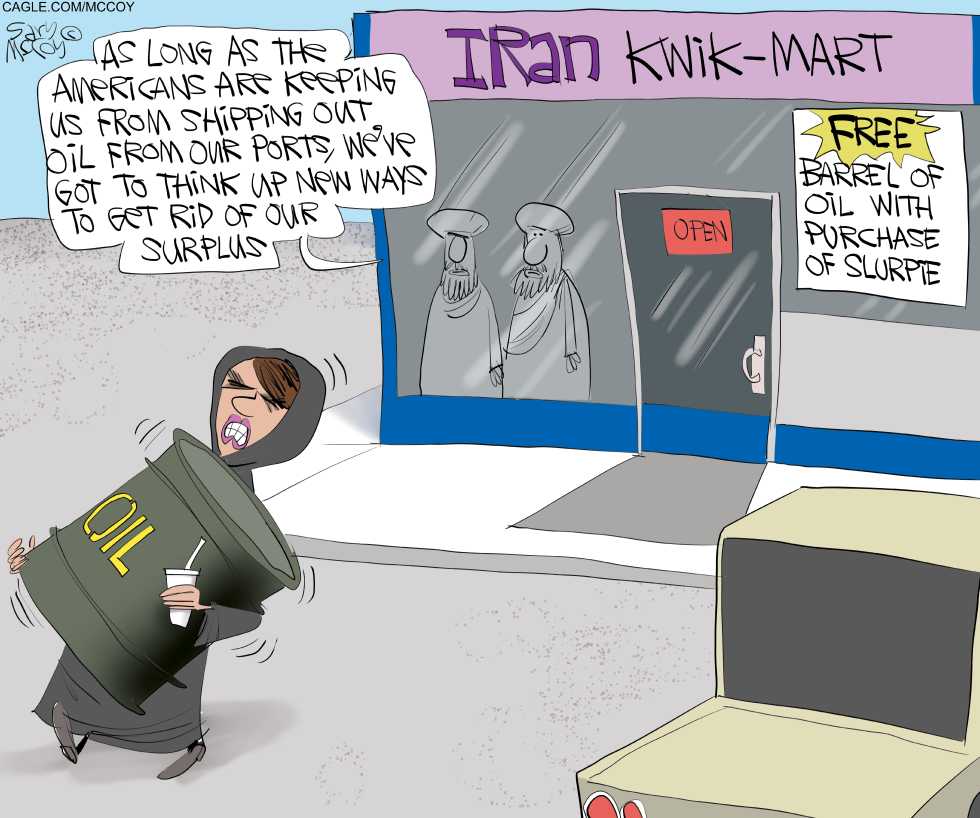
Gary McCoy's cartoon depicts two bearded Iranian clerics inside the Iran Kwik-Mart, promoting a free barrel of oil with Slurpee purchase to handle surplus crude. Outside, a hooded figure dumps an oil barrel into a car trunk, lamenting U.S. blockades on shipping ports. The image ties into Strait of Hormuz tensions, oil prices, Trump-era policies, Iran's Revolutionary Guard, and Middle East conflicts, highlighting ironic solutions to energy surplus amid international sanctions and naval standoffs. Commercial ships and tankers face barriers, forcing creative disposal methods in this dryly humorous take on global oil dynamics.
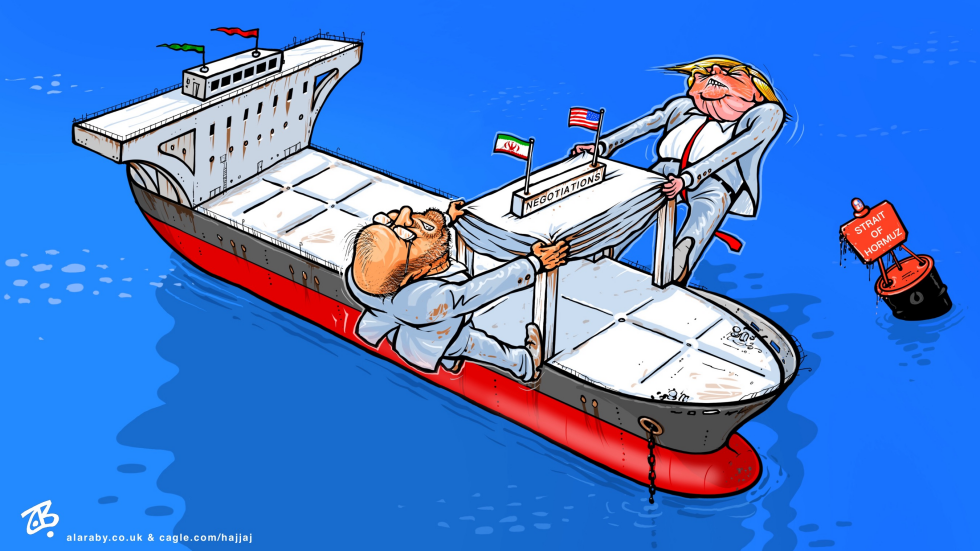
Emad Hajjaj\'s cartoon captures the tense Hormuz Strait negotiations between Trump and an Iranian figure on a massive tanker ship flying US and Iran flags. The scene shows them balancing a \'NEGOTIATIONS\' table on the tilting vessel, with an anchor chain and a leaking \'Strait of Hormuz\' buoy spilling oil. This Gulf war satire highlights the precarious talks amid potential sea block, where the ship appears damaged and unstable. Tags like ship, anchor, Gulf, war, tanker, talks underscore the maritime conflict theme. The dry humor lies in the literal sinking of diplomatic efforts.
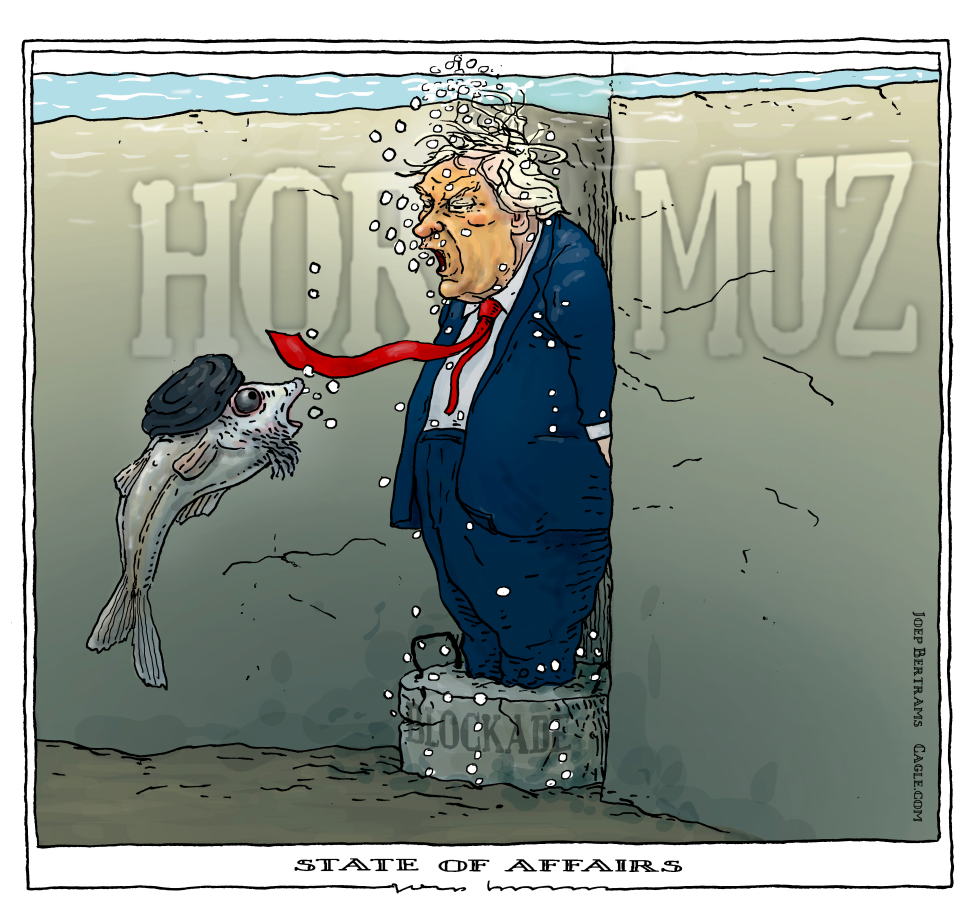
Joep Bertrams captures the Strait of Hormuz tensions with a caricature of Donald Trump sinking in concrete shoes marked blockade, bubbles rising from his open mouth as a fish in a black hat nibbles his red tie. The underwater setting features a cracked wall labeled Hormuz, emphasizing the sunk metaphor for diplomatic failures. Tags like Iran, concrete shoes, and fish highlight the satirical take on US-Iran relations, with the caption State of Affairs underscoring the dire situation. This cartoon from 2026 blends humor and commentary on potential blockades, showing Trump in a blue suit against a murky seabed.
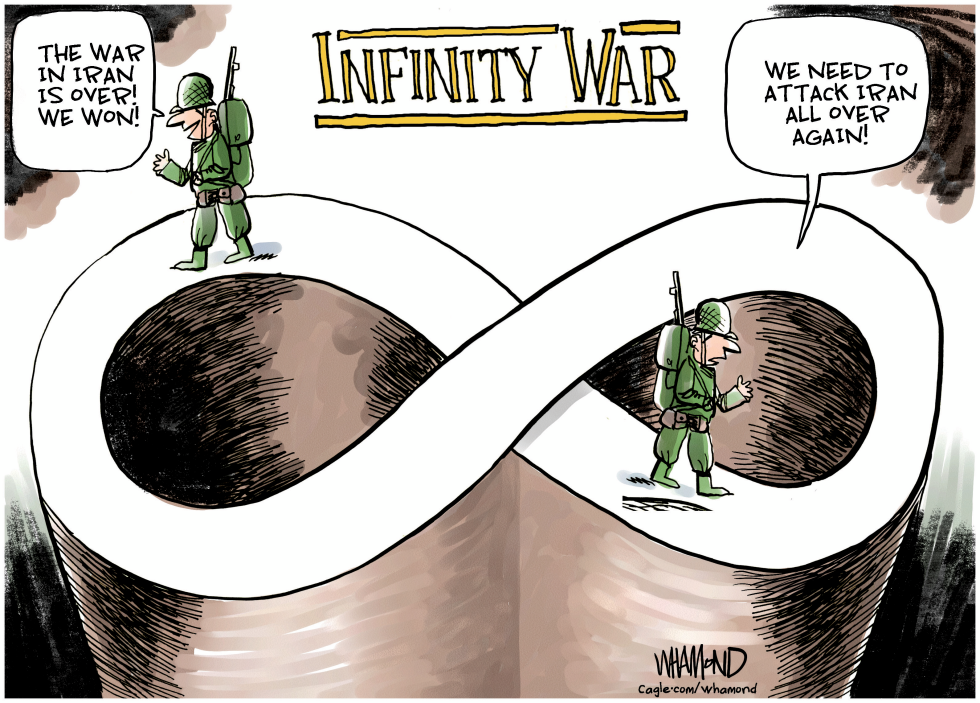
Dave Whamond's cartoon features two soldiers positioned on a large infinity symbol, one announcing victory in the Iran war while the other insists on attacking again, highlighting the perpetual nature of conflict. The title 'Infinity War' parodies endless warfare, with the loop representing cycles of victory and renewed aggression. Tags like iran war cartoon, infinity symbol war, endless conflict satire, military parody, perpetual war illustration, and satirical soldiers emphasize the dry humor in depicting how wars in regions like Iran seem to restart indefinitely, a common theme in political cartoons that resonates with ongoing global tensions.
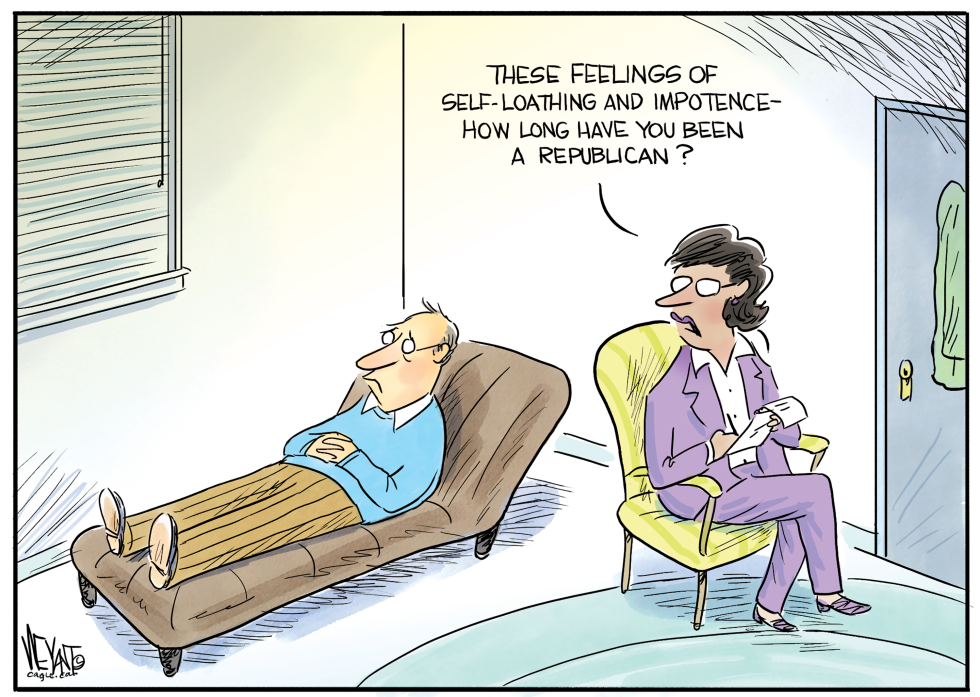
Christopher Weyant's political cartoon shows a therapy room with blinds, a door, and a coat hanger. A balding man in glasses, blue shirt, and brown pants reclines on a brown couch, arms crossed, looking distressed. A woman with dark hair, glasses, purple suit, sits on a yellow chair holding notes, speaking the punchline linking self-loathing and impotence to Republican tenure. The scene captures satirical commentary on political identity, with dry humor evident in the exaggerated expressions and simple setting. Tagged as republican party satire, therapy humor, political cartoon, self-loathing joke, impotence metaphor, and party affiliation critique, it highlights insider views on partisan struggles.
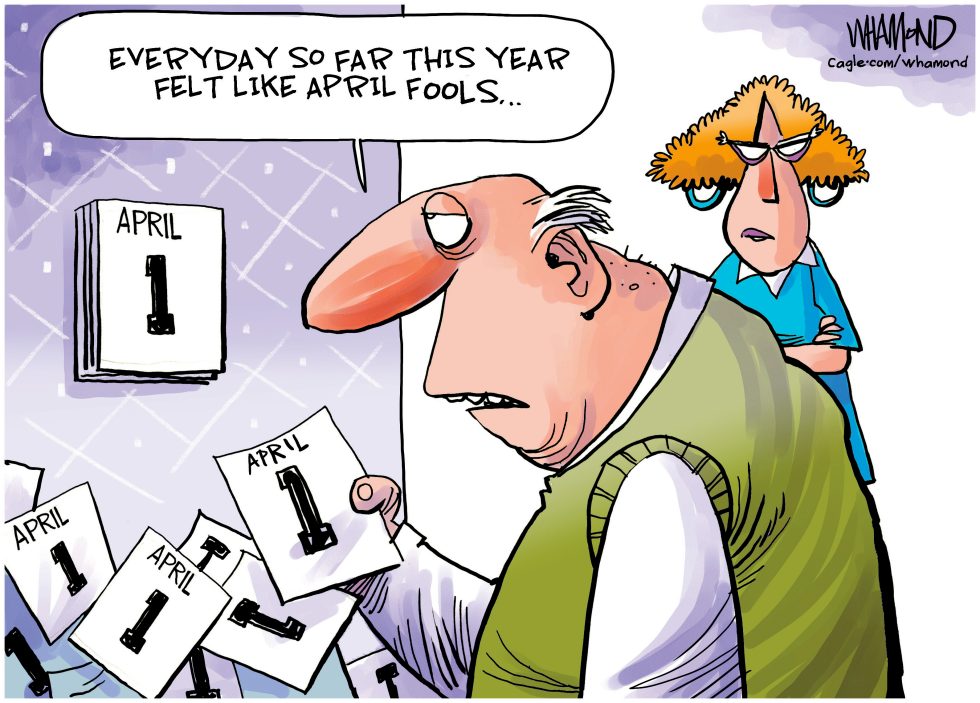
The cartoon depicts a man in a green vest examining several loose April 1 calendar pages that have fallen to the floor. A wall calendar also displays April 1. A woman with orange hair and glasses stands with arms crossed nearby. The speech bubble reads that every day this year felt like April Fools. The scene uses simple lines and limited colors to show the repeated date.
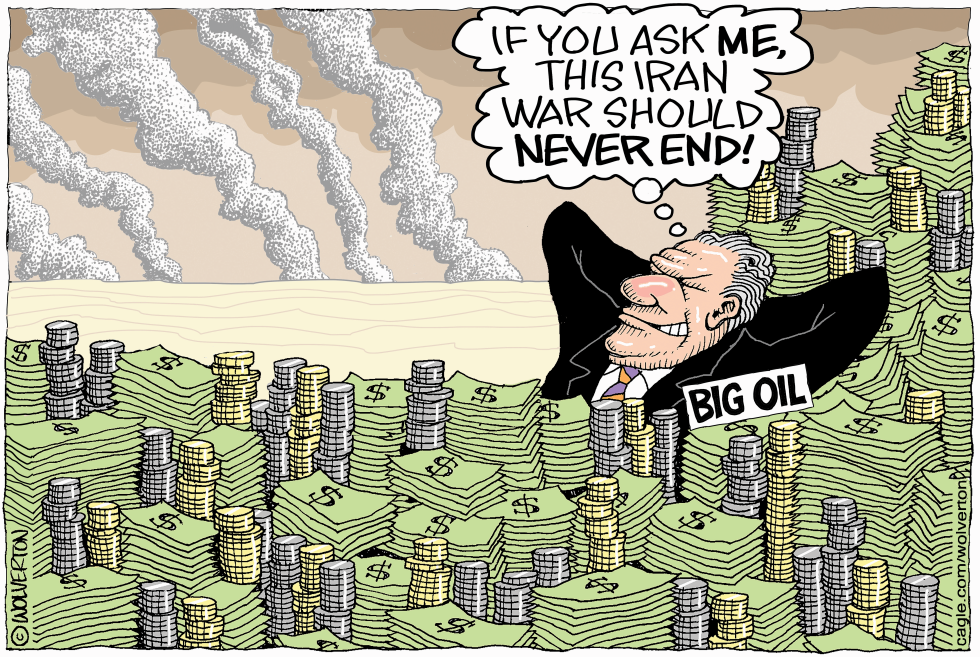
A political cartoon dated March 17, 2026, depicts a Big Oil executive reclining amid stacks of cash and coins. The figure, labeled BIG OIL, thinks that the Iran war should never end. Smoke rises in the background over a landscape of dollar bills. The image responds to ongoing concerns about oil industry gains during Middle East conflicts.
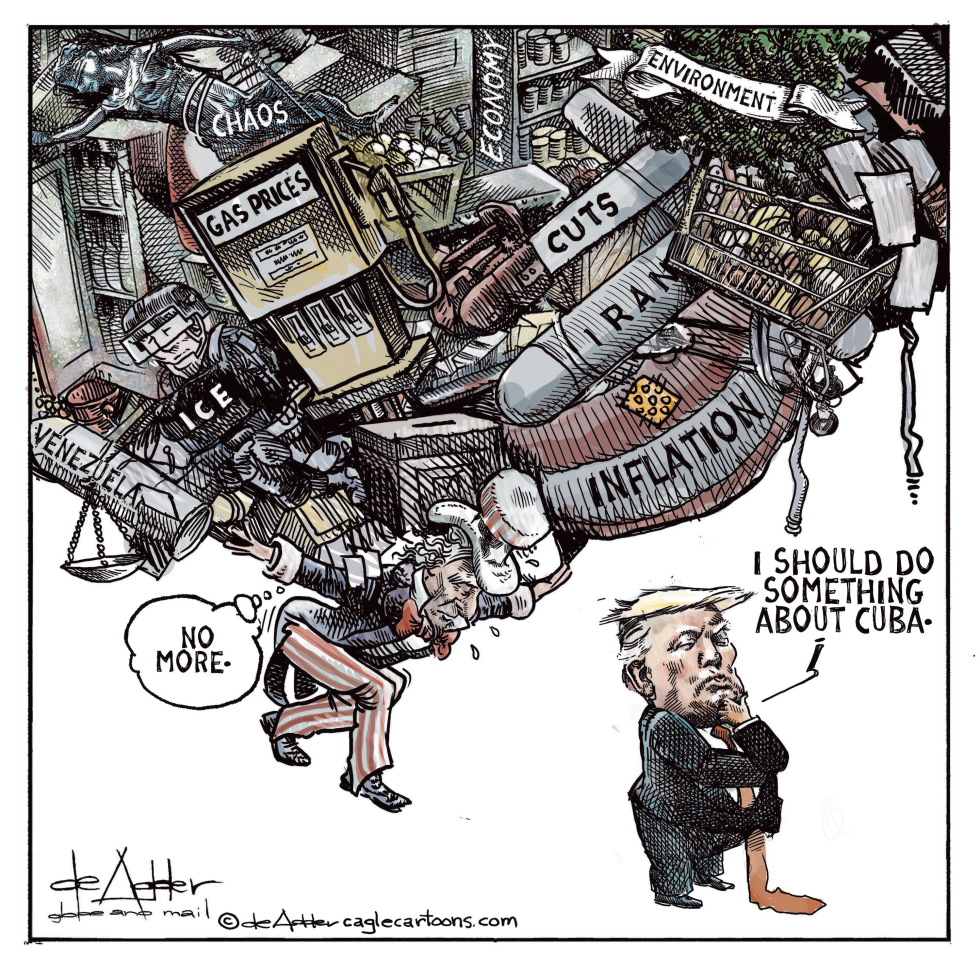
Donald Trump appears in the foreground contemplating action on Cuba. Behind him a swirl of labeled elements shows inflation, gas prices, Iran, Venezuela, ICE, and cuts tied to economy and environment. A second figure says no more. The March 2026 cartoon highlights distraction amid multiple pressures.
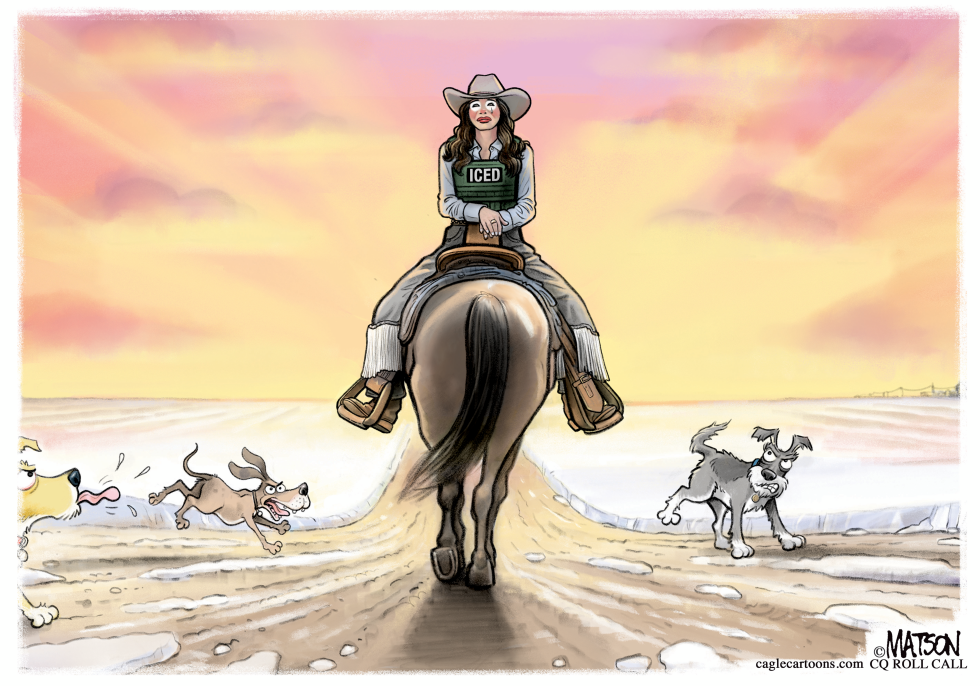
This sharp political cartoon captures an ICE agent, styled as a plucky cowgirl in a cowboy hat, galloping into a pastel sunset on her trusty horse, while a pack of frantic dogs—stand-ins for coyote smugglers—scatter in disarray. The 'ICED' vest adds a punny twist, perhaps nodding to the agency being put on ice amid heated immigration debates. With tags like political satire, border security, ICE criticism, cartoon dogs, western theme, and immigration policy, the image skewers the often chaotic world of enforcement, where even the bad guys (or dogs) get a comedic getaway. Matson's irreverent style shines through in this insightful jab at bureaucratic rodeos.
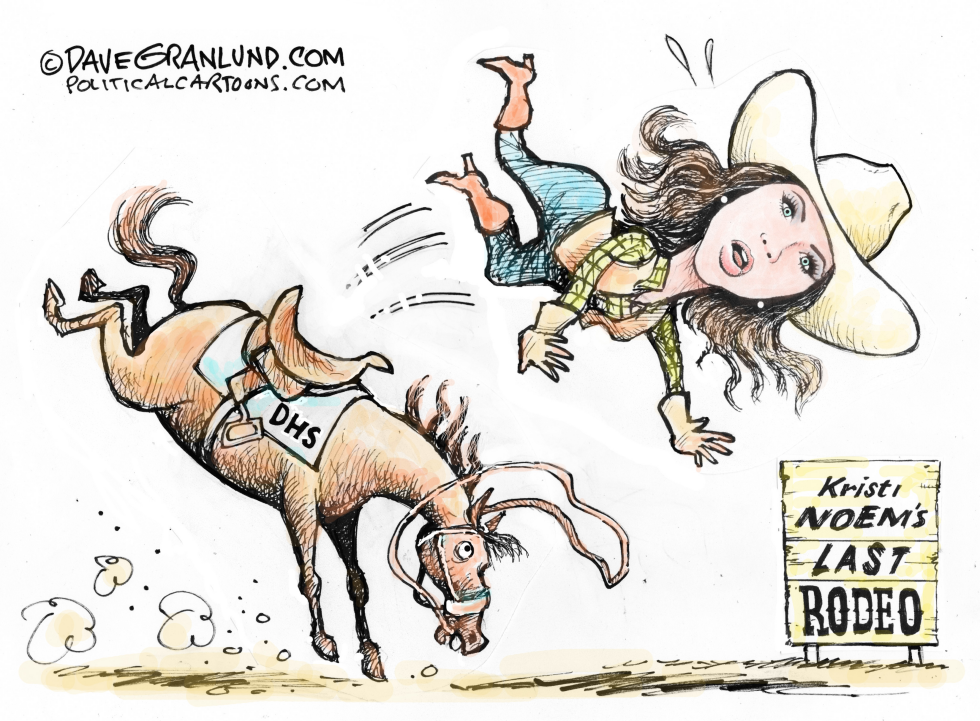
Dave Granlund's political cartoon hilariously portrays South Dakota Governor Kristi Noem in a rodeo metaphor, being violently thrown from a bucking horse labeled 'DHS' under a sign reading 'Kristi Noem's Last Rodeo.' This satire illustration captures her career downfall amid the infamous dog killing scandal, where she admitted to shooting her unruly pup Cricket, sparking widespread outrage. The humorous cartoon underscores how her VP ambitions for the Republican politics ticket were derailed, turning her book promotion into a PR nightmare. With elements of cowboy politics and political humor, it highlights the irreverent side of GOP satire, suggesting this could be Noem's final political stunt.