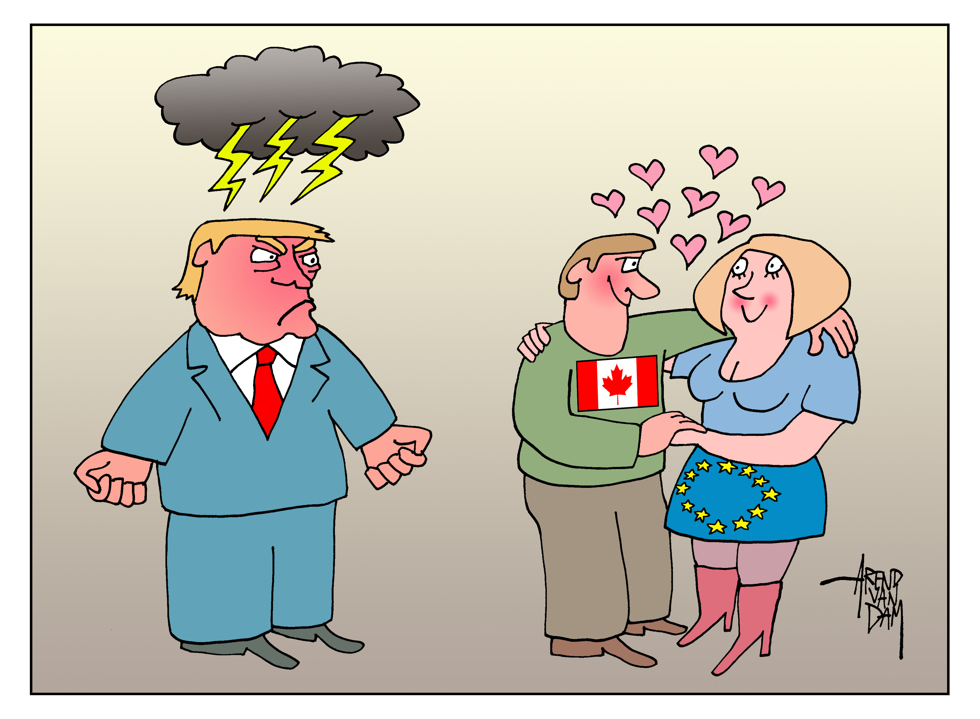
Tensions between the Trump administration and longtime allies Canada and the European Union have prompted closer bilateral cooperation between Ottawa and Brussels. The cartoon captures the contrast between American anger and allied warmth. It argues that Trump's confrontational style is pushing partners together and isolating the United States.
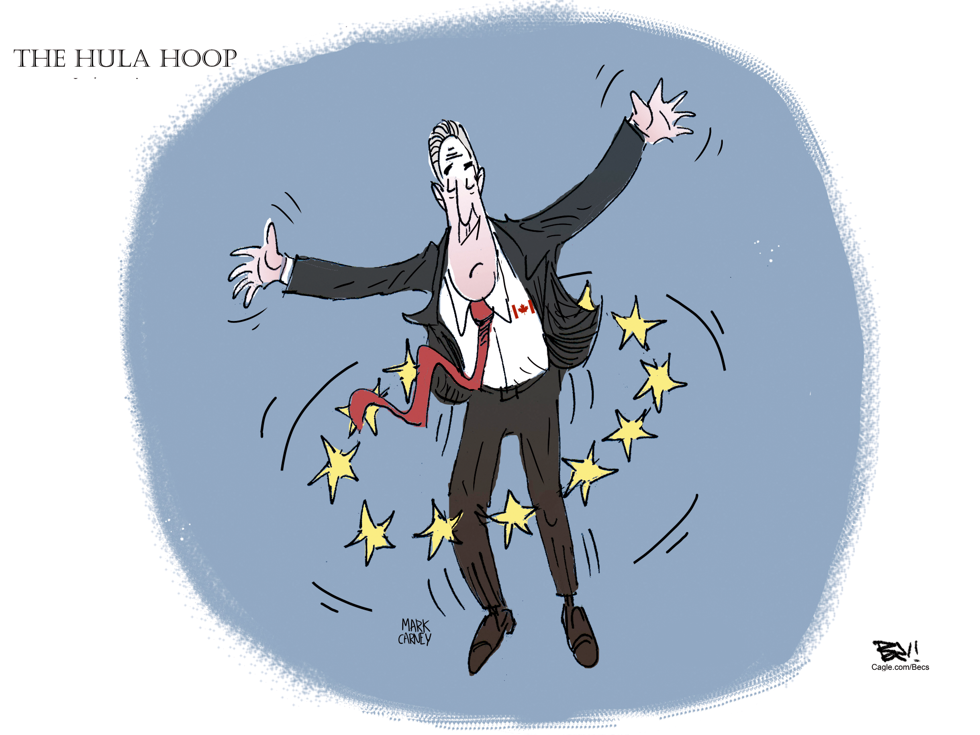
Mark Carney, a prominent Canadian figure with central banking experience, has positioned himself at the center of efforts to strengthen economic and diplomatic links between Canada and the European Union. Recent developments in trade negotiations and regulatory alignment have placed renewed focus on these ties, which matter for supply chains, investment flows, and geopolitical stability. The cartoon frames Carney's role as one of active management in this relationship, suggesting both opportunity and the need for careful coordination.
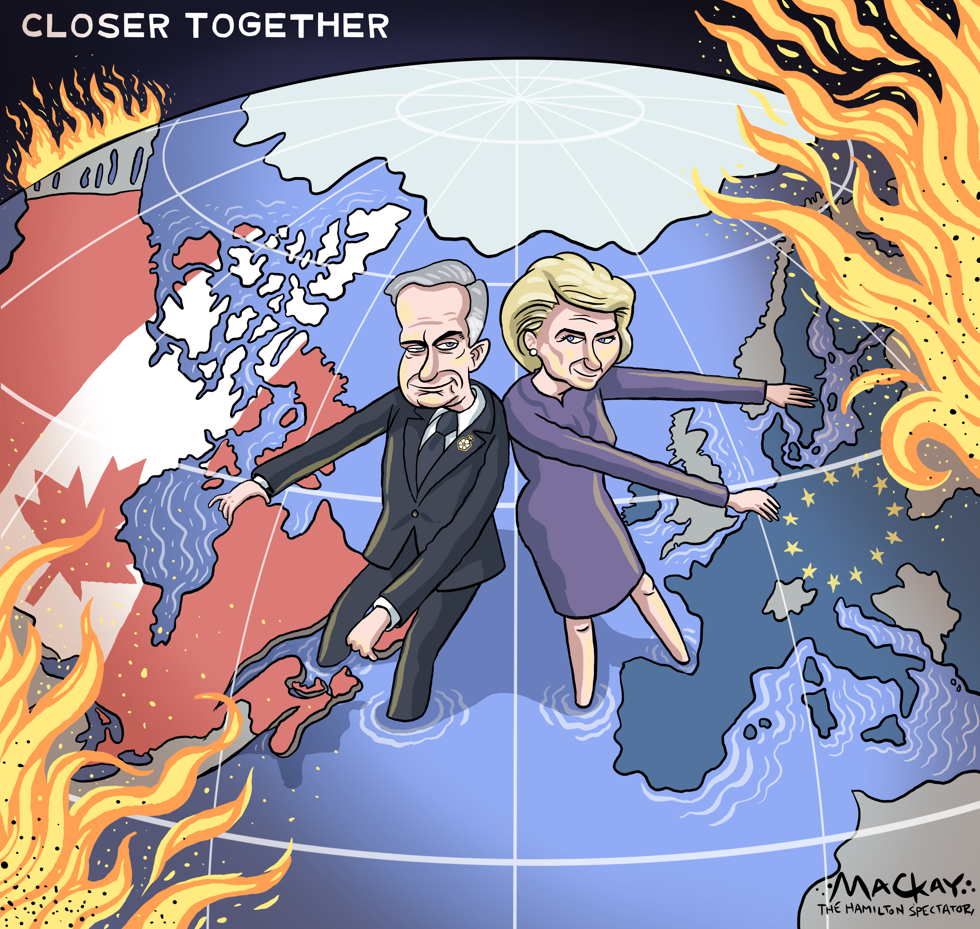
A political cartoon published September 16, 2026, shows a Canadian figure and a European figure positioned on a globe. The Canadian side features red and white maple leaf regions while the European side displays EU stars. Both areas are ringed by flames. The figures extend their arms across the Atlantic, connected by a thin line, beneath the heading Closer Together. The image comments on efforts by Canada and the European Union to draw nearer in response to shared international pressures and instability.
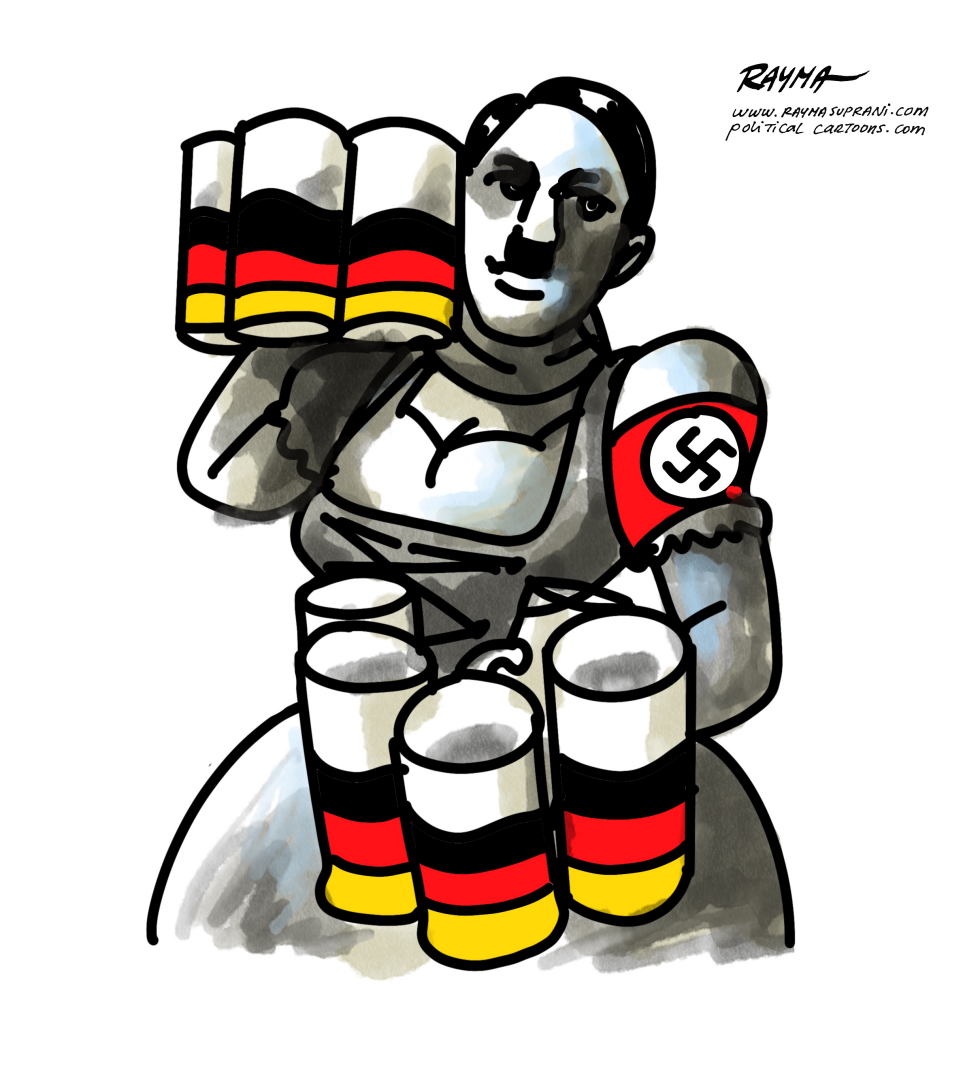
The cartoon depicts a figure resembling Adolf Hitler clad in armor and bearing a swastika armband while surrounded by beer mugs colored like the German flag. It responds to ongoing discussions about far-right movements in Germany by blending historical Nazi references with contemporary beer culture symbols. The work highlights perceived connections between political radicalism and national social customs as of the 2026 publication date. No specific recent event anchors the piece beyond recurring themes of extremism in European politics.
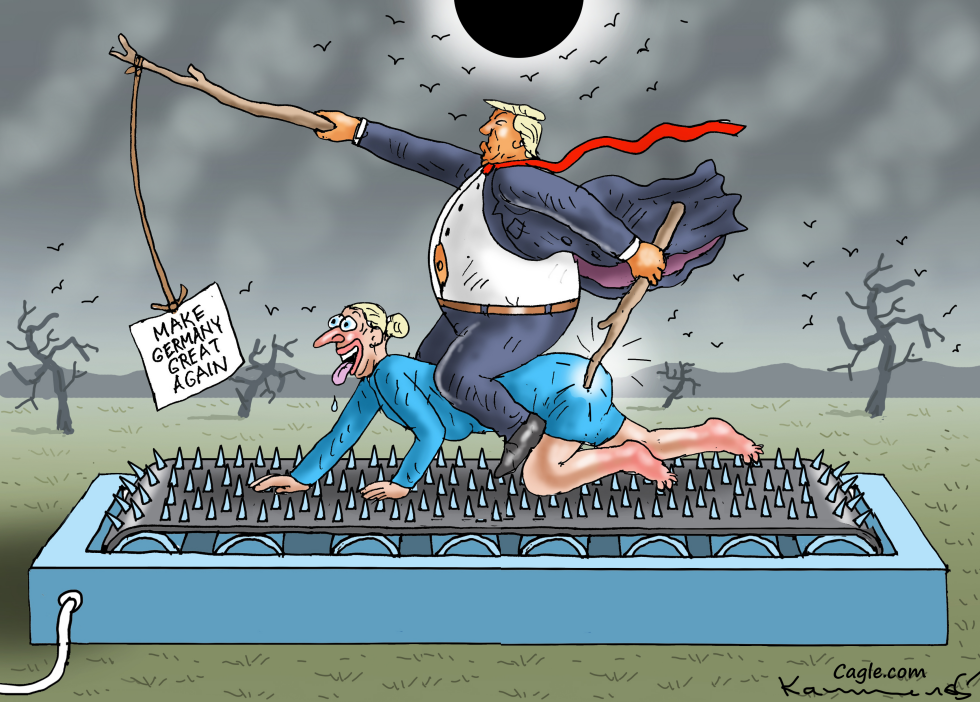
Donald Trump promotes a revival slogan aimed at Germany while Angela Merkel faces the consequences. The effort highlights ongoing tensions in transatlantic relations and questions about external influence on European domestic policy. The piece argues that such interventions impose unnecessary hardship without delivering benefits.
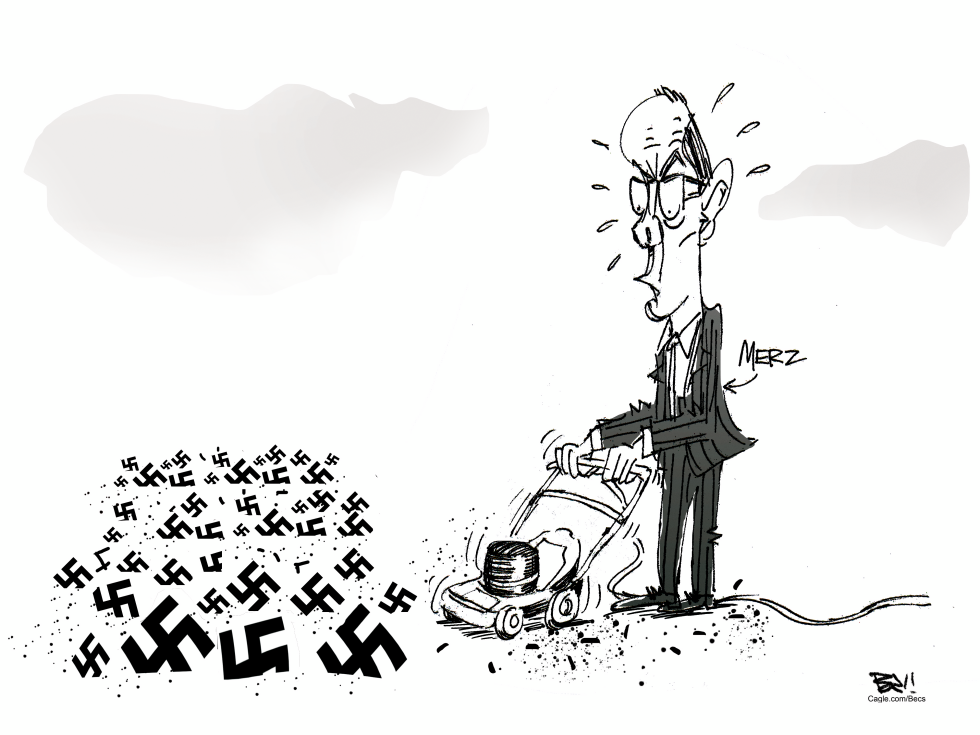
Friedrich Merz, a leading German conservative, has positioned himself against far-right extremism by publicly rejecting Nazi symbols and associated groups. The move comes as Germany faces growing concerns over rising far-right activity ahead of key political contests. Merz's stance aims to draw a clear line separating mainstream conservatism from extremist fringes. The cartoon portrays this effort as a deliberate cleanup of dangerous symbols. It endorses the push to isolate and diminish far-right influence in German politics.
Germany's far-right Alternative for Germany party is gaining ground ahead of elections with rhetoric echoing historical extremism. The party has faced repeated scrutiny for members' Nazi-era references and anti-immigrant stances that courts have flagged as extremist. This development matters because AfD polling strength could reshape coalition math and policy on migration, EU ties, and civil liberties. The cartoon argues that supporters are consuming a toxic ideological brew that risks normalizing authoritarian symbols and eroding democratic norms.
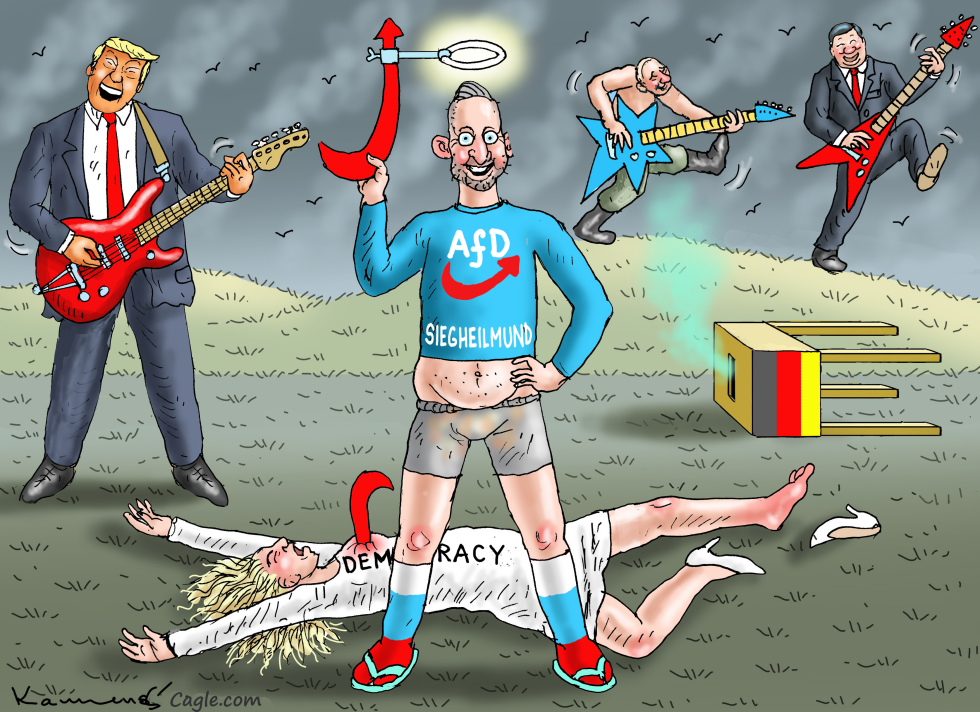
Germany's Alternative for Germany party posted strong results in recent state elections, prompting concern among mainstream parties about the far-right's rising influence. Donald Trump publicly welcomed the outcome, aligning with other international figures who view the AfD favorably. The development matters because it signals potential shifts in EU policy and democratic norms within a key NATO member. The cartoon argues that such gains represent a direct assault on democratic institutions, with external authoritarians celebrating the erosion from the sidelines.
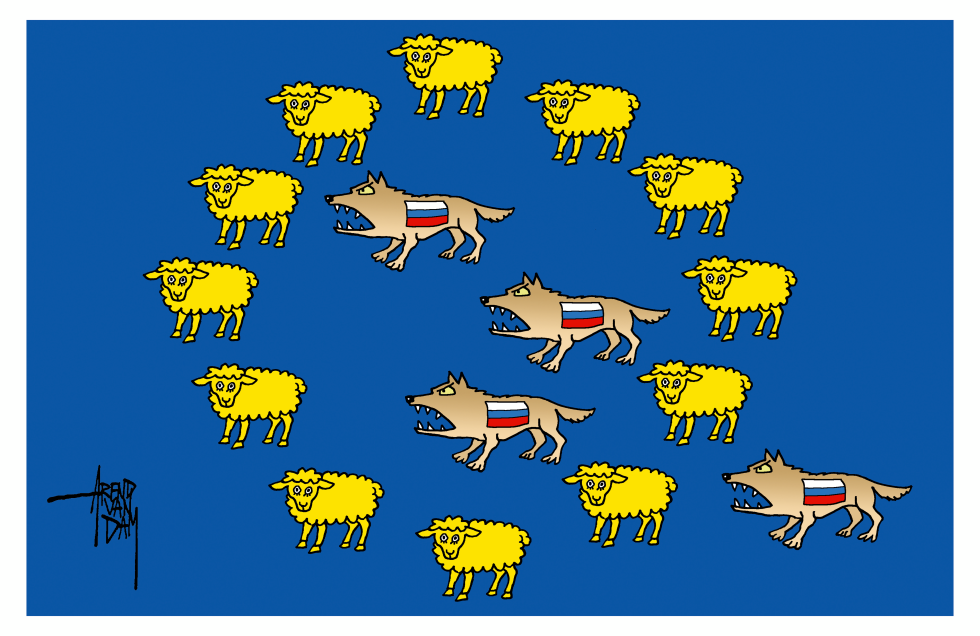
Russian hybrid warfare operations continue to target Eastern European nations through infiltration and influence campaigns. These tactics blend conventional pressure with covert actions to destabilize neighbors without triggering full-scale conflict. The editorial argues that European states must recognize and counter these disguised threats before they erode security further.
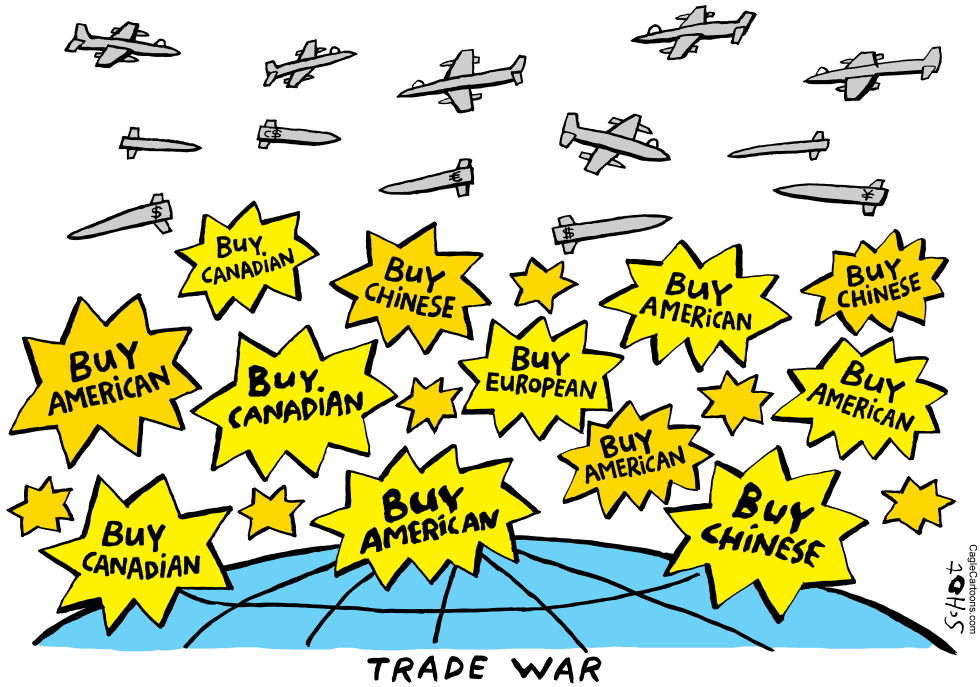
Competing buy national campaigns from multiple countries have intensified trade disputes, raising concerns over economic retaliation and supply chain disruptions. The piece argues these appeals are directly contributing to broader conflict.
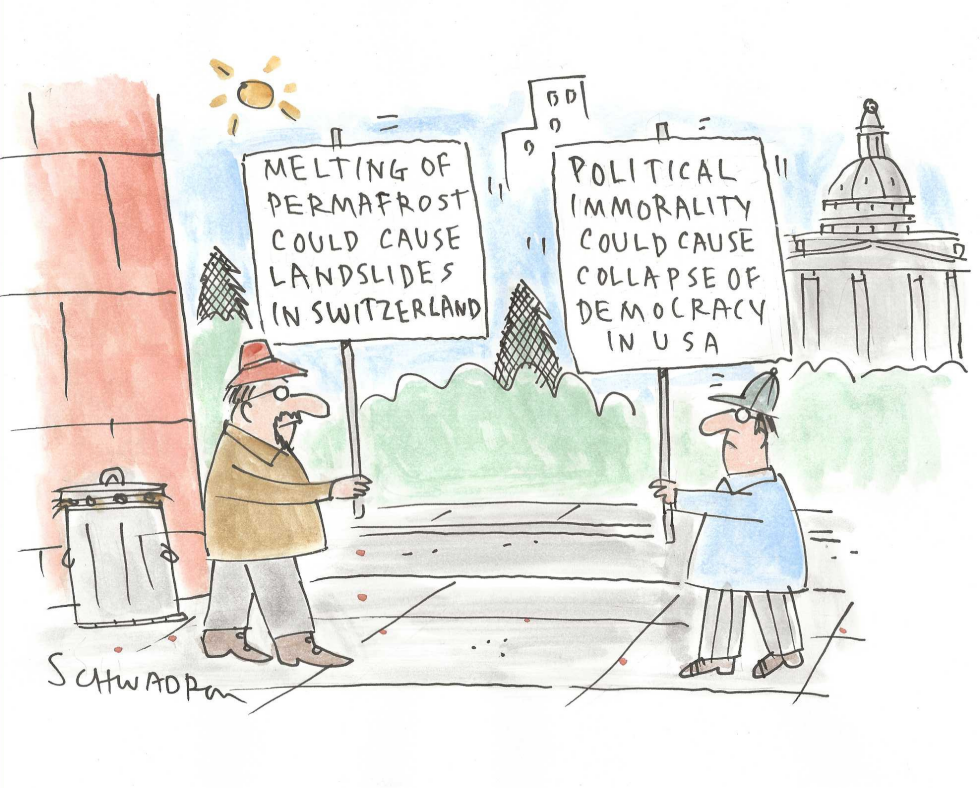
Activists in public spaces continue to draw parallels between accelerating climate impacts such as thawing permafrost and landslides in Switzerland and warnings about political conduct undermining democratic institutions in the United States. The signs highlight how environmental changes and governance failures each carry risks of sudden structural breakdown. The editorial stance underscores that both threats deserve equal public attention as visible warning indicators.
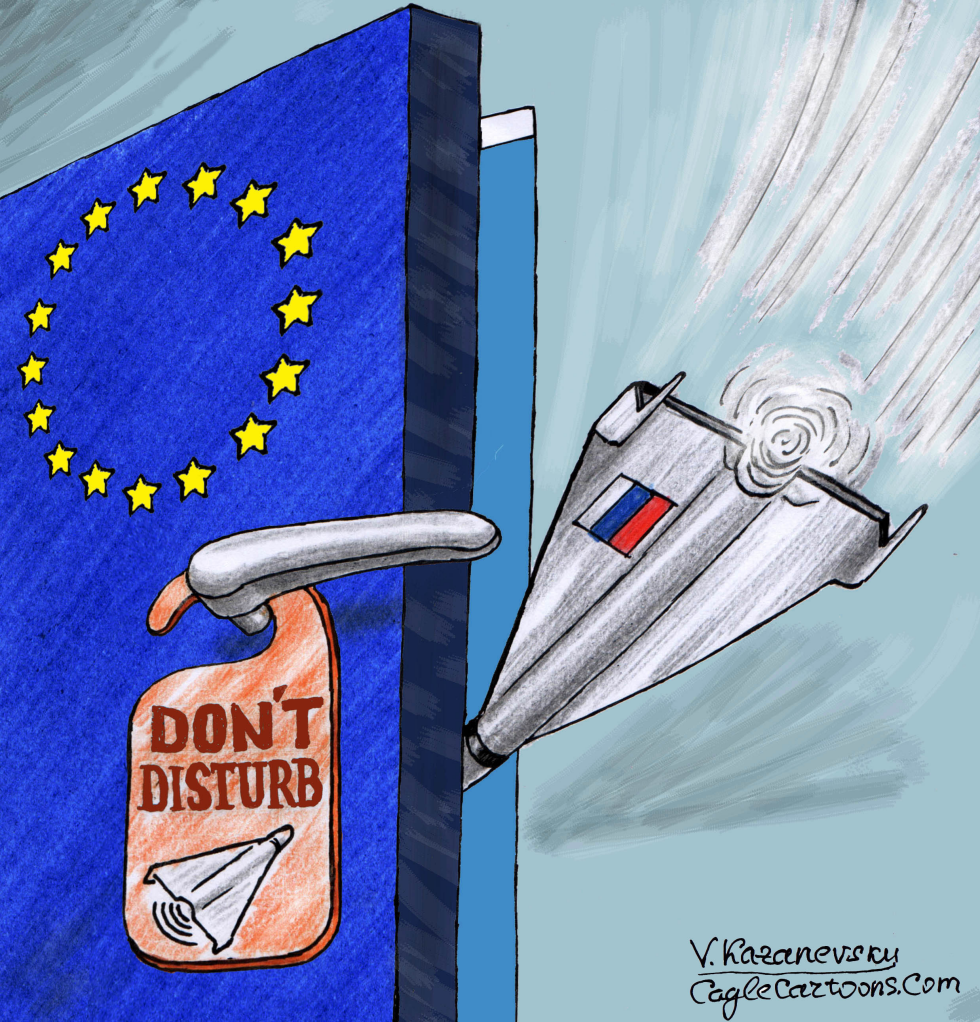
A Russian drone has breached an EU doorway in a symbolic incident highlighting ongoing security concerns from Moscow's actions near European borders. The event underscores vulnerabilities in continental defense amid the protracted Ukraine conflict and repeated airspace violations. The piece argues that EU warnings and isolation measures prove insufficient against persistent Russian incursions.
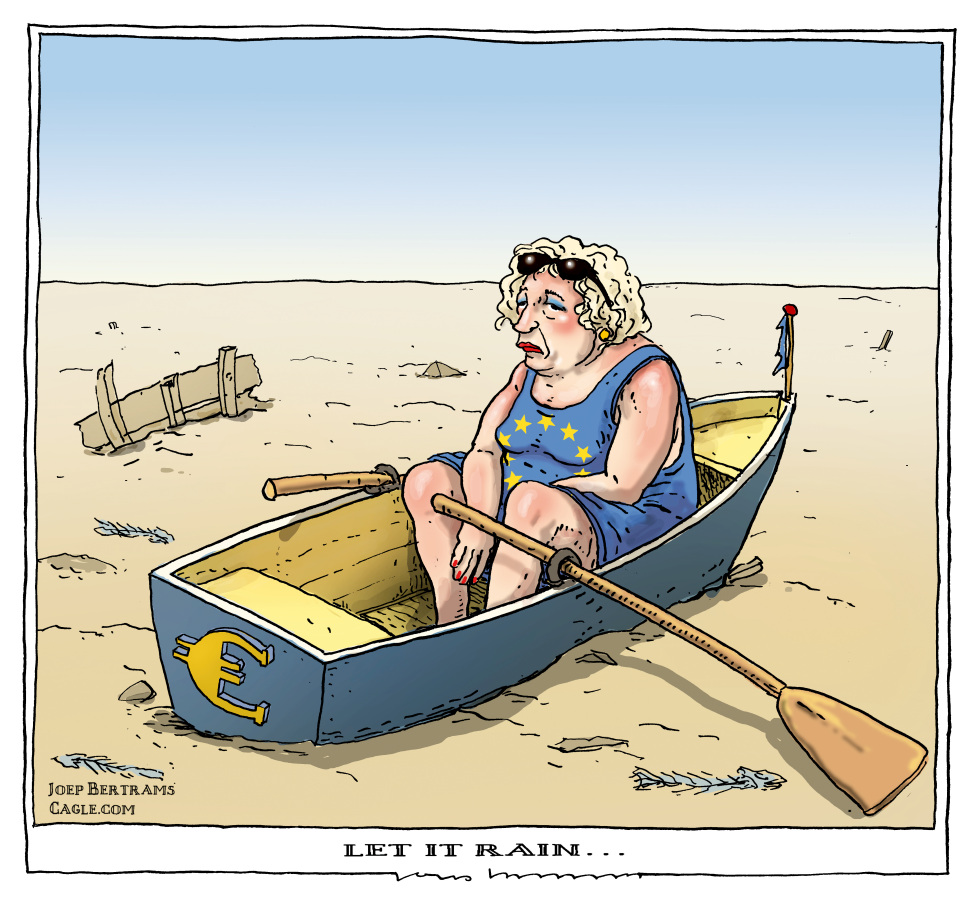
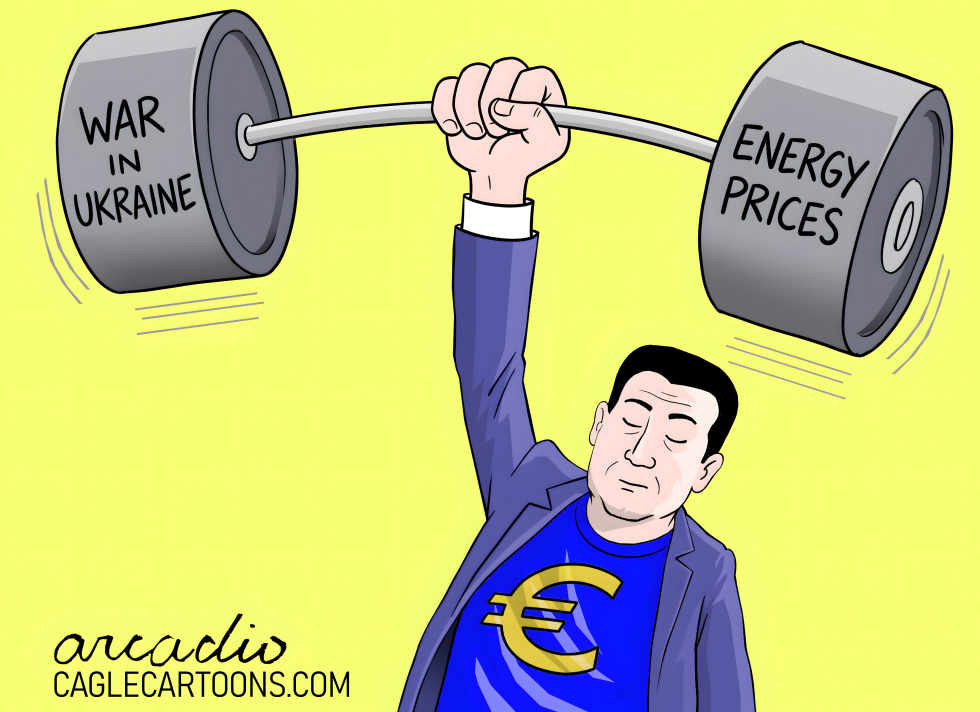
The Eurozone continues to absorb economic shocks from the Ukraine conflict and elevated energy costs. These pressures test the currency's stability and the broader European economy. The image portrays the Euro successfully shouldering both loads, underscoring its capacity to endure without collapse.
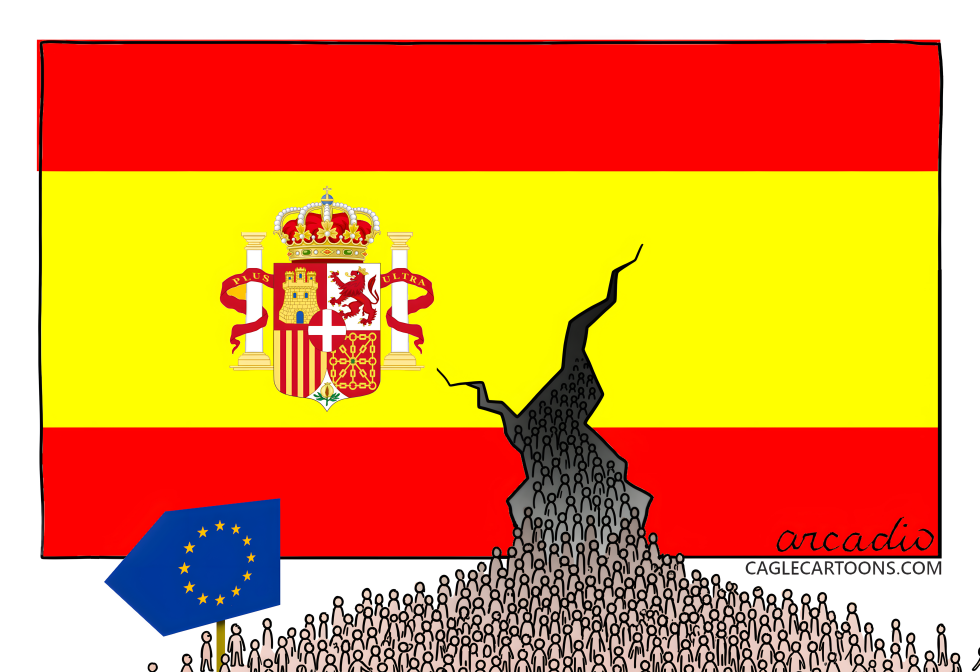
Migration flows continue to test Spain's southern border with North Africa, drawing renewed attention to EU external frontier management. Large numbers of arrivals have prompted Spanish authorities to reinforce controls while Brussels debates shared responsibility among member states. The situation highlights ongoing tensions between humanitarian obligations and national security priorities. The editorial argues that unchecked inflows risk undermining Spain's sovereignty and the stability of the Schengen area.