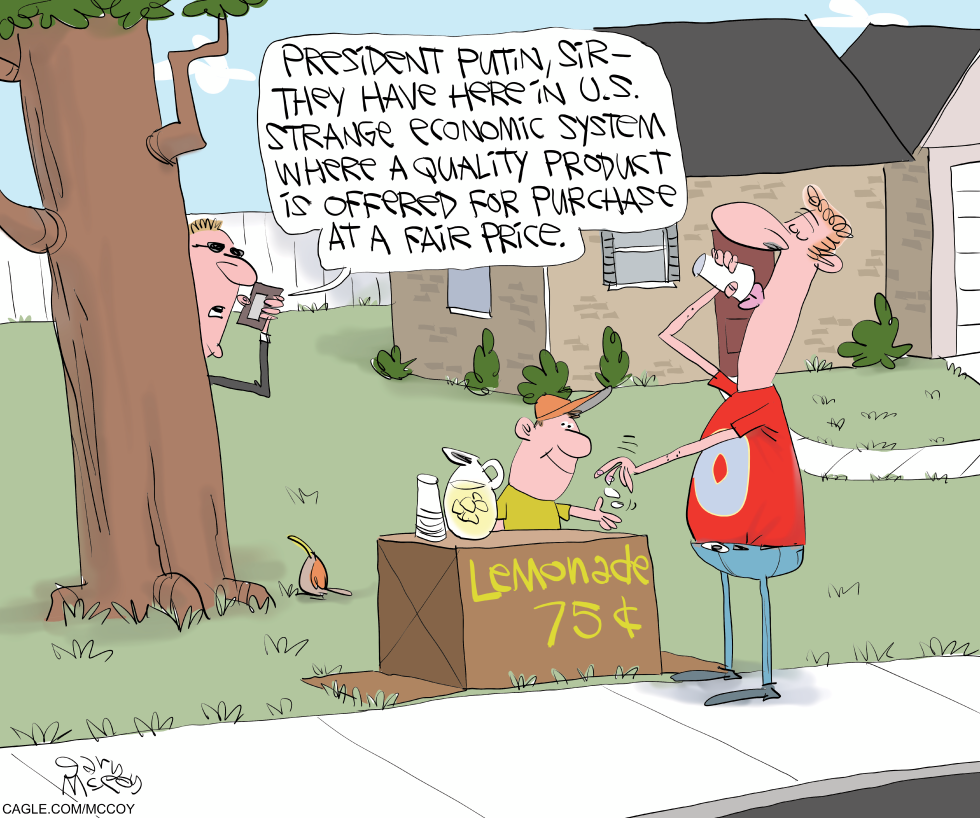
A cartoon depicts a man explaining the U.S. free-market system of offering quality goods at fair prices to President Putin during a phone call next to a child's lemonade stand. The scene underscores the perceived strangeness of American capitalism from a Russian perspective. The editorial position critiques the disconnect between market-driven economies and state-controlled systems.
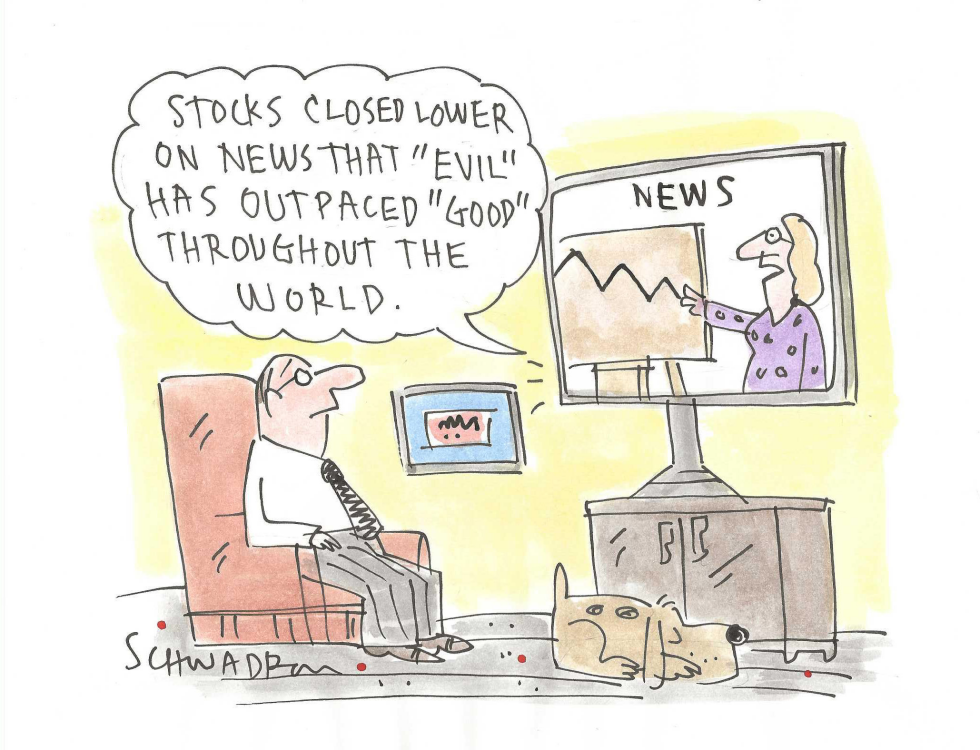
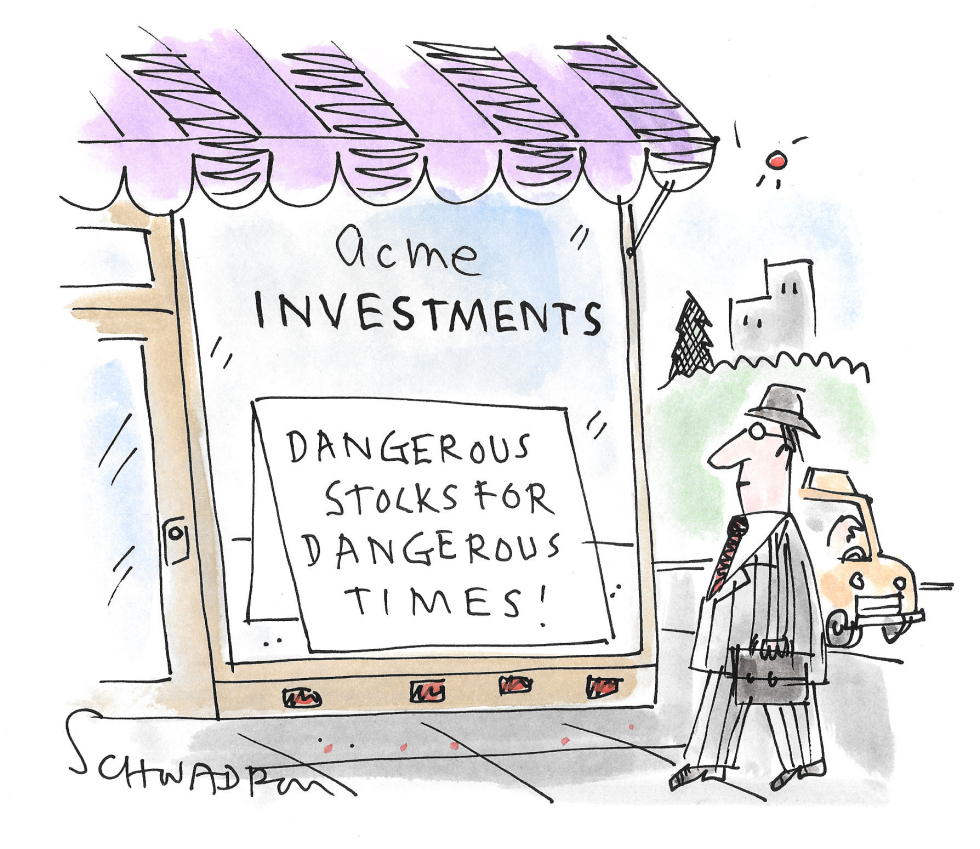
Stock markets declined after news reports indicated evil has outpaced good around the world. The development prompted immediate selling as traders absorbed the assessment from major outlets. The shift highlights how broad negative narratives can influence trading volumes and sentiment in real time. The piece presents the market reaction as a direct response to the reported imbalance between evil and good.
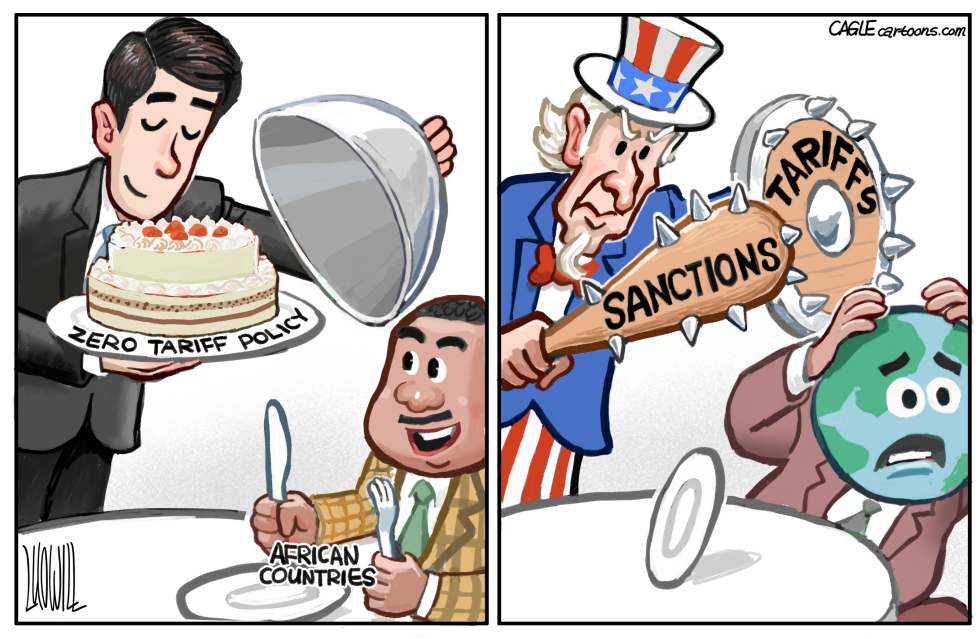
The United States has extended a zero-tariff policy offer to African nations amid ongoing global trade tensions. This move stands in contrast to simultaneous use of tariffs and sanctions against other trading partners. The policy highlights selective economic engagement by Washington. The editorial position criticizes the inconsistency between the overture to Africa and the punitive approach applied more broadly.
Elon Musk's public commentary on cryptocurrency markets continues to drive price swings and investor attention in 2026. His recent statements coincide with renewed volatility in Bitcoin trading. The editorial takes a critical view of how such high-profile interventions amplify market instability rather than stabilize it.
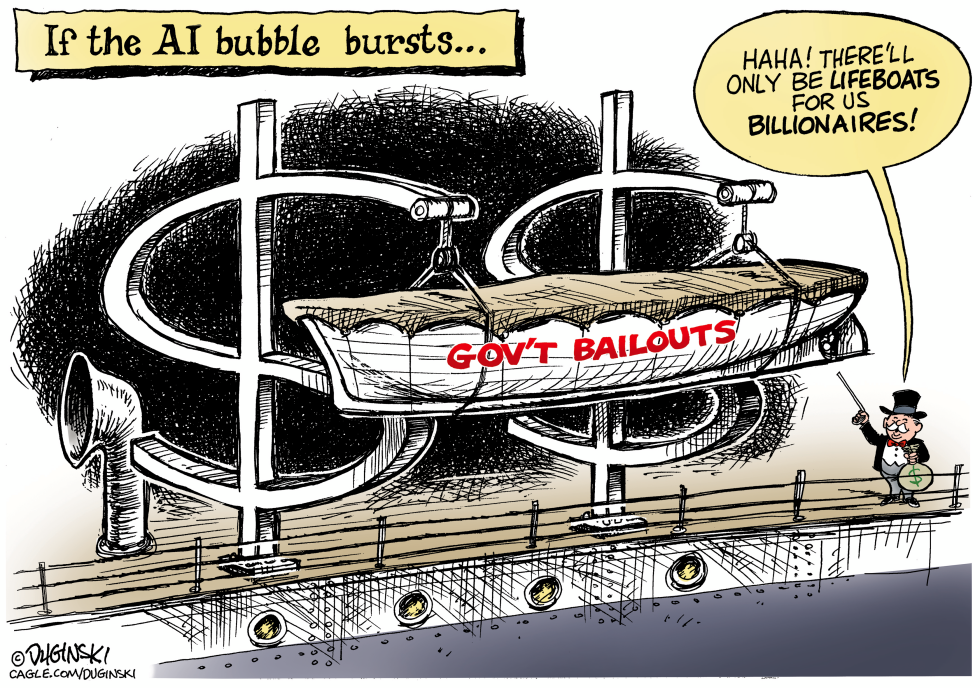
Speculation grows over potential government intervention if the artificial intelligence sector experiences a sharp downturn. Industry leaders and investors face questions about whether public funds would support failing companies. The editorial argues that any such support would primarily protect billionaires rather than address wider economic fallout from overvalued tech assets.
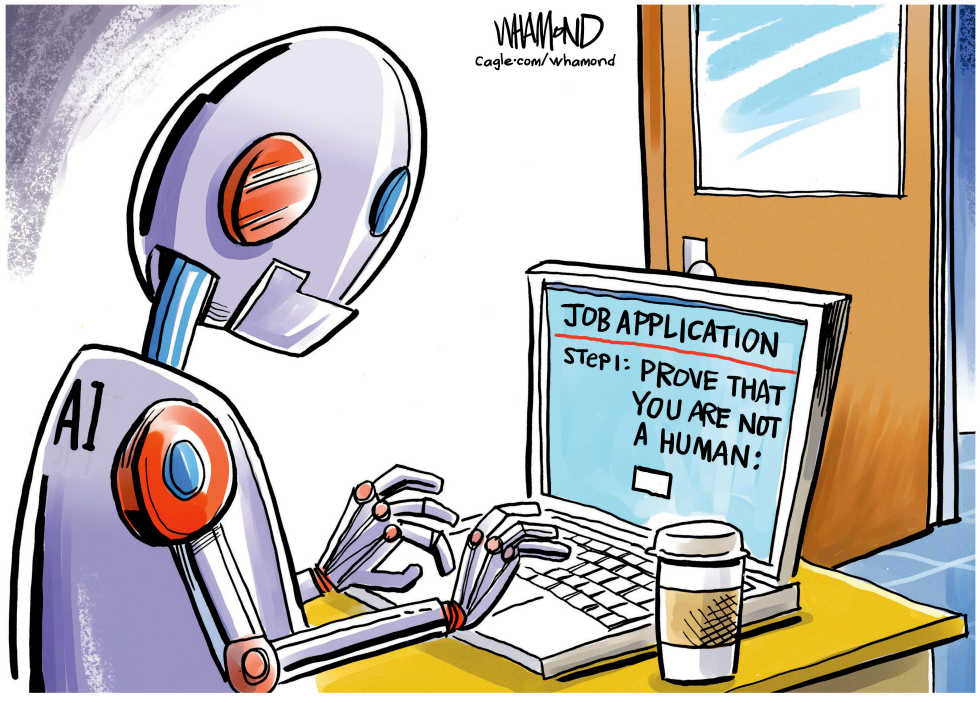
An AI robot applies for work by attempting to prove it is not human on a job application form. The scenario reflects ongoing debates over how rapid advances in artificial intelligence are reshaping labor markets and displacing workers. The piece takes the position that this reversal underscores the absurdity and speed of automation replacing people.
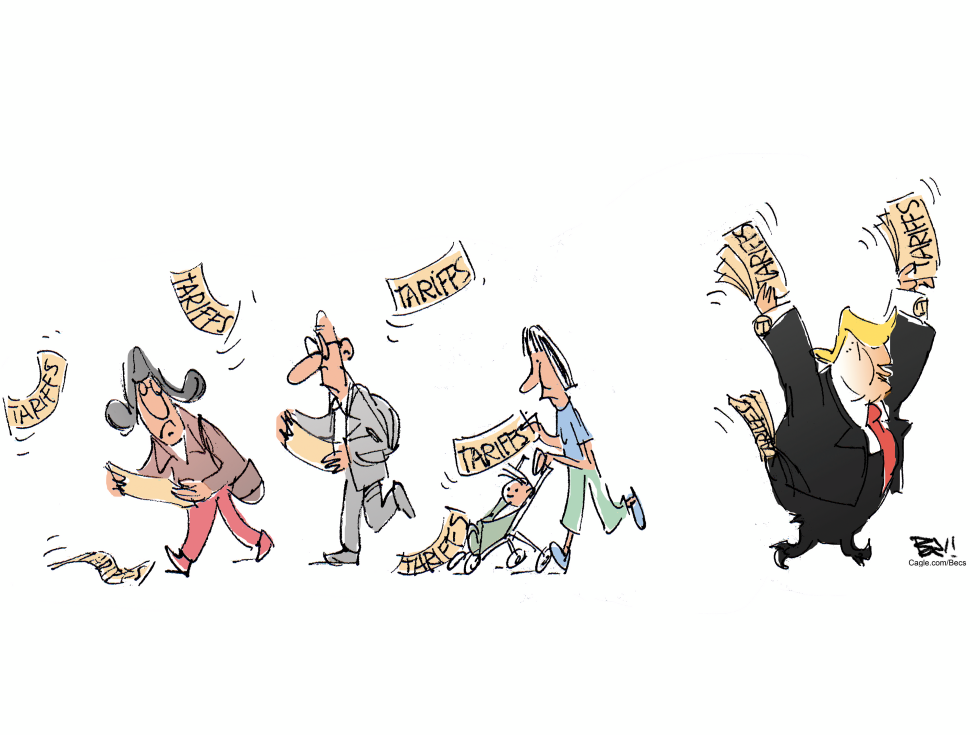
Donald Trump expanded tariffs across trading partners in mid-2026, triggering immediate market volatility and diplomatic pushback. The move raised costs for consumers and businesses reliant on imports. The piece portrays the policy as an indiscriminate barrage that disrupts daily life and global commerce.
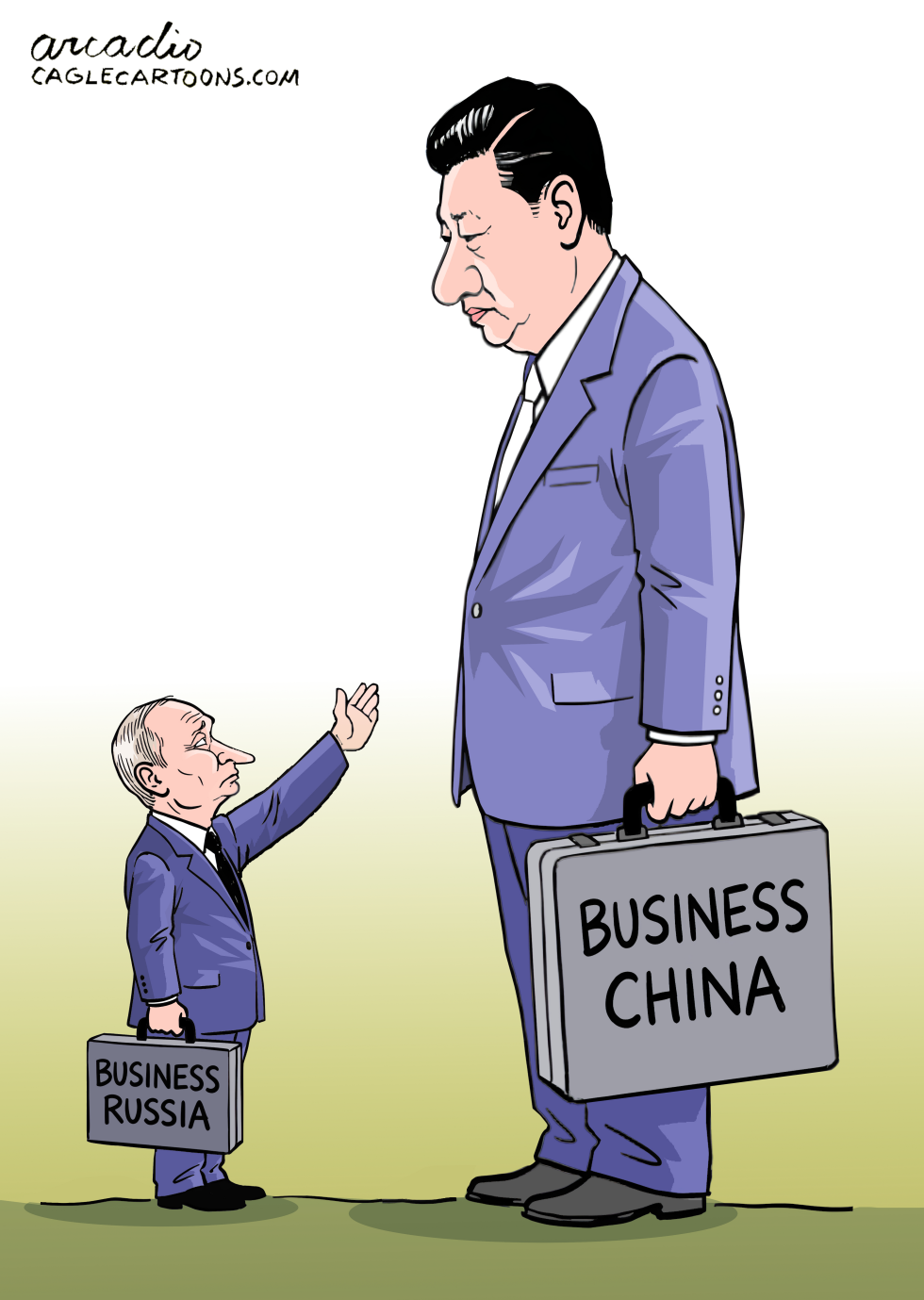
China and Russia continue deepening economic cooperation amid Western sanctions on Moscow. Xi Jinping's government provides critical markets and technology to Russia while extracting favorable terms. The cartoon underscores the unequal power dynamic in their partnership.
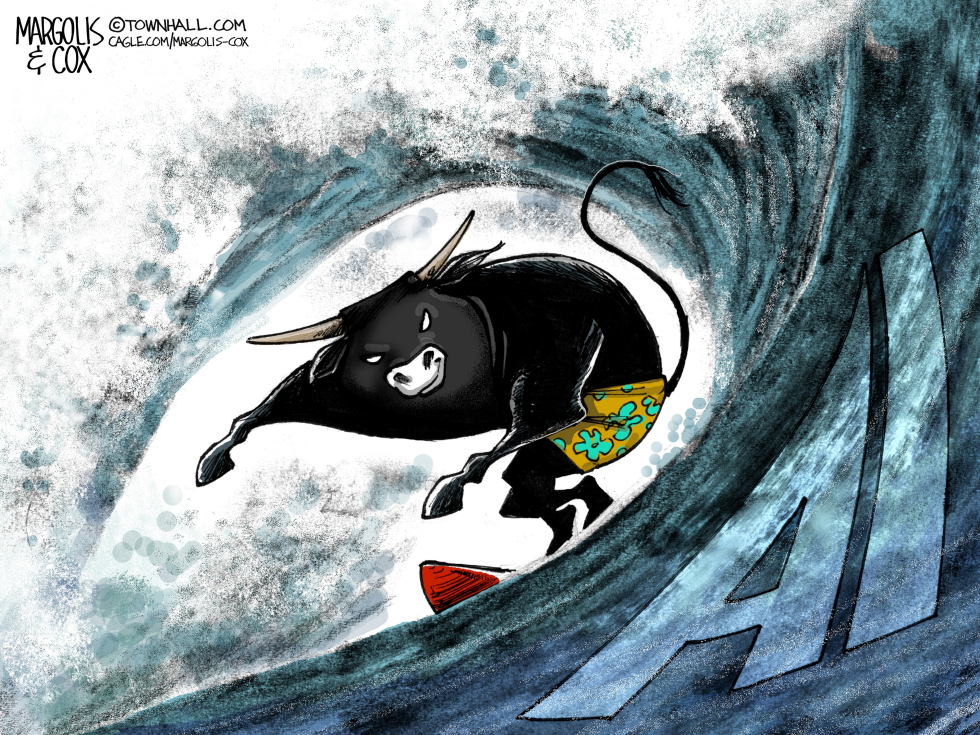
A black bull wearing patterned swim trunks rides inside a massive curling wave labeled AI. The animal balances on a surfboard fin while the wave towers overhead. The image captures the stock market bull navigating rapid advances in artificial intelligence. No specific policy or event is referenced beyond the visual metaphor of market momentum.
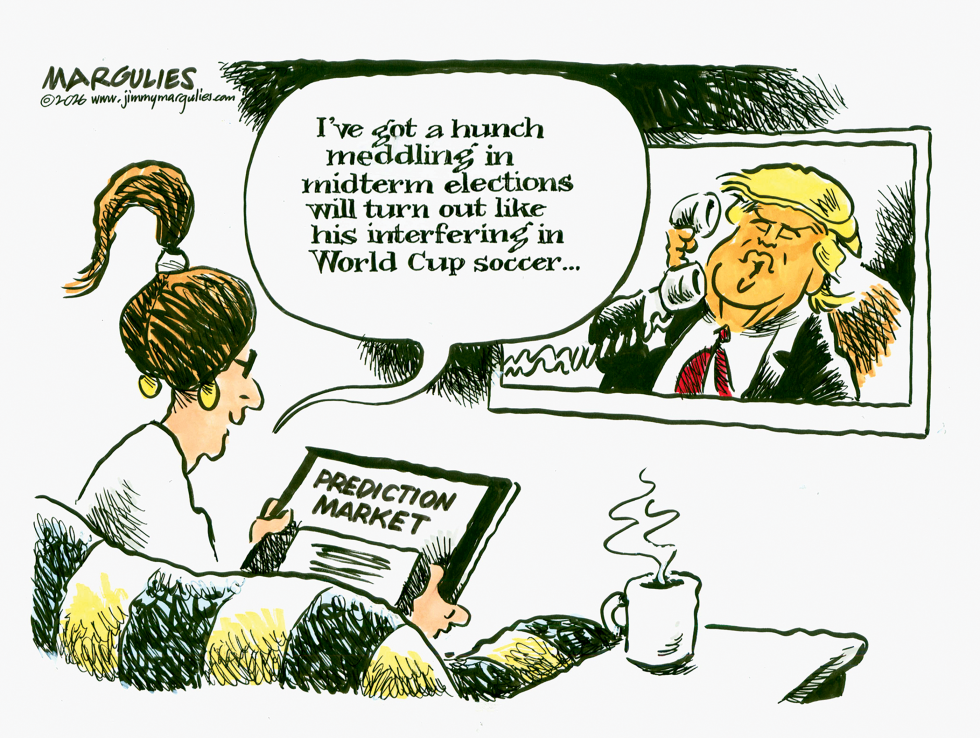
A woman seated with a prediction market tablet watches Donald Trump on television in this July 9 2026 cartoon. Her speech bubble draws a parallel between potential midterm election interference and earlier involvement in World Cup soccer. The scene highlights ongoing public attention to betting markets and political developments ahead of the 2026 elections.
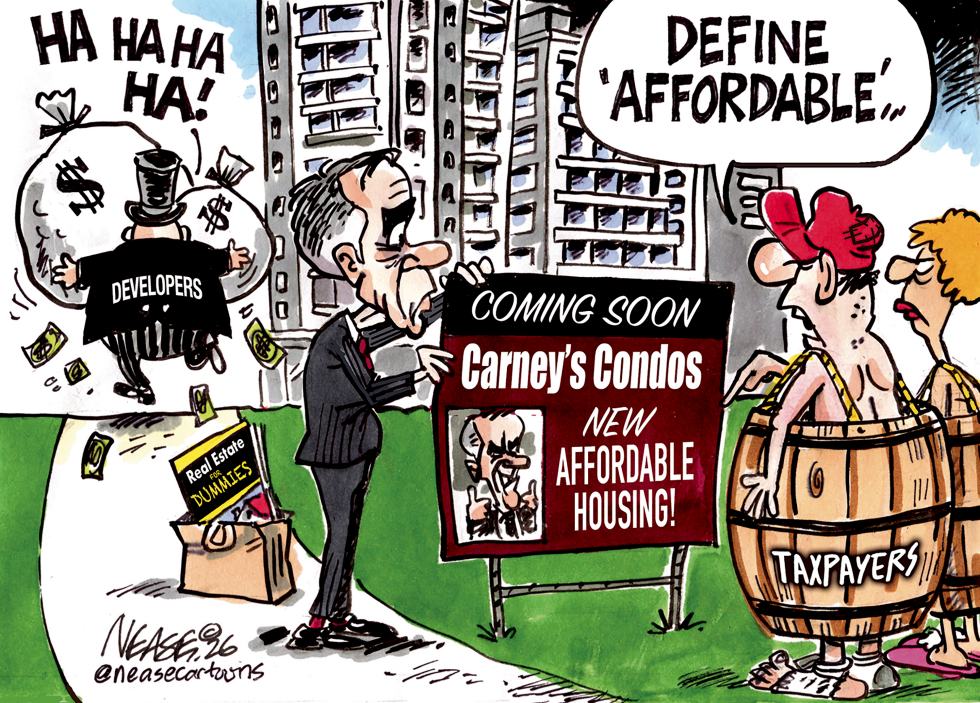
A real estate sign for Carney's Condos promotes new affordable housing. Developers in top hats collect money while laughing. Two taxpayers trapped in barrels question the definition of affordable. A book on real estate basics sits on the ground near high rise buildings.