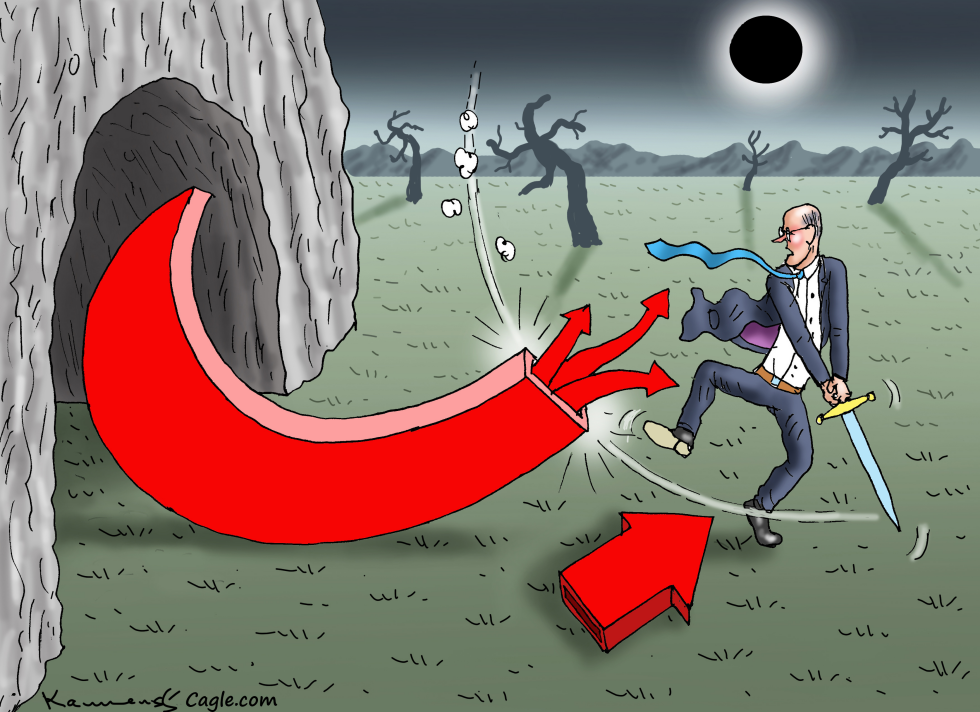
Friedrich Merz, CDU leader, faces a rising challenge from the Alternative for Germany party ahead of upcoming elections. The AfD has gained ground in recent state votes by capitalizing on economic discontent and migration concerns. Merz has positioned himself as the main bulwark against the far-right grouping. The cartoon frames this contest as a direct heroic struggle, with Merz cast as the defender wielding traditional weapons against a powerful, emerging threat. It endorses the view that mainstream conservatives must actively combat the AfD rather than accommodate it.
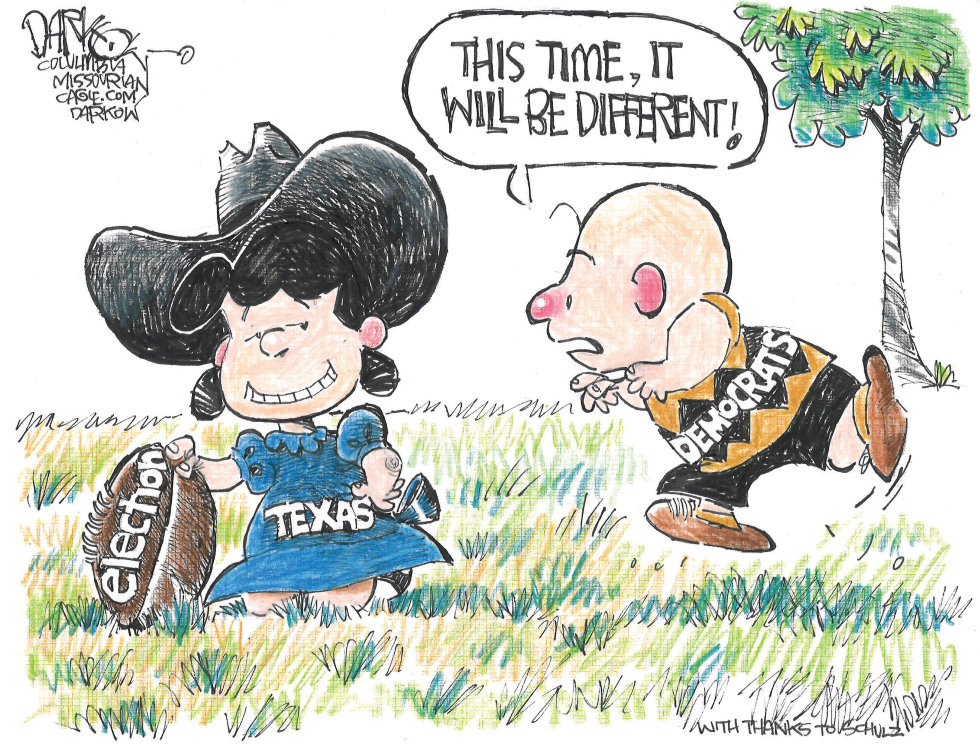
Democrats continue their long-running effort to compete seriously in Texas elections, a state that has remained reliably Republican for decades. Recent cycles have seen increased investment and turnout efforts aimed at flipping key races. The cartoon highlights the persistent optimism that this cycle could finally deliver results despite repeated past disappointments. The editorial position underscores the cyclical nature of these hopes without evidence of structural change.
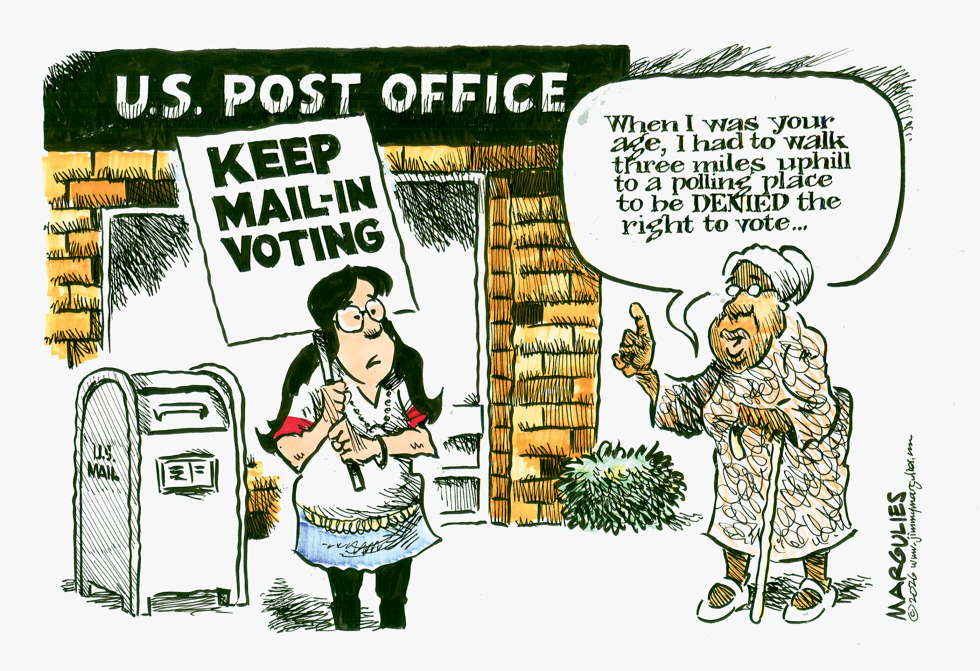
A protest sign at a U.S. Post Office calls for an end to mail-in voting. The cartoon responds to ongoing state-level efforts to restrict mail ballots after expanded use in recent elections. Such limits disproportionately affect older voters and those with mobility issues who previously faced physical barriers at polling places. The piece argues that rolling back mail-in options revives the very obstacles elderly citizens once endured, undermining broader access to the ballot.
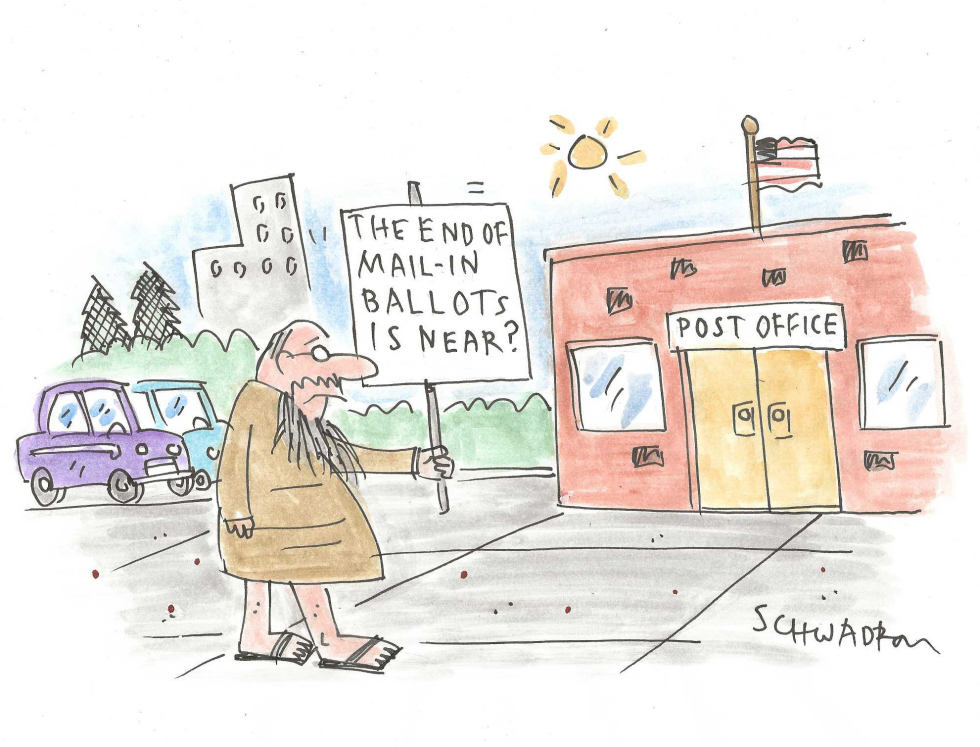
Proposals to restrict or end mail-in ballots have gained traction in several states ahead of upcoming elections, prompting concerns from voting rights advocates about reduced access for elderly, rural, and disabled voters. The post office has long served as a key conduit for absentee ballots. Critics argue the changes prioritize unproven fraud concerns over convenience and turnout. Supporters say tighter rules restore confidence in results. The cartoon frames the debate as an abrupt shift that could sideline a proven voting method.
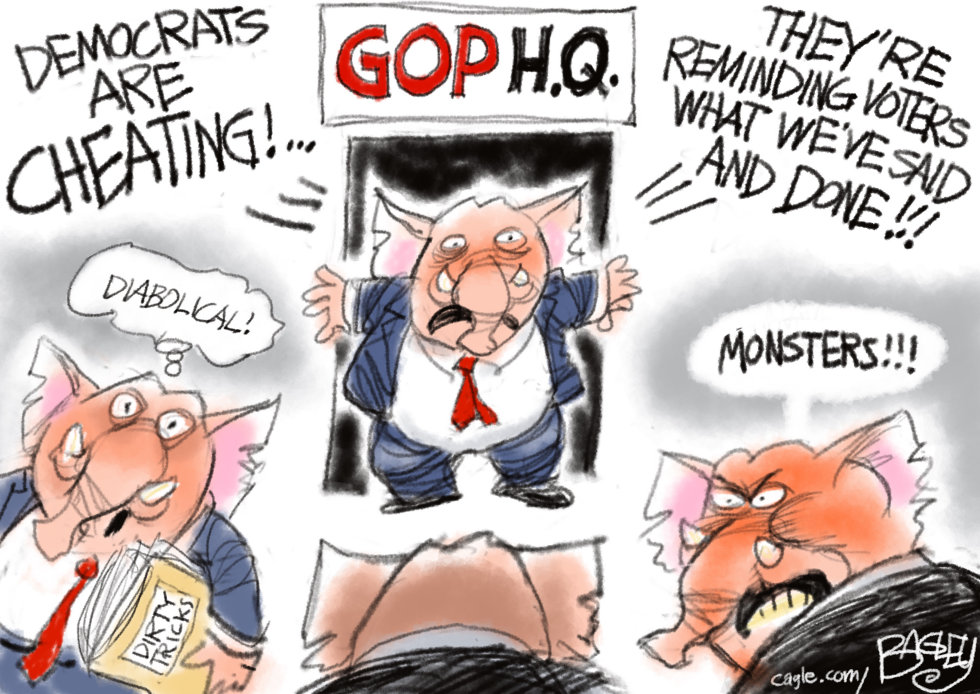
Republicans have renewed accusations that Democrats are cheating in elections, a charge that echoes long-standing GOP concerns over voter fraud. The claims come as the party faces scrutiny over its own past efforts to influence outcomes through restrictive laws and legal challenges. The cartoon argues that these accusations serve mainly to distract from the Republicans' documented history of similar or more aggressive tactics.
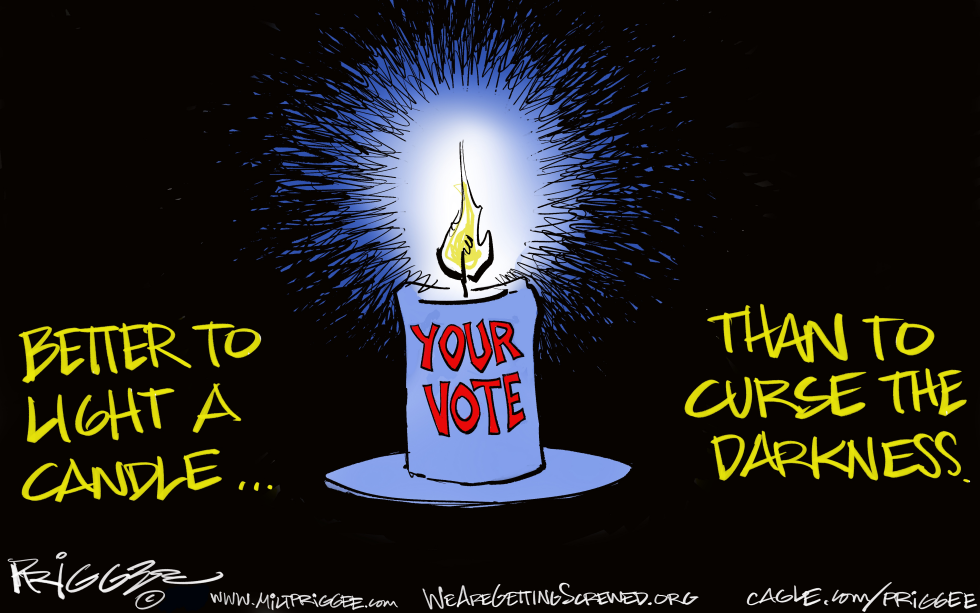
The cartoon depicts a glowing candle labeled Your Vote against a dark background, accompanied by the quote Better to light a candle than to curse the darkness. Published on September 3, 2026, it encourages citizens to participate in elections rather than complain about political conditions. The visual emphasizes voting as a constructive action that can illuminate and improve democracy. This approach aligns with longstanding calls for higher voter engagement during election cycles.
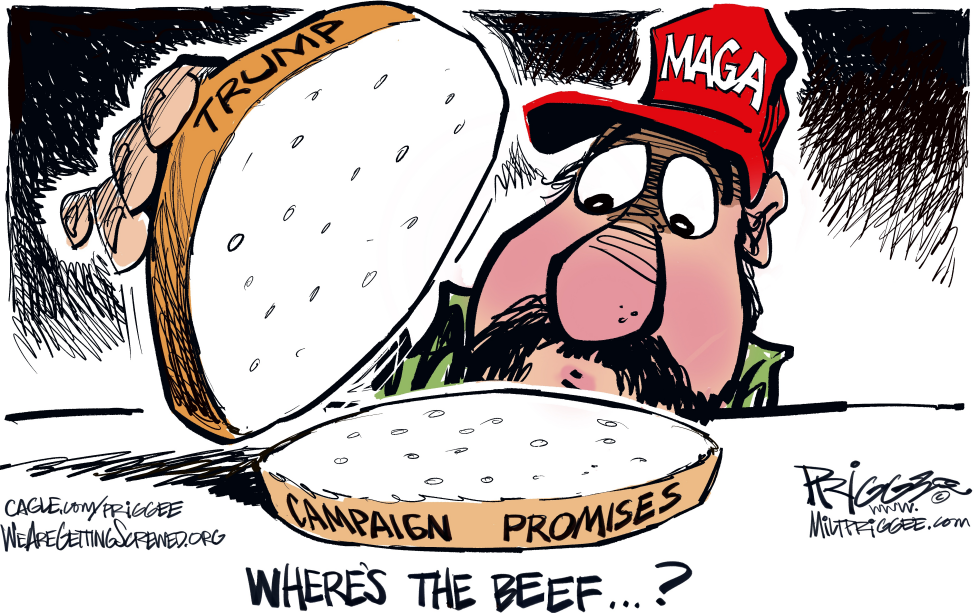
The cartoon depicts a figure resembling Donald Trump in a MAGA hat presenting a sandwich consisting only of bread labeled as campaign promises. The image references the classic Where's the beef slogan to underscore the absence of concrete policy details. Published on September 3, 2026, the work comments on ongoing debates about the substance of political pledges during election seasons. It aligns with broader discussions of voter expectations for tangible platforms rather than rhetoric alone. The visual metaphor emphasizes criticism of repeated patterns in campaign messaging without delivering specifics on key issues.
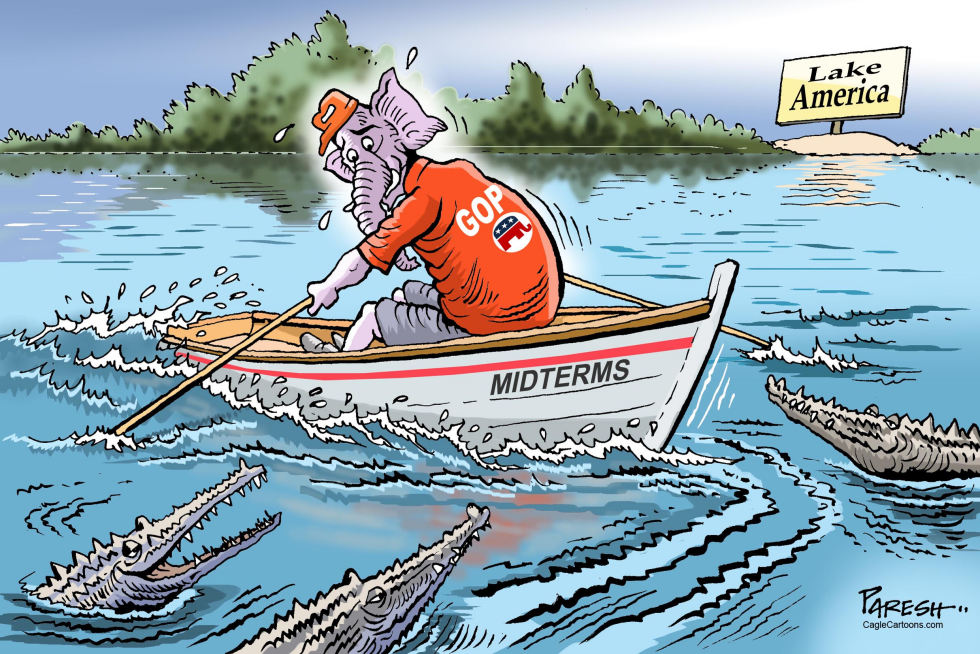
The cartoon shows the GOP elephant in an orange shirt rowing a boat labeled MIDTERMS across Lake America. Alligators circle the vessel, creating a scene of peril. Published on September 3, 2026, the image comments on the Republican Party's position ahead of the midterm elections. The rough waters and lurking threats represent the political obstacles and opposition the party faces. The worried expression on the elephant emphasizes the difficult navigation required. This visual metaphor captures the high stakes and potential setbacks in the upcoming contests.
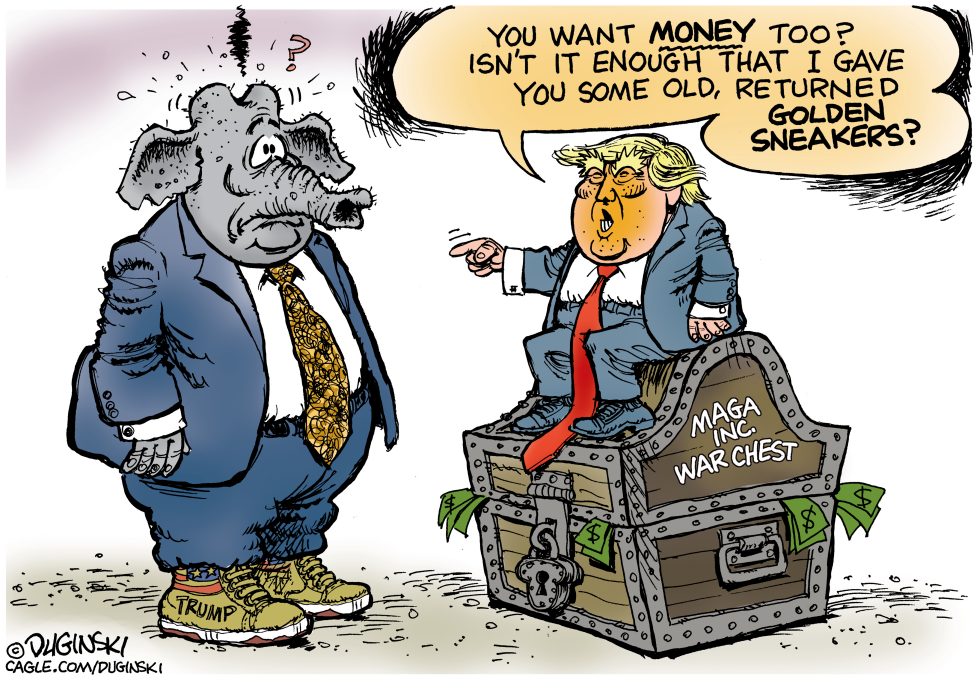
Donald Trump maintains tight control over his substantial campaign funds in the lead-up to the 2026 elections. Fellow Republicans have expressed frustration that he is unwilling to distribute resources from his war chest to support their races. The dynamic highlights ongoing tensions within the party over access to donor money. Trump has instead pointed to past gestures such as distributing returned merchandise. The cartoon criticizes this reluctance as self-serving and detrimental to broader Republican efforts.
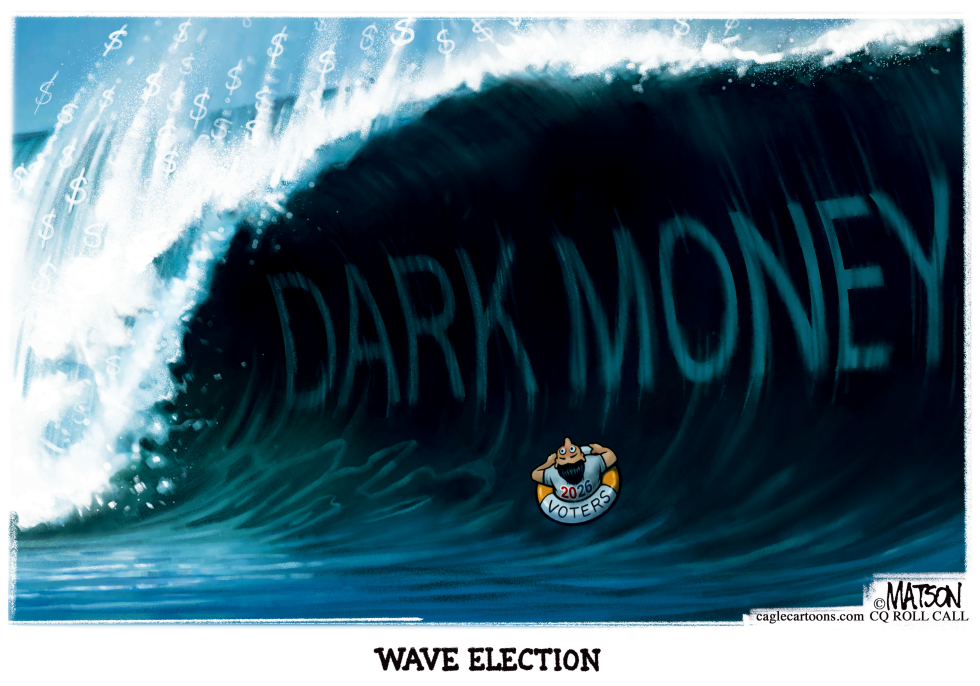
Unregulated dark money continues to pour into the 2026 election cycle, raising concerns that voters will be sidelined by massive undisclosed spending. The influx comes as candidates and outside groups prepare for midterm contests across the country. Critics argue the surge distorts democratic participation and drowns out ordinary voices. The editorial cartoon depicts this dynamic as an overwhelming wave labeled dark money bearing down on a lone voter buoy. It takes the position that such spending poses a direct threat to fair elections and calls for stronger safeguards.
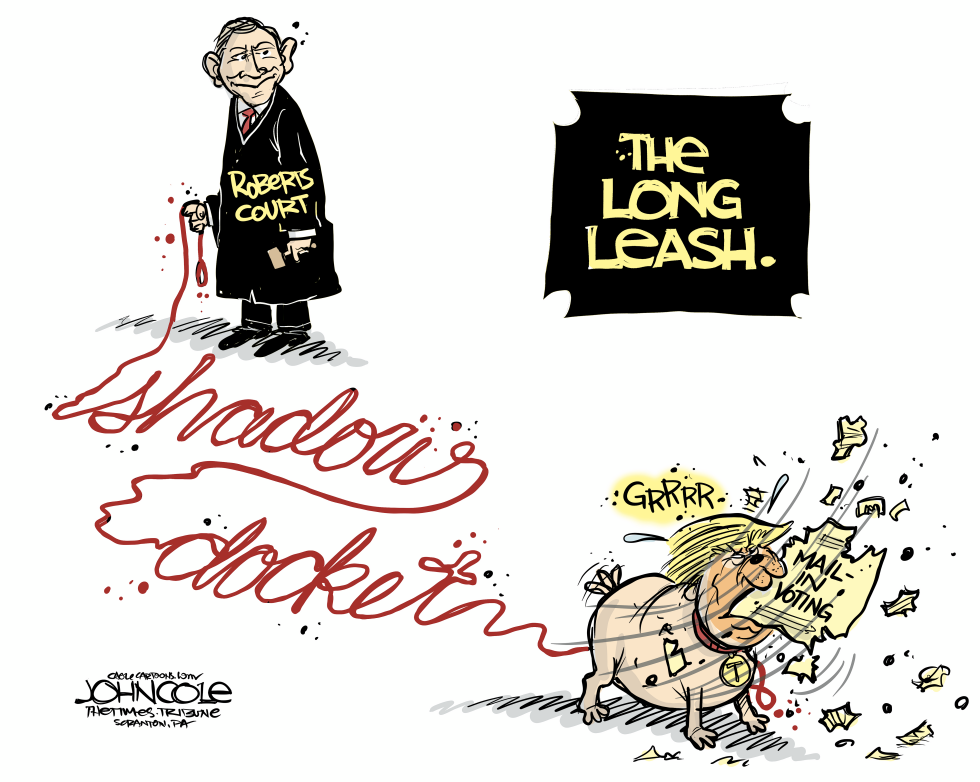
The Supreme Court under Chief Justice John Roberts issued orders limiting former President Donald Trump's administration from advancing certain mail-in voting restrictions through the shadow docket. The rulings underscore the Court's role in checking executive actions on election procedures ahead of future contests. The cartoon portrays the Roberts Court maintaining firm oversight while depicting resistance from Trump-aligned efforts.
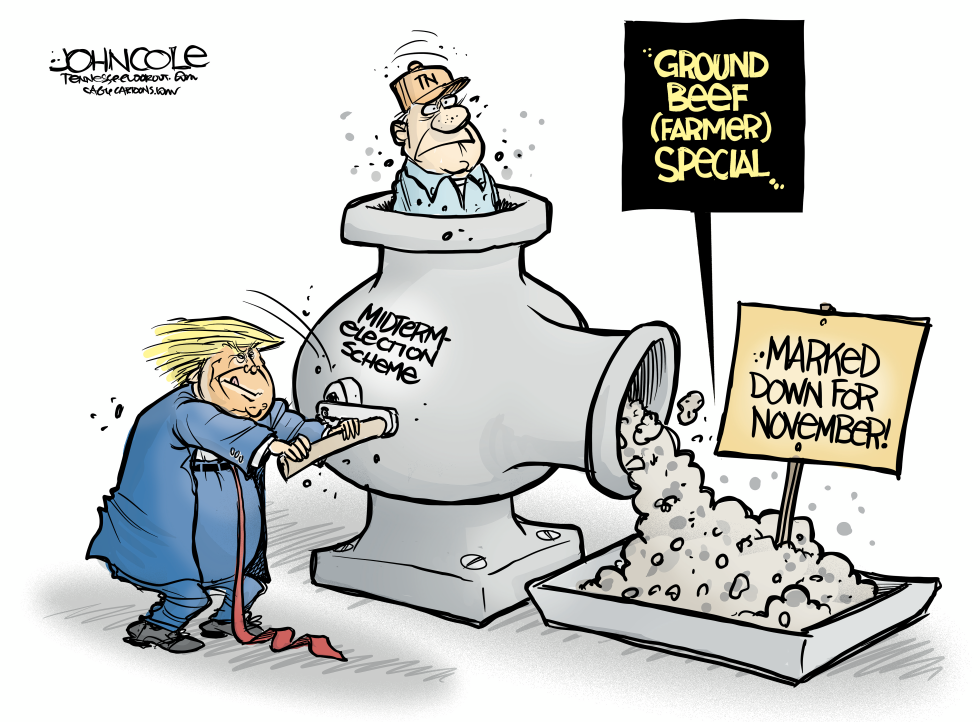
President Trump pushes a midterm election scheme that grinds down farmers ahead of the 2026 vote. The move reflects ongoing tensions between administration policies and rural constituencies whose support remains critical in key states.
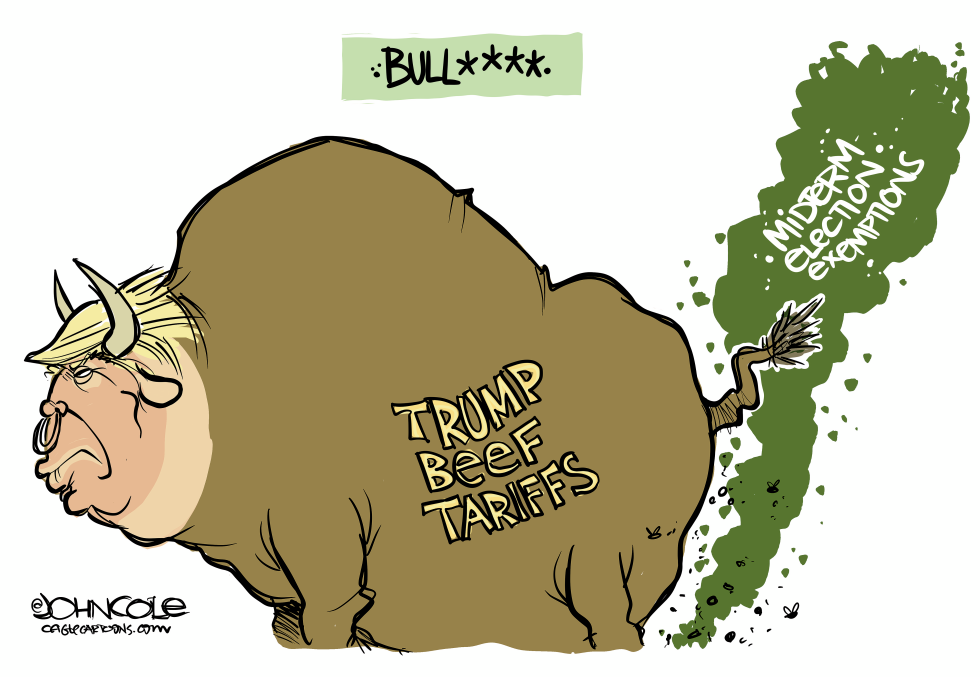
Tariff policy under the Trump administration faces scrutiny as midterm elections near. Exemptions tied to political timing draw criticism for undermining consistent trade enforcement. The piece portrays the approach as inconsistent and driven by electoral concerns rather than economic principle.
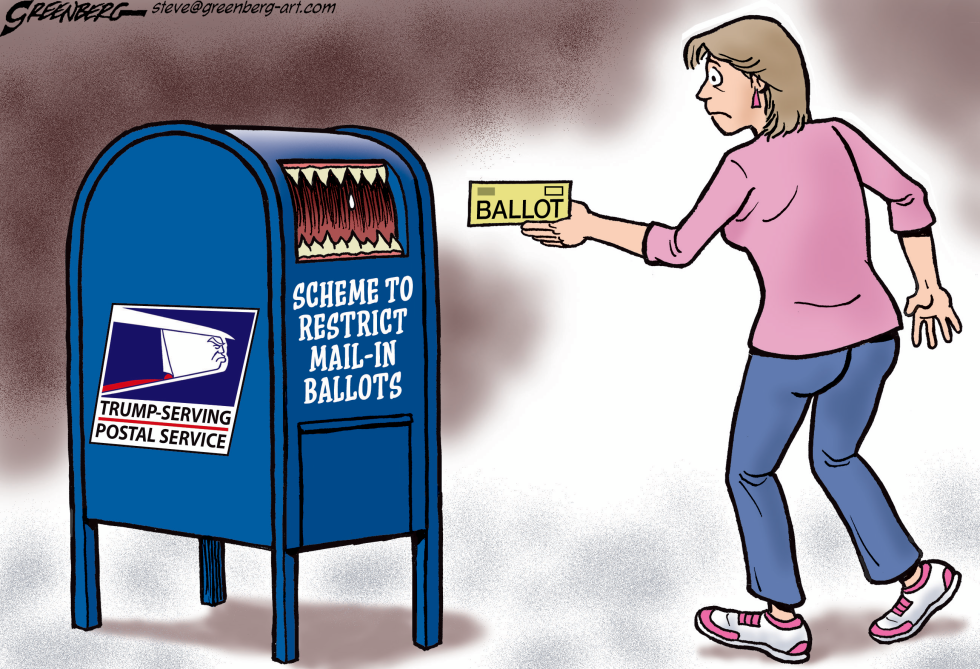
The U.S. Postal Service under Trump influence has implemented measures to restrict mail-in ballots ahead of the 2026 elections. These actions limit voter access through operational changes and heightened scrutiny of mail ballots. The moves raise concerns about equitable participation in elections. Critics argue the changes disproportionately affect certain voter groups and undermine trust in the process. The cartoon portrays the postal service as actively hostile to mail-in voting, framing the restrictions as a deliberate scheme to suppress turnout.
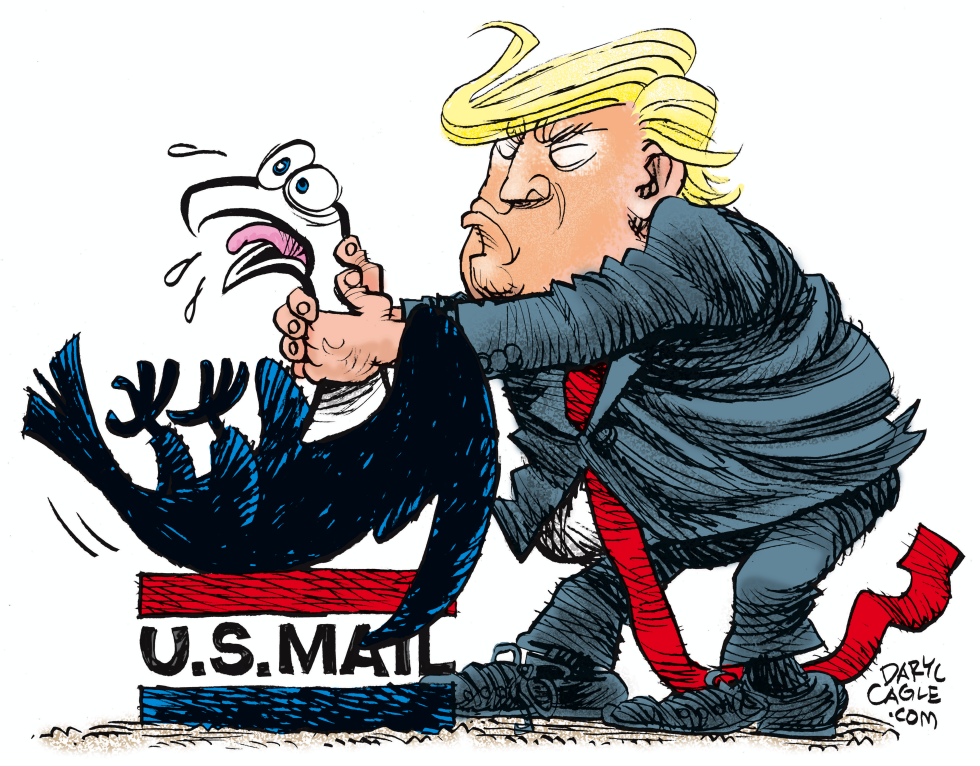
Donald Trump has renewed criticism of the U.S. Postal Service, calling for major operational changes amid reports of delivery slowdowns and budget shortfalls. The agency faces pressure to cut costs while maintaining universal service standards. Lawmakers from both parties have pushed back, arguing that further reductions would harm rural communities and election mail. The editorial takes the position that such attacks weaken a vital public institution without addressing root causes like underfunding and outdated infrastructure.