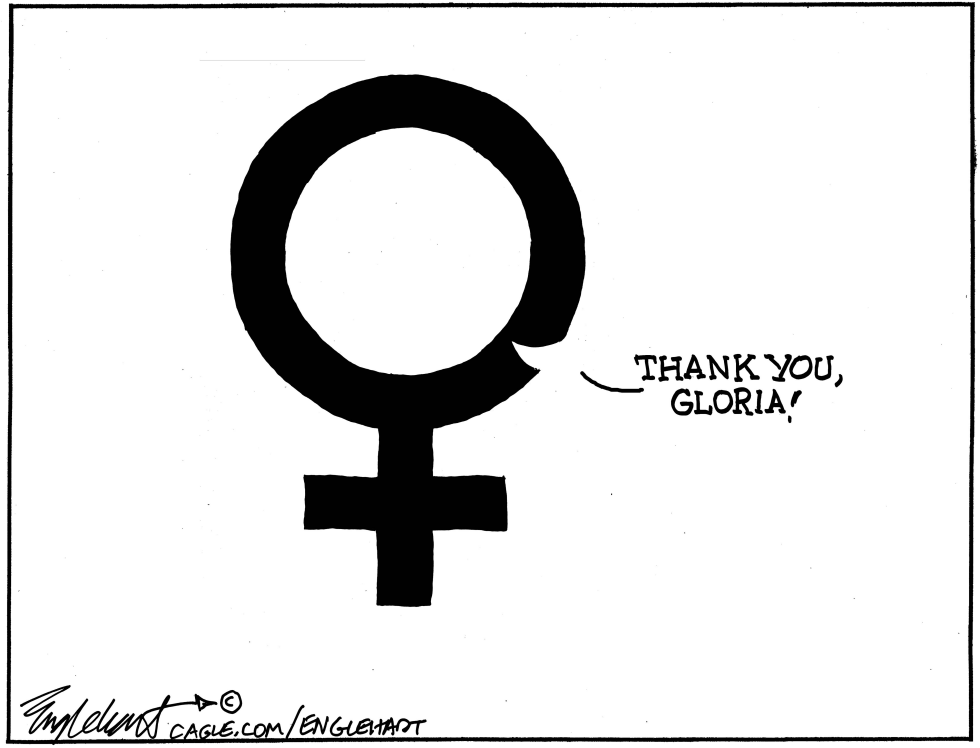
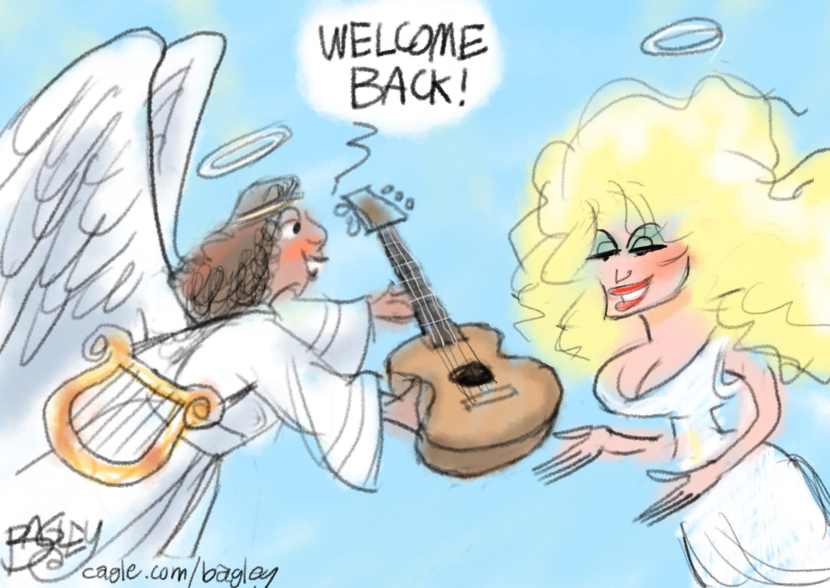
Gloria Steinem, a leading voice in the women's movement, is honored in this memorial tribute. Her decades of advocacy helped shape public discourse on gender equality and reproductive rights. The piece reflects appreciation for her foundational work in feminism.
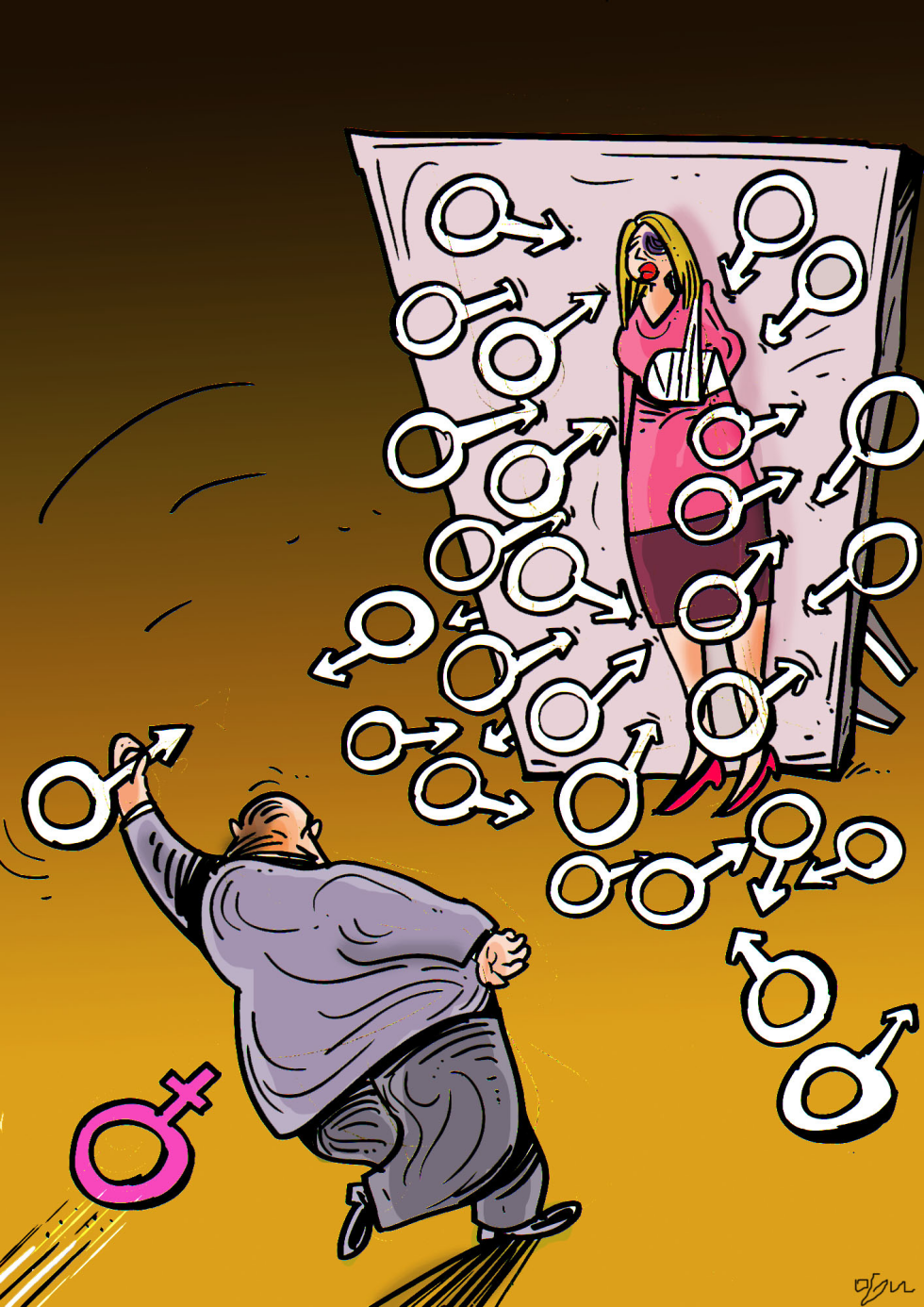
Violence against women remains a persistent social problem, with physical assaults and intimidation continuing in many communities. The piece responds to this ongoing dynamic by showing a male figure directing male symbols at an already injured woman, underscoring the editorial position that such aggression must be confronted directly.
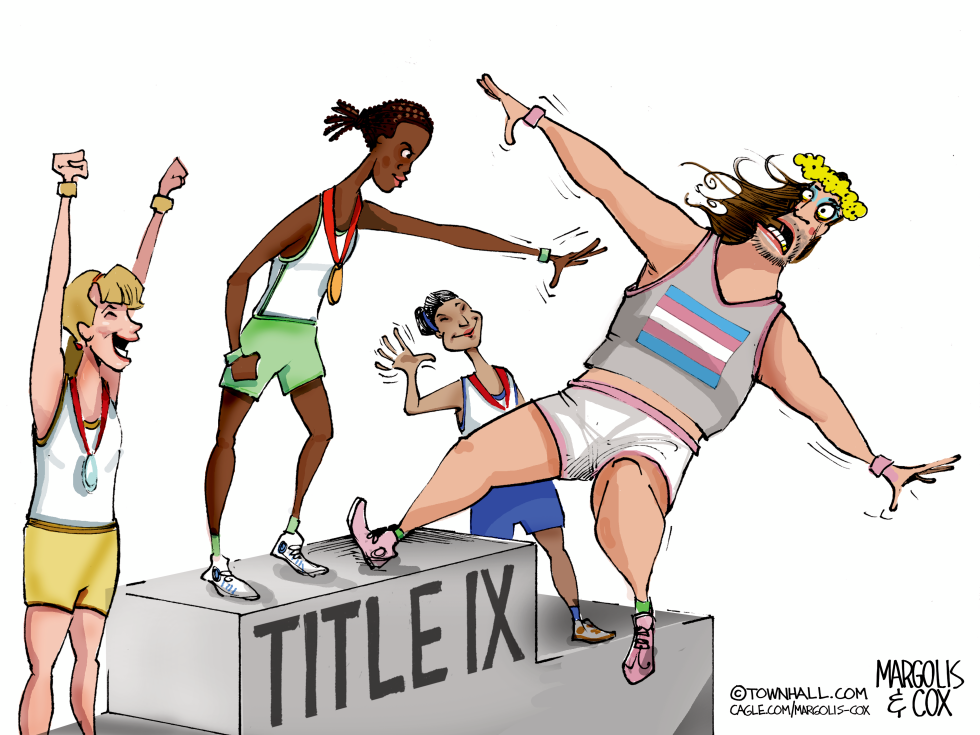
A trans athlete wearing a tank top with the transgender pride flag colors lunges forward on a podium labeled Title IX, displacing other competitors. Female athletes wearing medals stand on the structure with arms raised or extended in reaction. The scene shows one competitor with braided hair in green shorts and another with blonde hair in yellow shorts. A smaller figure in blue shorts appears behind the main action. The image was published on July 1 2026.
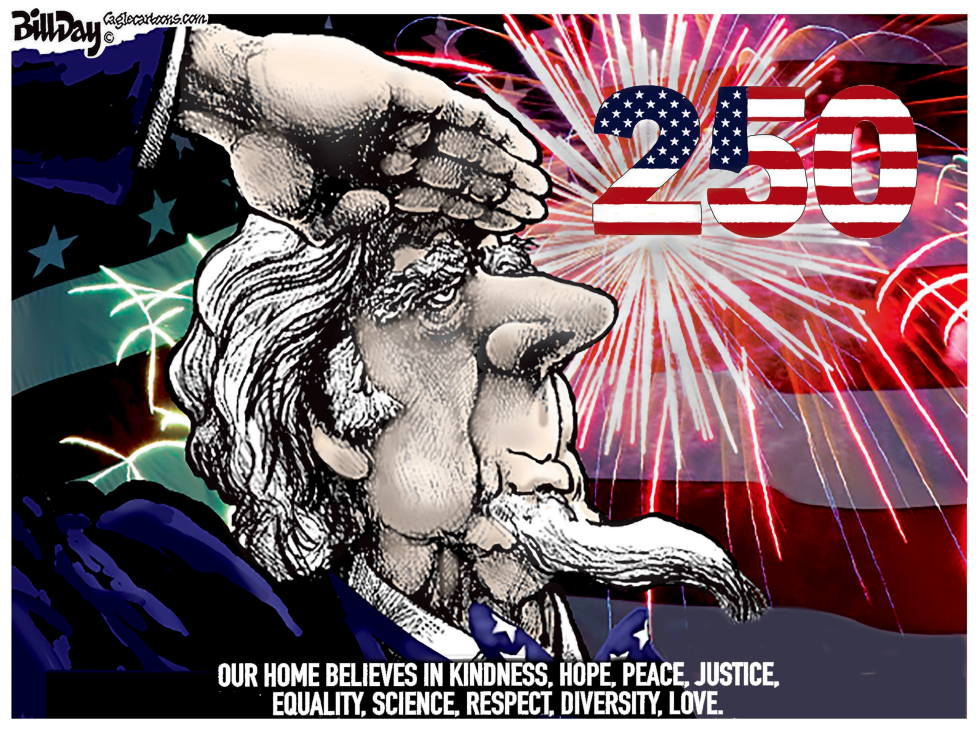
The image depicts a historical figure saluting against a backdrop of American flag and fireworks on June 30, 2026. The 250th anniversary of the United States approaches, and the cartoon emphasizes national values listed in a bottom banner: kindness, hope, peace, justice, equality, science, respect, diversity and love. The composition uses red, white and blue tones with celebratory pyrotechnics to frame the gesture.
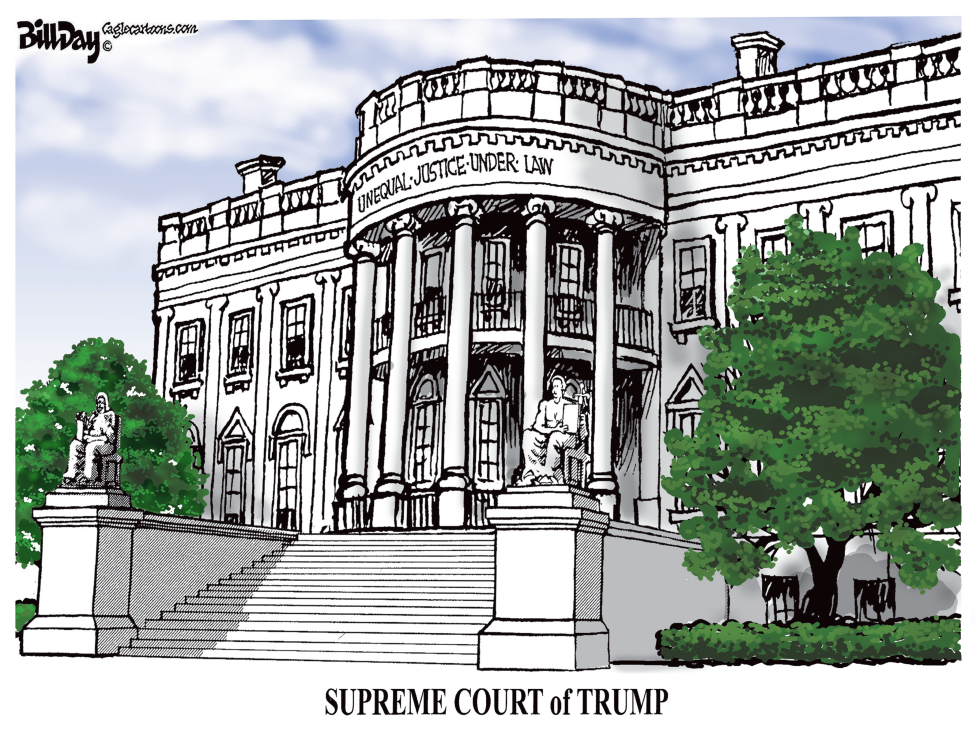
The image presents the Supreme Court building in Washington with the traditional inscription changed to read UNEQUAL JUSTICE UNDER LAW. The title below identifies the structure as the SUPREME COURT of TRUMP. Statues remain in place on either side of the central steps while trees stand to the left and right of the facade.
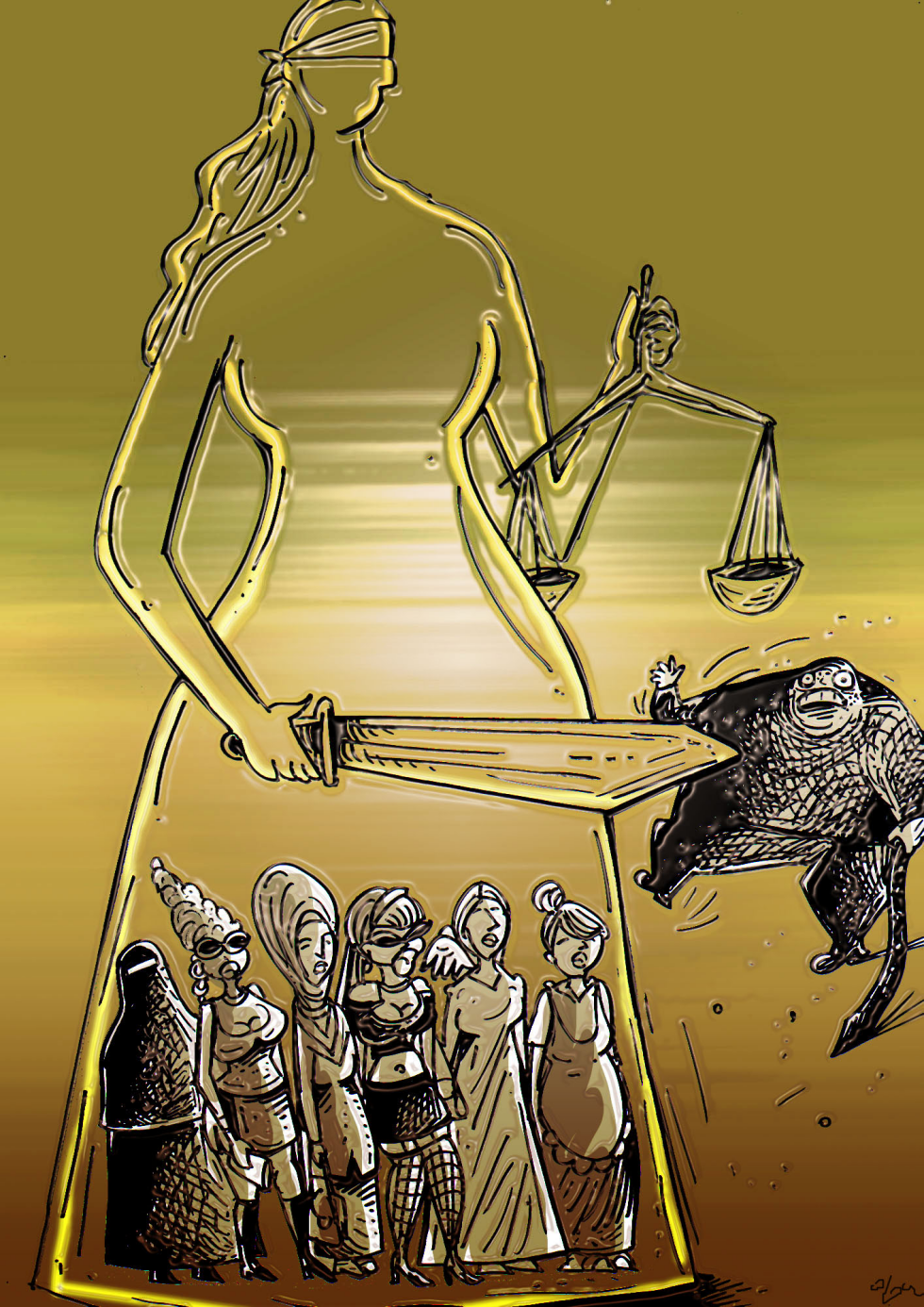
The justice system continues to face scrutiny over its ability to protect vulnerable populations amid ongoing debates about fairness and representation. Public attention remains on how courts and legal symbols address threats to safety and equality. The piece argues that justice must actively confront dangers while encompassing the diversity of those it serves.
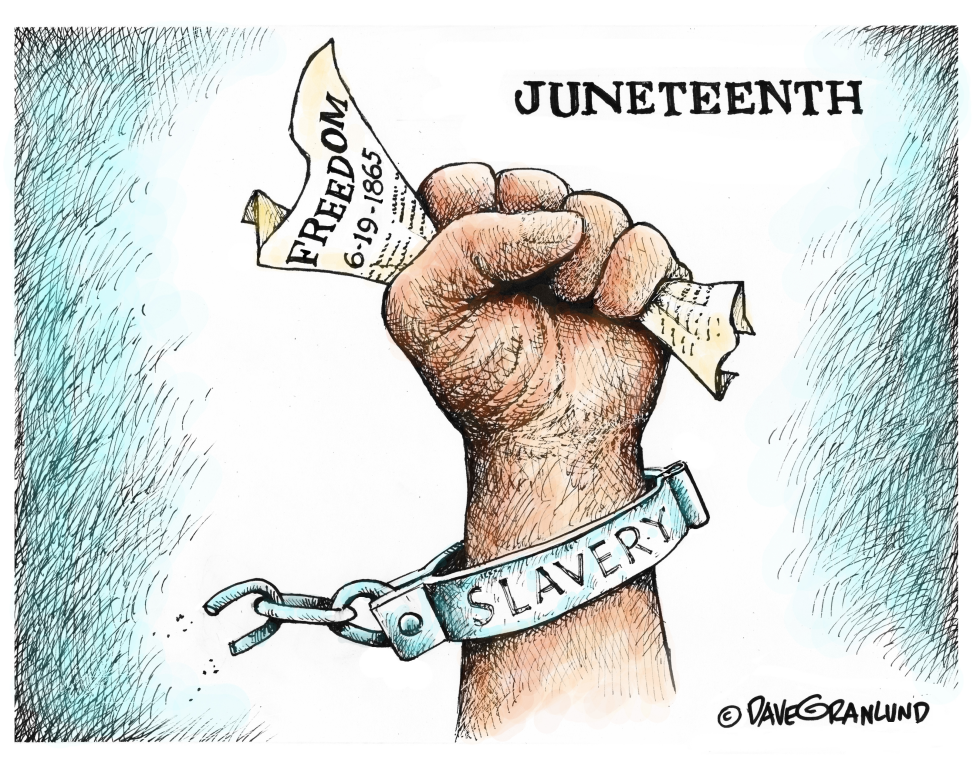
A raised fist tears a freedom document dated June 19, 1865 while breaking the slavery chain. Granlund captures both emancipation promise and its long shadow. The broken-chain composition is among the most direct visual statements of what the holiday commemorates.