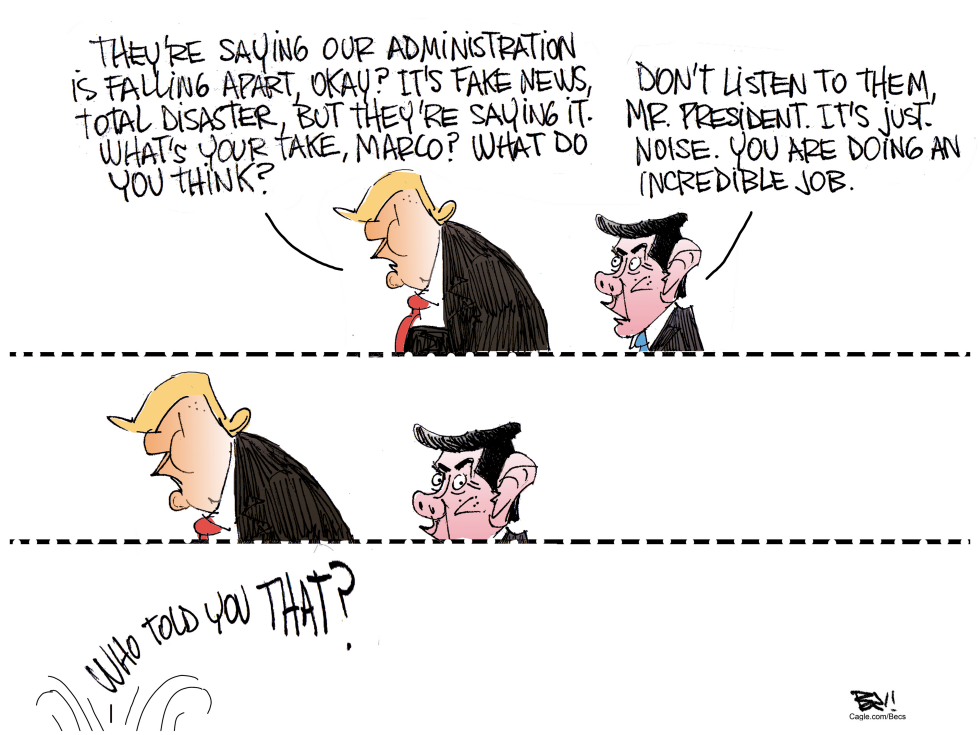
President Trump asked Senator Marco Rubio for his assessment of reports that the administration is in disarray, labeling them fake news. Rubio dismissed the reports as noise and praised Trump's performance. Trump responded by questioning who had told Rubio that assessment. The exchange highlights tensions over loyalty and information flow inside the administration. The cartoon portrays Rubio's positive reply as triggering suspicion rather than reassurance.
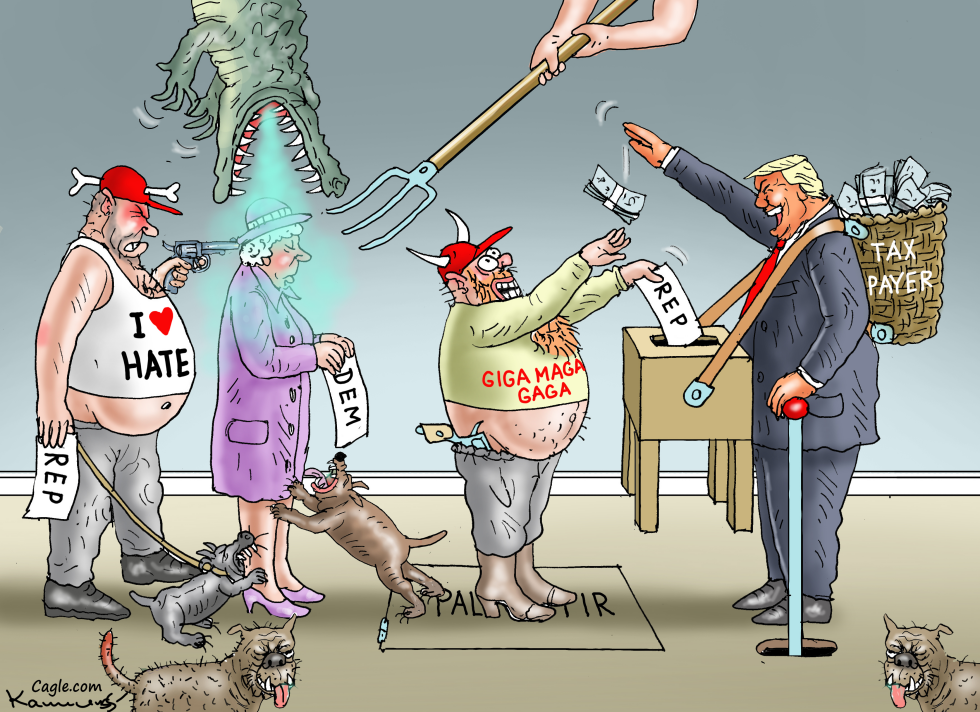
As the 2026 midterm elections approach, former President Trump has positioned himself as a central force in Republican campaigns, directing resources and mobilizing supporters. The cartoon highlights the use of taxpayer money in these efforts and the intense partisan divide, with Democrats portrayed as under attack. It takes the position that such involvement risks undermining fair electoral processes.
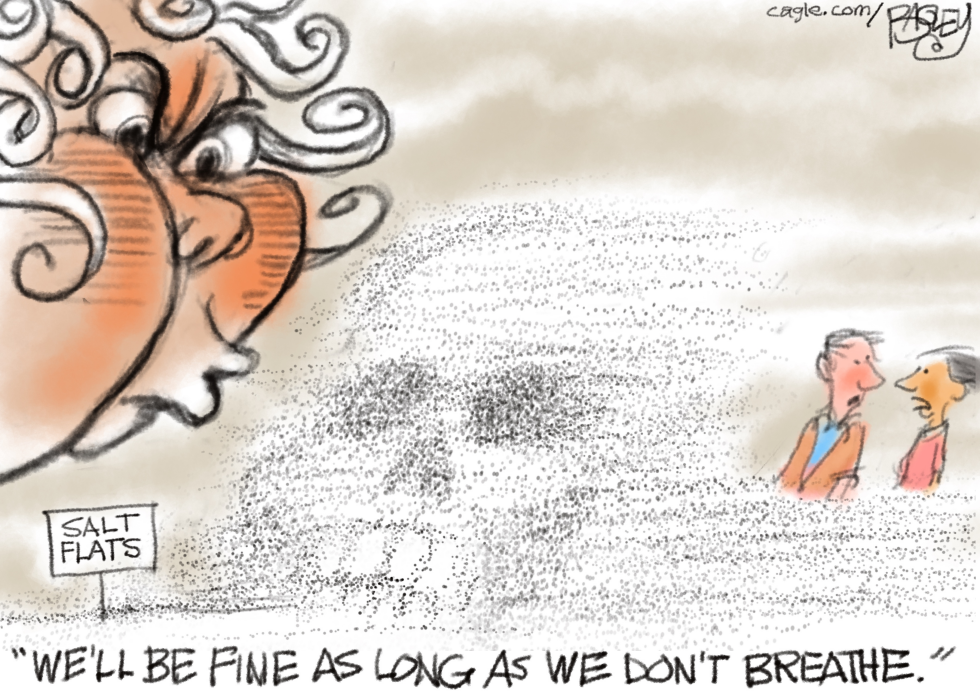
Air quality at the Salt Flats has deteriorated due to persistent dust storms, creating hazardous conditions for nearby residents and visitors. The situation underscores ongoing environmental degradation in the region and the urgent need for mitigation efforts to protect public health.
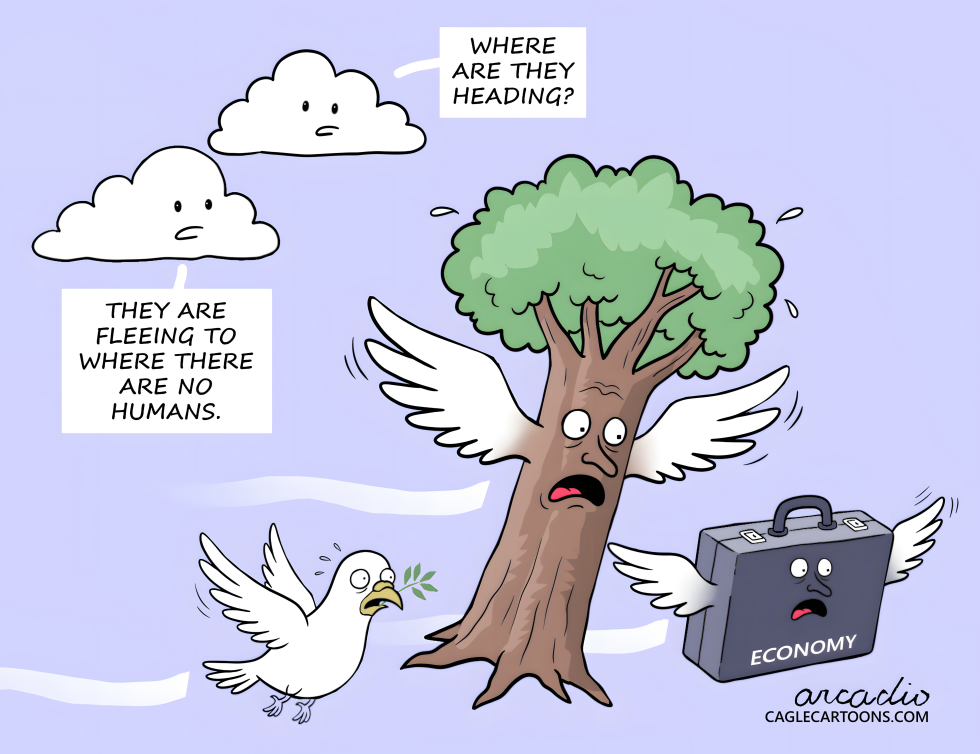
No single dated event anchors this cartoon, which addresses the ongoing dynamic of economic activity retreating from areas of heavy human environmental impact. The piece uses the visual of a winged briefcase labeled Economy fleeing alongside a concerned tree to highlight how unchecked human presence disrupts both natural systems and economic stability. It argues that reducing human interference allows nature to stabilize, indirectly benefiting long-term economic health by creating conditions where resources and peace can return.
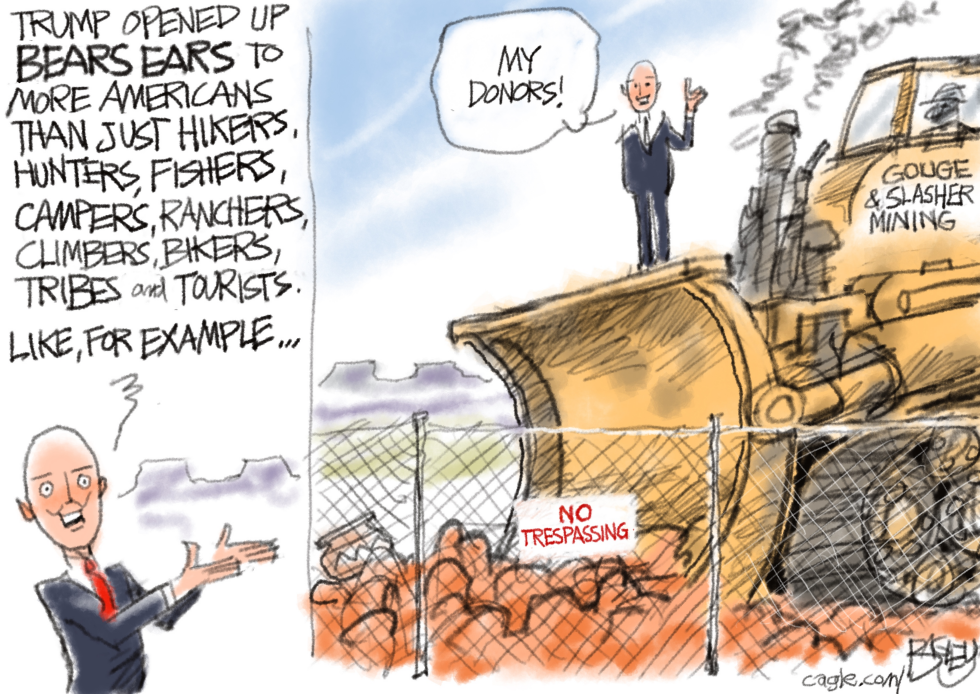
President Trump opened Bears Ears National Monument to expanded mining operations, citing broader public access. The move benefits mining companies and political donors while limiting protections for hikers, tribes and recreational users. The cartoon criticizes the decision as donor-driven favoritism over conservation.
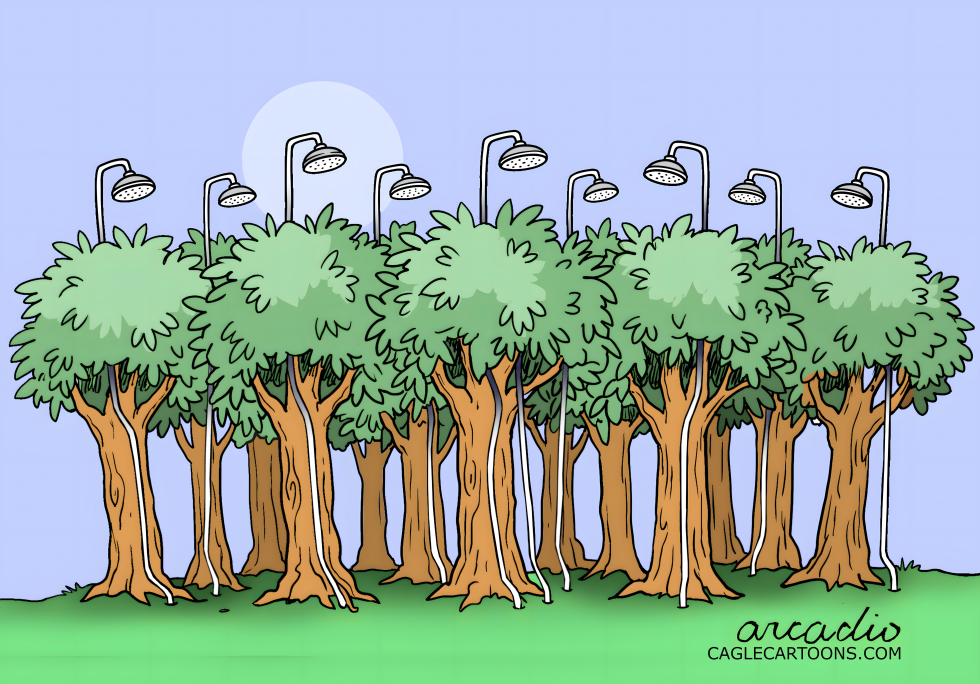
Forests in dry regions face heightened wildfire risks due to prolonged drought and climate patterns. Officials and environmental groups explore supplemental watering techniques to maintain tree moisture and reduce ignition potential. The approach matters because uncontrolled fires destroy habitats, release carbon, and threaten communities. The piece supports proactive hydration strategies as a practical step in broader fire prevention efforts.
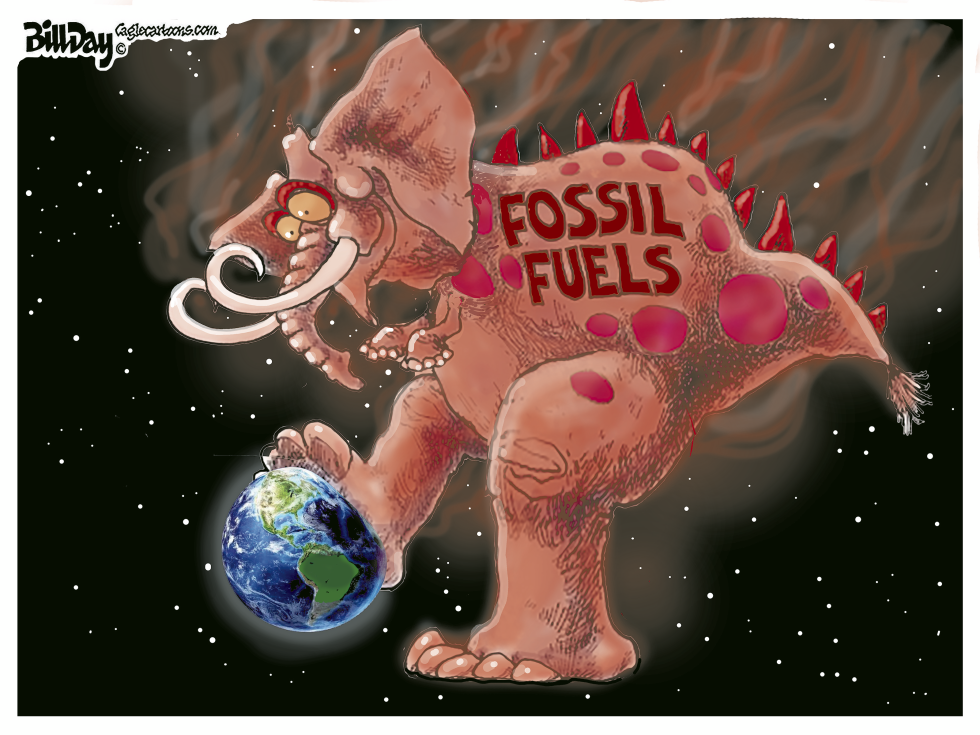
Fossil fuel dependence continues to drive global emissions and accelerate planetary warming. The ongoing reliance on oil, coal and gas extraction sustains economic activity but heightens risks of extreme weather and ecosystem collapse. The piece frames fossil fuels as an oversized destructive force that endangers the planet's future.
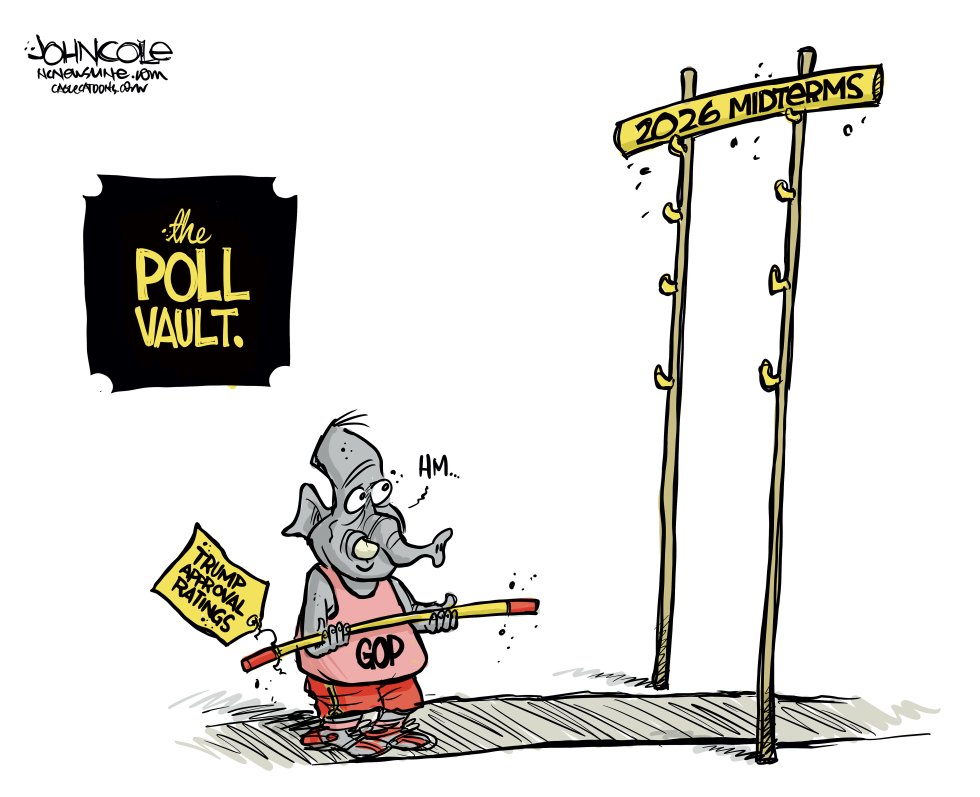
Republicans face the 2026 midterm elections with Donald Trump as a central figure whose approval ratings remain a key variable. Party strategists must decide how heavily to tie their candidates to the former president amid ongoing voter sentiment. The piece portrays the GOP as an athlete preparing to clear the midterm bar but questioning whether the available pole will suffice.
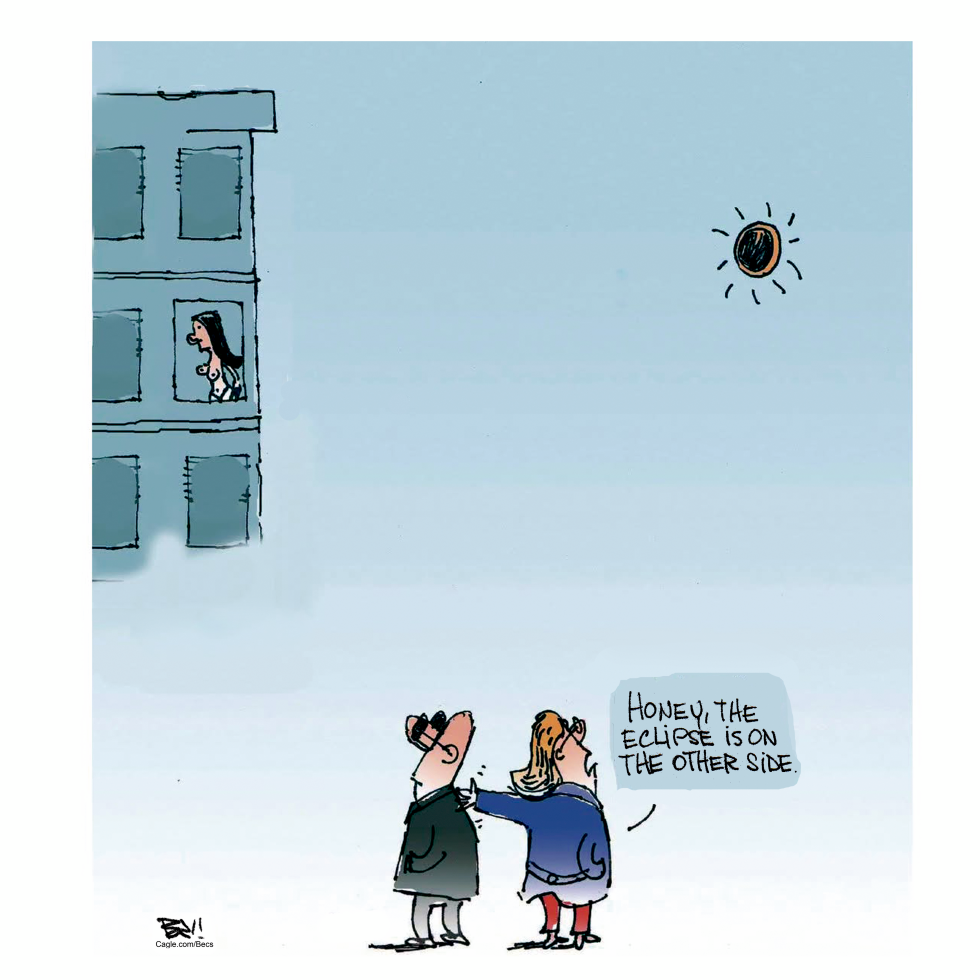
A domestic scene plays out around a simple pun on eclipses and visible marks. The exchange highlights everyday relationship dynamics where one party redirects attention from an apparent injury. The piece presents the interaction without broader political framing.
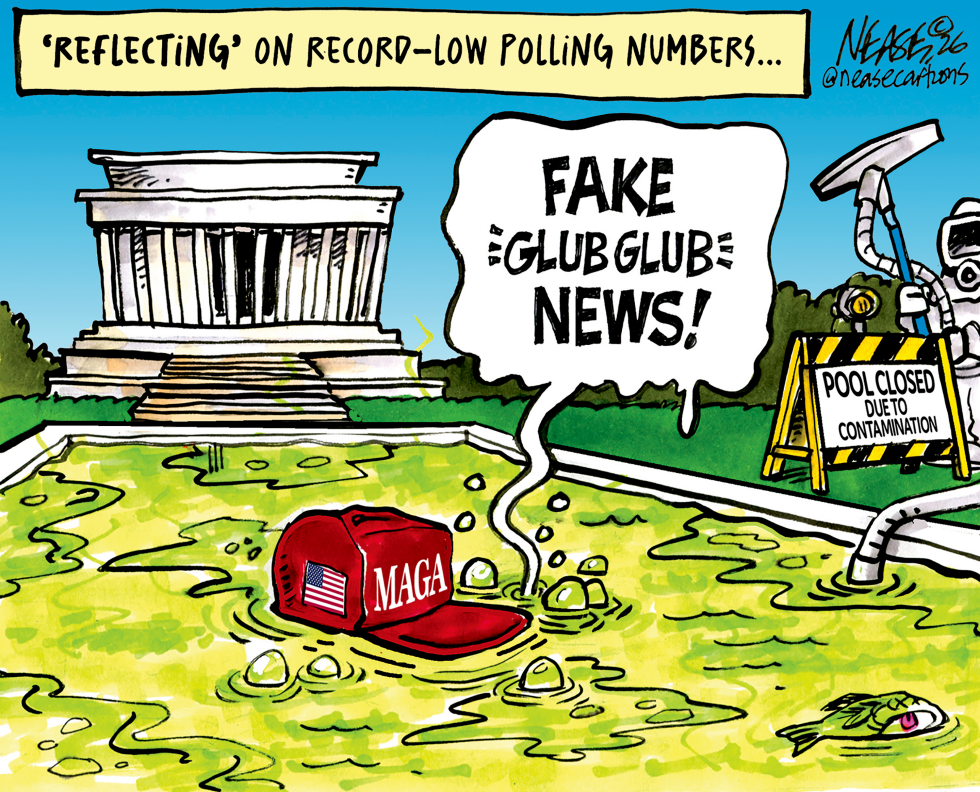
Donald Trump-aligned polling numbers reached record lows in early August 2026. Supporters responded with claims of fake news rather than addressing the data. The piece portrays this denial as occurring in a toxic environment.
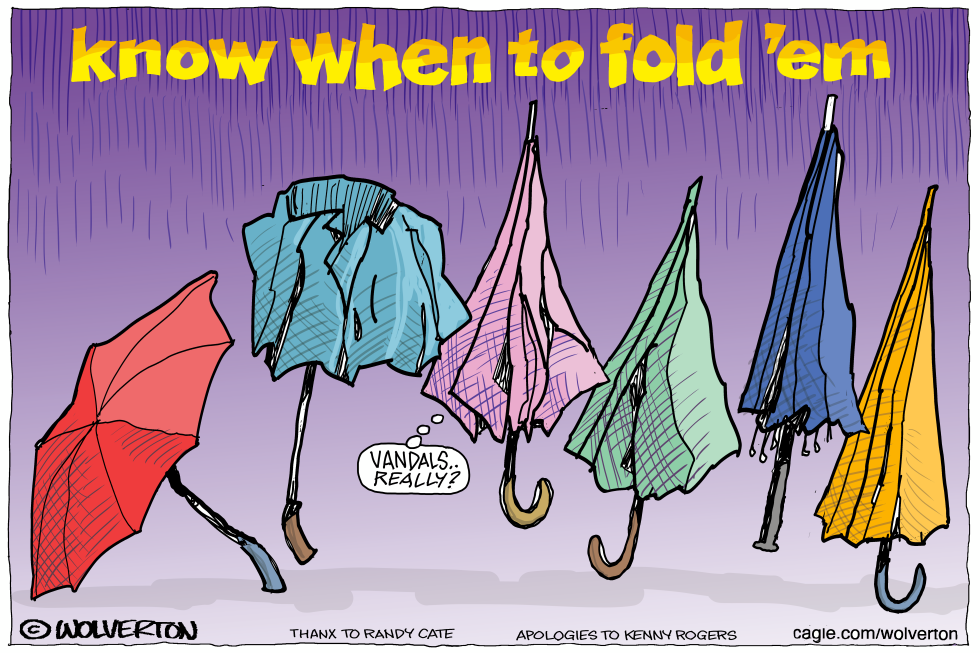
Political figures and institutions often confront moments requiring retreat or adjustment under external pressure. Recent developments show various actors weighing whether to persist or step back from contested positions. The piece argues that recognizing the right moment to fold preserves strength and avoids unnecessary damage in ongoing contests.
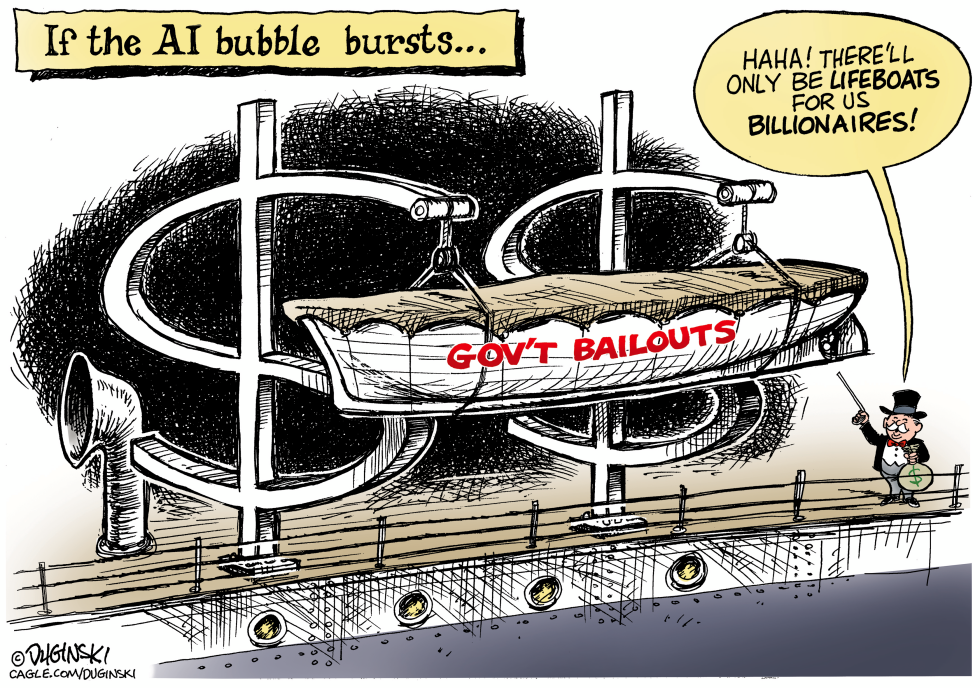
Speculation grows over potential government intervention if the artificial intelligence sector experiences a sharp downturn. Industry leaders and investors face questions about whether public funds would support failing companies. The editorial argues that any such support would primarily protect billionaires rather than address wider economic fallout from overvalued tech assets.
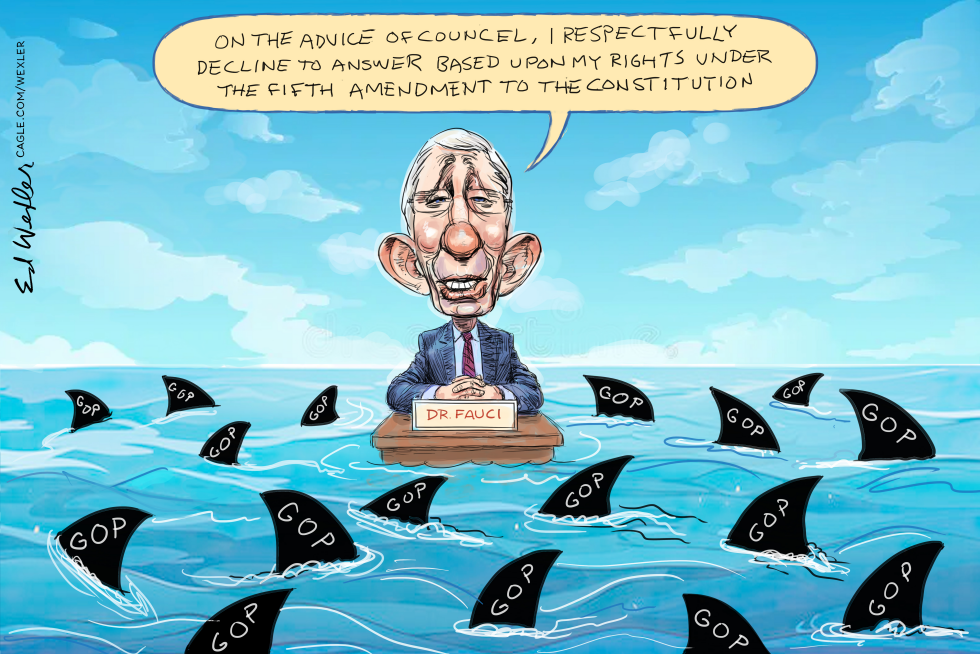
Dr. Anthony Fauci declined to answer questions at a House hearing, invoking his Fifth Amendment protections. The piece responds to Republican-led scrutiny of his role in pandemic-era public health decisions. It depicts the proceeding as a hostile setting rather than a neutral fact-finding exercise.
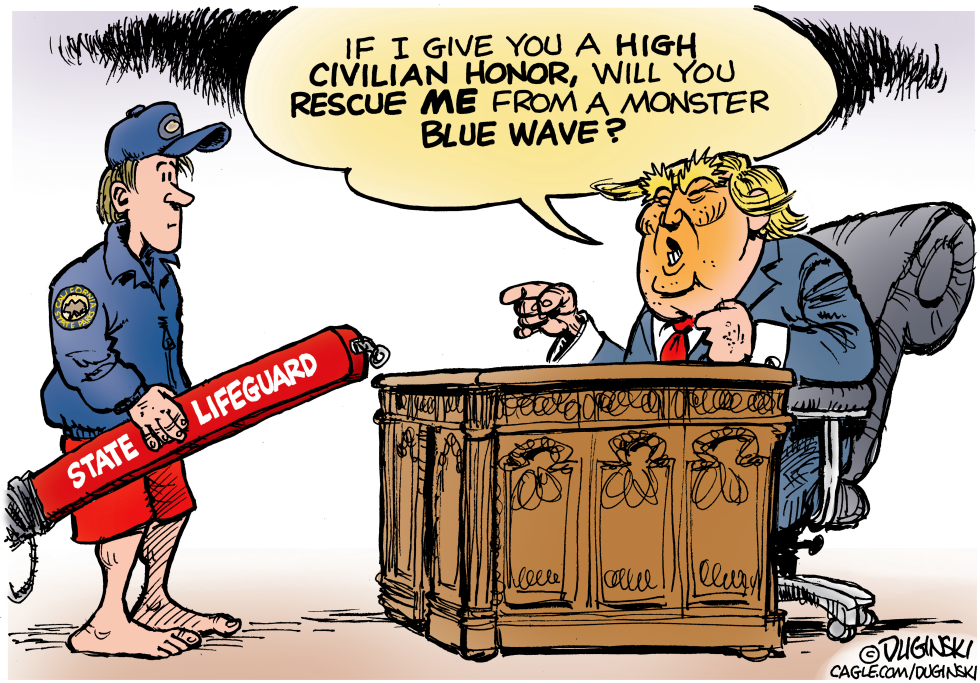
Donald Trump appealed to a California state lifeguard for rescue from an anticipated Democratic electoral surge, offering a high civilian honor in return. The request highlights concerns over midterm or future election outcomes. The piece portrays the overture as a desperate bid for political survival.
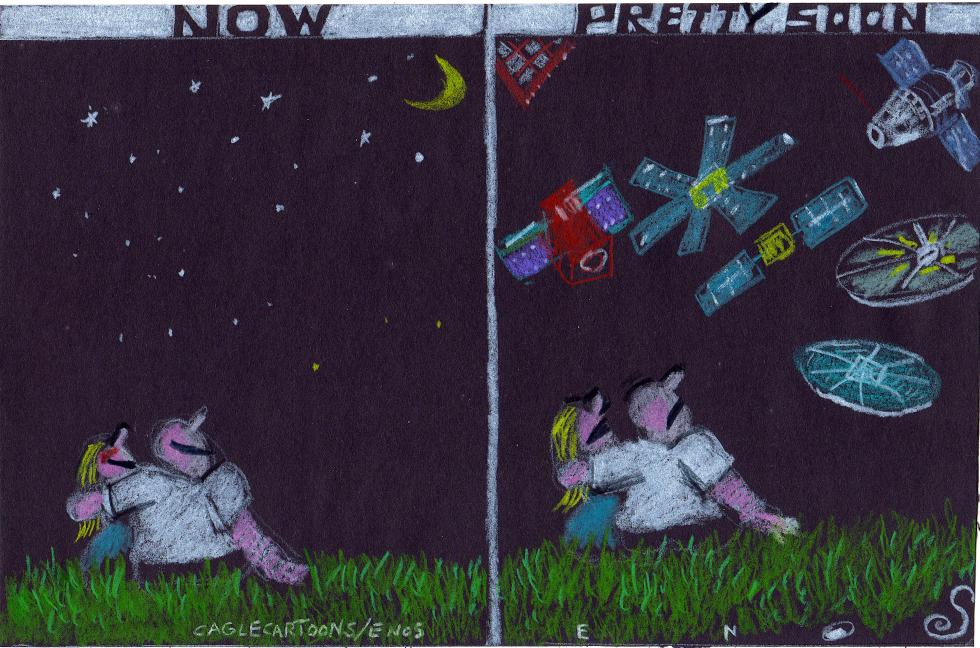
The night sky remains a quiet backdrop for stargazers in the present. Within a short time, however, proliferating satellites and debris will dominate the view overhead. The piece highlights how rapid expansion of orbital technology alters even simple moments of connection with the natural world.